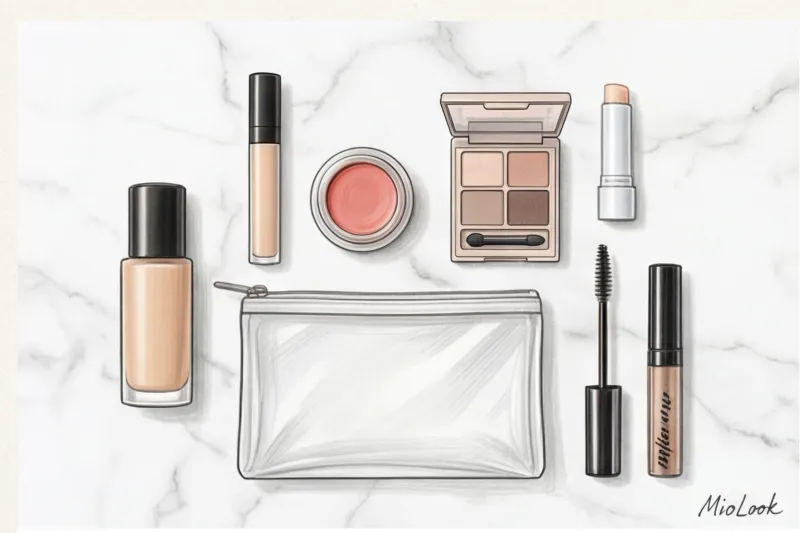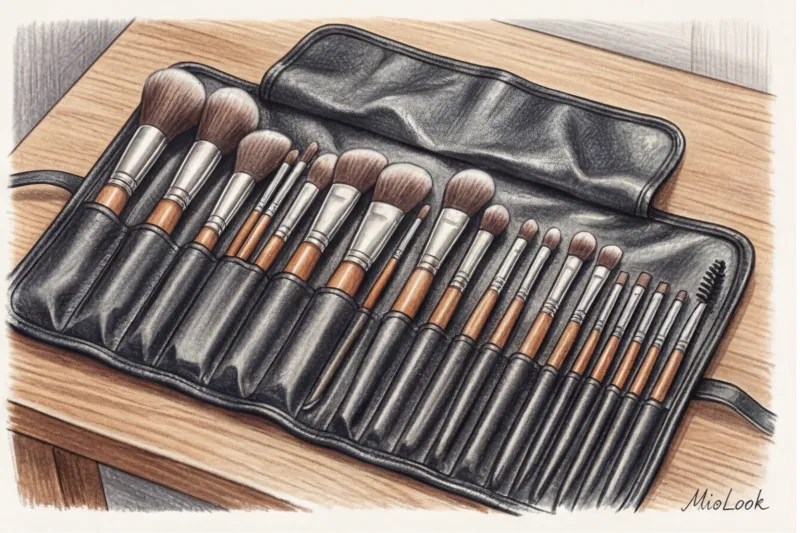
Last month, a client came to me for a beauty wardrobe review. She proudly laid out a huge black bundle of 24 brushes, a €150 purchase she'd made on a whim. When we began to analyze her daily routine, it turned out that 19 of those brushes had never touched her face. Worst of all, she'd developed contact dermatitis from using a single, cheap foundation brush (which, under a poorly sealed ferrule, had begun to trap moisture and bacteria).
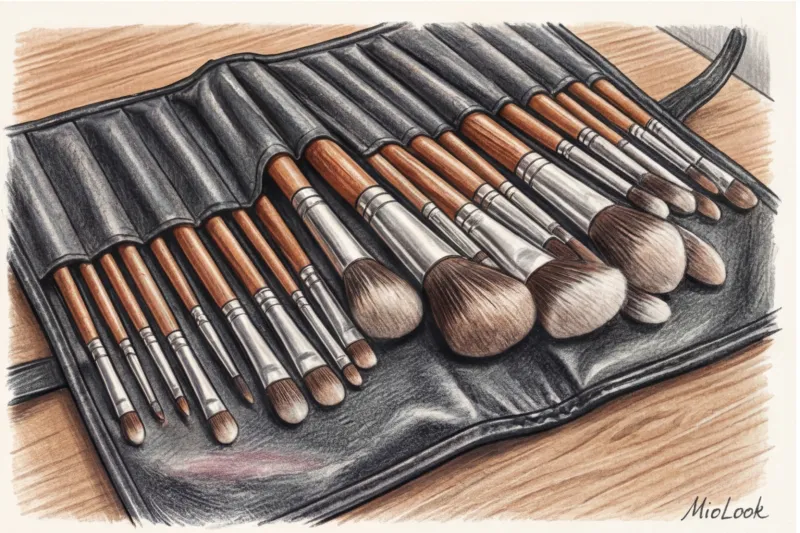
We're used to thinking that perfect makeup requires an army of tools. Marketing convinces us to buy ready-made mega-sets, promising "salon-quality" results. But as an expert in textiles and materials science, I can confidently say: this is the worst investment you can make in your skin. Quality basic set of makeup brushes should be built on the principle of a capsule wardrobe - a minimum of items that cover a maximum of tasks.
We talked about this concept of conscious consumption in more detail in our the complete guide to the perfect everyday kit Today, I suggest you put aside those daunting professional cases and assemble your perfect beauty kit using just 5 transformable tools.
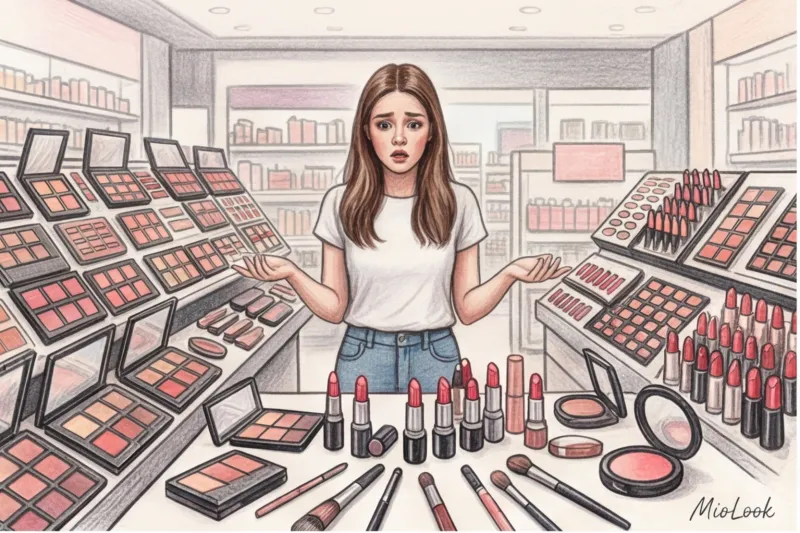
The Illusion of Choice: Why Buying Mega-Brush Sets Is a Mistake
Buying a ready-made set of 15-20 brushes is a classic beginner's trap. We're lured by the perceived value: the set seems cheaper per unit. But if you look closely at the contents of any budget set (in the €30-€80 range), you'll find junk. Foam applicator sponges that absorb half the product, spiky fan brushes that scratch your skin, and a dozen flat eyeshadow brushes that differ by a millimeter.
In makeup, the Pareto principle applies strictly: you use 20% of the tools 80% of the time. Internal app surveys MioLook Among more than 10,000 users, it was shown that 82% of women regularly use no more than 4–5 brushes in their daily lives.
Moreover, cheap kits have a critical drawback: poor build quality. Manufacturers skimp on adhesives. As a result, the bristles start shedding right on your face while applying foundation. Instead of saving money, you end up with irritation, ruined makeup, and a tool you'll have to throw away after a couple of months.
Your perfect look starts here
Join thousands of users who look flawless every day with MioLook. A smart AI stylist will help you find the perfect look.
Get access — €0.99 onceThe Anatomy of Quality: How to Choose a Tool That Will Last 10 Years
A makeup brush consists of just three parts: the handle, the ferrule (metal ferrule), and the bristles themselves. How these parts are connected determines whether the tool will last 10 years or fall apart after just one wash.
When I go to a cosmetics store to test new brands, the first thing I do is check the ferrule. I grab the brush by the handle and gently jiggle the metal part. If you feel even the slightest play or hear a soft click, put it back on the shelf. A high-quality ferrule should have a double crimp. These are two circular indentations in the metal that securely hold the bristles inside and the ferrule itself to the handle.
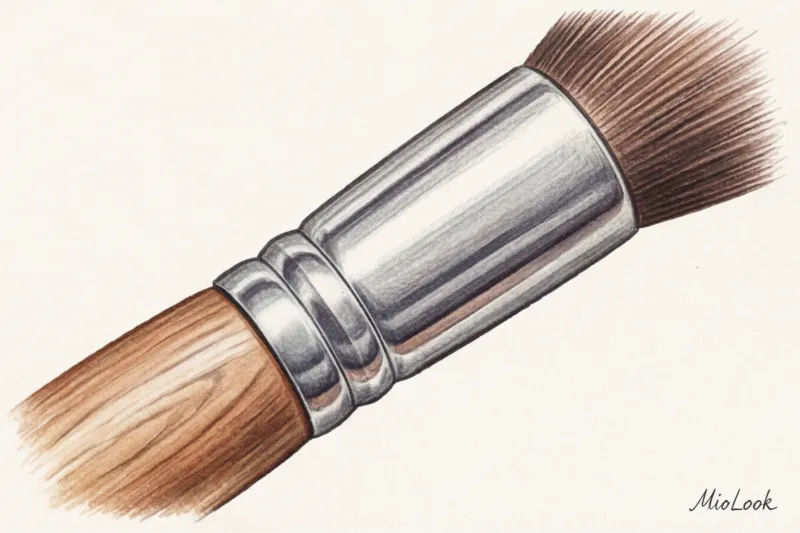
"A professional brush is like a well-balanced chef's knife. The balance point should be exactly where your fingers grip the metal ferrule. If the handle is too heavy, the brush will 'lead' your hand, leaving smudges when blending."
The handle material also matters. I strongly recommend avoiding cheap molded plastic. It cracks when exposed to temperature fluctuations (like in a bathroom). The ideal choice is FSC-certified wood coated with 5-7 layers of wear-resistant varnish, or recycled aluminum.
Pile Matters: Natural vs. High-Tech Synthetics
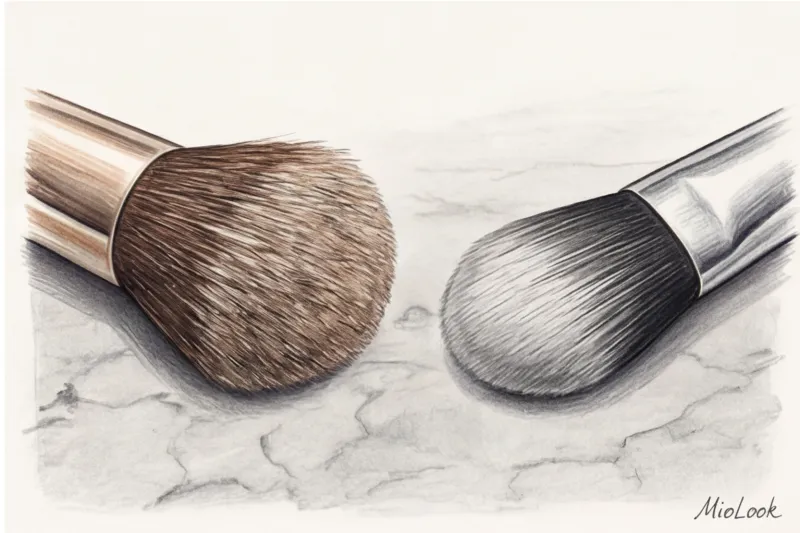
Many beauty bloggers still perpetuate the myth that "natural is always better." This is one of the main misconceptions, which I constantly debunk. Yes, ten years ago, synthetics were harsh and resembled fishing line. But the textile industry has come a long way.
Modern Taklon is a premium synthetic fiber, each fiber of which tapers to a point just like natural hair. However, unlike squirrel, goat, or pony hair, synthetics lack a porous structure (cuticle). What does this mean in practice?
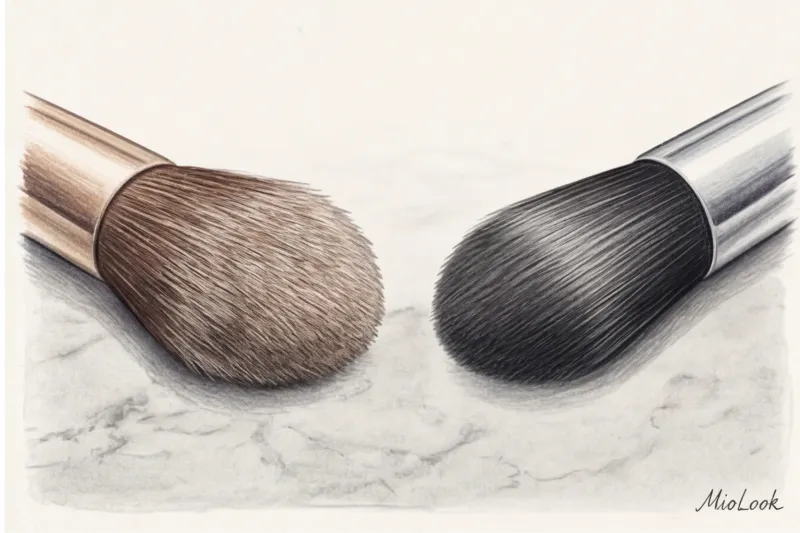
- Zero product consumption: Natural bristles absorb up to 30% of your expensive foundation. Synthetic bristles release the product onto your skin without leaving any residue.
- Hygiene: According to a study published in the Journal of Applied Microbiology (2023), bacteria Cutibacterium acnes (causing acne) multiply in the cuticle of natural hair 3 times faster than on the smooth surface of synthetic hair.
- Durability: Synthetics do not break, do not become thinner from aggressive detergents and are hypoallergenic.
To be fair, natural bristles do have one application where they still reign supreme. If you're working with highly pigmented, complex pressed eyeshadows on mature skin with creases, a soft squirrel brush will blend the dry product a little more delicately. But for a basic daily routine, high-quality synthetic bristles win on all fronts while remaining 100% cruelty-free.
Access to MioLook for €0.99 — one-time payment
Start creating your perfect looks with the help of artificial intelligence. Upload your items and receive ready-made capsule collections for every day.
Get access — €0.99 onceEssential Makeup Brush Set: 5-Piece Capsule
To avoid "choice paralysis" in the morning, you need to assemble a capsule of multifunctional brushes. Each one should perform at least 2-3 tasks. The main rule: match the bristles to the texture of the products. Proper skin preparation for makeup and the perfect tool is 90% of your shading success.
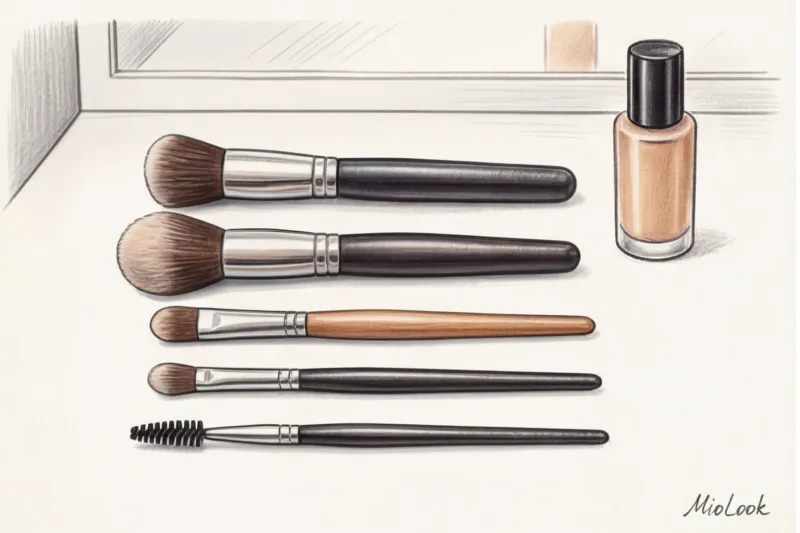
1. Duofiber brush or densely packed brush (for foundation and creamy textures)
Forget about damp sponges if you want to save time and makeup. You have to wet the sponge first, it eats up half the foundation, and it requires a lot of "tapping" work.
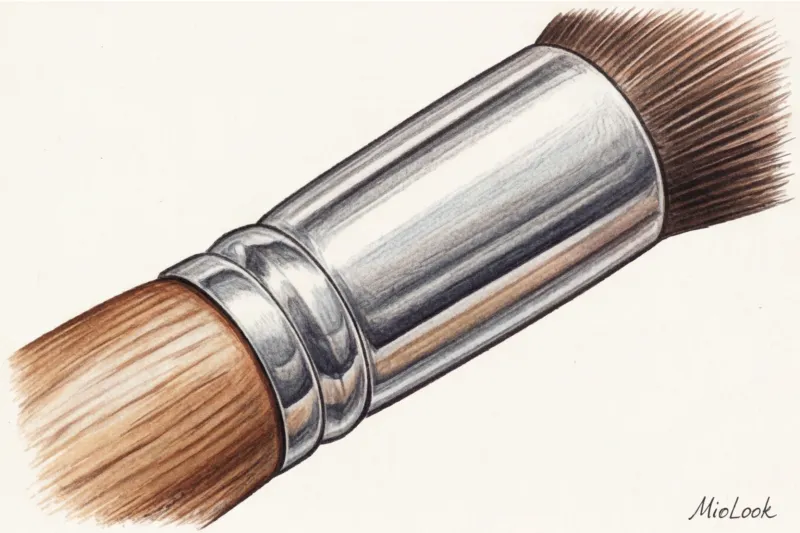
A dense synthetic brush (with a bevel or barrel shape) literally polishes the skin, rubbing the product in. Once you've applied the foundation, don't wash the brush right away. Use the remaining foundation on the bristles to pick up a small amount of cream blush—this will blend it into your base color for a more natural look, as if the flush is coming from within.
2. Fluffy torch brush (for powder, blush and bronzer)
No huge, round, fist-sized kabuki brushes. They're impossible to target specific areas. The ideal brush for dry textures is a "torch" shape—fluffy at the base and tapering slightly toward the tip.
Using the tip, apply mattifying powder specifically to the T-zone (leaving your cheekbones glowing), apply blush to the apples of your cheeks with the side, and apply bronzer with broad, sweeping motions around the edges of your face. One brush – three steps.
3. Flat elastic brush (for concealer and eyeshadow base)
The petal-shaped brush is made of smooth synthetic material. It should be firm enough not to bend under pressure. This is your tool for detailed work: covering post-acne marks, applying under-eye concealer, or applying cream eyeshadow to the lid.
A little stylistic secret: if you want hide peeling skin under makeup Apply concealer with this brush using smoothing motions from top to bottom, in the direction of the vellus hair growth. This will help "glue" the skin flakes down rather than lift them.
4. Barrel brush or fluffy blending brush (for dry eyeshadow and highlighter)
The secret to expensive eye makeup isn't the price of the palette, but the lack of sharp edges between the shadows. A fluffy, not too long barrel brush will do all the work for you.
Size is crucial: the bristles should be slightly smaller than the surface area of your still eyelid. If the brush is too big, you'll smudge the eyeshadow all the way to your brow bone. This same brush is ideal for precisely applying highlighter to the lip line and the bridge of your nose.
5. Double-ended angled brush with a spoolie (for eyebrows and arrows)
A razor-thin cut of stiff synthetic bristles (like nylon) is your key to perfect graphic lines and brow hairs.
The spoolie is a must-have: you use it to brush out excess pencil from your eyebrows so they don't look like they were drawn on with a marker, and to remove clumps from your eyelashes after applying mascara.
Care instructions: how to extend the life of your brushes and protect your skin
Even the best €50 brush will quickly become a breeding ground for bacteria if not properly cared for. Synthetic brushes for creamy textures (foundation, concealer) should be washed after each use. Brushes for dry textures can be washed once a week.
I strongly advise against using harsh bar soap (it dries out even synthetic bristles, making them brittle) or dishwashing detergent. A better choice is a gentle, sulfate-free baby shampoo or special cleansing gels.
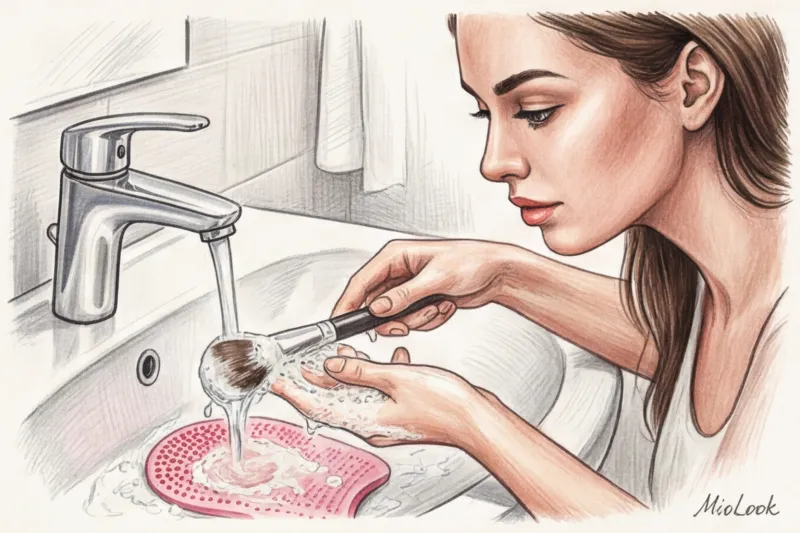
But the most important thing is the drying process. The most expensive mistake, made by 9 out of 10 women, is washing the brush under strong water pressure and then drying it vertically, bristles up, in a glass.
What happens at this point? Water runs down the bristles, gets inside the metal frame, and begins to dissolve the epoxy adhesive. Add to this the fact that the water inside the wooden handle causes the wood to swell. The result: the varnish cracks, the handle falls off, and the bristles fall out in clumps.
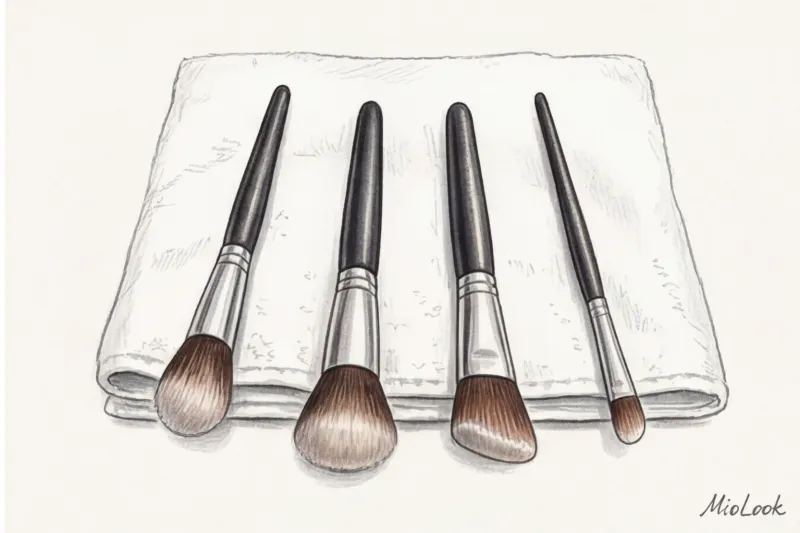
Checklist for proper washing:
- Wet the bristles with warm (not hot!) water, holding the brush with the bristles facing down.
- Apply a drop of shampoo to a silicone mat (brush egg) and lather the product using gentle circular motions.
- Rinse the brush thoroughly until the water is clear, lightly squeeze the bristles with your fingers, giving them their original shape.
- Dry it only horizontally on a clean towel, with the nap hanging over the edge of the table so that air circulates around it from all sides.
Summary: A conscious approach to beauty tools
Investing in five good brushes will pay for itself in just six months. You'll stop throwing away damaged tools, your makeup will be cleaner, and your skin will thank you for the lack of bacteria and scratchy bristles.
Take stock of your makeup bag today. Take out all the brushes you own. Put aside any you haven't used in the last month. And of the remaining ones, remove any that prick your skin or are losing their shape. What's left on the counter is your true foundation. Buy only the missing items from the list above—and enjoy stress-free makeup.
Ready to get started?
Try the MioLook free plan—no commitments required. Organize your wardrobe and beauty capsule in one app.
Get access — €0.99 once