Do you know the average lifespan of a typical formal dress? According to a 2023 study by Censuswide, an outfit bought specifically for a party is worn only 2-3 times during its lifetime. This is a real tragedy—both for our budget and for the environment. So, when I'm tasked with putting together the perfect elegant corporate look for a 40-year-old woman, I always suggest forgetting about compromises and disposable items.
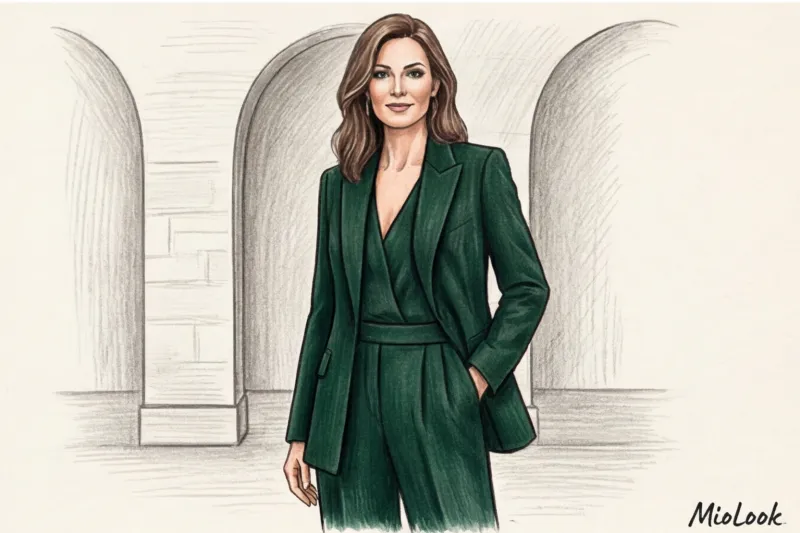
We've covered the basic rules for putting together a festive wardrobe in more detail in our a complete guide to the perfect corporate look But today I want to offer you a completely different, almost engineering-based approach. We'll eschew the clichéd advice about "sheath dresses for age" and discuss the physics of dense fabrics, architectural cuts, and the Cost Per Wear (CPW) metric, which will prove that status items are cheaper than mass-market ones.
The formula for elegance 40+: Architecture of cut instead of excessive decoration
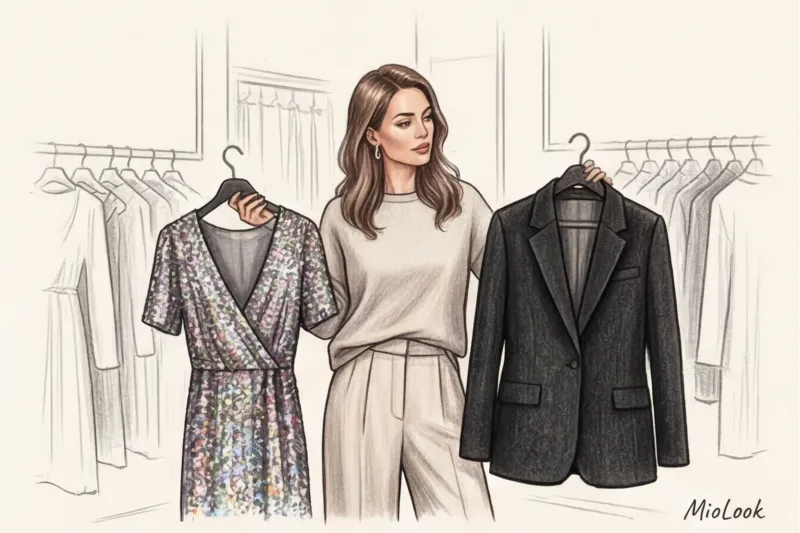
A common misconception is that for a special occasion, you need to buy something bright, covered in sequins, or generously trimmed with lace. This is a huge misconception. Cheap, excessive embellishments visually cheapen the look and, frankly, add age. At 40, we transition from a multitude of details to a flawless fit.
The main secret lies in the physics of fabric. Dense material acts like a lightweight frame. It doesn't cling to every fold of the body, but rather defines its own silhouette, elongating the figure. In my practice, clients often fall in love with thin polyester satin in the fitting room. But do you know what happens at a corporate party? The photographer's flash turns this material into a cheap, shiny oilcloth, highlighting the slightest imperfections of the silhouette. Heavy, matte silk or wool crepe behave completely differently—they absorb light and look elegant in any lighting.
"The main rule for a status look: choose one architectural accent. It could be asymmetry, a sculpted sleeve, or a deep yet understated V-neck. Save the glitter for the Christmas tree ornaments."
Access to MioLook for €0.99 — one-time payment
A smart AI stylist will select the perfect look for your body type and dress code.
Get access — €0.99 onceA Flawless Corporate Look for a 40-Year-Old Woman: 3 Smart Investments
Let's move from theory to practice. I propose the concept of an "evening designer." One of my executive clients (who, by the way, is ideally suited for classic type according to Larson ) has compiled five completely different evening outfits based on the same perfect pair of silk velvet palazzo pants. Here are three formulas that will save you from any unexpected invitation.
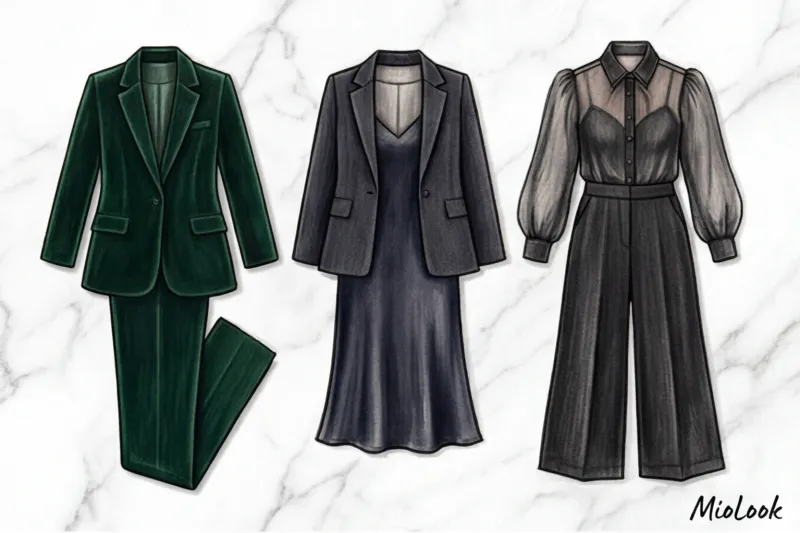
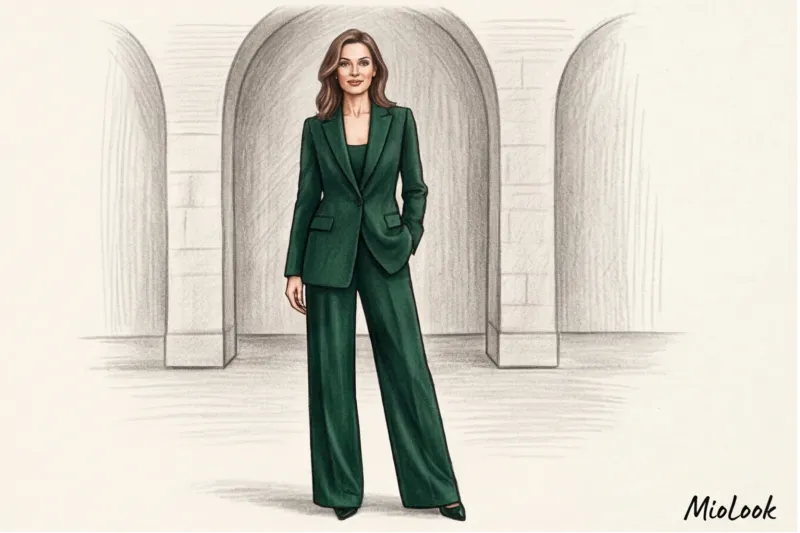
Women's tuxedo or three-piece velvet suit
A tuxedo takes evening sexiness to a whole new level. It's far more intriguing than even the most revealing dress. A well-tailored suit in the €300 to €600 price range will be your best investment. For a gala dinner, wear the jacket directly over your bare skin (with a quality bra) and add a statement necklace. For a more casual event, pair it with a silk top.
A durability bonus: after the holidays, the jacket will fit perfectly into everyday business looks with jeans, and the trousers will pair perfectly with a cozy cashmere sweater.
Thick silk slip dress + sculpted jacket
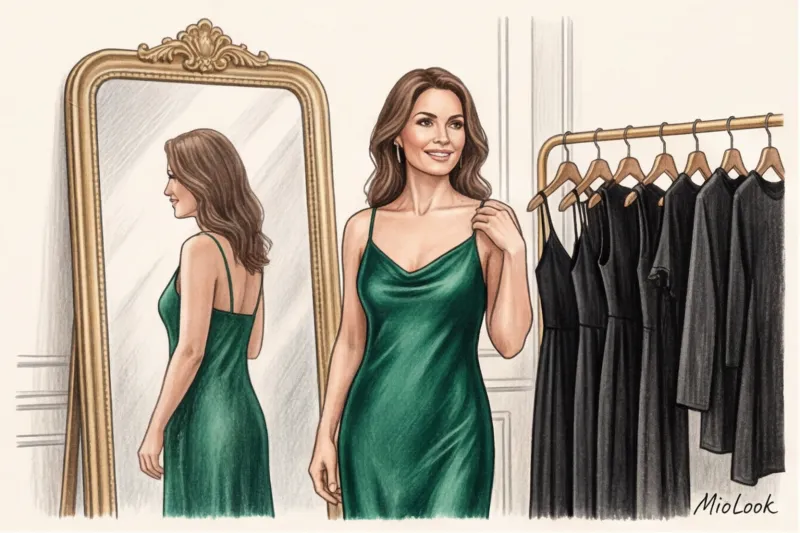
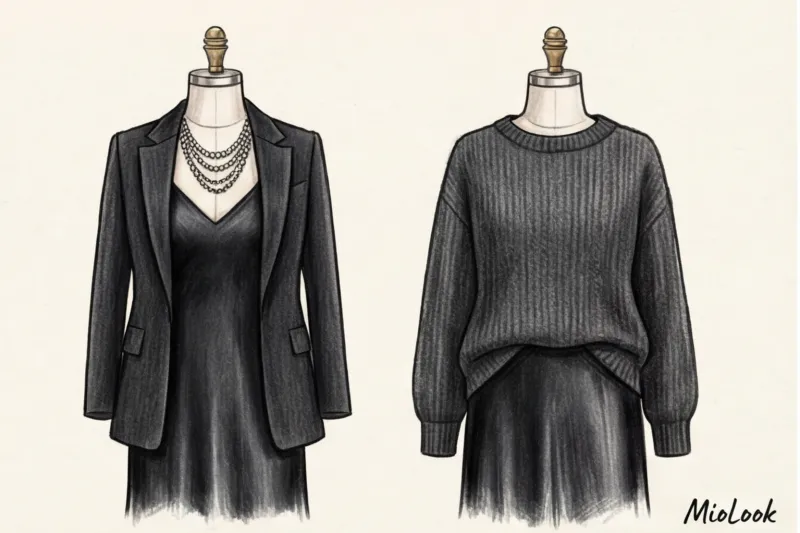
To make a slip dress look appropriate for women over 40, you need to adhere to a strict technical rule: bias cut and a silk density of at least 22 momme. Any thinner fabric will be treacherously see-through and cling to tights. The secret to this look is in the contrast of textures. We balance the delicate, flowing silk with the crisp, masculine shoulder line of an oversized blazer.
An organza accent blouse and palazzo pants
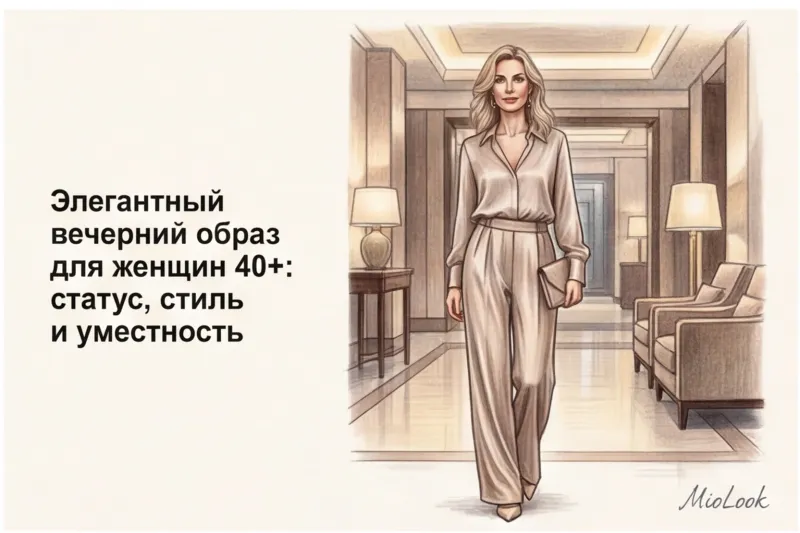
The perfect solution for a "go-to-prom" look, heading straight from the office to a party. High-waisted wool crepe trousers provide a formal base, while a sheer organza blouse adds the necessary airiness and formality. Simply swap your formal office shirt for the organza at the end of the workday, add statement earrings, and the look is complete.
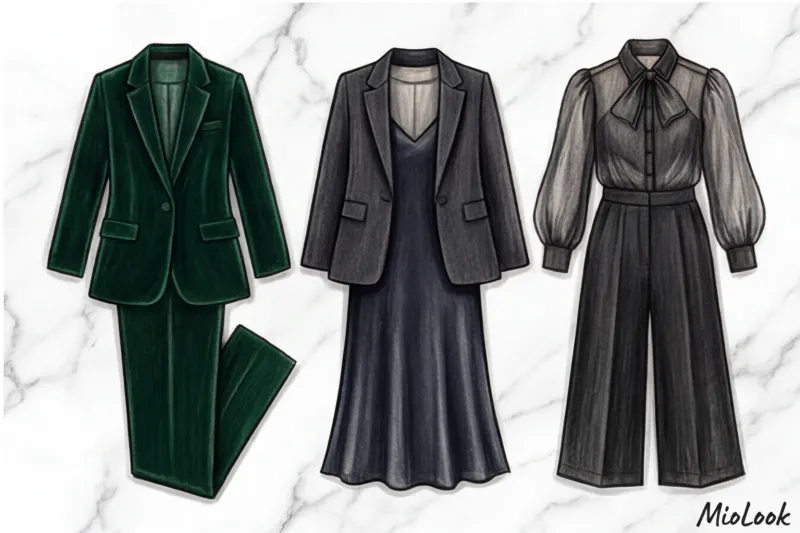
Fabric Science: What Looks Expensive and Lasts Longer
As a textile specialist, I always teach my clients to "read" things with their hands. Around 80% of an outfit's status is perceived by others through the quality of its texture.
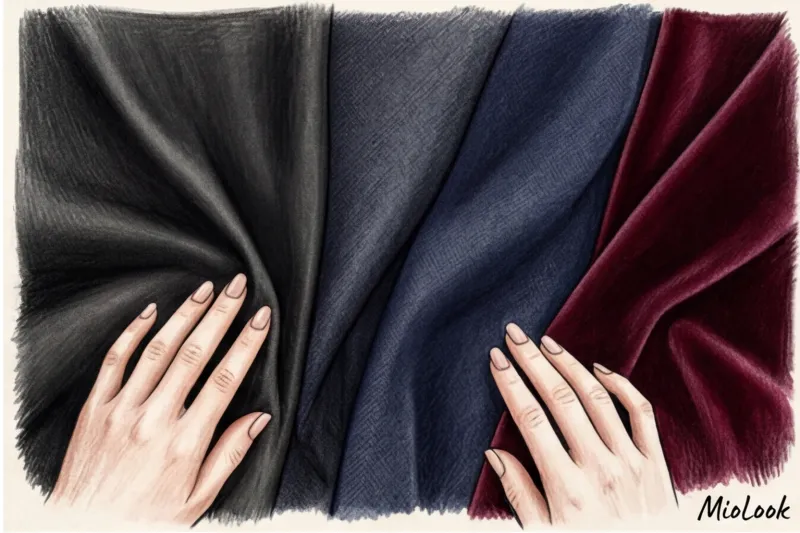
In the store, do a simple tactile test. Squeeze the edge of the fabric in your fist for 10 seconds. If it's covered in small, sharp creases (as often happens with cheap viscose or pure linen), you'll look rumpled by the end of the party. Assess the weight of the item: high-quality cupra, matte silk, or wool crepe always feel pleasantly heavy in your hand.
Pay special attention to velvet. The difference between synthetic and natural materials is colossal. Cheap polyester velvet has a glassy sheen and is incredibly staticky. Viscose or cotton velvet absorbs light, creating incredible depth of color, and falls in heavy, luxurious folds.
By choosing high-tech fibers (lyocell, tencel, or dense cupra), you're not only investing in your appearance, but also making a choice in favor of the environment, reducing the mountains of single-use fast-fashion waste.
Cost Per Wear (CPW): The Math of Evening Wardrobe
It's time to talk about money. Many people think buying an expensive suit for a special occasion is a luxury. Let's calculate the cost per wear.
Let's say you bought a trendy dress at a high-street store for €100. You wore it to a corporate event once. The final price is €100. Next year, it's no longer fashionable, and your colleagues will remember it.
Now let's take a premium evening suit (pants and jacket) for €400. You wear the entire suit to New Year's, then the jacket and jeans to an exhibition, and the pants and a silk blouse to a friend's birthday party. Over the course of a year, you've worn the suit elements 12 times. The cost per outfit is only €33.
Wearing the same high-quality basics to different events, changing only the accessories, is a sign of aristocracy and self-awareness. To avoid emotional shopping before the holidays, I recommend my clients use wardrobe analytics feature in the MioLook app AI helps digitize your closet and immediately shows you what new items can be integrated with.
Your perfect look starts here
Join thousands of users who look flawless every day with MioLook. Digitize your wardrobe in minutes.
Get access — €0.99 onceAdapting to the dress code: from a restaurant to a country club
Every December, I see the same thing: due to a lack of understanding of the dress code, women look either too casual or inappropriately dressed up. Let's look at three main scenarios.
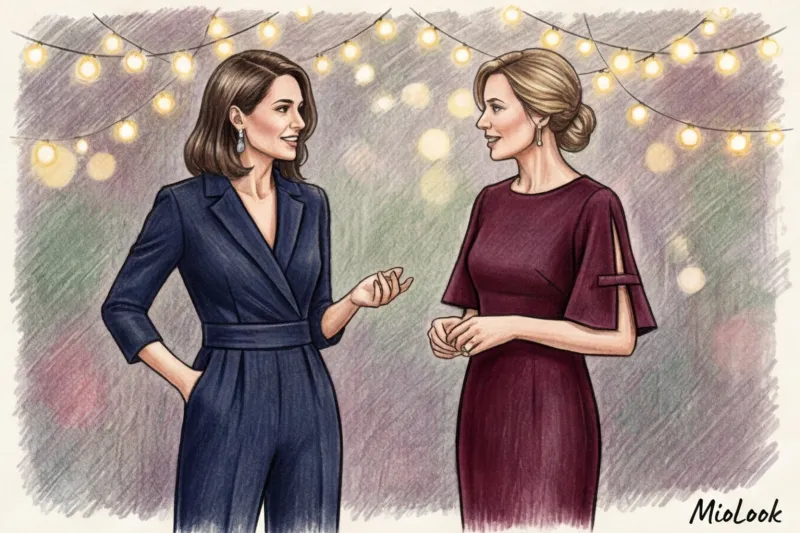
- Black Tie Optional (restaurant, gala dinner): Maxi lengths, tuxedos, and rich textures are appropriate here. A basic look can be elevated to a more formal look with chunky jewelry (or high-quality costume jewelry) and evening shoes with thin heels.
- Cocktail (social party): A balance between formality and relaxation is required. A silk midi dress in a sophisticated shade would be ideal. By the way, if you Dramatic straight type , it is in the cocktail format that you can luxuriously play up asymmetry and large-scale details.
- Festive Casual (office or loft): The main rule is to avoid looking too much. Wearing a floor-length dress to a boardroom buffet table will make you feel uncomfortable. Mix and match: a dressy top (a sequin blouse or silk top) and a relaxed bottom (wide-leg jeans or basic trousers).
Accessories That Change Everything: A Stylist's Checklist
A formal business suit can become an evening one in three minutes if you change your accessories wisely.
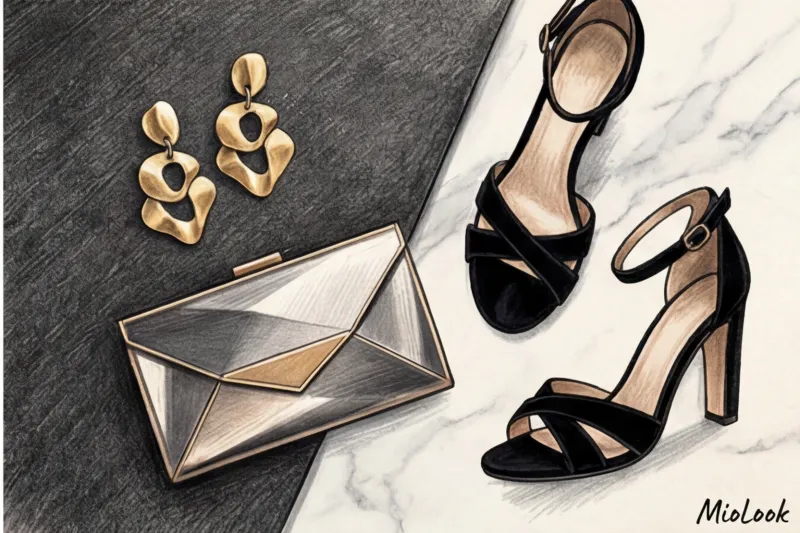
- Shoes: Ditch the boring black office pumps. Opt for statement shoes: colored velvet pumps, metallic sandals, or sculpted heels.
- Bag: Soft, everyday shoppers and bucket bags can ruin an evening look. You need a more formal shape—a geometric clutch or a micro-bag with a short handle.
- Decorations: Forget outdated sets like "ring-earring-pendant" all in one set. Modern geometric designs, chunky chains, or large, sculptural mono-earrings are trending today.
- Beauty look: Avoid those "concrete" curls covered in hairspray. A sleek, prim style (like a low bun) or a light, flowing mess will create a modern look.
Anti-trends and common mistakes: what to avoid at 40+
Finally, let's talk about what can ruin even the most expensive item. There are certain markers that are best avoided if you want to look elegant.
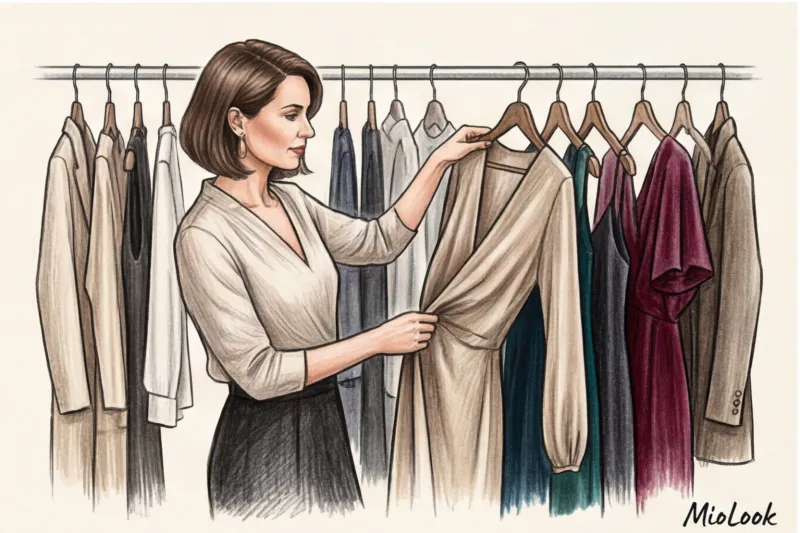
- Thin, flimsy knitwear. It doesn't hold its shape, stretches at the elbows, and treacherously emphasizes the contours of your underwear. Replace it with dense fabrics containing viscose and elastane.
- Small, indistinct print. Millefleur (small floral print) or aggressive leopard print rarely look classy in evening light. Opt for monochrome in deep shades: emerald, wine, rich chocolate, or deep sapphire.
- Styles that are too tight. The lack of "air" between the body and the clothing kills elegance. Airiness in the cut is what makes a woman appear slimmer and more free.
- Tights with lurex or glitter. Matte mattes only! Either ultra-thin invisible mattes (8–15 denier) or thick black mattes (60 denier and higher), depending on your footwear and overall look.
Important clarification: The rule about dense, heavy fabrics has its exceptions. If you're shorter than 160 cm, velvet that's too heavy can visually weigh you down. In this case, it's better to choose flowing crepe de chine or medium-weight silk.
Creating an elegant look for a corporate event isn't about chasing disposable trends, but rather investing in your own comfort and confidence. The secret to a perfect outfit is that you can breathe freely, dance, and not worry about how you fit or the fabric. Choose quality, emphasize the architectural cut, and you'll be the star of any evening.