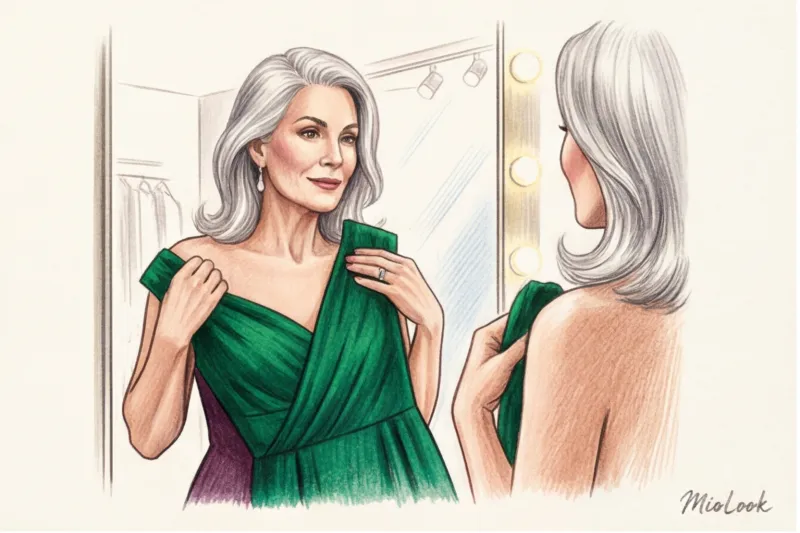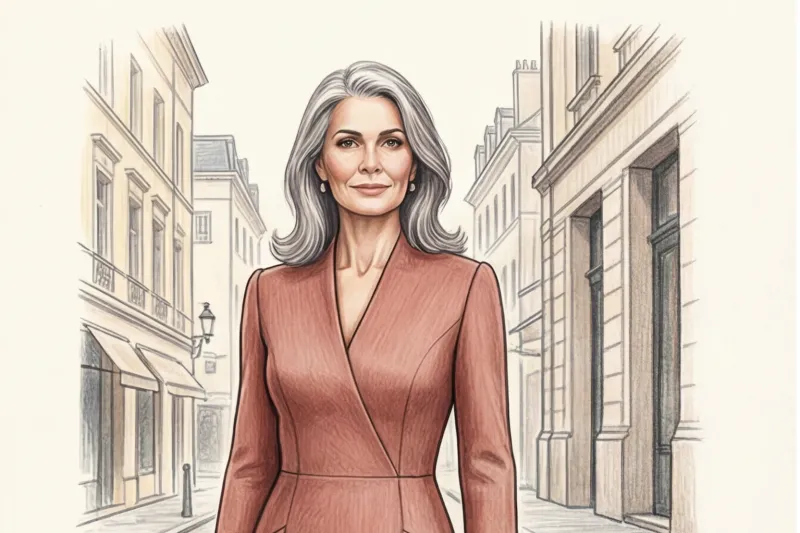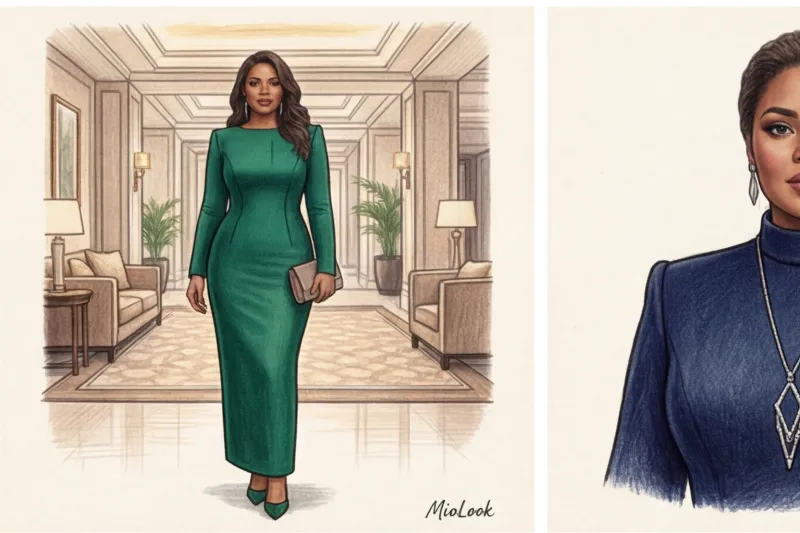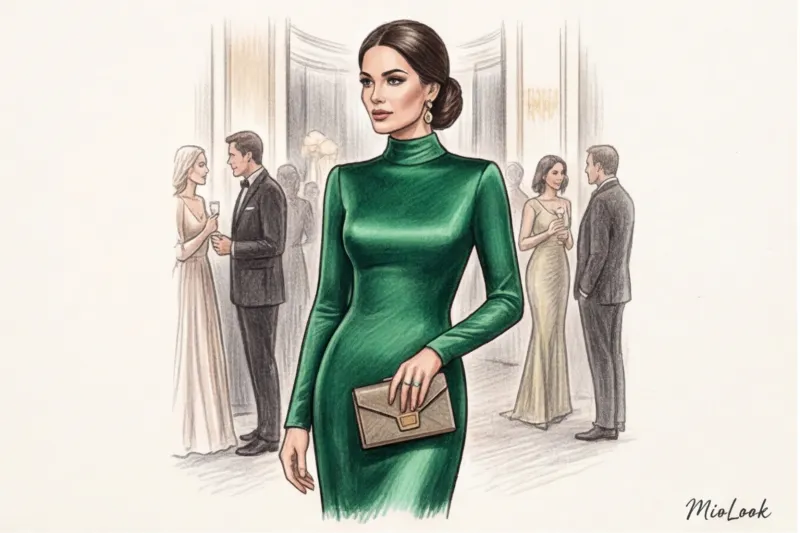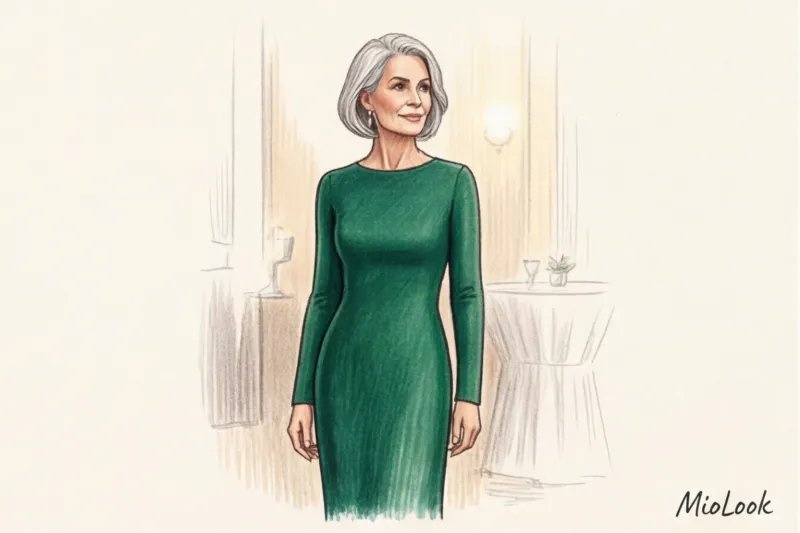
When we were getting 55-year-old Irina, a partner at a major law firm, ready for a prestigious industry awards ceremony, she brought an armful of dresses with plunging necklines and high slits into the fitting room. "Olena, I need to show that I'm still in great shape," she declared categorically. I offered her the complete opposite: a completely closed cape dress in a dark chocolate shade. No rhinestones, no skin exposed—only heavy, flowing silk. At the gala, Irina looked more classy than all the ladies in attendance, clad in guipure and sequins. Why? Because today, elegant, high-necked dresses for women over 50 aren't about excessive modesty or an attempt to hide the signs of aging. They're a powerful statement of self-confidence.
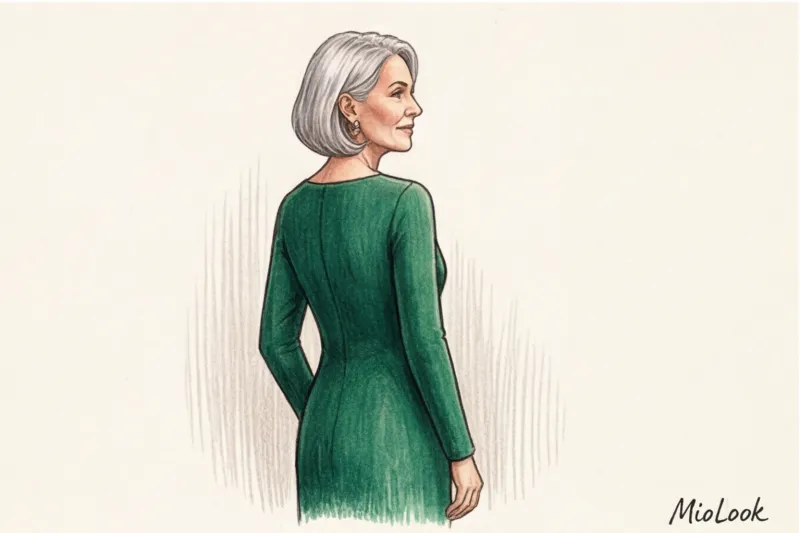
We talked about this phenomenon in more detail in our complete guide. Evening Dresses: A Symbol of New Luxury In this article, we'll explore the architecture of closed-cut tailoring: how to choose fabrics, avoid outdated stereotypes, and use clothing as a tool for "quiet luxury."
New Luxury: Why Elegant, High-Length Dresses for Women in Their 50s Have Become a Status Symbol
Evening fashion is undergoing a tectonic shift. The era when the status of an outfit was measured by the amount of skin revealed is finally a thing of the past. It has been replaced by the aesthetics of Modest Fashion. According to a global report by McKinsey & Company (2024), the premium, covered-up clothing segment has grown by 35% over the past three years, with socialite women over 45 being the main drivers of this growth.
Over 14 years as a stylist, I've clearly seen how demand has changed. My clients over 50 no longer want to prove anything to anyone. They embrace intrigue and grandeur. A high-necked dress works as a brilliant architectural tool: without distractions like a low neckline or a miniskirt, the impeccable cut, the quality of the fabric, and your regal posture take center stage.
Brands like The Row, Taller Marmo, and Valentino have made high-necked maxi dresses their signature. This is a direct nod to the Old Money aesthetic, where discretion was always valued over revealing style. A well-tailored high-neck dress creates a strong vertical line that elongates the silhouette and draws attention to your face rather than your figure.
The Biggest Style Mistake: Why Stoles and Boleros Make You Look Older
The most harmful style advice, still circulating on forums, is: "If you're wearing a revealing dress, just throw on a stole, a chiffon scarf, or a lace bolero to cover your arms." Remember: this is a disastrous mistake that instantly adds 10 years to your age and turns an expensive look into a provincial one.
Every season, I ruthlessly banish those sheer "capes" from my clients' wardrobes. They break up the silhouette with horizontal lines, draw attention to the exact area you were trying to hide (the widest part of the forearm), and cheapen any fabric. We once swapped out the usual "strap dress + shawl" combo for a one-piece dress with cape sleeves for the groom's mother at a wedding. The result? She received more compliments than the bridesmaids.
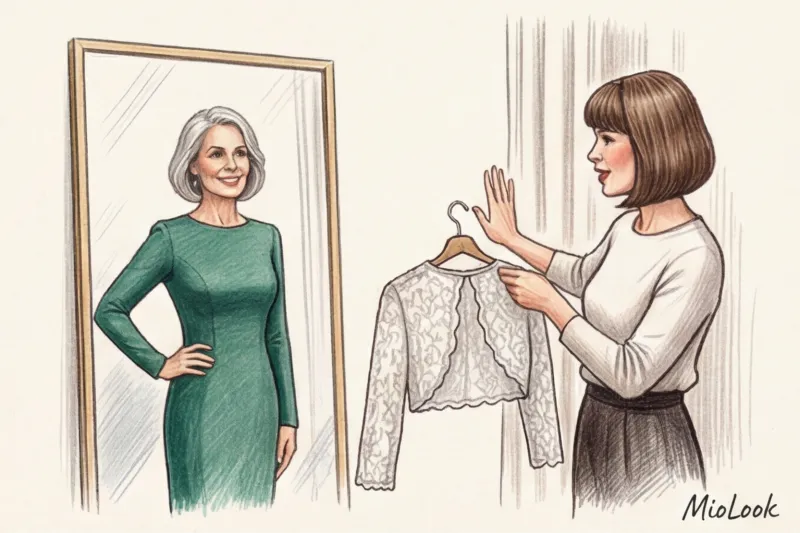
The rule of self-sufficiency dictates that the ideal elegant, high-neck dress should have built-in, well-designed sleeves. Which options work flawlessly?
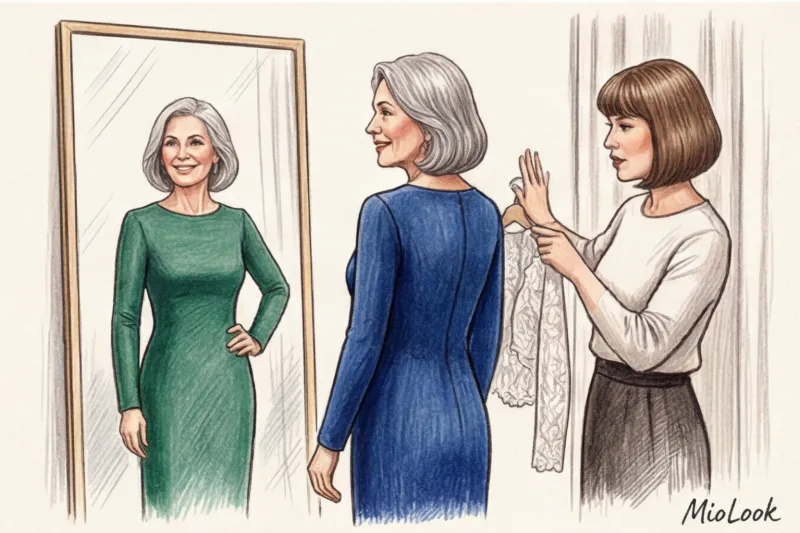
- Bishop sleeve: A voluminous sleeve gathered at a narrow, high cuff creates a beautiful drape and adds a bohemian chic touch.
- Structured shoulder: A defined shoulder line (often with minimalist shoulder pads) and straight, long sleeves balance out the hips.
- Heavy Fabric Bat: Works only in dense, flowing materials, creating an elegant drapery without excess volume.
Access to MioLook for €0.99 — one-time payment
A smart AI stylist will select the perfect look based on your proportions and preferences.
Get access — €0.99 onceCut Architecture: 4 Styles of Closed Dresses That Shape the Figure
After 50, it's important to create a clear silhouette. Shapeless robes won't hide extra pounds; they'll make your figure look bulky. Strong vertical lines and a sculpted cut are your best allies.
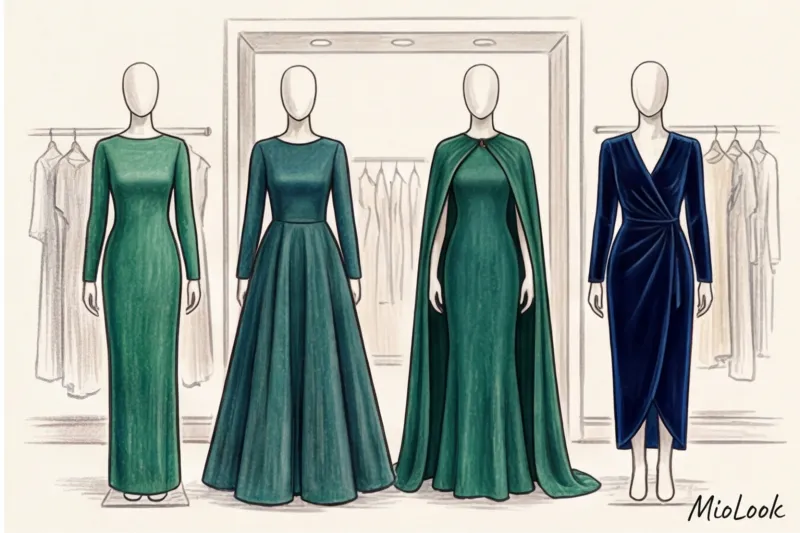
Column dress made of thick fabric
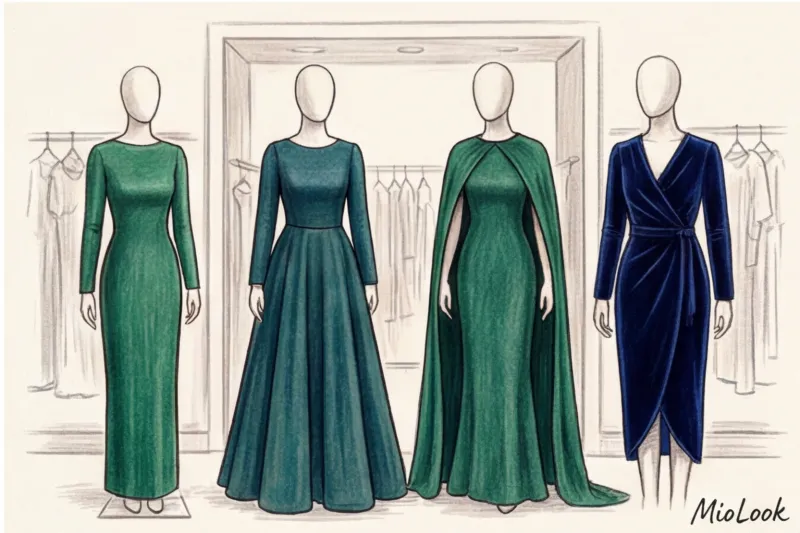
This style is a lifesaver for rectangle and hourglass figures. The column dress creates a continuous vertical line, visually elongating the height. However, there is an important limitation: doesn't work If the fabric is too thin or the cut is too clingy, a semi-fitted silhouette is essential. There should be air between you and the dress (at least 2-3 cm of ease). Only then will it conceal your stomach and accentuate your figure.
Evening dress with a cape
An absolute favorite among royals—from Meghan Markle to Queen Letizia—the cape accomplishes two stylistic goals at once: it looks incredibly formal thanks to the train that trails behind the shoulders, while elegantly covering the arms and back. This style is universal and suits any figure type, as it shifts the focus to the majestic shoulder line and the portrait area.
A-line silhouette with a clear shoulder line
A classic solution for the pear-shaped figure (lower body type). A wide, flared, floor-length skirt made of heavy fabric conceals the fullness of the hips. The most important nuance: To avoid a triangle-shaped figure, you need a clear, geometric shoulder line. Small shoulder pads are essential—they'll balance out a voluminous bottom. Avoid thin knits in favor of shape-supporting materials like taffeta or heavy crepe.
Structured wrap maxi dress
Please don't confuse this option with summer floral tea dresses. These are elegant evening styles made of silk velvet or heavy cady. The wrap creates a beautiful diagonal line that visually cinch the waist without the stifling corsetry. If a deep V-neckline bothers you, choose styles with a hidden button at the chest or wear a matching silk top underneath.
Matter comes first: what should a 50-year-old woman invest in?
The cardinal rule of evening wear: the more coverage your dress offers, the more luxurious and complex its texture should be. Since you're stripping the look of the intrigue of the naked body, that intrigue should be transferred to the quality of the fabric.
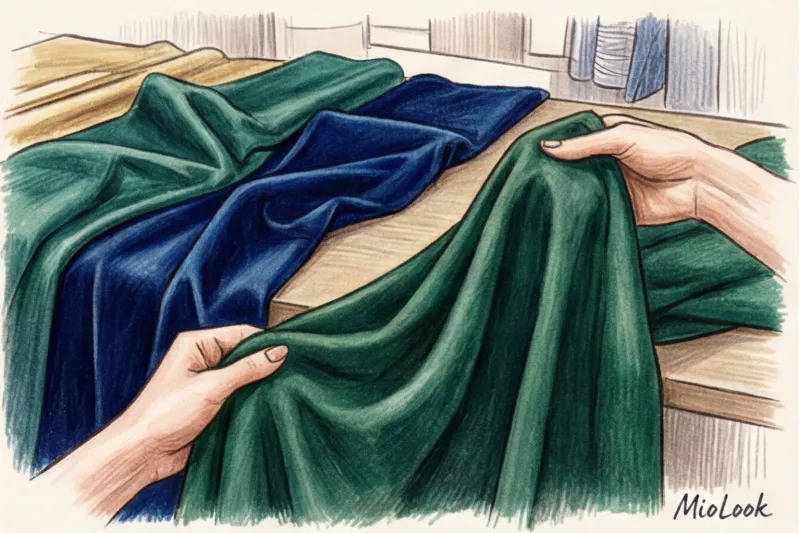
Invest in your favorite fabrics. In the premium segment (usually in the €250–€600 range), look for matte cady crepe—it holds its shape perfectly and doesn't wrinkle. Silk velvet absorbs light and deepens any shade, while taffeta creates that signature "architectural" effect.
If you choose silk, pay attention to its density. The minimum standard for a high-status evening dress is silk with a density of at least 30-40 momme. Thin linen silk (16-19 momme) is not suitable for a full-length evening gown—it will look like a nightgown and highlight the slightest unevenness in the underwear.
How do you check fabric before buying? I always teach my clients to do the "wrinkle test." Pinch the edge of the dress (preferably the hem) in your fist, hold it for 10 seconds, and then release. If the fabric is wrinkled, leave the dress in the store. An evening event typically involves sitting at a table or in the theater stalls. Leaving your dress with a wrinkled skirt will ruin the entire look.
Traitorous fabrics to avoid at all costs: thin, shiny satin (which accentuates every fold of the body), cheap synthetic lace, and thin stretch guipure. They have nothing in common with modern elegance.
Your perfect look starts here
Join thousands of women who look flawless every day with tips from the MioLook virtual stylist.
Get access — €0.99 onceColor as a Statement: How to Avoid the 'Granny Chest' Effect
Elegant, high-necked dresses for women over 50 require special care with prints. Avoid small florals, paisley prints, and, most importantly, intricate rhinestone and bead embroidery on sheer mesh. These elements are reminiscent of ballroom dance costumes from decades past. A refined monochrome is your choice.
The PANTONE Color Institute regularly notes that deep gemstone hues are perceived by the human eye as the most "precious." Choose deep emerald, sapphire, burgundy, dark chocolate, or rich graphite. If you're unsure which palette will refresh you, I recommend exploring 12 Color Types of Appearance: A Guide to Choosing a Palette.
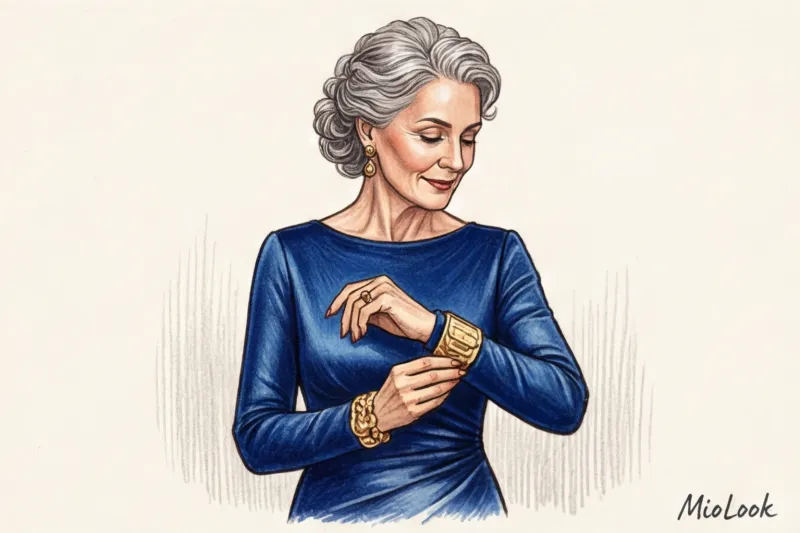
What about classic black? Total black after 50 often works against us—matte black fabric close to the face highlights shadows, wrinkles, and signs of fatigue. If you're not ready to give up black, follow two rules. First, choose fabric with a subtle satin sheen (it will illuminate the face). Second, refreshing makeup with an accent of blush is a must. The ideal alternative to black is Midnight Blue (a deep, jet-black shade), which looks softer but no less formal.
Stylist checklist: inspecting a smart, high-neck dress before buying
Even the most stunning dress on the hanger can fail in real life. Save this checklist of insights I give my clients before they go shopping on their own.
- Test in motion: Raise your arms as if you were reaching for a glass. Is the armhole tight? Sit on a pouf in the fitting room. Is the fabric too tight around your hips? A high-necked dress should offer some freedom.
- Light test: Stand with your back to a window or the brightest light source. If the outline of your legs shows through the fabric of your skirt, return it to the hanger. This is unacceptable for a high-status wardrobe.
- Underwear test: It's a misconception that a high-necked dress will hide the seams of your underwear. Smooth, dense fabrics require only smooth, laser-cut seamless underwear. Any lace on your bra will show through in relief.
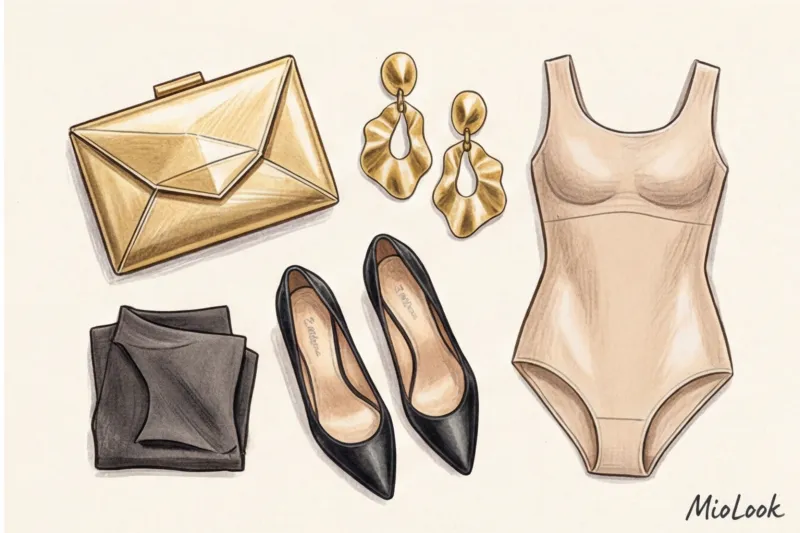
And finally, styling. A minimalist, high-necked dress is the perfect canvas for large, architectural jewelry. Instead of delicate chains, wear a chunky mono earring or a wide cuff bracelet right over the long sleeve of your dress. This styling trick is a favorite among fashion house creative directors: it demonstrates that you know the rules of the game, but know how to break them gracefully.
Elegance at 50+ doesn't mean boredom. A high-necked evening dress is your personal architectural project, where the quality of the fabric, clean lines, and your individuality reign supreme. Choose thick silk, avoid cheap lace, and remember: a truly prestigious woman doesn't need to expose her body for attention.