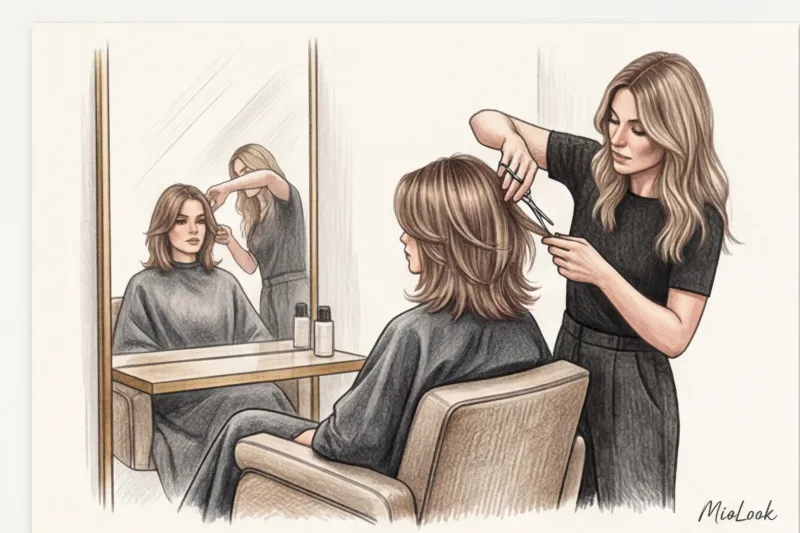
Over my 12 years as a stylist, I've witnessed the same paradoxical scene dozens of times backstage at Paris Fashion Week. A team of three top hairstylists can labor painstakingly for 40 minutes, measuring every millimeter of volume, to ultimately create the "I just washed my hair and went to bed" effect on a model's head. Ideal French hair styling This isn't the result of laziness. It's an expensive, mathematically calculated illusion that begins with an architectural haircut and premium scalp care, not with a haphazard spraying of hairspray.
We talked about the origins of this phenomenon in more detail in our The Complete Guide to French Clothing Style: Secrets of Parisian Women But while you can simply buy a wardrobe, you'll need to develop a completely different relationship with your hair. Forget the glossy advice of the 2000s about tight backcombing. Today, we'll explore the anatomy of true Parisian casualness.
The Anatomy of Sloppiness: Why the "French Hairdo" Is an Expensive Illusion
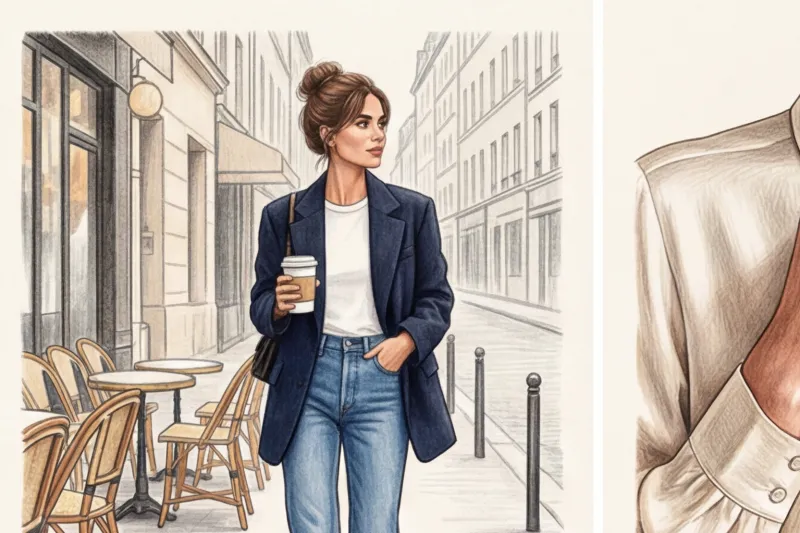
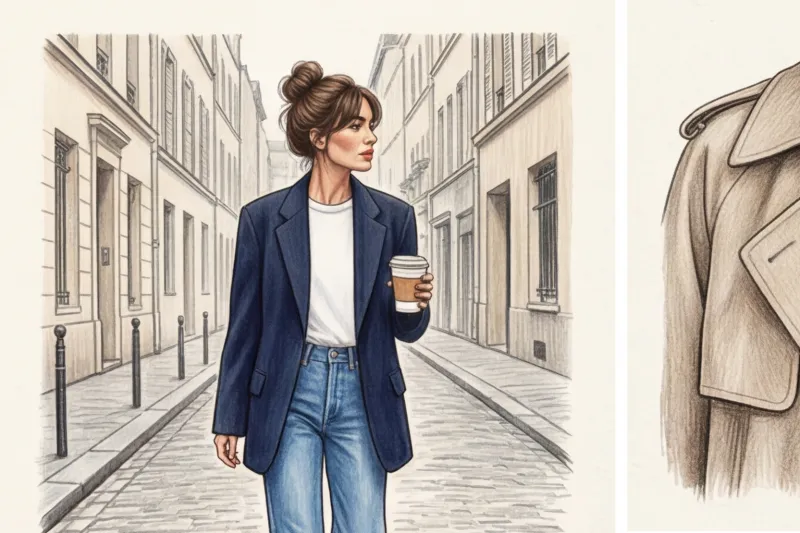
If you want to understand what real French hair looks like, turn off the TV series "Emily in Paris" with its perfect, curled Hollywood locks. Take a stroll through Paris's 11th arrondissement or pop into a café in the Marais. You'll see vibrant, bouncy strands that seem to have a life of their own, yet somehow mystically frame the face perfectly.
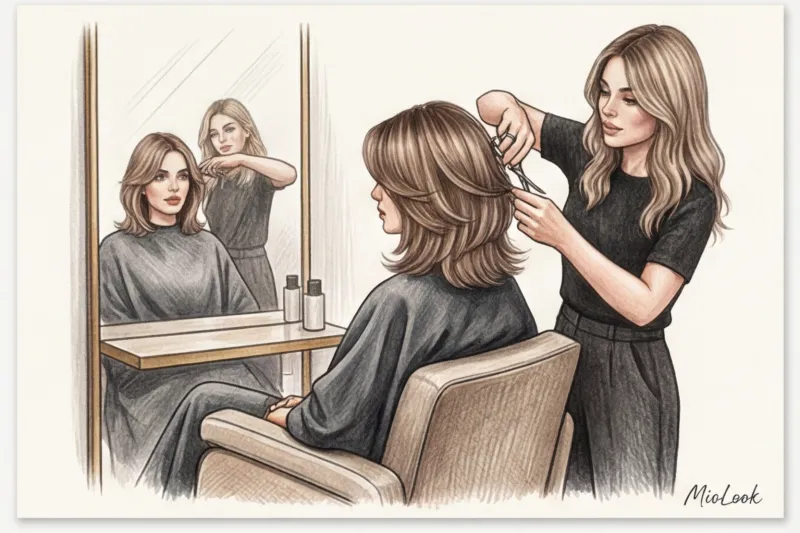
Concept effortless chic Effortless chic has nothing to do with unkemptness. It's the result of a well-laid foundation. In my experience, when I spoke with leading hairstylists in Parisian salons, I noticed their main trick: they often cut hair "dry." The hairstylist observes how the strand falls naturally, where the cowlick is, and how the hair reacts to the way you turn your head.
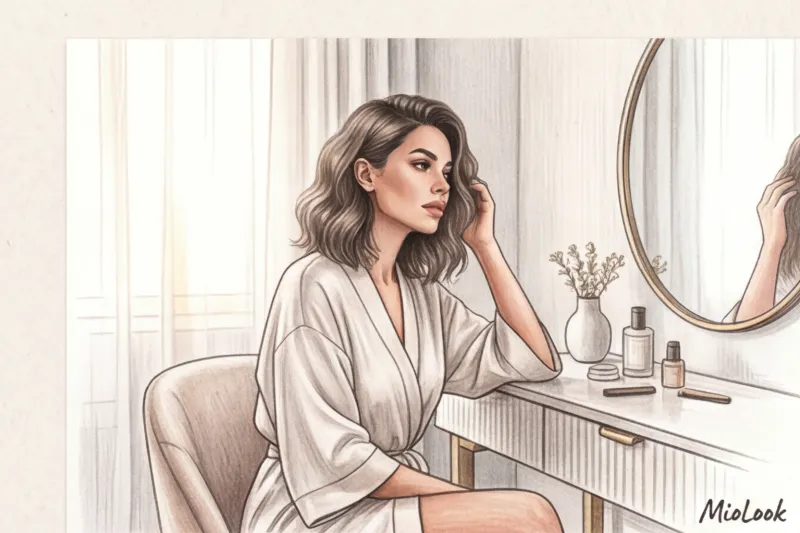
If the shape is tailored to your natural texture, your hair will look flawless even after you sleep. You invest time and money in a professional's chair once every two months, so you can spend no more than 5 minutes getting ready each morning.
Access to MioLook for €0.99 — one-time payment
A smart AI stylist will select the perfect look based on your new haircut.
Get access — €0.99 onceThe Parisian woman's top secret: invest in grooming, not styling.
In French style philosophy, healthy, shiny hair is as much a status symbol as a Hermès bag or a Cartier watch. You may be wearing a simple white T-shirt and vintage jeans, but the quality of your hair will reveal the level of self-care you've taken.
"The secret to Parisian chic is hair that a man wants to touch without fear of getting his hands dirty with sticky styling product," is how iconic French stylist David Mallett describes his philosophy.
The numbers speak for themselves. According to sales analytics from French pharmacies for 2023, dry shampoos (such as the classic Klorane with oat milk) and premium nourishing oils like Leonor Greyl are breaking all records. Meanwhile, strong hold hairsprays are purchased eight times less frequently. Parisians prefer products that dissolve into the hair, leaving only texture and fragrance.
Pharmacy Minimalism: What's Really Worth Having on Your Bathroom Shelf
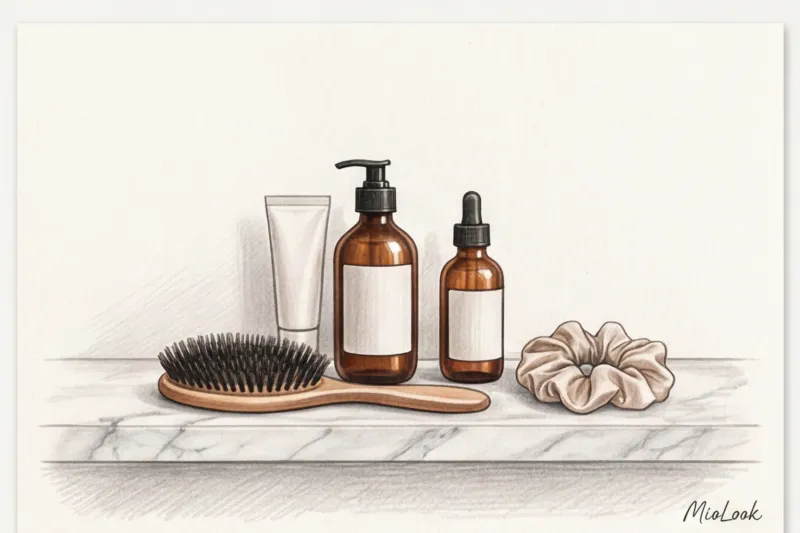
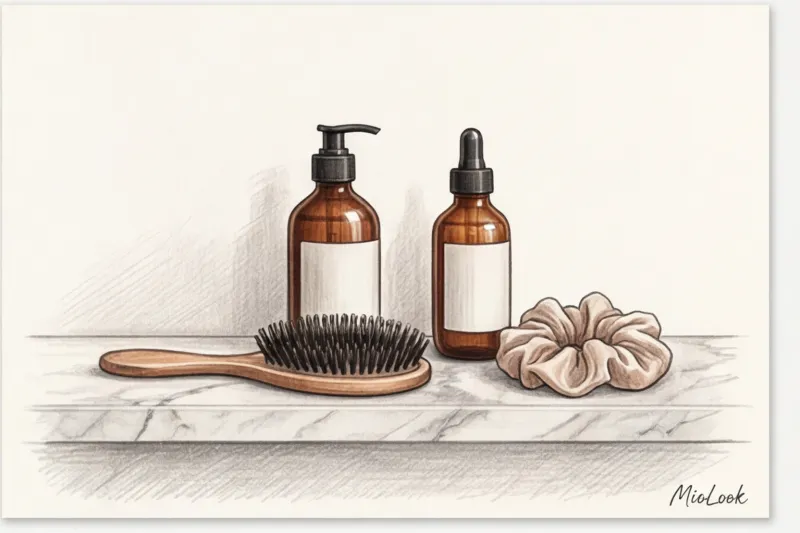
To replicate this approach, you don't need a battery of twenty bottles. Three carefully selected products (in the mid-price range, €35 to €60 per item) are sufficient:
- Scalp scrub: Cleanses pores and provides that natural, airy root volume without the use of harsh foams.
- Dry shampoo: French women apply it to clean hair! It's a genius trick for creating a matte texture and body, preventing strands from falling apart like baby fluff.
- Light oil for ends: Protects the cut and slightly weighs down the ends, preventing the "dandelion" effect, but without sticking them together into icicles.
Basic Haircuts for the Perfect French Hairstyle
No texturizing spray will save you if you've been given a straight-line cut. A straight, blunt cut is geometrically beautiful, but it's static. A French cut requires movement.
When explaining the task to your stylist, ask them to avoid straight cuts with clippers. The stylist should use a point cutting technique—a precise cut with the tips of the scissors at an angle. This creates invisible layers within the hair mass. However, there is an important limitation: This approach absolutely does NOT work on heavily bleached, thinning hair. A ragged edge will make damaged ends appear even more sparse.
Your perfect look starts here
Join thousands of users who look flawless every day with MioLook.
Get access — €0.99 onceFrench Bob and the Jawline Rule
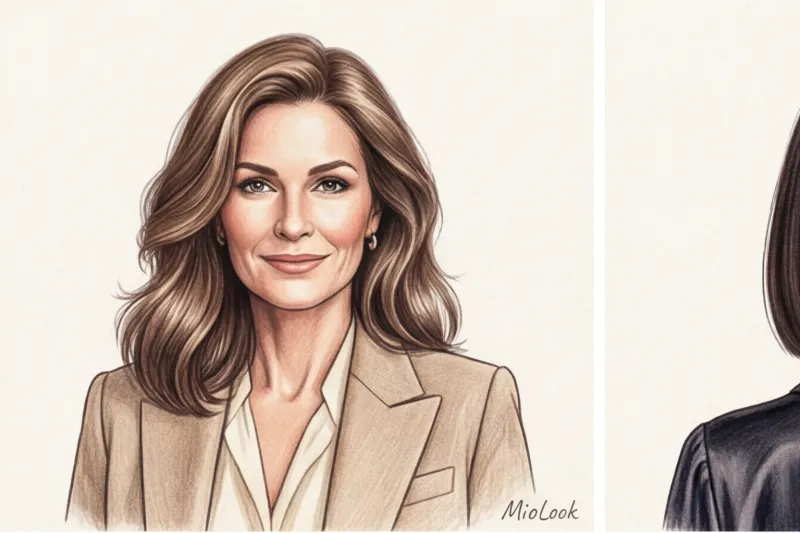
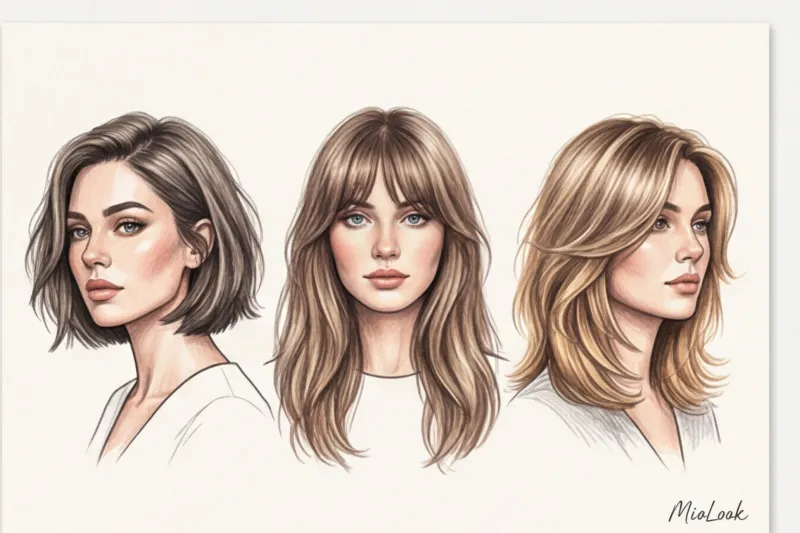
The classic French bob is cut precisely at the lip or chin line. This length exposes the neck, visually lengthening the silhouette and emphasizing the collarbones. Slightly uneven ends allow the hair to curl slightly inward or outward, depending on the fit of your trench coat collar. If you're unsure about the length, I recommend checking out our article about rejuvenating bob and its styling rules.
Curtain bangs: geometric cuts in the style of Jane Birkin
The biggest mistake when cutting bangs is a blunt angle. A proper "curtain" is cut at a 45-degree angle from the center of the forehead to the cheekbones. This angle ensures a smooth transition from the bangs to the rest of the hair, completely eliminating the risk of a heavy "helmet" on the head.
Step-by-step instructions: how to create a stylish, casual look at home
It's time to bust the biggest beauty myth. Many believe that a French blow-dry is achieved without a hairdryer: wash your hair, go to bed with wet hair, and wake up looking like a goddess. The reality is harsh: for 90% of European-type women, air-drying results in a frizzy, messy look, not chic.
Here's how we create this effect on set:
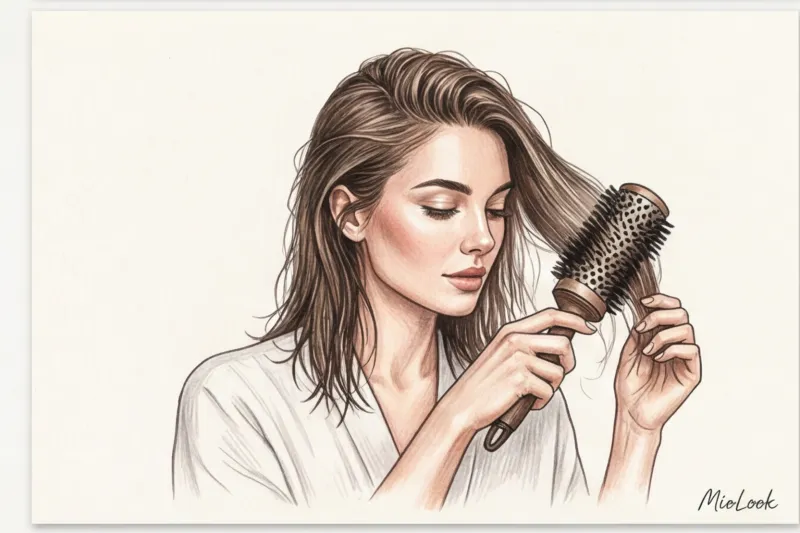
- Step 1: Drying the roots. We tilt our head down and dry only the roots with warm air, running our fingers through them. This directs the hair follicles upward, creating volume.
- Step 2: Polish the length. Yes, it's a paradox! First, we pull out the main length with a large brush. We need to close the hair cuticle to create a rich, healthy shine.
- Step 3: Controlled destruction. Once the hair is perfectly dry and shiny, we use a texturizing spray with sea salt (or dry shampoo). We spray it from a distance of 20 cm, ask the model to vigorously shake her head, and mercilessly "break" the perfect shape with our fingers, scrunching the strands.
What to Avoid: Mistakes That Show You're Trying Too Hard
Nothing kills French charm like obvious effort. Your hair shouldn't look like you spent three hours in the stylist's chair before heading out for a croissant.
What shows effort:
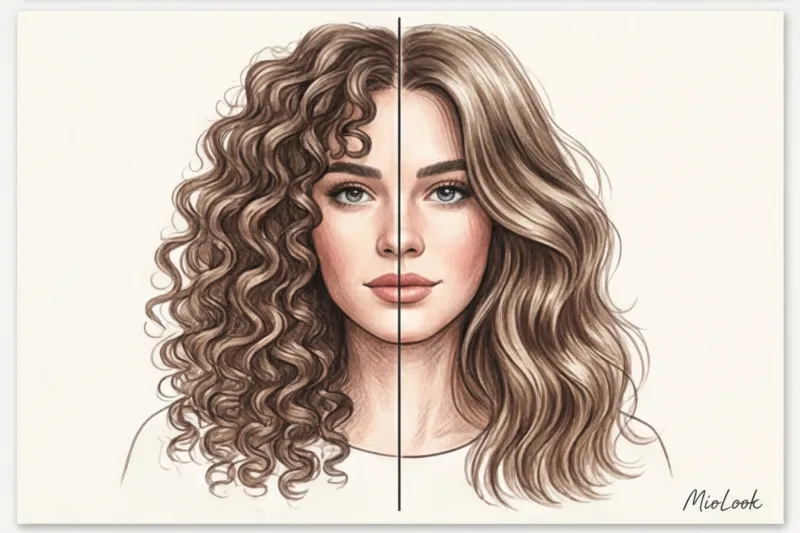
- Perfect symmetrical curls with a curling iron. If you use a styler, curl the strands in a random order (one away from the face, the other towards the face) and be sure to leave the ends (the last 3-4 cm) straight.
- Hard straight parting. A parting made with a ponytail comb along a ruler looks unnatural. Parisian women prefer a "floating" or zigzag parting that falls apart naturally.
- Monolithicity. If your hair stays still when a gust of wind hits it, you've used too much hairspray.
There's also a subtle psychological aspect here. An overly slick, rigid hairstyle creates distance between you and your conversation partner. A slightly casual look, on the other hand, conveys confidence and inspires trust.
French Hairstyles for the Office: How to Pair with a Strict Dress Code
Adapting casualness to a business environment is a challenge, but the result looks incredibly classy. The key here is the law of contrasts.
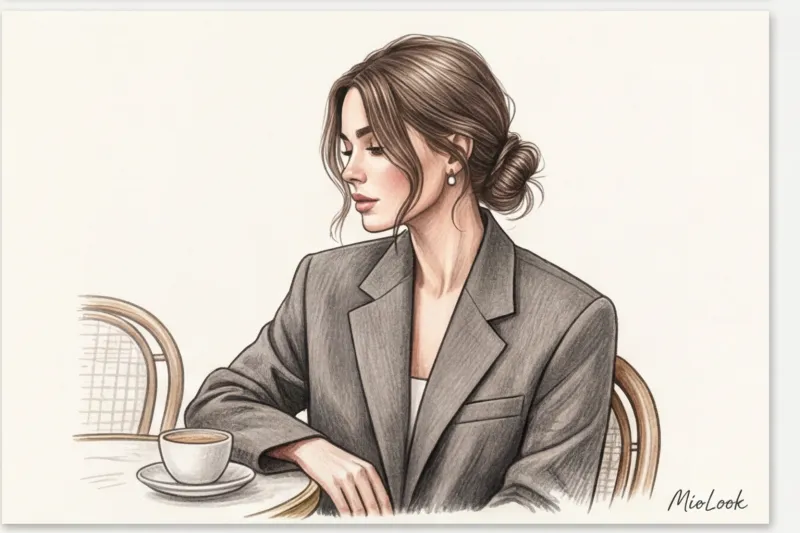
One of my clients is a top manager at an IT company with a casual dress code. She needed to look authoritative but not stiff. We found the perfect formula: while the outfit had a structured look (an oversized wool jacket, pleated palazzo pants), the hair needed to be relaxed. This contrast between the strict textures and the hair's lively texture adds a touch of luxury.
A low, messy chignon is perfect for the office. Gather your hair at the nape of your neck without a comb (just use your fingers), secure with bobby pins, and be sure to leave a few wispy strands out around your face.
By the way, in the app MioLook The smart stylist algorithm takes this balance principle into account. After uploading your business wardrobe, you'll see how the system recommends softening the architectural cut of a suit with soft, textured styling.
Stylist's Resume: Your Action Plan for Tomorrow
French style doesn't start with mindlessly copying social media trends, but with embracing your natural beauty. If you have naturally straight and heavy hair, don't try to curl it into a frizzy frizz. Accentuate its smoothness with the right cut and add texture with dry shampoo at the roots.
Your checklist for the coming week:
- Inspection of the shelf in the bathroom. Ditch the sticky mousses and extra-strong hold hairsprays. Instead, stick to a quality shampoo, a hydrating mask, a scalp scrub, and a texturizing spray.
- Conversation with the master. On your next salon visit, ask for a point cut instead of a straight cut to lighten the ends.
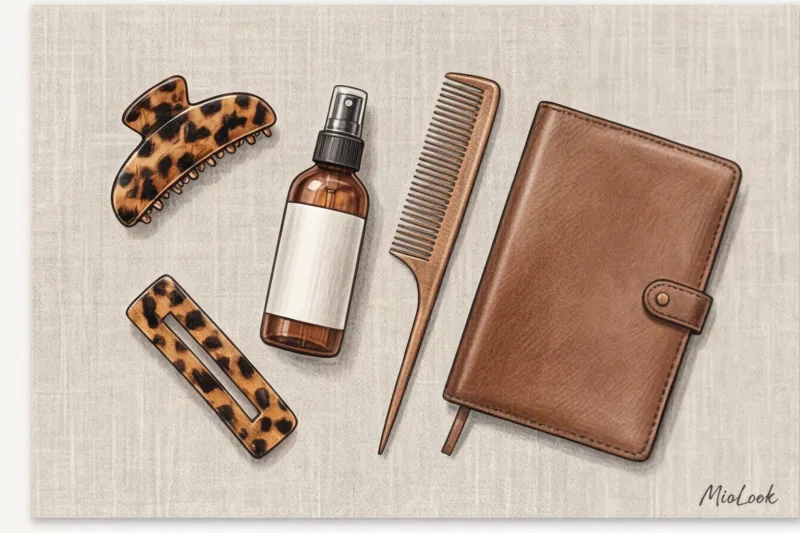
- Tool change. Invest in a good, large comb made of natural material and a claw clip (tortoiseshell or a basic shade) for creating quick, low buns. A quality acetate claw clip costs between €15 and €30, but it will last for years.
True chic is born when you become completely comfortable with yourself. A French updo is just a beautiful frame for your inner freedom. Allow your hair to move, breathe, and be alive—and you'll see how not only your reflection in the mirror changes, but also how others perceive you.