Last week, my client almost turned down a stunning €150 COS dress when she saw the dreaded word "lyocell" on the inside tag. "Sofia, I don't wear synthetics, I only look for natural fabrics," she declared categorically. And this is the most common misconception I encounter in my work as a stylist.
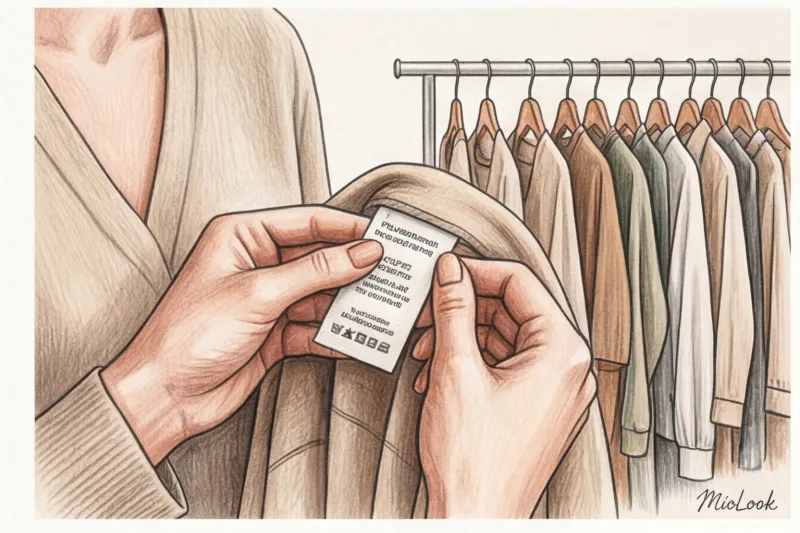
We're used to dividing the textile world into black and white: polyester is a petroleum-based evil, while cotton and silk are impeccable natural goods. But the reality of the modern textile industry is far more complex. Today, it's laboratory-grown fibers, created from renewable natural resources, that are saving our planet from environmental disaster, while also offering a whole new level of tactile luxury.
We have told you more about the history of the creation of these materials in our The complete guide to eco-friendly clothing fabrics: Tencel, modal, and lyocell Today, I invite you to look at them through the eyes of a technologist and stylist: why "artificial" no longer means "bad," and how cupra and tencel outperform traditional silk and cotton in everyday wear.
The Natural Myth: Why Cotton Is Giving Way to Innovation
Let's get our terminology straight. Synthetics (polyester, nylon, acrylic) are made from petroleum products. Natural fabrics (cotton, linen, wool) are grown in fields or on farms. Lyocell, Tencel, viscose, and cupra are... artificial fibers of cellulose origin Their base is completely natural (wood or cotton), but the transformation of this hard base into a soft thread occurs in the laboratory.
For years, marketers have been conditioned to look for the coveted "100% cotton" label on clothing labels. But the paradox is that regular cotton is one of the biggest environmental threats today. According to a report Textile Exchange Preferred Fiber & Materials Market Report (2023) It takes approximately 2,700 liters of fresh water to produce one cotton T-shirt. That's the amount an adult drinks in two and a half years. Add to that the depleted soil and harsh pesticides.
"We've reached a point where 100% organic cotton is a luxury the planet can no longer afford to the mass market in the same quantities. The future lies in innovations that take the best of nature but process it with mathematical precision."
That's why the real ones eco-friendly fabrics The new generation is the perfect compromise. They give us the breathability of cotton, the beauty of silk, and a minimal carbon footprint.
Access to MioLook for €0.99 — one-time payment
A smart AI stylist will select the perfect look based on your material preferences.
Get access — €0.99 onceTencel and Lyocell: How Wood is Transformed into Flowing Silk
Confusion often arises in stores: some brands write "lyocell," while others proudly list "Tencel™." The difference is simple: lyocell is the name of the fiber and the technology itself, while Tencel™ is a patented trademark of the Austrian company Lenzing Group, which has perfected this technology.
Tencel is made from eucalyptus wood. Why this? Eucalyptus forests grow incredibly quickly, require no artificial irrigation, and are pesticide-free. According to Lenzing itself, producing their fibers saves up to 95% water compared to traditional cotton cultivation.

The Secret of the Closed Loop
Tencel's main breakthrough lies in the chemistry of the process. To dissolve the hard wood and spin it into the finest thread, a solvent is needed. The production of cheap, older-generation viscose used toxic substances that were then discharged into water bodies.
In the case of Tencel, the technology used is closed loop (closed loop). A non-toxic organic solvent is used, and 99% of this substance is captured after the production cycle, purified, and reused. No toxic rivers near the factories. You get a fabric that feels like dense, heavy silk with a matte finish, knowing that no ecosystem was harmed in its creation.

Cupro: Vegan Silk Made from Cotton Waste
While Tencel is made from wood, cupra is a benchmark example of pre-consumer recycling (recycling waste before it becomes a product). Japanese corporation Asahi Kasei, which produces the world's best supra under the Bemberg™ brand, uses lint This is the finest cotton fluff that envelops the cotton seeds. Previously, it was simply discarded as unnecessary, as it was too short to spin into regular thread.
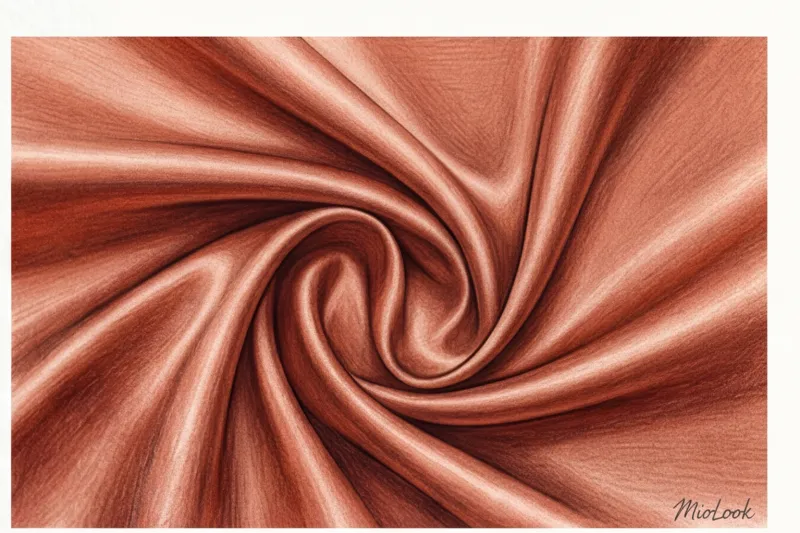
The Japanese have learned to dissolve this fluff and spin it into a continuous, smooth thread. The result is stunning. Visually and to the touch, cupra is indistinguishable from dense, washed silk, but without its capriciousness.
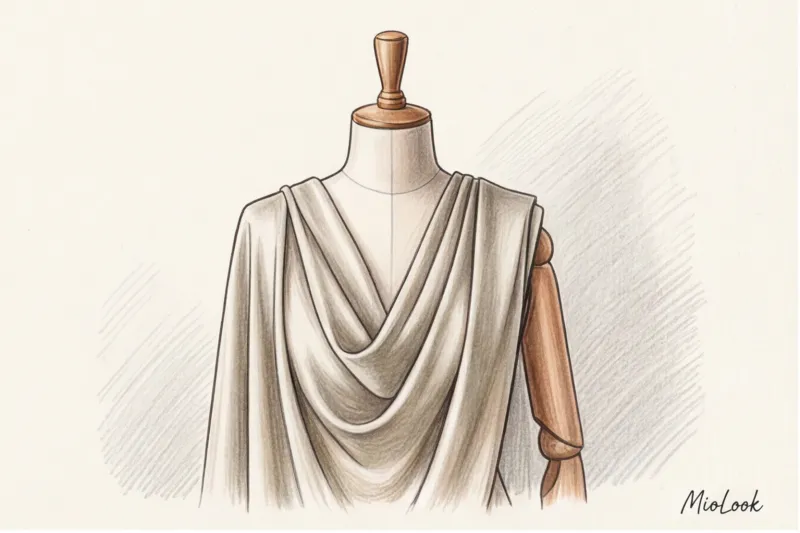
Over 12 years of working as a stylist, I've learned one rule: if you want to check the quality of an expensive Italian jacket, look at the lining. Premium brands (over €500 per jacket) never use polyester. They use supra. It glides over the body like water, doesn't static, and wicks away heat perfectly. In dresses, cupra provides that "heavy," classy drape that makes the figure look chiseled.
Eco-friendly fabrics in action: durability and tactile comfort
Let's move beyond theory and look at how these fabrics perform in a real wardrobe. After all, a garment's eco-friendliness is measured not only by its creation process but also by how long it lasts.
Two years ago, we conducted an experiment with a client: she bought two similar deep sapphire-colored blouses—one made of 100% natural silk (€280), the other of thick cupra (€130). After a year of heavy office wear and dry cleaning, the silk had begun to fray under the arms from deodorant, and micro-snags had appeared on the back. The cupra, on the other hand, looked like it had just been taken off the shelf.
Here are three less obvious benefits of new generation cellulose fibers:
- Abnormal hygroscopicity. Tencel absorbs moisture 50% more effectively than cotton and evaporates it instantly. On a hot July day, a lyocell dress will keep you cooler than a linen one.
- Resistance to pilling. Because the fiber is very long and smooth, cupra and high-quality Tencel practically do not form pellets in places of friction (for example, from a bag strap).
- Color depth. The structure of these fibers absorbs dye so deeply that even after 50 washes, a black Tencel dress will remain jet black, rather than turning dusty gray, as often happens with cotton.
Your perfect look starts here
Join thousands of users who look flawless every day and organize their wardrobe with MioLook.
Get access — €0.99 onceCare instructions: how to extend the life of modern materials
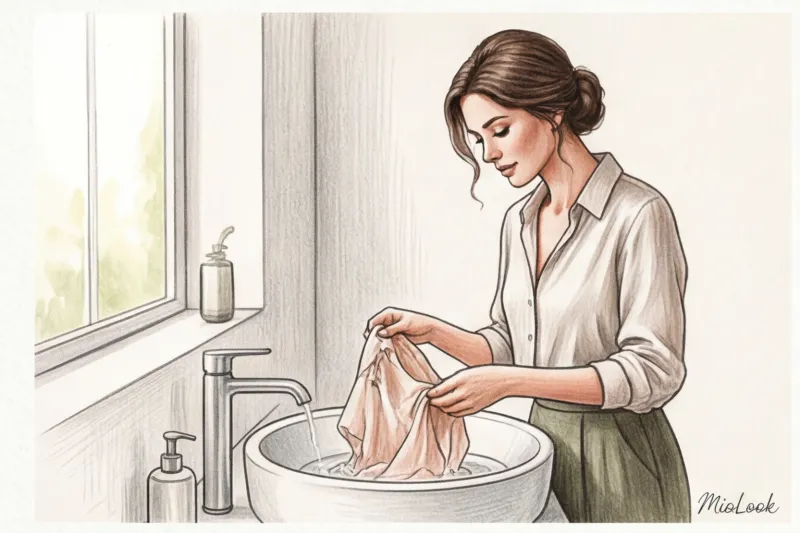
There's a myth that eco-friendly fabrics are difficult to care for. This isn't true, but they do have their own specific needs that you need to be aware of to avoid ruining your item after just one wash.
The main rule of Tencel: It shouldn't be rubbed aggressively when wet. When lyocell gets wet, its fibers become slightly stiffer. If you spot a stain and start scrubbing it vigorously by hand, the delicate silky sheen (the so-called peach effect) will be permanently lost, leaving a whitish fade. Machine wash on a delicate cycle at 30 degrees Celsius.
Rule for cupra: Be careful with wet-heat treatment (WHT). It's best to iron copper on the reverse side while it's slightly damp, or use a steamer. Pressing a hot iron onto a dry surface can leave unsightly shiny marks that are difficult to remove.
Greenwashing: How Brands Deceive Us on Labels
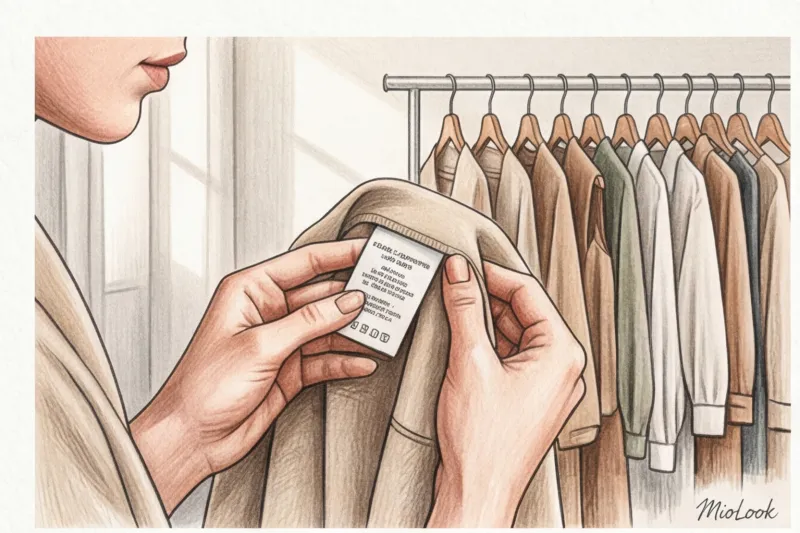
The popularity of sustainability has led to widespread greenwashing. Brands are slapping "Eco-friendly" and "Conscious" labels on everything. As a stylist, I teach my clients to read ingredient labels with a magnifying glass.
Firstly, the label "eco-friendly" means nothing without a certificate. Patented Austrian Tencel™, whose manufacturer reports on every drop of water, is one thing. But anonymous lyocell from an anonymous factory in Asia, where ancient forests may have been cleared to make way for eucalyptus plantations and the chemicals dumped into a river, is quite another.
Secondly, a favorite trick of mass-market brands in the €30–€80 range is the percentage game. You see a pretty green cardboard tag with the words "Contains eco-friendly lyocell." But when you look inside the side seam, you discover the ingredients: 85% polyester, 15% lyocell Remember: for the properties of cellulose fiber (thermoregulation, tactile softness) to be fully realized in a blended fabric, it must contain at least 30-40% of it. 10-15% is just marketing hype; you'll still sweat in polyester.
Checklist: Making Informed Choices When Buying Clothes
When building a smart capsule wardrobe, we're investing not just in clothes, but in our own comfort. To make your purchases truly mindful, keep this short checklist in mind:
- Look for proper names. Choose fabrics with patented names: Tencel™, Bemberg™ (for cupra), ECOVERO™ (eco-friendly viscose from Lenzing). This guarantees a transparent production cycle.
- Calculate the percentages. In blended options (for example, cotton + Tencel or wool + cupra), the proportion of eco-fiber should be significant—30% or more. The exception is elastane—2-5% is sufficient for a comfortable fit.
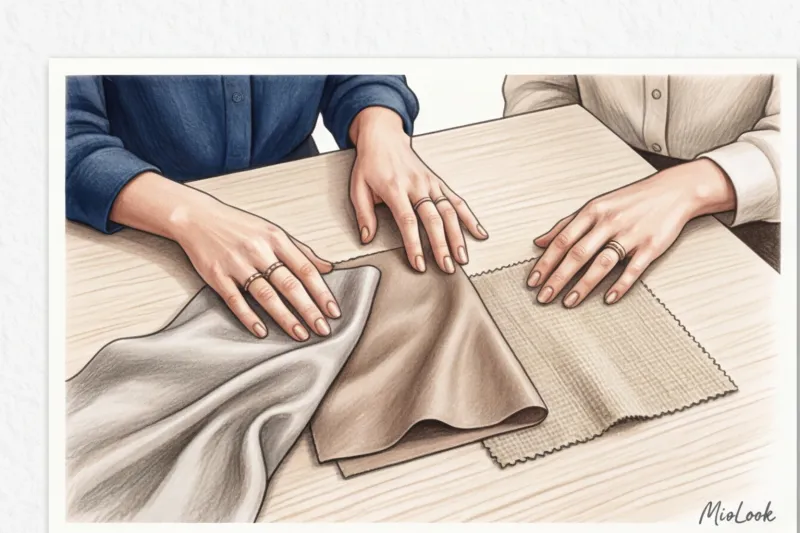
- Trust your hands. Proper Tencel or Cupra is always cool to the touch, pleasantly heavy, and fluid. If the fabric is lightweight, creaky, or catches on the micro-roughness of your fingers, you're looking at cheap synthetics, no matter what the marketers call them.
We live in an amazing time when we no longer have to choose between our love of nature and our desire to look classy. New-generation lab-produced fabrics have proven that intelligence and technology can create materials that surpass their natural counterparts. Next time you see an unfamiliar word on the tag instead of the familiar cotton, don't rush to hang it back up—you could be holding the future of fashion in your hands.