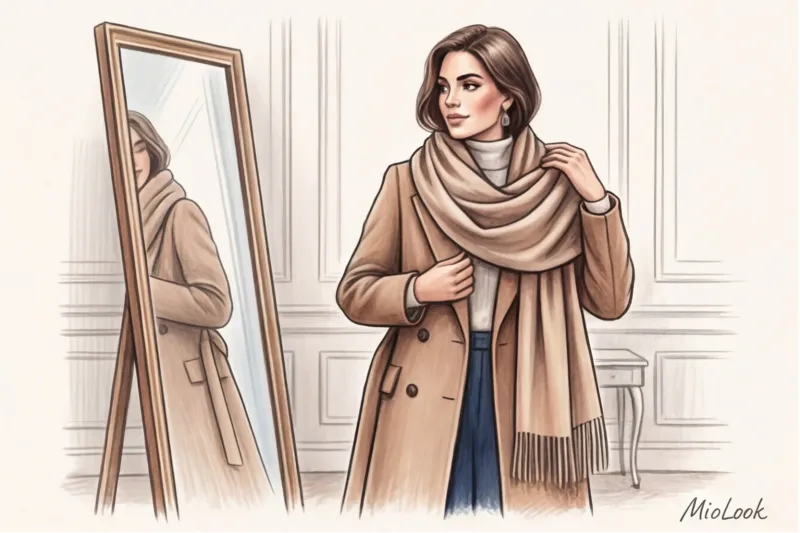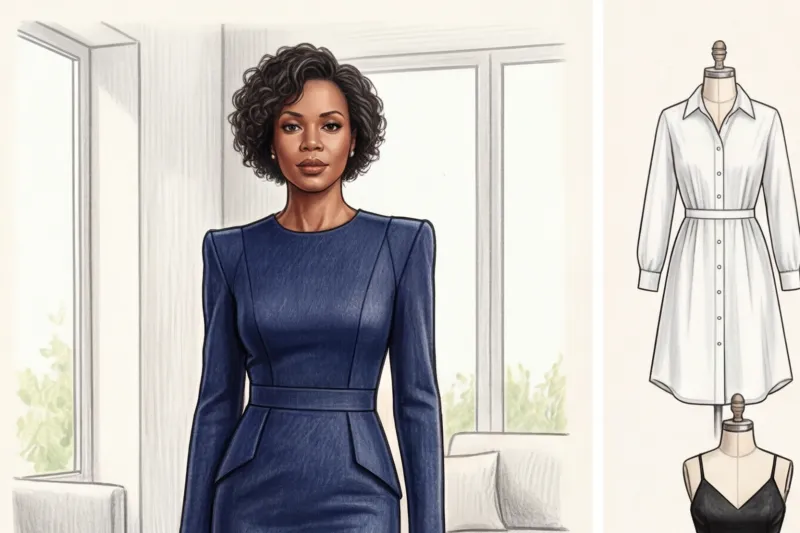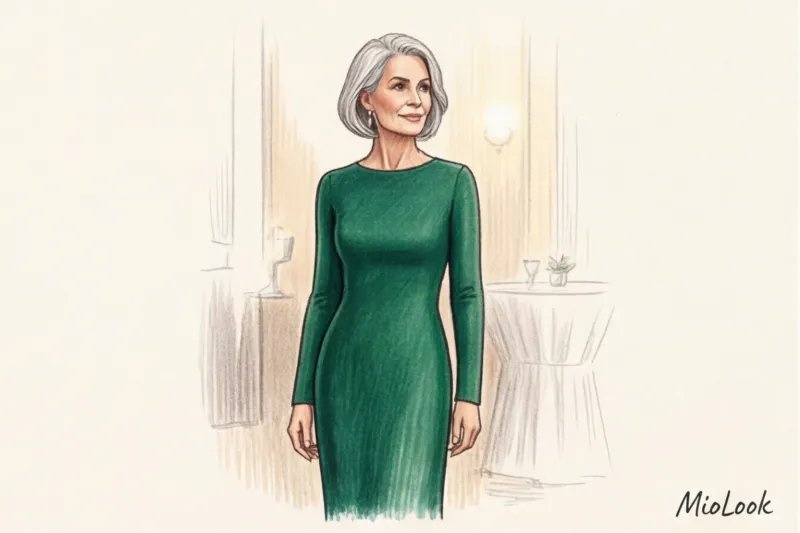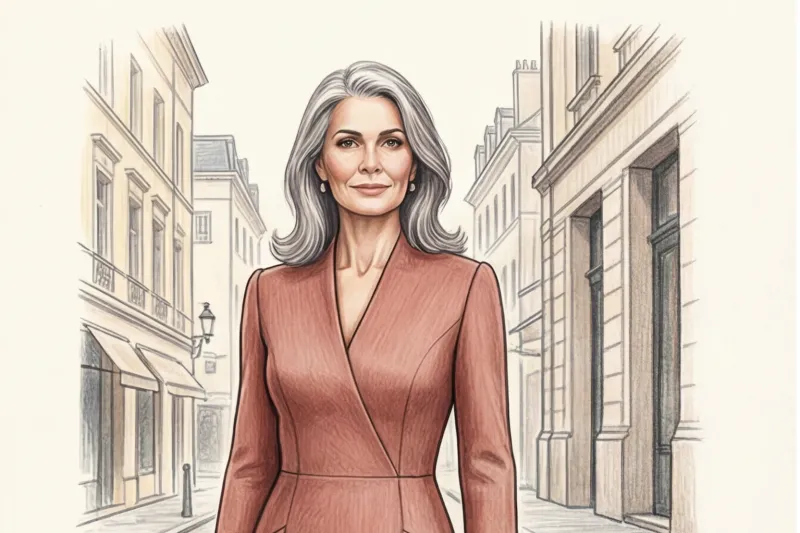
"I don't want to hide anymore," Anna, a 52-year-old finance executive, told me during a consultation. Her wardrobe was filled with dozens of shapeless tunics and flowing dresses that she'd been buying for years in an attempt to camouflage the changes in her figure as she aged. But the paradox was that these meters of fabric only added visual bulk and took away her grace. When we started looking for the right ones, Dresses for women over 50, styles which really work on the figure, we have completely abandoned the concept of “hiding”.
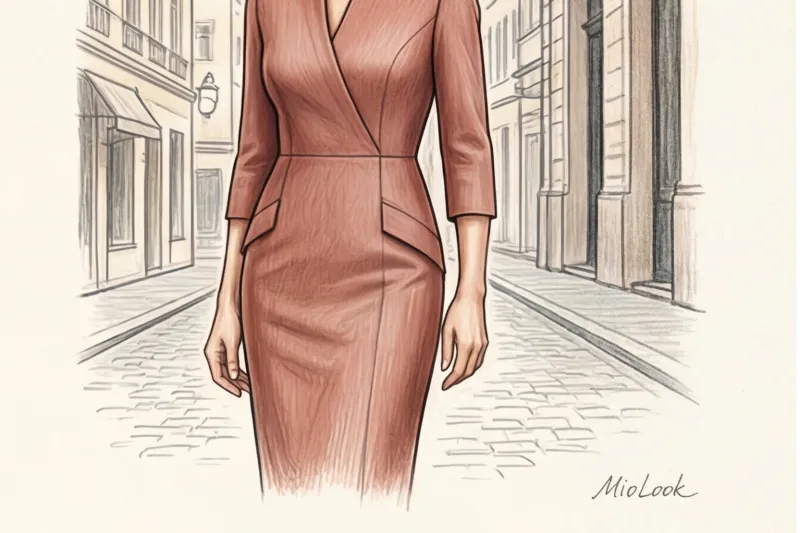
Instead of typical stylist advice, I offer a different approach: the architecture of cut and the physics of fabrics. Status and slenderness in elegant age are created not by shaping, but by the density of materials and the correct geometry of seams. Incidentally, I discussed this philosophy of modern age style in detail in our complete guide to Basic wardrobe for a 50-year-old woman: modern style.
Architecture over camouflage: why robes don't work anymore
A common myth is that to hide a belly or full hips, you need loose, oversized clothing. The reality is stark: shapeless, soft-fabric robes add 5 to 7 kg of visual weight.
Why does this happen? The soft, voluminous fabric catches the widest point of your figure (usually your chest or hips) and falls downward in a straight line. As a result, the observer's brain creates a body beneath the fabric whose width is equal to that widest point.
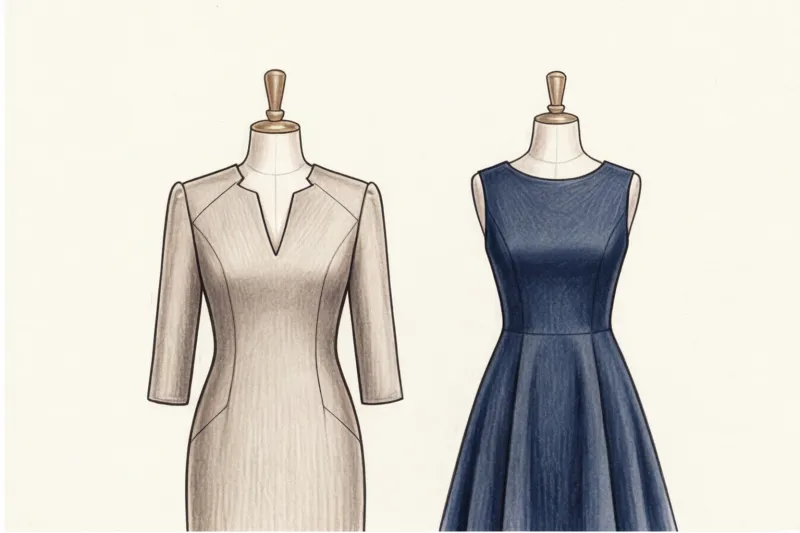
The secret to slimness lies in the concept "air gap" There should be exactly 1.5–2 centimeters of space between the body and the fabric. The dress should create the silhouette's architecture, not cling to it. A semi-fitted cut made from a shape-supporting fabric acts as a lightweight frame: it defines the body's contours without revealing a single wrinkle.
"The first and most difficult psychological step for my clients is giving up loose dresses. But as soon as a woman puts on a dress with defined shoulders and a semi-fitted waist, her posture instantly changes, and she drops a size or two."
Fabric Decides Everything: How Density and Texture Create Status
Even a perfectly tailored dress will look cheap if it's made from a treacherous fabric. In the textile industry, there's a concept called GSM (grams per square meter). According to premium brands, elegant dresses that hold their shape must be made from fabrics with a density of at least 200 GSM.
Fabrics with a density below 180 g/m² (thin viscose jersey, cheap polyester) highlight the slightest unevenness of the skin, seams and the slightest swelling.
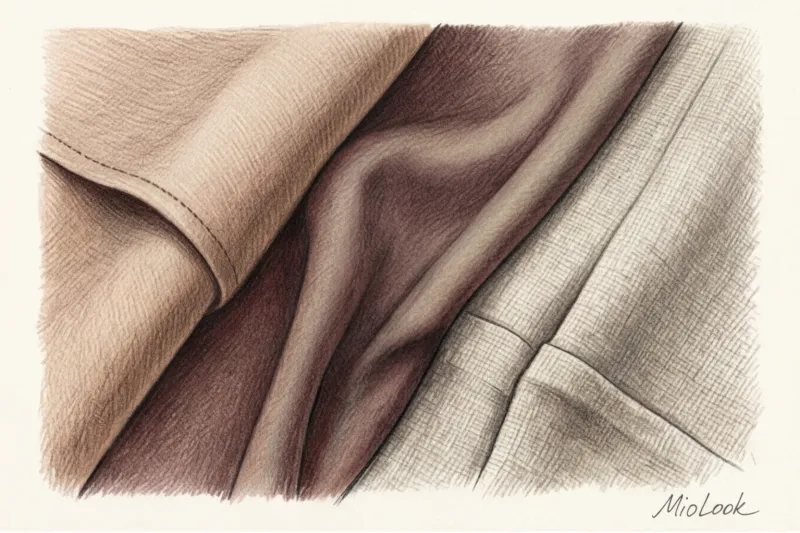
Blacklist of fabrics:
- Thin, flimsy knitwear - fits like a second skin, revealing everything you want to hide.
- Cheap shiny viscose — it wrinkles at one glance and cheapens the image.
- Glossy satin - shine visually increases volume and draws attention to the microrelief of the figure.
Eco-friendly status alternatives:
To create a status wardrobe (in the price range from 120 to 250 €), look for the following compositions on the tags:
- Tencel (lyocell) — dense, beautifully flowing, with a refined matte finish. The matte texture absorbs light and visually reduces volume.
- Blended linen with viscose - retains the texture of linen, but thanks to viscose it practically does not wrinkle and has a heavy, “expensive” fall.
- Cupro - an environmentally friendly silk substitute with a velvety surface that holds drapes perfectly.
Practical advice from an expert: I teach all my clients to check the fabric in the store. Squeeze the hem of a dress in your fist for 5 seconds, then let go. If the fabric immediately straightens out or leaves only soft, natural waves, feel free to take it to the fitting room. If it's covered in sharp creases, leave it on a hanger; otherwise, you'll look unkempt an hour after leaving the house.
Stop buying dresses that don't suit you.
Upload photos of your items into the app, and a smart algorithm will create stylish outfits based on your proportions and style.
Digitize your wardrobe with MioLookThe Best Dress Styles for Women Over 50: Silhouette Analysis
Let's look at specific dress styles for women over 50 that work as a functional wardrobe investment rather than a one-season purchase.
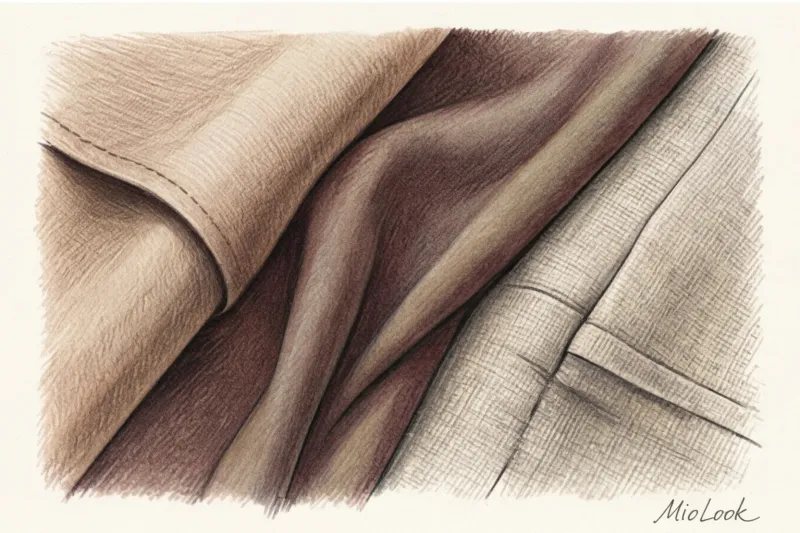
Shirt dress: the perfect vertical
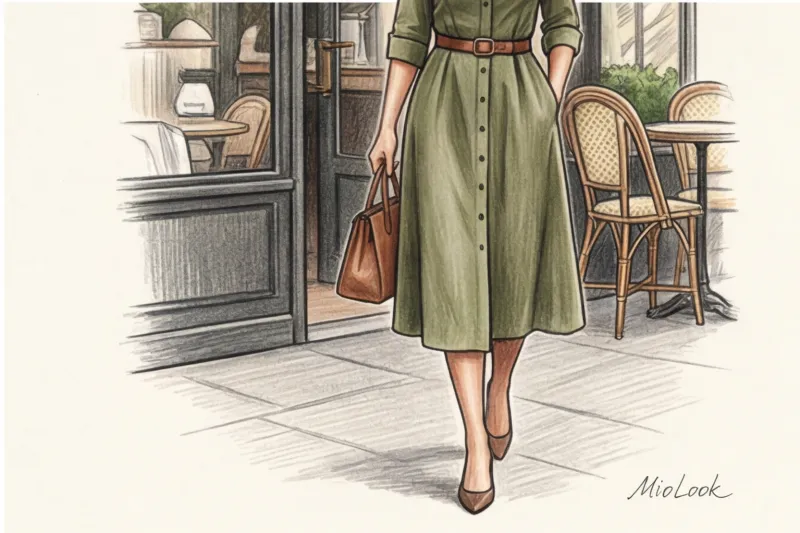
A midi shirtdress is a staple that works to visually elongate the figure. A concealed closure or a visible row of contrasting buttons creates a continuous vertical line that "cuts" the figure in half, making it appear slimmer.
Pay attention to the collar: it should be tight and hold its shape. A stiff collar, unbuttoned two buttons, creates a V-neck, elongating the neck. Be sure to roll up the sleeves to the elbow—a stiff, rolled-up cuff helps structure the look.
Wrap Dress: Choosing the Right Fabric
Diane von Furstenberg's iconic thin jersey dress revolutionized the 1970s, but in today's world, this material isn't the best choice for women over 50. Thin jersey clings too tightly to the midriff.
A modern wrap dress should be made from shape-supporting fabrics (heavy cotton, blended linen, gabardine). An asymmetrical wrap dress brilliantly draws attention away from imperfections around the waist, creating a diagonal line that draws the eye.
A-line silhouette with accentuated shoulders
According to research from the Fashion Institute of Technology (FIT), an accentuated shoulder line can steal up to 40% of the visual attention, distracting from the waist and hips. The return of shoulder pads in a subtle, modern form is a boon for pear- and apple-shaped figures.
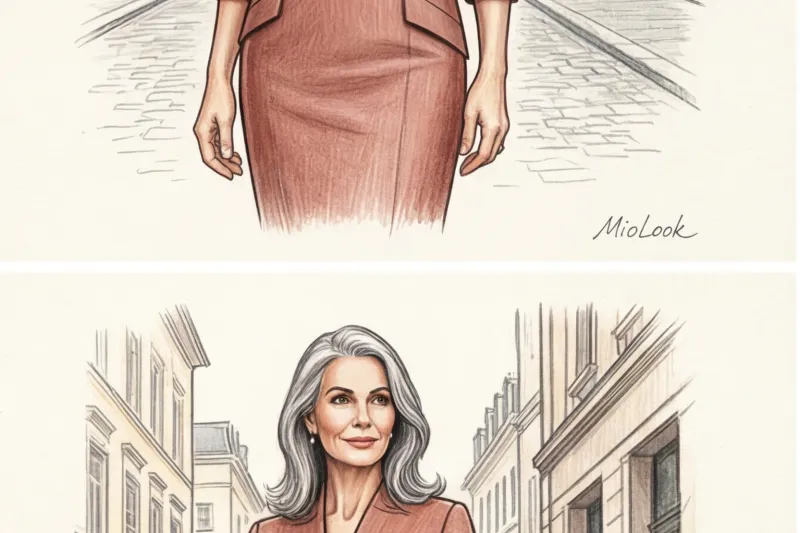
An A-line dress should fall loosely from the bustline. The wider shoulders will make the hips appear narrower. The main rule: no excessive flare at the bottom; the silhouette should resemble a slightly flared trapezoid.
The Art of Correction: Working with Proportions Without Shapewear
Many women torture themselves with rigid shapewear, although the desired effect can be achieved with the right cuts and lengths.
The focus should always be on the head area. According to eye-tracking studies, when communicating, people spend 80% of their time looking from the chest to the top of their conversation partner's head. Take advantage of this! A V-neckline or an elegant boat neckline visually broadens the collarbones and balances out a heavy bottom.
Midi length is your best investment. But midi dresses come in different shapes and sizes. How do you find your "sweet spot"? Stand in front of a mirror and look at your calves. The hem of your dress should end exactly where your leg begins to taper, flowing into your ankle. If your dress ends at the widest part of your calf, you'll visually add 3-4 kilograms to your legs.
Limitation of the method: A boat neckline is NOT suitable for women with broad shoulders or an inverted triangle body shape. In this case, it will make the shoulder area appear larger. A deep V-neck or wrap neckline is better.
A secret stylist trick is the 3/4-length sleeve. It reveals the thinnest and most graceful part of a woman's hand—the wrist. This creates an optical illusion of overall fragility.
Cheap parts and their high-status alternatives
Over 12 years of experience, I've noticed: micro-details instantly betray cheap manufacturing, even if the dress itself fits perfectly. If you want to look expensive, you'll have to be meticulous about the details.
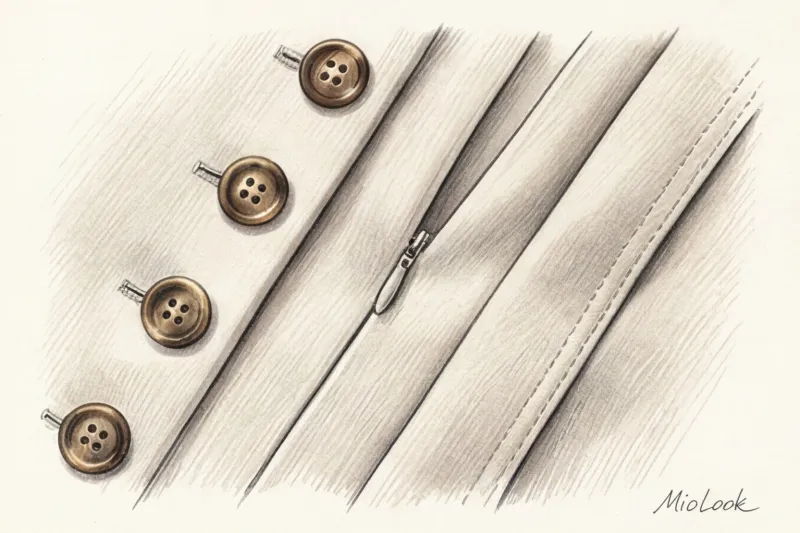
Fittings: Avoid shiny gold zippers that ripple down the back and plastic buttons with rhinestones. Replace them at a tailor's (it costs pennies) with horn buttons, mother-of-pearl, or matte metal. All zippers on high-status dresses should be concealed.
Prints: Avoid small, contrasting florals (millefleurs), which often make an elegant woman look "grandmotherly." Want prints? Opt for color blocking, strict geometric patterns, or abstract designs. If you're unsure how to wear them, check out our article about abstract print in the wardrobe If you prefer classics, choose a noble monochrome in deep shades: emerald, terracotta, sapphire.
Lace: Thin, stretchy guipure can make a dress look older. If you want to add texture, choose thick cotton macramé, perforated embroidery, or mesh with dense embroidery. Better yet, complement a simple dress with accent embellishments (for example, you could buy vintage jewelry , which will add historical depth to the image).
Don't know what to wear with your new dress?
MioLook's artificial intelligence will suggest the perfect shoe and accessory combinations for any dress you choose.
Create the perfect imageStylist's Checklist: How to Test a Dress Style in the Fitting Room
Buying a dress isn't just a try-on; it's a full-fledged test drive. I've created a 3-second rule and a strict checklist for my clients that will prevent impulsive spending (especially when the dress costs over €150).
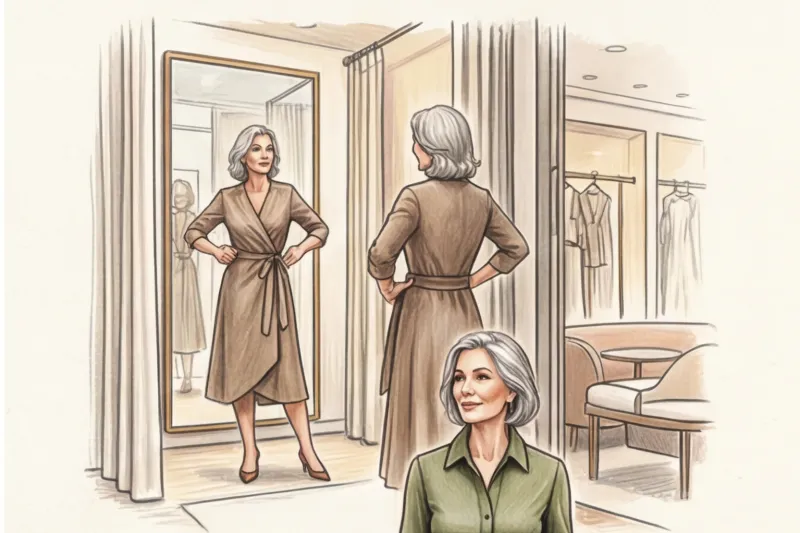
- Squat test: Sit on a pouf in the fitting room. The fabric across your stomach and hips shouldn't feel taut, as if it's about to burst at the seams. If it's a midi, the dress shouldn't ride above the knees.
- Lighting test: Be sure to exit the fitting room and enter the sales floor. The overhead halogen lighting in the booths distorts the texture of the fabric. In daylight, the fabric can appear treacherously translucent.
- Back Rule: Turn your back to the mirror. There shouldn't be any horizontal folds (bubbles) forming under your shoulder blades or at your lower back. If they do, the garment is out of balance, or the dress is too tight in the hips and is "slouching" up your back.
- Armhole Rating: The armhole (the area under the arm) should not be too deep, exposing underwear, or too narrow, cutting into the body and creating unsightly rolls on the back.
Ultimately, the best dress for a woman in her 50s isn't one that masterfully "masks" your life, but one that gives you freedom of movement and absolute self-confidence. Stop trying to squeeze into uncomfortable shapes or hide in shapeless fabrics. Invest in dense textures and architectural cuts—and you'll see how not only your reflection changes, but also how the world reacts to you.