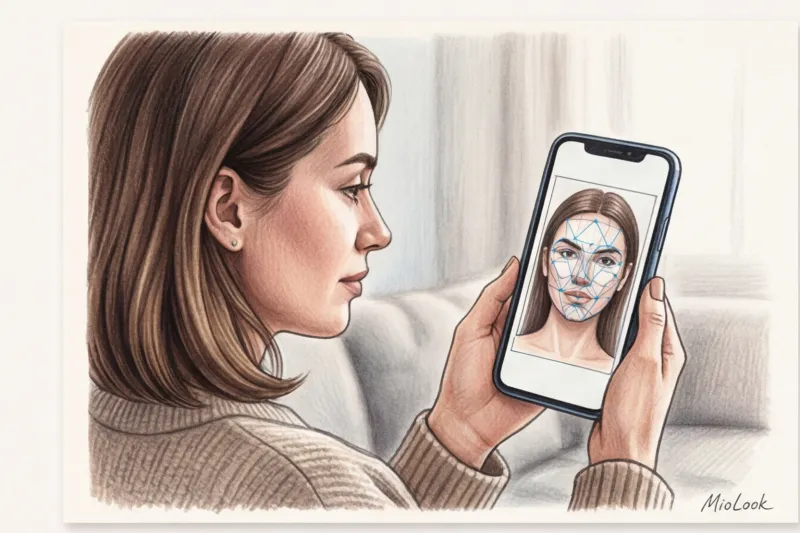
Have you ever wondered why you look perfectly proportioned in the mirror, but in selfies your nose suddenly appears wider and your shoulders look like a teenager's? Most women get upset at this point and delete the photo. But the problem isn't your face, it's your smartphone's 24mm lens. And when women try to determine their facial type from a photo, neural networks often produce absurd results precisely because of this optical illusion.
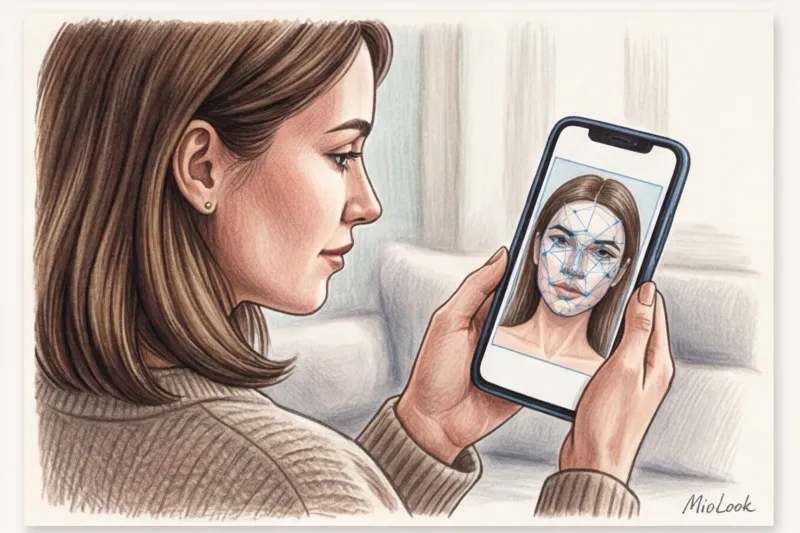
Algorithms can't read minds and don't know what you look like in real life. They analyze the bare geometry and pixels you provide them. In my 14 years as a stylist, I've seen hundreds of cases where excellent tools failed simply because of incorrect user instructions. We've already written more about body architecture and why geometry is more important than weight in our a complete guide to style types and archetypes And today I'll tell you how to stop fighting artificial intelligence and make it work for your wardrobe.
Why determine a person's appearance type from a photo: neural networks versus mirrors
Let's be honest: the "apple-pear-hourglass" body type system is hopelessly outdated. Fruit analogies focus on volume, and volume is a variable quantity. You might weigh 60 kg today and 75 kg in three years. Does this mean you need to completely change the cut of your clothes? No. Your bone structure, shoulder width, limb length, and jaw shape remain constant.
The main problem with self-typing is our emotional bias. We tend to look at ourselves in parts, exaggerating our flaws. I had a client, Irina, in my practice. She gained weight after giving birth and firmly believed that she was now a "Romantic" type, as she had developed curves. Because of this, she bought soft cardigans and floral dresses, which made her look 10 years older and two sizes too big. When we ran her correct photos through the AI, the algorithm impartially returned "Dramatic." Her skeleton had clearly sharp angles and a stately appearance. As soon as we dressed her in a structured jacket made of thick viscose (in the 120-150€ range), the excess weight visually disappeared due to the correct geometry of the cut.
Artificial intelligence is your most objective critic. It doesn't see your tummy or the cellulite you're so embarrassed about. It sees the balance of yin (softness, roundness) and yang (angularity, stateliness, height).
The neural network instantly deciphers what would take a novice stylist hours of measurements and hesitation to achieve.
How algorithms analyze the face and body using the Kibbe-Larson system
The operation of intelligent algorithms is based on the principles of Yin and Yang distribution in bone structure, described by David Kibby and later expanded upon by Dwyn Larson. How exactly does AI "look" at you?
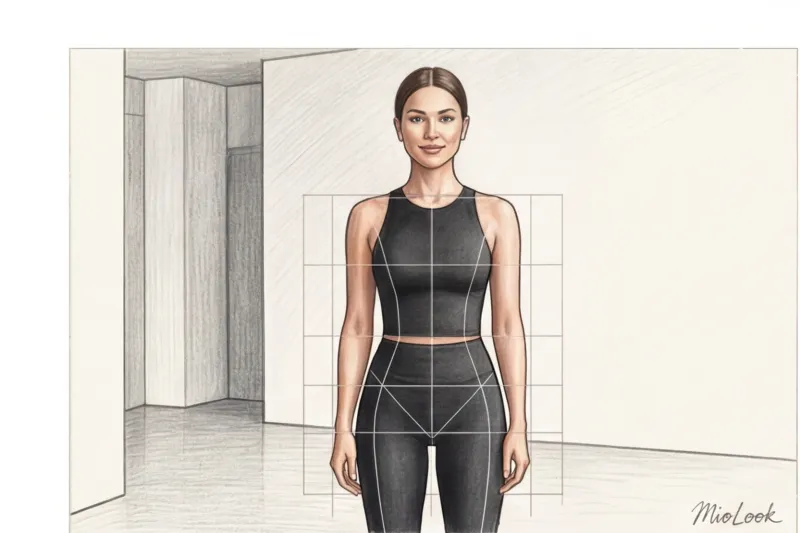
- Reading extreme points: The algorithm creates an invisible grid based on your shoulders, hipbones, cheekbones, and eye shape. It needs to determine whether these lines are smooth or jagged.
- Definition of scale: The key factor is the ratio of your head size to your overall height. This is how the AI determines whether you appear petite or tall, regardless of your actual height.
- Pattern matching: Unlike a stylist, whose brain stores hundreds of faces, a neural network's database contains millions. It finds mathematical matches in seconds.
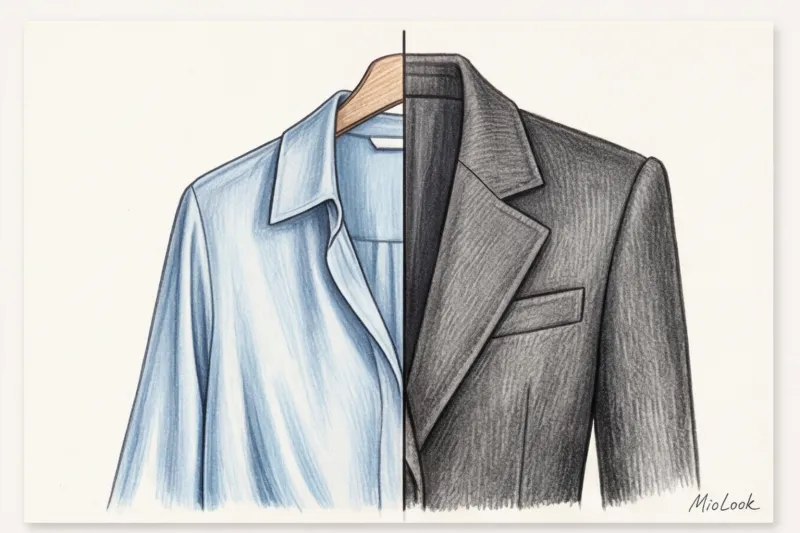
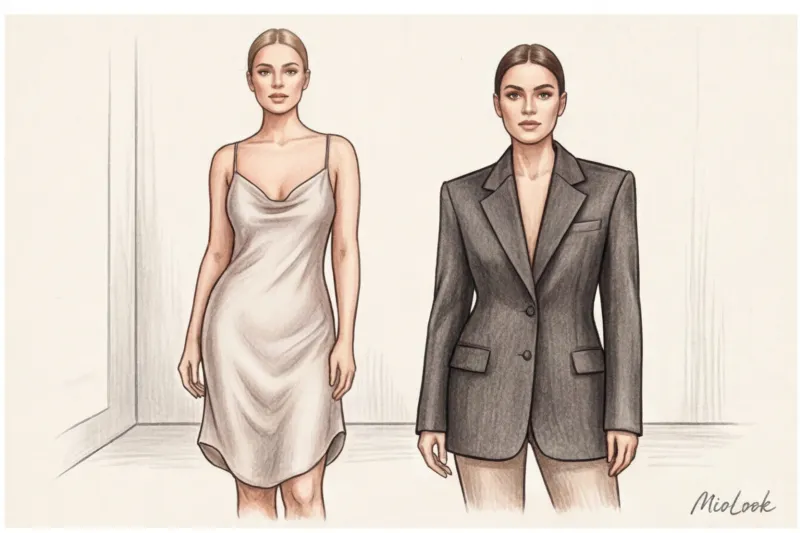
To explain this in simple terms, I'll use fabrics as an example. The program literally calculates the physics of your body. If you're Yang (carbon-like), flowing silk will look like wrinkled pajamas, while a thick wool suit (250 g/m² and above) will fit like a glove. If the AI sees Yin as dominant, a stiff, architectural blazer for €300 from Massimo Dutti will transform you into a boxy robot.
Access to MioLook for €0.99 — one-time payment
A smart AI stylist will select the perfect look based on your unique geometry.
Get access — €0.99 onceThe Biggest Mistake: Why AI Can Produce Wrong Results
But here's where things get interesting. Neural networks often make mistakes, and we're to blame. The reason is a simple distortion of the optics.
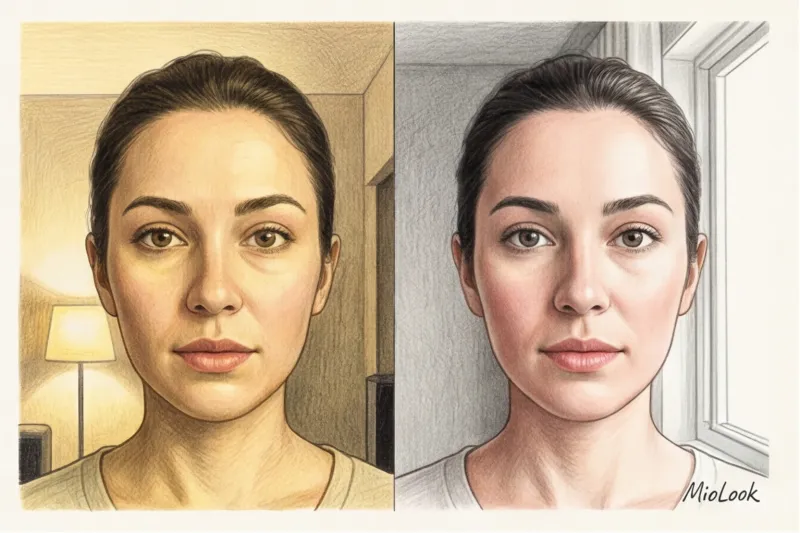
According to the basics of portrait photography, a smartphone's wide-angle lens (usually 24-28mm) dramatically distorts proportions at distances closer than 1.5 meters. If you take a selfie with your arm outstretched (about 40-50 cm), the center of your face (nose, forehead) is artificially exaggerated by 20-30%, while the edges (cheekbones, chin, shoulders) are narrowed and "tilted" back.
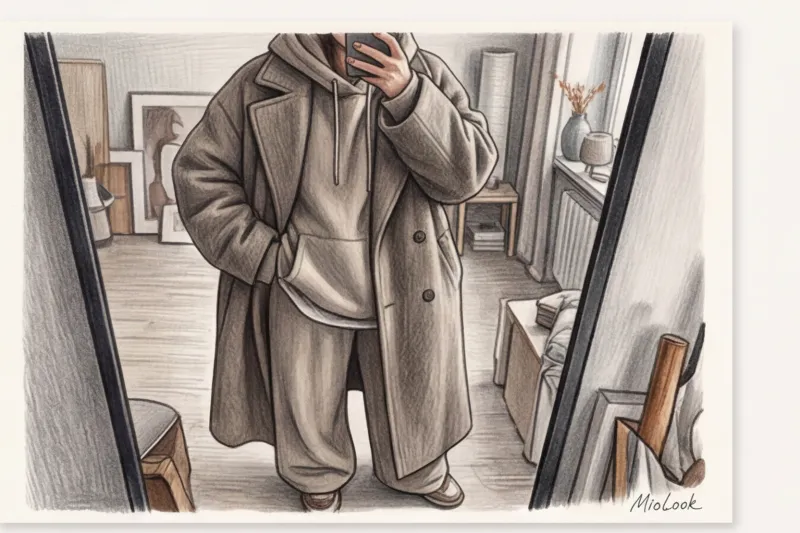
One day, an online client of mine sent me her body typing results via a popular app: the AI identified her as a "Bright Gamin." This type suits cropped jackets, broken silhouettes, and small prints. She bought a €500 capsule collection, and the clothes completely ruined her figure. When we started looking into it, it turned out she'd taken the photo in a mirror, holding the phone at face level and tilted downwards. This angle shortened her legs, made her head look enormous, and her shoulders narrow. In reality, she was a stately "Dramatic" type, standing 175 cm tall!
What else confuses the algorithm:
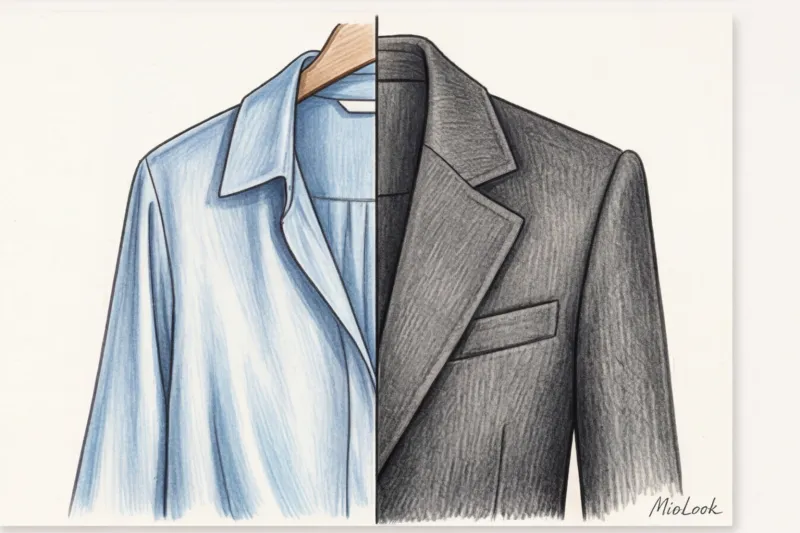
- Oversized items. The neural network will interpret the volume of the COS sweater as your chest circumference.
- Photographed in dark clothing against a dark background. The contours blend together, and the AI fills them in at random.
- Thick black tights for full-length shots. They visually reduce the volume of the calves and thighs.
Checklist: How to Prepare the Perfect Photo for a Neural Network
To get accurate results that you can use in modern stores (whether Zara or premium brands), you need to create laboratory conditions for the chamber. Here are my working instructions that I give to all clients before online analysis.
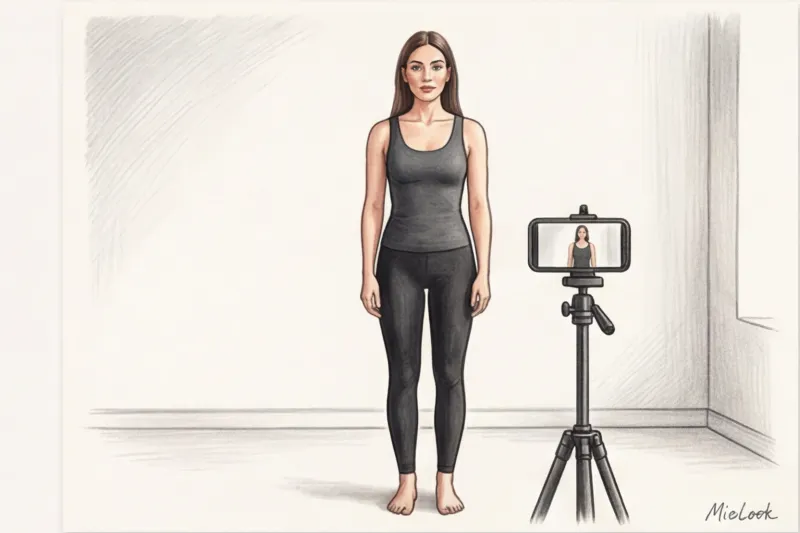
- Cloth: Choose clothing that's as form-fitting as possible. Leggings and a tank top or sports bra are ideal. The color should be solid (gray, beige, blue) and contrast with the wall background.
- Light: Stand facing a window in natural light. Side or overhead light (from a chandelier) creates harsh shadows: it will create hollow cheeks and sharp cheekbones where there aren't any, adding a non-existent yang.
- Camera position: The phone should be held at chest level. No bending over. The distance from you to the camera should be at least 1.5–2 meters. Be sure to use a tripod or place the phone on a shelf and set the timer.
- Pose: Look straight into the camera. Keep your arms relaxed at your sides (don't press them to your sides; leave some space between your arms and waist), and keep your feet together.
Additional requirements for a face photo (portrait)
For portraits, the rules are even stricter. Hair must be pulled back smoothly (in a ponytail or under a headband) so the algorithm can see the hairline, ears, and jawline. Makeup is strictly prohibited. Your favorite contouring of the nose and cheekbones will fool the neural network into thinking you have a sharper bone structure. Your facial expression must be completely neutral: smiling widens the cheekbones and distorts the natural shape of the lips.
Style Type and Archetype: What a Neural Network Can and Can't Do
Many people confuse these two concepts, but there's a huge difference between them. A personality type (according to Kibbe) is your physical makeup, geometry, and texture. An archetype (according to Carol Pearson's theory) is your psychology, life values, and vibe.
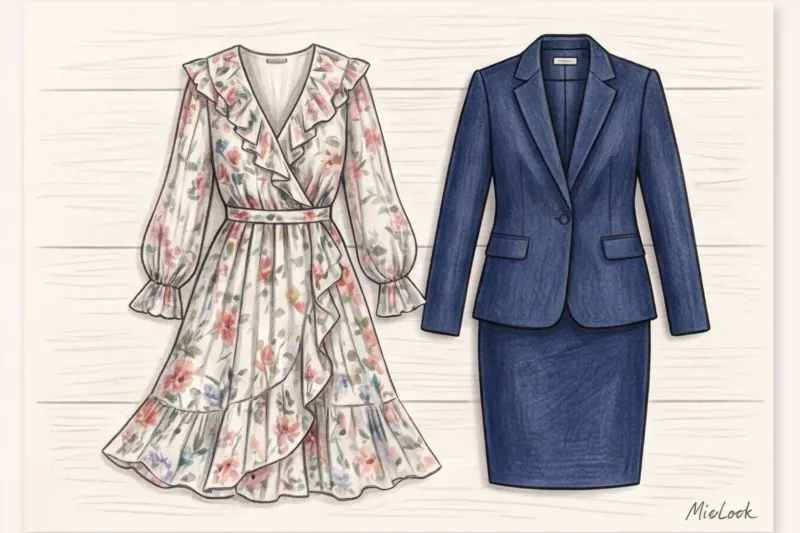
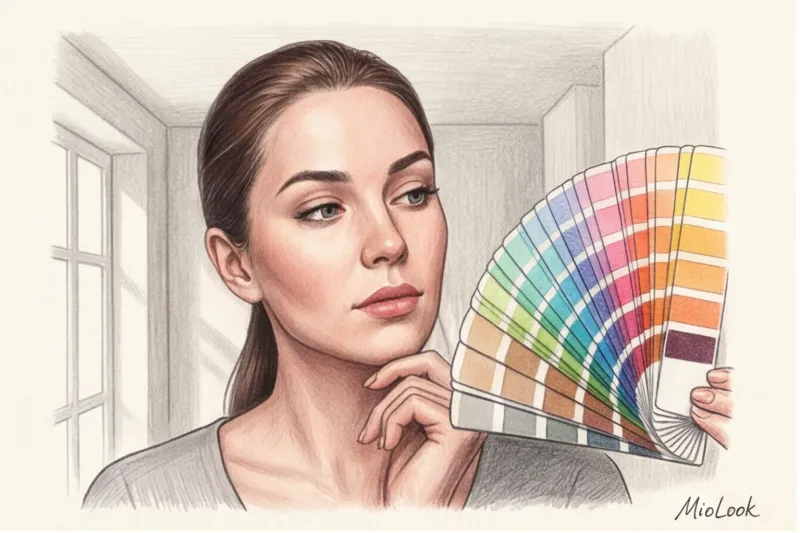
As a stylist, I always say: your type determines your CUT (how a garment will fit you), while your archetype determines your COLOR, PRINT, and DETAILS (what message you convey to the world). Modern neural networks are great at the former, but there can be nuances with the latter.
When AI analyzes your outer archetype, it looks at your current hair, makeup, and clothing in the frame. If you're photographed in ripped jeans, it might assign you the "Rebel" archetype. But what if your core structure is a pure "Dramatic" (requiring hard lines), while your inner archetype is a soft "Caregiver"? In this case, we take a formal outfit (a jacket) but tailor it from a tactilely pleasing, soft suede in warm shades (for example, camel for €150-200). The AI provides a flawless base, but we always fine-tune the "soul" of the look ourselves.
Your perfect look starts here
Join thousands of users who have combined their personality type and archetype with MioLook.
Get access — €0.99 onceReceived a result from AI: what to do next?
The biggest mistake is to treat the algorithm's results as a prison cell. The Kibbe system was created in the 1980s, when fashion was different. Today, there's no need to blindly follow the advice of old books: "Gamines should have short hair, and Romantics should have ruffles."
Your task is to translate these recommendations into the language of modern trends. For example, if you're a "Classic" (you value symmetry and medium-weight fabrics), you don't necessarily need to wear a three-piece office suit in the casual era. You could wear straight-leg jeans in heavy denim (€80) and a cashmere smooth-knit sweater (€120)—this would also be a classic look, but adapted for 2024.
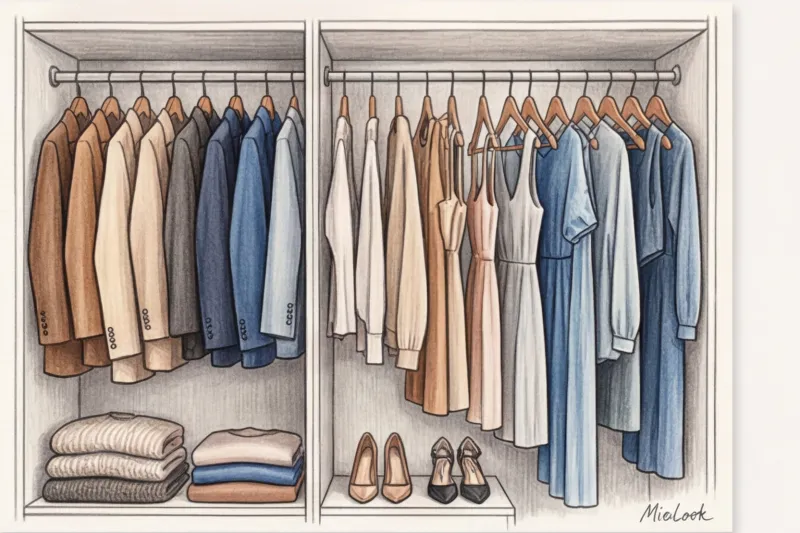
To avoid confusion in adaptation, I recommend using smart wardrobe feature in the MioLook app Once you've identified your body type, you enter these parameters into a virtual stylist. It begins filtering out silhouettes that distort your proportions. Knowing your body type saves up to 50% on your shopping budget: clothes no longer hang in your closet with tags, because you buy only what's tailored to your body type.
Stylist's Resume: Your Personal Canvas
Determining your appearance type from a photo using a trained neural network is perhaps the fastest and most objective step toward conscious consumption. Algorithms don't flatter or criticize; they provide a mathematically precise analysis of your "canvas."
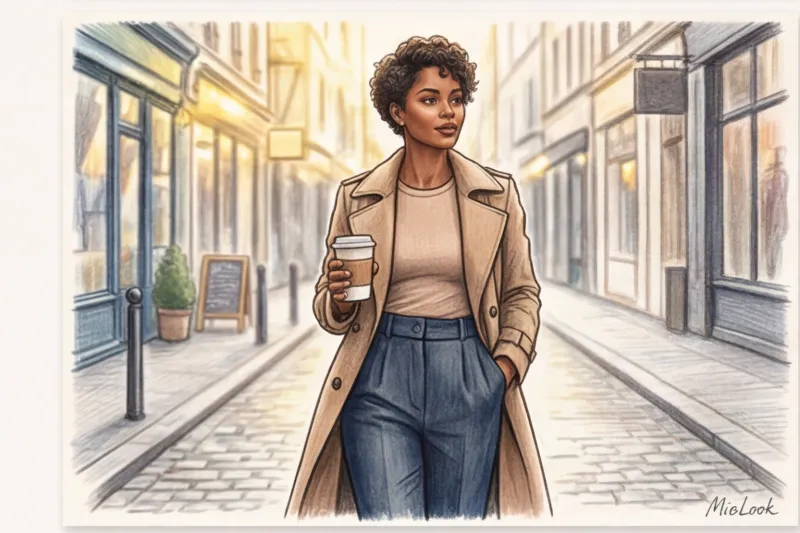
Remember this important rule: algorithms are a powerful diagnostic tool, but the laws of style exist so you can adapt them to your real life, not the other way around. Any natural geometry is beautiful when it's properly designed. If you've been putting off sorting through your wardrobe, take a perfect photo in daylight today. Upload it to a smart app, determine your type, and start creating a capsule wardrobe that will always make you look sophisticated and confident.