Sorting Out Your Kids' Wardrobe: Why Expensive Items Turn into "Dead Weight"
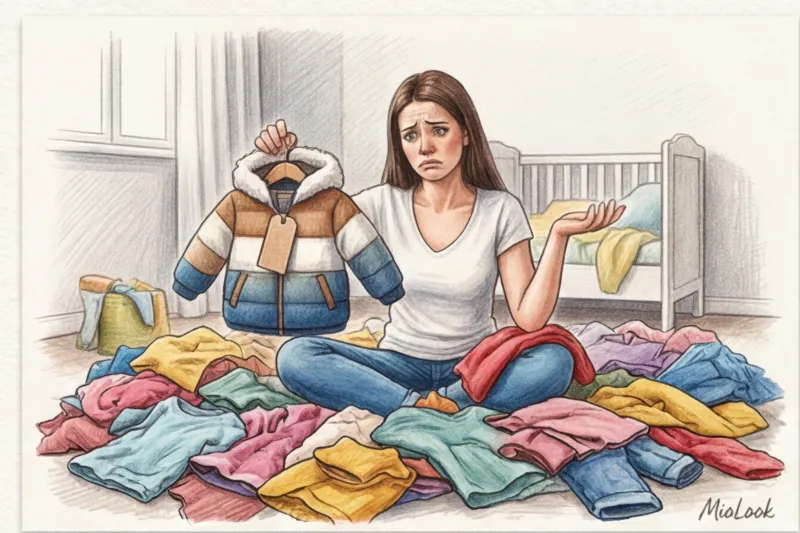
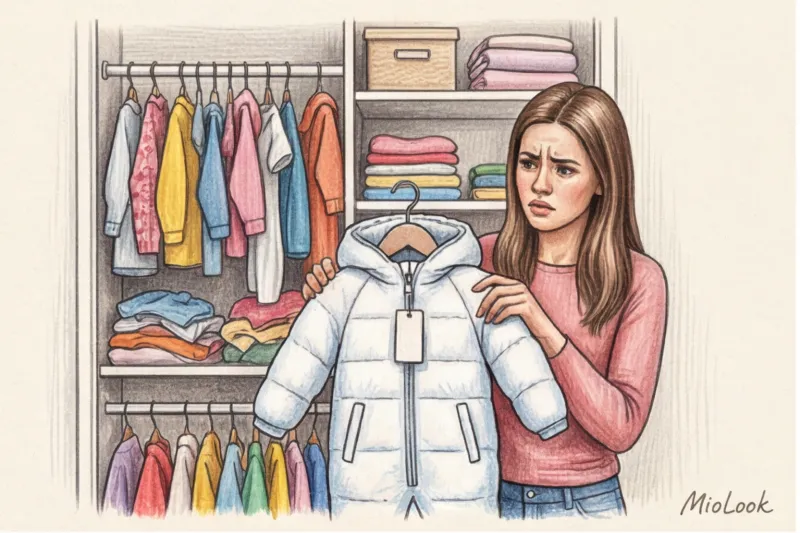
A couple of months ago, my client burst into tears while sitting on the floor of her nursery. We were sorting through her five-year-old son's wardrobe for the season and, at the very bottom of the closet, we came across a vacuum-sealed bag. Inside were three brand-new Moncler winter overalls, tags intact. She'd bought them at a Milan sale "for growth," carefully tucked them away, and… conveniently forgotten about them. He'd outgrown them twice. The lost investment amounted to over €1,200.
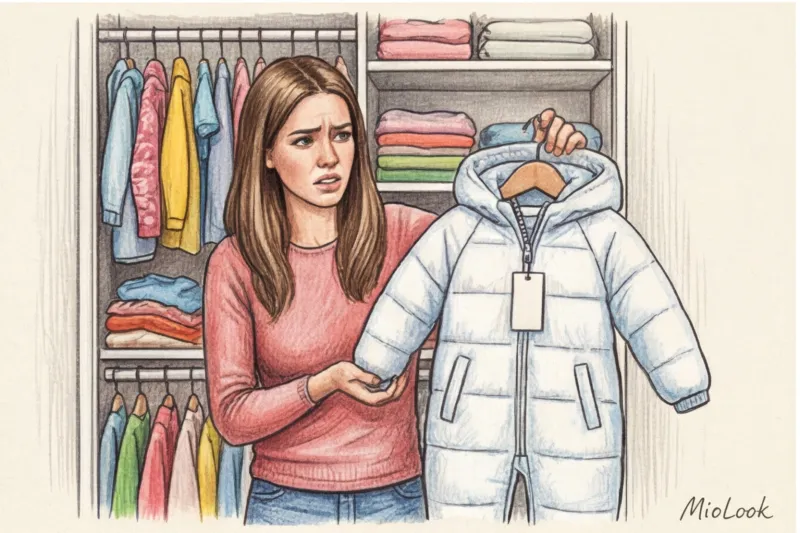
Sound familiar? A child's closet often becomes a "blind spot." The psychology of impulse buying dictates that we stock up on items, especially when we see those coveted red price tags. We think we're saving money. But in reality, we're simply burying money in textiles the child will never wear.
A 2023 report by the environmental organization WRAP (Waste and Resources Action Programme) revealed alarming statistics: on average, families actively use only 30% of their children's clothing each year. The remaining 70% sits idle, becomes outdated, turns yellow from improper storage, or becomes too small. To break this cycle, we need to stop treating children's clothes as disposable consumables and start managing them as family assets. We recently explained in detail how to build this system in our comprehensive guide: A virtual wardrobe (app) for the whole family - this is the basis from which order begins.
Digital Inventory: Why Children's Clothes Need an AI Stylist
When you're standing in front of the sale rail at the store, you rarely remember how many pairs of size 110 jeans you already have at home. This is where technology comes in. Digitization is the transition from physical chaos to crystal clarity.
By adding basic items to the MioLook app, you create a complete digital catalog. The next time you're planning a purchase, you simply open your smartphone and see that you already have the right size fall jacket, but you're missing some turtlenecks. This is more sobering than any persuasion and puts an end to blind shopping forever.
Access to MioLook for €0.99 — one-time payment
A smart AI stylist will select the perfect look and help manage children's clothes.
Get access — €0.99 onceSorting Checklist: How to Properly Organize Your Child's Wardrobe into Three Baskets
Sorting out a child's wardrobe requires rigor. No sentimentality like, "What if he wears this at the dacha?" If an item is too small, uncomfortable, or hopelessly damaged, it has no place in the closet. I always recommend my clients use the three-basket method.
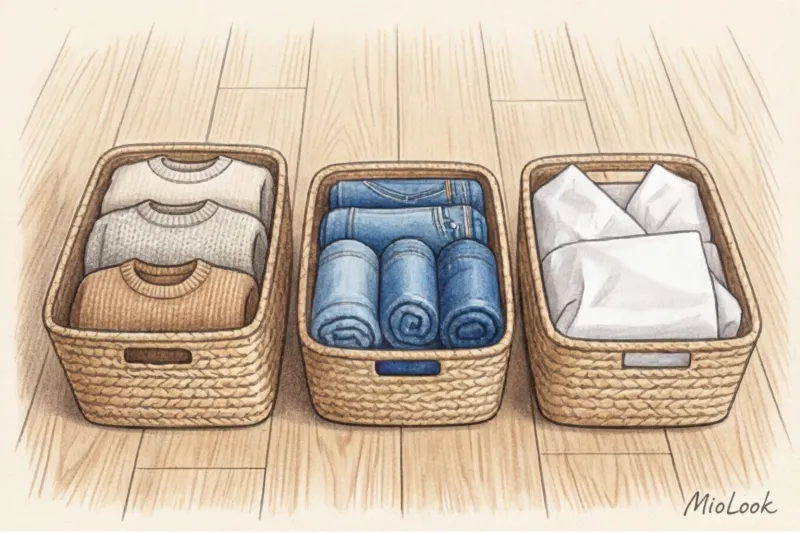
Cart 1: Save (for younger children)
Only high-quality, timeless items in perfect condition are sent here. But there's an important detail that 9 out of 10 moms forget: proper preservation. As an expert, I categorically forbid storing premium fabrics—cashmere, merino wool (especially extrafine), and natural silk—in non-breathable plastic bags or vacuum-sealed bags. The fibers need air, otherwise the fabric will develop a musty smell and lose its elasticity.
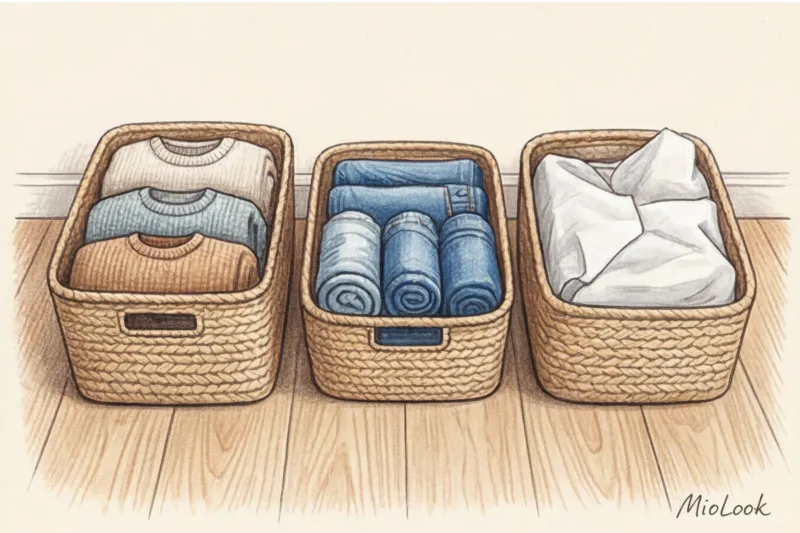
- Place knitwear in cotton dust bags or cardboard boxes lined with acid-free tissue paper.
- Be sure to place cedar blocks or lavender sachets inside to repel moths.
- Avoid hanging heavy knitted sweaters on hangers before storing them for a long time – they will stretch under their own weight.
Basket 2: Sell (liquid asset)
This includes branded clothing and outerwear in good condition that the child has outgrown and that the family is not planning to have younger children. We'll discuss how to make money from this below.
Basket 3: For recycling or charity
Items from mass-market stores, clothes with stains that dry cleaning didn't pick up, or items with stretched collars.
Let me clarify right away: the strategy of preserving clothes for younger children does NOT work if the age difference between them is more than 5-6 years. Even with ideal storage, elastic bands dry out, the membrane loses its properties, and the cut becomes hopelessly outdated. In such cases, it's more profitable to sell everything now and buy new ones later.
Your perfect look starts here
Join thousands of users who manage their wardrobe easily and stress-free every day.
Get access — €0.99 onceSecondary Market: How to Recoup Your Investment on Premium Items
Many parents are wary of buying expensive brands for their children, believing it's a waste of money. In fact, premium children's clothing is a highly liquid asset. According to analytics from the global resale platform Vestiaire Collective, outerwear from brands like Moncler, Bonpoint, Tartine et Chocolat, and high-quality, functional premium clothing like Reima or Molo retains up to 40-50% of its original value if properly cared for.
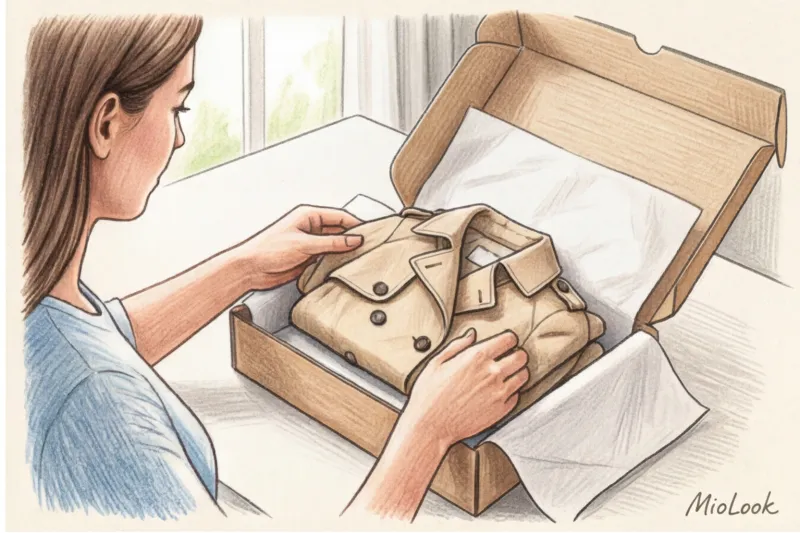
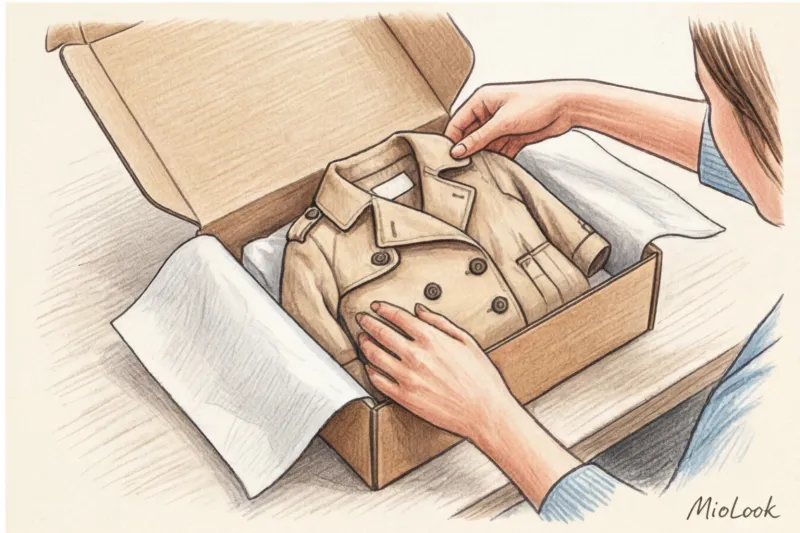
To get the maximum return on investment (ROI), the item must be properly prepared for sale:
- Pre-sale preparation: No pilling on the cuffs. Dry clean your down jacket (this will cost about €15-20, but will increase the resale price by €40-50).
- Equipment: Keep original tags, dust bags, and spare hardware (buttons) in a separate folder. An item with an original tag, even if it's cut off, sells 20% faster.
- Visual: Take photos in natural daylight against a neutral background, focusing on close-ups of hardware (YKK zippers, logos) and the fabric tag.
Charity and environmentally friendly recycling
What to do with mass-market items (Zara, H&M, Mango Kids) that are still in perfect condition? Trying to sell them for €2-3 on classifieds sites is just wasting your time on emails and trips to the post office. It's better to donate them to charity.
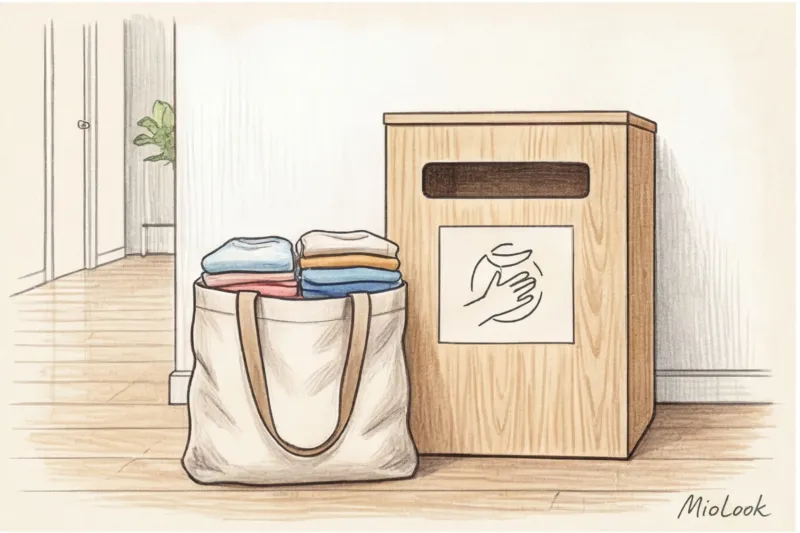
It's important to differentiate between the different formats: charities and crisis centers only accept clean, undamaged clothing with working zippers that can be worn immediately. No one wants onesies with ingrained pumpkin puree stains—such items go into specialized textile recycling bins.
At recycling plants, old T-shirts and jeans with worn-out knees are shredded and turned into regenerated fiber, cleaning rags for businesses, or technical sound insulation. This is your direct contribution to reducing your environmental footprint—don't throw textiles in the general trash.
Ready to get started?
Try the MioLook plan for free—no commitments required. Digitalize your children's wardrobe today.
Get access — €0.99 onceLife After: Capsule Wardrobes for Kids and Cost-Per-Wear
Now I'll share a thought that often sparks debate during my consultations. I constantly hear the phrase: "Why buy my child something expensive when he grows so fast! I'd rather buy more of the cheap stuff." From a financial literacy perspective, this is a huge mistake.
Buying children cheap fast fashion is unprofitable. Cheap fabrics (thin cotton and polyester) pill after three washes, seams fall apart, and the knees of pants stretch out within a week. These clothes won't last until your younger children are old and are worthless on resale. As a result, you constantly return to the store.
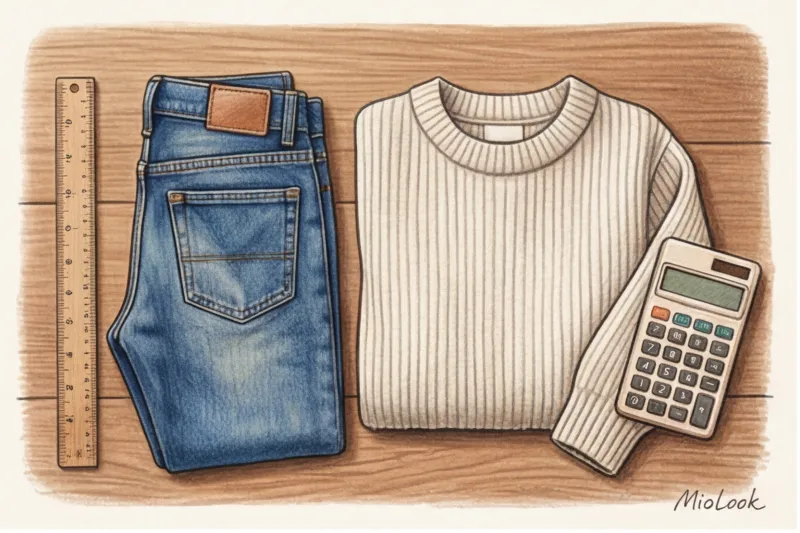
Let's count cost-per-wear (cost of one output).
Let's say you bought a high-quality Finnish winter jumpsuit for €200. Your child wears it every day for four months (about 120 times). In the spring, you sell it on a resale platform for €90. The total cost of ownership is €110. Divide by 120 times = 0.91 € per exit.
Now let's take a jacket from a mass-market store for €50. A child has worn a hole in it or broken a low-quality plastic zipper after 20 pulls. It's impossible to sell; it's going in the trash. Cost-per-wear = €2.50 per exit That means the "cheap" jacket cost you almost three times as much in actual use!
That's why I recommend building a smart capsule for children:
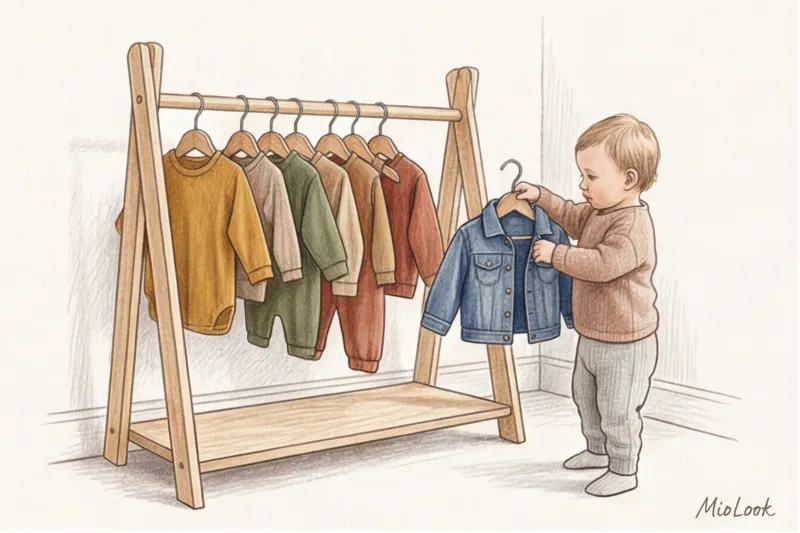
- A neutral color base (sand, gray melange, deep blue, terracotta), where all items can be easily mixed together.
- Invest in outerwear, quality shoes (with the right last) and thick knitwear (fleece fleece with a minimum of 320 g/m²).
- Interchangeability: 3 bottoms, 5 tops and 2 warm layers give you over 15 ready-made looks that will last for any season.
A practical action plan: how to declutter your kids' wardrobe in a weekend
Now that you know the theory, it's time to move on to practice. To avoid the process dragging on for weeks, follow a clear algorithm.
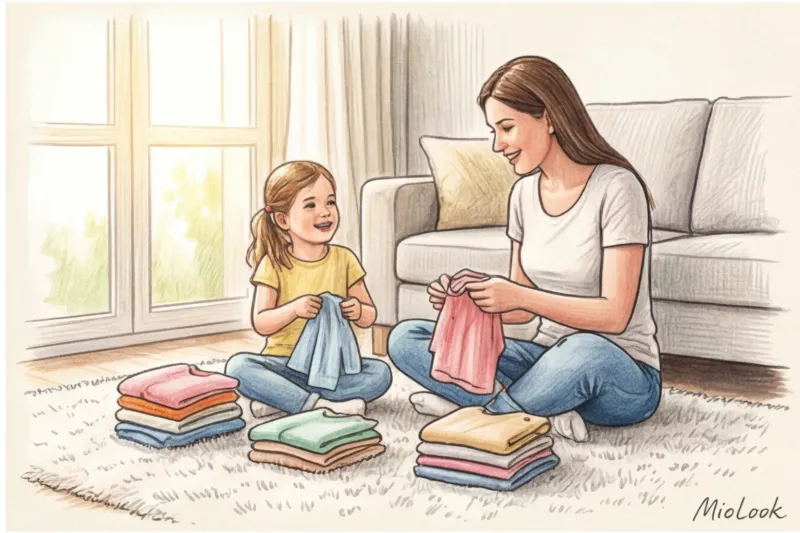
- Preparing the space: Empty the bed or lay a clean blanket on the floor. Prepare three boxes (keep, sell, donate/throw away) and wet wipes to immediately wipe down the empty closet shelves.
- Involvement (if the child is over 4 years old): Don't do this behind your child's back. Give them a voice. Let them choose one or two favorite T-shirts that they absolutely don't want to give away (even if they're washed—keep them for home). This will reduce anxiety and teach them decision-making skills.
- Trying on controversial items: Not sure about your size? Try it on. If there's more than 2 centimeters of skin between your wrist and the sleeve hem, it's too small.
- Digitalization: Lay out the items remaining in the "will wear" category in good light, photograph them, and upload them to the MioLook app. The smart system will automatically suggest pairings, and you'll immediately see what's really missing to complete your capsule wardrobe.
Sorting out your child's wardrobe isn't just a tidying process. It's a family budget inventory. By stopping buying fast fashion and switching to a digital investment capsule, you'll save not only money and closet space, but also the whole family's stress in the morning before preschool or school.