Imagine opening a photo album ten years from now. What do you expect to see? Two unique, confident people with a tingling chemistry, or a laundry detergent commercial featuring two people wearing identical sweatshirts? Over 12 years of working as a stylist on shoots in Paris, Milan, and London, I've seen thousands of couples. And I can tell you one harsh but important thing: completely imitating your partner's looks kills chemistry on camera.
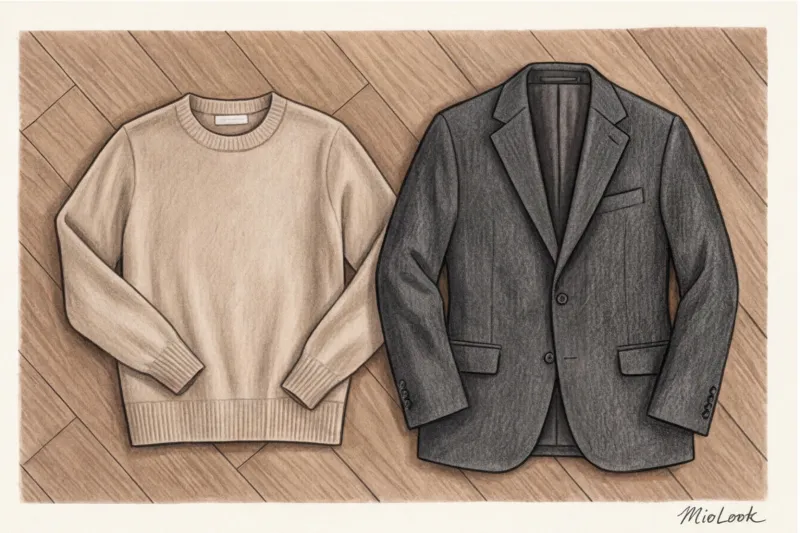
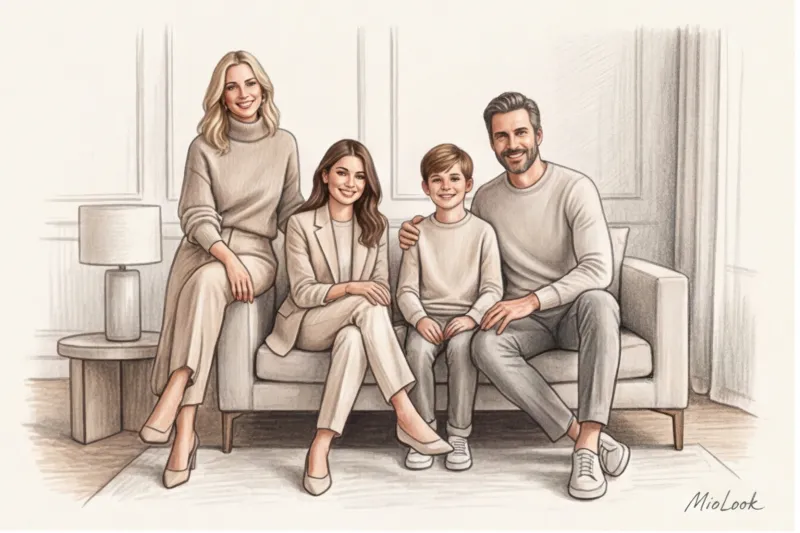
When we discuss the ideal couples' looks for a photo shoot, many instinctively imagine the classic "family look." But this approach is hopelessly outdated. Today, the aesthetic of "quiet luxury" and complementarity reigns supreme. Your clothes should create an elegant dialogue, not blend into a single blur. We've covered the basic principles of wardrobe coordination in more detail in our the complete guide to stylish couples looks , and in this article we'll explore advanced styling techniques specifically for camera lenses.
The Evolution of the "Couple Look": Why Matching Couple Photoshoot Looks No Longer Works
Remember the early 2000s? The trend for matching couples' clothes came to us from South Korea, where the phenomenon keopeulluk The couple look symbolized a public declaration of a relationship. Couples wore matching T-shirts, sneakers, and even jackets. While it was cute in the pop culture of the time, in the context of modern aesthetics it seems like an attempt to blur personal boundaries.
While working at Fashion Weeks, I often observe pairs of street style influencers. They never dress alike. Their secret lies in psychology. Researchers from Northwestern University in the US (Hajo Adam and Adam Galinsky, 2012) introduced the concept Enclothed Cognition (embodied cognition). It proves that clothing directly influences the wearer's psychological state. When you force your partner (for example, a man accustomed to formal suits) to wear an uncharacteristically "cheerful" matching sweater just for the sake of a shot, he'll feel insecure. The camera immediately picks up on this awkwardness.
"Harmony in a frame is a dialogue, not an echo. Your clothes should communicate with each other through subtle hints: the texture of the fabric, the contrast of shades, the overall silhouette"—this is my main rule on any shoot.
According to analytics agency WGSN (2024), 85% of modern couple photo references on Pinterest are now based on color blocking and mix-and-match rather than direct copying. The individuality of each partner is what makes a shot truly cinematic.
Access to MioLook for €0.99 — one-time payment
A smart AI stylist will create the perfect look for your next couples photo shoot in just a few minutes.
Get access — €0.99 onceA Stylist's Secret Weapon: The Three T's (Texture, Temperature, Tone)
To put together paired looks for a photo shoot that look expensive and professional, you don't need to buy pieces from the same collection. You just need to master the three "T"s.
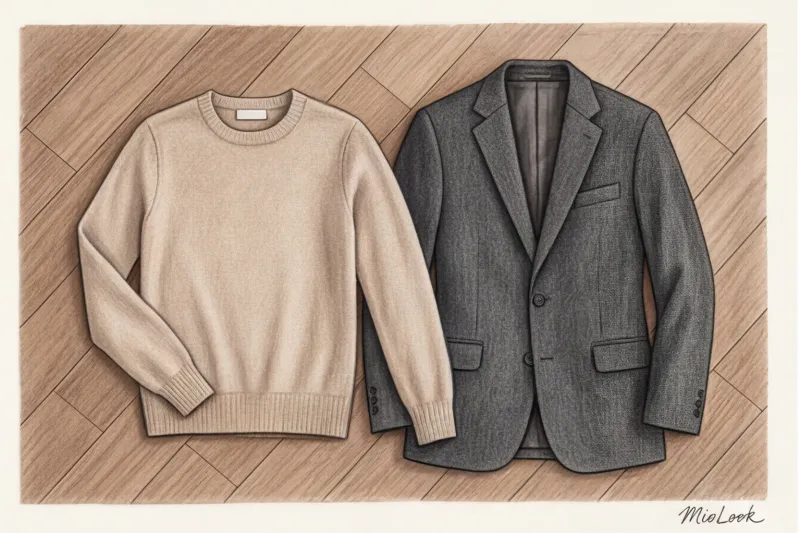
1. Texture: the rule of balance. A professional camera's sensor is fundamentally different from the human eye—it feeds on light and shadow. If you both wear smooth cotton, the frame will be flat. Differences in texture are what give a photograph volume. If he's wearing a rough tweed jacket, she should be wearing flowing matte silk or heavy 14-ounce denim. Smoothness should always contrast with texture, and fluffy materials (mohair, cashmere) with rough materials (leather, linen).
2. Color temperature. This is the most common mistake I see in amateur Love Story shoots. Mixing warm and cool tones in the same shot creates a visually "muddy" effect during color correction. If you've chosen a warm olive (with a yellow undertone), your partner can't wear a cool emerald (with a blue undertone). Choose a consistent temperature setting for the couple. Insider tip: always check compatibility by holding items next to each other near a window in natural light. Artificial light in a fitting room will deceive you 9 times out of 10.
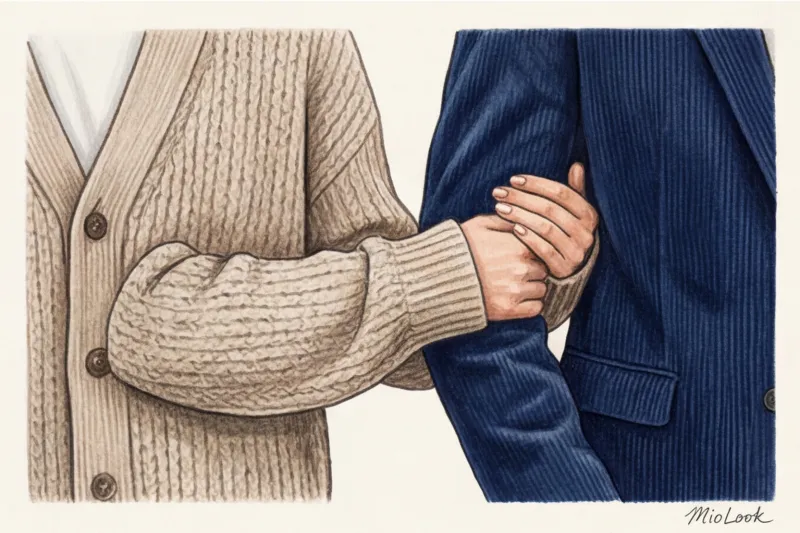
3. Tone and complementarity. Consider Itten's color wheel. Instead of choosing a single color (for example, both in blue), use complementary or analogous colors. For example, a deep wine shade on her will luxuriously contrast with a dark chocolate or graphite tone on his.
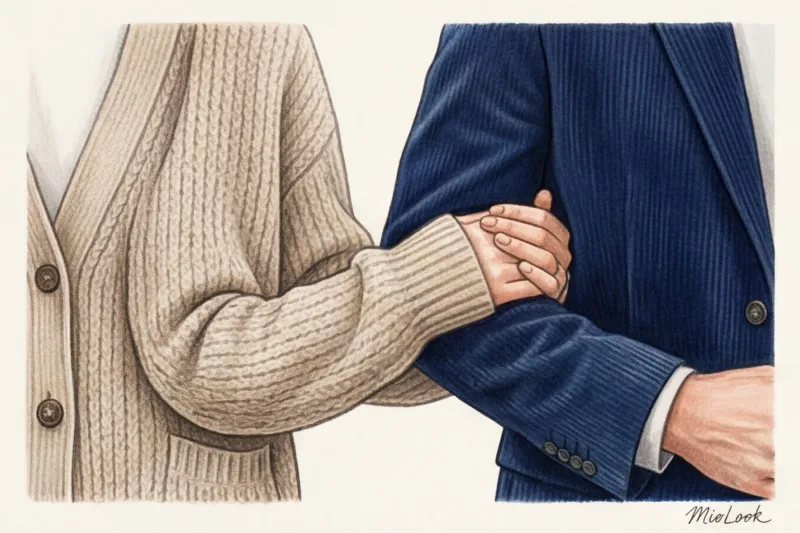
Love Story's Biggest Mistake: The White Shirt and Blue Jeans Myth
Let's address the elephant in the room. The search term "white shirts and jeans for a photo shoot" is one of the most popular. It's considered a "safe" choice. In reality, it's the worst thing to wear to a professional shoot.
Why doesn't this work? From a technical photography perspective, two identical light spots (shirts) merge when placed side by side. You lose dynamic range. The pair turns into a single, wide, shapeless light spot with four blue denim legs sticking out from it. Furthermore, pure optical white (most often found in mass-market products) produces a bluish reflection on the skin, emphasizing under-eye circles and uneven skin tones.
I had a case in Paris. The guys brought this exact set of clichés to the shoot. I practically begged them to change into the backup outfit we'd been packing in case of rain. We swapped my husband's blue jeans for camel-colored chinos, and my wife's off-white shirt for a creamy, textured viscose top with a silk blend, layered with a voluminous ecru jacket. The shot instantly acquired depth, status, and Parisian chic. A quality basic merino sweater (even a mid-range one like COS or Massimo Dutti for €80-120) will always work better on camera than a stiff, office-style shirt.
Your perfect look starts here
Join thousands of users who look flawless every day and save time with the MioLook smart wardrobe.
Get access — €0.99 onceScenarios and ideas: paired looks for photo shoots in different locations
Clothing never exists in a vacuum. It's always contextualized within the location. This is the basic rule of appropriateness. Wearing a floor-length satin evening gown with a train for a shoot in a pine forest is considered bad form (unless it's a conceptual fashion shoot with appropriate lighting and props).
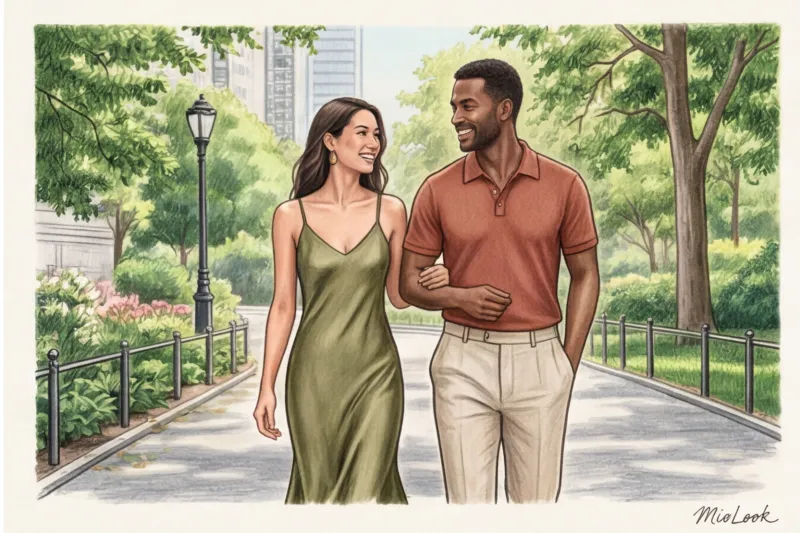
Urban aesthetics (Streetstyle)
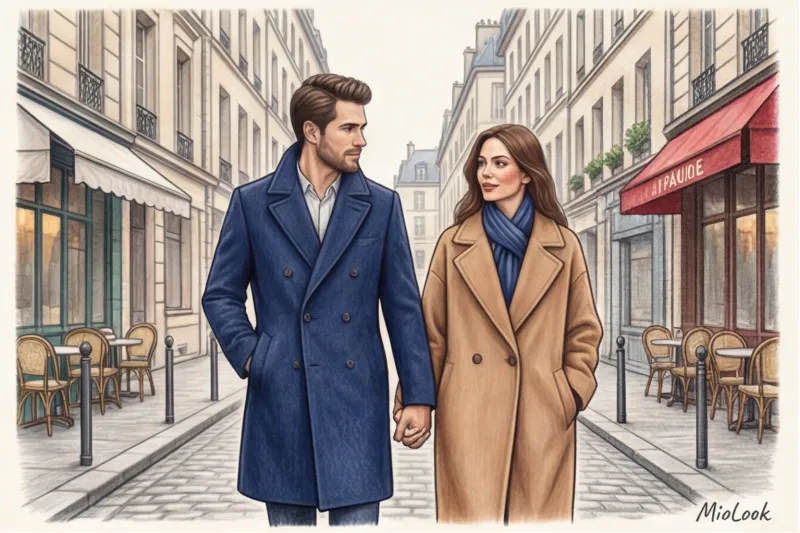
The city loves layering, clean lines, and a touch of casualness. Be inspired by the Old Money aesthetic: high-quality trench coats, oversized silhouettes, and turtlenecks worn under shirts. A great example of a capsule wardrobe for the city:
She: A loose beige trench coat thrown over a dark blue turtleneck and wide palazzo shoes.
He: A graphite-colored wool raglan coat, a thick turtleneck, and classic trousers with creases.
Studio shooting
The studio has no distracting background, so all attention is focused on the portrait area and silhouette. Architectural cuts are key here. Avoid small, rippled prints (polka dots, small checks) as they can create a moiré effect on the camera sensor. Opt for minimalism, asymmetry, and deep monochrome fills.
Outdoor Photography Looks: Textures of the Wild
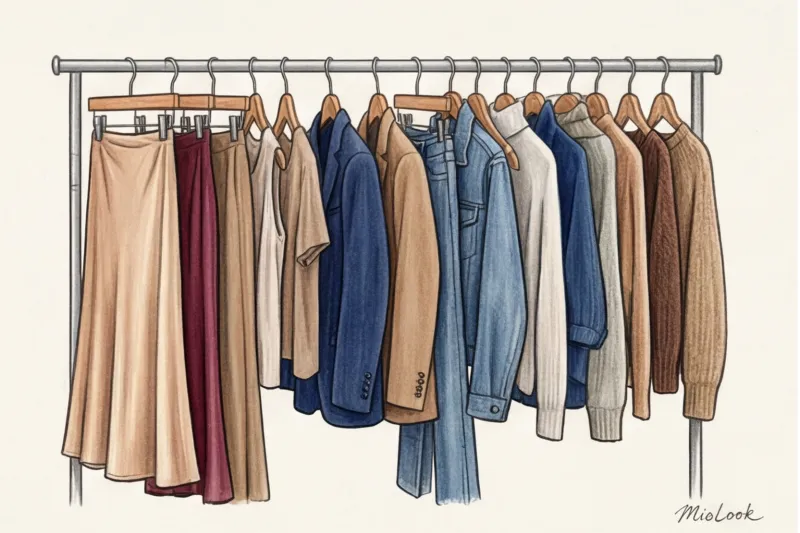
Nature dictates a rejection of urban rigidity. Stiletto heels, tight ties, and starched collars look out of place here. Choose textures that blend seamlessly into the environment: suede, corduroy, chunky knits, and matte leather.
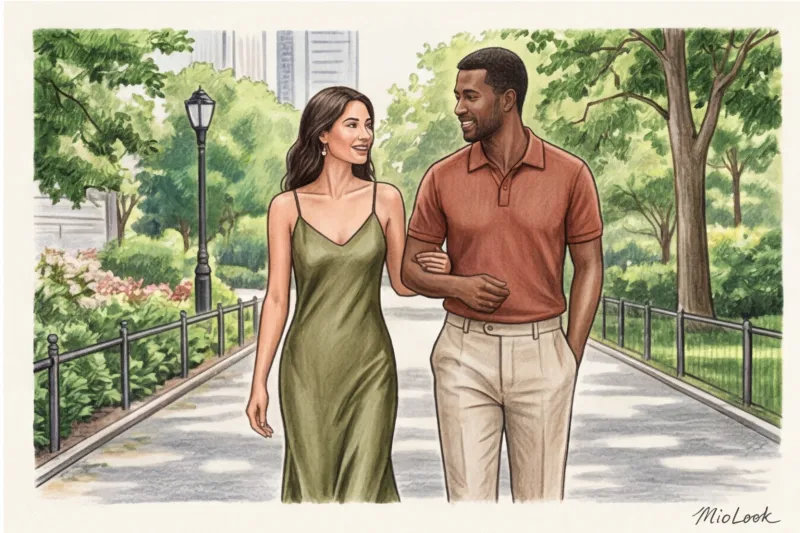
The palette should be natural: ochre, mossy green, terracotta, and rough stone tones. Be sure to take advantage of the wind and movement! If the shoot is taking place near water or outdoors, consider having one partner wear a flowing fabric (chiffon, thin silk, or a long scarf) to add movement to the shot, contrasting with the other partner's thicker material (such as a suede jacket).
Instructions: How to put together a paired look from what's already in your wardrobe
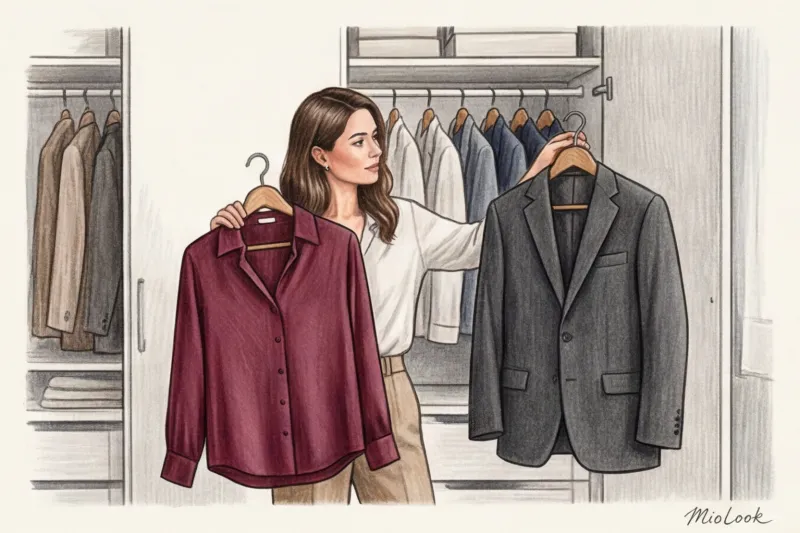
You don't have to rush to the store before every photo shoot. Most of us already have great clothes hanging in our closets; we just don't know how to put them together properly.
- Honest audit. Lay out both partners' basic pieces on the bed in daylight. You'll immediately see which tones predominate.
- Search for an anchor. Choose one strong, complex piece as a starting point. For example, her dress with an interesting floral print. Look closely at the print: find the most subtle, secondary hue (say, a muted mustard) and draw it out—make your partner's sweater that same mustard color. This will create a stunningly subtle visual connection.
- The 70/30 rule. In an ideal couples' wardrobe, 70% of the space should be taken up by basic, neutral shades, and only 30% by accent colors. Otherwise, you'll be competing for the viewer's attention.
- Connecting accessories. Disparate items can be linked through details from the same era or texture: for example, a grained leather belt on it and a bag or boots made of similar leather on it.
To avoid creating chaos on the bed, I always recommend that clients use lookbook creation feature in the MioLook app You can digitize your and your partner's belongings, and an AI stylist will help you create harmonious collages on your phone screen. This saves a ton of time and stress before the shoot.
Ready to get started?
Digitize your wardrobe and try MioLook's free look plan—no obligation.
Get access — €0.99 onceStylist checklist: what to bring to a couples shoot
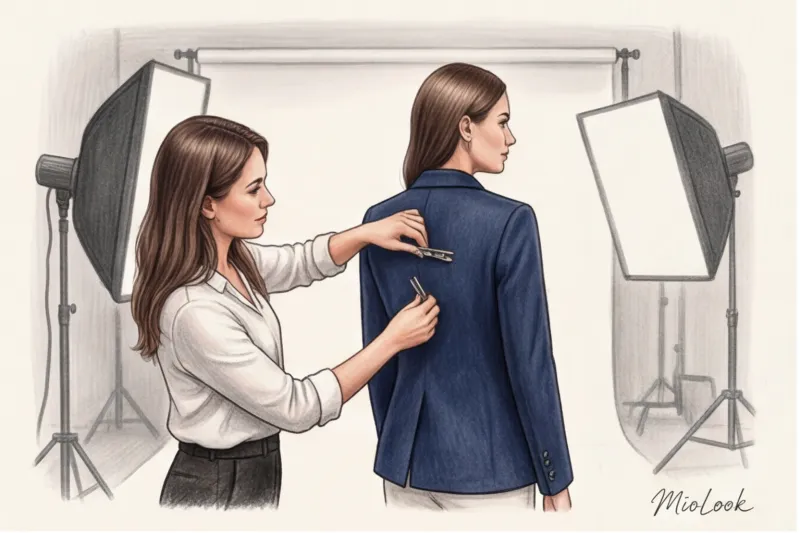
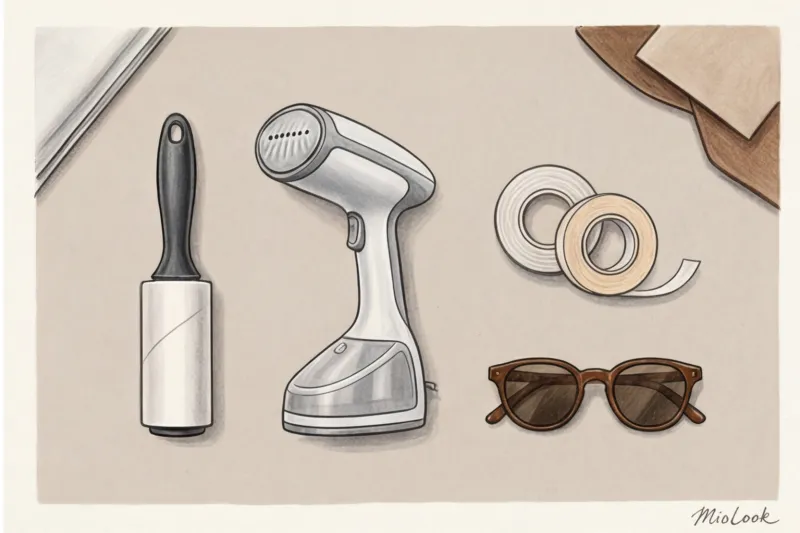
Even the most perfect look can fall apart due to technical details. As a practicing stylist, I never arrive on set without my "fashion first aid kit." Here's what you should definitely have in your bag:
- Sticky roller for clothes. This is an absolute must-have, especially if you adhere to the rule of contrasting textures. A woman's angora sweater will instantly leave a lint on a man's dark wool jacket.
- Handheld steamer. No €200 retouching will save a wrinkled linen suit as effectively as two minutes of steaming before the shot. Creases in the groin or elbows cheapen any look.
- An extra pair of comfortable shoes. To walk from the car to a beautiful location in the forest or park without ruining your suede pumps. Furthermore, changing your footwear (for example, from pumps to rugged boots) can completely change the mood of the shot.
- Double-sided tape for clothes (fashion tape). The key to a perfect fit on the red carpet: If your dress has a deep neckline or you plan on doing active poses (running, hugging), tape will keep the fabric in place.
To be fair, I must admit one limitation of all style rules. My advice does NOT work in one case: if wearing the same outfit is part of your personal, intimate story. If you met at a concert of your favorite rock band and want to pose in a photoshoot in identical washed-out merch T-shirts because that's who you are, then go for it. Genuine emotion will always trump polished styling.
But if your goal is to create a visually appealing, aesthetically pleasing result that you'll want to print on canvas for your living room, avoid direct copying. Allow your clothing to be as varied, complex, and yet harmonious as your relationship.