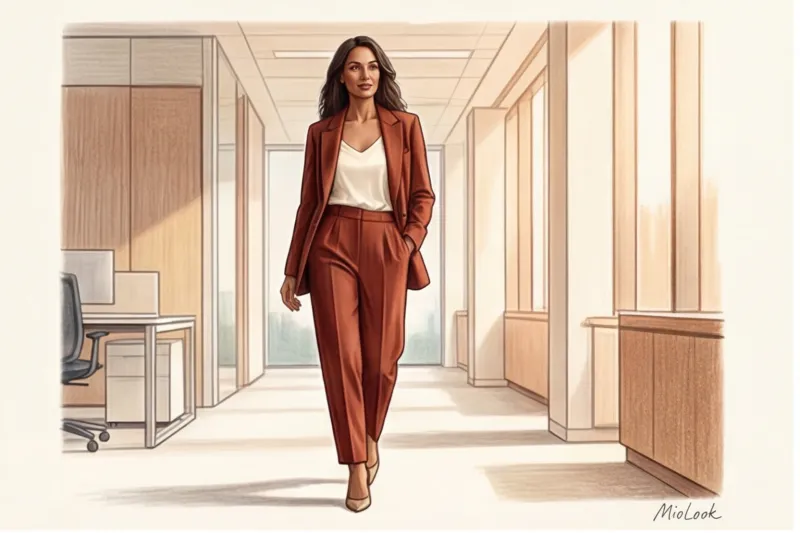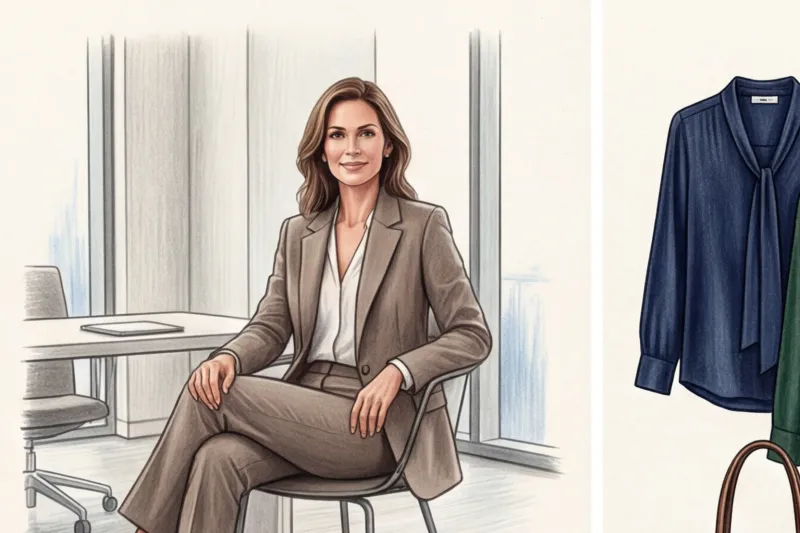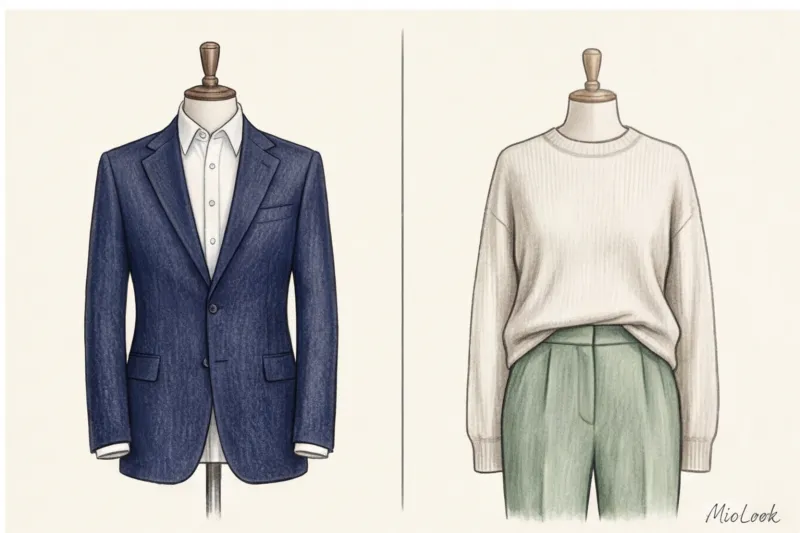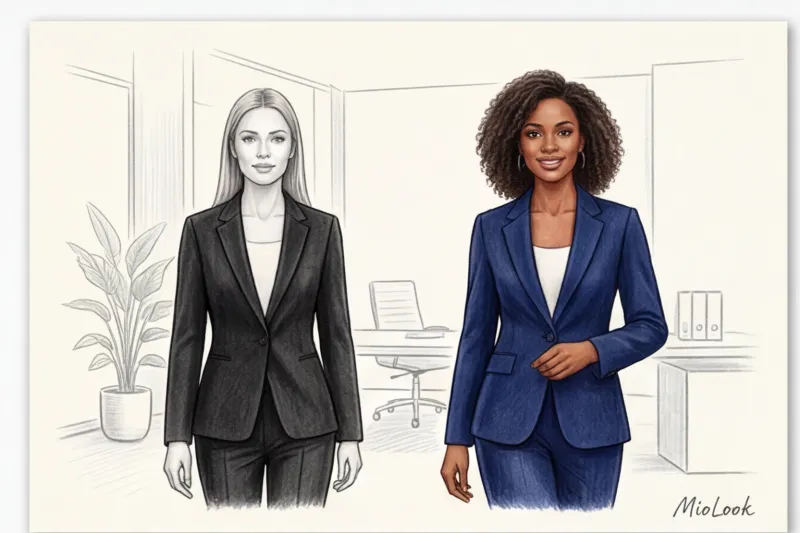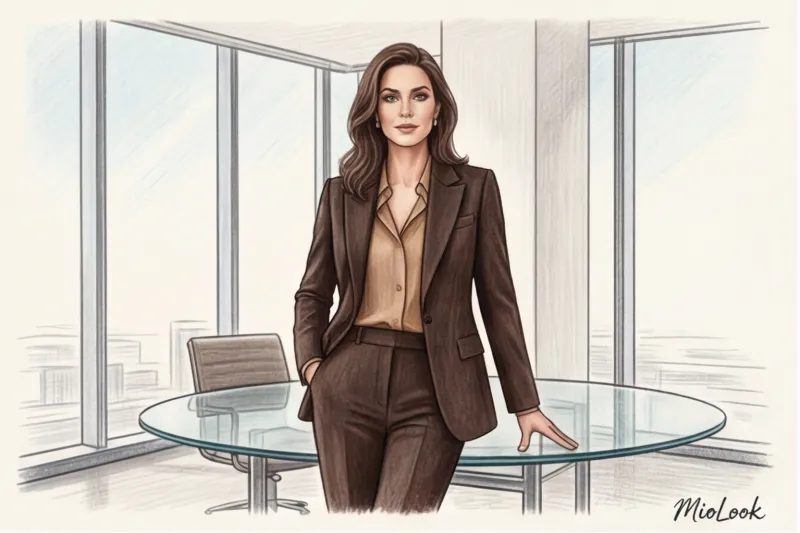
One day, a client—the CFO of a large IT company—came to see me for a consultation. She complained that her ideas were often interrupted at board meetings, and that her look was perceived as too "executive," despite her custom-tailored suits. I took a look at her wardrobe and immediately understood the reason. It was 90% composed of stark, rigid black-and-white ensembles. We replaced the basic black with dark chocolate and midnight blue, adding texture with cashmere and heavy silk. A month later, she wrote to me: "Julia, it's magic. People have started listening to me before I speak, and the dynamics of negotiations have changed dramatically.".
Literate color combinations in business clothes — it's not just a matter of aesthetics. It's a powerful tool of nonverbal influence, a quiet code of luxury (stealth wealth) that is discerned by others in a split second. I've already discussed the fundamental mechanisms of this influence in more detail in our A complete guide to the psychology of color in clothing: how to manage impressions Today, we'll move on to absolute practicality: how to break free from the banal office uniform, stop hiding behind boring black, and assemble a truly luxurious, high-status wardrobe.
The Hidden Code of Luxury: Why Your Business Attire Color Combinations Determine Your Status
The difference between "dressing strictly according to the dress code" and "dressing with class" is colossal. You can wear a gray suit from a mass-market brand, and technically, HR won't have any complaints. But at a subconscious level, your partners will still see you as an ordinary employee.
According to a large-scale study by the Institute for Color Research (2023), people form an initial impression of a person within the first 90 seconds of a conversation, and 62% to 90% of this assessment is based solely on color. Color reveals the true value of your clothing much faster than cut, perfect fit, or, especially, a brand logo hidden in the lining.
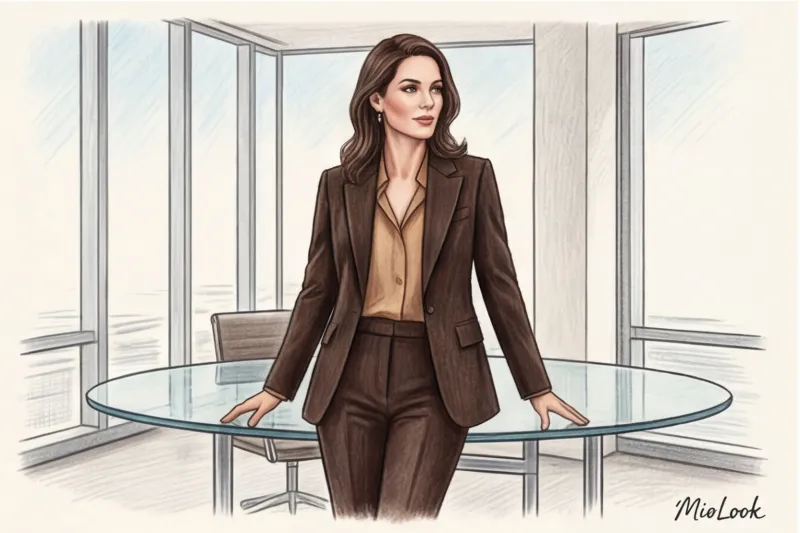
The fact is that producing deep, complex shades is an incredibly expensive technological process. Cheap mass-market dyes are physically incapable of producing a multifaceted color that shifts gracefully in different lighting. This is precisely why premium items (remember the Loro Piana palette) are so alluring: their colors seem to glow from within, conveying a calm, confident luxury.
Access to MioLook for €0.99 — one-time payment
A smart AI stylist will select the perfect look for your negotiations.
Get access — €0.99 onceThe biggest myth of the corporate world: why black cheapens an image
In my practice, I constantly encounter the same misconception among my clients: "Black is the most formal, safe, and prestigious color. I'll buy a black suit for any occasion." As a stylist, I officially declare: this is the main myth of business wardrobe.
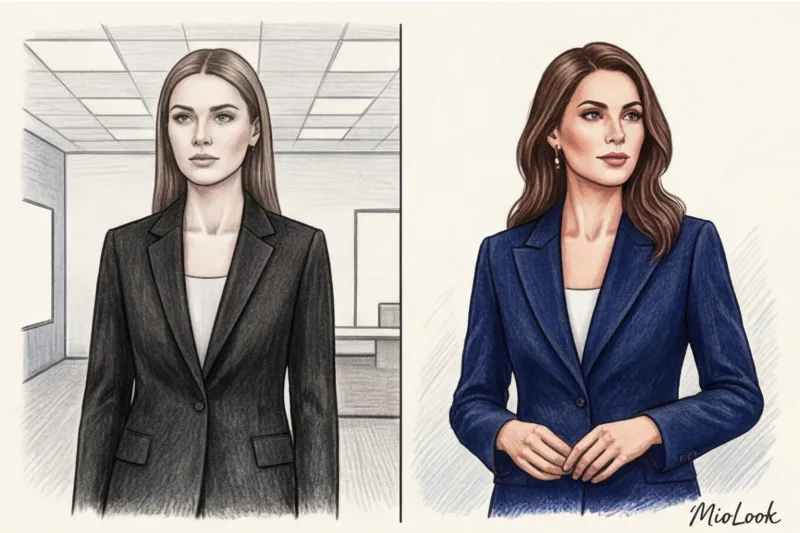
Black is incredibly demanding when it comes to fabric quality. It only looks truly expensive on matte crepe, heavy silk (19 to 22 momme), luxurious cashmere, or the finest Super 120s wool. If you buy a black jacket made of viscose with added polyester, be prepared for failure. Under office fluorescent lighting (which typically has a cool temperature of around 4000 Kelvin), cheap black takes on a bluish, greenish, or downright washed-out cast.
"The crisp, contrasting duo of a black jacket and a crisp white shirt has historically been associated with the uniforms of service personnel—waiters and maitres d's. Top management and business owners wear completely different colors."
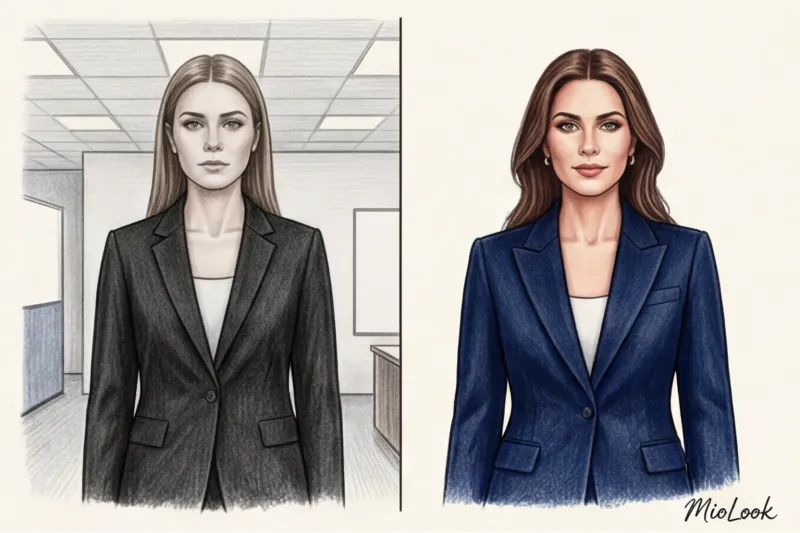
Moreover, in daylight, black often looks flat, highlighting even the slightest hint of facial fatigue, shadows under the eyes, and creating an overly rigid, inflexible distance. Much more "expensive" and status-conscious alternatives include:
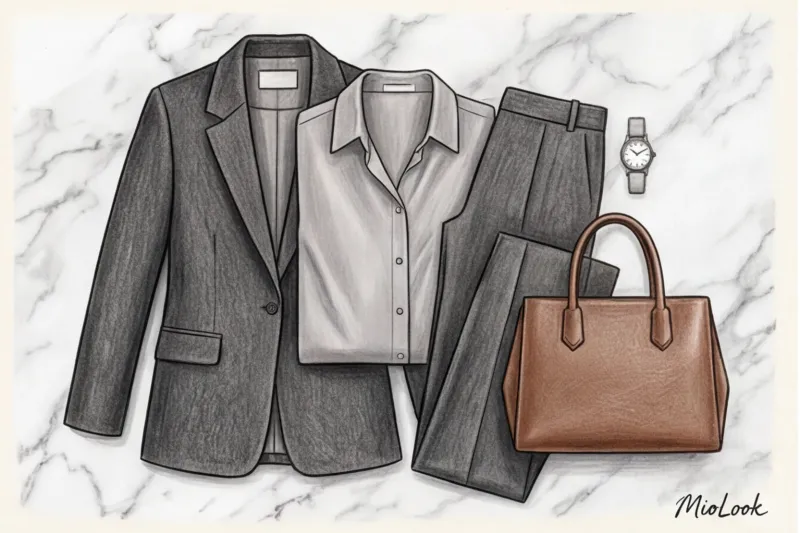
- Graphite (Charcoal): retains absolute strictness, but looks softer and more intelligent.
- Midnight blue: The king of the business wardrobe. Looks authoritative, but not aggressive.
- Dark chocolate color (Espresso): A luxurious alternative to black for women with a warm complexion.
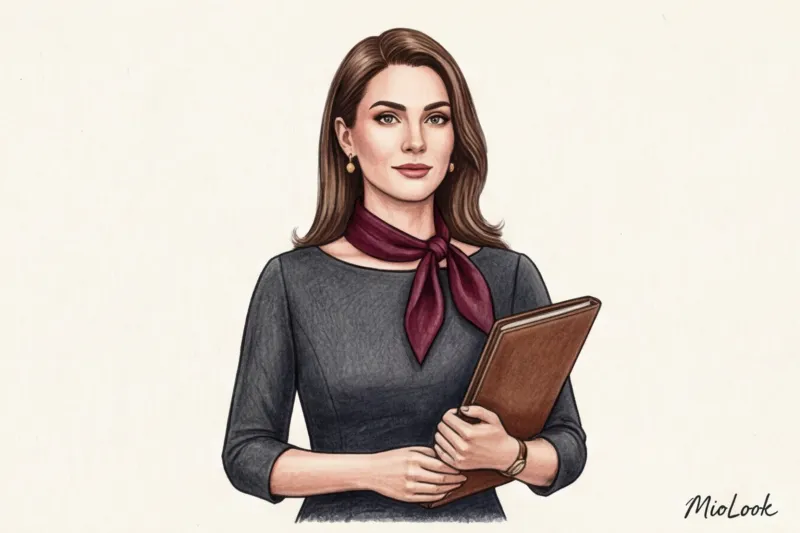
- Deep Bordeaux (Oxblood): the color of unspoken power and hidden energy.
The Art of Monochrome and Sophisticated Neutrals
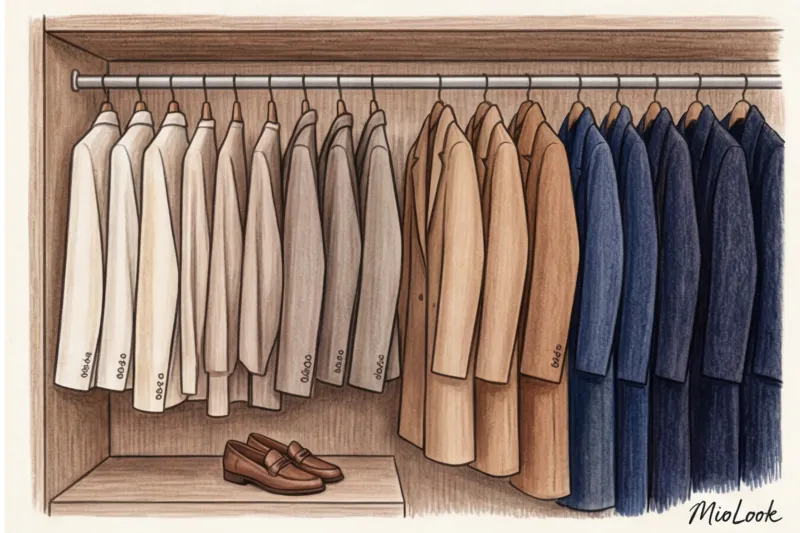
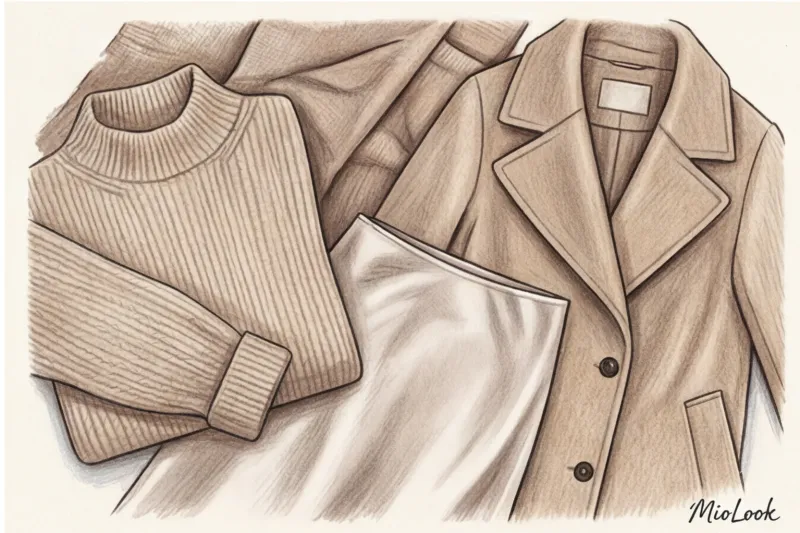
If you want to look like you just stepped out of a boutique on Via Montenapoleone in Milan, master sophisticated neutrals. These are colors that masterfully blend several pigments: taupe (taupe), camel (camel), greige (gray-beige), sage (muted sage).
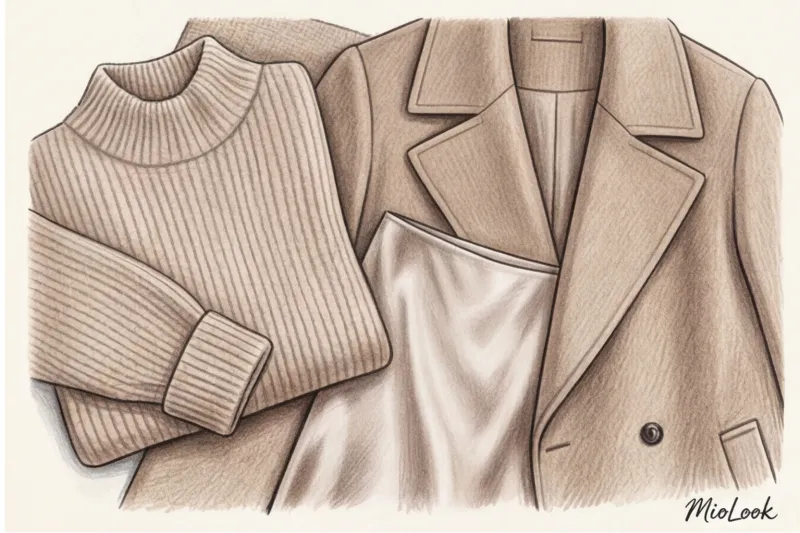
For me, the Italian house Brunello Cucinelli has always been the benchmark for working with such colors. Their main stylistic secret is the exquisite blending of warm and cool undertones of the same color within a single look. For example, a cool taupe cashmere cardigan is worn over a warm sand-colored silk top. This creates stunning visual depth that simply can't be achieved by buying a ready-made three-piece suit in a single tone.
Texture is everything: how color works on different fabrics
In a monochrome look (when you're dressed in one color from head to toe), the eye becomes bored if there's nothing to catch it. Contrast here isn't created by color, but solely by materials. Remember the formula for the perfect, high-status monochrome: matte + glossy + textured.
Wear matte, heavy wool trousers, pair them with a glossy silk blouse, and complete the look with a grained leather bag. While all the pieces may be in the same taupe shade, the varying textures create a complex ensemble. Matte wool absorbs light, creating a richer color, silk reflects light, creating a playful hue, and grained leather adds architectural structure.
Your perfect look starts here
Join thousands of users who look flawless every day with MioLook.
Get access — €0.99 onceFormulas for ideal color combinations for the office
Even if you're not an expert in color and don't want to spend hours in front of the mirror, remember the golden rule of proportions: 60-30-10 This formula ensures that your look is balanced and doesn't turn into visual chaos.
- 60% (Base): The main color of your suit or dress. For example, graphite gray.
- 30% (Addition): The color of the blouse, shirt, or turtleneck. For example, dusty blue.
- 10% (Accent): Shoes, a bag, a silk scarf, or jewelry. For example, dark burgundy.
If the dress code allows for color, use analogous combinations—shades that are adjacent on the Itten color wheel. A perfect example for business: a navy blue jacket paired with a deep emerald top. It looks unique, yet completely professional.
Here, it's crucial to consider your natural contrast. As we discussed in detail in the article about the 12 color types of appearance , women with soft, muted coloring (light eyes, light brown hair) are contraindicated