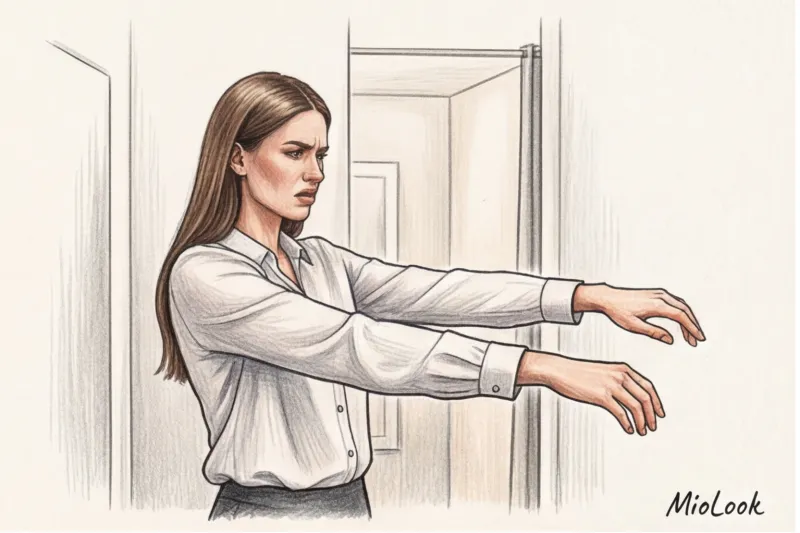
Cold wrists, sweater cuffs constantly pulled down, and the constant compromise between a flattering silhouette and the right sleeve length. If you're taller than 173 centimeters (5'8"), you probably know the feeling: when trying on a new wool garment, the first thing you do is stretch your arms out in front of you. And more often than not, you sigh in disappointment.
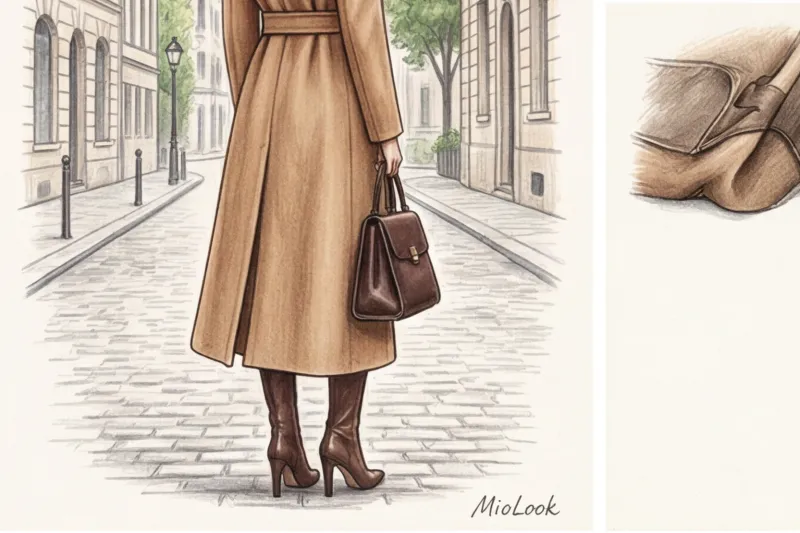
Typical fashion advice says, "Just look for Tall lines." But as a stylist and wardrobe investment consultant, I can tell you honestly: the selection in such lines is often limited, and the quality of the fabrics leaves much to be desired. We've already discussed wardrobe anatomy in more detail in our The complete guide to perfect clothing for tall girls , but today I want to delve into the holy of holies - outerwear.
Find the perfect one coats for tall women It's not a matter of luck. It's a matter of understanding the art of tailoring. Today, I'll teach you how to read clothes like a professional buyer: we'll explore which seams reveal a garment's hidden potential, and why buying clothes "one size too big" is the worst thing you can do to your silhouette.
The Architecture of Cut: Why the Perfect Coat for Tall Women Isn't Just About the Sleeves
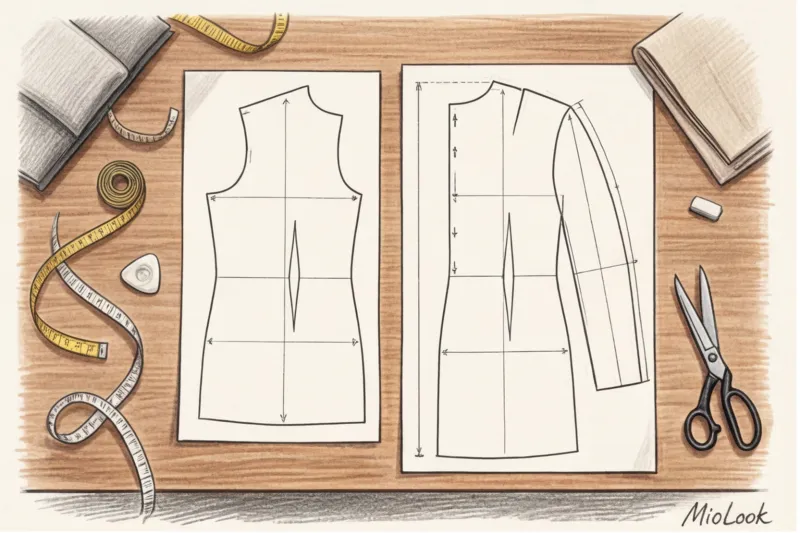
When we focus solely on sleeve length, we miss the most important thing: the overall design of the garment. A coat isn't just fabric; it's an engineered structure. And if that structure is designed for a height of 165 cm (which is the height for which most mass-market brands base their basic patterns, according to European standard EN 13402), absolutely everything will fall flat on a tall figure.
Over 12 years of working with premium Italian brands, I've developed a "golden ratio" for outerwear. The problem isn't cold wrists. The problem is that the waistline dips under the ribs, the darts at the bust end up higher than they should, and the pockets, which should be at wrist level, poke out onto the stomach.
Luxury brands approach design differently. They have a completely different basic fit (often 170-175 cm) and a different back balance. When you put on a well-tailored garment in your size, you immediately feel how it "pulls" your figure together, giving your look a prestigious and luxurious feel.
The biggest mistake when choosing: why you shouldn't buy a size with room to spare
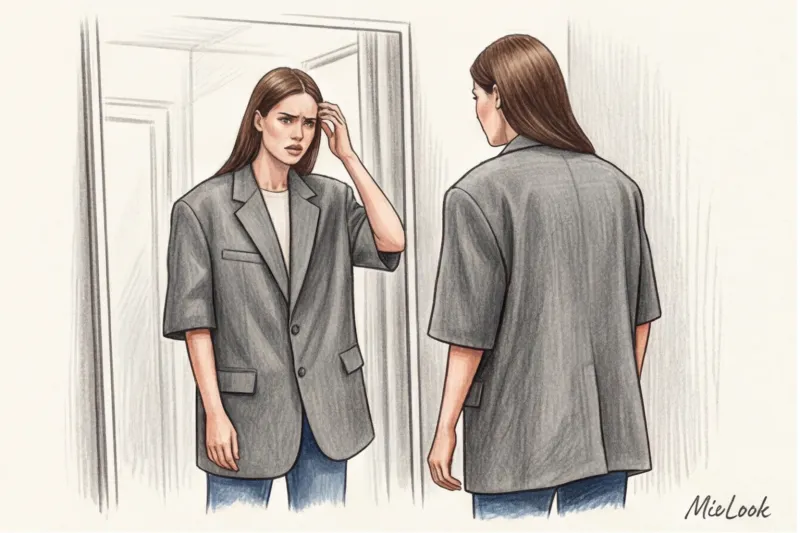
The most common misconception new clients come to me with is: "I wear a size M, but I always buy coats in L or XL so the sleeves are a normal length." Please forget this method forever.
Let's look at this from the perspective of pattern grading (reproduction) in production. When a factory increases a size from M to L, the chest and hip width increases by an average of 4-5 centimeters. The shoulder width increases by 1-1.5 cm. But the sleeve length increases... by a maximum of 0.5 centimeters!
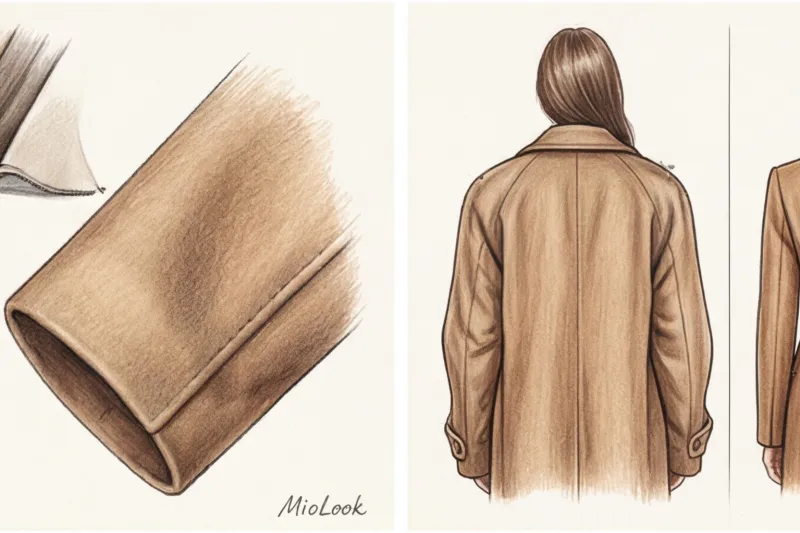
What do you get in the end? The sleeves are still short, but now the shoulder structure is distorted. The armholes, dropped in an unintended way, look untidy, and the excess fabric around the waist and hips makes the figure look bulky and shapeless. This instantly cheapens even a top-quality cashmere garment.
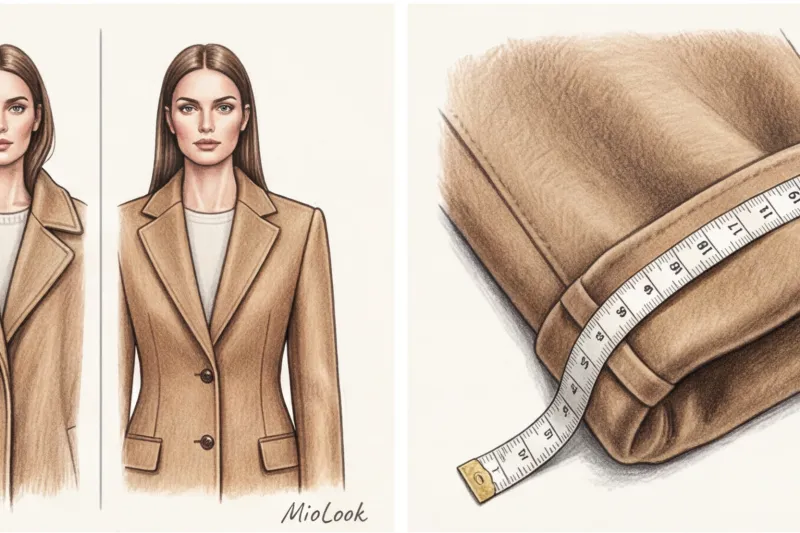
Remember the golden rule of investment shopping: shoulder shape is paramount. If a garment doesn't fit properly, no tailor can fix it. Volume should be built into the style itself (oversized), not achieved by buying someone else's size.
Your perfect look starts here
Tired of wondering if a style will suit you? Join thousands of users who look flawless every day with the help of a smart AI stylist.
Get access — €0.99 onceSecrets of premium tailoring: how to lengthen sleeves at a tailor's shop
And now for some insider information that will change your shopping experience forever. I'll tell you what only professional tailors and luxury buyers know.
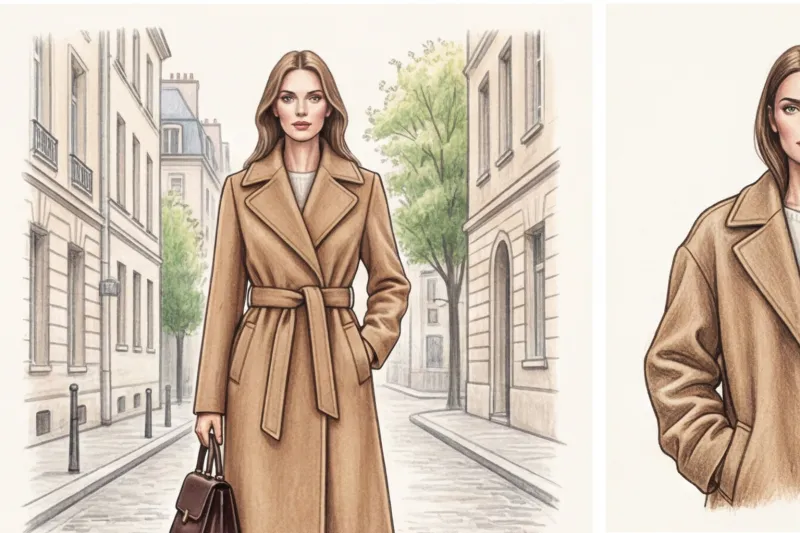
One of my clients, Anna (178 cm), had always dreamed of a classic double-breasted camel coat, but everywhere she looked, she always found it looked too short. We went to a boutique, chose a Max Mara coat that fit perfectly around the shoulders and waist (though, of course, it was a bit short in her arms), and brought it to my trusted atelier. The tailor ripped open the lining, revealing 4 centimeters of hidden fabric. For the first time in her life, Anna wore a classic coat with a sleeve that reached to the thumb bone.
What's the secret? It's in the hem allowances.
- Mass market (Zara, Mango, H&M): Saves every millimeter of fabric on millions of copies. The sleeve hem allowance there is 1-1.5 cm. There's nothing to waste.
- Premium and luxury (Max Mara, Loro Piana, COS, Massimo Dutti in their premium lines): The sleeves are filled with luxurious 3.5–5 cm of fabric. The designers of these brands understand that their clients will need to adjust the garment to their figure.
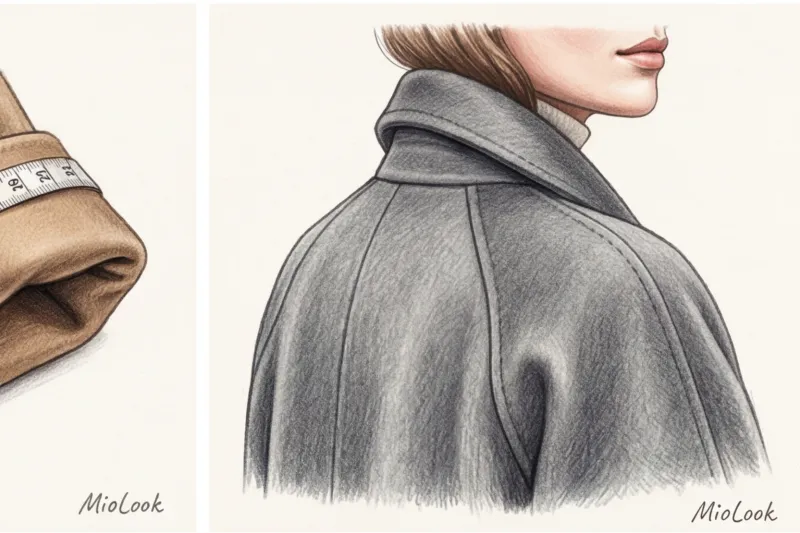
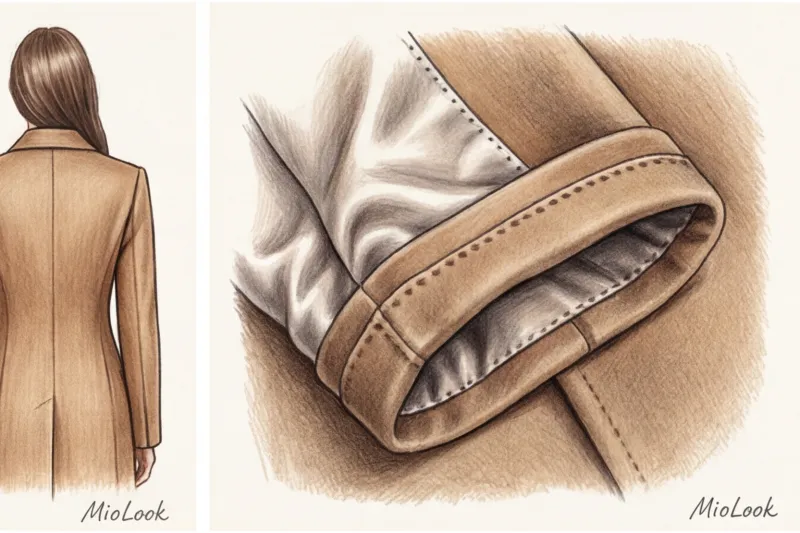
How can you determine the garment's potential right in the store? Reach inside the sleeve and feel where the lining is sewn to the main fabric. Use your fingers to feel the edge. If you feel a tight, wide fold of fabric, two or three fingers wide, go for it. A good tailor will make this length in a couple of hours, adding the lining with an invisible seam. This is inexpensive but gives the effect of a custom-made garment.
Saving cut: styles that forgive taller heights
If you don't have the time or desire to fiddle with a tailor, your most important tool is choosing the right shoulder knot design. The way the sleeve is sewn in determines how critical a few centimeters of length will be.
Raglan and one-piece sleeves
What makes the raglan so effective? It doesn't have a rigid shoulder seam (the point where the sleeve attaches to the shoulder in a classic set-in fit). The fabric flows smoothly from the neckline down the arm.
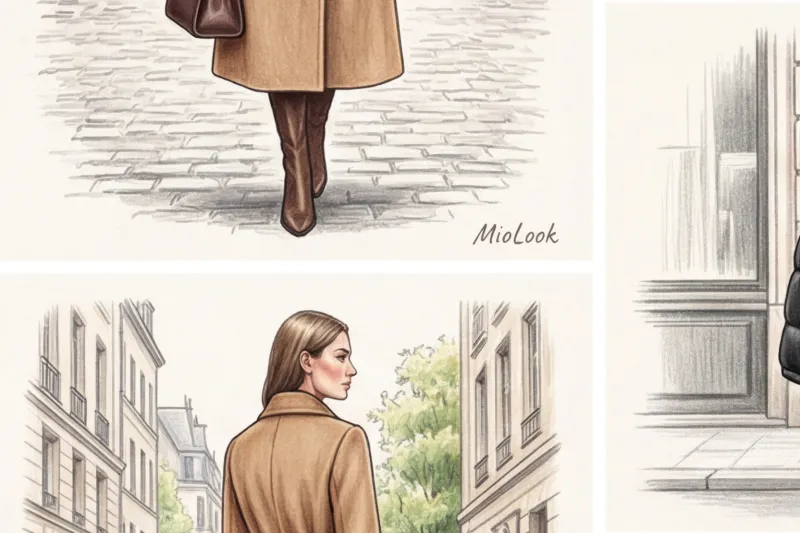
If you have broad shoulders, a raglan will take up some of the sleeve length. If you have narrow shoulders, the sleeve will drop lower, giving you those missing inches. This is the most adaptable design for tall women, always looking elegant and relaxed.
Exaggerated oversize and dropped shoulder (Drop-shoulder)
According to a 2024 study by the WGSN Institute, architectural oversize has become the main hallmark of the "quiet luxury" aesthetic. But there's a catch: the dropped shoulder must be intentional.
In a proper drop-shoulder coat, the armhole line is low (sometimes mid-bicep), but the sleeve itself necessarily tapers towards the wrist If the sleeve remains wide and flared all the way to the bottom, it looks like you're wearing a larger man's garment. A tapered cuff, even with a slightly shorter length, brings the look together, leaving it feminine and delicate.
Jackets and down jackets: how to avoid the "shot" effect
The tailor's trick rarely works with down jackets. I have to be honest: this advice does NOT work with quilted synthetic jackets. The fabric often "remembers" old needle holes, and the filling doesn't allow for a beautifully finished edge. Furthermore, horizontal quilting on a slightly short sleeve visually "cuts" the arm, making it look disproportionate.
How do we solve this problem with our clients?
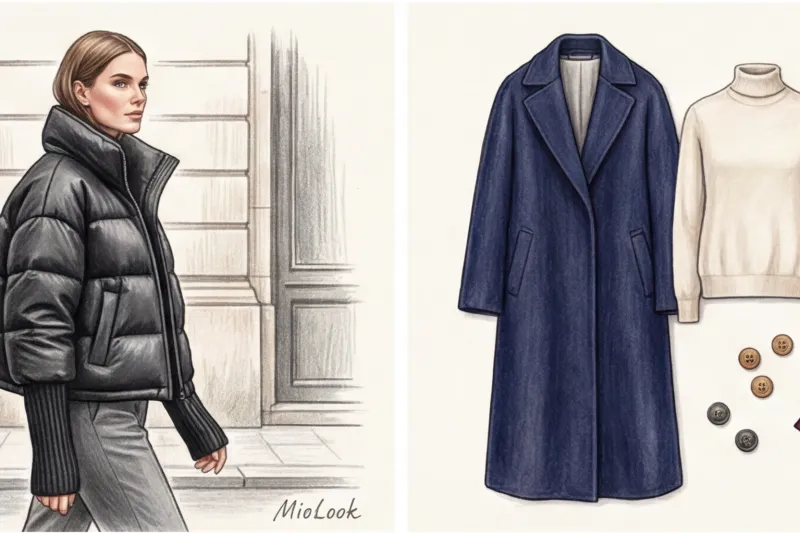
- We are looking for knitted cuffs. Choose jackets with a long, thick knit cuff (sometimes with a thumbhole) peeking out from under the main sleeve. This not only adds warmth but also creates a great design element—layering always looks more luxurious.
- Let's look at men's collections. Yes, for oversized parkas, bombers, and minimalist down jackets, the men's departments of premium brands (or concept stores) are a real find. They typically have different sizing and longer sleeves, and the straight cut is currently at the peak of fashion.
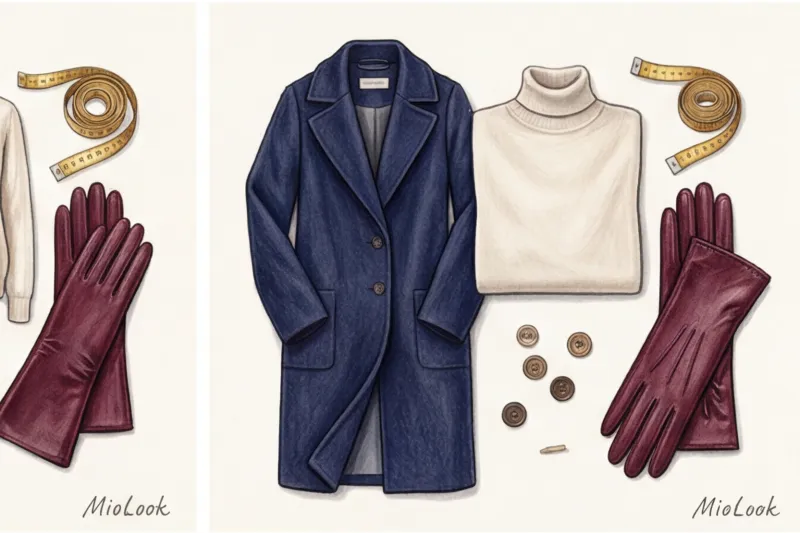
And my favorite styling trick I use for cropped sleeves on leather jackets and ponchos: high gloves Investing in a pair of luxurious leather gloves that reach mid-forearm instantly transforms a short sleeve into a sophisticated style statement, as if you just stepped out of a Jil Sander or Saint Laurent show.
Ready to get started?
Create your perfect outerwear capsule in our virtual wardrobe. Try the free plan—no commitments.
Get access — €0.99 onceInvestment Purchase Checklist: 5 Steps to the Cashier
Buying outerwear is an investment. And it should be approached with due pragmatism. Save this checklist I use for personal shopping:
- Test in motion: Put the garment on and raise your arms to chest level (as if holding onto the steering wheel of a car). If the back seam is stretched to the point of popping and the sleeve is pulled past the middle of your forearm, this isn't your style.
- Fold test: Bend your arm at the elbow. In a properly tailored coat, the sleeve hem should not rise more than 2-3 centimeters.
- Pocket locations: Relax your arms at your sides. Your fingers should fit naturally and effortlessly into your pockets. If you have to bend your arm or reach up, the waistband isn't in the right place.
- Palpation of the reserve: Feel the sleeve hem. Found a 3-4 centimeter excess? Excellent, the item can be customized at a tailor's.
- Belt loop rating: If your coat has a belt, check the belt loops. They should sit squarely at your waist. Reputable brands make belt loops from a thin thread that can be easily cut and resewn lower without damaging the fabric.
Being tall isn't a problem when choosing clothes. It's a luxurious base that complements complex, architectural shapes, dense textures, and maxi lengths. Stop compromising by buying shapeless, oversized pieces. Find your own patterns, check the inside for seam allowances, and don't be afraid to delegate the final fit to a reputable tailor. This is how you create a wardrobe that looks truly luxurious.