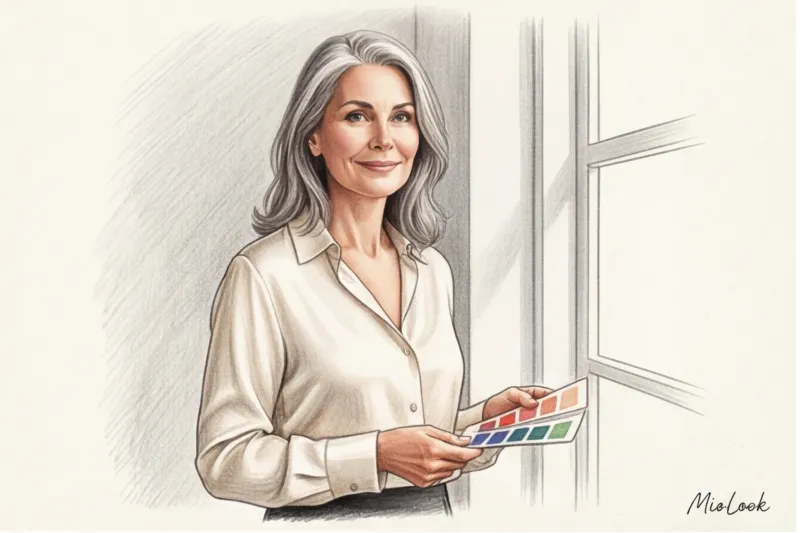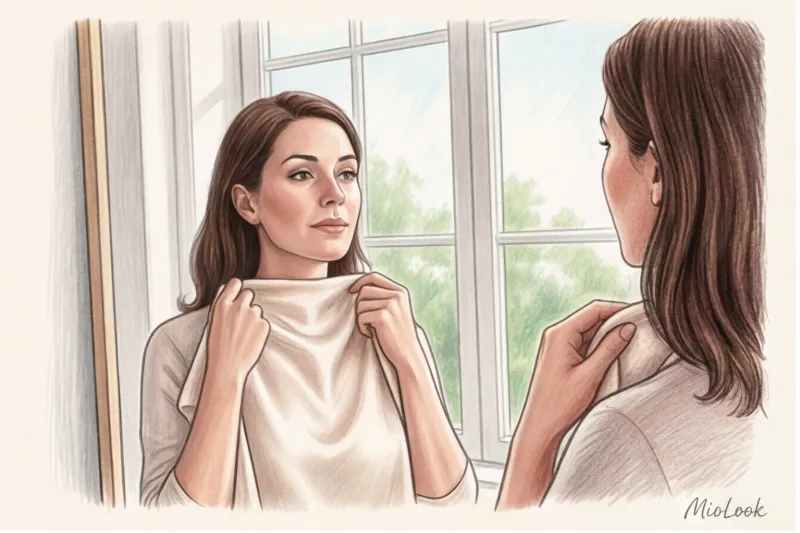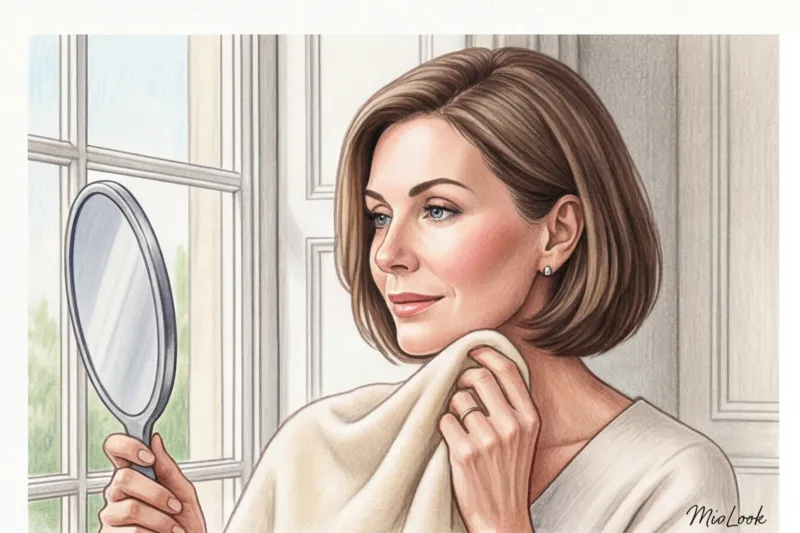
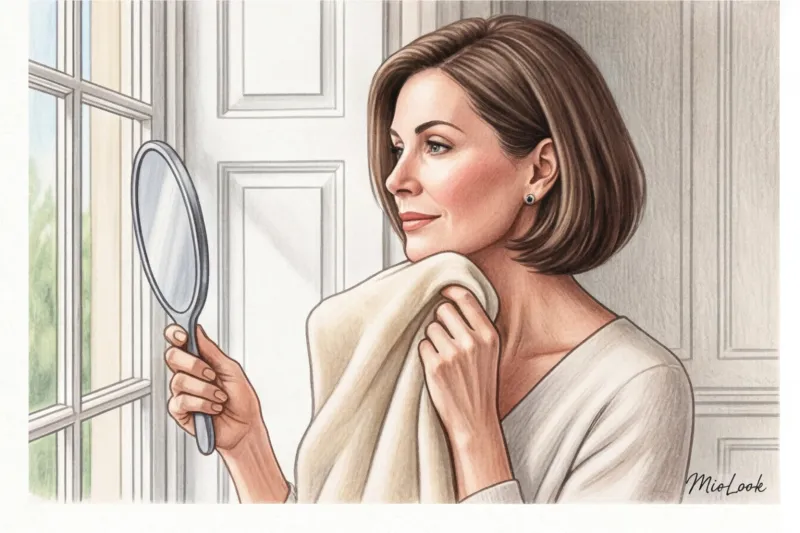
At every first consultation, I ask the client to stand near a window without makeup and hold a plain white A4 sheet of paper under her chin. Nine times out of 10, the reaction is the same: "Oh, where did those shadows under my eyes come from? I just slept for eight hours!" The secret is simple: it's the merciless physics of light, not your age.
When we search for clothing colors that make us look younger, we often fall into the trap of banal glossy magazine advice: "throw away all black immediately" or "wear only cheerful pastels after fifty." Over 14 years of working as a personal stylist, I've become convinced that these rules are hopelessly outdated. We discussed style architecture in more detail in our The Complete Guide to a Basic Wardrobe for a Woman Over 50: Modern Style Today, we'll explore how fabric works as a photographic reflector, and why choosing the right shade can replace a trip to the cosmetologist.
Why Colors Work Like Cosmetics: The Physics of Light After 50
As we age, our skin inevitably loses up to 20% of its natural contrast. Melanin production decreases, and blood microcirculation changes, causing the skin's undertone to become slightly cooler or olive. That's why the shades that made you look fabulous in your 30s can make your face look tired today.
According to Johannes Itten's color theory, saturation contrast directly determines the perception of form and relief. In portrait photography, this is measured using the LRV (Light Reflectance Value) metric. How does this work in wardrobe?
- Fabrics with LRV above 60% (light, complex, "dusty" tones) work like an expensive studio softbox. They gently diffuse light upward, visually "erasing" up to 30% of fine wrinkles and pigmentation.
- Low LRV fabrics (deep, matte, dark tones) absorb light. They cast micro-shadows on every crease of the face, deepening the nasolabial folds.
"Pure" spectral colors (open red, bright green) command all attention. Mature beauty, however, requires a complex facet. Therefore, we will focus on status-conscious, mixed shades.
Access to MioLook for €0.99 — one-time payment
A smart AI stylist will select the perfect look based on your appearance and palette.
Get access — €0.99 onceTop 5 status shades that are guaranteed to refresh your face
Let's forget about neon flashes and move on to a refined palette that looks expensive and flatters you. Here's my tried-and-true base for the portrait area (from the chest to the face):
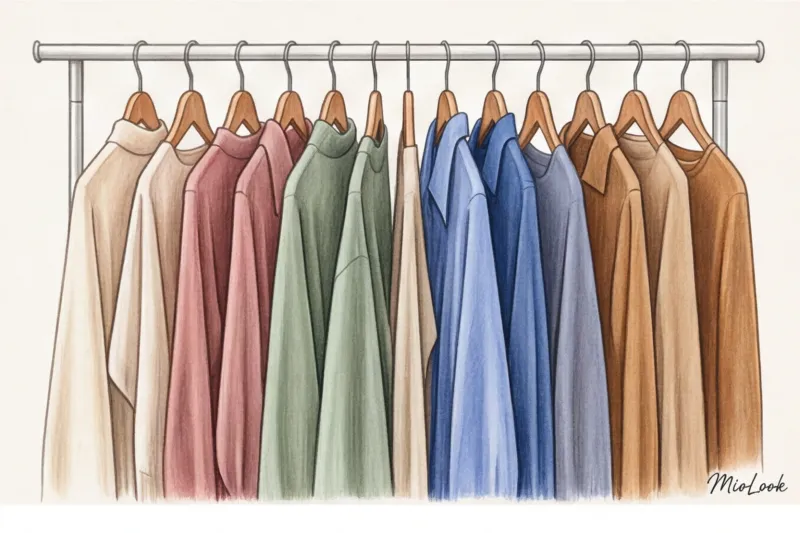
- Milky and ecru instead of snow-white. Pure white with a bluish undertone (like printer paper) accentuates even the slightest redness. Warm milky, buttery, or ecru shades work as a highlighter. An ideal investment is an ecru silk blouse (budget €60–€90 at Massimo Dutti, or premium from €200).
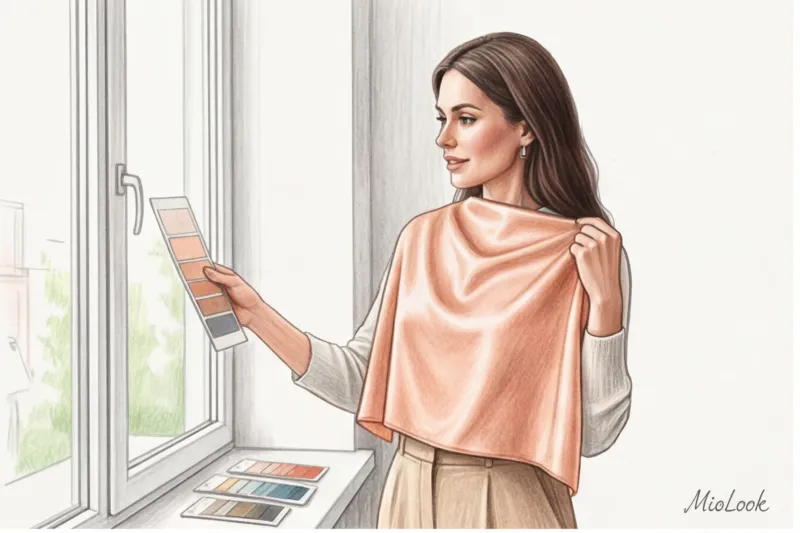
- Dusty rose and salmon instead of Barbie pink. A grown woman doesn't need to rejuvenate herself with childish pink. Salmon and muted powder pink restore a healthy glow to the face.
- Complex blue (navy, cornflower blue). An ideal substitute for black for creating high contrast, navy blue has become the leading "new black" in the premium age segment, according to the WGSN Global Trends Study (2024).
- Soft emerald and sage. Did you know that, according to coloristics, green neutralizes red? If you're prone to rosacea or redness, sage green will visually even out your skin tone.
- Caramel and camel. They add warmth and coziness. They look stunning in cashmere and wool blends (excellent basic jumpers can be found at COS for €150–€190).
The Secret to "Adult" Pastels: How to Avoid Looking Childish
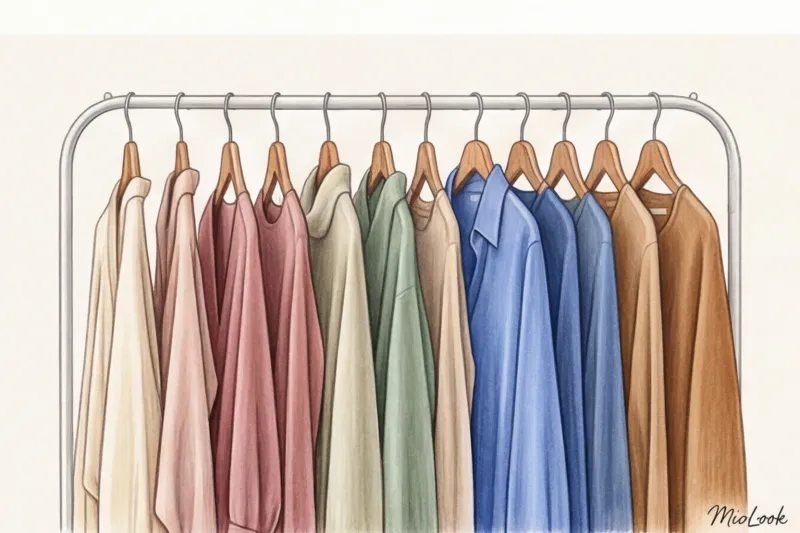
Pastels have one dangerous quality: they can dull an image, turning an elegant woman into a "kindergarten teacher." Pale blue or light yellow in their pure form often look cheap if the fabric isn't thick enough.
"A stylist's golden rule: to make pastels look classy, always ground them with a deep base color. Wearing a dusty rose blouse? Add dark chocolate or deep navy trousers."
Your perfect look starts here
Join thousands of users who look flawless every day with MioLook.
Get access — €0.99 onceThe main myth: "Black makes you look older and should be thrown away."
One of my regular clients, Anna, categorically declared at our first meeting: "I'm an architect, I only wear black, and if you tell me to throw it away because of my age, we won't work together." And we didn't throw it away. Because completely avoiding black is lazy advice.
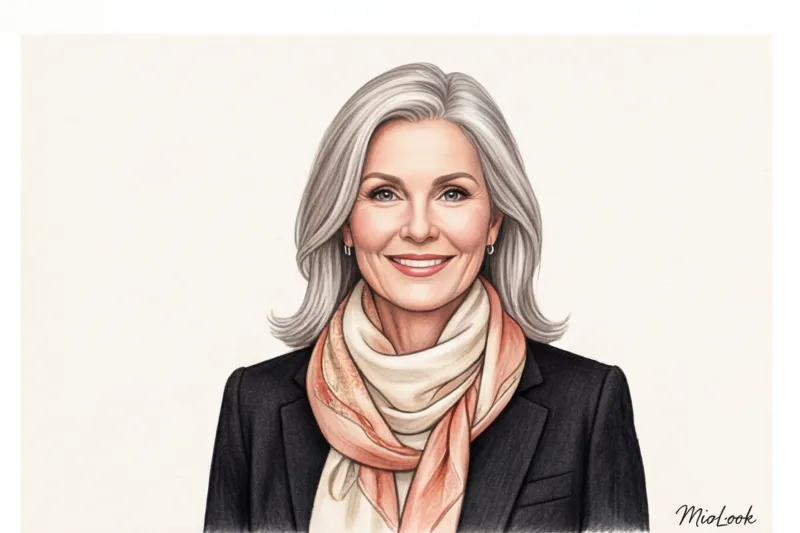
Yes, matte black near the face absorbs light and highlights wrinkles. But there's a neat solution to this problem— buffer zone rule We just need to move the black color away from the chin by 15–20 centimeters.
How to do this in practice:
- Deep V-neck. Your own skin (décolleté) will act as a buffer between the fabric and your face.
- Light colored scarf. That same salmon or milky silk bob, casually tied around the neck over a black cashmere sweater, completely neutralizes the negative effect.
- Change of texture. Matte black wool ages. Shiny black silk, satin, or smooth leather do not. The sheen of smooth fabric reflects light and adds dynamism to the look.
Clothing colors that make you look younger: adapting to your complexion and gray hair
I often see women trying to squeeze themselves into the "12 color types" theory, which was defined for them 20 years ago. "I'm Autumn, I need warm colors!" But after 50, this system breaks down. Why?
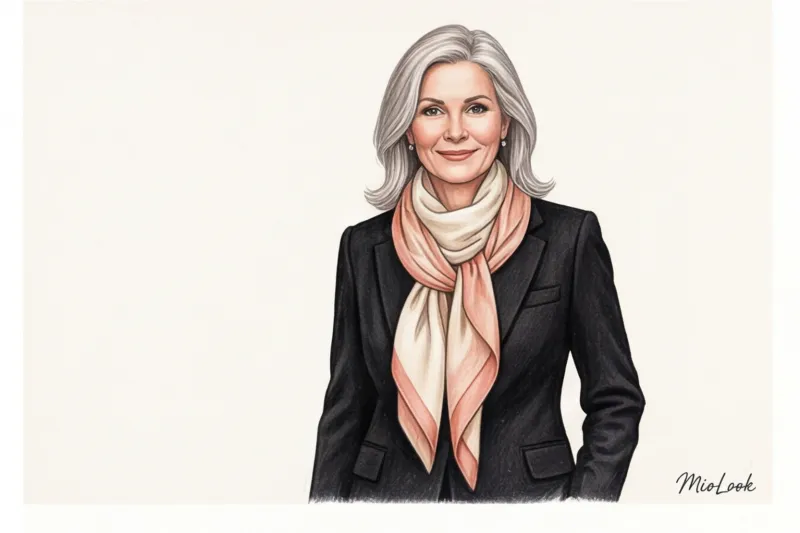
When you transition to natural gray hair (silver hair), the temperature balance of your appearance changes dramatically. Warm pigment fades, giving way to icy, cool tones. Your old favorite peach and mustard blouses suddenly begin to clash with your hair color.
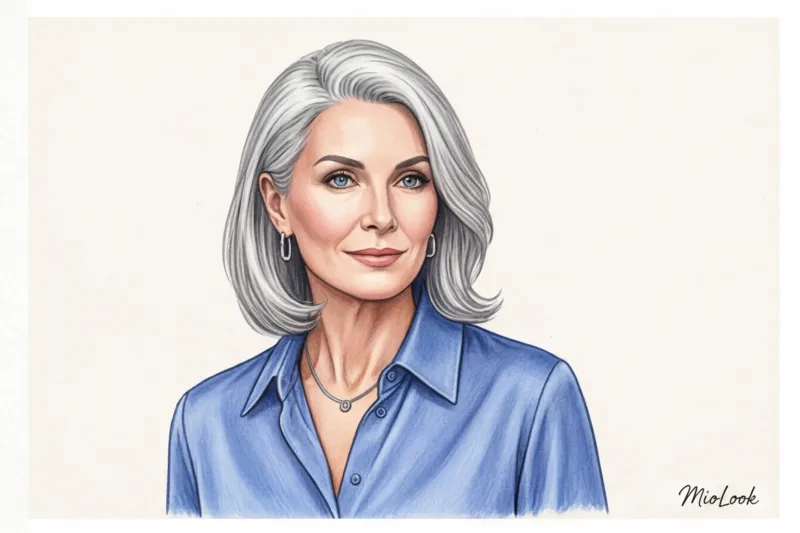
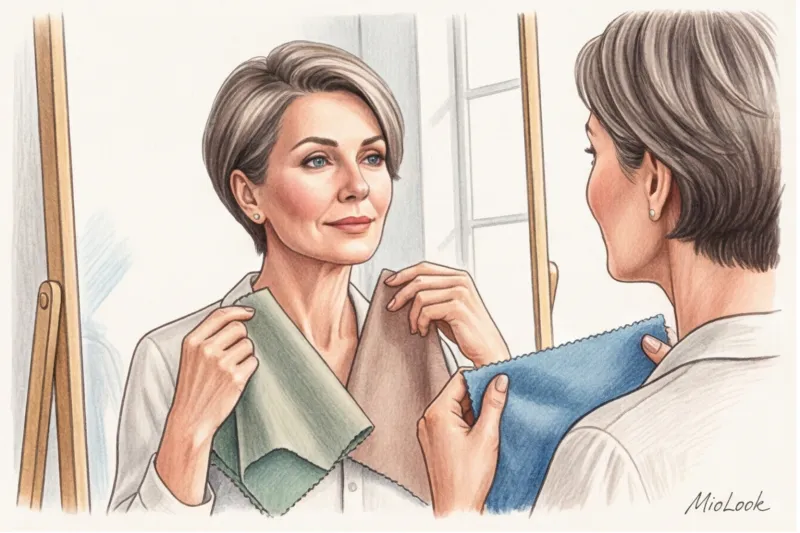
Do a quick test at home. Take a sheet of silver tin foil and a piece of gold gift paper (or any gold fabric). Place them alternately on your face in daylight. If you're starting to gray, you'll notice with a 90% probability that silver sharpens your facial contours and brightens your eyes. Gold, on the other hand, will give your skin a sickly yellow tint. This is a signal to "cool down" your wardrobe by adding berry, emerald, and cornflower blue shades.
Ready to get started?
Try the free plan—no commitments required. Start curating your best looks today.
Get access — €0.99 onceDanger Zones: Which Shades Treacherously Highlight Age
Every spring, fashion magazines publish palettes from the Pantone Institute. But let's be honest: not all trends are designed for the mature woman's portraiture. There are colors that I call "traitors":
- Neon and acid colors. They're too aggressive. Against the delicate, time-softened backdrop, neon looks out of place, creating a jarring imbalance.
- Earthy tones. Deep brown, marsh, khaki, mustard. On the face, they act as a "fatigue and unhealthy" filter, drawing out the skin's sallow undertones.
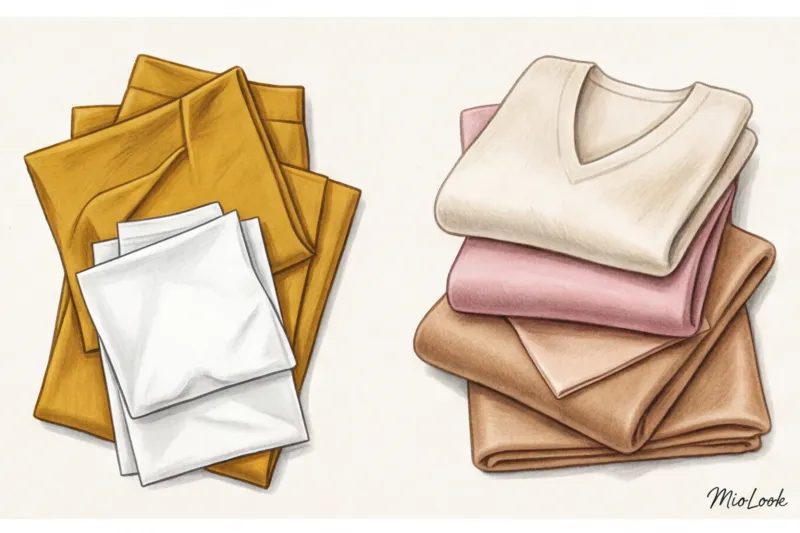
Important limitation: This rule ONLY applies to the portrait section! If you adore mustard or trendy khaki, you don't have to give them up. Simply transfer them to your lower body: buy mustard palazzo pants or a khaki skirt, and wear a refreshing off-white blouse on top. Harmony will be preserved.
Checklist: How to Color Revamp Your Wardrobe Over the Weekend
To make sure your knowledge doesn't just remain text on a screen, I'm offering you a practical plan for this coming weekend. We'll need natural daylight—remember, this test won't work with yellow lamps in your bedroom.
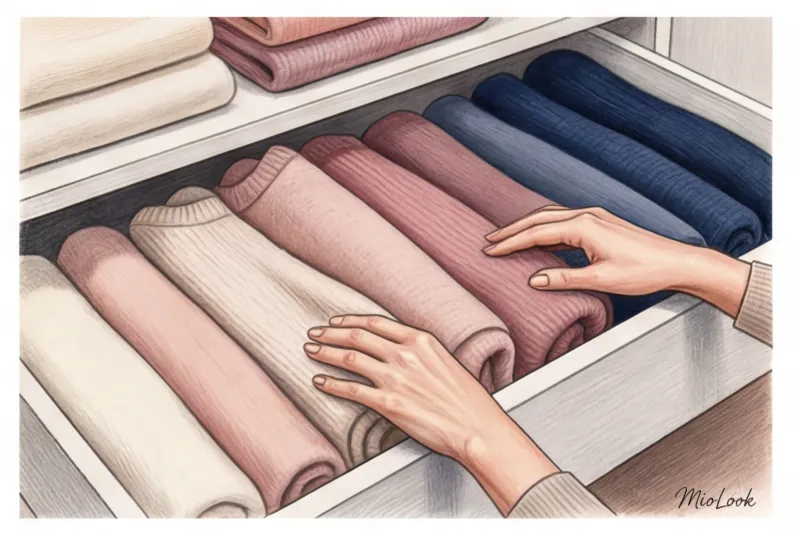
- Step 1: Window test. Remove your makeup and go to a window with good natural light. Hold all your tops, shirts, and jumpers against your chin. Monitor honestly: does the color blur wrinkles (leave it) or deepen shadows (put it away).
- Step 2: Sorting. Divide your items into two piles. The first is your "refreshing" tops. The second is "dangerous" colors that you still love. For the second pile, immediately select light, buffering accessories (scarves, collars, large pearl earrings).
- Step 3: Digitization. Set aside successful combinations. To remember how they work together, take a photo of them or upload them to the "smart wardrobe" feature in MioLook The app will automatically create capsules of your perfect shades, saving you time in the morning.
- Step 4: Capsule formula. To start, it’s enough to assemble a basic capsule according to the formula: 3 neutral, refreshing colors (for example, ecru, camel, navy) + 2 accent colors (sage and dusty rose).
Color is the fastest and most free way to transform your appearance. You don't need to completely change your style or buy expensive brands to look younger and classier. Simply understand the physics of light and learn to manipulate it around your face. Remember: clothes should serve you, highlighting your beauty, not casting shadows on it.