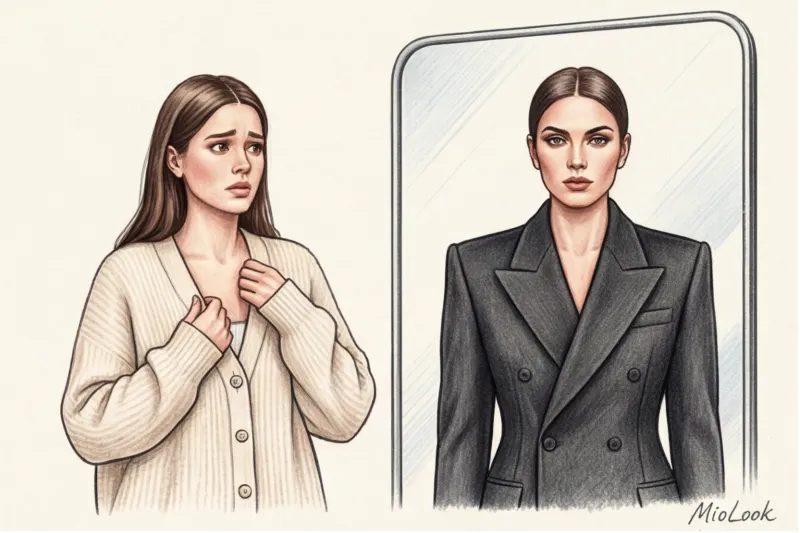
Have you noticed how your posture changes when you wear a heavy, double-breasted coat with a sharp shoulder line? You don't just appear taller—people on the street physically start to make way for you, and your own stride becomes more deliberate. This isn't magic or coincidence. It's pure neuroscience.
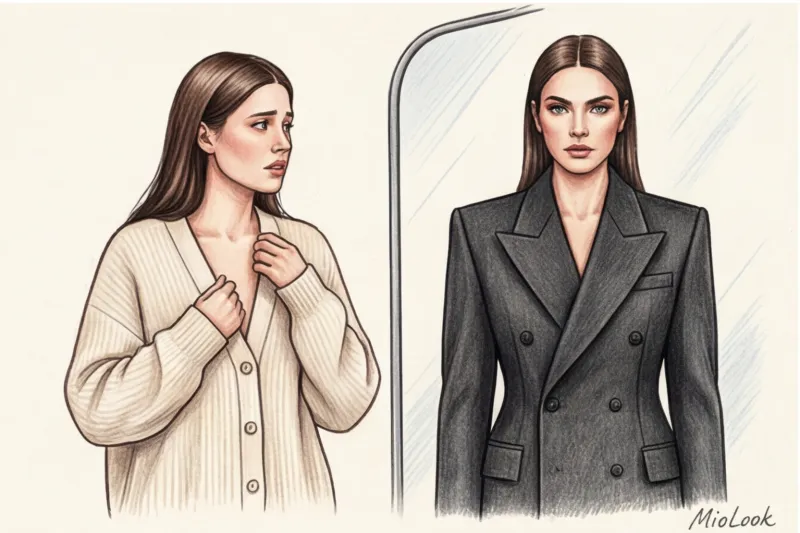
Over 12 years of working as a fashion journalist and stylist, shuttling between shows in Paris and Milan, I've learned one ironclad truth: fashion isn't just art, it's also the fastest nonverbal tool for manipulating others' behavior. When my clients complain about their boundaries being violated at work, we rarely start with public speaking lessons. We begin with wardrobe. The topic of "clothing as psychological defense" is currently being actively explored by neuroscientists, who are proving that texture and cut can alter our brain chemistry.
Why are some people constantly interrupted in meetings, while others are listened to in complete silence? The answer lies in those split seconds it takes for the other person's brain to process your silhouette. We discussed the mechanism of unconscious evaluation in more detail in our a complete guide to the psychology of first impressions But today we'll go further and explore how to physically create insurmountable personal boundaries with the right fabrics, cut, and color.
Clothing as Protection: The Psychology and Neuroscience of Personal Boundaries
A top manager at a large IT company once approached me. Her problem was typical: despite her brilliant skills, her colleagues constantly violated her personal boundaries. They interrupted her on boards, sat too close, and offered unsolicited advice. We analyzed her wardrobe. It consisted of soft cashmere cardigans, thin knit dresses in pastel shades, and suede shoes. She wanted to appear "in" and "approachable," but in the predatory corporate environment, this signal was interpreted as weakness.
I suggested an experiment: swap her soft knits for a week of architecturally cut jackets in thick wool and crisp poplin shirts. The result was astonishing—the dynamic in the meeting room shifted even before she uttered her first word. People began to physically distance themselves.
This phenomenon has a scientific basis. In 2012, Northwestern University (USA) researchers Hajo Adam and Adam Galinsky coined the term Enclothed Cognition Their research demonstrated that clothing alters the wearer's biochemistry and behavior. By wearing structured, formal clothing, we stimulate abstract thinking and reduce emotional reactivity. We literally don "armor" that calms our nervous system, sending a signal to the brain: "I am protected."
Your perfect look starts here
Join thousands of users who look flawless and confident every day with a smart AI stylist.
Get access — €0.99 onceSartorial Armor: 4 visual range triggers
To understand how sartorial defense works, we need to draw a clear line between "domestic" (soft, pliable) and "public" (structured, autonomous). Our brain evolutionarily interprets soft textures as an invitation to contact, and hard geometric lines as a barrier.
Architectural cut versus soft textures
Historically, a strong shoulder line has always been associated with power and inaccessibility—from military epaulettes to the iconic "power dressing" of the 1980s in Thierry Mugler's collections. A wider shoulder physically takes up more space in a room. You assert your presence without apologizing for it.
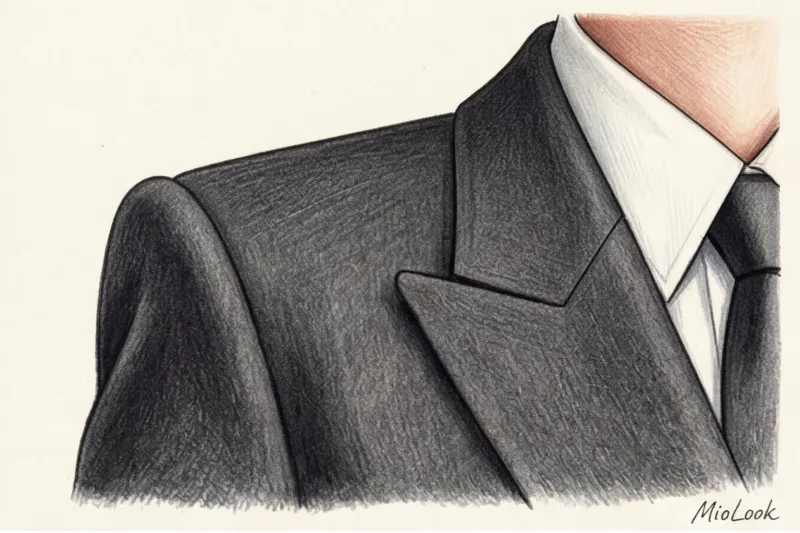
Fabric plays a crucial role. Dense materials like tweed, gabardine, heavy denim, or leather create a physical barrier. They hold their shape regardless of your posture. If you slouch in a silk blouse, the fabric will sag with you, conveying a lack of confidence. If you slouch in a heavy wool jacket (at least 300 g/m²), it will maintain its architectural structure. Conversely, a fluffy angora sweater or cashmere subconsciously stimulates tactile contact and closeness in others.
Color coding: monochrome as a closed system
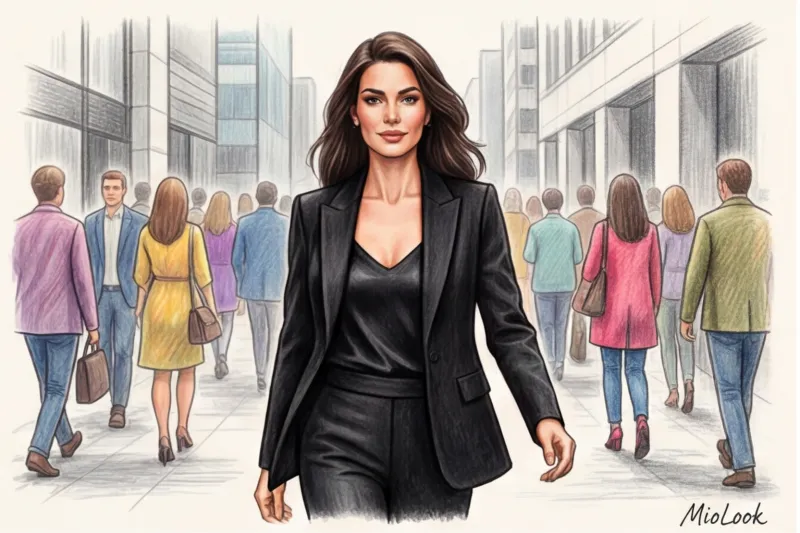
Color is vibration, and some shades absorb energy without releasing it. Total black, deep navy, or graphite act as a visual shield. During Paris Fashion Week, you can see brands' PR directors donning monolithic black looks. This isn't just a nod to minimalism; it's a literal defense against the chaotic energy of thousands of attendees.
"A solid monochrome of a single dark shade is perceived by the human eye as a solid, indestructible column. There's nothing for the eye to grasp, no details to study, and therefore no reason to invade your space."
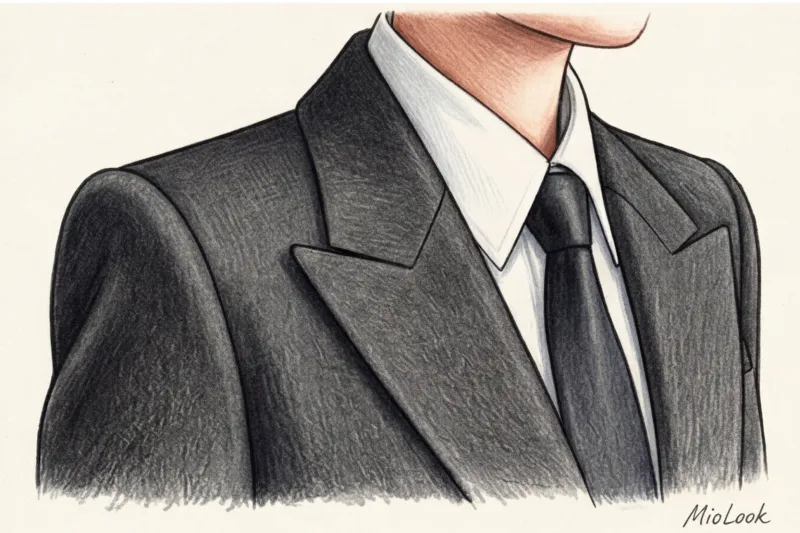
High contrast (such as a crisp white shirt under a black jacket) works differently but no less effectively—it acts as a road sign, signaling danger and urging people to keep their distance.
The Illusion of Invisibility: The Main Mistake When Trying to "Hide"
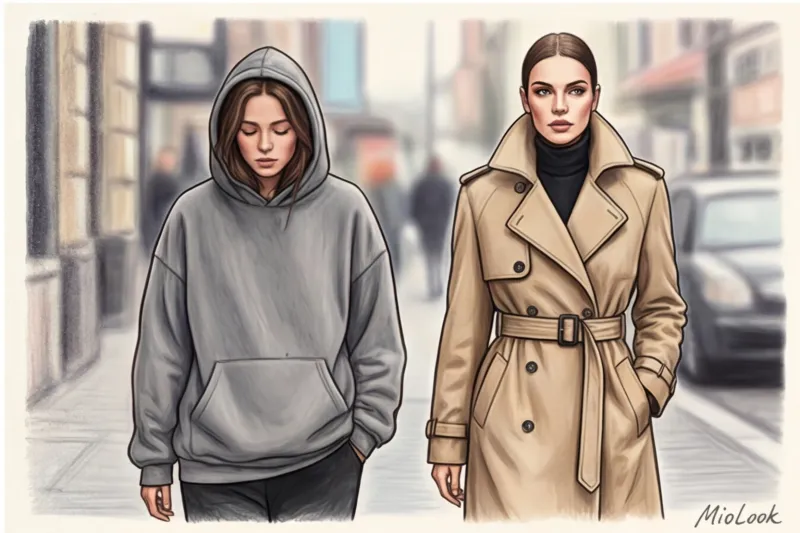
Here we come to the most counterintuitive point in the psychology of style. When we feel vulnerable, burnt out, or want to avoid unwanted attention, our hand instinctively reaches for an oversized, shapeless hoodie or baggy joggers. We think oversize clothing will make us invisible.
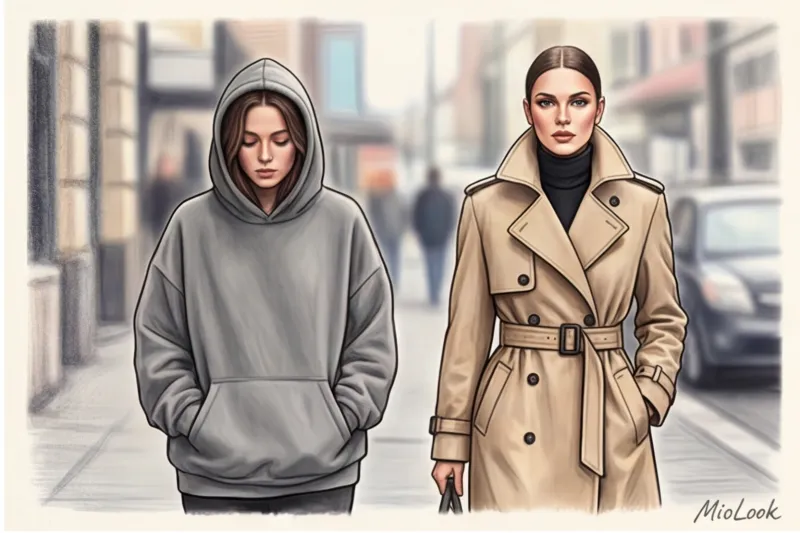
This is a dangerous myth. Shapeless, sagging clothing doesn't act as armor. On the contrary, it conveys vulnerability, fatigue, and a desire to hide—a prey attitude. In the wild, a predator attacks those who try to shrink and become invisible. The same thing happens in the office: a person in shapeless knitwear is subconsciously perceived as someone who can be burdened with unnecessary work or whose opinion can be ignored.
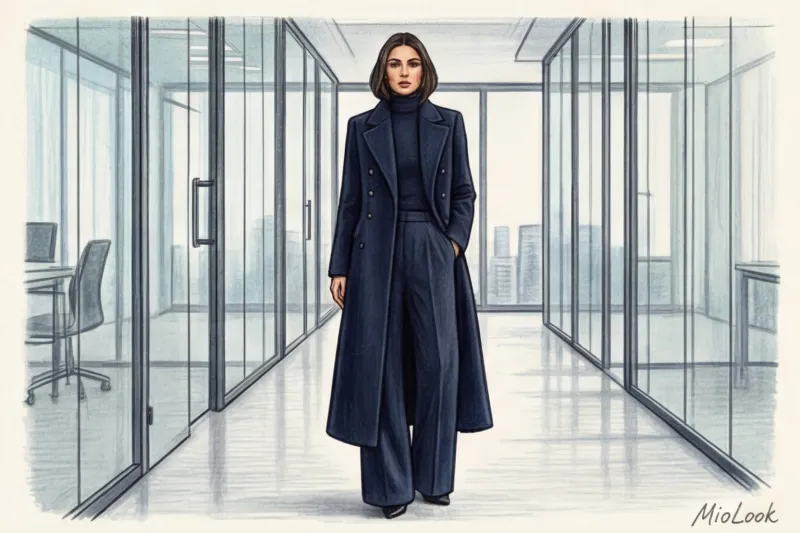
One of my clients tried to avoid the greasy glances of her male colleagues by switching to oversized sweatshirts. While the attention did change, her authority as a leader also vanished—she was simply no longer taken seriously. The solution was to switch to a more closed-off wardrobe. structured Menswear style: loose-fitting but crisp pantsuits. She remained completely covered, but instead of "I'm hiding," she began to convey "I own this territory."
Finding that delicate balance between volume and structure can sometimes be challenging. To ensure you get the proportions right, you can use the "smart wardrobe" feature in MioLook , where AI will help you create images that protect you without taking your shape.
Ready to build your sartorial armor?
Try MioLook's free plan—upload your items and let the neural network create images that convey confidence.
Get access — €0.99 oncePhysical barriers: collars, layering, and accessories
Personal boundaries can be literally built by blocking access to the most vulnerable areas of our body.
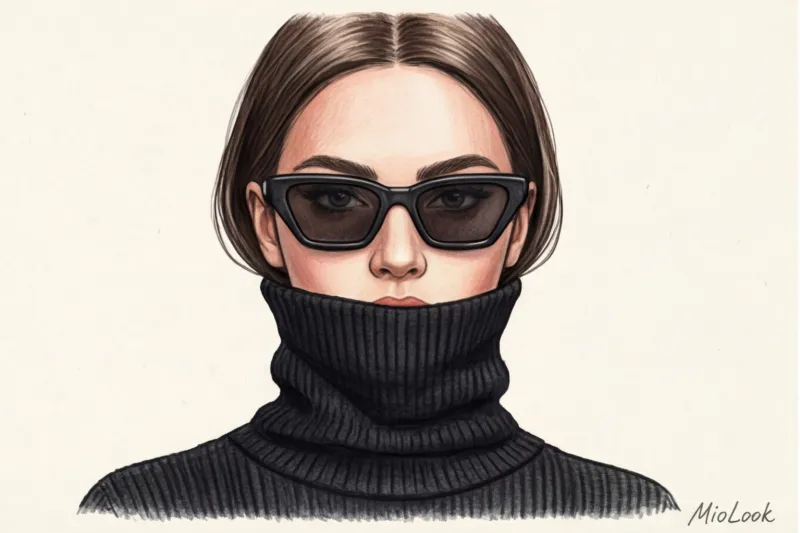
- High collars: The neck is evolutionarily our most vulnerable spot. By covering it, we feel safe. The famous uniforms of Karl Lagerfeld (high collars) and Steve Jobs (black turtlenecks) are classic examples of creating a physical barrier between ourselves and the world.
- Layering: The combination of a cotton shirt, a heavy vest, and a jacket creates a literal layer of insulation between your skin and the outside world. It works like a weighted blanket for anxiety.
- Barrier accessories: Why does Anna Wintour wear dark glasses in the front row at fashion shows, even in a darkened room? It's more than just a fashion statement. Glasses conceal micro-expressions and block eye contact. Eye contact is an invitation to communication. By blocking it (even clear glasses with massive frames will do), you're signaling "no entry." The same goes for massive metal watches, which act as a kind of "bracelet" for the modern city dweller.
The Right to Be Covered: Women's Clothing and Social Expectations
We can't discuss the psychology of clothing without addressing the social context. For centuries, society has expected women to be visually "approachable": wearing figure-flattering clothing, choosing soft fabrics, pastel shades, and floral prints. We are expected to appear sweet and welcoming, providing emotional comfort to those around us.
Opting for a rigid, closed-off outfit is an act of separation. It's a way of saying, "I'm not going to cater to your aesthetic expectations." However, many fear that a formal wardrobe will make their look too aggressive. The secret lies in the balance of textures.
Of course, let's be honest: this strategy doesn't work for all professions. If you work as a child psychologist, educator, or HR manager whose job is to encourage people to open up, rigid sartorial armor will only harm your professional goals. In such cases, you need to find a compromise: maintain a structured cut, but tone down the color palette.
How to Use Clothing to Establish Personal Boundaries at Work: An Action Plan
The theory is great, but how do you apply it at 8 a.m., standing in front of an open closet? Here are some proven formulas for specific scenarios.
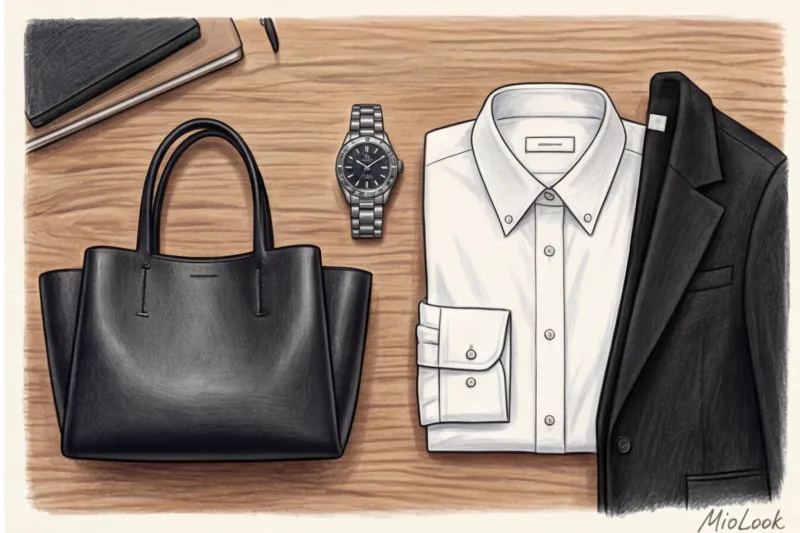
For complex negotiations
Your goal is to occupy space and eliminate interruptions.
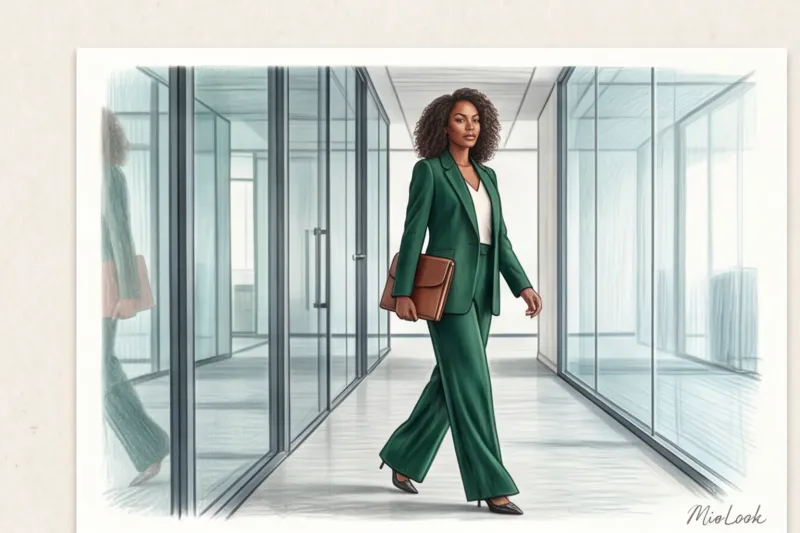
- Formula: A straight-cut double-breasted jacket with a pronounced shoulder line + palazzo trousers with creases + pointed-toe shoes.
- Details: Avoid prints, as they draw attention away from your face. Choose a thick suiting wool. A high-quality structured jacket from a versatile brand (such as COS, Massimo Dutti, or Zara) will cost between €100 and €250, but it's an investment in your career security that pays off with your first successful deal.
For a toxic team ("Teflon wardrobe")
If the atmosphere in the office is tense, you need an image that doesn’t “stick” to other people’s emotions.
- Formula: Total monochrome (graphite, deep blue or dark chocolate) + high collar + closed shoes (no open toes).
- Details: Use smooth, slightly gliding textures. Thick, coated cotton, fine wool, and heavy-weave silk. They visually reflect light and eyes.
In days of emotional burnout
There are days when putting on a tight suit is physically unbearable, and you just want to stay in your pajamas. How do you balance the internal need for comfort with the external need to maintain defense?
- Formula: A silk or viscose shirt that fits the body + a loose but structured cardigan with a tight knit (not loose!) or a men's-style jacket.
- Details: Create a layered cake. What touches your skin should be enveloping and soft (like silk). What faces the world should hold its shape.
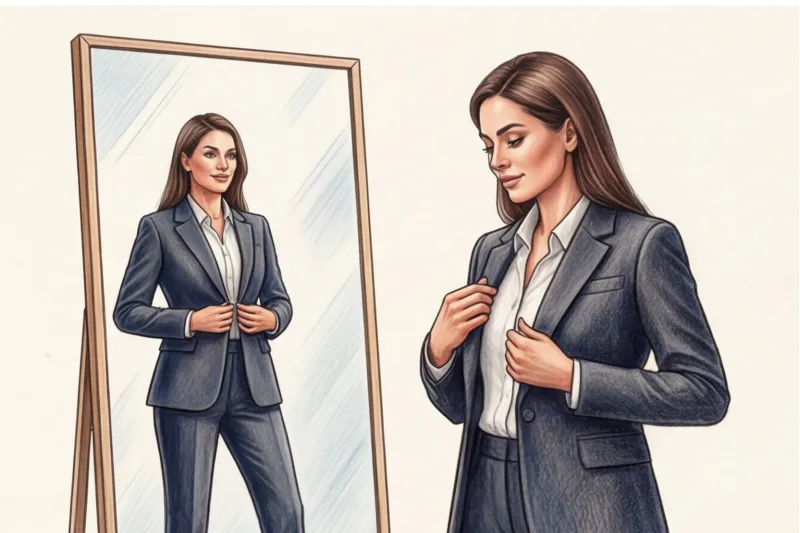
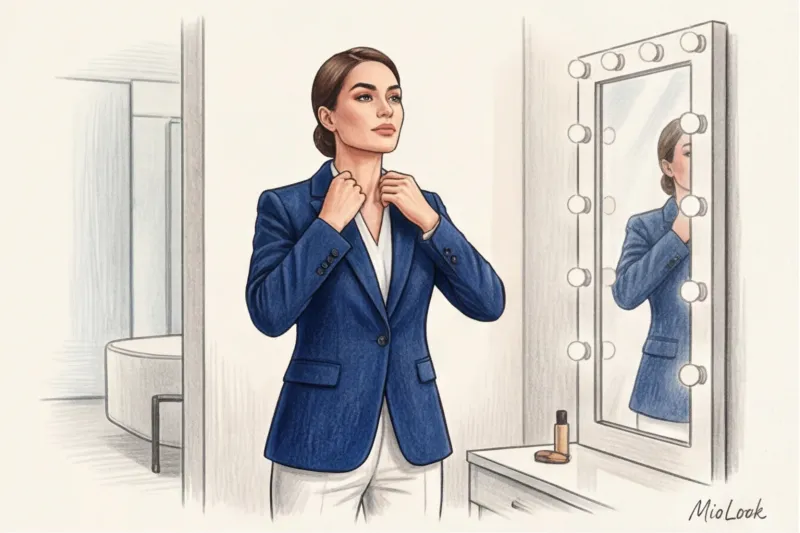
Before leaving the house, run a simple checklist: look in the mirror and ask yourself, "Does this look require me to constantly suck in my stomach, adjust my straps, or pay attention to my hem?" If so, it's not armor, it's a cage. True sartorial protection frees your mind to focus on your work, rather than focusing on your clothes.
Your clothes are your personal architectural project. It's up to you to decide whether you're building a cozy living room with open doors or an impenetrable fortress. Next time you're facing a challenging day, don't try to hide in a shapeless oversized suit. Put on the jacket with the most rigid shoulders in your closet—and let your clothes take the brunt of it.