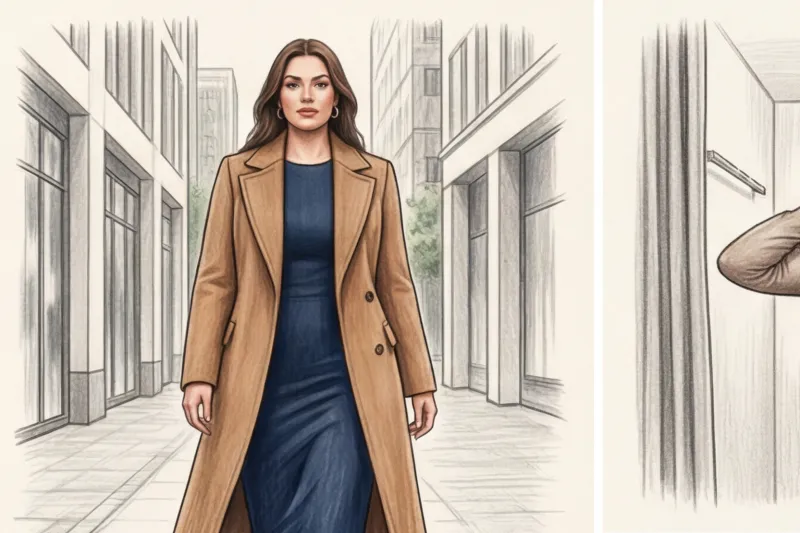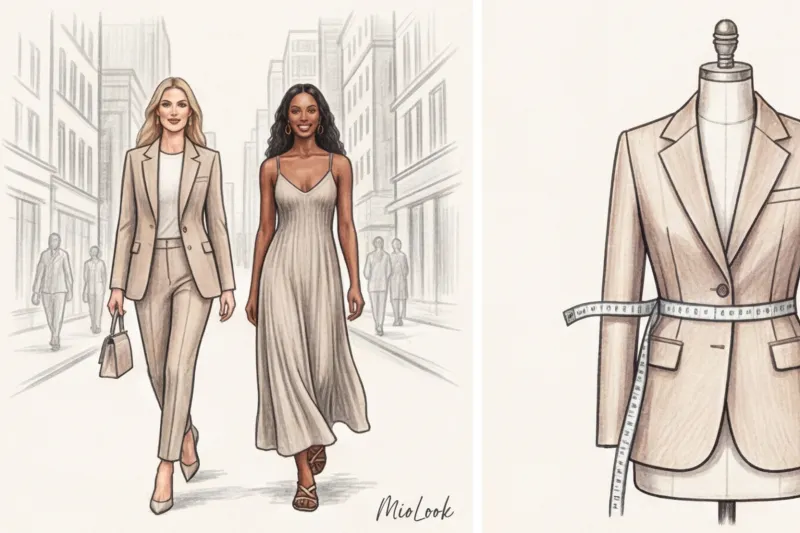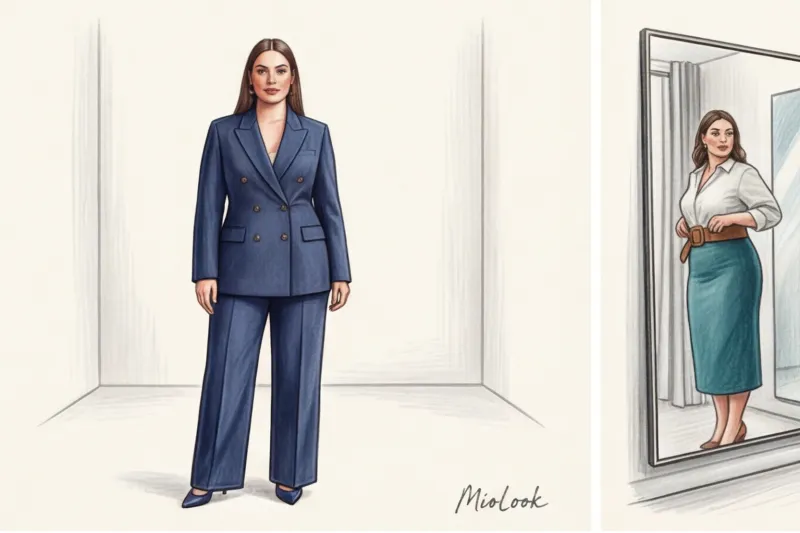
Last year, I analyzed over 500 digital wardrobes in the MioLook app. Do you know what tall, curvy women have in common? Most of them wear only 15% of their clothes regularly. The remaining 85% is a sad archive of compromises, bought out of desperation because "it fits and doesn't pinch." A well-chosen outfit clothes for tall and plump women This isn't an attempt to conceal volumes in a dark, shapeless shell. It's working with the body as monumental architecture, requiring a completely different approach to cut, line strength, and visual proportions.
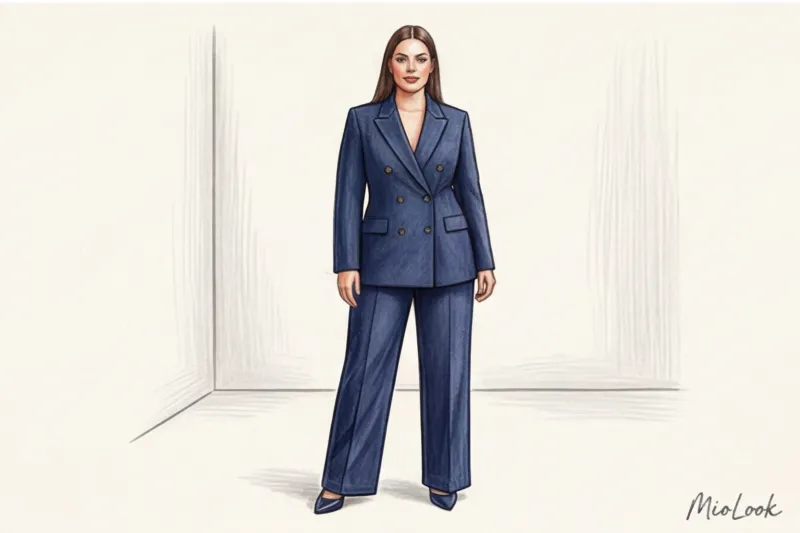
We have already discussed in more detail the basic principles of fit for heights over 175 cm in our complete guide to the perfect outfit for tall girls But today I want to dissect the most difficult style challenge: how to work with height multiplied by plus-size, so that the result is a statuesque goddess, not a bulky closet.
The biggest wardrobe mistake: why oversized clothes turn a statuesque figure into a "monument"
For a long time, the fashion industry sold us a toxic message: if you're larger than a size 10, wear something loose, flowy, and preferably black. In my practice, hundreds of clients have fallen into this trap.
Take my client Anna, for example (she's 178 cm tall and wears a size 52). Before we met, her basic attire consisted of an XXL men's hoodie and baggy boyfriend jeans. Anna's logic was clear: oversized clothing should hide excess weight. But in reality, hyper-oversized clothing only works on petite women. When a petite woman of 160 cm wears an oversized sweater, the contrast is palpable—the brain interprets a smaller figure beneath the mountain of fabric. When a tall, curvy woman does the same, the brain interprets the fabric's dimensions as the body's own. You literally add 10-15 visual pounds to your figure.
"Oversized clothing doesn't hide the fullness of a statuesque figure. It destroys your natural curves, blurs your body's boundaries, and turns you into a monolithic block."
The difference between a loose fit and a baggy bag
Ditching oversized clothing doesn't mean switching to bandage dresses that are impossible to breathe in. The gold standard for a slimming silhouette is a semi-fitted cut. There should be exactly 2-3 centimeters of air space between your body and the fabric. This is enough to prevent the material from stretching over problem areas (like your stomach or hips), while still allowing others to see the contours of your actual figure, not the outline of a sheath you're hiding in.
Access to MioLook for €0.99 — one-time payment
A smart AI stylist will select the perfect look based on your proportions and height.
Get access — €0.99 onceThe Anatomy of Cut: How to Choose Clothes for Tall and Curvy Women
The biggest pain point of shopping is math. According to WGSN research (2024), 85% of mass-market brands base their plus-size lines on an average height of 164-168 cm. What happens when you, at 175+ cm, wear a dress cut like that?
A geometric disaster ensues. The bust darts end up somewhere around the collarbone. The waistline, which should accentuate the narrowest point under the ribs, treacherously creeps upward, resting directly under the bust. I call this effect the "empire disaster"—a high waist on a large bust instantly makes the ribcage appear massive, and even a flat stomach looks pregnant.
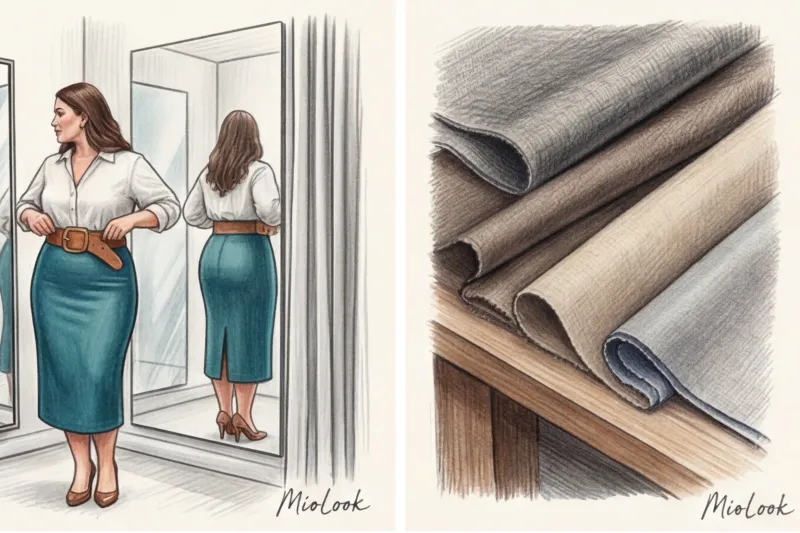
The second problem is armholes and sleeves. In standard patterns, armholes are often cut too deep (called "dolman"). When you lower your arms, the fabric between your chest and biceps bunches up, blending your arm and torso into one wide mass. Look for pieces with high, neatly cut armholes—they visually separate the arm from the body, making you look slimmer.
Length Matters: Midi, Maxi, and Dangerous Boundaries
For tall women, horizontal cut lines are crucial. The worst thing you can do is wear a knee-length skirt (or just above) with cropped, wide-leg culottes. A short skirt on a tall woman often looks too short, as if you've outgrown it, while culottes cut into the widest part of the calf, making you look squat.
Your safe haven is a confident midi (mid-calf, where the leg begins to taper) or a full maxi that reaches just above the ankle. Pants should be full length, ideally with a slight overhang over the shoe, covering half the heel.
Fabrics and textures: how material weight creates a slimming silhouette
Let's be honest: thin viscose knitwear is the worst enemy of a shapely figure. It treacherously sinks into every fold, accentuates the contours of your underwear, and breaks up your silhouette into uneven lumps.
The physics of a perfect fit require weight. Heavy fabric works like a plumb bob in construction—gravity causes it to fall evenly, creating perfect vertical folds. If you're looking to visually slim down, look for dense materials: cotton weighing at least 200 g/m², heavy, flowing crepe, dense suiting wool, and denim weighing at least 12 ounces. These fabrics act like a lightweight corset, smoothing out unevenness.
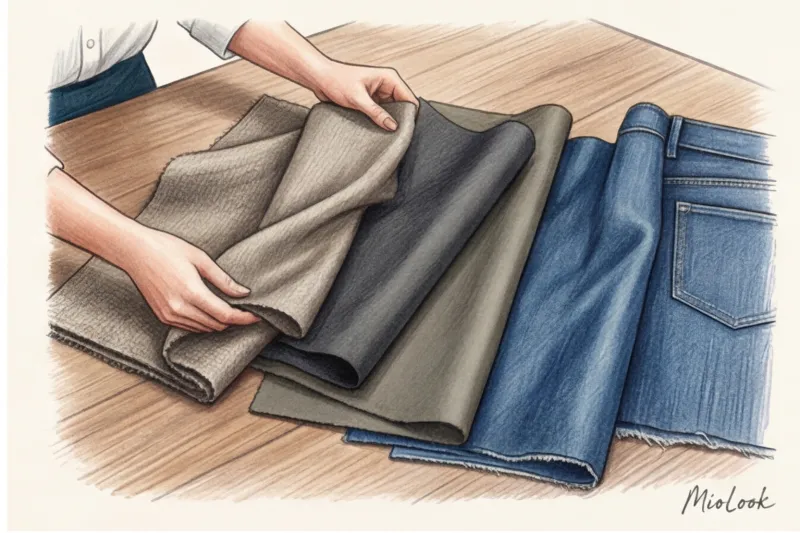
Also pay attention to light reflection. Satin, sequins, lurex, and shiny silk act like a magnifying glass—they capture light and visually expand volume. Deep matte textures, on the other hand, absorb light, making the body's contours appear more defined and defined.
Your perfect look starts here
Join thousands of users who look flawless every day with the MioLook virtual fitting room.
Get access — €0.99 onceScale Matters: The Geometry of Color and Prints
You often see advice in articles: "Wear a small print to look smaller." This is a fundamental mistake that defies the laws of optics. In the psychology of perception, there's an illusion of contrast. If you place a large object (a stately woman) next to a scattering of small details (a millefleur print with small flowers), the woman will appear even larger against the background of the small details.
Scale is your choice. Large abstractions, wide contrasting stripes (at least 3 cm wide), diagonal lines, and color blocking. Color geometry is a powerful tool. You don't have to dress head to toe in black.
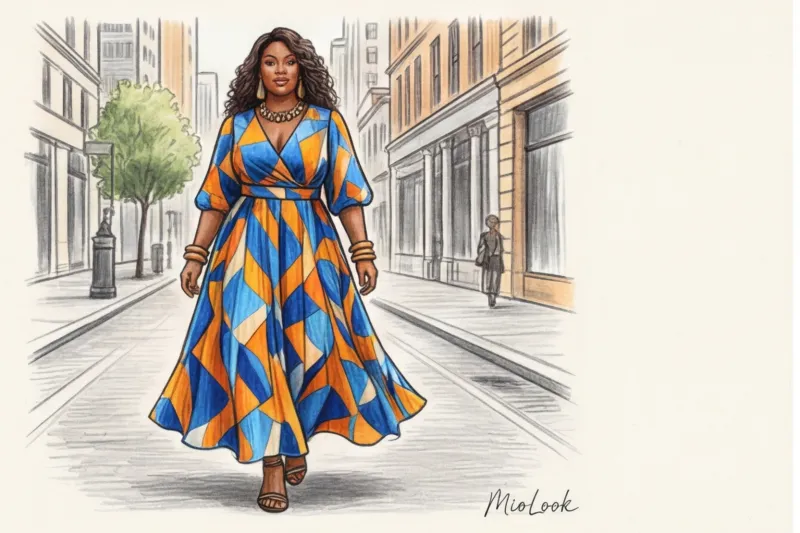
Try creating a "color vertical": wear palazzo pants and a top in one deep shade (like emerald or chocolate), then layer a contrasting jacket over it, leaving it unbuttoned. The two vertical lines of the jacket's lapels will "cut off" a few centimeters on the sides, elongating your silhouette.
Smart Capsule: 5 Investment Items for a Slim Figure
Once you know your cutting rules, building a basic wardrobe becomes easier. Here are 5 pieces I consider absolute must-haves for tall, curvy women:
- Double-breasted straight-cut jacket The length should be exactly below the widest part of the hips (mid-thigh). A firm shoulder line is essential—it balances out the voluminous bottom.
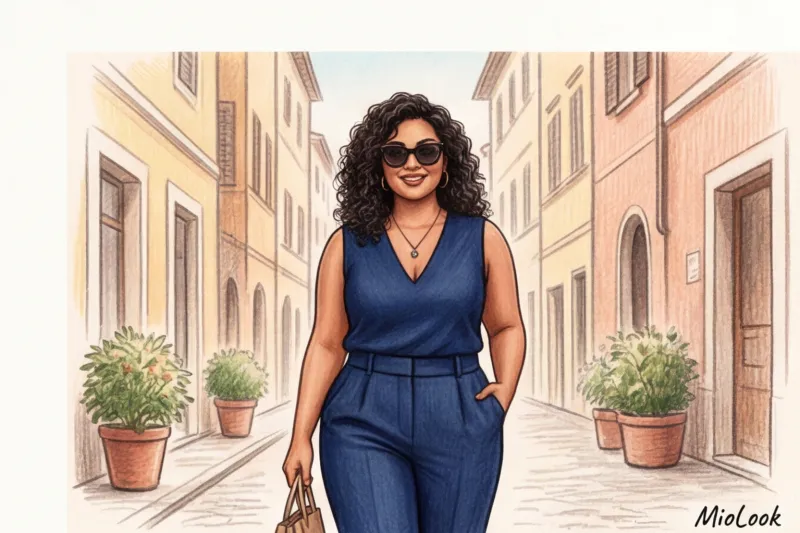
- High-waisted palazzo pants Made from a thick suiting fabric with pleats at the waist. The pleats will allow for a more relaxed midsection, while the straight, wide legs will conceal the fullness of the hips.
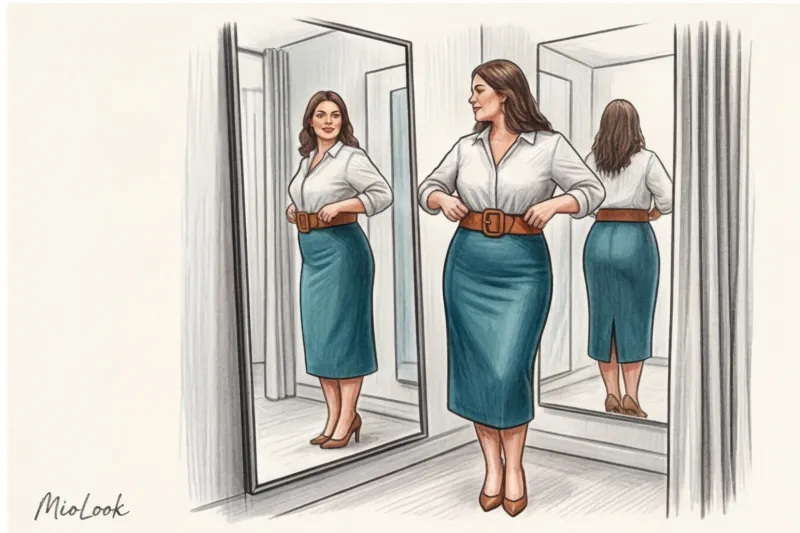
- Midi shirt dress made of thick poplin The vertical row of buttons acts as a slimming line, and the belt will help to fix your waistline (not the curved one).
- Straight maxi coat Forget those shapeless, off-the-shoulder robe coats that make you look like a bear. Just set-in sleeves and a button-down collar.
- Classic men's cut shirt Not a fitted blouse, but a thick cotton shirt that holds up a stand-up collar.
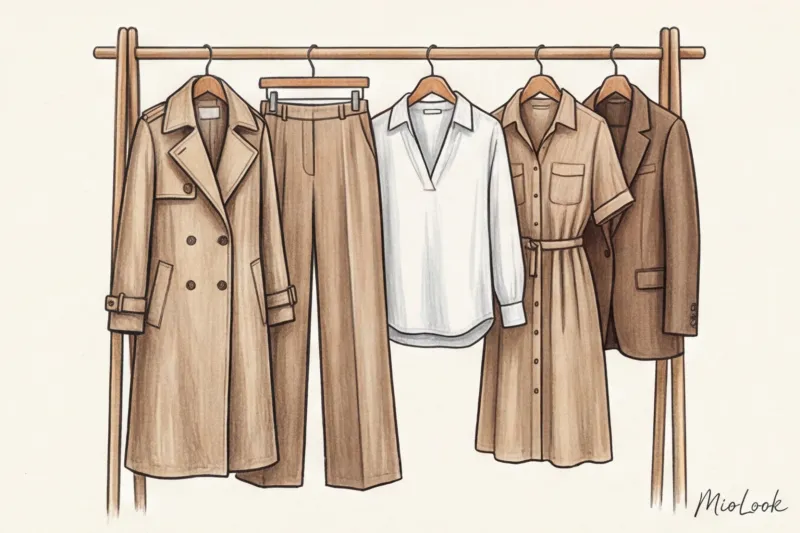
I always advise my clients to load these basic items into MioLook wardrobe Not only can you create 20+ combinations from them, but you can also track your Cost Per Wear metric. An investment in the perfect $150 pair of trousers will pay for itself faster than five pairs of cheap jeans you never wear because they fit poorly.
Shoes and accessories: the finishing touches for a grand look
Even the perfect suit can be ruined by the wrong details. The main rule for a stylist for tall and curvy women is scale conformity.
Micro bags, thin 1.5 cm straps, delicate ballet flats with round toes, and the finest chains with micro pendants will make you look like a giant who accidentally stole Thumbelina's things. In my practice, eight out of ten clients refused to believe it until I handed them a structured tote instead of their usual soft crossbody. The difference is colossal.
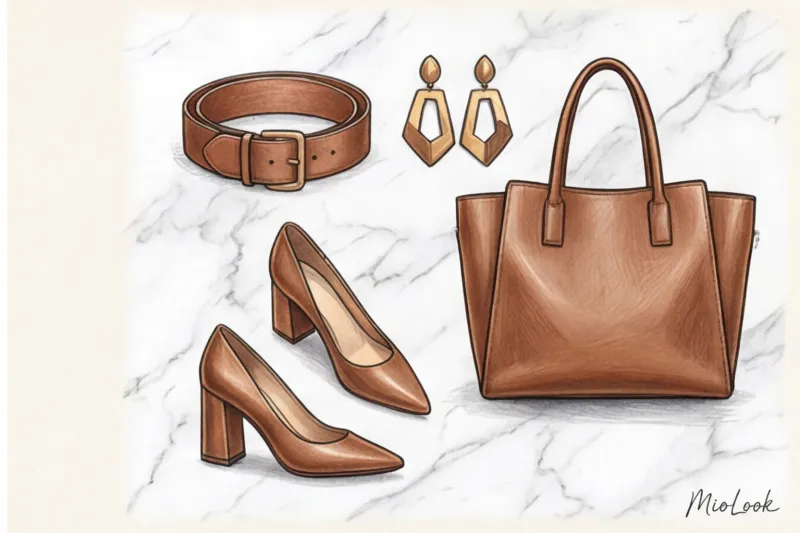
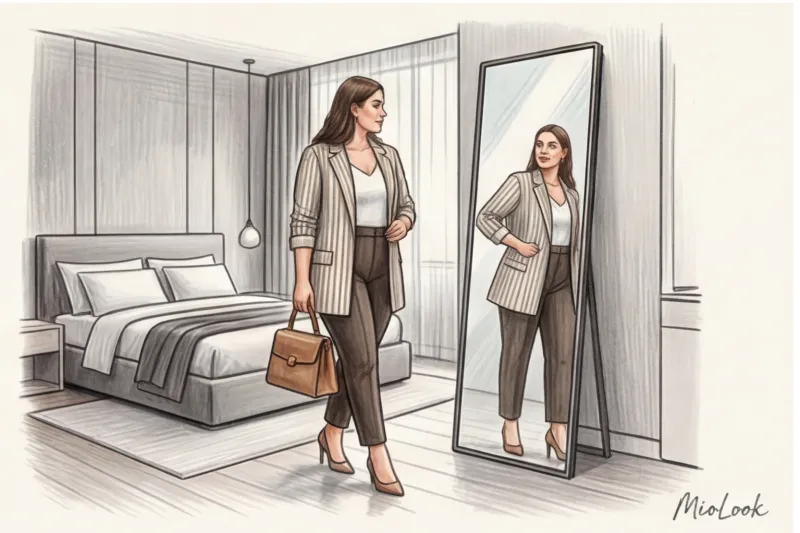
If you're a size 50+, your belt should be at least 4 cm wide. Choose bags that are architectural and hold their shape (totes, large hobo bags). Shoes should have visual weight: a stable block heel, a chunky sole for loafers, and a slightly elongated or square toe (a round toe makes the foot look like a hoof).
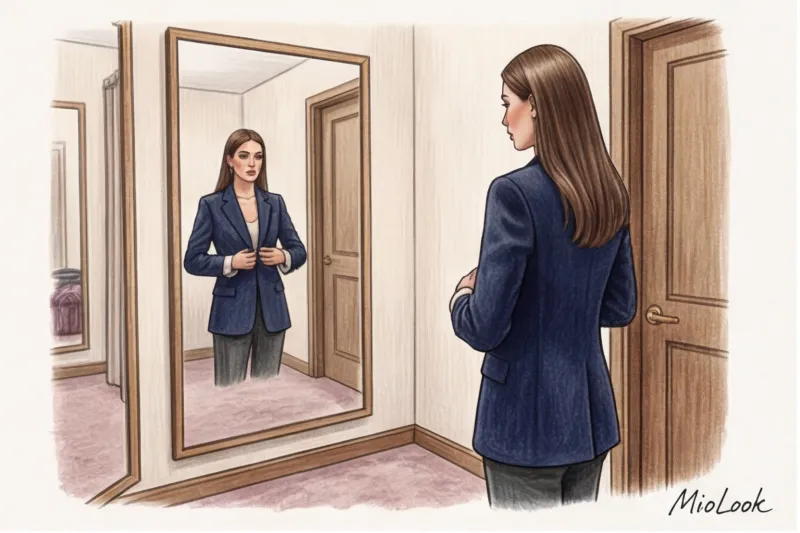
Checklist: Create a slimming silhouette in front of the mirror
Of course, this strict architectural approach doesn't work for every relaxed day at the dacha. But when you need to look classy, put together, and confident (for example, for an interview or an important meeting), use this one-minute checklist before heading out:
- The proportion is 1/3 to 2/3. The visual center of your look shouldn't divide you in half (1/2), but rather shift higher. A tucked-in top or a cropped waist jacket (1/3) plus long pants (2/3) will elongate your legs to infinity.
- Attachment points. Even if you're wearing a loose dress, it should have a clear fit at the shoulders, a perfect armhole line, and emphasis on the wrists (roll up the sleeves).
- Dynamic test. Take two steps across the room. The fabric shouldn't get caught between your thighs as you walk or bunch up in horizontal folds across your stomach.
Dressing stylishly as a tall, curvy woman isn't about concealment. It's about skillfully presenting your size. Don't apologize for your height and size with shapeless clothes. Occupy your space beautifully, structured, and with dignity.