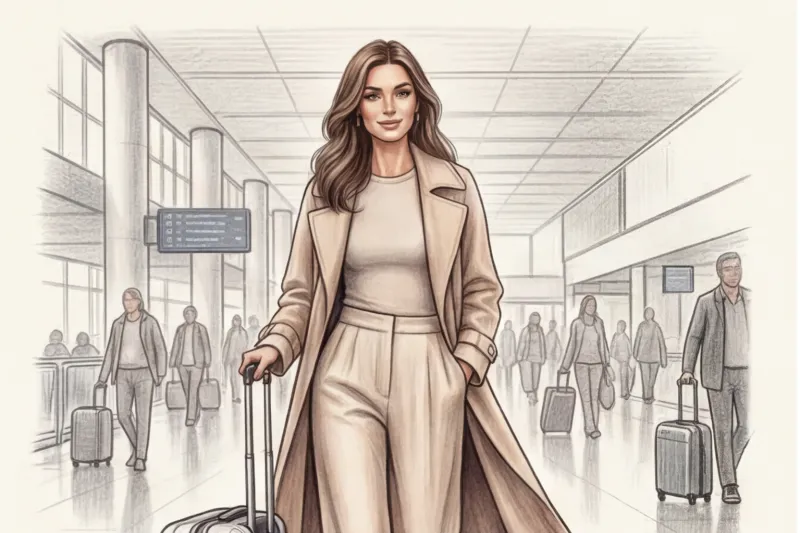
Remember that feeling? You're running through the terminal with a heavy bag, running late for boarding. You're hot, your heart rate is racing. You take your seat, exhale, and 20 minutes after takeoff, the air conditioning turns your wet cotton T-shirt into an ice pack. You still have nine hours of flying ahead of you, and you're already cold and exhausted.
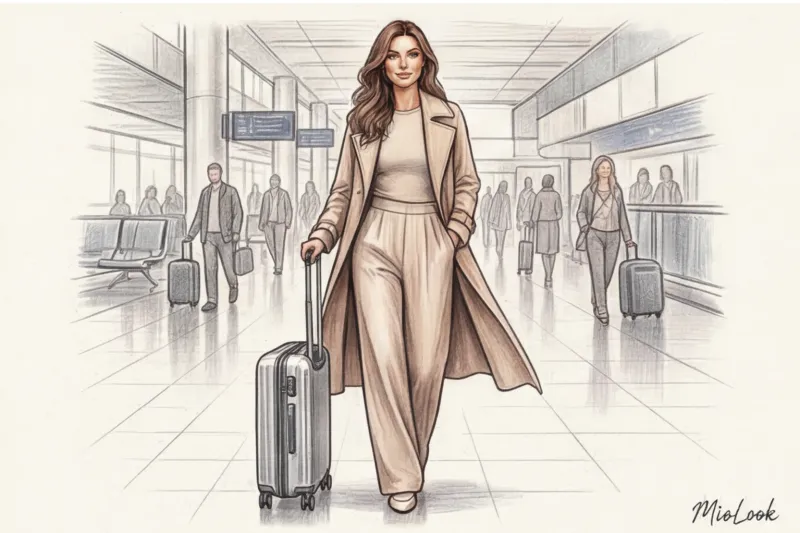
Correctly selected clothes for a long flight It's not just a matter of aesthetics for a pretty window selfie. It's a matter of physiological survival. We've already discussed the anatomy of the ideal travel wardrobe in more detail in our the complete guide to airplane looks , but today I want to look specifically at transatlantic and long-haul flights (8 hours or more).
Over 14 years of working as a personal stylist and 12 years of regularly flying between fashion weeks in Milan, Paris, and New York, I've developed a rigorous travel capsule formula. The Jet-Set Chic concept proves that you don't need stretchy sweatpants to feel comfortable.
Why Dressing for a Long Flight Is a Matter of Physiology, Not Just Style
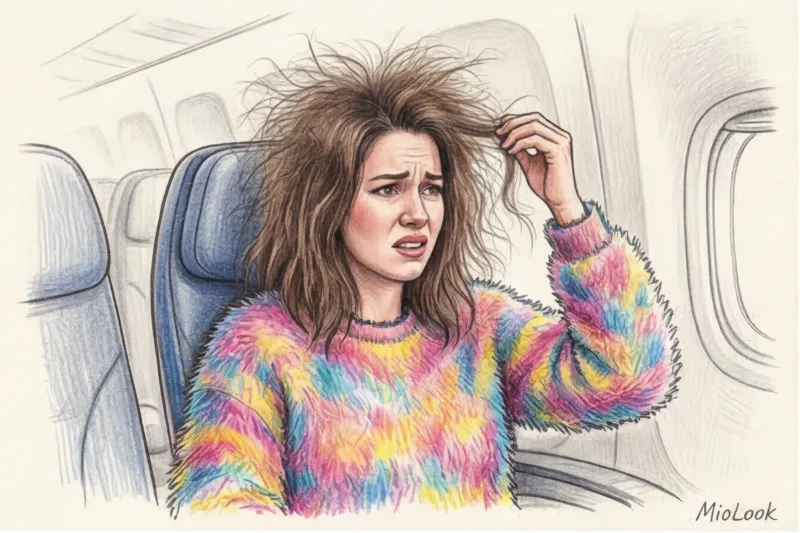
The cabin of an airplane at cruising altitude is an extreme environment. According to the Aerospace Medical Association, humidity on board drops to 10-20%. By comparison, humidity in the Sahara Desert rarely drops below 25%. Temperatures fluctuate constantly between 18°C and 24°C, and atmospheric pressure is equivalent to being on a mountain at approximately 2,400 meters.
In such conditions, your body loses moisture, circulation slows, and tissues swell. What seemed comfortable on the ground becomes an instrument of torture at 10,000 meters.
"Clothing directly impacts our cognitive functions and sense of self. In psychology, this is called enclothed cognition—a term coined by researchers Hadjo Adam and Adam Galinsky in 2012. When you're dressed in sloppy, stretched-out clothes, your brain switches to apathy mode. A put-together but relaxed look, on the other hand, helps you maintain your energy even after a sleepless night in an economy-class seat."
Let's not forget the human factor. An elegant, well-thought-out appearance is your social capital at the airport. In my experience, it was a neat, Jet-Set Chic look (not Mickey Mouse pajama bottoms) that was the deciding factor several times when airline staff offered me a free upgrade to business class when I was overbooked.
The Three-Layer Rule: Creating Your Own Microclimate on Board
The worst thing you can do on a flight is wear nothing but a thick wool sweater over your bare skin. During takeoff, when the cabin hasn't yet cooled down, you'll get heatstroke. Once you're at altitude, when the air conditioning kicks in, you'll be uncomfortable taking it off.
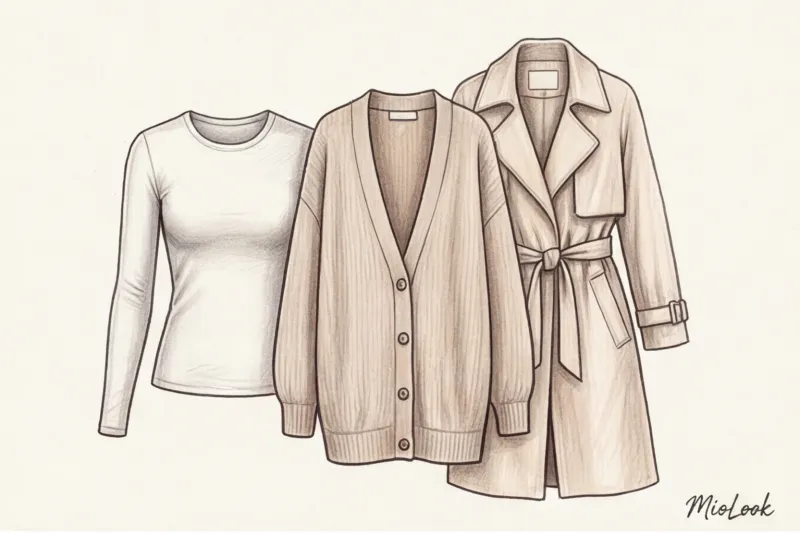
I always teach my clients the "take it off in 3 seconds" rule. If a layer can't be removed or unbuttoned while sitting in a cramped chair without bumping your neighbor's elbow, it's not the right layer for you. Your travel wardrobe should be modular.
Base Layer: Debunking the 100% Cotton Myth
The most dangerous myth I constantly hear is: "You should only wear 100% cotton on a plane so your body can breathe." This is a disastrous mistake for a long flight.
Cotton absorbs moisture well, but it's not very good at releasing it. If you sweat during security, your cotton T-shirt will remain damp. In the dry, cool cabin air, it will rapidly absorb your body heat. Textile engineering data confirms that damp cotton loses up to 90% of its insulating properties.
Ideal materials for the base layer:
- Extrafine merino wool is a natural thermoregulator that wicks away moisture and does not absorb odors even after 14 hours.
- Tencel (lyocell) is a smooth fiber made from eucalyptus that cools the skin and dries 3 times faster than cotton.
- High-quality viscose with the addition of 5-7% elastane to maintain shape.
To be fair, this advice doesn't work for everyone. If you have hypersensitive skin or a severe allergy to any wool, even extrafine merino will cause itching. In this case, your uncompromising choice is dense Tencel.
Pay special attention to your lingerie. No hard underwire bras or lace seams. Choose seamless microfiber tops or soft bralettes only.
Insulating and protective layers: comfort without losing shape
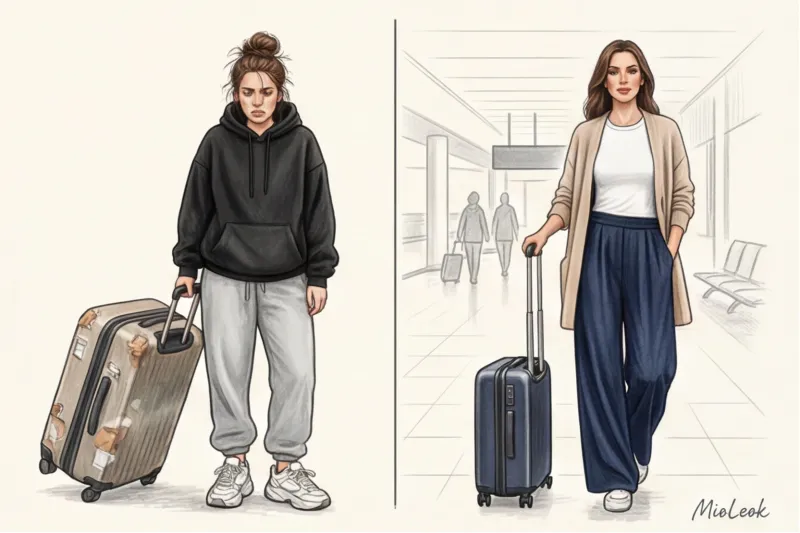
The middle (insulating) layer is responsible for keeping you warm. My absolute favorite is a loose cashmere cardigan with buttons or a voluminous zip-up hoodie made of thick fleece. The key is a front zip.
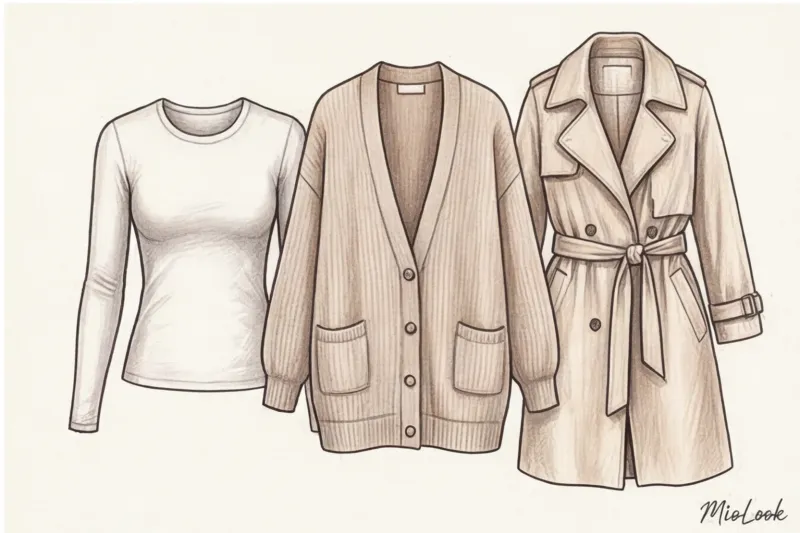
The outer (protective) layer is your armor against drafts and a replacement for dubious airplane blankets. A loose trench coat made of flowing fabric (cupro or tencel), an oversized blazer made of a wrinkle-free wool blend, or a huge cashmere stole that you can wrap yourself in completely work perfectly.
Your perfect look starts here
Join thousands of users who look flawless every day. MioLook, the smart AI stylist, will help you put together a capsule wardrobe for any trip.
Get access — €0.99 onceBottoms: What to wear on a 10-hour flight to avoid swelling
If you've ever flown in tight, high-waisted jeans, you know the feeling: after five hours, the waistband starts to cut mercilessly into your stomach, causing a sharp pain. And it's not just discomfort.
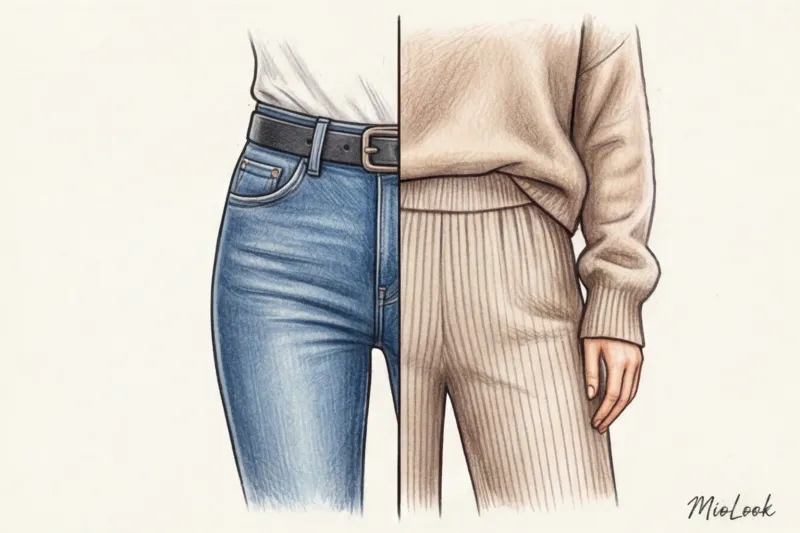
According to gastroenterologists, at cruising altitude, the pressure difference in the intestines causes gases to expand by approximately 30%. Stiff denim blocks natural circulation and digestion. Jeans are your number one enemy on a transatlantic voyage.
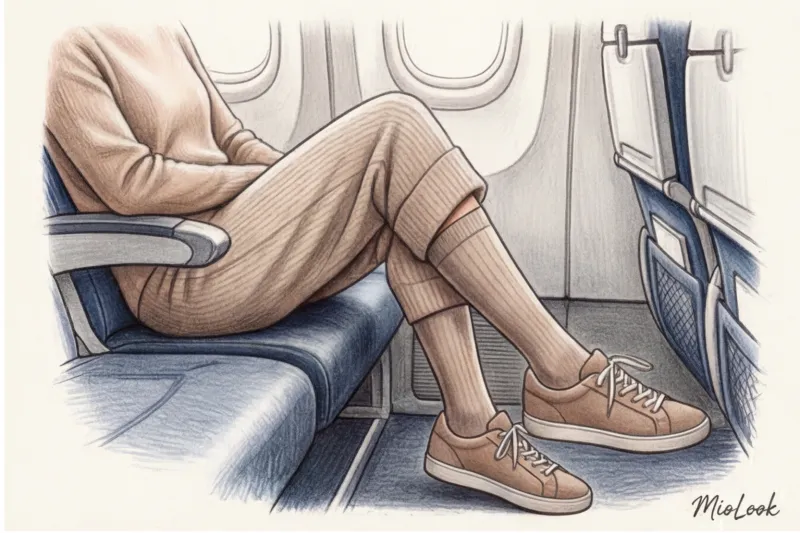
The golden rule of the belt: Before your flight, insert two fingers into the waistband of your trousers and pull. It should stretch easily by at least 5-7 cm. If not, leave the item in your suitcase.
Joggers with tight elastic at the ankles are also a poor choice. The elastic constricts lymph flow in the most vulnerable area. A better choice is wide-legged palazzo pants made of cashmere blend or thick viscose. They look like elegant trousers but feel like your favorite pajamas.
Shoes and socks: a hidden threat for travelers
One of my clients was flying to New York for an important conference. To save luggage space, she wore her heaviest and tightest leather Chelsea boots on the plane. She took them off during the flight. Thirty minutes before landing, she panicked: her foot had swelled so much that the boots simply wouldn't fit. She had to walk out of the JFK terminal in her socks, carrying the boots in her hands.
Flights longer than eight hours can increase your foot size by up to one full size. Popular slip-ons with a stiff edge or oak leather loafers will trap your feet.
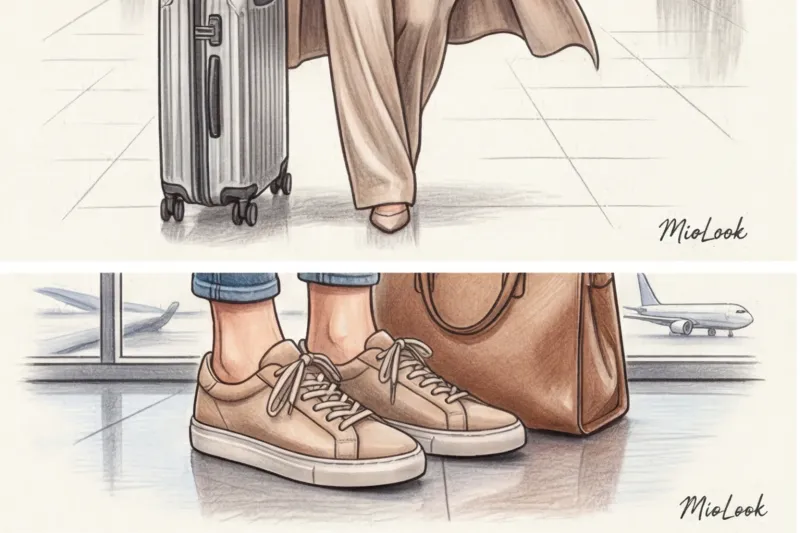
- Compression stockings (1st compression class). This isn't a grandma's accessory, it's a medical necessity. They protect against deep vein syndrome (DVT) and heavy legs. Put them on at home, before heading to the airport.
- Shoes with adjustable width. Lace-up sneakers (which can be loosened during the flight), soft suede loafers, or shoes made of flexible fabric.
- Spare warm socks. There's always a draft on my feet on a plane. I pack thick alpaca socks and change into them immediately after takeoff.
Enemies of Comfort: 5 Things You Should Never Wear on a Plane
On a 14-hour flight from Dubai to New York, I deliberately observed the passengers and their suffering. The ergonomics of airplane seats are unforgiving of wardrobe mistakes. Here are five items that should be permanently banned from your travel capsule:
- Overalls. Imagine: turbulence, a tiny restroom stall, and having to strip almost completely to use the bathroom. A jumpsuit is style suicide in flight.
- Clothes with voluminous seams or buttons on the back. A small decorative button between your shoulder blades will leave a painful bruise on your back after 3 hours of sleeping in a chair.
- Massive metal decorations. They guarantee you a long, annoying security check, and during the flight they will get tangled in your hair and chill your skin.
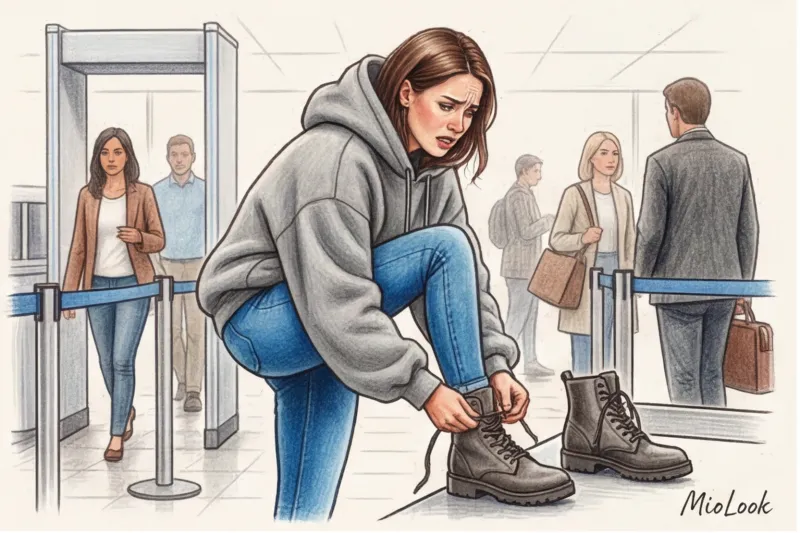
- Intricate lacing and belts with large buckles. Anything that prevents you from quickly undressing in front of the airport scanner is a stressful experience.
- Light-colored fabrics that are easily soiled without dirt-repellent treatment. A drop of tomato juice during turbulence and your white linen suit is ruined for the rest of the trip.
Jet-Set Chic: How to Look Classy When Leaving the Terminal
How do celebrities manage to look perfect in paparazzi photos after a 12-hour flight? The secret isn't genetics, but the clever styling of basic pieces.
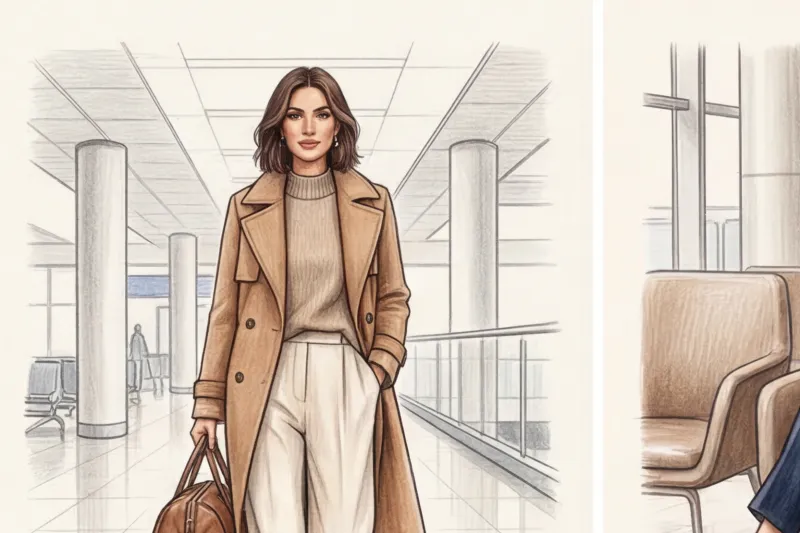
The easiest way to look expensive even in soft knitwear is to create a monochrome look. A pair of trousers and a cardigan in camel, graphite, or ecru shades always looks more classy than a colorful outfit. Monochrome visually elongates the silhouette, offsetting the relaxed cut.
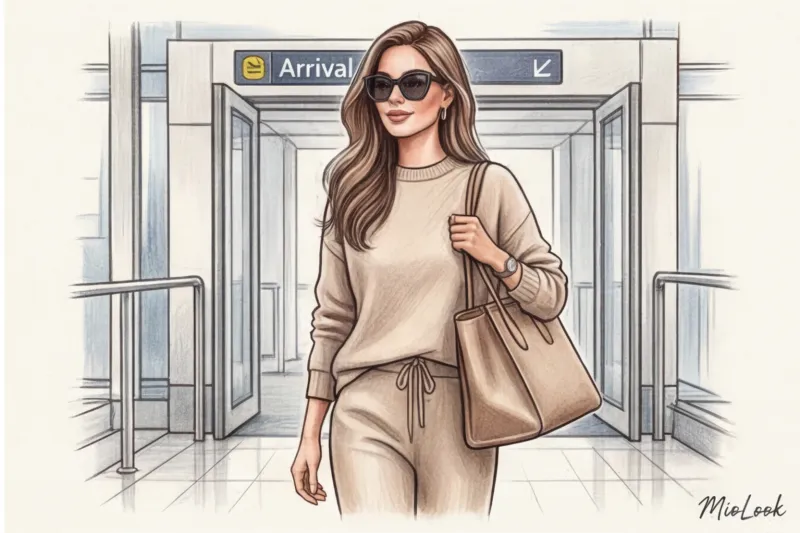
Use accessories for a quick transformation. 20 minutes before landing, refresh your face with thermal water, put on large sunglasses (they'll hide signs of fatigue and puffiness around the eyes), and tie them around your neck. silk scarf Silk instantly adds texture and gloss to even a simple basic t-shirt.
The finishing touch is a rigid, structured tote bag as carry-on luggage. The contrast between the soft, enveloping knit on the body and the crisp geometry of an expensive leather bag creates that perfect balance that separates thoughtful style from sloppiness.
Access to MioLook for €0.99 — one-time payment
Start creating your perfect looks with AI. Digitize your wardrobe and plan travel capsules with just one click.
Get access — €0.99 onceChecklist: Putting together a capsule look for a long flight
To avoid standing in a panic in front of your open closet before your next flight, I've prepared a clear procedure. Check your look using the "squat and stretch rule": put on your planned outfit, squat deeply, raise your arms high, and sit on a chair, pulling your knees to your chest. Are there any tight spots? Is your waistband digging in? Great, you're ready.
Your flight base:
- Seamless underwear without wires.
- Base layer: long sleeve top made of Tencel or merino.
- Middle layer: loose cashmere cardigan.
- Bottoms: knitted palazzo pants with a soft waistband (+7 cm stretch).
- Shoes: compression socks + lace-up sneakers.
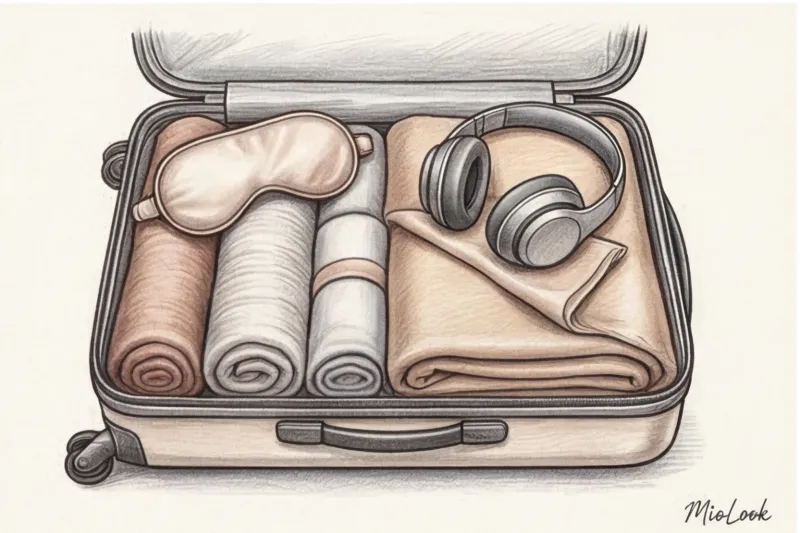
What to put in your carry-on luggage (closest to you):
- Wide stole-plaid.
- Warm soft socks.
- A silk sleeping mask (silk does not absorb moisture from the skin, unlike synthetics).
- Moisturizing stick or thick lip balm.
Dressing for a long flight shouldn't be a compromise between style and comfort. The secret lies in a smart choice of textures and an understanding of how your body reacts to altitude. Swap stiff denim for flowy knitwear, cotton for merino wool, and tight shoes for ergonomic ones, and your 10 hours in the air will transform from a challenge into a relaxing experience before heading to a new city.