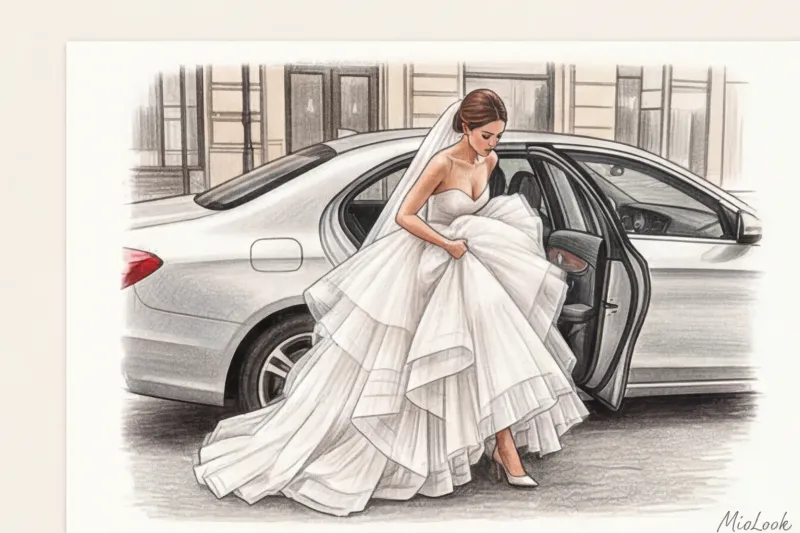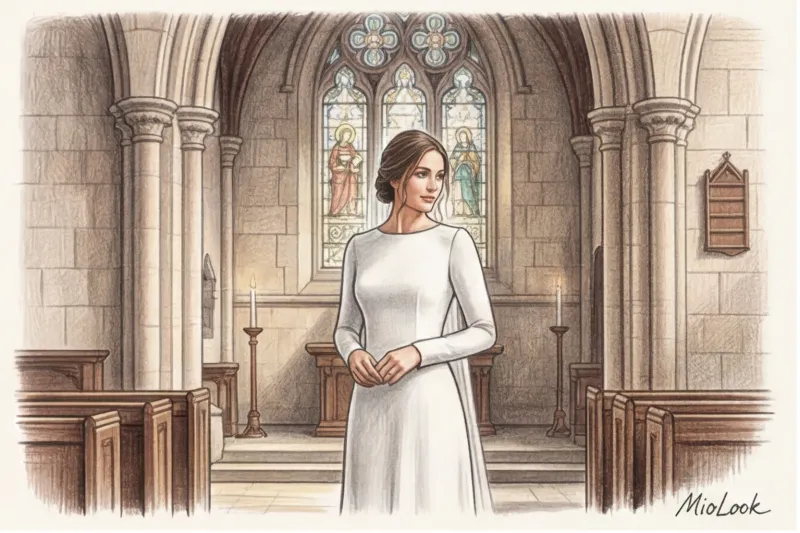
The scent of incense, the flickering of dozens of candles, the silence of the ancient vault, and you standing before the altar. It sounds like a perfect Pinterest board. But reality often hits you harder: after twenty minutes in a stuffy church, a heavy corset cuts off your breathing, tight lace sleeves prevent you from raising your arm to cross yourself, and stiletto heels on the stone floor turn the sacrament into a torture session.
I've seen this dozens of times. We discussed the basic principles of putting together a wedding wardrobe in more detail in our a complete guide to choosing a dress , But wedding dress — it's a completely separate genre. It's not just a pretty outfit, it's an engineering project.
Let's be honest: buying a separate, one-piece dress, resembling a monastic habit, just to wear for an hour is outdated and a waste of money. Today, we'll explore how to create an ergonomic, stylish, and canonically correct look using a smart approach and modularity.
Church Rules vs. Modern Style: Where to Look for Compromise?
There's a myth that a wedding gown should completely conceal the bride's figure, turning her into a shapeless cloud. Over the course of 12 years as a stylist, I've spoken with dozens of priests of various churches while preparing clients for their wedding. And you know what? None of them require you to sacrifice elegance.
The church dress code is based on respect for sacred space, not on any desire to ruin your celebration. The checklist of canonical requirements is extremely simple:
- Covered shoulders and décolleté: The collarbones may be slightly exposed, but a deep V-neck is unacceptable.
- Hidden back: no cutouts up to the waist, even if they are covered with transparent mesh (the illusion of a naked body in a temple is inappropriate).
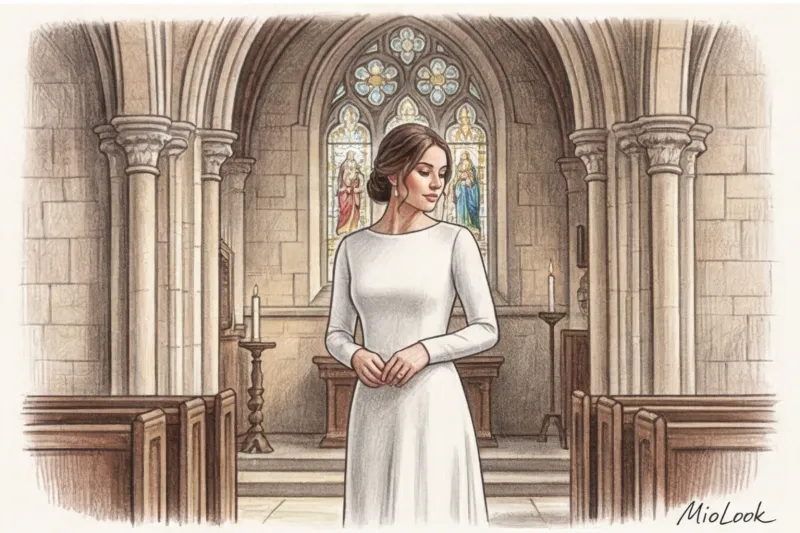
- Length: Strictly below the knee. Optimally, midi or maxi.
It's important to consider your religious affiliation here. In the Catholic tradition (according to Vatican rules), long, luxurious trains are encouraged, symbolizing purity of intention, and covering your head is optional. In the Orthodox Church, a train is more of a problem: churches are often smaller, you'll have to walk around the lectern a lot, and your long "tail" will be constantly trampled by witnesses. Head covering, however, is strictly required in Orthodoxy.
Ergonomics of the Sacrament: 4 Physical Criteria for the Ideal Wedding Dress
A wedding ceremony lasts between 40 and 90 minutes. During this time, you'll be standing, holding candles, crossing yourself, and at a certain point, witnesses will hold heavy crowns over your heads. Therefore, when choosing your attire, I take a project manager's approach: I analyze the operating conditions.
"One of my clients, Anya, almost fainted right during the ceremony. It wasn't nerves that were the cause, but the stiff polyester corset, which, combined with the stale air, the smell of incense, and the heat from the candles, caused simple hypoxia."
To avoid such scenarios, test the dress on four parameters:
1. Freedom of the shoulder girdle. Narrow sleeves made of non-stretchy guipure are a major mistake for brides. Your arms should be free to lift. If, when you try to cross your arms, the sleeve pulls up your bodice or digs into your armpit, remove it immediately.
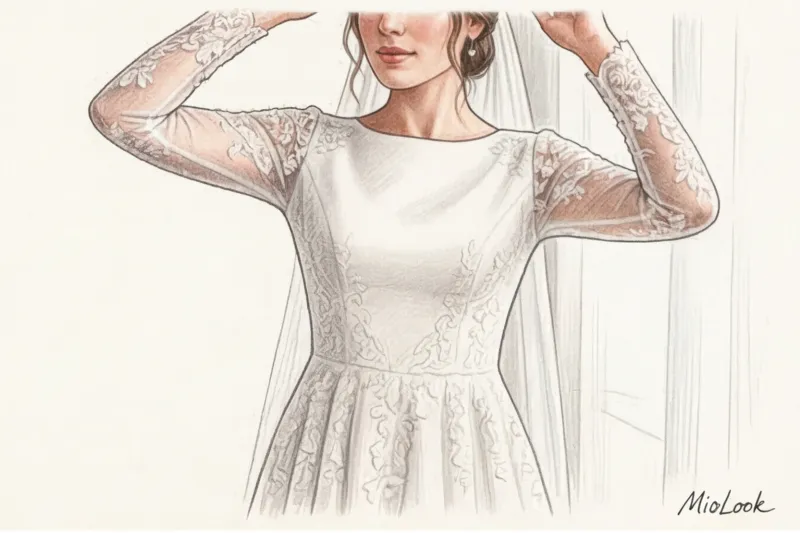
2. Free breathing. Avoid tight fitting dresses. Choose dresses with a soft bodice or a loose waist. Churches can often get stuffy, so you need full lung capacity.
3. Hem weight. Multi-layered tulle skirts with crinolines can weigh up to 5-7 kilograms. When standing still for long periods, this weight puts enormous strain on the lower back.
4. Temperature conditions. In ancient stone churches, the floors remain icy even in July, while hot air accumulates at head level from burning candles. You need a fabric that acts as a thermostat.
Tired of keeping dozens of references in your head?
Create a moodboard for your wedding look in one click. Artificial intelligence will help you find the perfect combination of styles and accessories.
Create a bridal capsuleClosed dress styles: trendy silhouettes without the "mothball" effect
According to the WGSN Bridal analytical report (2024), the focus of wedding fashion has finally shifted from excessive embellishment to clean lines. A high-necked gown is now synonymous with "quiet luxury," not a compromise due to strict rules.
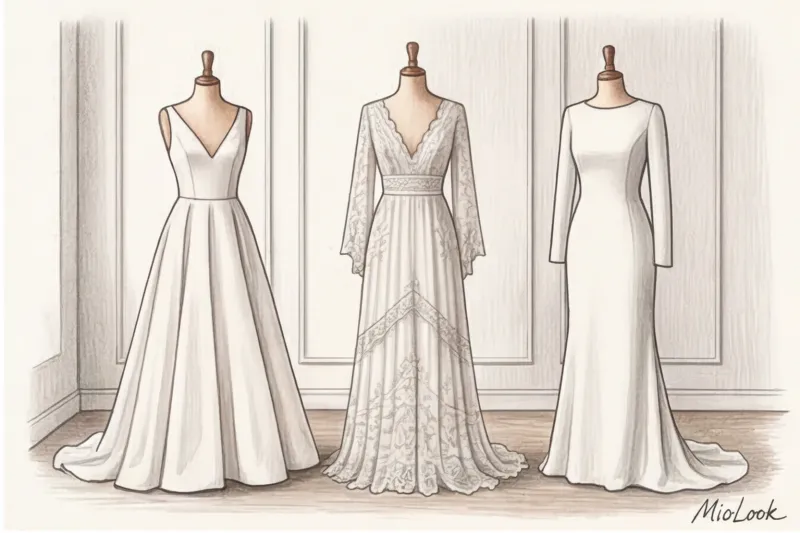
Here are three styles that look flawless:
- Architectural minimalism. A-line dresses made of dense crepe with long sleeves and a stand-up collar. Take inspiration from the looks of Grace Kelly or royalty. The dense fabric holds its shape and conceals any figure flaws.
- Boho and vintage. If you're having an outdoor or rustic wedding, choose flowing silhouettes made of cotton and viscose using the macrame technique.
- Maxi shirt dress. An unexpected yet incredibly elegant choice for modern brides, this silk shirtdress with covered buttons looks classy and easily fits into your post-wedding wardrobe.
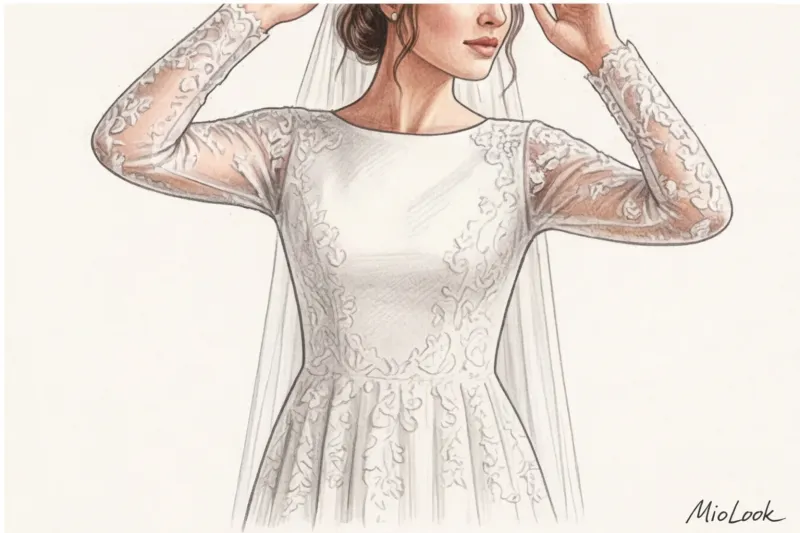
What you should absolutely avoid is cheap synthetic guipure. A high-necked dress made of thin, shiny lace from a mass-market store will always lose out in visual cost to a sleek, yet high-quality, minimalist dress.
How to choose the length: midi or maxi?
A French length (midi, just above the ankle) is often much more practical than a classic maxi. Church floors can be covered in candle wax, dust, and moisture. If you choose a floor-length dress, be prepared for the hem to be dry-cleaned. A midi eliminates this problem and allows you to show off your beautiful shoes.
Modular Bridal Wardrobe: Transformers Instead of Two Dresses
We've reached my favorite insight. We've long since abandoned the idea of buying two different dresses (one for the registry office and reception, and one for church) for premium styling. It's not eco-friendly and it's a big budget hit. A modern solution is... smart modularity.
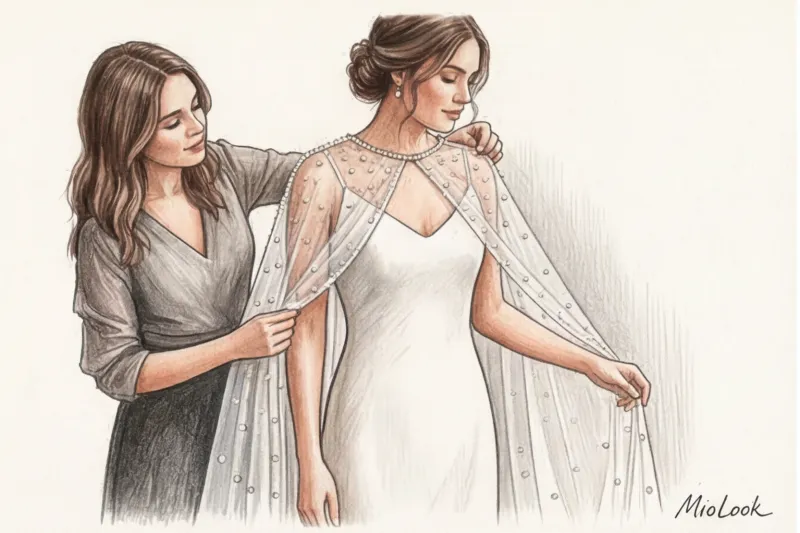
You buy one perfect basic dress. Most often, it's a high-quality slip dress made of thick silk with thin straps or a simple off-the-shoulder bandeau. For the wedding, we add additional layers:
- Wedding cape (cloak). A luxurious element of translucent organza or chiffon, which is attached to the shoulders, covers the arms and back, creating a formal silhouette.
- Detachable bolero or long sleeve top. Wear over a basic dress. Choose from matte Chantilly or pearl-embroidered styles.
- Overdress skirt. A sheer overskirt softens the tightness of the basic mermaid dress, creating a more demure silhouette.
A personal experiment: last spring, a client and I calculated the cost per wear. Buying two mid-range dresses would have cost 180,000 €. We bought one luxury silk base layer and had an embroidered cape custom-made. The result: 110,000 €, a savings of almost 40%, and a base layer that she now wears with jackets on anniversaries.
There is a limitation here, though: The modular approach doesn't work if your dream dress is a voluminous "cake" with a rhinestone-embroidered corset. No cape or top will fit beautifully over such a volume.
To visualize how the layers will work together, I recommend my brides use the virtual wardrobe feature in MioLook You simply upload a photo of the basic dress and overlay the cape options on top—the algorithm immediately shows whether the figure's proportions are violated.
Fabrics that "breathe": a checklist of materials for a temple
The microclimate in a church is unique. If you choose 100% polyester, a greenhouse effect will occur within 15 minutes.
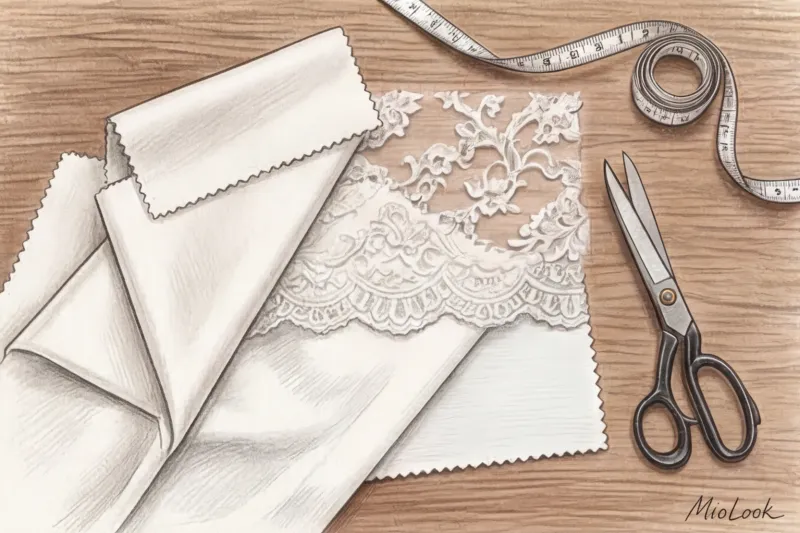
Textile technology experts confirm that hygroscopicity of at least 10% is required for stressful conditions of long-term storage. This requirement is met by:
- Natural silk (mikado, charmeuse, crepe). It has the unique property of cooling the skin in hot weather and preserving body heat in the drafts of a stone temple.
- Cotton batiste and sewing. Ideal for summer weddings.
- Chantilly lace made from viscose. Soft, non-itchy and breathable.
Another professional secret: avoid excessive shine, strong lurex, and scattered sequins. Glossy surfaces begin to reflect unpredictably in candlelight. In photographs, this often looks like overexposed spots, and in person, it distracts from the sacrament. Matte textures look much more refined and expensive in the dim light of a church.
Wedding accessories: veil, headscarf, and the right shoes
A head covering is a mandatory attribute of an Orthodox wedding. The classic multi-tiered veil is gradually giving way to more elegant designs.
- Lace bonnet or hood. An elegant trend of recent years that doesn't ruin your hairstyle with hairpins.
- Silk scarf (bob). Tied in the style of Grace Kelly, it adds a touch of European aristocracy to the look.
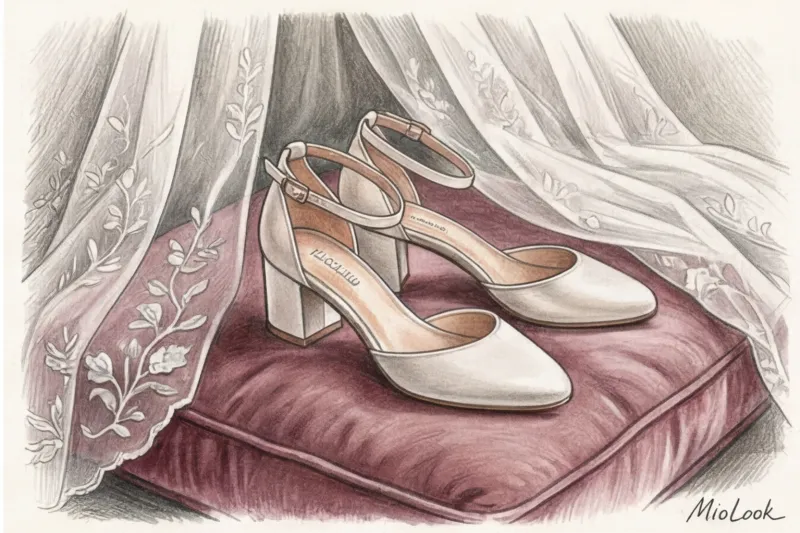
But the most important thing to pay attention to is your footwear. The biomechanics of our bodies are such that standing in high heels (8 cm and higher) on a hard stone floor shifts the angle of the pelvis. After half an hour, your lower back will begin to ache unbearably.
Choose elegant ballet flats with a pointed toe (slingbacks) or kitten heels with a sturdy block heel (3-4 cm). Save the stilettos for the hotel photo shoot.
Are you unsure about choosing accessories?
Upload a photo of your dress, and a smart MioLook stylist will select the perfect shoes and accessories based on your proportions and style.
Select accessoriesChecklist: 5 Major Mistakes When Choosing a Wedding Dress
Finally, here's my tough but thoughtful checklist, compiled from the tears of real brides. Check it out before you buy:
- Ignoring the scale of the temple. A huge dress with a three-meter train looks as incongruous in a tiny wooden church as a minimalist slip under the vaults of St. Isaac's Cathedral. Measure your volumes.
- A style in which it is impossible to lift the hem. You'll have to climb the temple steps. If your skirt is so tight or heavy that you can't lift it gracefully with one hand, you'll trip.
- Lack of spare shoes. Even if you're 100% confident in your shoes, throw a pair of soft leather ballet flats in the car.
- "Naked" back under a transparent veil. Many brides think, "My back is open, but I'll just add a veil and everything will be alright." No, one layer of tulle doesn't make the back look closed. The priest has every right to make a comment.
- Buying on impulse without testing it on the move.
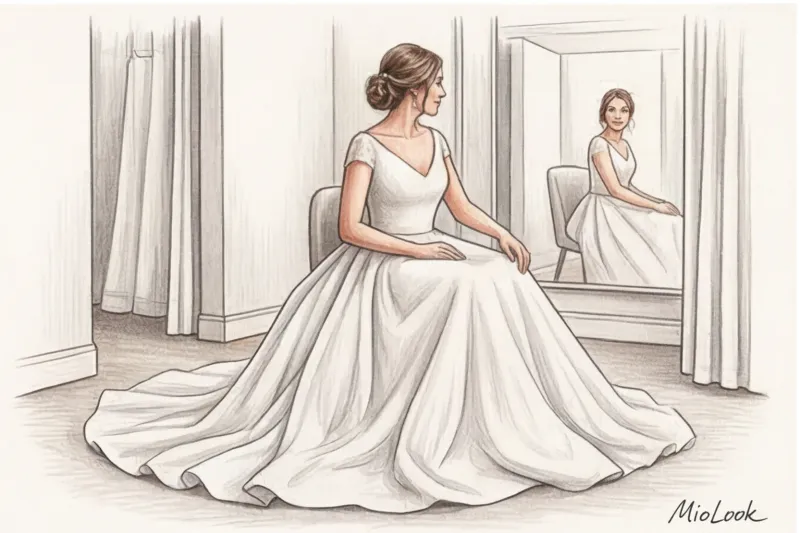
Remember: a wedding is a spiritual act, not just a pretty photo shoot. Your outfit should be your ally, supporting you physically, not a pretty cage. Choose wisely, test the ergonomics, utilize smart modularity, and then on this day you'll be thinking about the eternal, not about how to quickly take off those shoes and unlace your corset.