One of my clients, a luxurious 80F, once confessed to me during a wardrobe review: "Olya, I've quit running. My back is falling apart, and my breasts are living their own, very painful life." She sincerely believed that active sports with a large bust were a death sentence. And you know what? This is a disastrous misconception.
When we finally found the right one for her sports bra for large breasts , she not only returned to morning runs, but also signed up for CrossFit. The root of this problem is almost always a simple misunderstanding of how support bras work. We discussed the anatomy of everyday fits in more detail in our The complete guide to shapewear for plus-size women , however, sports equipment requires a completely different, engineering approach.
The Anatomy of Proper Support: Why Classic Tops Don't Work
Put on your regular gym crop top and jump up and down in front of the mirror. What happens? Your breasts move up and down. But that's only the visible part of the problem. Research by the Research Group in Breast Health (University of Portsmouth) has proven that when we run, our breasts perform complex figure-eight movements—up, down, sideways, and back and forth.
"Without proper support, breasts of size D and larger can shift 14–21 centimeters during intense jumping. This places enormous strain on the tissue," confirms data from Portsmouth researchers (2023).
There are no muscles inside the breast; its shape is supported only by skin and thin Cooper's ligaments. Regular tugging stretches these ligaments, causing microtrauma and irreversible sagging. Furthermore, classic elastic tank tops create a dreaded "uniboob" effect. This not only visually distorts the proportions but is also physically harmful: the skin between the breasts sweats, rubs, and becomes inflamed.
Compression vs. Encapsulation: The Secret of Bra-Fitters
The most dangerous mistake I regularly see in fitting rooms is buying a stretchy top one size too small for "better support." It's counterintuitive, but trying to squeeze larger breasts is absolutely unacceptable. Severe compression impairs circulation and can lead to lymph congestion.
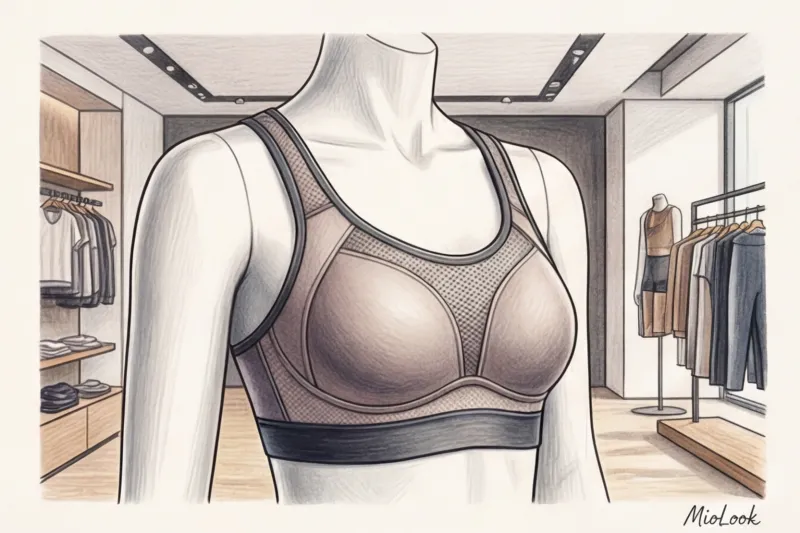
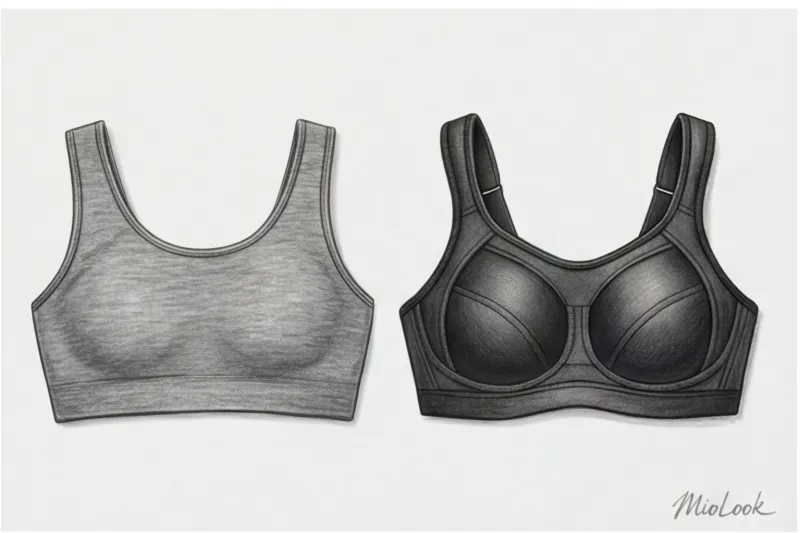
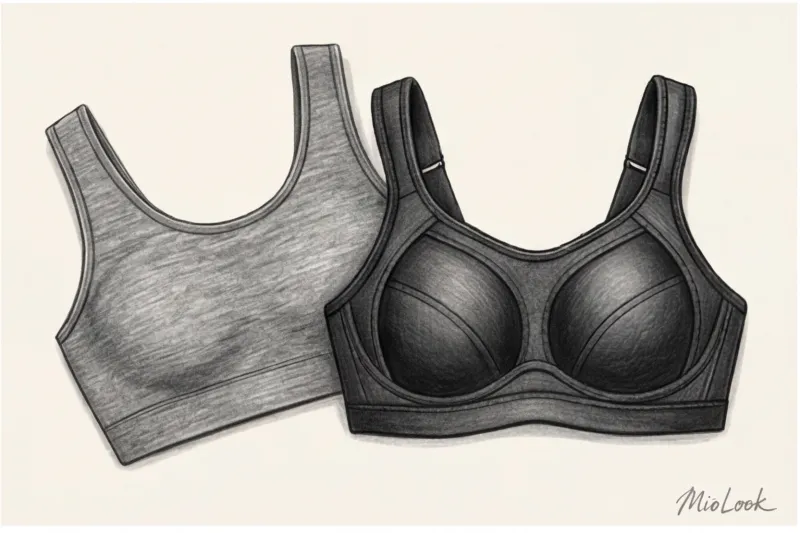
Compression tops that simply press the bust against the rib cage are designed exclusively for A and B cups. The only safe choice for D+ cups is encapsulation In this type of bra, each breast is placed in its own, rigidly designed cup. They are not pressed together, but are securely held independently.
How to Choose a Sports Bra for Large Busts: 5 Critical Details
In 14 years of working as a stylist, I've learned a golden rule: the right bra instantly changes your posture. When choosing a sports bra for a large bust, pay attention to these elements:
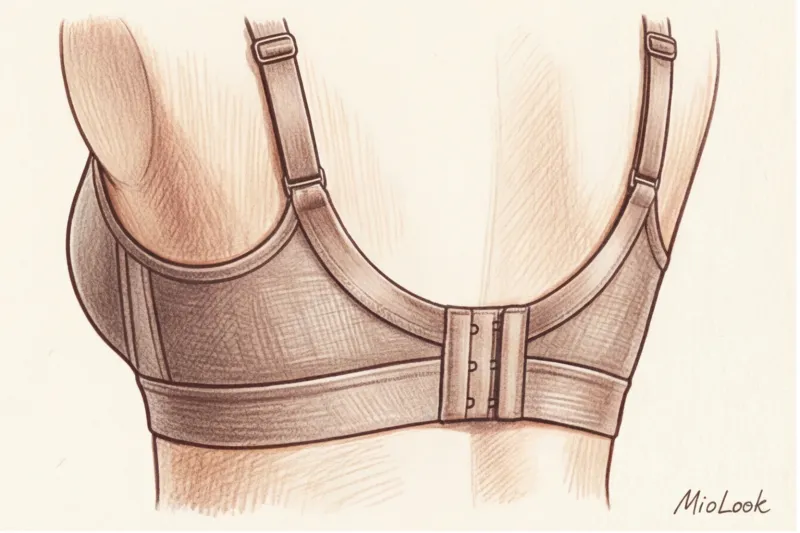
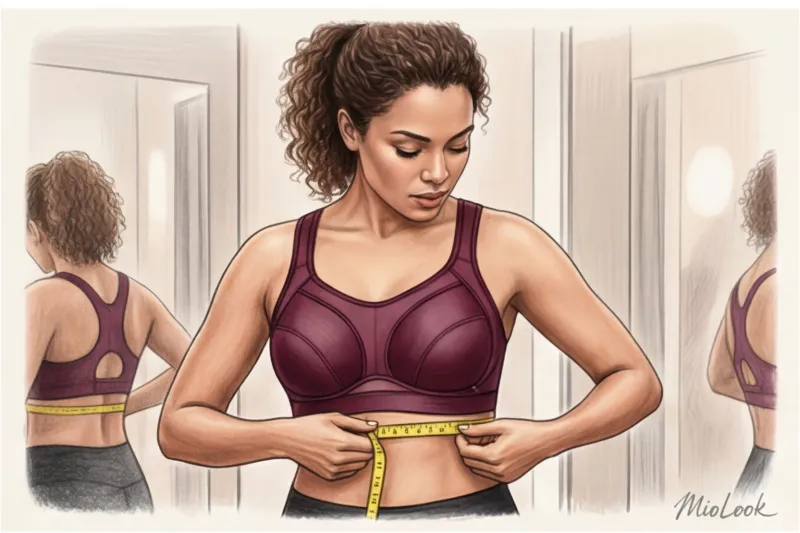
- Belt: This is the foundation. A thick, wide belt bears 80% of the bust's weight. It should fasten with the loosest hook (leaving room for fabric stretch) and sit strictly horizontally, not riding up on the shoulder blades.
- Straps: Their job is to support only 20% of the load. For E cups and above, look for models with padded straps at least 3 cm wide. They should be adjustable.
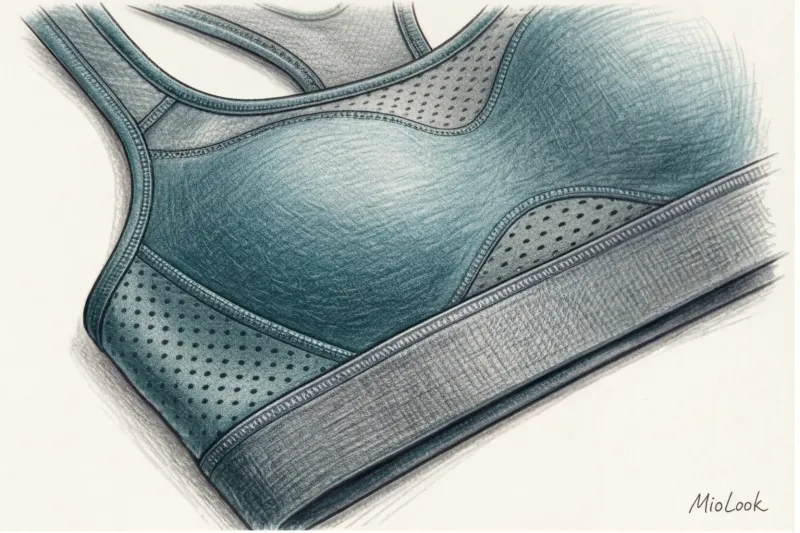
- Materials: No cotton! Cotton absorbs sweat, becomes heavy, takes a long time to dry, and cools the body, causing muscle cramps. Look for microfiber, polyester with Coolmax technology, or thick elastane.
- Seams: Flat or completely seamless inner cups will protect delicate skin from chafing and bleeding during a marathon.
Your perfect look starts here
Join thousands of users who look flawless every day with MioLook. A smart AI stylist will help you find the perfect fit.
Get access — €0.99 onceSeedless or Seedless? Debunking the Myths
The myth that underwires are dangerous in sports is hopelessly outdated. Premium sportswear (brands like Panache Sport or Anita, where a quality bra costs between €60 and €90) uses flexible underwires sealed in silicone or gel channels. They move with your body.
However, there is limitation If you have close-set breasts, the center of an underwire bra may rest directly on your breast tissue rather than your sternum. This is unacceptable. In this case, your choice should be wireless bras with very dense foam padding.
Activity Levels: Why the Rules Change for Large Breasts
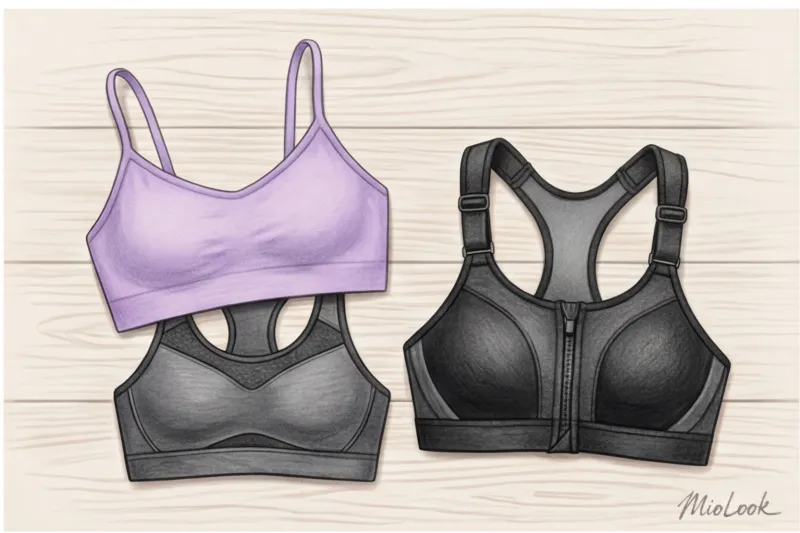
Manufacturers label lingerie by support levels (Impact). But what works for a size B is completely inapplicable to a size F.
- Low Impact (yoga, pilates, stretching): For petite women, a soft top is sufficient. Women with larger breasts should wear a medium-height bra for this exercise. Otherwise, in the downward-facing dog position, the breasts will fall toward the chin.
- Medium Impact (strength training, elliptical, exercise bike): Requires tight encapsulation without rigid fixation of the upper pole of the breast.
- High Impact (running, HIIT, CrossFit, dance, equestrian): This is where uncompromising protection comes in. Look for styles with additional support at the top (sometimes in the form of a separate panel or a high neckline) to prevent your breasts from bouncing upward.
Fitting rules: test drive in the locker room
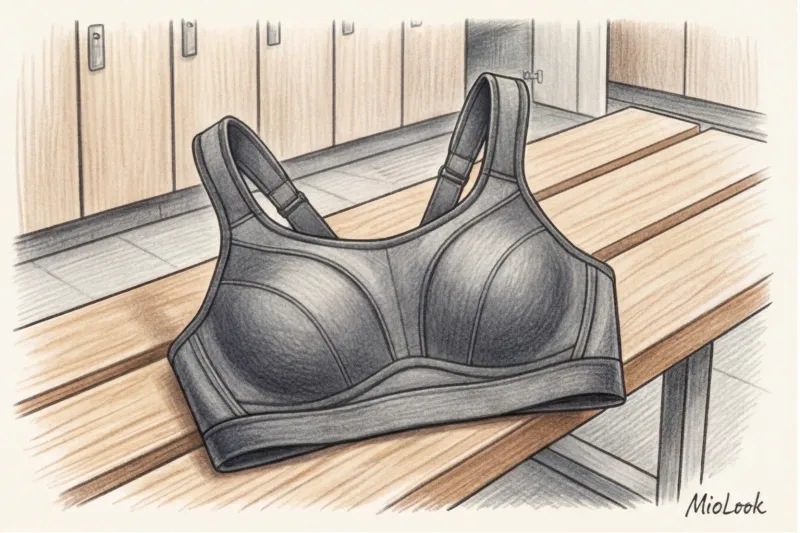
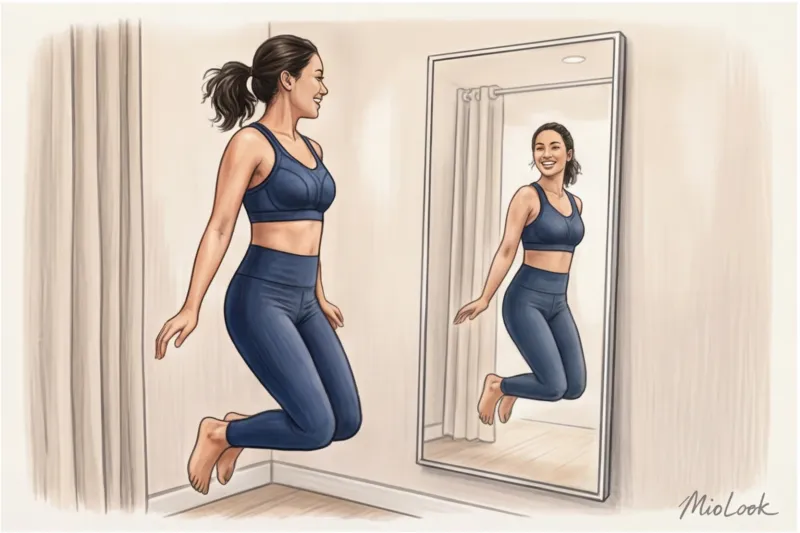
Never buy sportswear just because it "looks like it fits." In my practice, I always make my clients do a rigorous test drive right in the fitting room.
Two-finger test. Slide two fingers under the band at the back and pull. The band shouldn't come out more than 3-4 centimeters. Do the same with the shoulder straps—if they pull up easily, tighten them. If the band starts to slide up, the bra is too big.
Bounce Test. Do 10 jumping jacks or simulate running. You should feel completely comfortable and not experience any pain in your chest or neck.
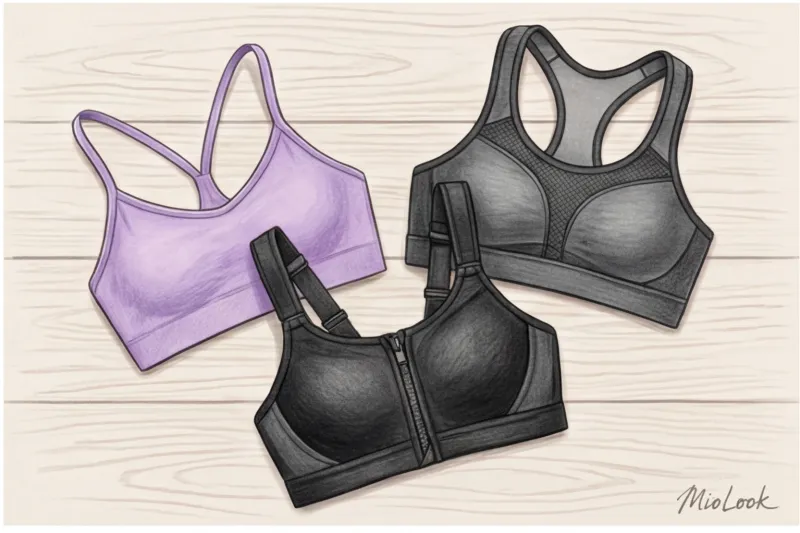
Breathing and tilt test. Take a deep breath—the belt shouldn't interfere with your ribs' expansion. Lean forward at a 90-degree angle—your chest shouldn't spill out of the cups.
Styling: How to Wear a Sports Bra in Athleisure Style
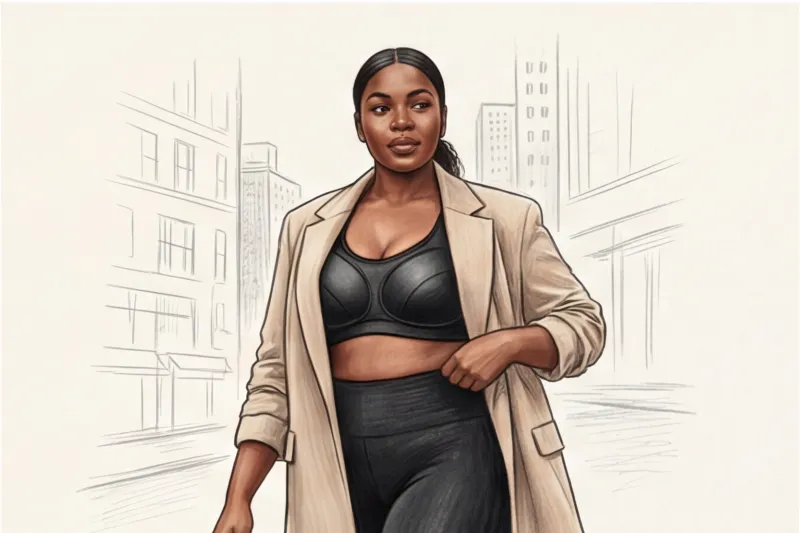
High-quality encapsulation bras have a fantastic side effect: they create an incredibly toned silhouette. That's why I often use them not only for the gym but also as a base for everyday looks for my plus-size clients.
A smooth sports bra works perfectly as a crop top. Layer it over an unbuttoned, oversized, heavy cotton shirt or a structured men's jacket. The bra's tight, lifted hold reveals a strip of skin at the narrowest part of your waist, visually slimming your figure.
To balance out a fitted top, opt for loose bottoms: high-waisted, wide-leg palazzo pants, oversized joggers, or wide-leg jeans. This mix of sporty chic and casual is incredibly on-trend right now. Learn more about how to incorporate these elements into your look. capsule wardrobe , we wrote earlier.
Organize your wardrobe with ease
Try MioLook for free: upload your items to the app, and the AI stylist will suggest dozens of new combinations with sports tops and jackets.
Try MioLookChecklist: 4 Signs It's Time to Throw Out Your Bra
Let's be honest: a sports bra isn't a family heirloom bought to last five years. It's a technologically advanced consumable designed to protect your health. With regular exercise (three times a week), elastane loses its properties after just 6-8 months.
It's time to go shopping if:
- You fasten your belt to the tightest hooks, but it still rides up on your shoulder blades.
- The fabric on the waistband or straps has become wavy, which means that the elastane threads inside have burst.
- My chest began to bounce more strongly during my usual jogging.
- After a workout, the muscles of the neck or shoulders began to ache (a sure sign that the belt gave in and the weight transferred to the straps).
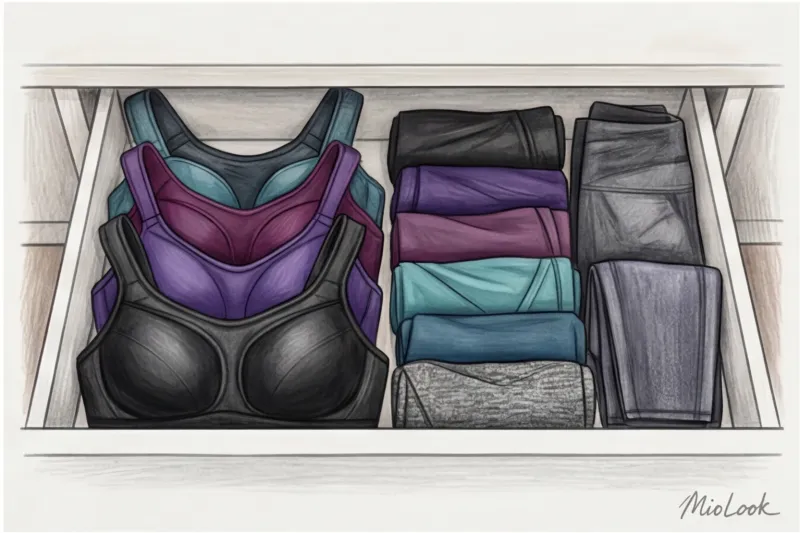
Investing in a sports bra for large breasts isn't about wasting money on a pretty piece of clothing. You're buying a healthy back, firm skin, and, most importantly, the motivation to keep working out because of discomfort. Don't compromise in the fitting room; opt for firm encapsulation, and you'll be amazed at how effortless working out can be.