What is the "scale rule" and why is the capsule dead without it?
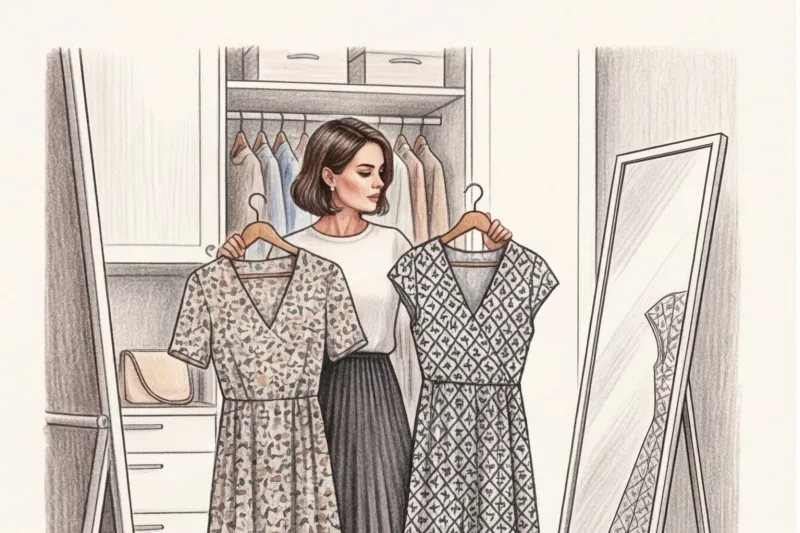
Let's be honest. You spend hours putting together the perfect basic capsule wardrobe, buying high-quality pieces in a carefully chosen neutral palette, and then you look in the mirror and see... a dull uniform. Last month, I analyzed over 500 digital wardrobes in the MioLook app and discovered a disturbing pattern: 80% of women avoid prints entirely for fear of looking disproportionate.
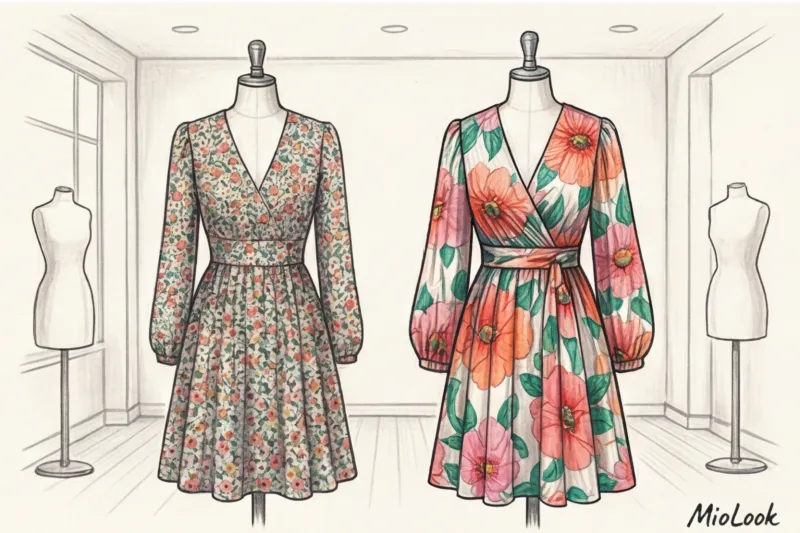
As a result, smooth, monochromatic items merge into a flat blob of color. There's nothing for the eye to focus on. We've covered the mechanics of this visual effect in more detail in our complete guide: How to Combine Prints in Clothing: Rules for a Stylish Capsule We talked about wardrobe rhythm there, but today we'll focus on the fundamentals—how to choose the right print size to suit your natural features.
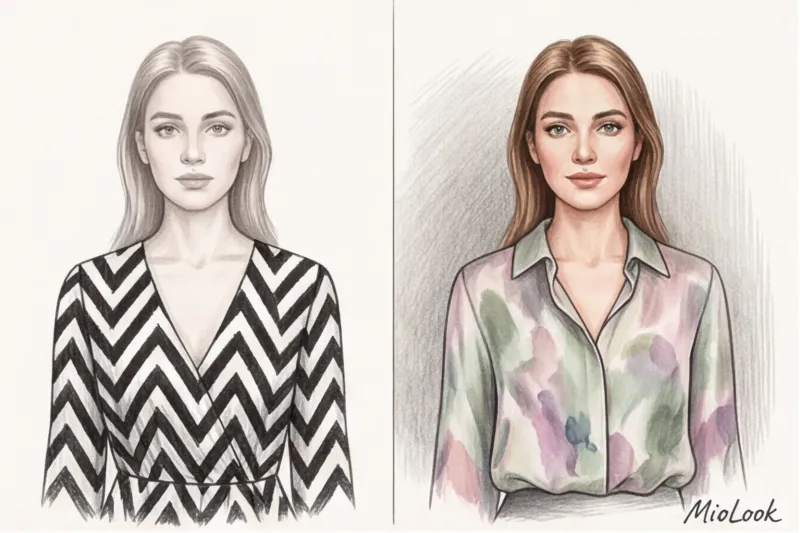
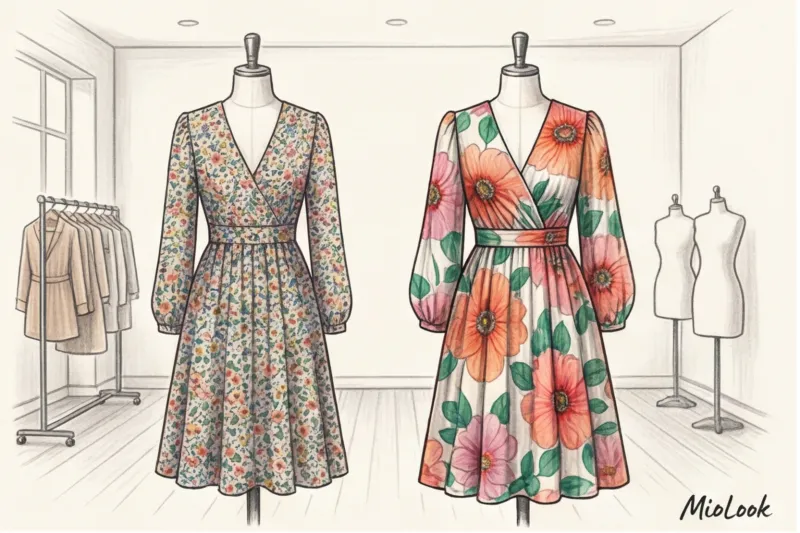
The rule of scale is a physical law that dictates how a pattern on a fabric is proportional to your bone structure. This optical illusion works relentlessly: our brain always compares the size of a pattern on a blouse to the size of your facial features, the width of your wrists, and your overall height. If a petite woman wears a dress with giant poppies, the viewer's brain immediately concludes, "The woman is too small," not, "The flowers are too big."
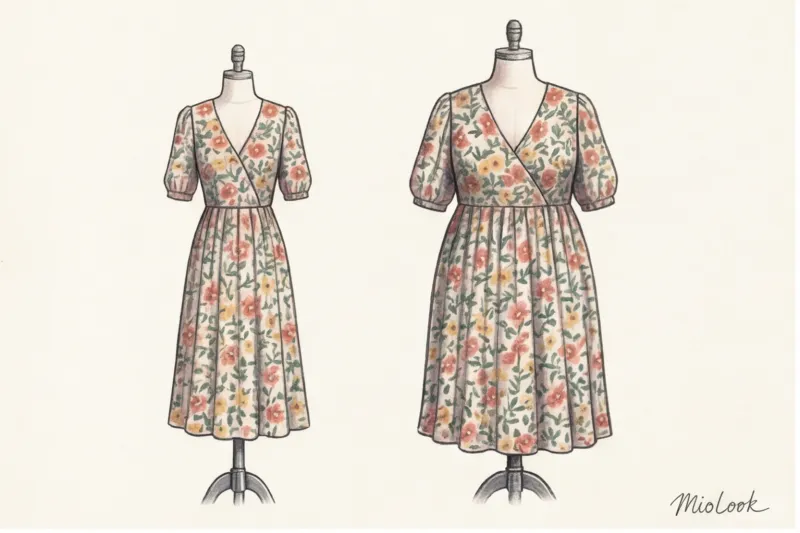
The main myth of style: "large prints for plus size women, small prints for thin women"
It's time to dismantle the most toxic and pervasive stereotype in the fashion world. For decades, glossy magazines have been writing that clothing size is directly dictated by the scale of the print. Plus-size women were urged to wear chunky abstract designs and oversized flower petals to "balance their volume."
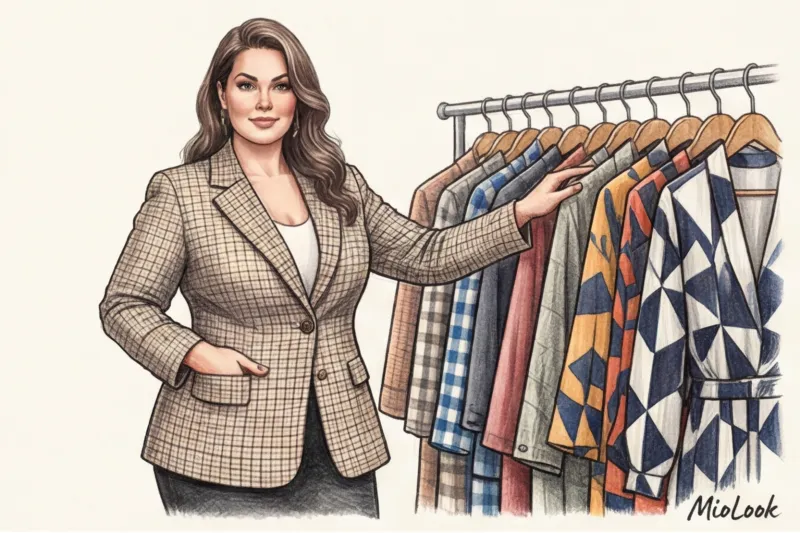
In my experience, this has always led to disaster. Recently, a client named Elena (size 52) came to me. She bought an expensive €180 tunic with large, spreading peonies because "the consultant recommended it." In this print, she looked like a walking billboard—the design acted like a magnifying glass, highlighting every extra kilo.
What's the mistake? Back in 1987, David Kibby proved in his revolutionary typology of figures that body geometry is determined by bone structure , not soft tissue volume (weight). Elena had graceful wrists, slender ankles, and delicate features. When we changed her into a medium-sized dress with a dense geometric print, she visually dropped two sizes. Print should scale with your bones, not your fat.
Your perfect look starts here
Join thousands of users who look flawless every day with MioLook. A smart AI stylist will analyze your items and find the perfect combinations.
Get access — €0.99 oncePractice: How to choose the right print size for your height and bones
To determine your scale, you need to assess two things: your height and bone thickness. There are three main categories of bone structure: delicate, medium, and large. The most accurate indicator is your wrist.
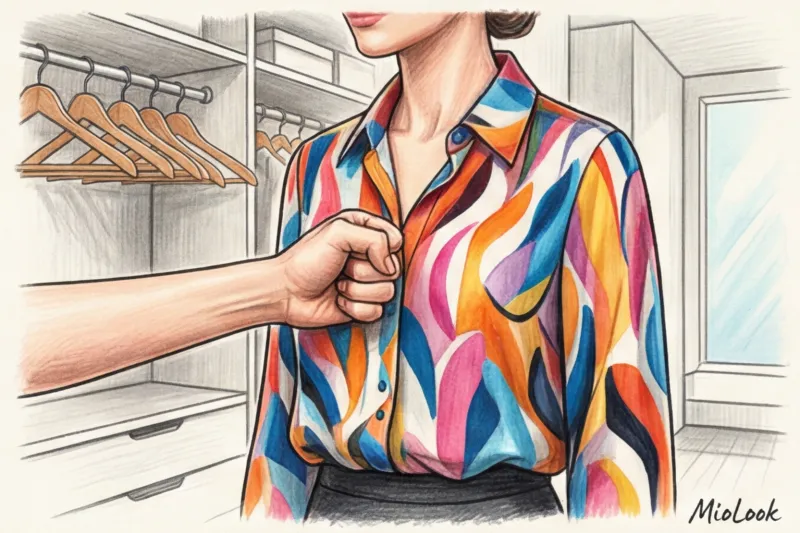
Over 12 years of working as a stylist, I have developed basic rules for my clients "the rule of the clenched fist" You walk into Zara or Massimo Dutti and pick up a printed item from the hanger. Make a fist and press it against the fabric. If one individual element of the design (one diamond, one flower) is larger than your fist, it's objectively a large print. If it's the size of the pad of your thumb, it's a micro print. Now let's apply this to height.
Miniature stature (up to 160 cm) and delicate features
If you have thin wrists, a neat nose, and are short, your superpower is detail. Vast flower beds will visually "pin" you down.
- Ideal prints: micro-floral (millefleur), small polka dot, thin rhythmic stripe, small Vichy check.
- Dangers: Wide horizontal color-block stripes and large single prints (like the huge logo on the chest) that cut the figure into pieces.
Average height (160-170 cm) and balanced proportions
This is the most flexible category. If your wrist is around 15–17 cm, you can settle for the happy medium.
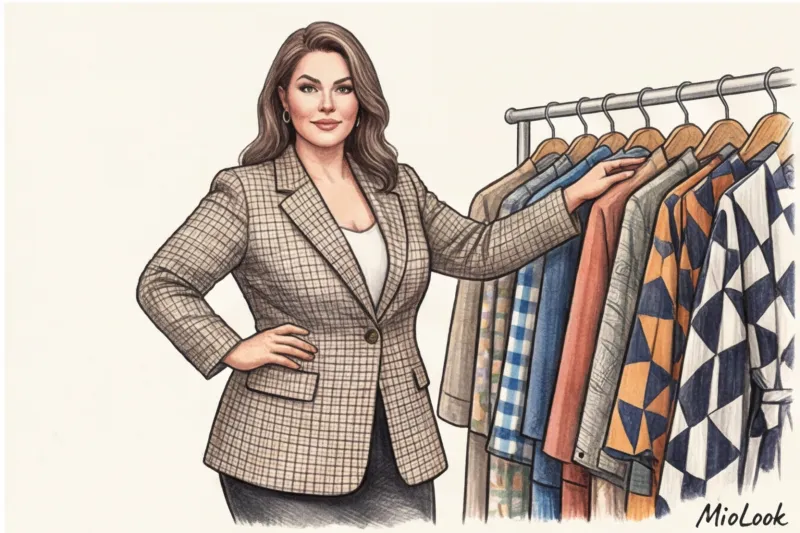
- Ideal prints: Classic houndstooth, medium caliber leopard, classic geometry.
- Life hack: Use medium-sized prints for contouring. If you have a pear-shaped figure, wear a blouse with a medium-sized accent print and sleek dark trousers underneath. The eye is always drawn to the pattern.
Tall (over 170 cm) and large bone structure
Tall girls with wide wrists and expressive features often fear being "too noticeable" and hide behind small floral prints. This is a mistake.
- Ideal prints: Large architectural geometry, wide stripes, massive floral motifs.
- Why small print doesn't work: On the fabric area needed for a height of 178 cm, the micro-print merges into a television-like ripple. The girl looks orphaned, as if she's wearing a child's dress.
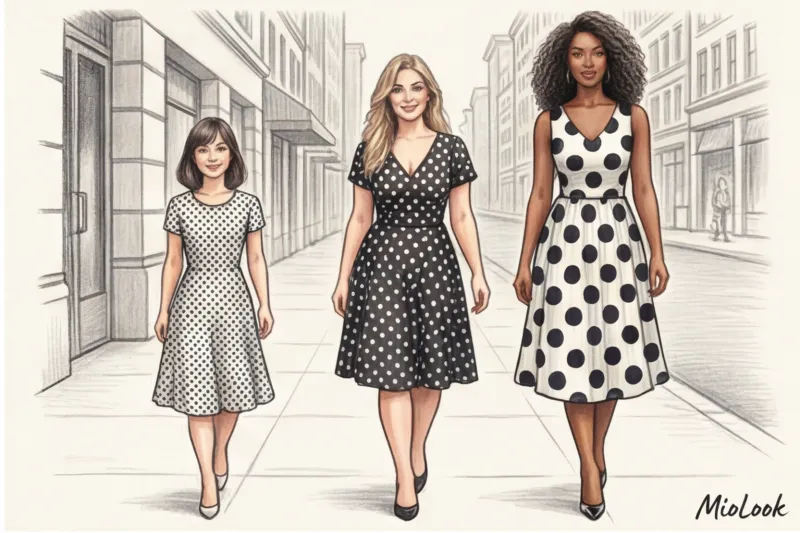
Density Index: The Secret Parameter Stylists Don't Tell You
Knowing how to choose the right print size is only half the battle. There's another critical factor: the distance between design elements.
The principles of Gestalt psychology in fashion design (the London College of Fashion has been actively teaching this theory of visual proportions since 2022) prove that our brain automatically groups objects placed close to each other. A sparse print (with a lot of background) and a dense print (with almost no background) work completely differently, even if the size of the flower itself is identical.
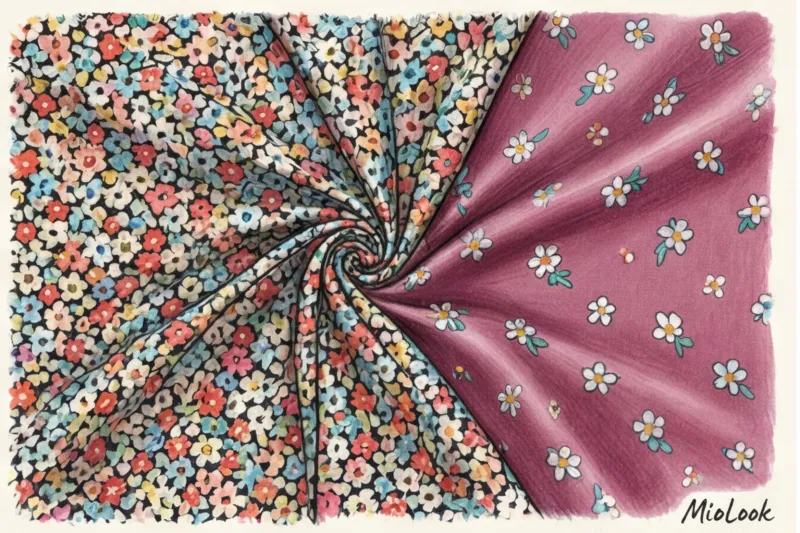
"From a distance of more than two meters, the dense micro-print ceases to be read as a pattern and becomes a complex, solid color. It's the perfect way to add texture to a wardrobe for those who shy away from color."
An interesting fact from visual weight research: if a print takes up more than 60% of the fabric's surface, overlapping the background, it creates a slimming effect. The brain simply can't focus on the silhouette's boundaries because it's too busy examining the maze of lines. This is why a dense snakeskin print often looks more flattering than sparse, large polka dots on a white background.
How to wear prints that are "out of your league" (without ruining your figure)
Let's be honest. I could go on and on about bone structure, but sometimes you walk into a boutique, see a gorgeous silk skirt for €120 with giant abstract spots—and fall in love. Rules are meant to be broken. If a print is objectively not the right scale for you, but you really want it, use these two techniques.
Distancing rule. The most dangerous zone is the portrait area (from the chest to the crown of the head). Anything near the face directly clashes with your features. Want a huge, crazy print on a petite frame? Keep it low. Choose palazzo pants, shoes, or a bag. Stick to a calm, solid-color cashmere near the face.
Taming in layers. If you've bought a blouse with a pattern that's too small or too large, break it up. Layer it with a crisp, structured jacket in a deep, basic shade. Keep the print to just a narrow vertical stripe at the neckline or flared cuffs. This will transform the pattern from a loud accent into a piquant detail.
Ready to incorporate prints into your style?
Try MioLook's free plan—no commitments required. Upload your items and see what new combinations the AI can suggest.
Get access — €0.99 onceChecklist: How to Safely Incorporate Prints into a Capsule Collection
If your wardrobe currently resembles an endless field of beige, don't buy a leopard-print coat tomorrow. Be strategic.
- Step 1: Start with texture. If contrasting patterns make you panic, swap out smooth cotton for tweed, ribbed, or bouclé. Their weave creates a micro-print through shadows and volume.
- Step 2: Incorporate the classics. Buy a pinstriped shirt or a checkered jacket, but in the colors of your current base If you're wearing navy and gray, keep the checks gray-blue.
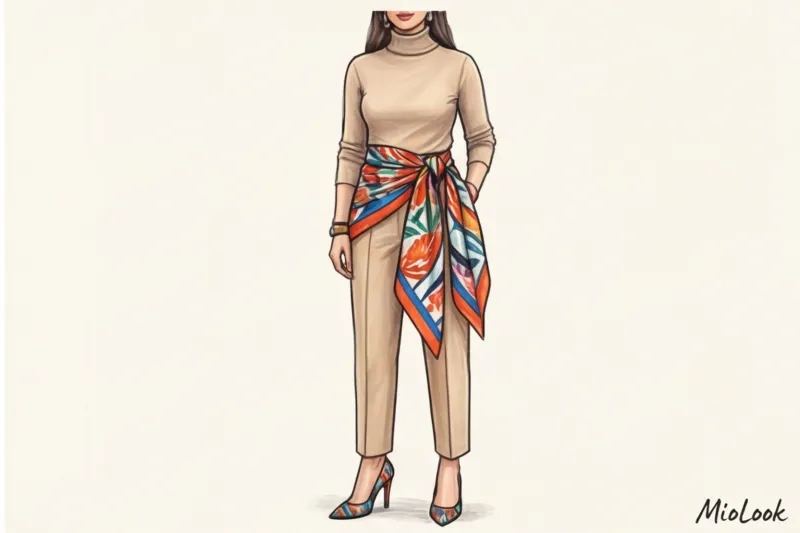
- Step 3: Micro-doses through accessories. A silk scarf (local brands offer great options in the €30-€60 range) or a statement belt in a custom print will liven up any look.
- Step 4: Digital fitting. Before you buy an accent piece, take a photo of it in the fitting room. Upload the photo to MioLook wardrobe and check if this print matches with at least three of your basic bottoms.
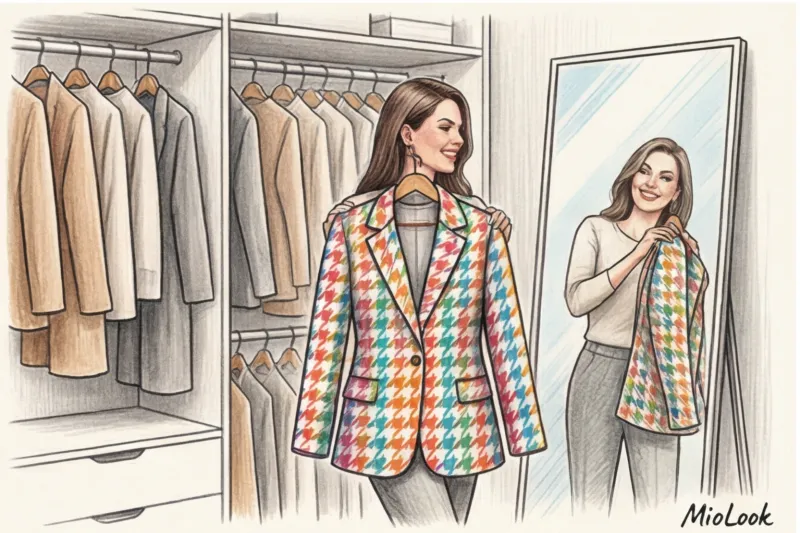
The perfect functional wardrobe isn't a stack of identical basic sweaters. It's a complex rhythm where smooth textures alternate with bold patterns. Don't let size stereotypes dictate your rules. Measure your wrist, find your size, and finally let your wardrobe speak for itself.