According to statistics from global bra-fitting associations, over 80% of women wear the wrong bra size or style every day. You buy an expensive lace bra, put on a thin blouse, and suddenly notice that the cups are bulging, the straps are digging into your shoulders, and the elastic of your panties is pulling in tightly around your hips, creating a bulge where none existed before. Sound familiar?
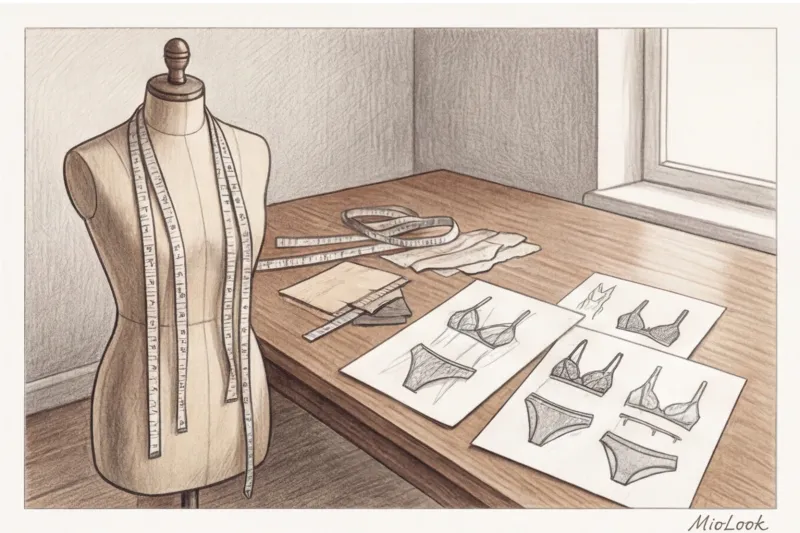
When people ask me, How to choose underwear according to your body type , I ask you to immediately forget about fruity geometric metaphors. While the "apple-pear-hourglass" system may still be valid for choosing a coat (albeit with some caveats), it's completely useless when it comes to lingerie styling. Lingerie interacts with the micro-relief of your body: the architecture of your pelvis, the width of your ribcage, and the density of your fabrics, rather than your overall silhouette. We discussed this in more detail in our The complete guide to smart lingerie selection online , but today I want to delve into the physics of landing.
Anatomy instead of "apple" and "pear": a new approach to choosing underwear
Over my 12 years as a stylist, I've seen hundreds of women come to me complaining, "Nothing fits me." One of my clients wore a standard size 75B for years, suffering from the underwire digging into her sides and the waistband constantly slipping down onto her shoulder blades. When we switched her to an anatomically correct 65E, she was truly shocked. Her silhouette lengthened, her posture improved, and her stomach visibly flattened—simply because her breasts were lifted back into their natural position.
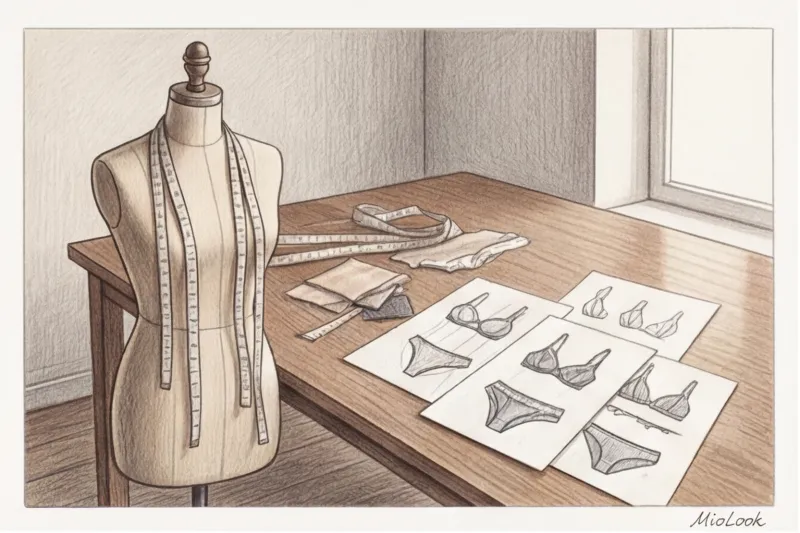
To ensure that the underwear fits perfectly, we must evaluate three parameters:
- Root of the breast — the area the mammary gland occupies on the chest. It can be wide (extending into the armpit) or narrow.
- Projection — the extent to which the chest protrudes forward. The projection can be deep or shallow.
- Pelvic architecture — the height of the femur and the distribution of soft tissue. This determines the appropriate cutout line for your swimsuit.
This is why standard size charts fail. The app's algorithms MioLook For example, they analyze body topography, not just waist-to-hip ratio. Artificial intelligence takes into account how fabric will stretch along specific curves.
How to choose underwear for your body type: physics and cut
The same 70C size will fit you completely differently across different brands. This depends on the national pattern school. For example, French brands (such as Chantelle or Simone Pérèle) historically produce cups for a wider root and shallow projection—they are more open and wider. The British school (Panache, Freya) is known for its patterns for a narrow root and deep projection: their underwires are shorter in width, and the cup itself is deeper.
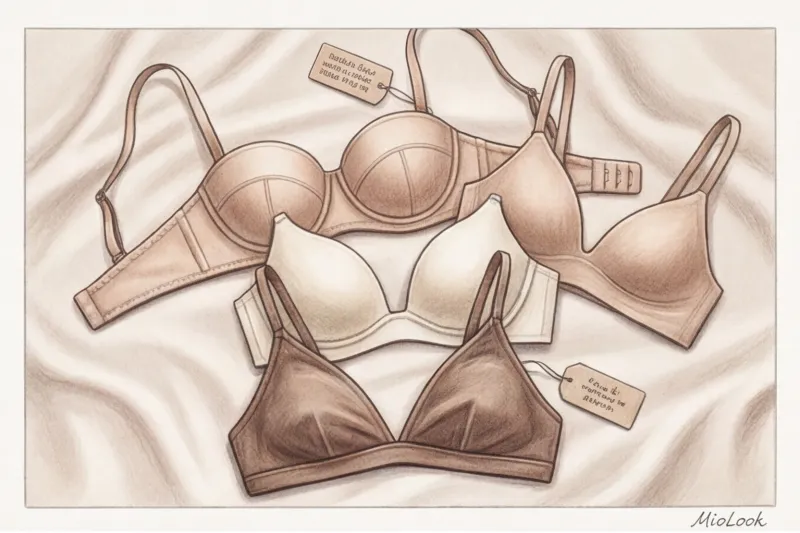
Wide base and low projection
If your chest is wide and your volume is distributed over a larger area, full-coverage, deep cups are a definite no-no—they'll stick out at the top, creating an unsightly "empty cup" effect, even if the size is correct. Your best bet is style. balconette or models with a vertical seam (half-cup) They lift the breasts from below, creating a beautiful neckline without unnecessary pressure from above.
Narrow base and deep projection
For this type of anatomy, the main problem is the underwire, which extends too far under the armpit, rubbing against the skin. Your ideal cut is plunge with a low bridge between the cups and models with a side cut (side support) The side panel in these bras gathers volume from the sides and directs it forward, creating a neat and collected silhouette.
Asymmetry and loss of density (age-related changes)
Perfectly symmetrical breasts don't exist, but sometimes the difference in size can reach a full cup. In this case, rigid molded bras (foam "shells") will only highlight the problem: the cup will be constricted on one side and empty on the other. The solution? Elastic lace. (stretch lace) at the top. It works like a smart membrane, stretching where there's more volume and softly conforming where there's less.
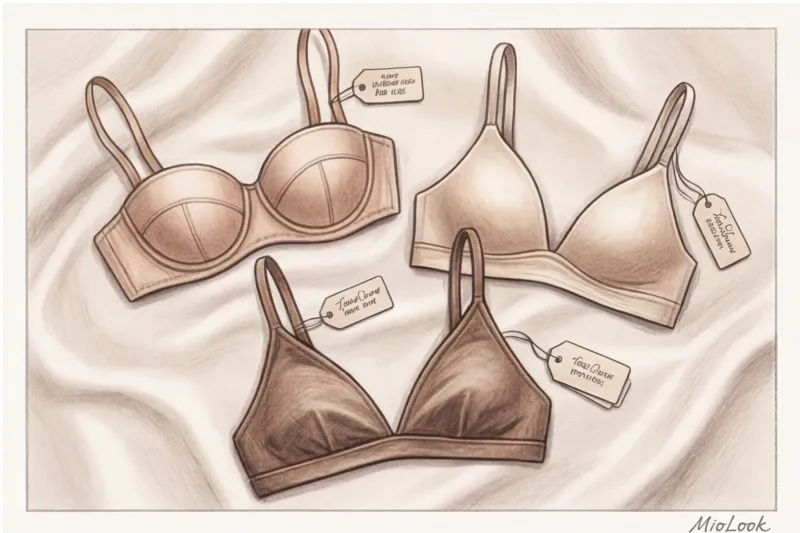
Another innovation for breasts that have lost density is the material spacer (spacer 3D) It's a lightweight, breathable fabric made of two layers with a microscopic air gap between them. Unlike dense foam, the spacer conforms to the anatomical shape of your breasts, without adding artificial volume, but ensuring a perfectly smooth fit under a T-shirt.
Your perfect look starts here
Join thousands of users who look flawless every day with MioLook. Its smart algorithm takes into account every anatomical detail of your figure.
Get access — €0.99 onceDesigning the bottom: how to fit panties based on the pelvic architecture
The thigh-high cut is a more powerful tool for controlling proportions than heels. I often see women with a rectangle body type (a slight waist, a straight silhouette, and sometimes a slight tummy) buying low-rise bikini bottoms in the hopes of feeling more comfortable. The result? The elastic cuts right into the softest part of the belly, cutting it in half.
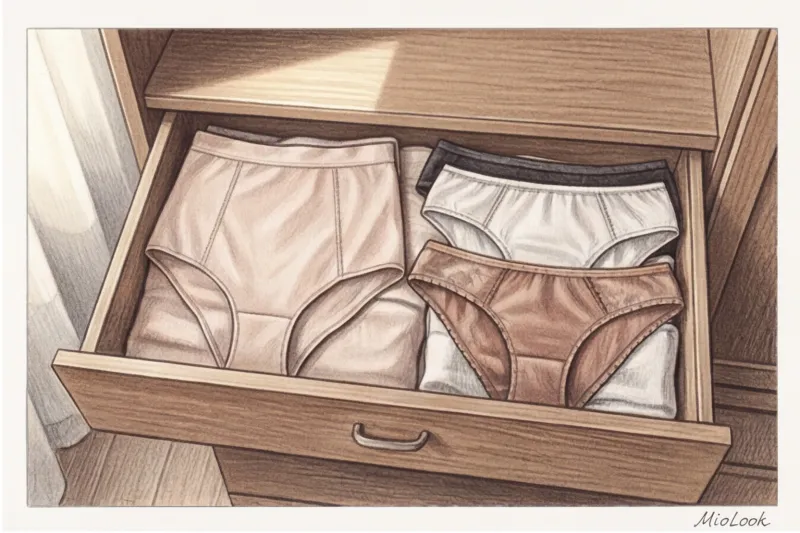
In such cases, I recommend a high-waisted fit, but not a simple one, but one with a front panel made of powernet Powernet is a special textile mesh with a hexagonal cell structure. It doesn't just tighten; it redistributes pressure, creating an even, smooth contour without the feeling of a rigid corset.
But what if you have high hips and steep, pronounced pelvic curves? Standard briefs with a tight elastic band around the hem will create a "stretched sausage" effect under your favorite jeans. The solution is your fit. French cut with a high hip line or Brazilian Without hard seams along the edge of the buttocks. This will visually lengthen your legs and eliminate creases under clothing.
The main myth about seamless and shapewear
For years, marketers have been telling us: if you want a smooth silhouette, wear seamless underwear. This is the biggest myth in the industry. Seamless underwear is not a panacea.
"On curved figures and soft fabrics, completely seamless laser briefs without support structures roll up under the belly or hips, creating more unevenness under clothing than classic underwear with proper flat seams."
One day, a client came to me in tears: she'd bought a gorgeous silk slip dress for an evening out and worn a pair of sheer seamless shorts underneath. As she walked, the soft edge of the shorts instantly rolled up, creating two tight ropes on her thighs beneath the thin silk. Thin fabric requires an architectural base, and seamless knits lack a structural seam to maintain tension.
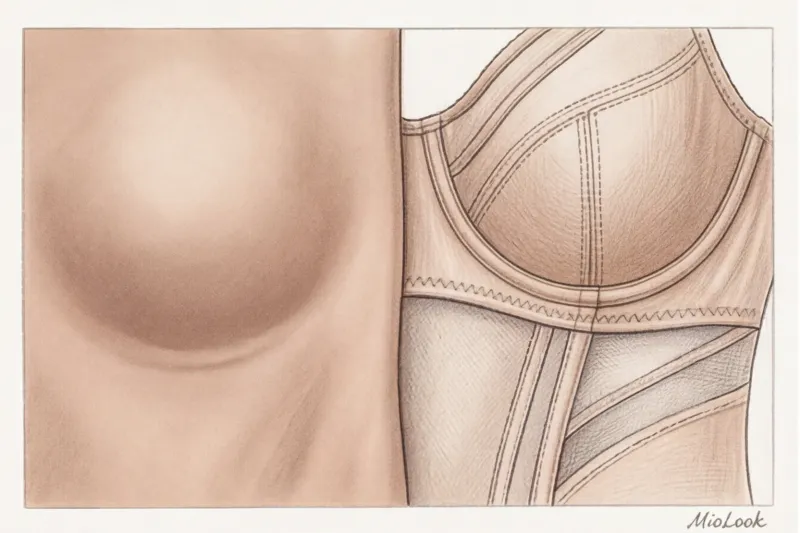
The second harmful myth is buying shapewear that's a size too small. Contrary to expectations, you won't get slimmer. Physics can't be fooled: fabric under excess pressure will simply push the body's volume into loose areas (underarms, back, above the waistband), creating new folds where none were ever there. Choose dense materials with laser-bonded seams Strictly true to size. They maintain the architectural fit without showing through under clothing.
Textile Expertise: How Fabric Composition Affects Fit and Ecology
As a textile specialist and proponent of sustainable fashion, I always check the composition of my underwear. The difference between premium elastane (like genuine Lycra®) and cheap, no-name spandex is not only a matter of comfort but also durability. According to the Textile Institute, high-quality polyurethane fibers can withstand up to 200 stretch cycles when properly cared for. Cheaper alternatives lose compression and become wavy after just 15 washes, especially if you wash them at temperatures above 30 degrees Celsius (hot water literally melts the elastane).
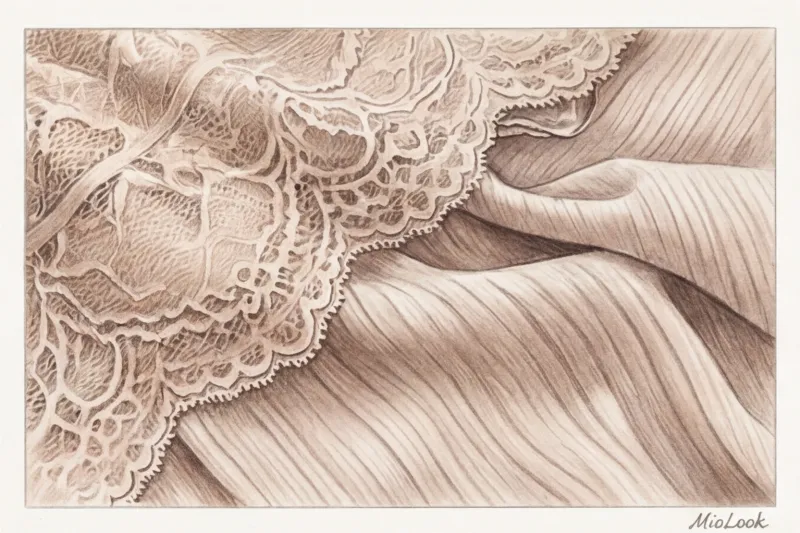
Pay attention to the gusset and main fabric. Polyester is the worst choice for everyday wear due to its greenhouse effect. Eco-friendly and healthy alternatives are organic cotton, modal and lyocell (Tencel) Derived from eucalyptus wood, lyocell absorbs 50% more moisture than cotton and has natural antibacterial properties.
Even lace lovers can make informed choices today. Many European brands have switched to recycled lace made from regenerated polyamide yarns. It looks just as luxurious, costs the same (from €60 to €120 for a quality bra), but significantly reduces the carbon footprint of your wardrobe.
Try MioLook
A smart AI stylist will choose the perfect look for you and help you review your wardrobe.
Get access — €0.99 onceChecklist: How to check the quality and fit of underwear before buying
Don't rely solely on a mirror—use your hands. Before you take your set to the checkout or cut off the tags when ordering online, run through this checklist:
- Tensile test: Pull the band of your bra or panties and release quickly. High-quality material should return to its original shape instantly, with a distinctive click. If it returns lazily and slowly, the item will have stretched out permanently within a month.
- Checking the fittings: Make sure the adjustment rings on the straps are made of hypoallergenic metal (zamak) or high-strength nylon. Cheap transparent plastic will break under the first serious strain.
- Two-finger test: Fasten your bra on the loosest hook. You should be able to easily slide two fingers under the band at the back. If your entire palm fits and the band can be pulled 5 centimeters away from your back, the band is too big. 80% of the support in a bra comes from the band, not the straps.
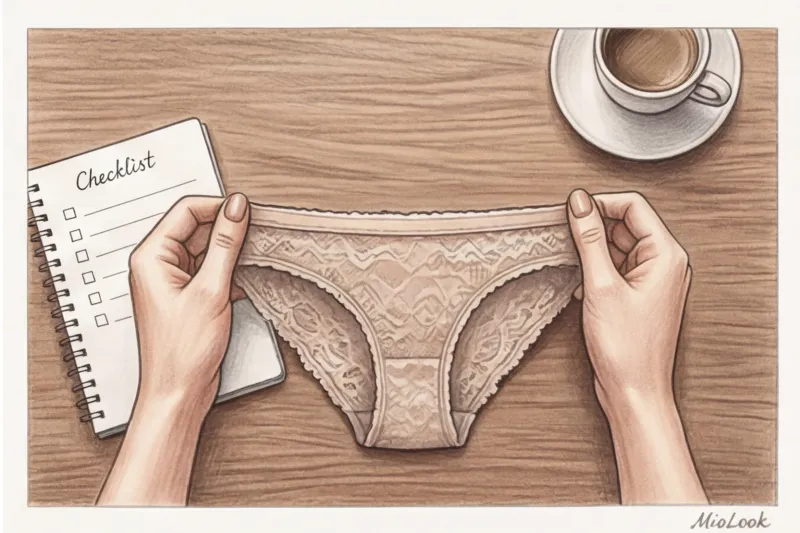
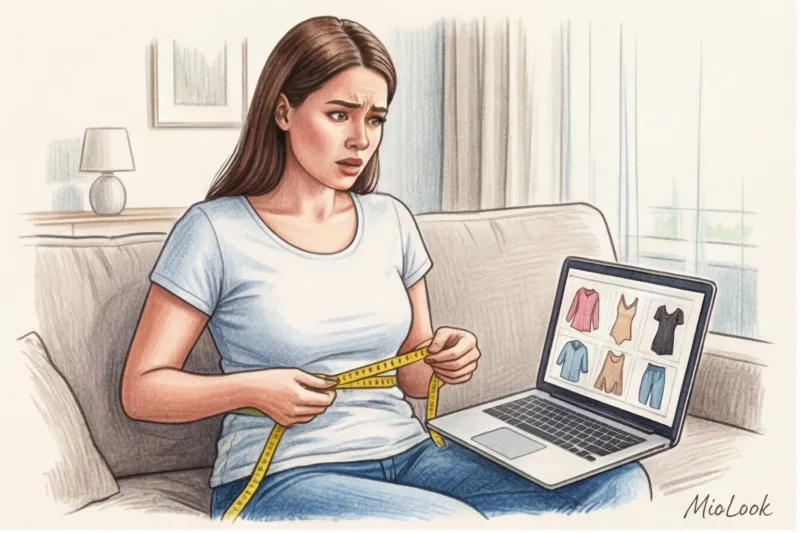
For online shopping, I recommend uploading your exact measurements to MioLook wardrobe The app will tell you which brands' patterns have historically best suited your bust-root-projection configuration.
Conclusion: A lingerie wardrobe as the foundation of your style
Perfectly fitting lingerie isn't a luxury; it's essential for your style and posture. Constantly wearing the wrong bra leads to spasms in the trapezius muscle, and digging panties impair lymph flow.
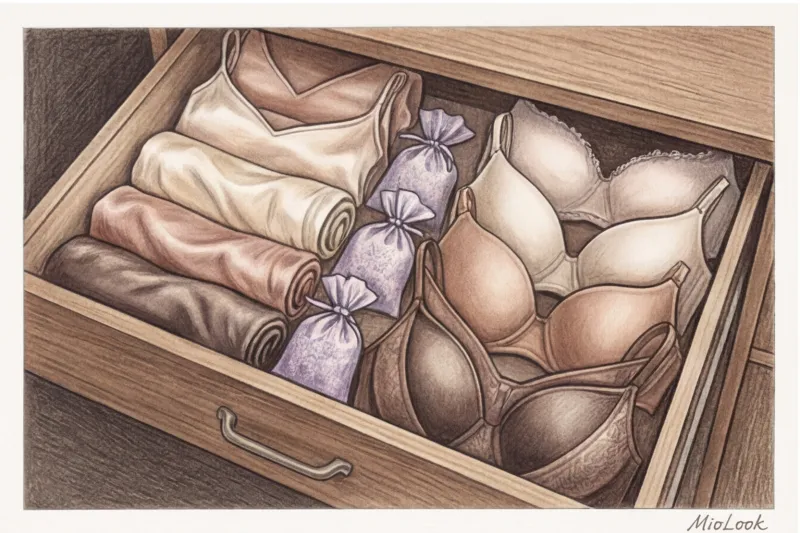
Invest in 3-4 high-quality, anatomically correct sets in the €80-€150 range, instead of hoarding 10 cheap mass-market options that ruin your mood every time you look in the mirror. Conduct a ruthless audit of your underwear drawer this weekend. Throw out anything itchy, stretched out, or requiring constant readjustment throughout the day. You deserve to start your day with comfort you don't have to think about.