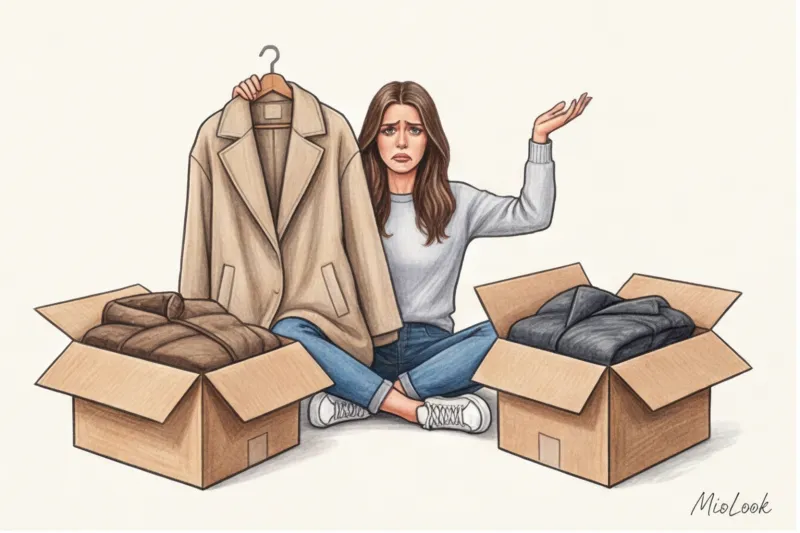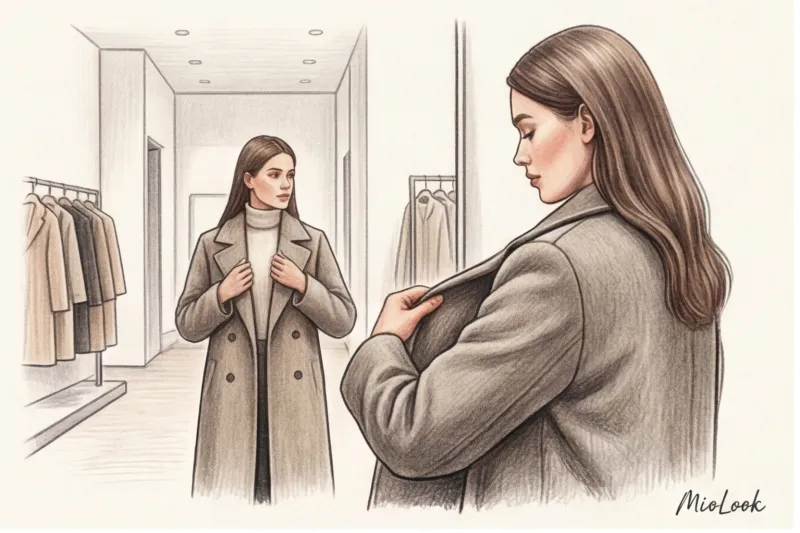
Do you know why almost 40% of outerwear returns in online stores are due to the item not fitting in the shoulders? We're used to buying clothes based on flat measurements: chest, waist, hips. But when it comes to choosing coat according to body type , the measuring tape becomes practically useless.
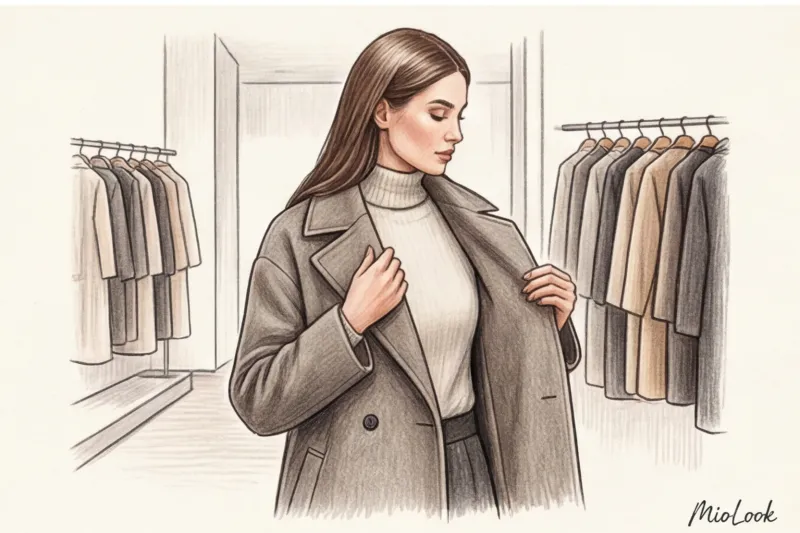
My name is Katarzyna Nowak, I'm a personal stylist, and after 12 years of wardrobe analysis, I've learned one ironclad rule: outerwear is the toughest, thickest, and most expensive layer of your outfit. It's unforgiving of measurement errors. We've already covered basic body geometry in more detail in our the complete guide to female body types , but when choosing a coat or trench coat, 3D architecture comes into play.
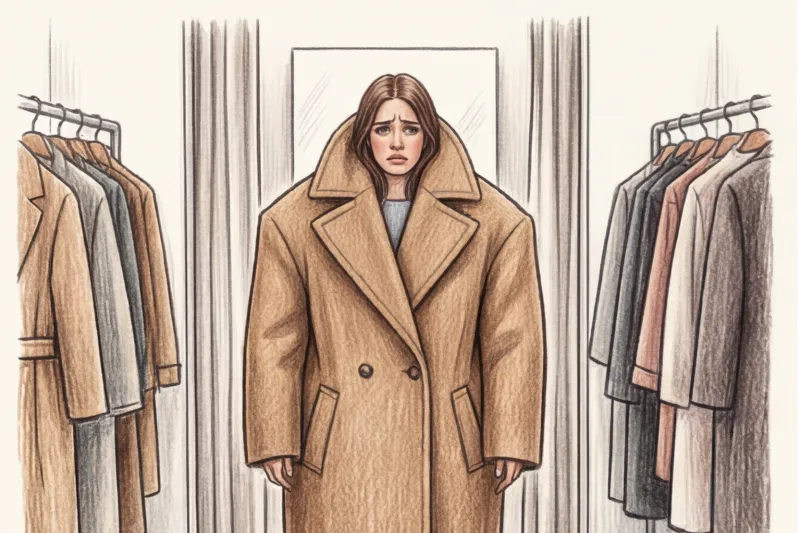
Recently, a client came to me who was constantly freezing in the winter. She had an expensive wool coat that was exactly her size. The problem? The manufacturer had skimped on the pattern and made the armholes too narrow. She physically couldn't wear a thick sweater underneath it—the fabric cut into her armpits, cutting off her circulation. This case perfectly illustrates why the fit of outerwear requires a completely different approach.
Cutting Architecture: Why a Tape Measure Won't Help You Choose a Coat
Constructing outerwear is akin to engineering. According to classical design principles (for example, the authoritative Müller & Son cutting system), the shape of the shoulder joint determines the entire balance of the garment. The way the sleeve is cut instantly changes the geometry of your top.
Let's look at the three main types of shoulder:
- Set-in sleeve (classic): Creates a crisp, right-angled silhouette. Ideal for creating a classy, put-together look. It acts as an architectural framework—if you have sloping shoulders, a set-in sleeve with a small shoulder pad will instantly smooth them out.
- Dropped shoulder: The most insidious cut. The seam is below the natural shoulder line, visually widening the upper back and adding volume to the biceps.
- Raglan: The seam runs diagonally from the neck to the armpit. It rounds and softens the shoulder girdle, making it appear narrower.
But patterns are only half the battle. The other half is fabric density. A coat made from fabric with a density below 600 g/m² will never hold its shape. It will sag limply around the hips, highlighting every flaw. If you compare a mass-market brand like Zara (which often uses loose, 400-450 g/m² blended fabrics) with a mid-range brand like Massimo Dutti or COS, you'll notice the difference precisely in the fabric's ability to stand up on its own.
Access to MioLook for €0.99 — one-time payment
A smart AI stylist will select the perfect look based on your body structure.
Get access — €0.99 onceThe main myth: will a belt on a coat save you if you have no waist?
One of the most harmful pieces of fashion advice that keeps popping up in article after article is: "If you're an apple or rectangle-shaped, just tighten your coat belt to create the illusion of an hourglass." Forget it.
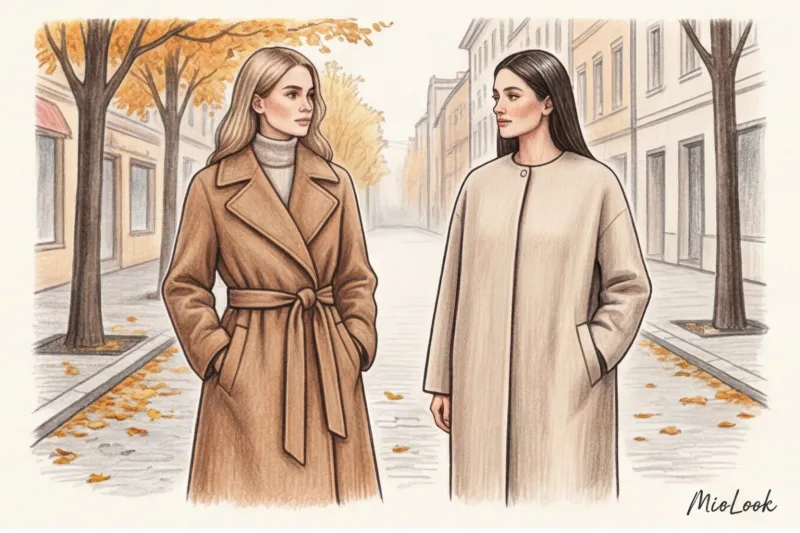
"A belt on thick wool fabric doesn't create a waist where there isn't one. It creates a 'tied sheaf' effect."
What's really going on? Wool is a bulky material. By cinching a belt at a waist that doesn't have a natural curve, you're gathering the dense fabric into massive folds. These folds are distributed evenly across your stomach and hips, visually adding 5-7 kilograms to your weight.
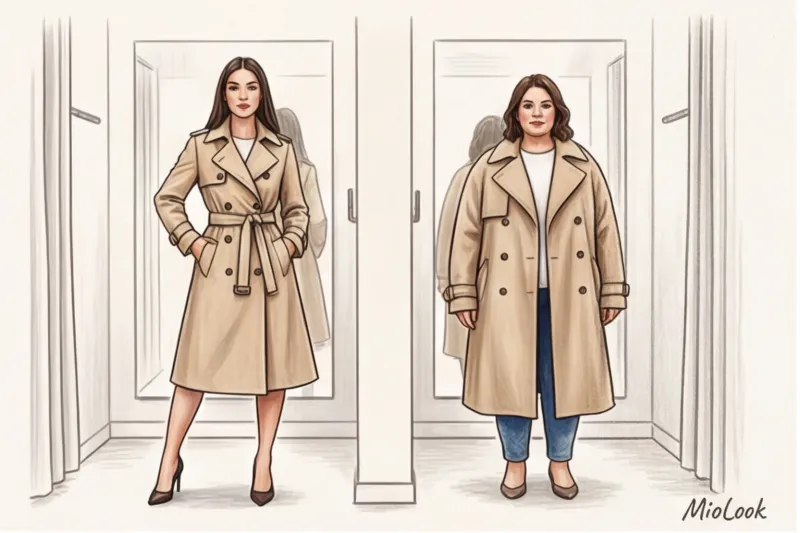
For these body types, a much more elegant alternative is an architectural straight cut or a cocoon silhouette. A straight, unbuttoned coat creates two vertical lines along the body, instantly elongating the figure and camouflaging any bulk in the midsection.
How to Choose a Coat for Your Body Type: A 3D Approach to Silhouettes
Instead of measuring your waist, look in the mirror and determine your volumetric weight—the area where the greatest visual emphasis is concentrated.
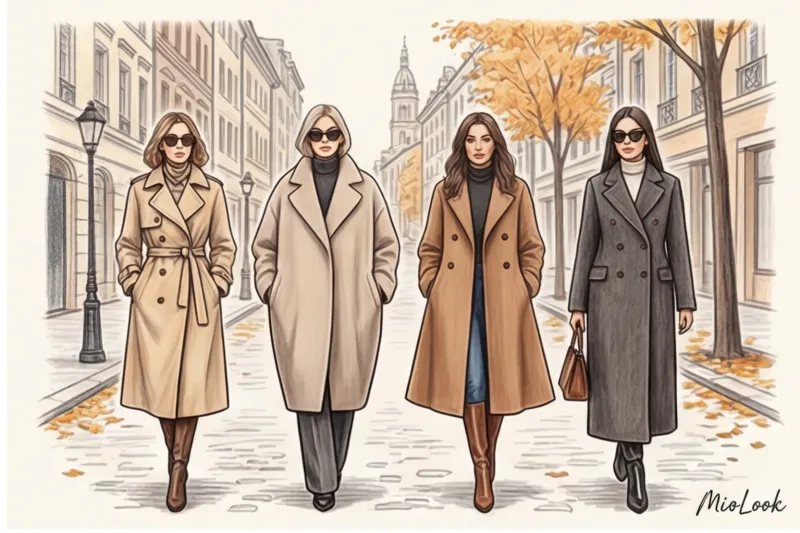
For "lower" volume (heavy hips): balance the bottom
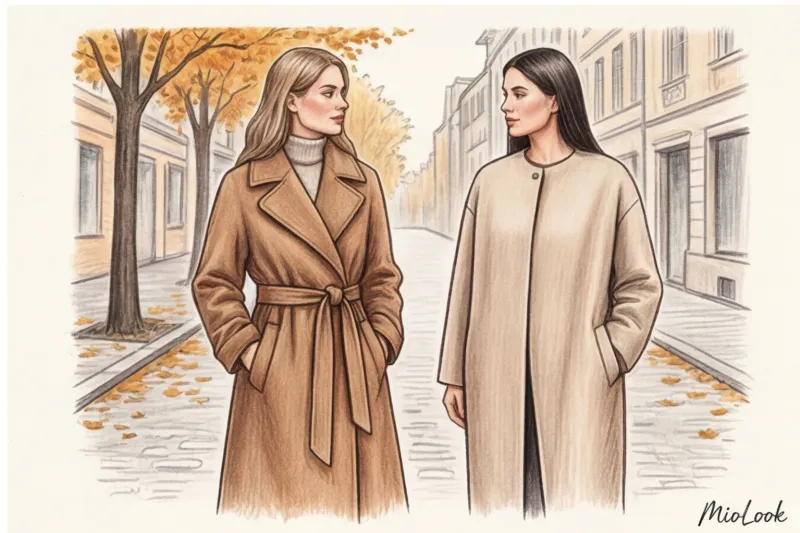
Your goal is to draw the eye away from the widest part of your hips and visually broaden your shoulders, creating balance. A coat with wide notched lapels, epaulettes on the shoulders, or a voluminous collar is ideal. Such details add heft to the top.
Styles that will suit you: a classic wrap coat with an accent at the waist (a belt works perfectly here, as the difference between your waist and hips is significant) or an A-line silhouette. The length should be exactly below the knee—midi or maxi. If the coat ends at the widest point of your hips, it will visually cut your figure in half, making your hem look even more massive.
For "upper" volume (broad shoulders, large chest)
Here, everything is the other way around: you need to soften the shoulder girdle and create a vertical line in the neckline, which will “break up” the monolithic volume of the chest.
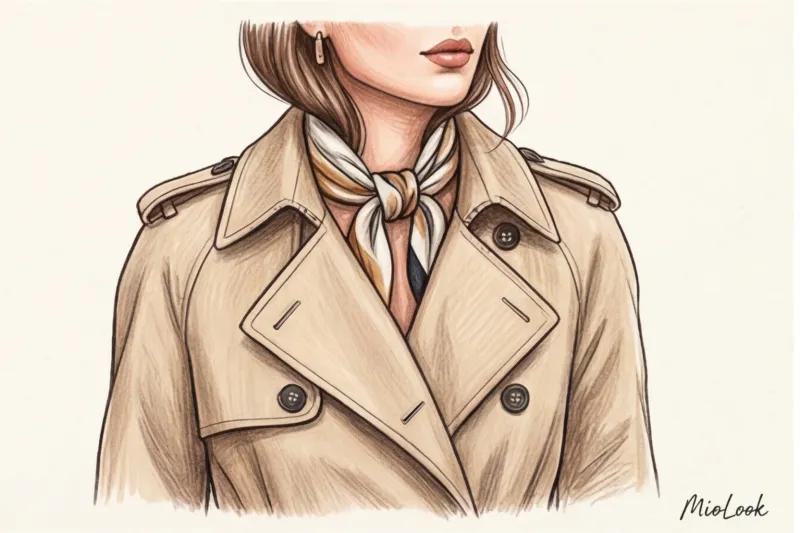
Raglan sleeves are a must. Choose a coat with narrow, long lapels and a deep V-neck. Avoid double-breasted styles—two rows of buttons and an extra layer of fabric across the chest will make you look like a wrestler. Your choice: a minimalist, single-breasted, straight-cut coat in a masculine style, preferably without stiff shoulder pads.
For "central" volume (pronounced belly)
The main goal is to elongate the figure and avoid any horizontal lines around the waist. Patch pockets on the stomach and double-breasted closures are a definite no.
The best investment is a cocoon coat, which tapers slightly at the hem, creating a delicate silhouette around a voluminous center. Wear the outerwear unbuttoned, layering a contrasting monochrome layer inside (for example, black trousers and a turtleneck under a camel coat). This optical illusion works flawlessly.
Your perfect look starts here
Join thousands of users who look flawless every day with MioLook. Artificial intelligence will help you create a wardrobe tailored to your needs.
Get access — €0.99 onceTrench Coats and Jackets: The Hidden Pitfalls of Short Outerwear
Let's talk about short styles. A mid-thigh puffer jacket is the most dangerous item in a woman's wardrobe. It cuts off the leg in the worst possible place, shortening the height and turning the figure into a square.
In styling, there's a "golden ratio" rule for short outerwear: it should either end just at the waist (a crop style that elongates the legs) or completely cover the buttocks (reaching the narrowest part of the leg). There should be no in-between.
As for the classic trench coat, its cut can be deceiving. The classic Burberry model was created for the military: epaulettes, a yoke, and a double-breasted closure all serve to visually broaden the chest. If you have a large bust or broad shoulders, such a trench coat will make you look bulky. In this case, it's better to choose a minimalist coat without unnecessary details, such as basic models from COS or Arket.
The Length Rule: How Outerwear Changes Height Proportions
The just-above-the-knee length is hopelessly outdated. It disrupts natural proportions, visually chopping the leg into disproportionate sections.
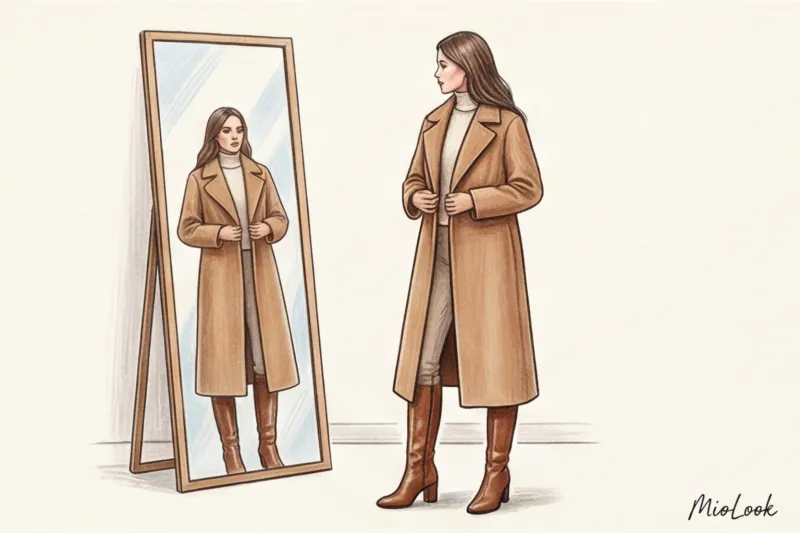
Two lengths are trending today: a full midi (ending a hand's breadth below the knee, at the narrowest part of the calf) and maxi (ankle-length). Midi is the most versatile length for urban wear. The rule "a coat should overlap a skirt" applies perfectly. A dress hem peeking out from under a coat breaks up the silhouette. The exception is if you're intentionally creating a layered boho look, but this is unacceptable for office wear.
Stylist Checklist: 5 Steps for a Fitting Room Test
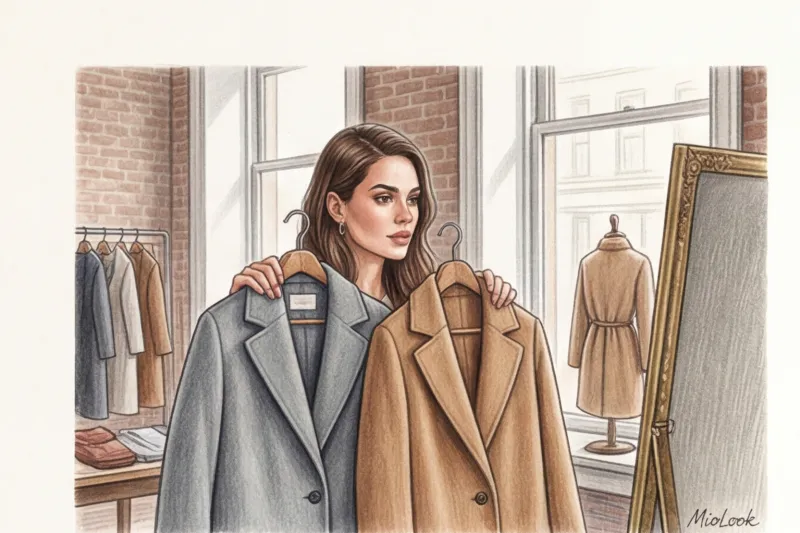
How do my clients and I check items before handing over cash at the checkout? I always use this 5-step checklist.
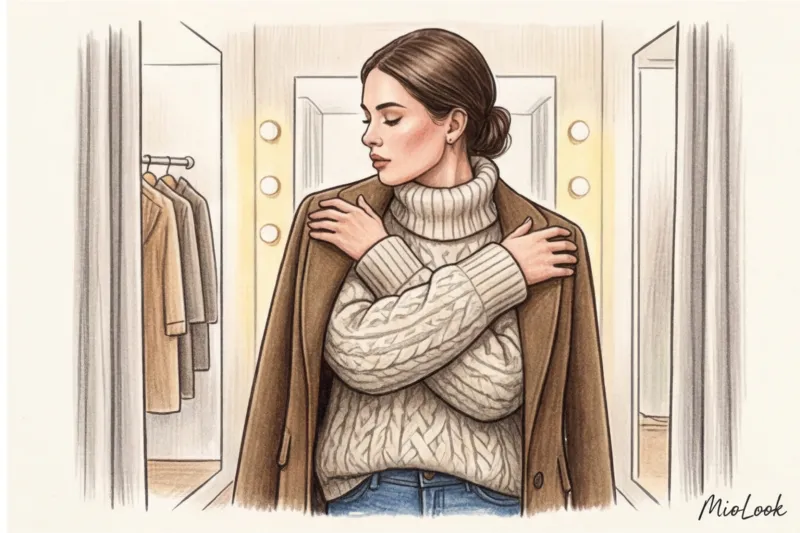
- The "thick sweater" test. Never try on a winter coat over a thin T-shirt. The optimal amount of ease is 8-10 cm above your chest measurement. Bring your roomiest hoodie or chunky knit sweater to the fitting room.
- The hug test. Put on your coat, button it, and cross your arms in front of you, as if hugging yourself. The back shouldn't be bursting at the seams, and the armholes shouldn't dig into your armpits.
- Shoulder fit test. If the coat has set-in sleeves, the seam should be positioned exactly on the anatomical shoulder bone. A seam that hangs 2 cm over the shoulder looks less like a stylish oversized garment and more like a garment that's been mishandled.
- Spline test. Turn your back to the mirror. If the back vent flares out like a house when you stand up straight, your coat is hopelessly tight around the hips. Order a size up.
- Evaluation of fittings. Cheap plastic buttons will ruin even the most luxurious wool. If your coat fits perfectly but the buttons look cheap, buy it, but immediately have the hardware replaced with horn or metal ones at a tailor's.
Instead of a conclusion: invest in planting, not in trends
According to the analytical agency WGSN (2024), conscious consumers have finally shifted their focus from fleeting trends to long-lasting design. Outerwear is being purchased for more than just one season.
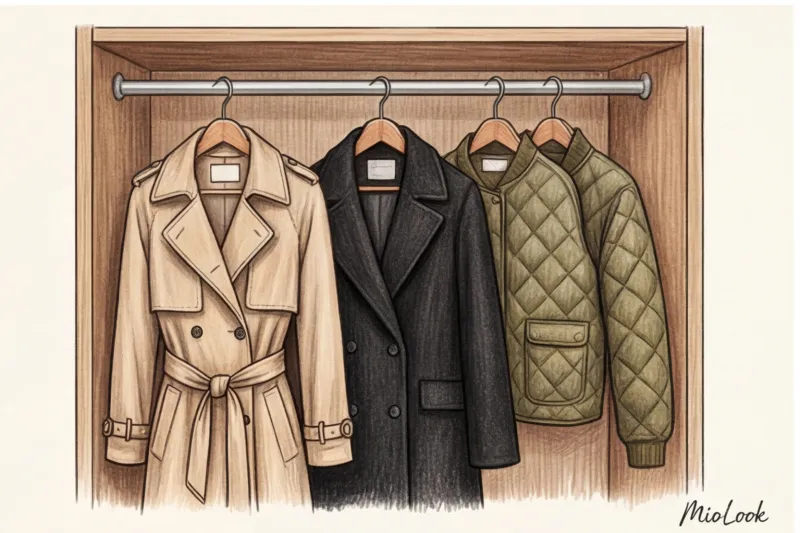
Even an inexpensive coat will look classy and luxurious if it perfectly matches your body's 3D architecture and has the right amount of freedom. Audit your outerwear wardrobe today. Try on every coat and jacket using the "hug test." If a piece feels restrictive or distorts your proportions, it has no place in your closet. Keep only those pieces that work for you, not against you.
Ready to get started?
Try the MioLook free plan—no commitments required. Our AI assistant will analyze your wardrobe and suggest what you need to create the perfect capsule wardrobe.
Get access — €0.99 once