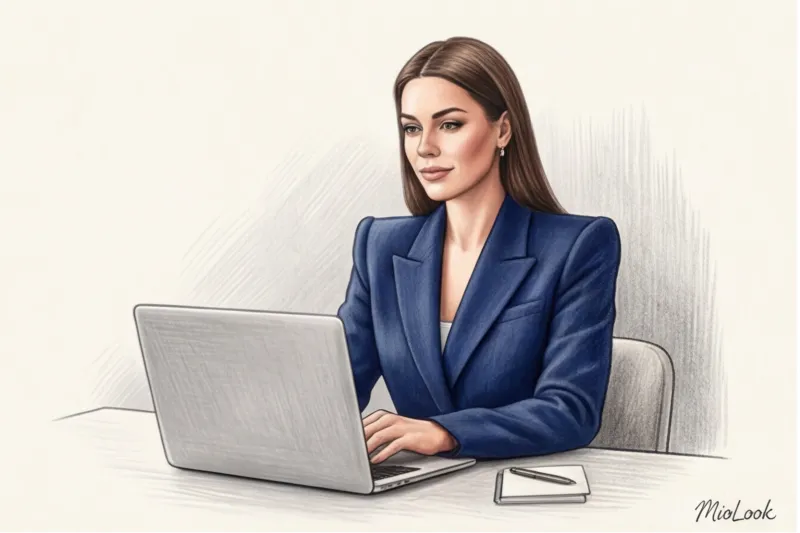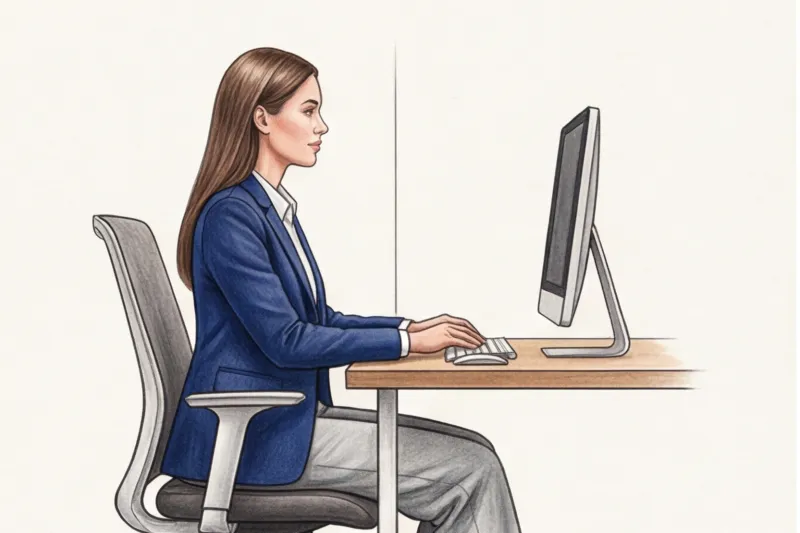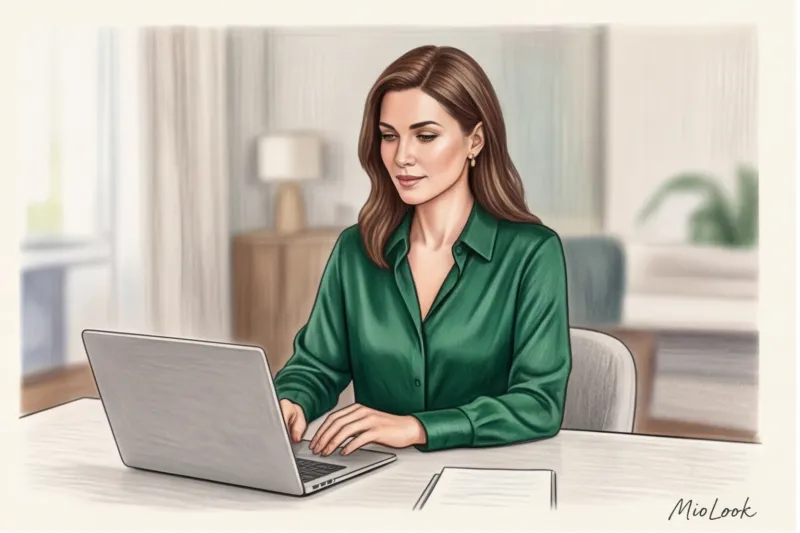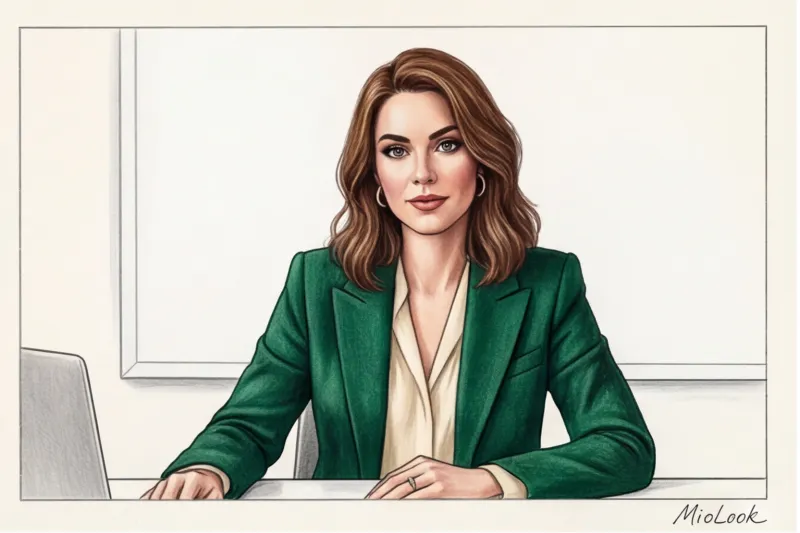
Did you know that Zoom's algorithms don't care how much your jacket costs? You can wear a flawless blazer from The Row or Massimo Dutti, but if its color clashes with your webcam's sensor, you'll turn into a flat, blurry blob on your interlocutor's screen. According to a 2023 Science of People study, speakers have exactly seven seconds to make a first impression online. And how your silhouette reads against the background of the room determines half of that success.
We discussed the basic principles in more detail in the article How to Dress for a Webinar: Style for Online Presentations , but today I want to delve deeper into the technical side of the matter. We'll explore pure physics: how to match your clothes to the background so the camera "loves" you, and the viewer listens to you instead of staring at the pixelated fringe around your shoulders.
Why We "Disappear" in the Frame: The Physics of Webcams and Compression Algorithms
Over 12 years of working as a stylist, I've learned one thing: on-screen style operates by its own rules. Online, we use the concept of "keyboard dressing." The limitations of a 16:9 frame leave only 20% of your body visible. If that 20% blends into the wall, you visually lose your authority.
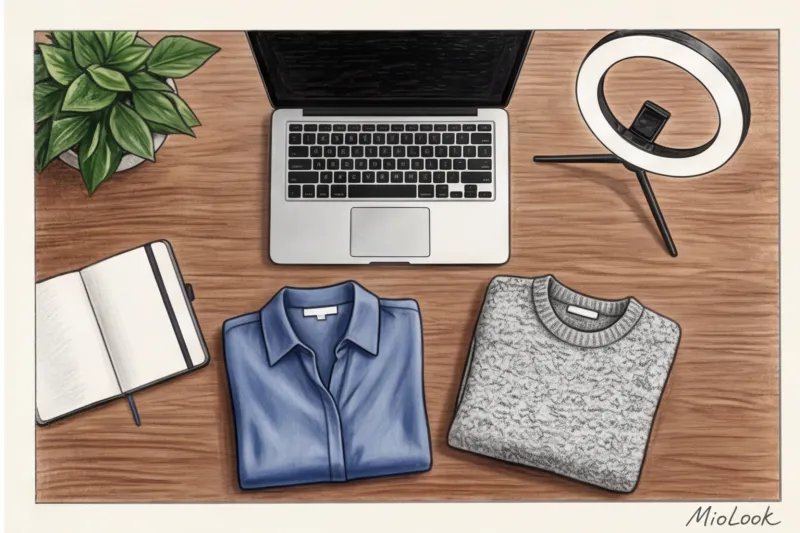
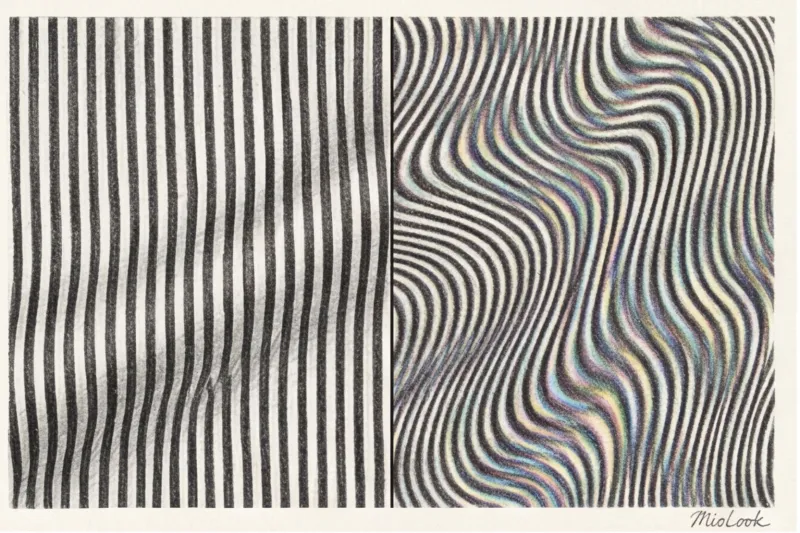
But the main problem lies in the optics. The average laptop webcam has a very narrow dynamic range. Its built-in autoexposure constantly struggles to find a balance between the brightest and darkest parts of the frame. When video compression algorithms (such as H.264 or H.265, used in Google Meet and Zoom) process the image, they save bandwidth by combining adjacent pixels of similar colors. As a result, dense, solid-color fabrics close in color to the background turn into a flat, volume-less blob.
The Contrast Trap: Why Black on White Is a Bad Idea
The most common (and most harmful) advice I hear from pseudo-experts is: "Wear black on a white background for maximum contrast." It's high time to bust this myth.
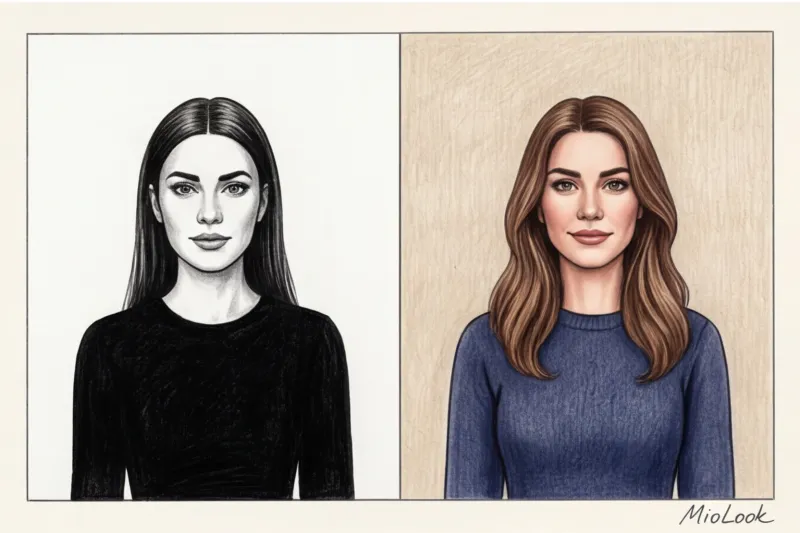
I had a revealing case in my practice. My client Anna, a top manager at an IT company, was giving an important pitch. She wore a crisp white cotton blouse and sat against a white wall. What did the camera do? To avoid overwhelming the shot, it dramatically reduced the exposure. Anna's face darkened beyond recognition.
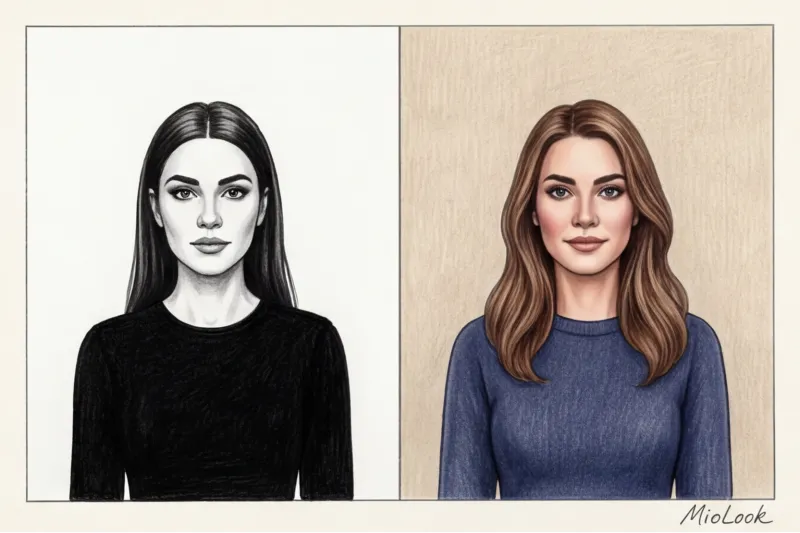
If she'd worn a pure black jacket, the opposite would have happened. A cheap camera's sensor would have been blown away by the light shift. The abrupt transition from the black fabric to the white background creates what's known as "pixel fringing" (chromatic aberration) along the edges of the silhouette. The face often becomes an overexposed white spot.
Access to MioLook for €0.99 — one-time payment
A smart AI stylist will create the perfect look for video calls and performances.
Get access — €0.99 onceHow to Match Your Background: Basic Video Rules
On-screen style requires the use of analog and complementary harmonies. I always recommend clients use the classic Itten color wheel, but with an adjustment for digital distortion.
The main rule I've come up with for phone calls is "a two-tone shift." If you want to match the color scheme of the background (for example, a beige sweater against a beige wall), your clothing should be exactly two shades darker or richer than the wall. This creates a soft gradient that the camera reads correctly.
Light backgrounds (white, beige, light gray)
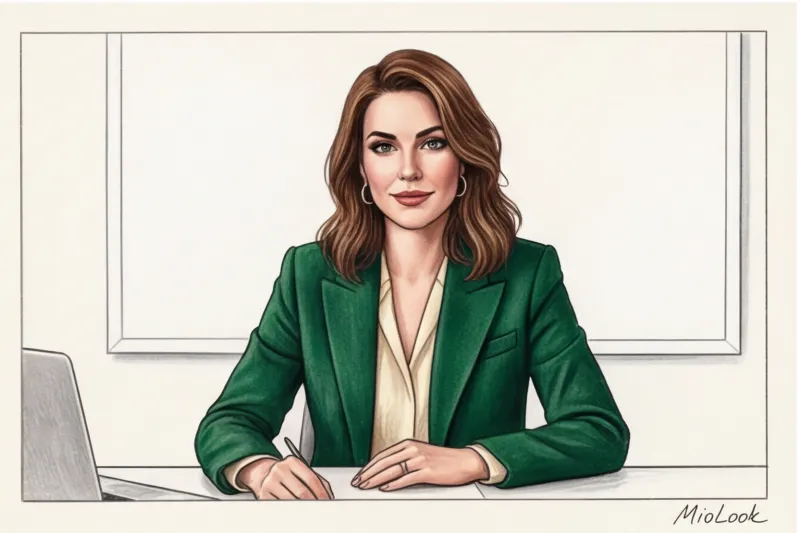
Avoid pastel shades. Pale blue or powder pink on a white background will simply be eaten up by the camera. Opt for rich, jewel-toned colors: emerald, deep sapphire, and rich burgundy. These provide the camera with enough color information for focusing without creating extreme black-and-white contrast.
Dark and active backgrounds (bookcases, colored walls)
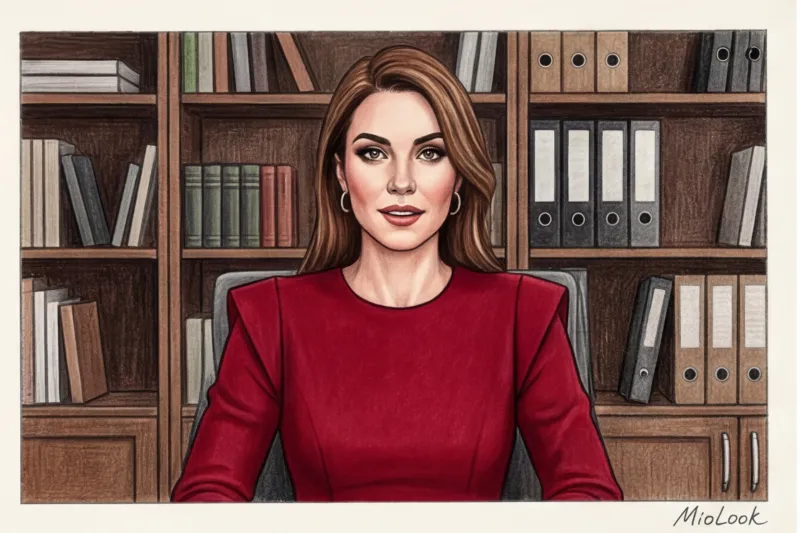
How do you avoid getting lost against a colorful bookcase? Use color blocking. Choose a piece in a single, solid color, without prints. Light but muted tones work well for dark offices: dusty rose, olive, deep gray-blue.
Your perfect look starts here
Join thousands of users who look flawless every day with MioLook.
Get access — €0.99 onceTexture over color: a secret tool for stylists
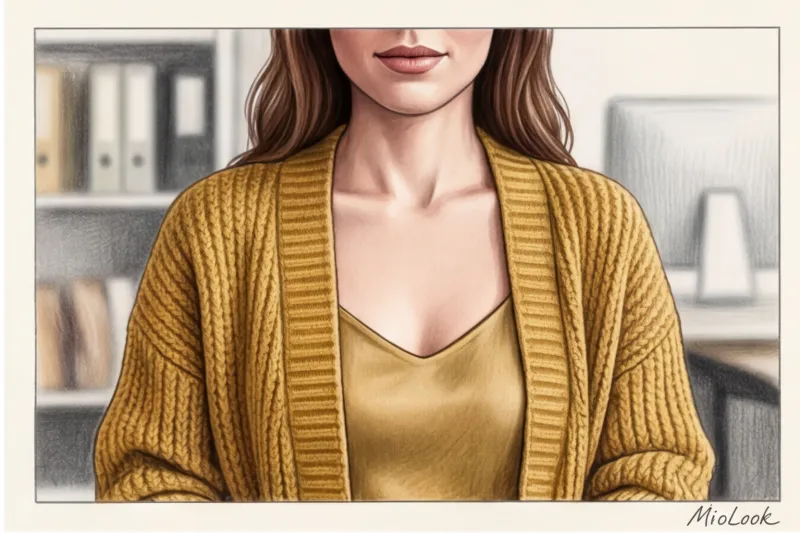
In the 2D space of a monitor, we are deprived of body language and three-dimensionality. It is the texture of the fabric that replaces volume. Smooth viscose looks flat on video, but bouclé, ribbed fabric, thick silk, or tweed save the day.
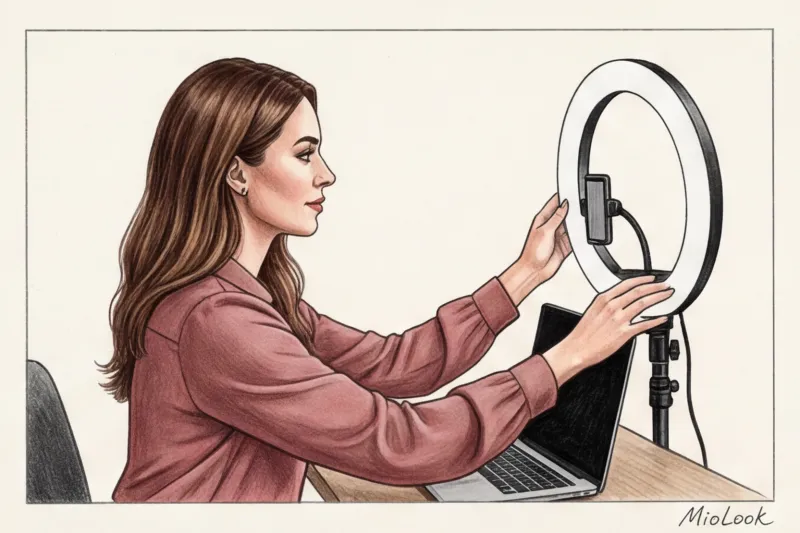
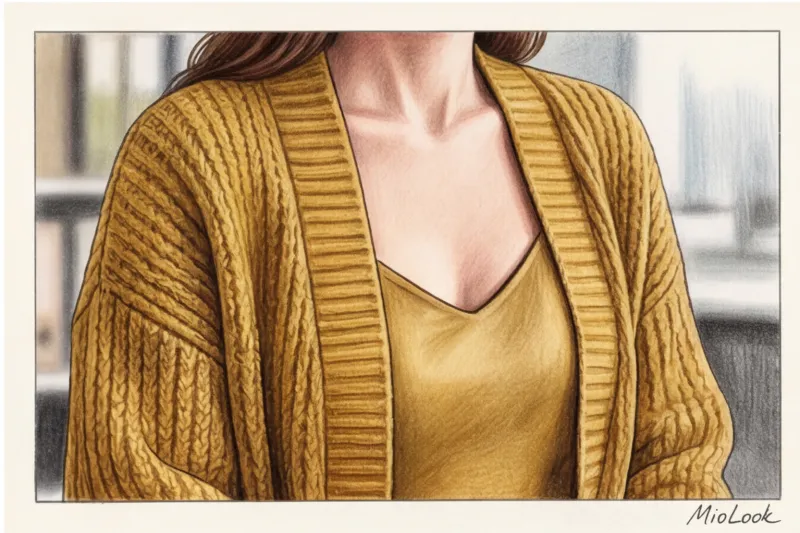
Last month, I conducted a personal experiment: I tested five different fabric textures under a standard ring light (temperature 5500K). The results were astonishing. Plain cotton blended into the background. Glossy satin cast cheap glare right into the lens. But a chunky knit cardigan and a tweed jacket created micro-shadows on the fabric's surface. The camera captured these shadows, and the silhouette instantly acquired 3D volume, visually separating it from the flat wall.
In a digital wardrobe, texture acts as architecture. It builds your silhouette where color fails.