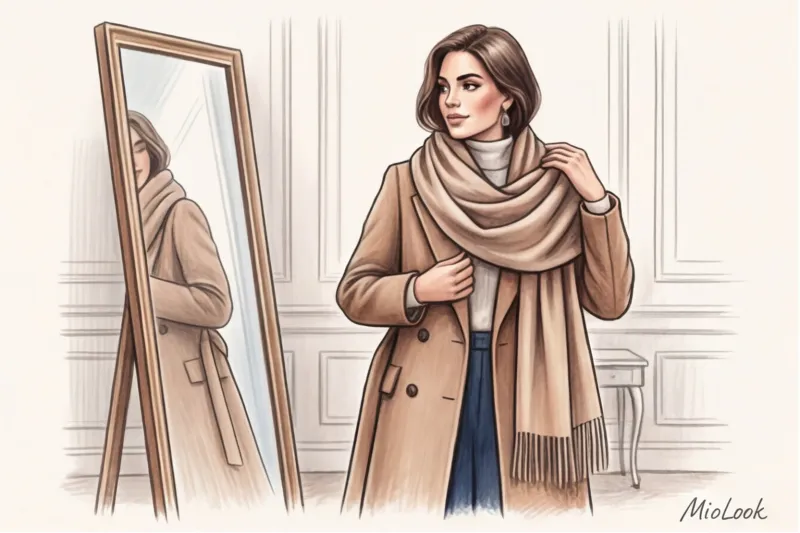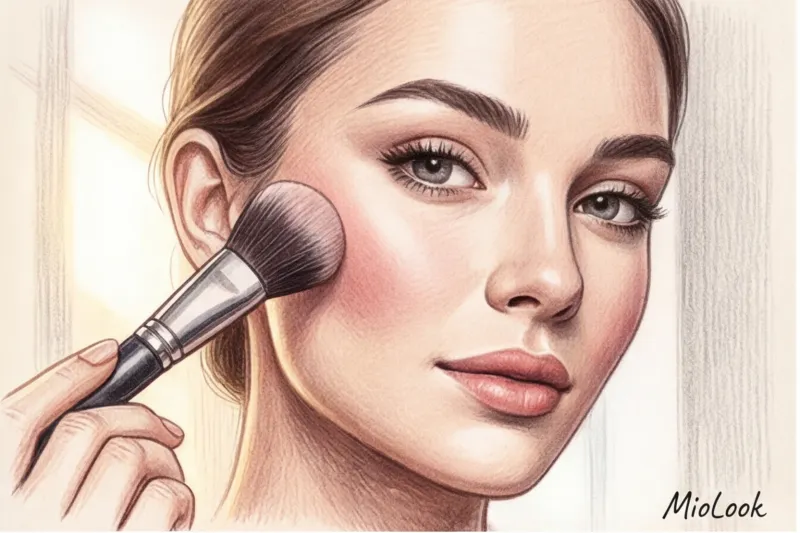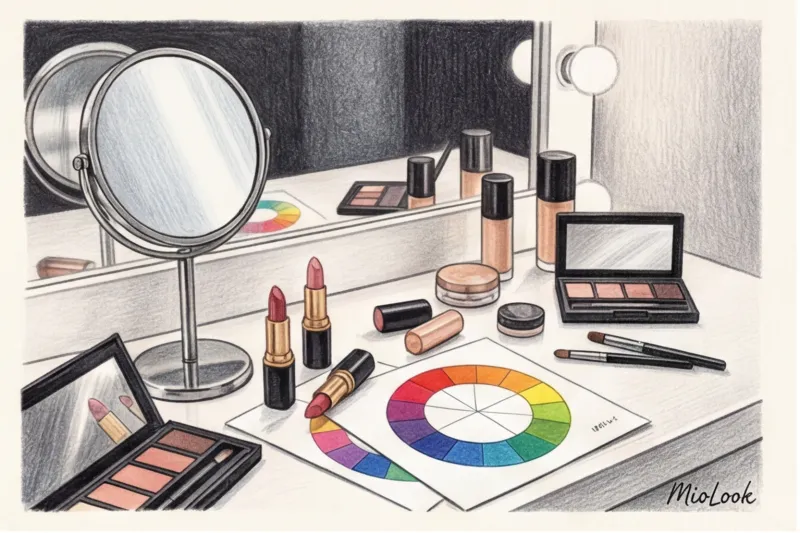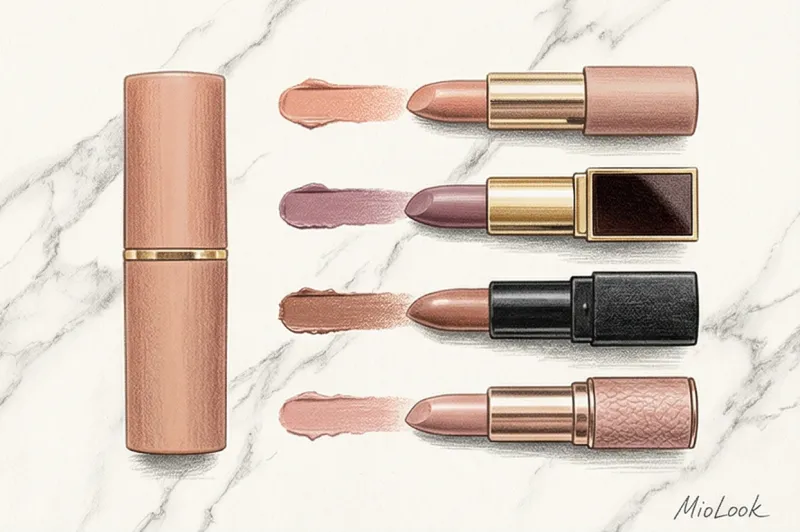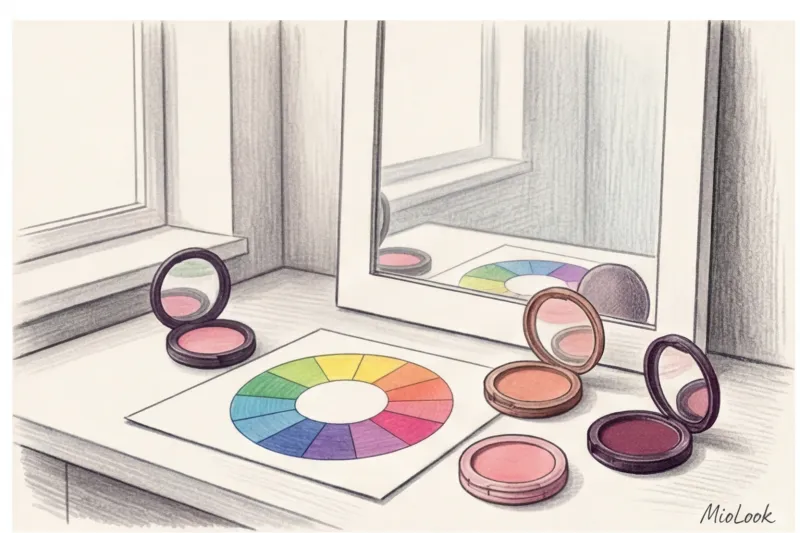
Have you ever noticed how the same makeup looks rested in a voluminous cashmere sweater, but tired and dull when you put on a formal office jacket? I see it all the time on the streets and in conference rooms. Women spend hours searching for the perfect shade, forgetting the most important rule of modern coloristics: the face is not separate from the clothes.
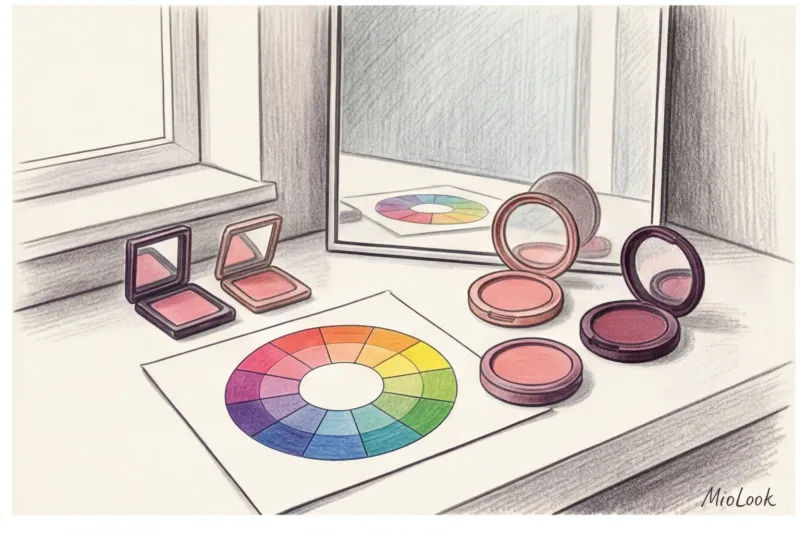
Select blush by color type Based solely on skin tone is a thing of the past. Today, we see this product as a coloristic bridge between your face and your wardrobe. We discussed the basic principles in more detail in our a complete guide to perfect makeup based on your color type In this article, we'll go further and break the stereotypes: I'll show you how to use peach, pink, and plum shades as optical illusions for different elements of your capsule wardrobe.
Why "color-type blush" works differently than we were taught in the 2000s
In my 12 years as a stylist and fashion journalist, I've spent hundreds of hours backstage at Paris and Milan Fashion Week. You know what you'll never hear there? Phrases like, "She's a typical 'spring,' give her coral." Makeup artists like Pat McGrath and Lisa Eldridge have long abandoned the four-season formula.
The modern approach is based on temperature (warm/cool) and contrast levels. Makeup has become a full-fledged accessory, an extension of one's wardrobe, and a subtle indicator of one's status.
"Color has no absolute value; it is always relative and dependent on its surroundings"—this principle from Johannes Itten's color theory (1961) perfectly describes the work of blush. Your shade will change depending on whether you're wearing a white collar or a beige trench coat.
Don't forget about lighting, either. A 2024 study by the Pantone Color Institute once again confirmed that cool fluorescent lighting in offices literally "eats" warm pigments, turning them gray. So, that blush that looked perfect by your bedroom window could turn you into a ghost in the workplace.
Skin Temperature and the Physics of Color: How Pigment Reveals on the Face
Color in a pretty plastic package (refill) is only 50% of the final result. The rest is pure chemistry and physics.
When pigment mixes with your sebum and reacts to your skin's pH, oxidation occurs. This is why a delicate peach skin tone turns a rusty red after an hour on some women, while on others it remains clear. Furthermore, your skin's natural levels of melanin and hemoglobin (that redness from nearby capillaries) act as a built-in filter.
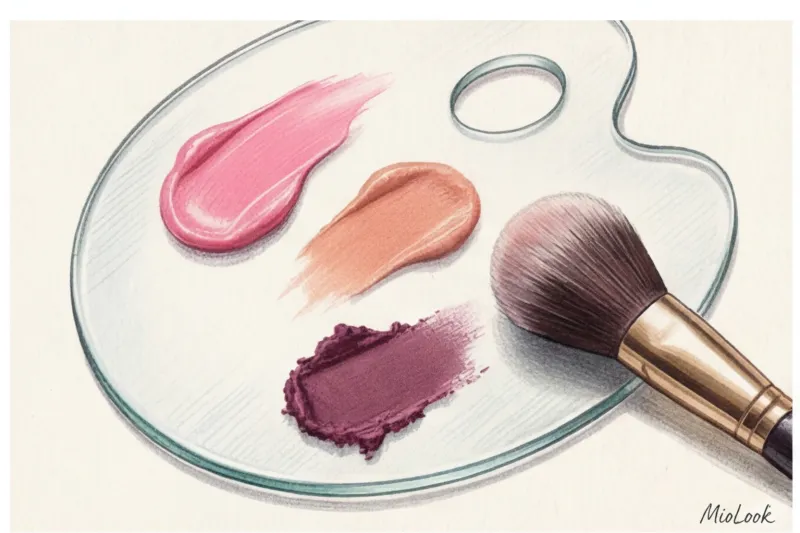
To determine your base, do a quick test with a crisp white shirt in daylight. If it makes your face appear slightly yellowish or golden, you have a warm undertone. If it makes your skin appear pinkish or slightly olive-gray, you have a cool undertone.
Pink Blush: From Icy Fuchsia to Tea Rose
Cool pink (Baby Pink) is an optical energizer for fair skin with bluish or pink undertones. It creates that "just got back from a frosty walk" effect.
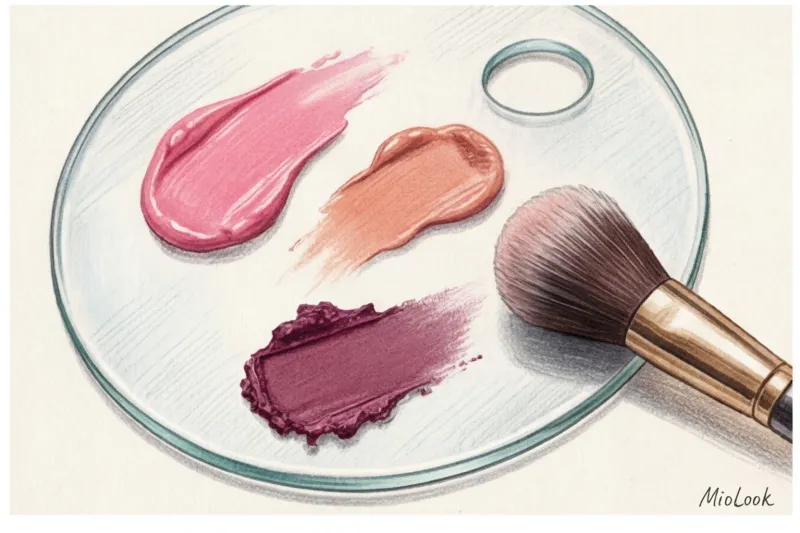
The dusty rose (Mauve) shade with a lilac undertone is an absolute must-have for a neutral undertone. It looks incredibly expensive and aristocratic, mimicking the natural shadow on the cheekbone.
- What fabrics to wear with: Natural silk in cool white color, silver, gray cashmere, dense white cotton.
- Scenario: for business creative makeup in the office when you need to look fresh, but not frivolous.
Peach and coral shades: who needs a warm filter?
The real superpower of peach is its ability to neutralize dark circles (for example, under the eyes) and signs of fatigue on warm or tanned skin.
However, there's a danger here that beauty bloggers rarely warn about: coral shades contain a lot of red pigment. If you have rosacea, couperose, or blush easily when nervous during negotiations, coral will highlight all that redness.
- What fabrics to wear with: Beige camel wool, terracotta linen, olive silk, warm gold.
Plum and berry tones: status and drama for high contrast
Plum is the new beige for olive skin and sultry brunettes. Many are wary of the dark shades in the palette, but the secret is in the application technique. Berry blush should be applied veil-like, with a fluffy brush, mimicking a deep, natural flush.
- What fabrics to wear with: emerald velvet, black matte silk, deep sapphire (Navy blue).
Tired of wondering what suits you?
MioLook's smart AI stylist will analyze your appearance and select the perfect makeup and wardrobe shades in just a few clicks.
Get access — €0.99 onceThe main secret of stylists: synchronizing blush with your wardrobe
I had a revealing experience in my practice. Elena, the CFO of a large IT company, came to me. She complained that she looked "sick" in her new, formal navy suits. I looked at her makeup: Elena had been using her iconic peachy-gold blush for years. The warm golden pigment on her cheeks clashed sharply with the cool, light-absorbing navy blue of her suit.
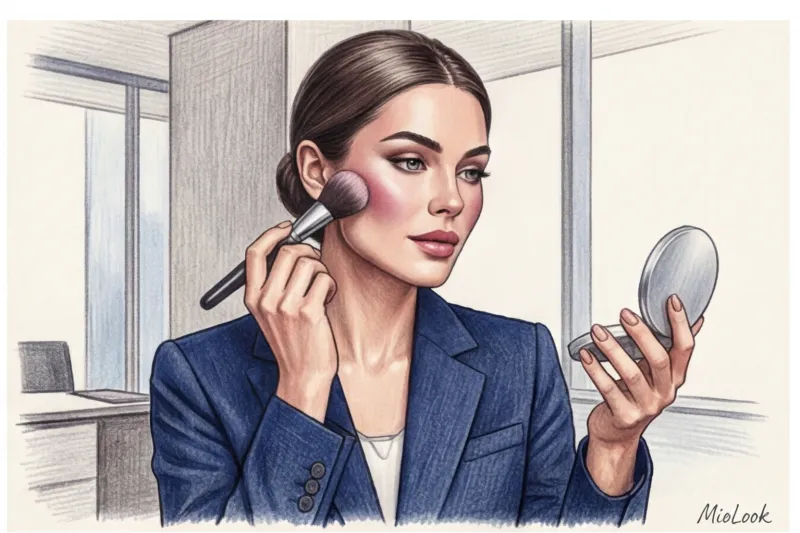
As soon as we replaced the warm peach with a cool berry tint, our face instantly tightened and our look became cohesive. (By the way, I wrote about these nuances in more detail in the article about business makeup for executives ).
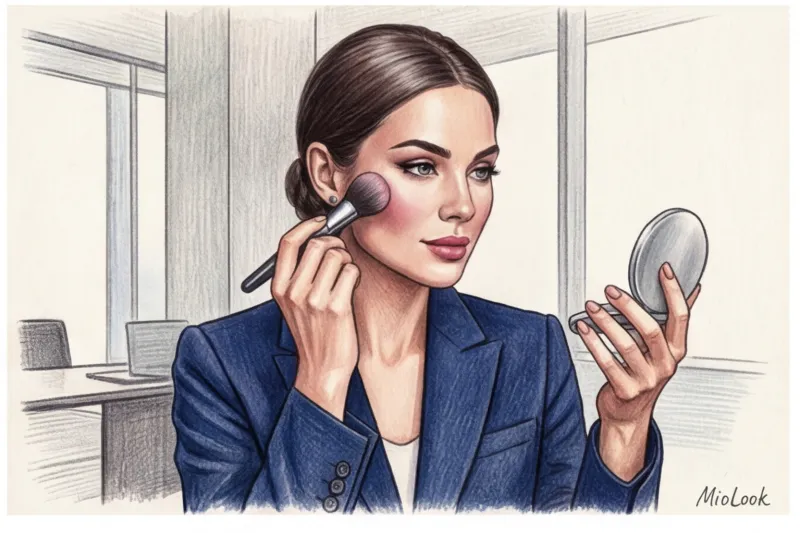
Stylist balance rule: The brighter and warmer your clothes, the more subdued and neutral your blush should be. Conversely, a monochrome gray, black, or white wardrobe not only allows for, but demands, accentuated berry or cool pink cheekbones, otherwise your clothes will "outshine" you.
Texture Matters: Creamy vs. Dry
The product's texture alters the perception of color. The wet finish reflects light, making the color more transparent and vibrant. The matte velvet absorbs light, delivering maximum pigment.
Cream blushes create that "old money" aesthetic—the look of expensive, well-groomed, and hydrated skin. They work flawlessly on dry and aging skin without accentuating wrinkles. Dry textures are ideal for oily skin and long workdays when makeup needs to last 10 hours without touch-ups.
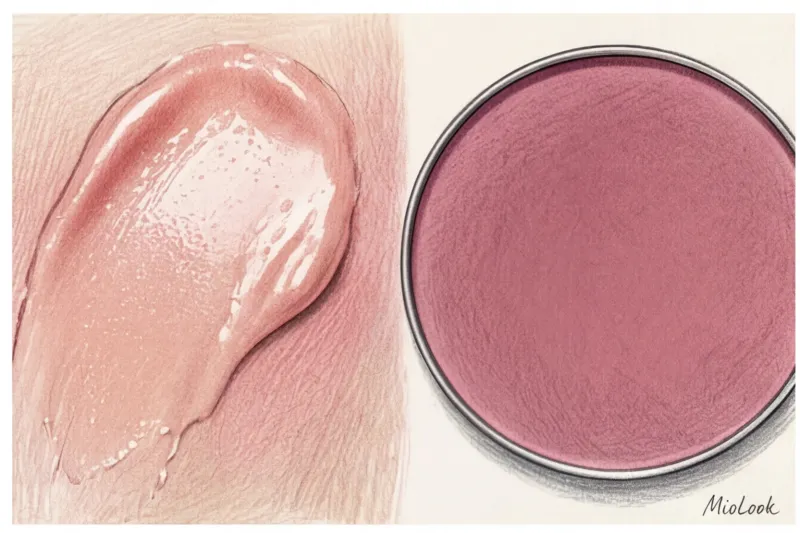
Professional life hack from the red carpet: Blending textures. Apply a drop of cream blush to the apples of your cheeks, then blend the edges with a light powder of the same shade. This creates a 3D, lit-from-within effect.
But be honest with yourself: creamy, shimmery blush is a no-no for skin with pronounced acne marks on the cheeks. The highlight on the raised areas will only highlight them. In this case, matte, dry, finely milled textures are your best friend.
The myth of "age-defying" shades: why plum doesn't make you look older, while peach doesn't make you look younger
It's time to challenge the advice from glossy magazines of the 2000s. For years, we've been told, "After 40, switch to light peach tones to refresh your complexion and avoid dark shades." This is an optical error.
As we age, skin often loses its warm pigment, becoming paler, cooler, or acquiring a grayish undertone. Applying a warm orange-peach color to such a cool base won't blend with the skin. Instead, it will create a foreign, reddish hue that will highlight the pigmentation and make the face appear tired.
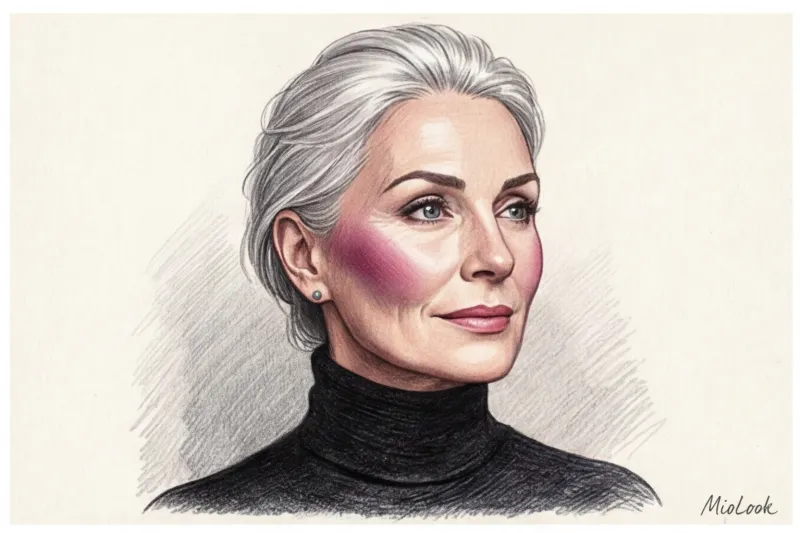
But a clear, cool plum works wonders. Applied high on the cheekbones and pulled back toward the temples (the draping technique), it creates a powerful lifting effect. The plum shade mimics the natural flush you get in the cold at age 20. It doesn't age you—it restores the natural contrast lost with age.
Your perfect look starts here
Join thousands of women who create flawless capsules every day using MioLook algorithms.
Get access — €0.99 onceHow to Build Your Beauty Rig: A Checklist for Choosing the Perfect Blush
Forget testing blush on your wrist—it's a completely different skin tone, lacking capillary action and porosity. Test the shade on your fingertips (where the skin is closest in texture and color to your cheeks) or directly on your face.
To create a complete beauty capsule that will cover 100% of your wardrobe needs, you don't need 10 palettes. Two are enough:
- One cool shade (dusty rose or translucent berry plum) - for days when you wear white shirts, blue suits, gray coats or silver jewelry.
- One warm or neutral shade (soft peach or beige-pink) - for looks with beige cashmere, brown leather, gold and summer linen dresses.
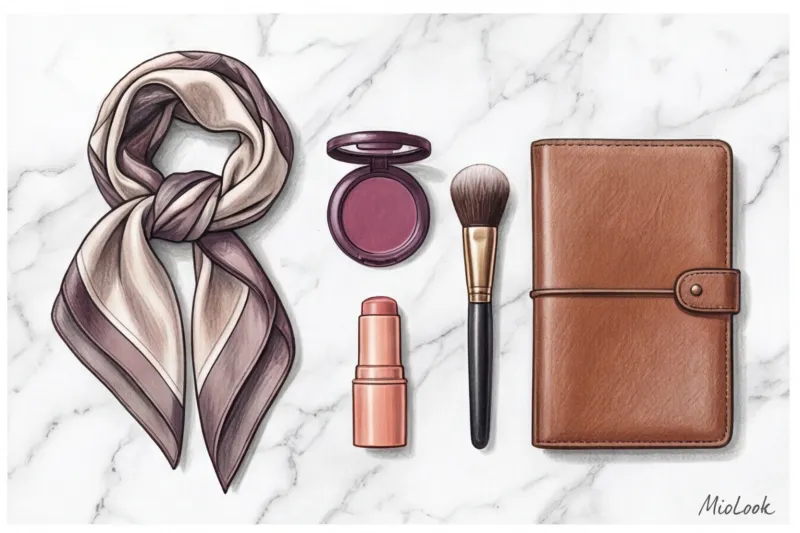
Makeup isn't a mask you put on in the morning. It's the final, unifying touch of your style. When choosing between peach, rose, and plum, look not only in the mirror but also in your closet. Knowing how to sync your face's temperature with your wardrobe's is that invisible marker of impeccable taste that distinguishes a woman simply made up from one with a refined personal style.