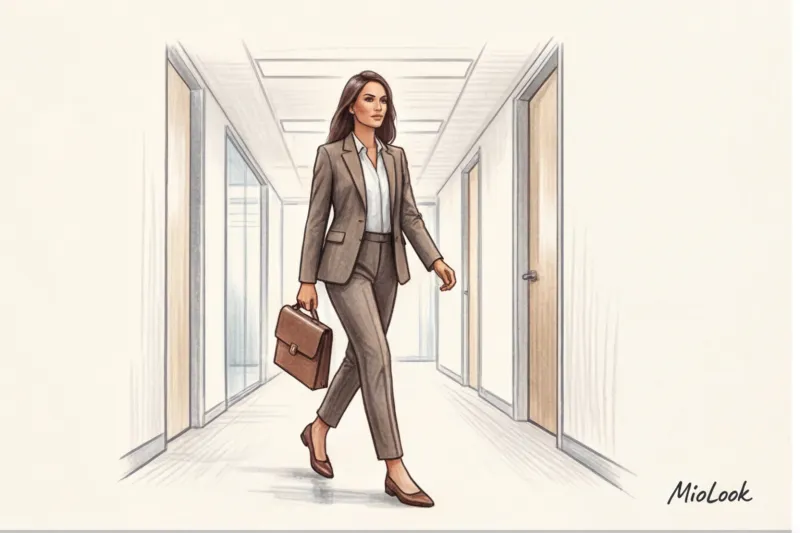
Have you ever noticed how a woman's voice and intonation change when her legs hurt? In my 14 years as a personal stylist, I've seen it hundreds of times. A client puts on a stunning, perfectly tailored suit, accessorizes it with skinny 10-centimeter stiletto pumps, and two hours later, her shoulders sag, her breathing becomes shallow, and a micro-expression of irritation appears on her face. At that moment, she stops being a leader in control of the situation and becomes someone who just wants to sit down.
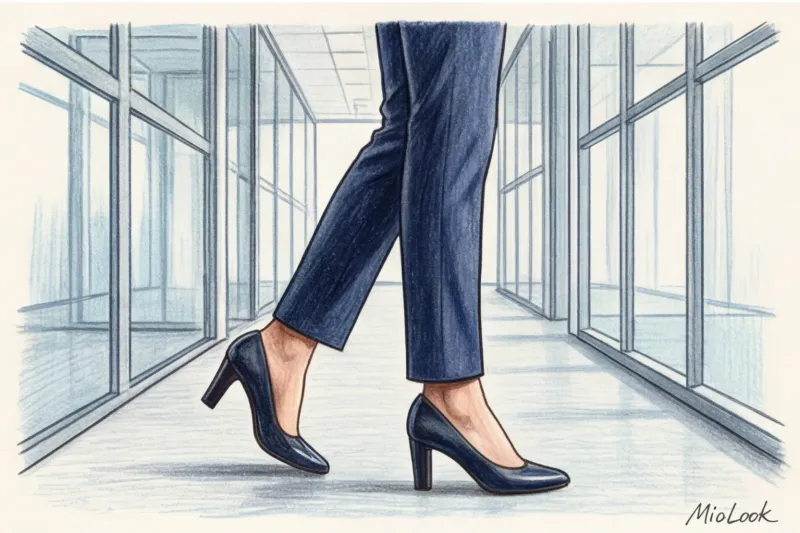
High-quality business shoes for women are more than just a line in a corporate dress code. They're your physiological foundation, an impression management tool, and, if you like, your professional weapon. We discussed the architecture of a boss's wardrobe in more detail in our complete guide to the ideal image of a female leader Today, let's focus specifically on footwear. And no, we won't be discussing the "closed toe" rule for the hundredth time. We'll be talking about how shoes convey power.
Why Status Starts with Shoes: The Psychology of the Business Walk
Our brains are incredibly quick to read nonverbal cues. According to research on gait biomechanics, people experiencing discomfort in their feet subconsciously shift their center of gravity. You begin to take shorter, more hesitant steps. To compensate for the pain, your body adopts closed postures—crossing your arms, slouching, and shifting your weight from one foot to the other. Your team and negotiating partners interpret this not as "her shoes are too tight," but as "she's nervous, hesitant, or hiding something."
Moreover, an uncomfortable shoe creates constant background stress. Physiologically, this leads to micro-spikes of cortisol. You waste cognitive resources enduring the pain instead of brilliantly countering your opponent's arguments in a boardroom meeting.
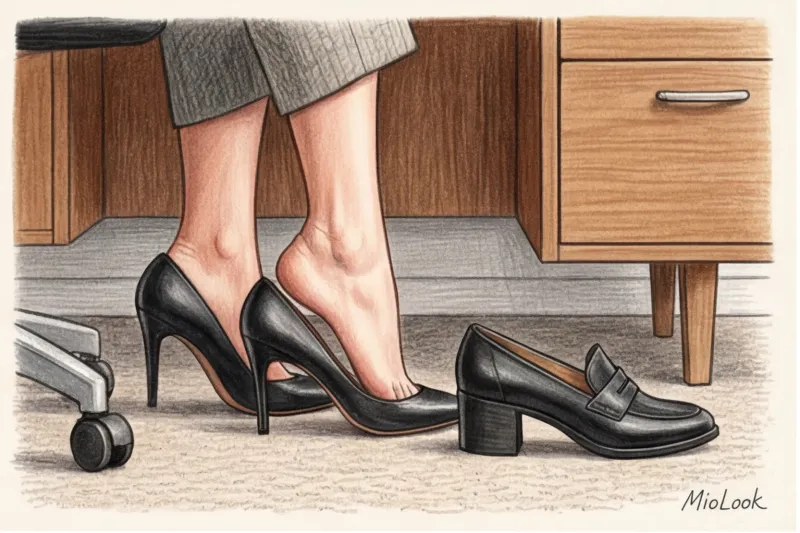
"Shoes dictate body language. You can't project authority if you're only dreaming of kicking your shoes off under the table."
This is where the principle of Enclothed Cognition comes into play. A landmark 2012 study from Northwestern University (USA) demonstrated that clothing and footwear directly influence our psychological processes. By putting on impeccably tailored, expensive, and, most importantly, comfortable shoes, you literally force your brain to operate in "I am in control" mode.
Access to MioLook for €0.99 — one-time payment
A smart AI stylist will select the perfect look based on your dress code.
Get access — €0.99 onceThe End of the Stiletto Heel Era: How the Shoe Dress Code for Top Managers Has Changed
Let's bust the biggest myth of corporate style in the 2000s: a strong female boss no longer has to wear high heels. In fact, in today's leadership paradigm, a 10-centimeter heel often works against you.
One of my clients, Anna, the financial director of a large IT holding, considered classic Louboutins her uniform for a long time. "This is my armor." " she said. But we experimented and replaced her stilettos with premium grained leather loafers and elegant shoes with a 5-centimeter architectural heel. A month later, she admitted: the dynamics of meetings had changed. Male colleagues stopped perceiving her as "room decoration" and began listening to the numbers she rattled off. She stopped projecting aggressive sexuality and began projecting grounded confidence.
WGSN's 2024 reports confirm this trend: the aesthetics of smart formality and "quiet luxury" have supplanted ostentatious glamour. Today, a classic stiletto heel during the day is seen as trying too hard. True status is the privilege of comfort. Women on the Forbes lists choose footwear that allows them to stand firmly on their feet.
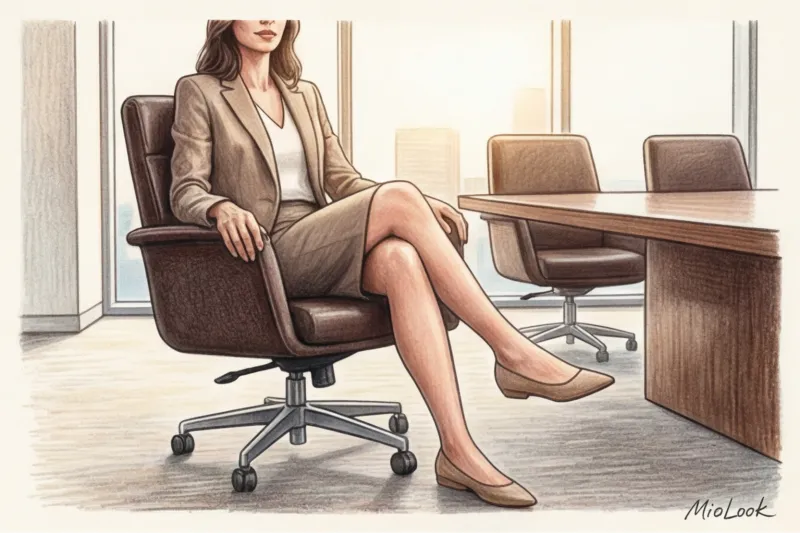
The three pillars of high-status footwear: last, material, and fittings
How can you visually distinguish an expensive pair from a mass-market one if they don't have huge logos (which, by the way, are considered bad form in serious business)? The devil is in the details.
1. Material. Classy business shoes for women always feature matte, smooth, or full-grain leather. Avoid cheap, glossy or patent leather—it not only cheapens the look but also creates a greenhouse effect on the foot. The interior lining should also be made of genuine leather (usually chevrolet), otherwise the shoes won't breathe.
2. Fittings. The rule is simple: the less glitter, the higher the status. Cheap, bright yellow metal, rhinestones, and an abundance of chains—all of these things can ruin a business look. Look for matte, aged brass, dark nickel, or shoes without any metal embellishment at all. A simple horsebit buckle (like the classic Gucci ones) is the most you can afford.
3. Balance of the pad. I'm sharing a professional stylist's secret for testing shoes right in the store. Place the shoe on a flat, hard surface (not on a carpet) and gently nudge the top of the heel with your finger. If the shoe starts to wobble, the last is unbalanced. Your calves will be burning in just an hour in such shoes. A good shoe should stay planted firmly in place.
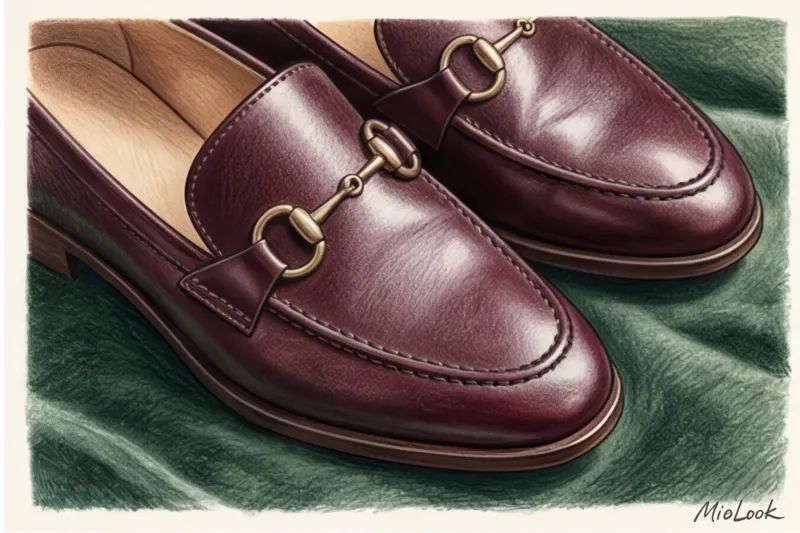
Heel architecture: stability as a synonym for confidence
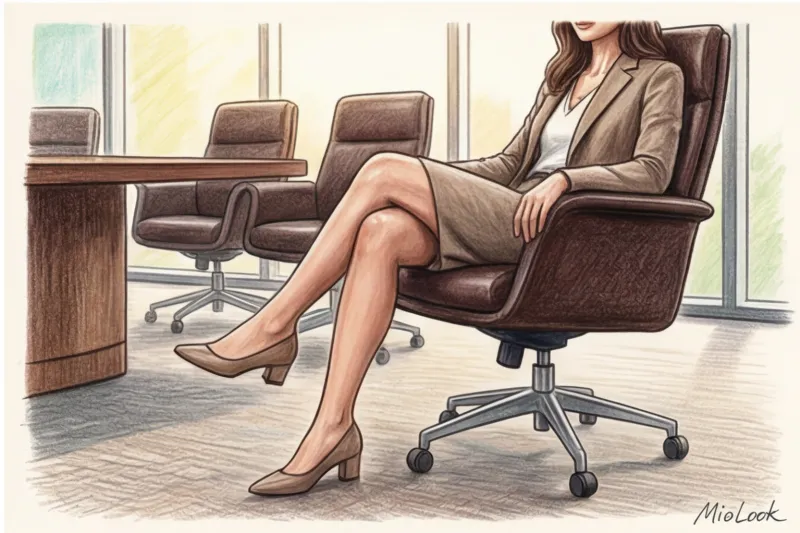
If flat shoes are not your thing, choose modern alternatives to stilettos. Orthopedists and business etiquette protocol agree on one figure: the ideal heel height for the office is between 4 and 7 centimeters.
- Kitten heel (shot glass): 3-5 cm. Elegant, feminine, but absolutely comfortable for an 8-hour workday.
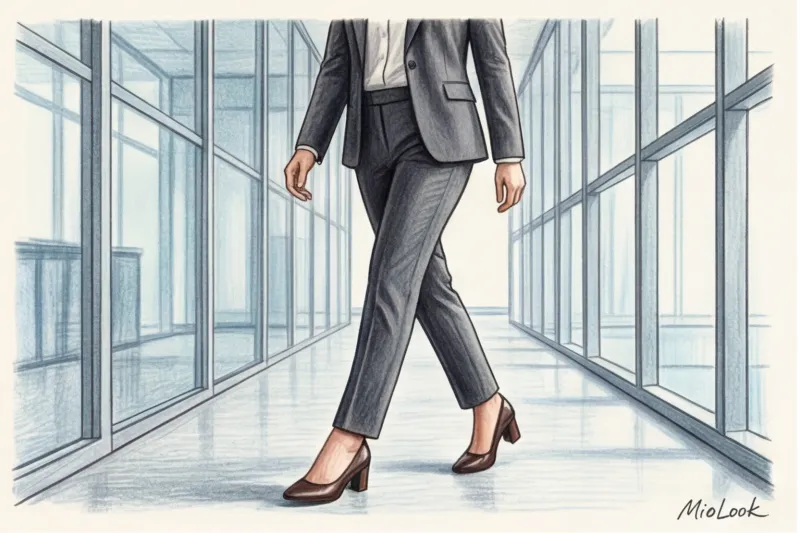
- Block heel: A straight, stable square heel. Looks perfect with straight trousers and pencil skirts.
- Trapezoid: A heel that flares out slightly at the bottom. This isn't just a microtrend of recent seasons, but also a brilliant invention for maximum stability.
Your perfect look starts here
Join thousands of users who look flawless every day with MioLook.
Get access — €0.99 onceA boss's shoe wardrobe: a minimal capsule wardrobe
How many pairs do you really need for the office? I always teach my clients the "rest shoes" rule. Genuine leather absorbs moisture throughout the day and needs at least 24 hours to regain its shape on wooden lasts. Therefore, wearing the same pair every day is like wasting them for the season.
Use the Cost Per Wear formula. Buying three premium pairs for $350 each and wearing them for years is mathematically more cost-effective than buying 10 pairs of mass-market shoes each season for $50, which quickly become unsightly and damage your joints.
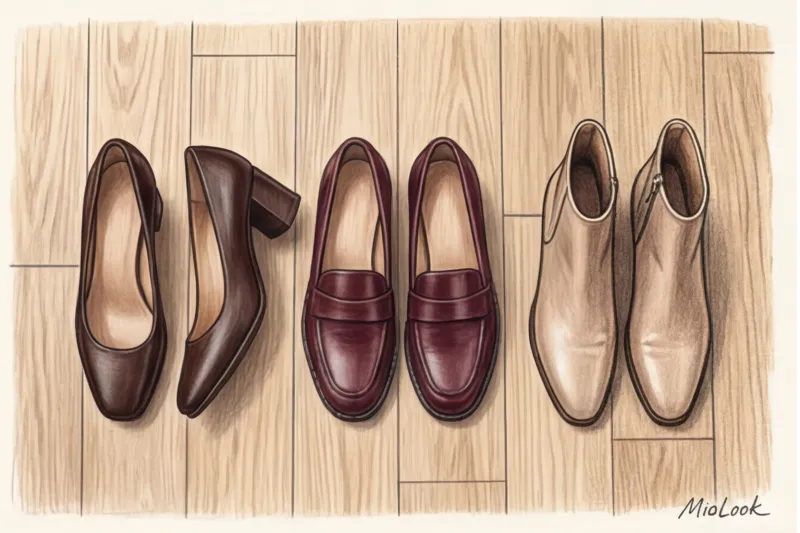
Abandon the idea that business shoes must be exclusively black. Black often looks too heavy and contrasting, especially with light-colored summer suits. Your capsule wardrobe should include deep burgundy (the color of ripe cherries), rich chocolate, and neutral taupe (gray-beige). These shades look significantly more expensive and pair with 90% of office attire. By the way, to test how new shades will fit into your current wardrobe, I recommend using smart wardrobe feature in MioLook — the application will clearly show all possible combinations.
Power Flats: Loafers, Oxfords, and Brogues for Long Days
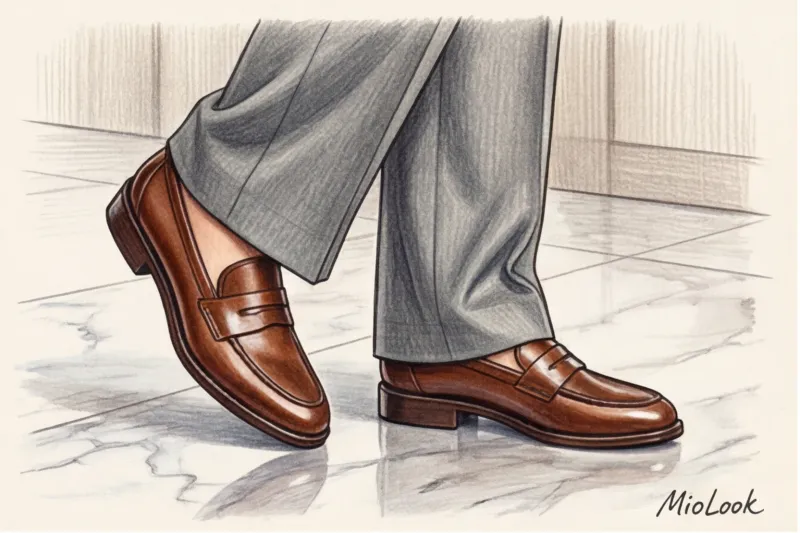
Flats have long been a staple in executive offices. But to avoid looking too casual, opt for structured styles borrowed from men's wardrobes: oxfords, perforated brogues, or penny loafers.
The secret to styling them lies in contrast. The sharp, masculine shape of brogues looks stunning with feminine, flowing palazzo pants or a tailored three-piece suit. This conveys that very "quiet confidence"—you don't need to tower over your interlocutor in heels to be recognized for your authority.
Demi-season and winter: boots and ankle boots without sacrificing status
The most common question with the onset of cold weather is: "Is it necessary to change shoes in the office?" The answer is straightforward: yes. Sitting for eight hours in a warm room in winter fur boots is not only unhygienic but also reduces your productivity due to disrupted thermoregulation.
However, for short meetings or if you're only moving between the car and the office, smooth leather ankle boots with a narrow shaft are the ideal choice. They should fit snugly around the ankle so they can be easily worn under wide-leg trousers (pipe or palazzo) without disrupting the silhouette.
Taboos and common mistakes in business shoes for women
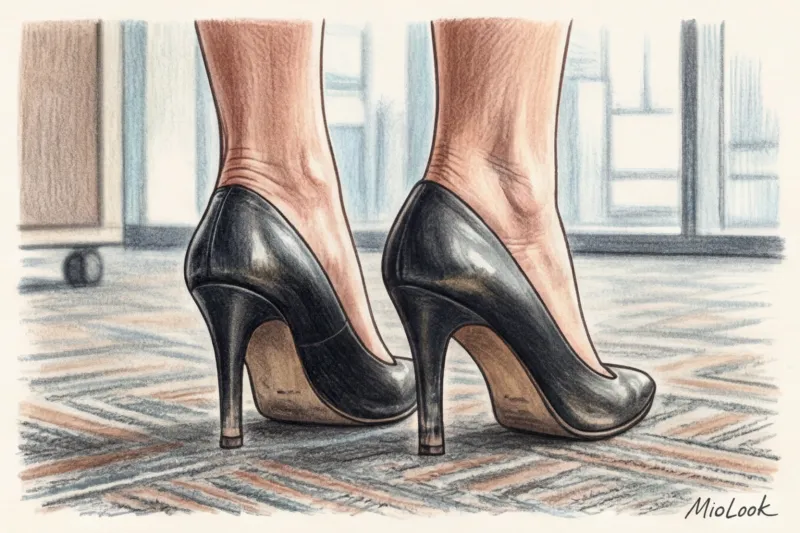
Even the most expensive Brioni or Armani suit won't save the situation if your shoes are poorly chosen. Here are the biggest killers of your credibility:
Open fingers. In a strict corporate dress code, sandals are unacceptable even at +30°C. Period. There is a small exception here: Open heels (slingbacks) are acceptable in the Smart Casual dress code, but ONLY if your heels are perfectly groomed and your pedicure is perfect. When in doubt, choose closed-toe pumps.
Hidden platform in the toe box. Shoes with an extra 1-2 centimeters of platform under the toes visually evoke pole dancing shoes. This completely undermines the business context.
Sound accompaniment. I once attended a presentation at a cool fintech startup. The speaker was a brilliant female CEO. But her shoes had loose metal heels that clattered deafeningly against the stage floor. The entire audience subconsciously listened to this annoying sound, not the revenue growth figures. Squeaky leather or loud heels are a no-no. Executive shoes should be silent.
Checklist: How to choose and prepare the perfect pair for the big day
To make shoes an investment rather than an expense, follow these rules that I usually give to clients during personal shopping:
- Buy shoes after 4:00 pm. By evening, everyone's feet naturally swell and increase by half a size. Shoes bought early in the morning will look like a pair of Spanish boots by the end of the workday.
- Start preventative measures immediately. Even premium brands (Jimmy Choo, Manolo Blahnik) often have soles made of thin, smooth leather. They slip on office marble and wear out on asphalt within three days. Take your new pair to a shoe repair professional and have them fitted with thin (1-1.5 mm) Vibram rubber soles that match the sole.
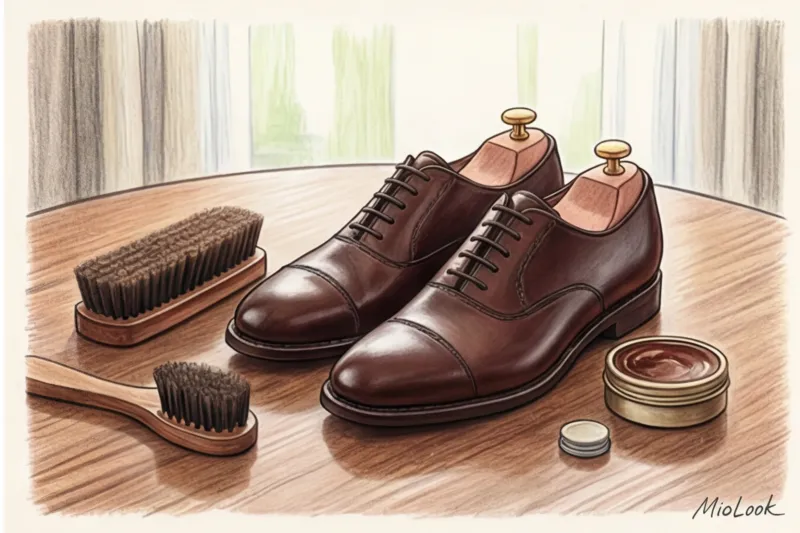
- Buy tree trees made from unvarnished cedar. This isn't a snob's whim, but a necessity. Cedar absorbs moisture, deodorizes the leather from the inside, and smooths out wrinkles. Plastic shoe trees don't work—they simply stretch the shoes without removing moisture.
Summing up: a step towards a new level of management
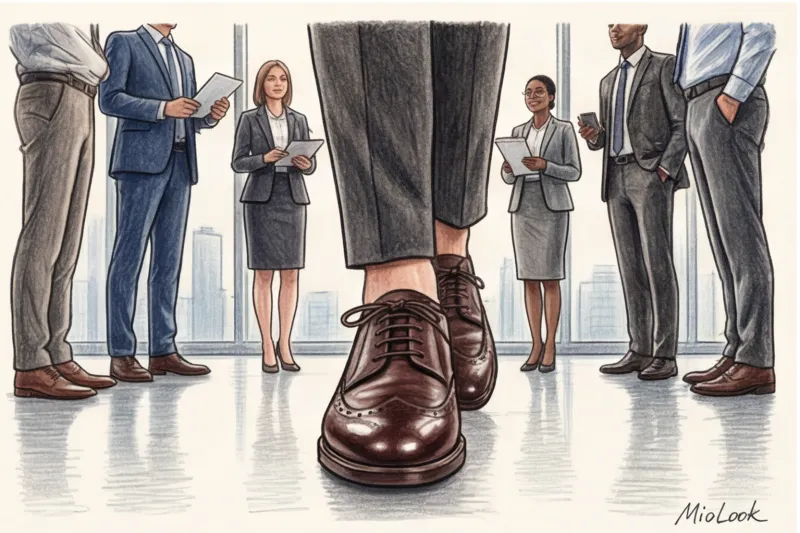
Business shoes for female executives are no longer a matter of being "liked" by others or fitting into the rigid confines of a patriarchal dress code. They're about personal comfort, which is the source of true, genuine power.
Take stock of your office shelves this weekend. Remove anything you can't confidently walk a mile in, and anything that makes you wince in pain by lunchtime. Keep only those pairs that serve you, not those that require sacrifice. After all, true leadership begins with the ability to stand firmly and comfortably on your own two feet. And to assemble these ideal pairs into flawless outfits, entrust your routine to smart assistant MioLook — and free up time for the strategic decisions that really matter.