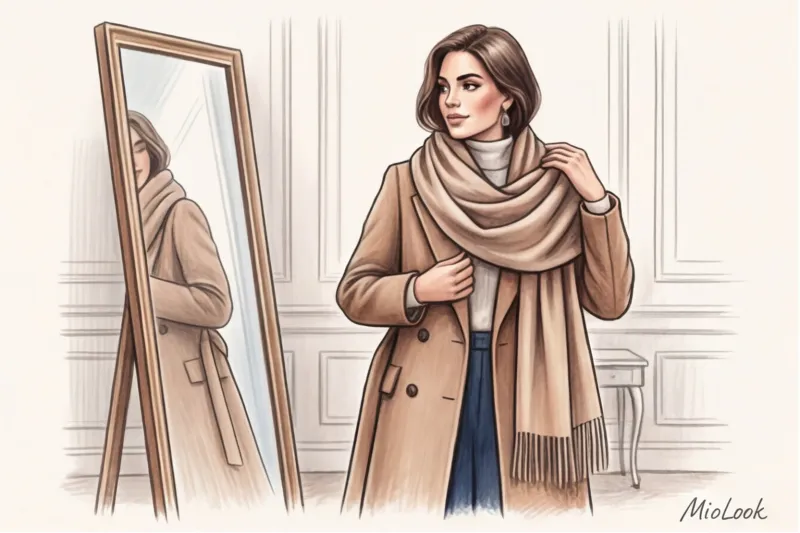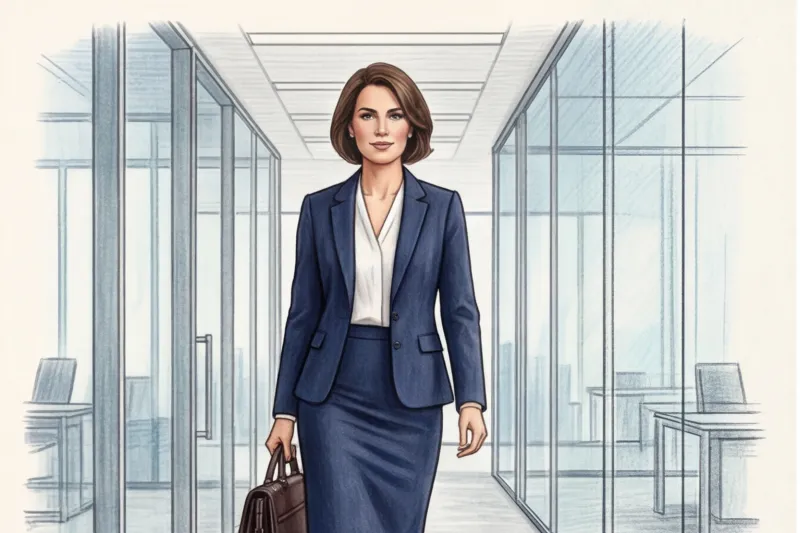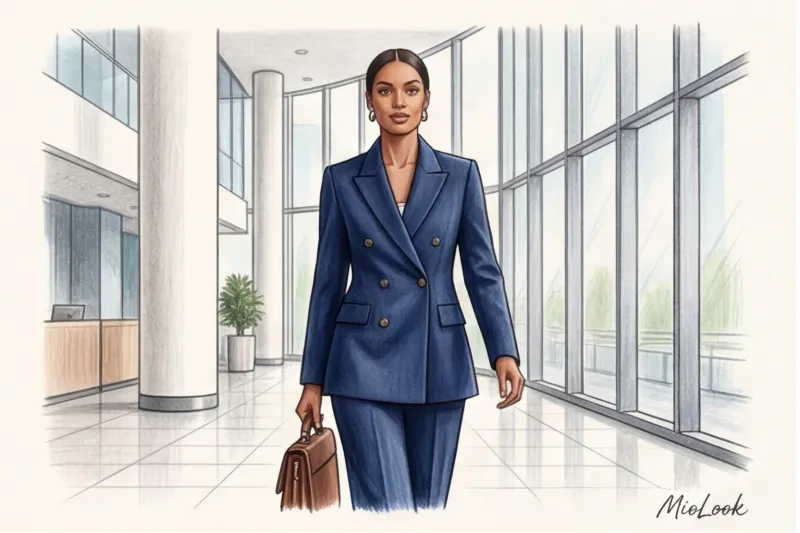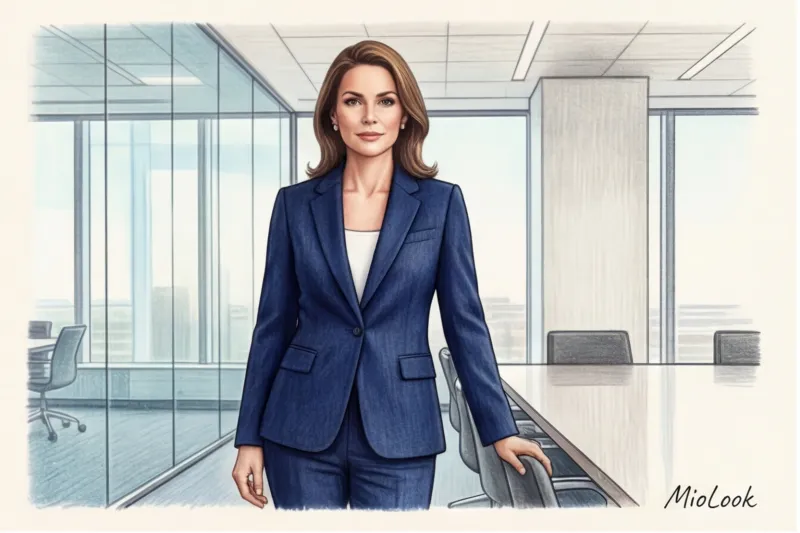
Have you ever noticed how, during important negotiations, one woman looks like she was born in the boardroom, while another looks like she's wearing someone else's armor and constantly tugging at her sleeves? The difference is rarely rooted in intelligence or level of preparation for the meeting. Over 12 years of working as a stylist in Europe, I've learned that status is often betrayed by the cut and weight of the fabric. When we discuss strict dress code for women Many still imagine a dreary school uniform of "white top, black bottom." But true formal style is a subtle tool of influence, not a set of stifling restrictions.
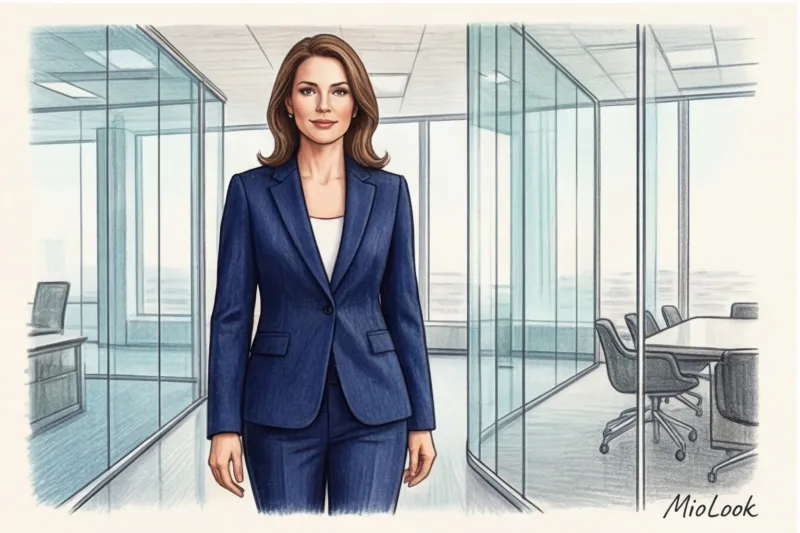
We talked about the origins of this format in more detail in our The Complete Guide to Business Attire for Women , but today I want to talk about the big leagues of corporate wardrobe. We'll break down the micro-details that make up the so-called executive presence (leadership presence), and let's forget forever about stereotypes that cheapen your image.
What is Business Formal: The Anatomy of High-Level Business Protocol
Business Formal is the most conservative, uncompromising, and strict dress code, adopted in investment banks, law firms, diplomatic receptions, and the public sector. Unlike relaxed smart casual or even business professional attire, there's zero tolerance for fleeting trends. Your attire shouldn't distract from what you're saying.
Why is this so critical? Let's recall the classic 55/38/7 rule, coined by psychologist Albert Mehrabyan back in 1971 (and confirmed many times since). At a first meeting, 55% of the information about you is determined visually—through your silhouette, posture, and attire. More recent data: a large-scale study by the Center for Talent Innovation (now Coqual) showed that appearance accounts for about 25% of that executive presence — a factor that determines whether you will be promoted to top management.
A strict dress code acts as a ruthless filter of competence. If a suit fits perfectly, the other person's subconscious concludes, "She controls the details of her look, which means she'll be just as meticulous in overseeing our multi-million-dollar contract."
The Biggest Misconception: Why a Black Suit Is a Rookie Mistake
"I'll buy a nice black suit; it goes with everything"—I hear this phrase at almost every first consultation. And every time, I have to debunk this myth. Contrary to popular belief, black is the worst choice for formal daytime office attire.
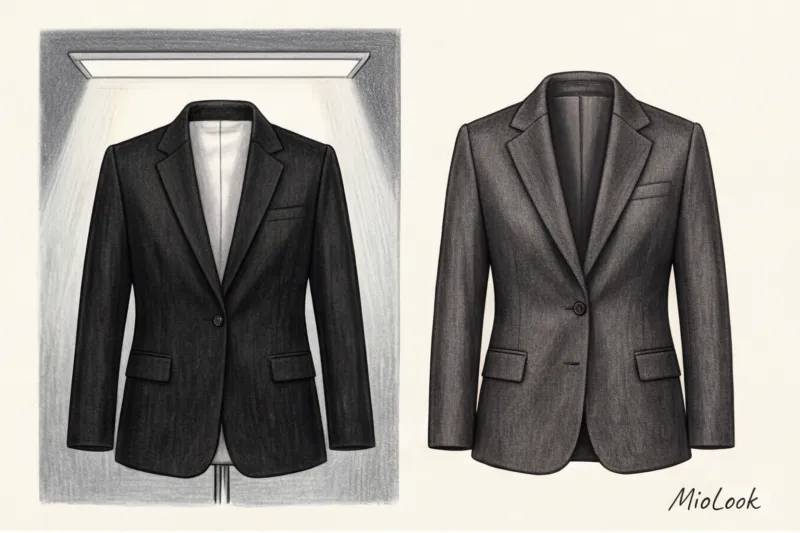
Let's turn to the physics of color and the rules of European diplomatic etiquette. Under the harsh fluorescent lighting of Class A offices, black fabric absorbs the light, creating a stark contrast with the face. This instantly highlights the slightest signs of fatigue, dark circles under the eyes, and nasolabial folds. Furthermore, every speck of dust and hair is visible on black, and inexpensive black blends are the quickest to acquire a cheap, whitish sheen on the elbows.
"In classic protocol, wearing black before 6:00 PM is only appropriate in two situations: if you work in the funeral services industry or if you're attending a funeral ceremony. In all other situations, it's considered bad manners," I never tire of telling my clients.
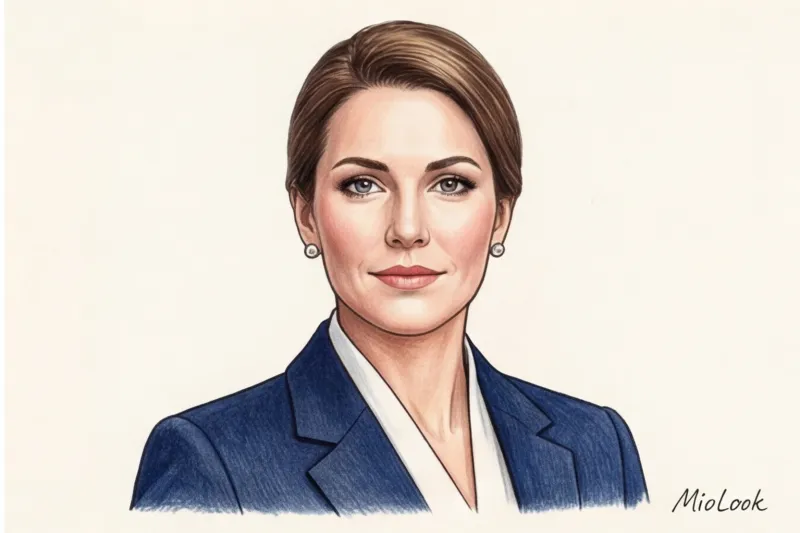
What to choose instead? Status protocol is built on deep navy blue and charcoal gray. According to color psychology research, navy blue subconsciously conveys reliability, stability, and trust. This is why pilots and police uniforms have historically been based on navy shades.
Access to MioLook for €0.99 — one-time payment
A smart AI stylist will select the perfect look for your business meetings and help you create the perfect capsule wardrobe.
Get access — €0.99 onceStrict dress code for women: basic rules and acceptable liberties
A modern business suit is architecture, not a straitjacket. Recently, a diplomat client came to me complaining of constant fatigue after hours of negotiations. The problem turned out to be a stiff, "stiff" jacket from a mass-market brand with exaggerated shoulder pads. As soon as we replaced it with a flexible suit in flowing crepe wool from Massimo Dutti Studio, even her posture improved.
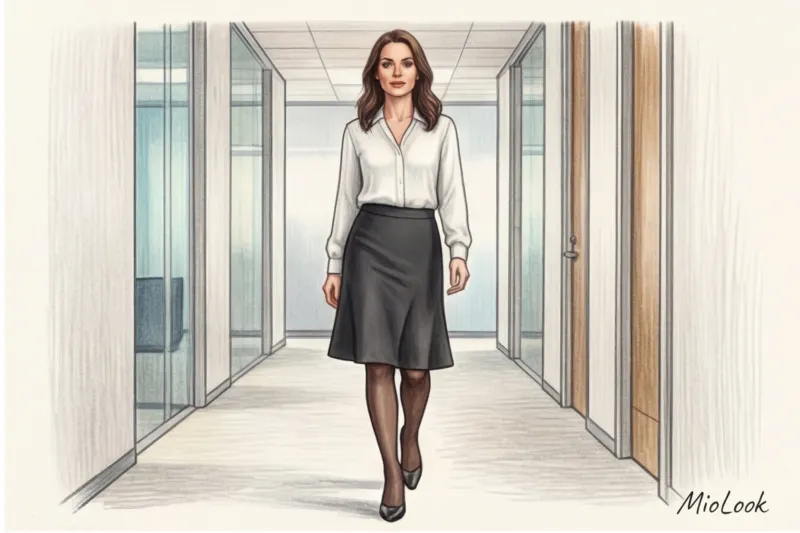
If you're unsure whether to wear a skirt or trousers, the 2024 protocol provides a clear answer: both options are perfectly legitimate. However, at ultra-conservative financial institutions in London or Zurich, it's still safer to wear a suit and skirt for your first interview.
Suit basics: jacket, trousers and the right length
A business formal jacket should have a semi-fitted silhouette. Forget about oversized, mannish jackets—that's for creative agencies, as we mentioned in the article. Creative Business Style: A Guide for Creative Professions In a strict dress code, the shoulder line should be positioned precisely in its anatomical position. The jacket length is classic—to mid-thigh (covering the widest part).
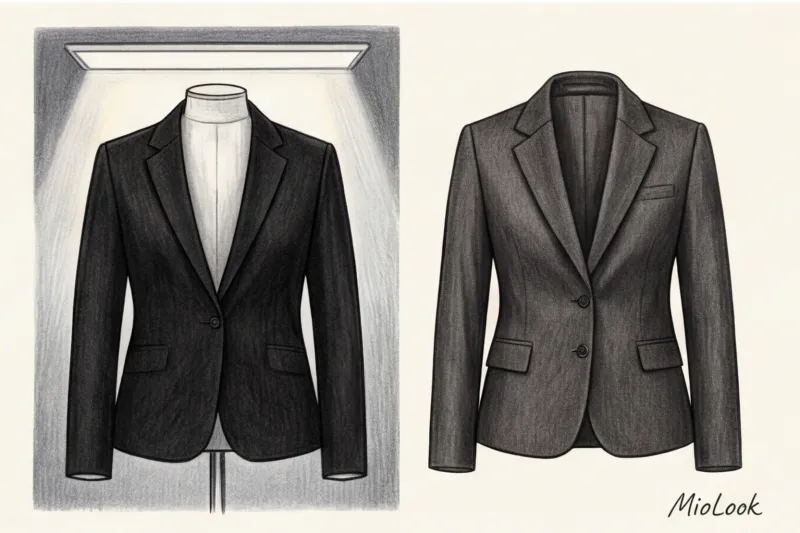
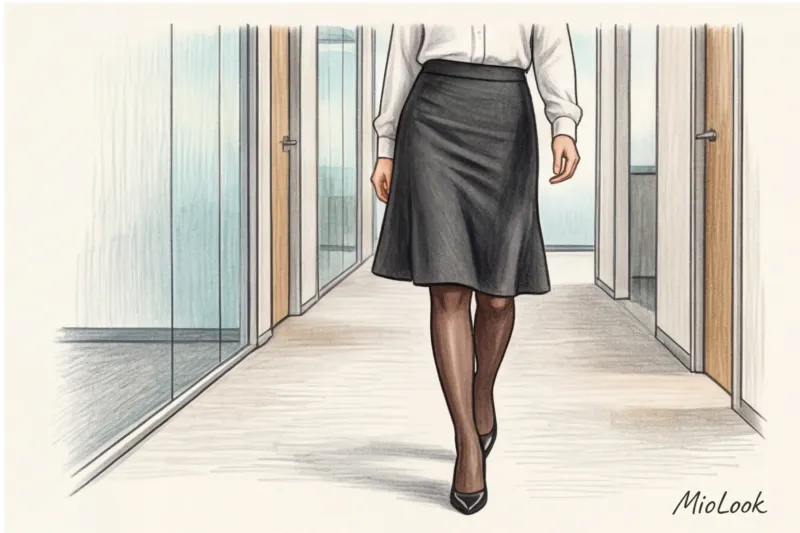
Choose straight-leg trousers with a crease or slightly flared from the knee down. A crease is a vertical line that visually elongates the height and flatters the silhouette. Trouser length should reach mid-heel. Skirts should be pencil or A-line. The length is strictly regulated: from mid-knee to classic midi. No miniskirts, even with thick tights.
Shirts and blouses: matte finish and density
The most common mistake I see in offices is see-through blouses. The lace of your bra shouldn't be visible under a business jacket. The ideal standard is a white shirt made of heavy cotton (at least 120 g/m²), borrowed from a men's wardrobe, but tailored to the female figure with darts.
If cotton seems too stiff, choose silk. But don't choose thin chiffon. Look for a heavy, matte crepe de chine with a density of at least 16 momme (a unit of measurement for silk density). The neckline rule is uncompromising: the neckline should not fall more than 3-4 centimeters below the collarbone.
Shoes, tights, and accessories: where the main mistakes lie
The devil is in the tights. In Business Formal, bare legs are unacceptable, even at 35 degrees Celsius. Matte, thin (8-15 denier) tights in a skin tone are required, with no shine or tan effect. They must be invisible.
Shoes—closed toes and heels only. Matte, smooth leather or suede. Heels 5-7 cm. Remember: a 10 cm stiletto is aggressive and formal, while ballet flats are too casual.
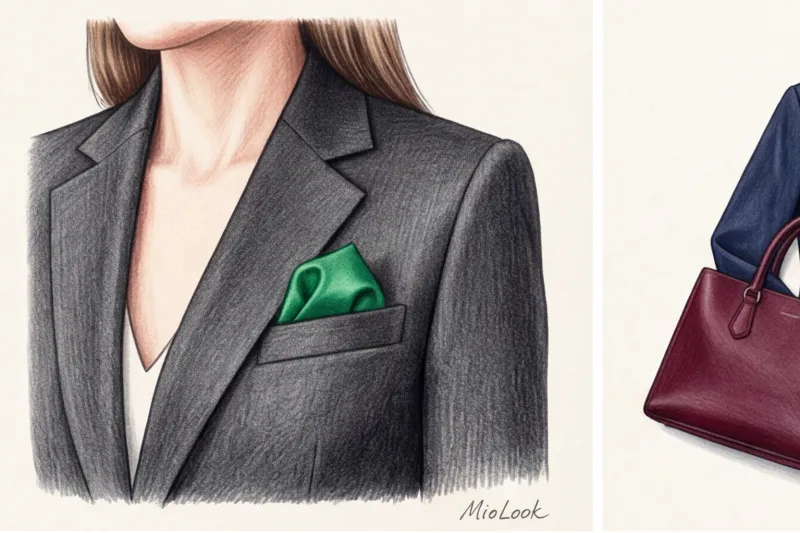
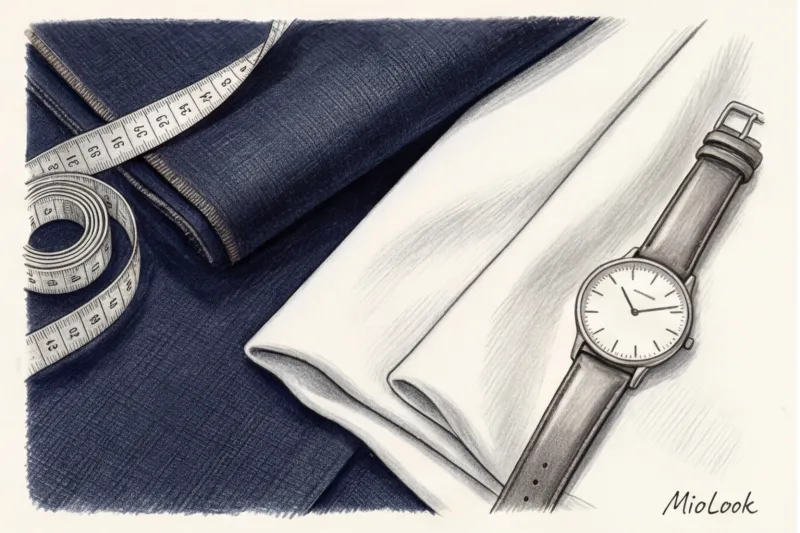
When it comes to jewelry, the "rule of three" applies: a wedding ring, simple stud earrings (pearl or smooth metal), and a watch. A watch is essential—it signals your appreciation for time. Choose models with a leather strap or metal bracelet, without a scattering of crystals.
Materials Matter: How Fabric Reveals Your Status and Budget
You can buy a perfectly tailored suit, but if it's made of 100% polyester, the magic will be lost within an hour. Polyester is the enemy of confidence. It creates a greenhouse effect (you'll sweat during tough negotiations), has a cheap sheen at the folds, and creases unattractively into hard creases.
The gold standard of a business wardrobe is fine suiting wool. Look for Super 100s, 110s, or 120s on the labels. These numbers indicate the thickness of the wool thread. It's the perfect balance: the fabric looks expensive and drapes beautifully, yet is durable.
I must add a caveat here—when does 100% wool NOT work? If your job involves constant flying and business trips, pure, high-twist wool (Super 130s and above) will wrinkle before you even get out of the taxi. In such cases, we look for smart blended fabrics. The optimal composition for an investment suit is 95-98% fine wool and 2-5% elastane. Elastane will prevent the knees of trousers and elbows of a jacket from stretching.
You don't have to go to Tom Ford to assemble a wardrobe like this. Excellent basic pieces made from high-quality wool blends regularly appear in premium mass-market lines (for example, COS, Massimo Dutti, or Arket). And to avoid buying too much, analyze your current items using the app MioLook — this is a great saver from impulsive purchases of identical gray jackets.
Your perfect look starts here
Join thousands of users who look flawless every day with MioLook.
Get access — €0.99 onceChecklist: Auditing Your Image Before Important Negotiations
I make all my clients memorize this simple checklist. Before leaving the house for an important meeting, stress-test your clothes.
- Test in motion: Raise your arms as if you were presenting a presentation on a screen. Your jacket shouldn't be draped over your ears, and your blouse shouldn't be hanging out of your skirt. Sit on a chair: your pencil skirt shouldn't ride up above your knees, exposing your thighs.
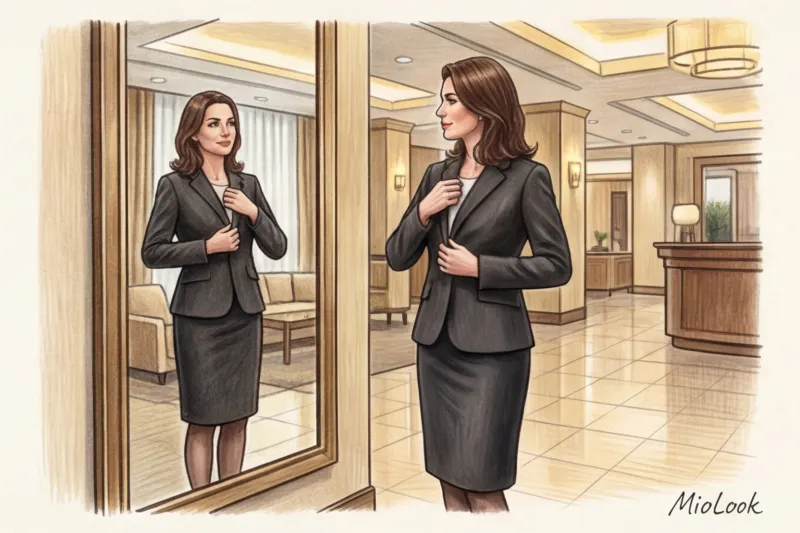
- Kink test: Look in the mirror from behind. Is the skirt's vent coming apart? Are the buttons pulling at the chest (do they form a crisscross pattern)? If so, the item is half a size too small, which dramatically lowers its status.
- Check for neatness: No pilling on the sides of your jacket (where your bag rubs), perfect shoe toes, and most importantly, a spare pair of tights in your bag. Trust me, a torn hem before a meeting can ruin any executive presence.
Summary: How to Maintain Individuality Within a Strict Protocol
Women often resist business formal dress, fearing it will undermine their individuality. But strict protocol doesn't erase individuality, but rather enhances it. You convey your taste not through flashy colors or extravagant styles, but through "quiet luxury."
Your uniqueness is revealed in the masterfully tailored jacket, the elegant matte shine of horn buttons, the subtle scent of well-groomed hair, the perfect hairstyle, and the quality of silk draped across your collarbones. Open your closet tonight and remove all the squeaky, synthetic, and ill-fitting items from your business capsule wardrobe. Keep only those pieces that enhance your status and don't make you constantly tug at your hem.