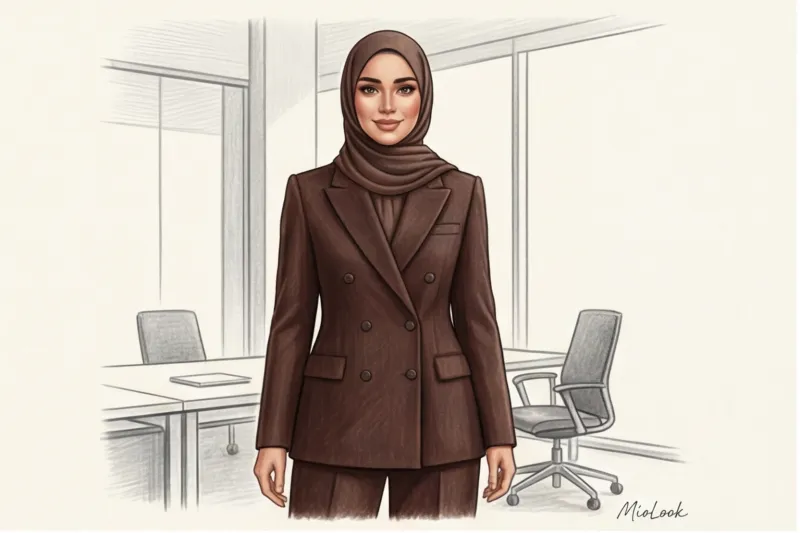
Did you know that 70% of first impressions of your professionalism are formed solely based on color? According to the Colorcom color research institute, this assessment occurs unconsciously, in just the first 90 seconds of a meeting. When it comes to Business style colors for Muslim women , most women instinctively reach for the seemingly safest option - black.
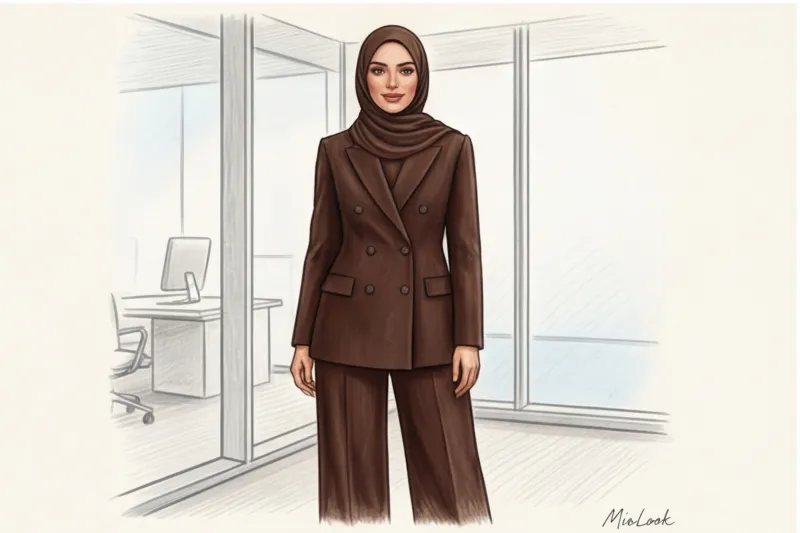
I've been working as a personal stylist for over ten years, and I can confidently say: the stereotype that modesty in business necessarily equates to black-and-gray blandness is a major stylistic mistake. All-black is downright detrimental to a closed-cut silhouette. We've covered basic styles in more detail in the full guide. Business attire for Muslim women: stylish looks Today, let's explore the architecture of color. How can deep hues and complex geometry be used as tools of influence in a demanding corporate environment?
The All-Black Trap: Why This Color Harms a Closed-Leg Silhouette
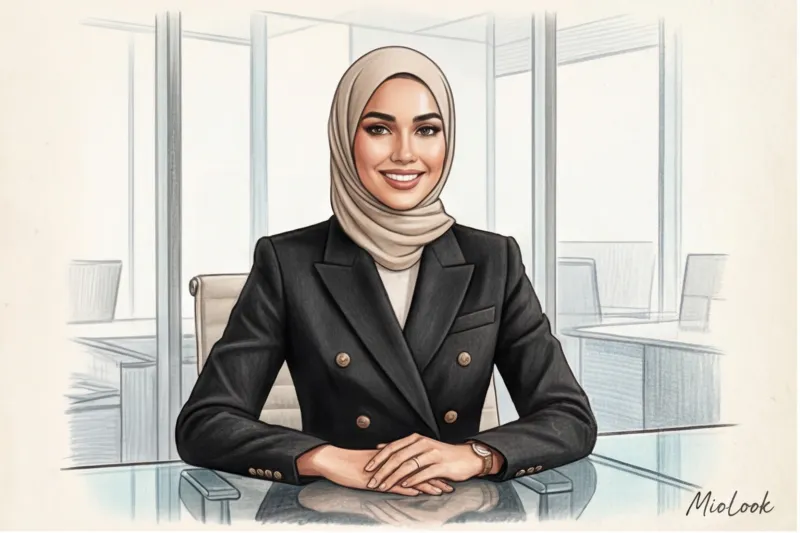
Let's talk about the physics of light. Black absorbs light rays. When you wear a classic European suit with an open neck, wrists, and ankles, the skin acts as a natural reflector, giving the look "air." But in modest fashion, the skin is covered. A black maxi suit paired with a black hijab turns a woman into a heavy, solid monolith.
"Because there's no exposed skin, solid black blurs the lines of the cut. No one will see the perfect darts of your jacket—you'll just become a dark spot in the conference room."
I had a revealing case in my practice. Amina, a senior analyst at a large consulting firm, approached me. HR gently hinted that her style seemed "too aloof, even funereal." Amina exclusively wore high-quality, loose-fitting black suits. The problem wasn't the style, but the psychological perception of the solid mass of darkness. As soon as we replaced the black jacket with a deep, dark chocolate shade and the scarf with soft taupe, colleagues began to remark on how she "looked fresher." Same level of isolation, but a completely different level of communication.
If you're not ready to give up black completely, use it in subtle ways: in shoes, a structured bag, or as a base layer (turtleneck), but frame it with a contrasting jacket.
Basic Colors for Muslim Women's Business Style: Status and Influence
Corporate Formal (the strict business dress code adopted in Big4, consulting, and banking) does not tolerate flashy neon colors. Your influence palette is the so-called Jewel Tones (jewel tones) and complex neutrals.
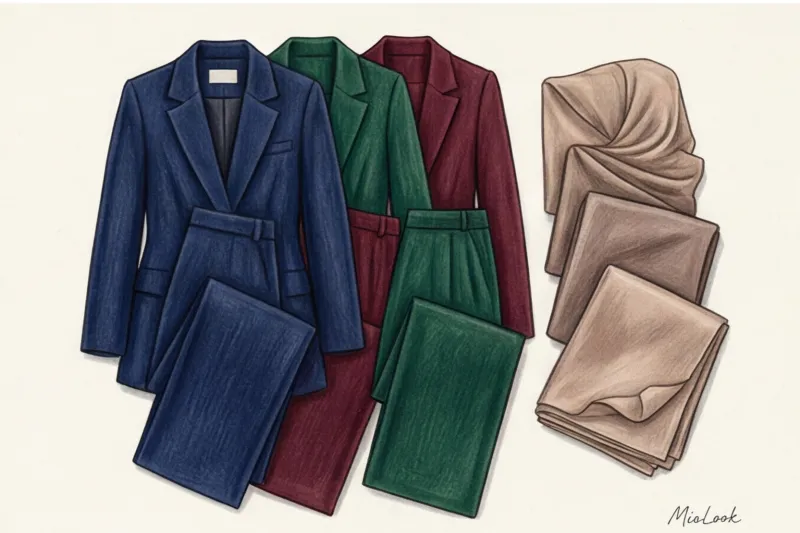
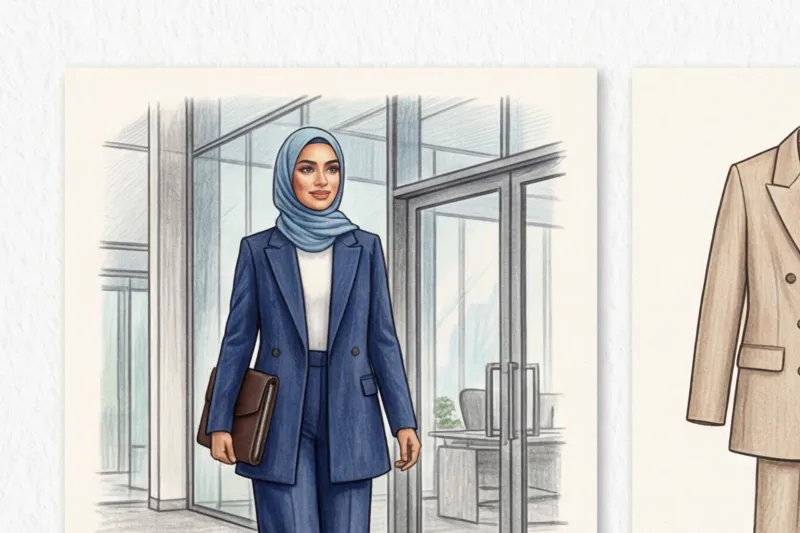
- Deep blue (Navy blue): In color psychology, blue conveys absolute reliability, logic, and trust. It's the ideal color for project defense or meeting with investors.
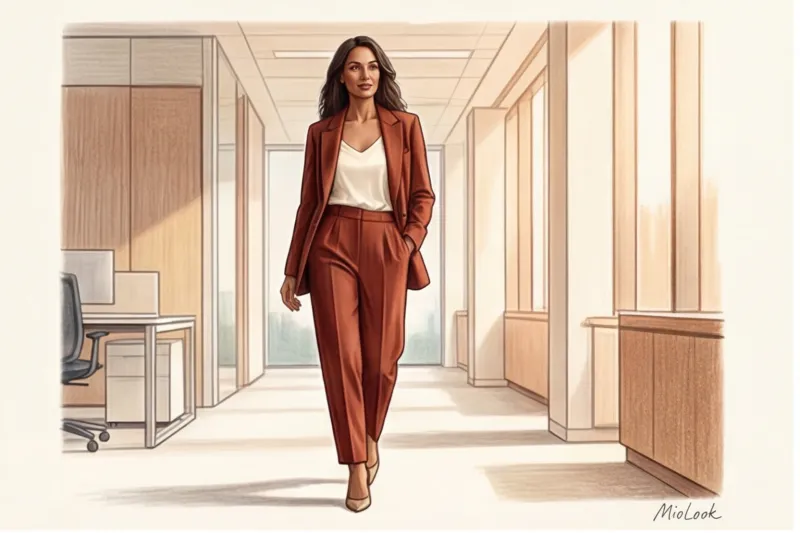
- Emerald and wine (Burgundy): They convey hidden strength and authority, yet they don't evoke aggression like pure red.
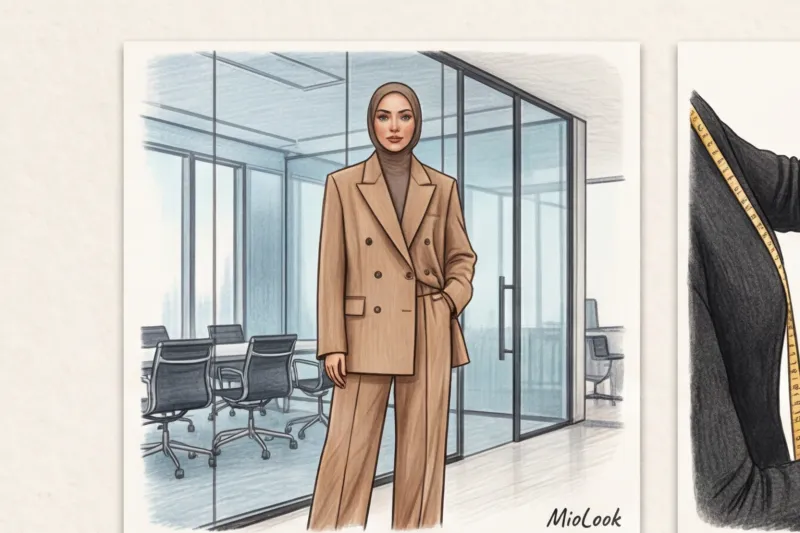
- Complex base: Camel, taupe, graphite and sand. By the way, Old Man colors and shades of quiet luxury fit perfectly into a strict dress code.
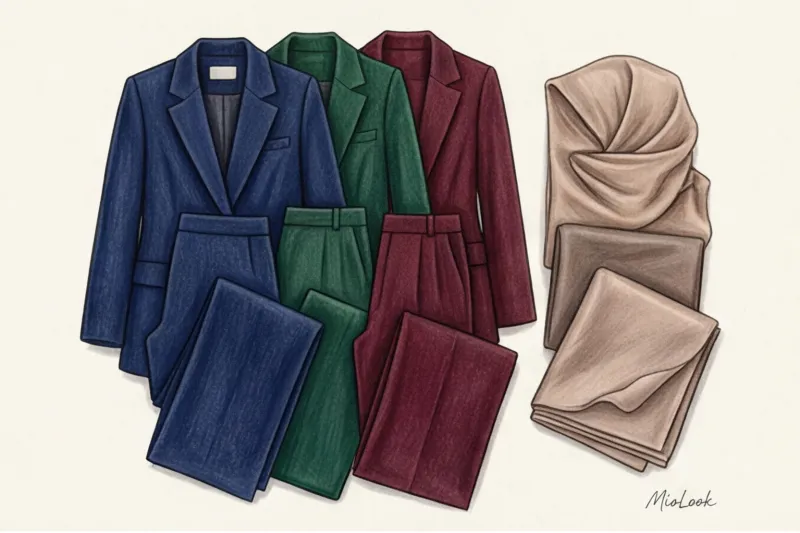
There's one strict rule here: color is inextricably linked to the texture of the fabric. A camel shade on a 100% polyester jacket (usually in the €30-€50 range) will always have a cheap yellowish or muddy green tint. The same color on a wool blend or thick viscose at Massimo Dutti (€150-€200) looks like a million bucks. Never buy complex light shades in cheap synthetic fabrics.
The Three Shades Rule in Modest Business Dress Code
To avoid visual noise in a closed outfit, use the classic 60/30/10 formula:
- 60% - main color (for example, a graphite two-piece suit).
- 30% - complementary color (light gray hijab and blouse).
- 10% - accent (burgundy tote bag or shoes).
If you have trouble finding contrasts, try monochrome dressing—assembling an outfit in different shades of the same color. This elongates the silhouette and looks incredibly expensive. To avoid spending hours trying on clothes in front of a mirror, I recommend my clients load their outfits into MioLook and collect monochrome capsules right on your phone.
Access to MioLook for €0.99 — one-time payment
A smart AI stylist will select the perfect business look and help you create a capsule wardrobe.
Get access — €0.99 oncePrints in corporate modest fashion: acceptable options
Let's save the floristry and small flowers for the weekend. In the harsh reality of the office, romantic prints subconsciously diminish your authority. A boss in a floral dress is perceived as softer, but less expert.
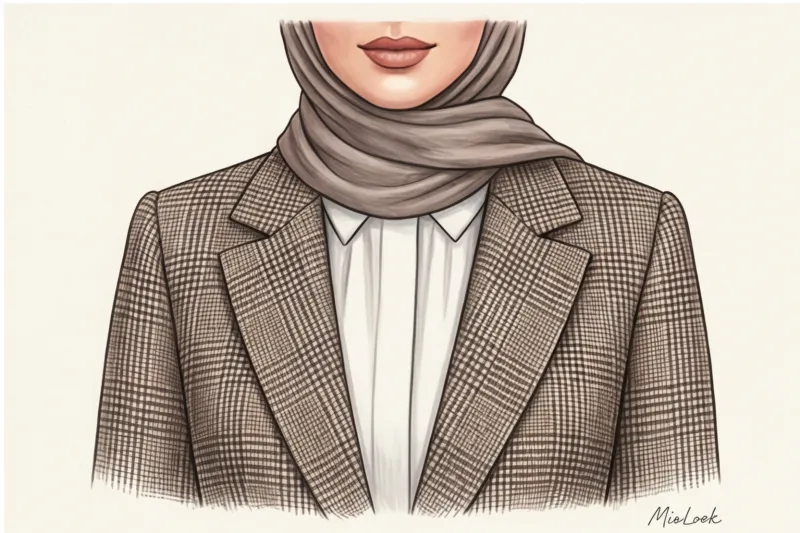
Your choice is classic tailoring geometry. A strict print plays a crucial role in modest fashion: it creates a visual "framework." Where in a regular suit the geometry is defined by the neckline or exposed arms, in a closed silhouette, the pattern takes over.
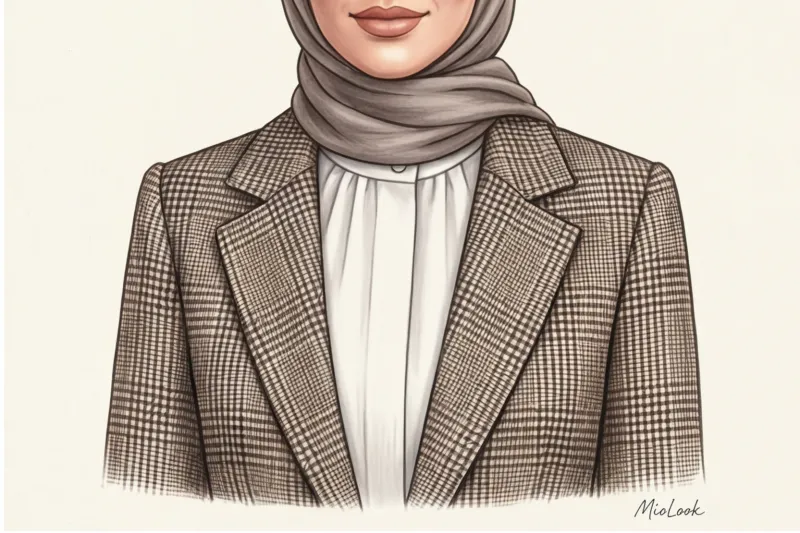
- Pinstripe: It elongates your height and adds dynamism to your look. Perfect with palazzo pants.
- Prince of Wales: That same grey suit check with a thin colored thread (often blue or pink).
- Goosefoot: My personal favorite style. But keep an eye on the scale: petite women need a small rapport (pattern pitch), while tall and statuesque women need a medium or large one.
Color and the hijab: how to incorporate a headscarf into a strict dress code
A hijab in a business wardrobe is more than just a head covering; it's your most important portrait accessory. It frames your face and sets the tone for your entire communication.
I often use one practical life hack when choosing capsule wardrobe colors Find your perfect nude hijab. It should match your skin tone as closely as possible (cool pink, warm peach, or olive). In a fully covered suit, such a headscarf acts as a visual "breathing space"—it replaces an open neckline and doesn't cut into the silhouette.
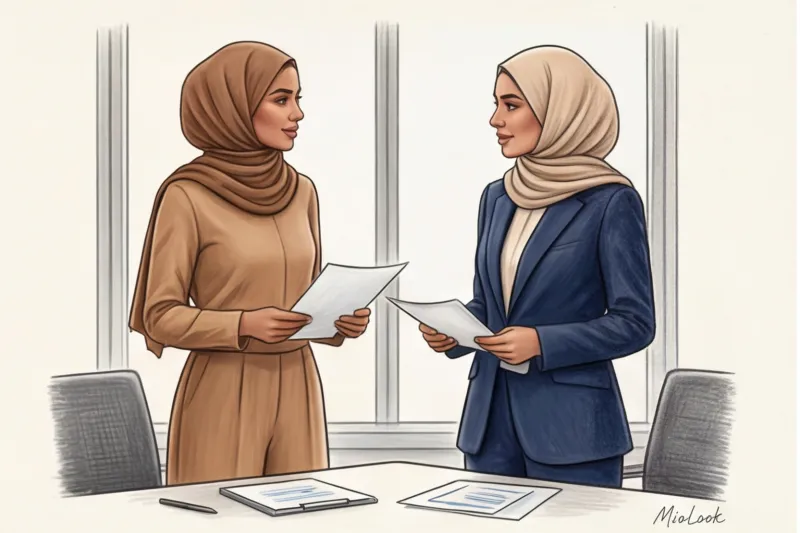
Is a printed hijab acceptable in conservative companies? Strict corporate formality says a definitive "no." A printed hijab near your face distracts your interlocutor from your eyes during negotiations. Choose solid colors: the color-stretching principle (when the scarf is a shade lighter or darker than the jacket) works flawlessly.
Glossy or matte textures in the portrait area?
This rule is often broken, but it's crucial: shine cheapens a business look. Silk and satin scarves, especially in bright colors, are inappropriate in the office. Under the cool fluorescent lighting of an open-plan office, the glossy sheen of the fabric will clash with the crisp, matte wool of your jacket.
This does NOT work when: If you're going to a gala corporate dinner or a social event, silk will be perfect there. But for workdays, swap it for matte chiffon, thick viscose, or fine cotton.
Your perfect look starts here
Join thousands of users who look flawless every day with MioLook. Digitize your wardrobe in minutes!
Get access — €0.99 onceBrands and Palettes: Where to Find the Right Colors
When building your wardrobe, you don't need to buy luxury items to look expensive. The secret is to seek out luxury items. shades in the middle market.
How do I scan rails in stores for my clients? I go to COS, for example, and spend exactly five seconds assessing the row. If the color seems flat (just blue, just red), I pass it by. If the color makes me think (is it a dark gray with a green undertone? Or graphite with a hint of blue?), I take it to the fitting room. It's precisely this color complexity that distinguishes a high-end item.
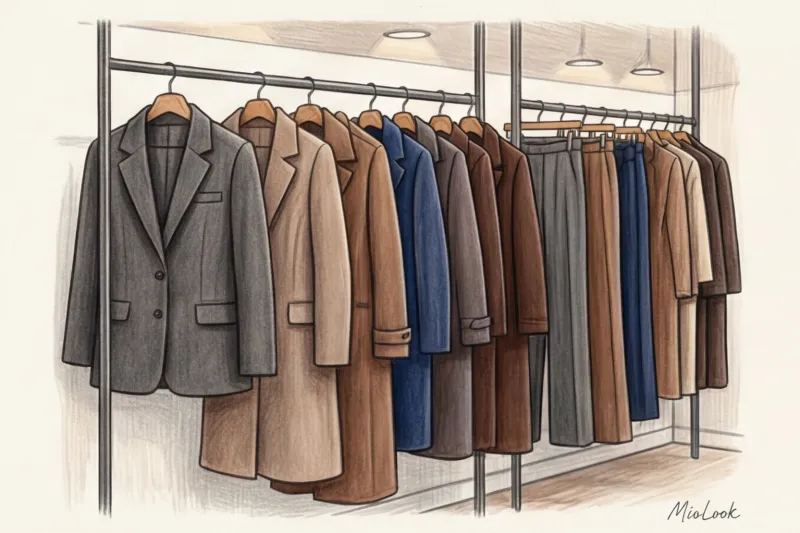
- Massimo Dutti: Here, you should look for the perfect navy (deep blue), the right shade of dark chocolate, and a rich camel for architectural coats and jackets. The average price for a good jacket is €120–€160.
- COS: Geniuses of complex, dusty shades: sage, cool graphite, bleached sand. They have perfect high-neck blouses in thick cotton (in the 70–90 € range).
- Local modest brands: When buying online, always check the composition. If you see a beautiful wine shade in the photo, but it's 80% polyester, in person it will almost certainly have a cheap, glassy sheen.
Checklist: Auditing Your Business Color Capsule
Let's move from theory to practice. Open your closet right now and do a quick inventory. It won't take more than 15 minutes.
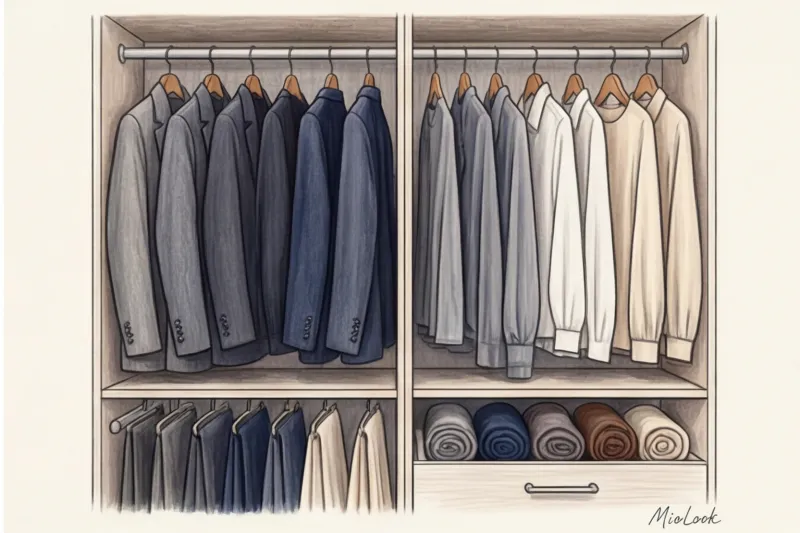
- Step 1: Remove the black from the face. If you have black turtlenecks or black everyday scarves, put them away. Replace them with deep navy or graphite.
- Step 2: Introduce depth. Add at least one jacket in a complex jewel tone (emerald, burgundy) to your outfit. You'll see how the variety of your looks expands.
- Step 3: Contrast test. Check your basic hijabs. You should have at least three matte scarves: one that matches your skin tone (nude), one light basic (off-white or ecru—not stark white!), and one dark (matching your most frequent outfit).
- Step 4: Office Lighting. Put on a put-together outfit, go to a window on a cloudy day, or stand under a cool lamp. If your complexion becomes sallow, the scarf shade is incorrect.
Color in a corporate environment is more than just a matter of aesthetics. It's a tool for nonverbal communication. A well-chosen palette for a closed dress code allows you to direct the attention of your interlocutor: shift the focus away from your clothes and toward your face, your words, and your professionalism. Don't hide behind a faceless black monolith—let color work for your career.