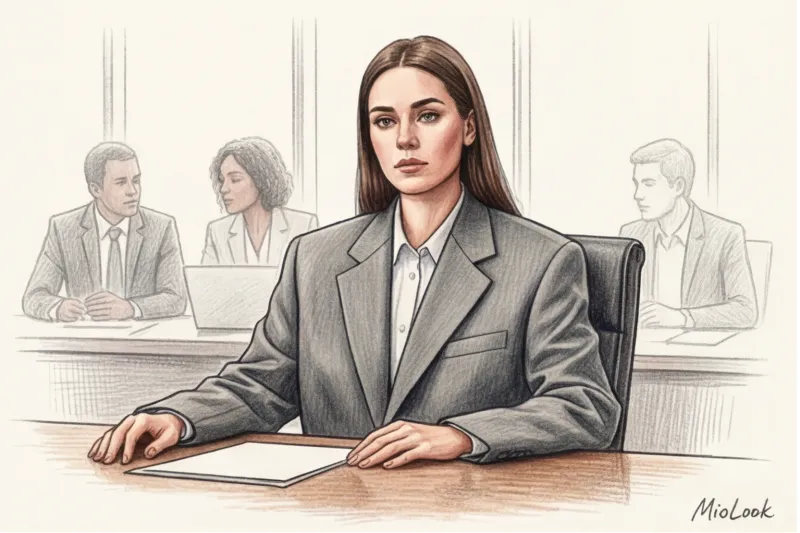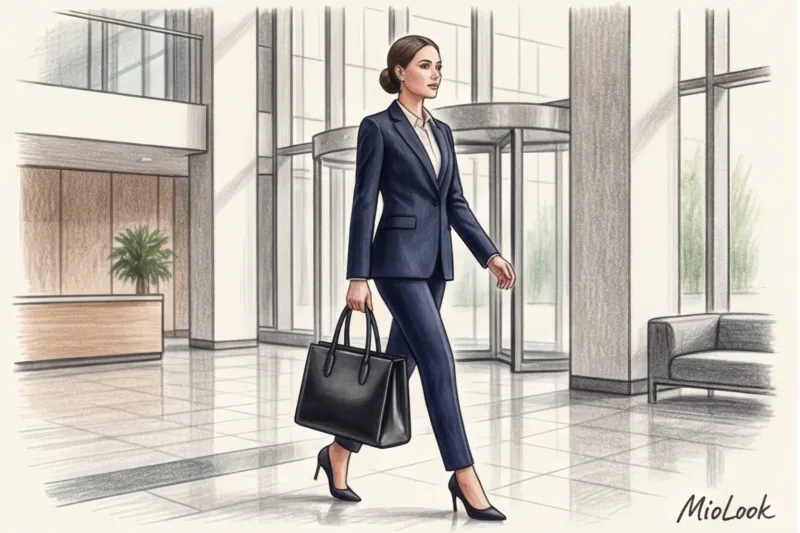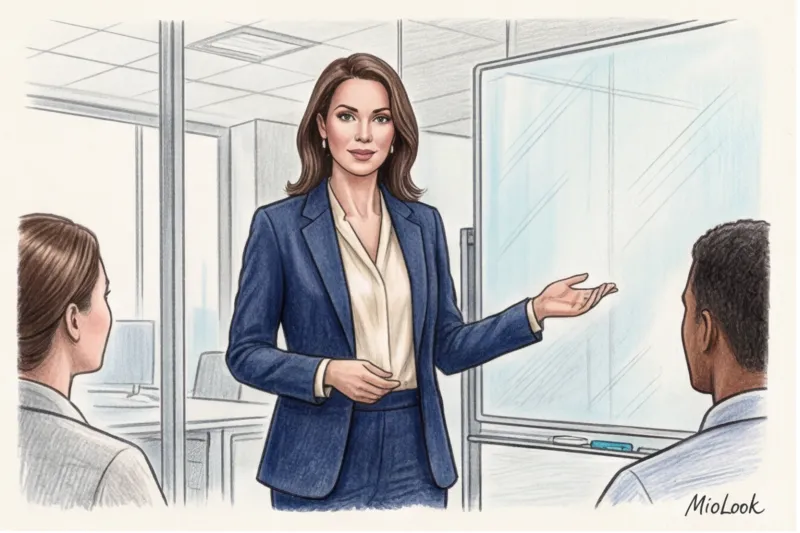

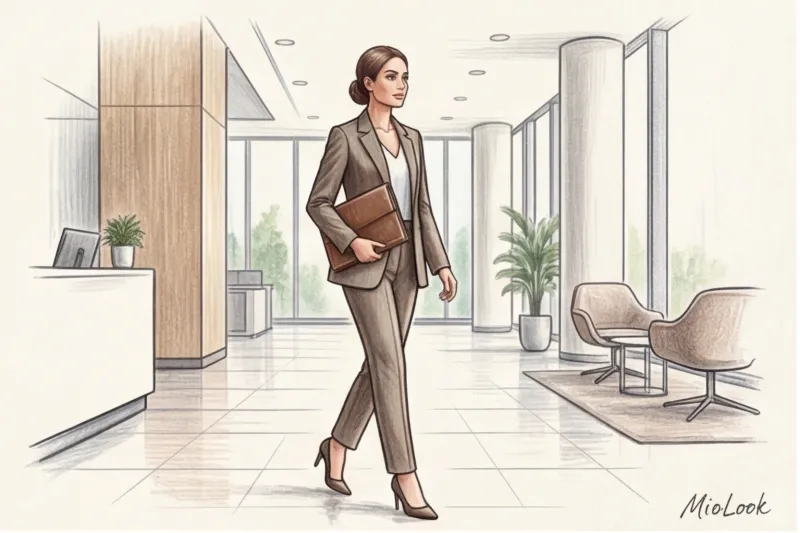
Imagine this: you've been preparing a stellar quarterly report for three weeks. You step up to the projector and begin your presentation, but for some reason the board of directors detects a lack of confidence. The problem isn't the numbers. The problem is that you're unconsciously tugging at your too-tight skirt, while the office fluorescent lights treacherously highlight the cheap sheen of your polyester jacket. Your professionalism is being questioned before you've even opened your mouth.
We discussed the fundamental rules in detail in our The Complete Guide to Business Attire for Women But today I want to talk about hidden traps. Trivial bans on deep necklines and miniskirts have long been a cliché—they're obvious. Much more dangerous are the less obvious ones. mistakes in business attire: incorrect textures, flimsy cuts and outdated formulas that subconsciously convey a lack of status.
Hidden Threats: How Business Attire Mistakes Are Sabotaging Your Career
Over 12 years of working as a personal stylist in Europe, I've developed a strict rule: your wardrobe is your visual elevator pitch. The era of aggressive power dressing with exaggerated shoulders from the '90s is a thing of the past. Today, corporate "quiet luxury" rules the roost, where status is determined not by logos, but by the quality of stitching and the density of fabric.
Let's recall a large-scale study by Coqual (formerly the Center for Talent Innovation) in 2023. Examining the concept of executive presence, analysts found that 65% of top managers admit that an employee's appearance directly influences promotion decisions. You are assessed in a split second. If your appearance says, "I don't pay attention to details," management concludes, "She wouldn't pay attention to details even on a multi-million dollar contract."
Your perfect look starts here
Join thousands of users who look flawless every day with MioLook. A smart AI stylist will create looks for you.
Get access — €0.99 onceCut and texture errors: why clothes look cheap under office lighting
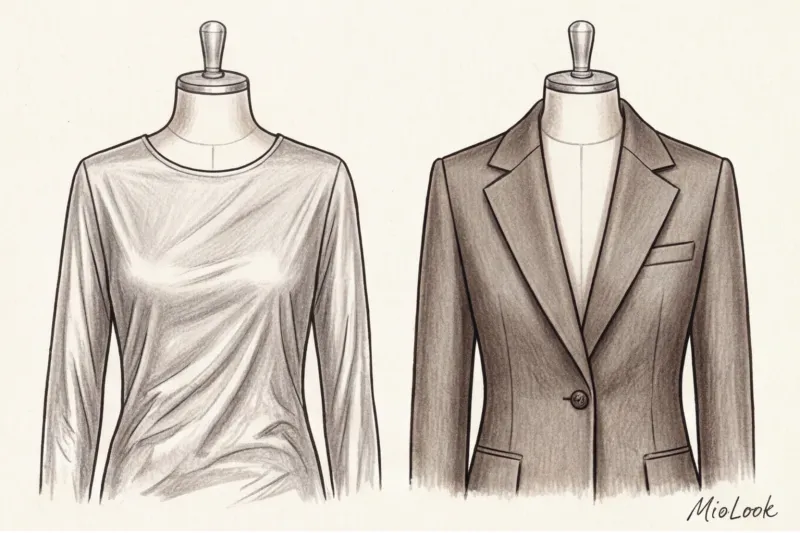
Business centers are the most mercilessly lit spaces in the world. Cold fluorescent light highlights even the slightest imperfections in fabric. What looked acceptable in a warm, subdued fitting room becomes a disaster in a conference room.
I often show my clients a visual test. We take a 100% lightweight polyester blouse from, say, H&M and compare it to a blouse made of heavy crepe or high-quality triacetate from COS or & Other Stories. The price may differ slightly, but the visual weight of the second item is three times greater. Cheap synthetics become staticky, cling to the body, and have a telltale shine.
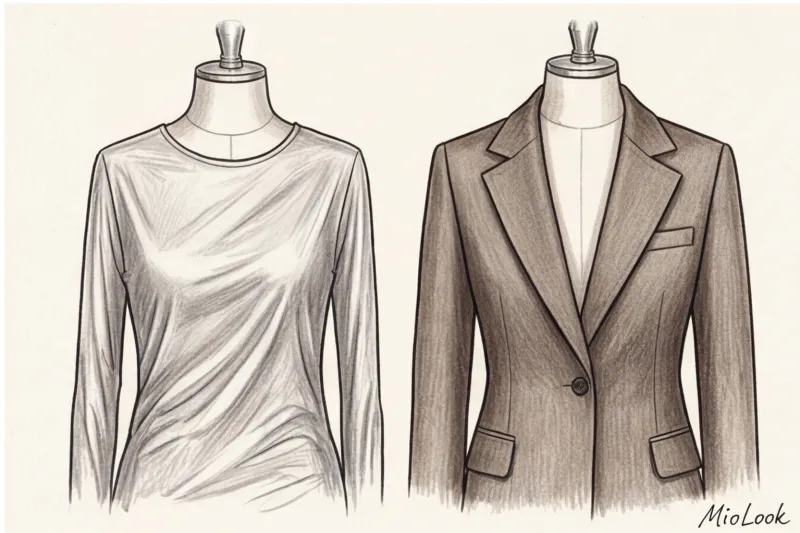
Mistake 1: Flimsy knits instead of structured layers
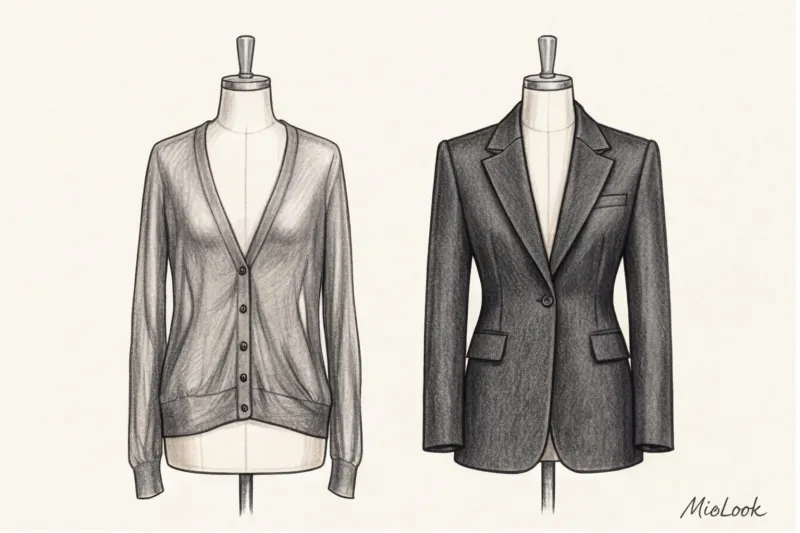
Thin cardigans with tiny buttons are the absolute enemy of a business-like presence. They instantly lose their shape, stretch out at the elbows, and become covered in pilling after the third wash. It's impossible to look like an expert decision-maker in such a cardigan. You look casual and laid-back, which kills your work ethic.
Solution: Swap flimsy knits for structured pieces. A heavy wool blazer, tweed jacket, or suit vest work great. If you can't live without knitwear, choose thickly knit cardigans (for example, merino wool with a weight of at least 300 g/m²) in chunky shapes that maintain the silhouette's structure.
Mistake 2: The illusion of "breathable" material and wrinkled items
Many people mistakenly buy 100% linen or thin cotton for the summer, hoping for comfort. This doesn't work if your workday lasts 8-10 hours. Linen wrinkles even on the way to the office. By lunchtime, your pants will look like you slept in them. A wrinkled look in business is synonymous with sloppiness.
Solution: For the office, always look for blended fabrics. Cotton with a weight of at least 180 g/m² with 5-10% elastane or polyamide added. Linen should be blended with viscose and wool—this way, it retains its elegant texture but becomes wrinkle-resistant.
Mistake 3: The "skinny" silhouette and outdated sheath dresses
The hyper-sexuality of the 2010s is no longer acceptable. Sheath dresses bursting at the seams and skirts that make it impossible to walk normally convey insecurity and a desire to please, rather than professional competence.
Solution: A modern cut requires air. There should be 1-2 centimeters of space between your body and the fabric. The architectural yet flexible cut of a semi-fitted silhouette looks a hundred times more expensive and prestigious.
Mistakes in the details: little things that ruin an expert's image
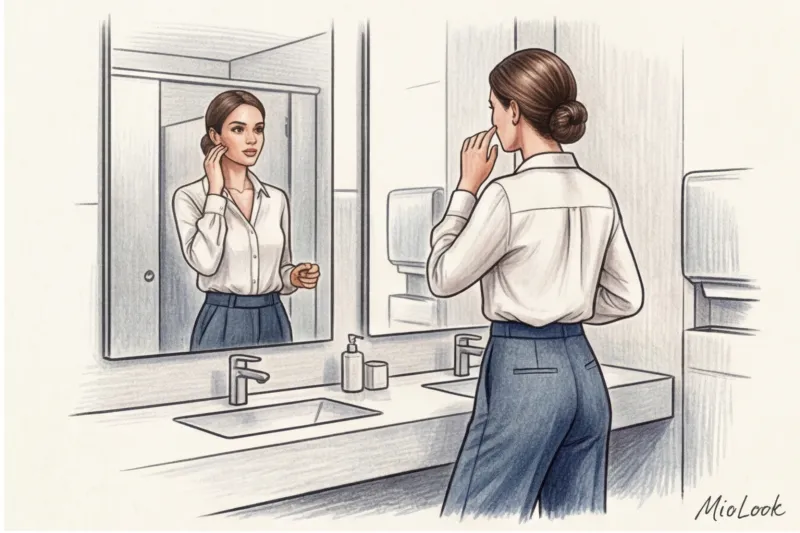
I remember a case from my work: we were preparing the CEO of a large startup for a board meeting. She chose a luxurious ivory silk blouse. But in a rush that morning, she slipped on a white lace bra underneath. Under the flashbulbs and spotlights, the lingerie stood out in sharp relief. The impression of a brilliant speech was marred by a single technical wardrobe error.
Mistake 4: See-through underwear and telltale contours
Remember the ironclad rule of the stylist: we wear under white and light-colored clothes only smooth, seamless, flesh-colored underwear , perfectly matching your skin tone. White underwear under a white blouse always shows through, creating a sharp contrast.
Thin silk and unlined viscose are especially dangerous. If you're unsure of the fabric's thickness, use a basic top with thin straps in a color that matches the blouse as an intermediate layer.
Mistake 5: Incorrect pants length
Trousers that gather awkwardly over shoes, or, conversely, "shot-down" styles that reveal a strip of bare leg between the hem of the pant leg and the ankle boots, mercilessly cut off height and ruin proportions. If you wear office-style jeans or classic trousers, length is your main priority.
Solution: Palazzo pants and wide-leg styles should end 1-1.5 cm from the floor when shoes are on. If you wear cropped straight-leg pants (7/8 length), they should expose the narrowest part of the ankle, and your shoes should not clash with them. You can read more about this in the article about a combination of sneakers and a business suit.
Mistake 6: Shiny nude tights
Shiny lycra on legs is a complete anti-trend and a major faux pas in the business world. Legs that look like sausages in cellophane cheapen any suit, even the most expensive one.
Solution: For a strict dress code, choose only opaque tights with a density of 8-15 denier. They should work like foundation for your legs: they even out your skin tone while remaining completely invisible. We wrote about the rules of etiquette in detail in this article. about business tights.
Accessory Failures: Bags and Shoes That Drag an Outfit Down
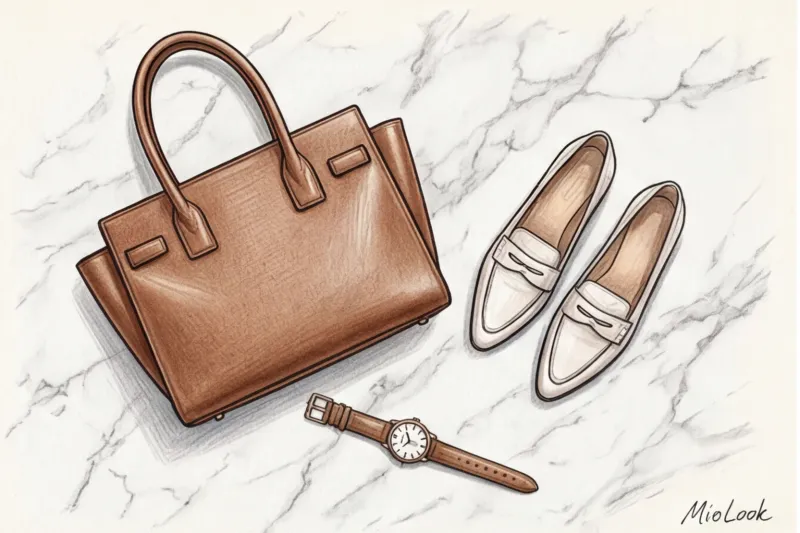
In a business wardrobe, accessories play the role of key status indicators. You can save on a basic cotton shirt, but a bag and shoes must be impeccable.
Mistake 7: Soft hobo bags. Shapeless, soft shoppers are associated with the beach or the supermarket. In the office, structure is essential. Choose totes or satchels with a rigid frame that sit securely on a desk and hold an A4 sheet of paper without warping. To be fair, this advice doesn't work for the ultra-relaxed IT industry, but it's a must for a traditional office.
Mistake 8: Worn-out shoes. Worn-out heels, worn-out toes, dirty soles—all of these things ruin the value of your suit. I always recommend clients consider the cost per wear. It's cheaper to buy one pair of quality leather loafers for 200 euros that will last three years than to replace faux leather shoes every three months.
Access to MioLook for €0.99 — one-time payment
A smart AI stylist will create the perfect look for you. Forget about the "nothing to wear" problem in the morning.
Get access — €0.99 onceMistake 9: The Illusion of Security, or Why Boring Black Is a Bad Idea
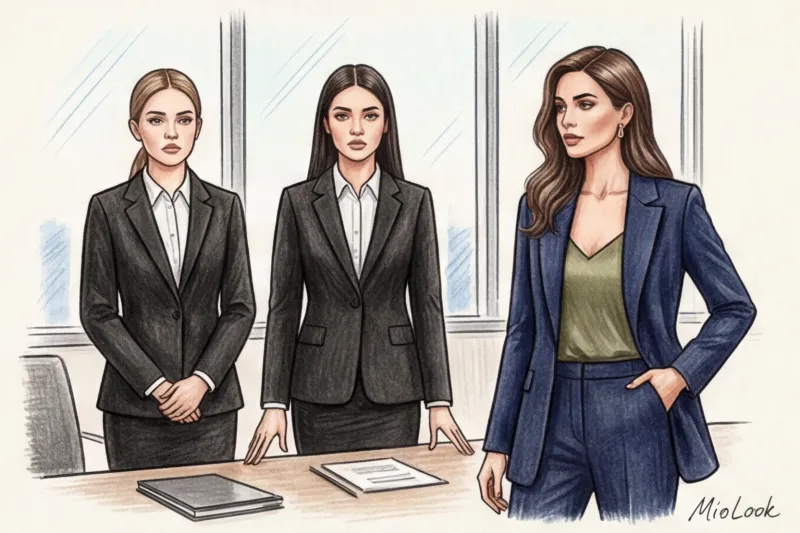
Now for a counterintuitive insight that often shocks my new clients. We're used to thinking that a basic black suit is the safest choice for work. But in reality, mass-market black is a huge risk.
Firstly, cheap black dye fades disastrously quickly. Secondly, low-quality black fabric collects every lint, dust particle, and pet hair. Compare a black jacket from Zara after a month of wear and a deep blue blazer from Massimo Dutti. The former looks like it's five years old, the latter retains its elegance.
Solution: Save black for evening wear (premium fabric tuxedos). For an office base, use graphite gray, deep navy blue, dark chocolate, or camel. According to the PANTONE Color Institute (2024), these sophisticated base shades form the palette of modern "quiet luxury." They look expensive even in budget versions and offer a much softer contrast to the complexion, refreshing the skin tone.
Mistake 10: A complete lack of individuality in a business wardrobe
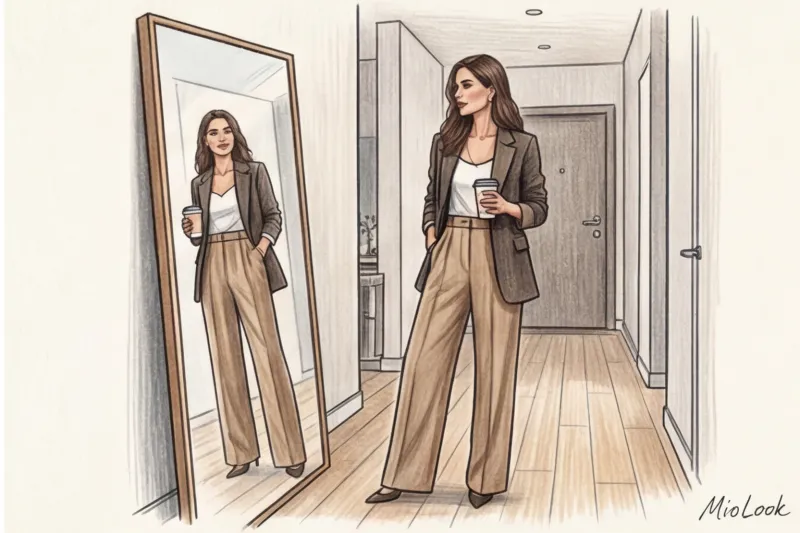
Dressing like a typical white-collar worker (a smart white shirt and black trousers) is voluntarily becoming invisible in the office. A strict corporate dress code (formal or smart casual) doesn't require you to erase your identity.
To incorporate your personality without breaking the rules, use texture and color in details. Swap a regular leather belt for a crocodile-embossed one. Add an architectural clock or use silk scarf on the bag handle. If you have a creative profession, be sure to check out our material. about style for creative industries.
Keeping all these details in mind can be difficult. To avoid wasting your morning hours on agonizing choices, I recommend using the "smart wardrobe" feature in MioLook The app helps you digitize your items and create dozens of perfect outfits in advance, eliminating stylistic errors during the virtual fitting stage.
Stylist Checklist: 5 Questions to Ask Before Heading to the Office
To put style failures at work behind you, ask yourself these 5 quick questions before you walk out the door:
- Does my jacket hold its shoulder shape? (If the shoulder line is drooping and hanging, it’s time to change the item to something more structured).
- Is there air between the body and the fabric? (No tension on shirt buttons or skirt hips.)
- Is the texture smooth under the blouse? (Check your back in a double mirror to see if there are any raised contours of lace underwear.)
- Does the bag meet the rigor of my schedule? (She must stand confidently on the table and hold the format of the documents).
- Do my shoes look perfect? (No knocked-off toes or dust—keep a shoe sponge in your desk drawer.)
How to fix mistakes: investing wisely in a status wardrobe
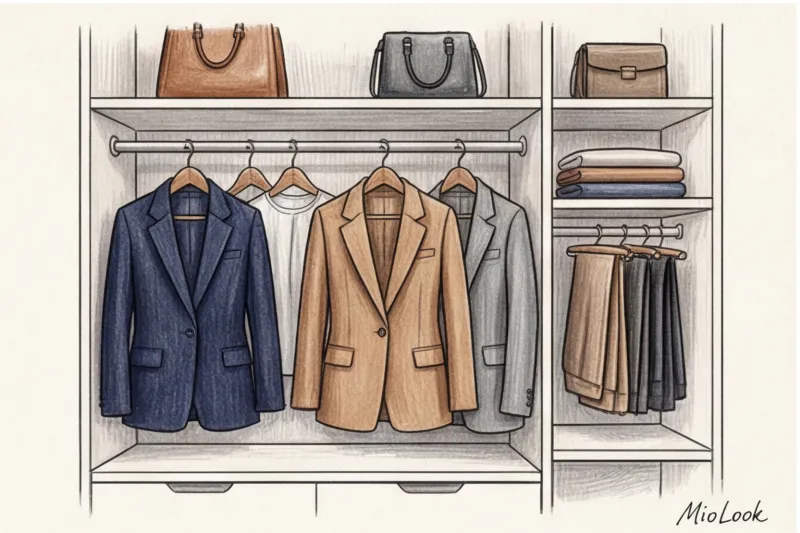
High-end business style doesn't require million-dollar budgets. It requires a keen eye, ruthless auditing, and discipline. Start small: conduct an inventory this weekend. Put away everything flimsy, shiny, pilled, or overtly tight.
Your clothes aren't just a covering for the workday. They're a direct investment in your future position and how seriously your colleagues will take your ideas. Create your ideal business capsule wardrobe, focusing on quality cuts and fabric thickness, and you'll notice a difference in your body language and professional influence.