Five years ago, the CEO of a large IT company came to me for advice. She had failed the first round of complex merger negotiations. As we began to analyze the situation, it became clear that she had worn a formal, aggressive burgundy suit and a white shirt with a stiff collar to the meeting. She wanted to project power and status, but her partners subconsciously interpreted this image as pressure, stubbornness, and an unwillingness to compromise. By the second round, we had completely changed tactics: she wore a camel cashmere jacket over a muted blue silk blouse. The tension eased immediately, and the deal was sealed.
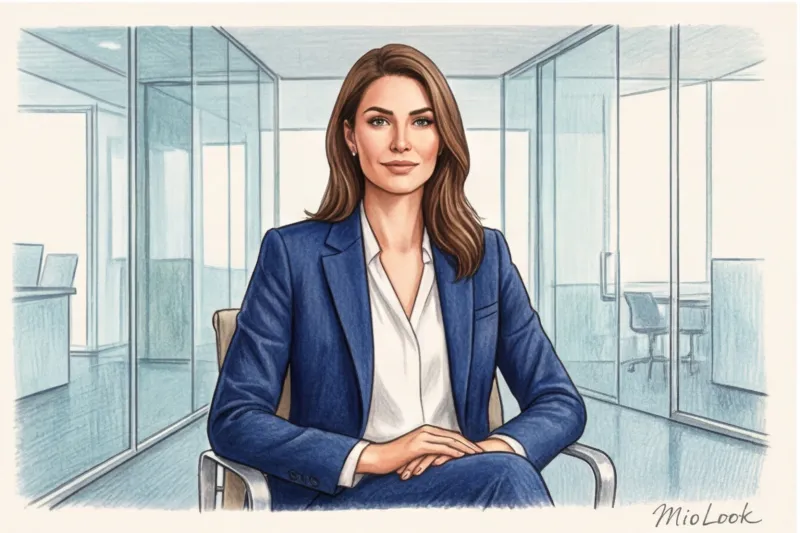
In 14 years of working as a stylist, I've learned one ironclad rule: a wardrobe isn't about "what colors suit me," but about managing other people's perceptions. Properly chosen colors of business clothing act as an invisible participant in the negotiations. We discussed the physiological mechanisms of this phenomenon in more detail in our a complete guide to the psychology of color in clothing In this article, we'll explore how to consciously assemble a palette for a specific business challenge—from strict dominance to empathetic partnership.
Business Attire Colors: Why the "Red Tie" Concept Is Hopelessly Outdated
Remember the '80s and the power dressing style? Huge shoulder pads, contrasting combinations, and the obligatory element—a bright red tie or a full scarlet suit. Back then, power was believed to be loudly declared. Today, that concept is falling apart.
According to the Institute for Color Research, people form a subconscious impression of you within the first 90 seconds of meeting you, and up to 90% of that impression is based solely on your color scheme. In today's corporate world, loud red or neon shades are no longer associated with status. Instead, they are perceived as manipulative, overly aggressive, or—even worse—as a compensation for insecurity.
Power has shifted to the concept of Soft Power. True status today is conveyed through complex, deep shades and intelligent casual attire. A person who has nothing to prove will never wear a fire-engine-colored tie to a board meeting.
Your perfect look starts here
Join thousands of users who look flawless every day with MioLook. Our intelligent AI stylist will help you find the perfect hairstyle for any business need.
Get access — €0.99 onceThree Negotiation Strategies and Their Ideal Palette
It's a mistake to think there's a single "universal winning look." In my experience, a successful executive's wardrobe functions like a matrix of business goals. When getting ready for a meeting, ask yourself: What do I want from these people today? And only then open your closet.
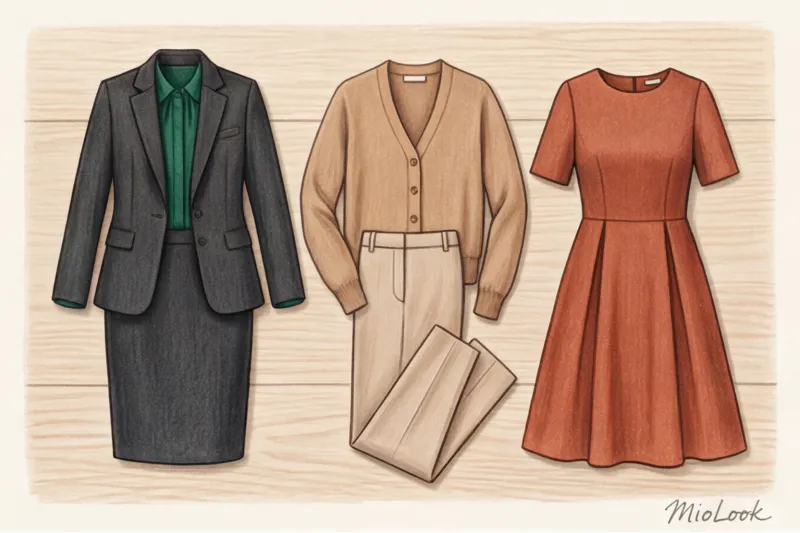
Dominance and Authority Strategy (Dark Blue, Graphite, Emerald)
When to apply: Communication with investors, protection of the annual budget, crisis management, dismissal of employees.
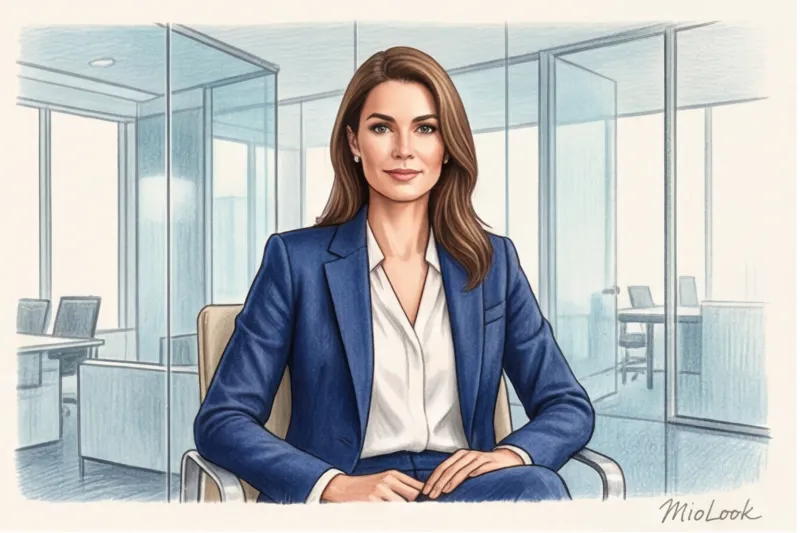
This palette is essential when you need to establish distance, demonstrate expertise, and take firm control of the situation. Cornell University research has proven that navy blue physiologically slows the heart rate of others, aligning them with a rational, logical mindset. This creates a perception of you as a person who relies on facts rather than emotions.
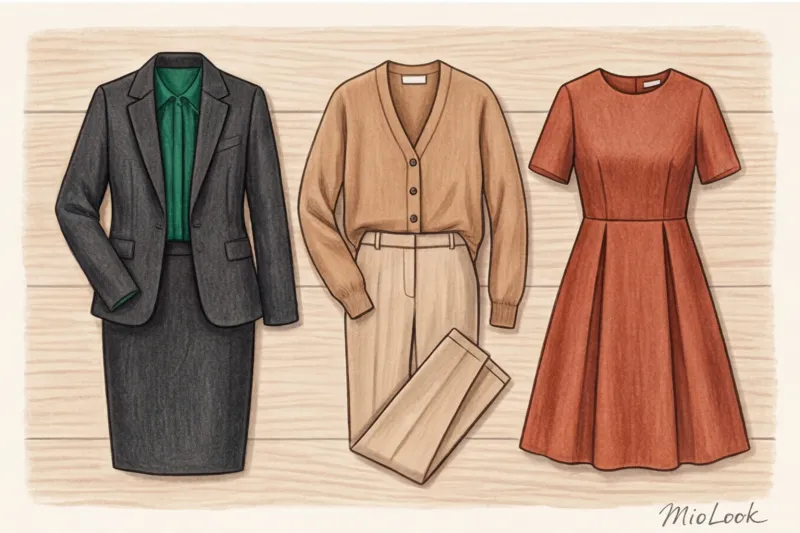
- Navy (deep dark blue): the color of intellect. A win-win option for any strict wardrobe of a female executive.
- Graphite: It conveys unwavering stability. It's softer than pure black, yet maintains the utmost formality.
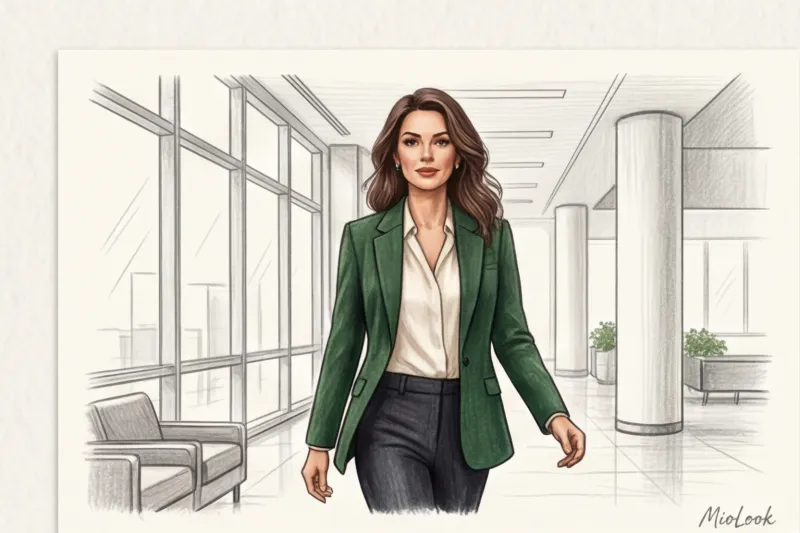
- Deep Emerald: A modern alternative to classic dark tones. Perfect for conveying high status without being overtly aggressive.
Partnership and Empathy Strategy (Camel, Beige, Muted Blue)
When to apply: B2B sales, finding compromises, onboarding key top managers, company mergers.
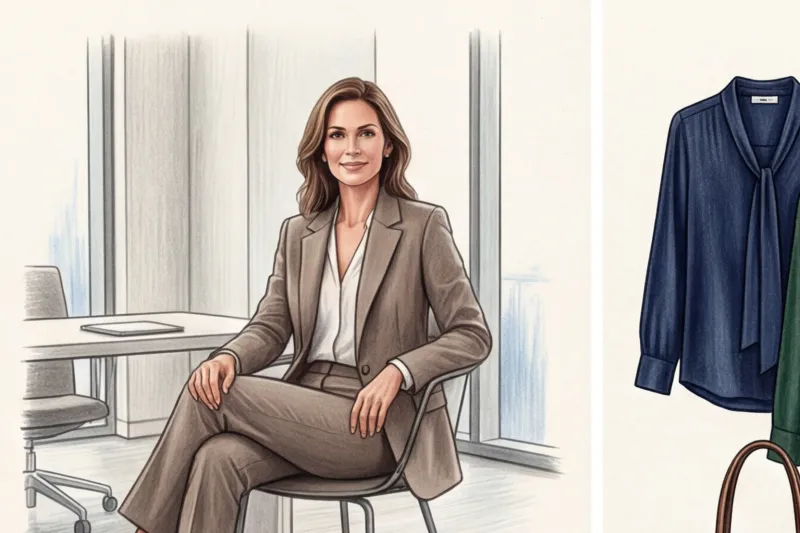
If you come to sell the idea of a partnership in a tight suit, your interlocutor will subconsciously become defensive. The opposite tactic is needed. Warm shades of sand, camel, and cappuccino visually remove psychological barriers. They literally say, "We're on the same page."

Light blue acts as a visual tranquilizer. It reduces anxiety. However, there's a caveat: this strategy absolutely does NOT work if you're dealing with a contractor who consistently misses deadlines. An empathetic palette in such a situation will be perceived as softness.
Innovation and Creativity Strategy (Terracotta, Complex Gray, Wine)
When to apply: startup pitching, brainstorming, negotiations with IT teams or in creative industries.
Imagine walking into a creative agency's office in a classic navy three-piece suit. You'll instantly be labeled a "boring bureaucrat." To demonstrate your flexibility and a lack of conventional thinking, use unconventional yet elegant colors. Terracotta, burgundy, and sophisticated gray-green (khaki) demonstrate that you know the rules but know how to break them gracefully.
Ready to rethink your business wardrobe?
Try MioLook: upload your items to a virtual closet, and the neural network will create dozens of new sets to work with.
Get access — €0.99 onceBlack: the main mistake in difficult negotiations?
Now I'll share a counterintuitive observation that my new clients often challenge. Many inexperienced speakers and negotiators literally hide behind all-black clothing. They think it's "safe," prestigious, and stylish. This is a huge misconception.

In the context of business communication, a deep black color absorbs light and energy. It creates an insurmountable psychological distance. Black is a wall. When you try to negotiate difficult terms or discounts while wearing a black jacket, you visually repel your partner.
"One of my lawyer clients constantly complained that during initial consultations, clients were withdrawn and distrusted her. We replaced her favorite black jackets with dark chocolate and deep gray melange. Consultation-to-contract conversion increased by 30% in two months."
How to wear black correctly? Save it for extremely formal business events. Or use it locally—as a contrasting element (shoes, bag, belt, pants paired with a light-colored top). Never wear black close to your face if you're about to have a difficult, emotional conversation.
Online Negotiations: How the Camera Distorts the Colors of Power
The transition to Zoom and Teams has introduced technical challenges that fashion bloggers rarely mention. You can buy a luxurious navy suit, but in low light, it will turn into a blurry, dirty black spot on a laptop camera.
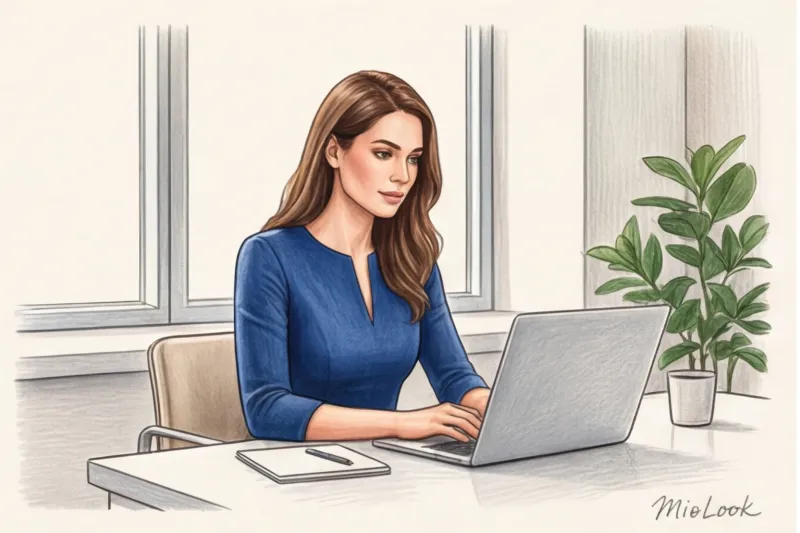
Here are three rules for online meetings that I have discovered in practice:
- Contrast rule: Your color should contrast with the background. If you're sitting against a white wall in a white blouse, you'll lose weight in the frame, turning into a floating head. Choose rich colors (emerald, cobalt).
- Beware of moire: Never wear pinstripes, ribbed prints, houndstooth prints, or small checkered patterns. Webcam sensors can't handle these patterns, and the clothing will start to ripple and flicker on the screen, causing headaches for your interviewer.
- Light decides everything: Always test the color of your clothes BEFORE you call. What looks like a luxurious beige in the bathroom mirror may give your complexion a muddy green tint when viewed from a computer screen.
Access to MioLook for €0.99 — one-time payment
A smart AI stylist will select the perfect look for Zoom conferences and in-person meetings based on your color type.
Get access — €0.99 onceFabric texture: the grey cardinal of impression management
The same shade of gray on matte wool and shiny satin conveys completely different meanings. In the premium segment and at the top management level, texture often becomes even more important than the color itself.
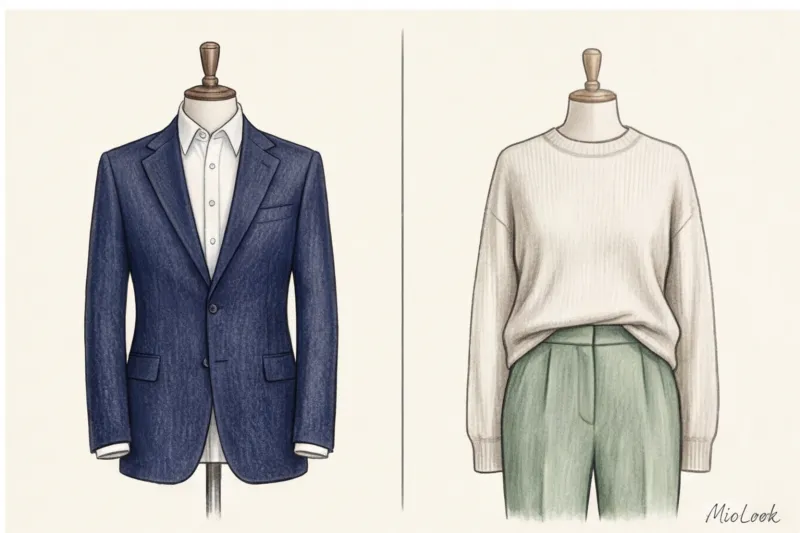
Matte, dense fabrics (suit wool with a weight of 200 g/m² or more, tweed, heavy cotton) "pull" the silhouette together. They create a clear shoulder contour and convey stability, reliability, and authority. When you put on a structured jacket made of high-quality wool (even from mass-market brands like Massimo Dutti or COS in the €150-€200 range), your posture automatically changes.
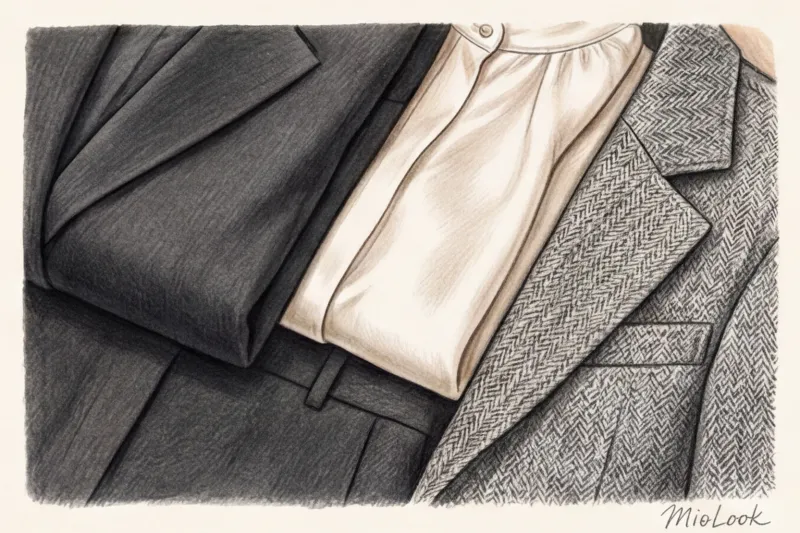
Smooth, flowing fabrics (silk, high-quality viscose, cupra) add dynamism and lightness to an outfit, but significantly reduce the formality. My favorite styling trick for complex negotiations is a mix of textures. Wear a crisp matte jacket (authority), but layer it with a silk blouse with a soft sheen (dynamics and flexibility). It's the perfect balance.
Stylist checklist: putting together a look for an important meeting
To avoid standing in front of your open closet in a panic an hour before you leave, use this algorithm. And to make the process as simple as possible, you can digitize your belongings in MioLook app , and it will offer you combinations itself.
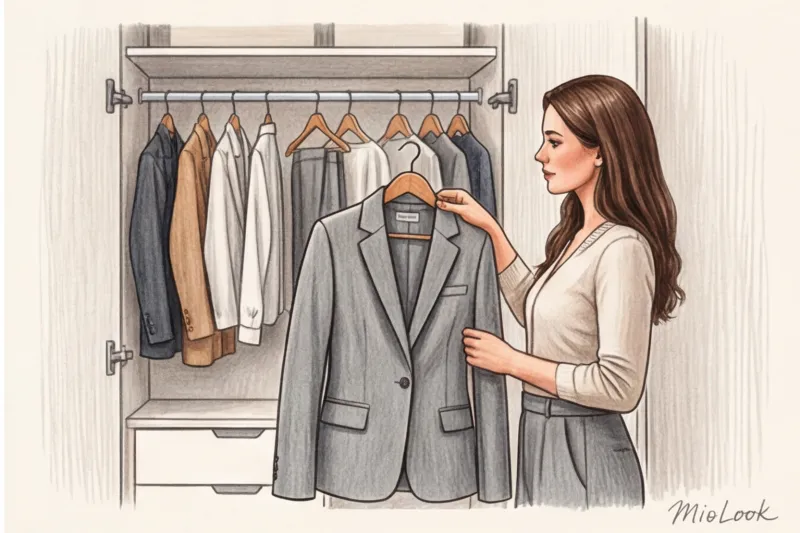
- Step 1: Define your goal. What do you need? To prove a point (blue/graphite), negotiate peace (camel/beige), or inspire investors with new ideas (terracotta/sophisticated gray)?
- Step 2: Choose a basic item. It will be a suit, a dress or high-quality trouser set the desired color.
- Step 3: Add a compensator element. If the suit is very formal, soften it with a light-colored blouse. If the suit is more relaxed (linen, soft cotton), complete the look with a sturdy, structured bag and closed-toe shoes.
- Step 4: Check for tidiness. A wrinkled piece of premium silk or pilling on a sweater will instantly nullify the effect of even the most correct color psychology.
Your clothes speak for you even before you say "hello." Make sure they convey the right message to help you win the negotiation.