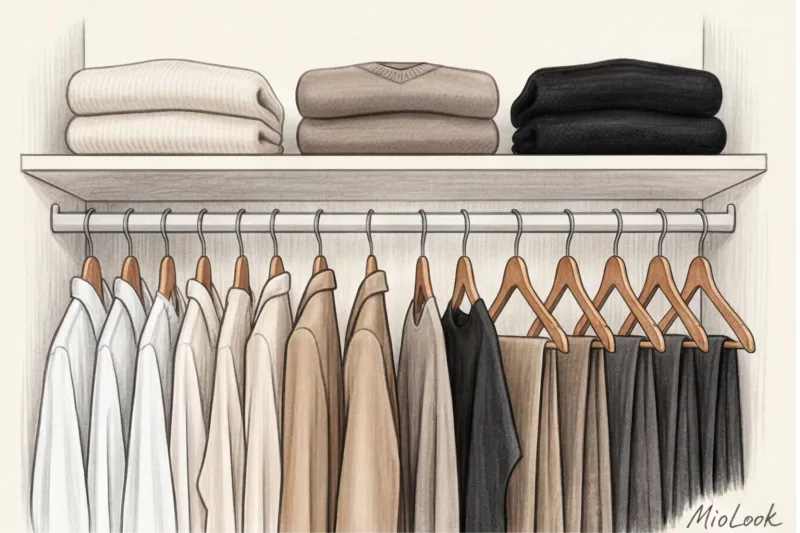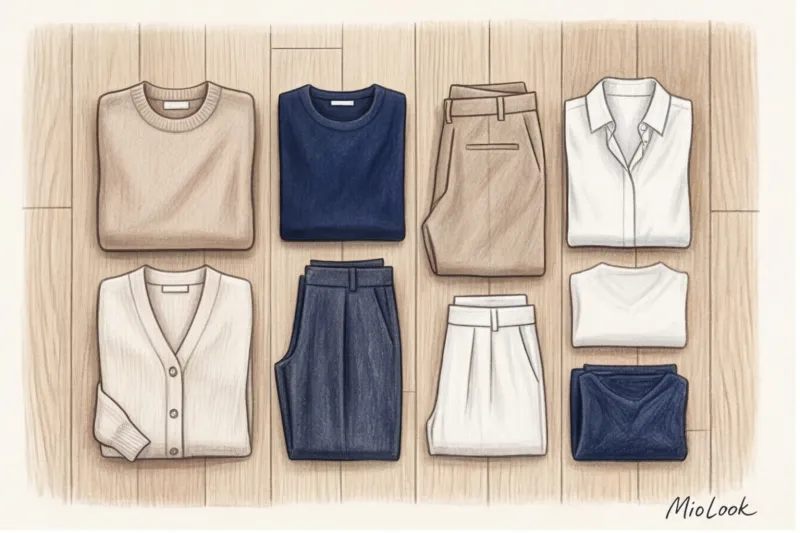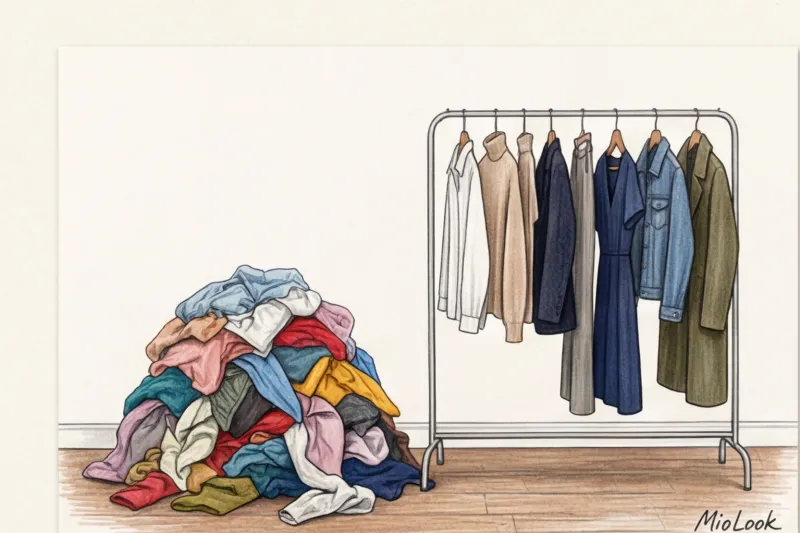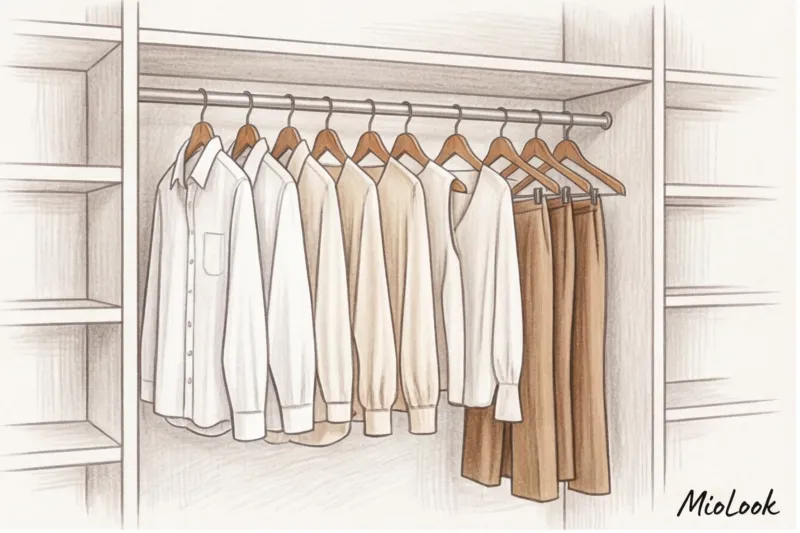
Recently, a client, a top manager at a large IT company, contacted me. She'd bought half the beige selection at the mass market, trying to assemble that perfect TikTok capsule wardrobe, but in her office, she looked, in her own words, "sloppy and pale." Why did this happen? Because the Clean Girl aesthetic isn't just about buying identical light-colored items. It's a strict mathematics of cut and texture density. And managing this mathematics while keeping everything in mind is practically impossible.
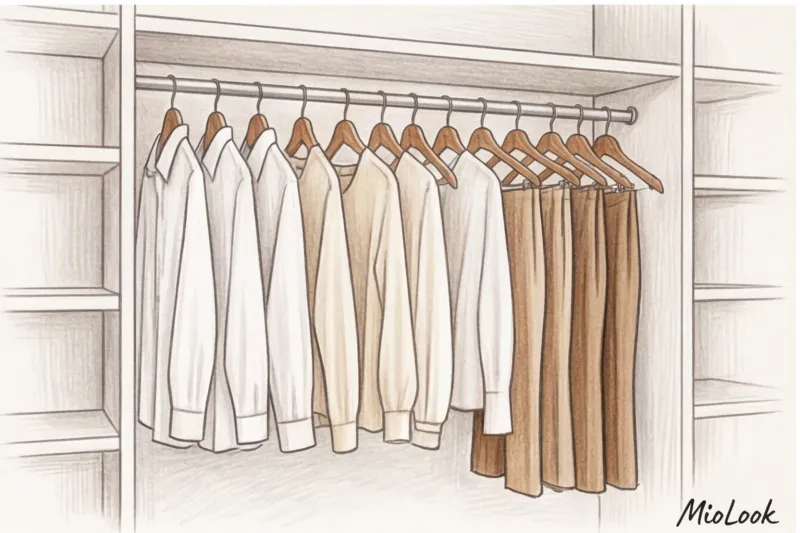
If you want to do it correctly create a wardrobe in the app , you need to stop treating it as a simple catalog of pretty pictures. Think of it as an investment portfolio for your premium minimalism. We've already discussed the philosophy of this style and its origins in more detail in our The Complete Guide to Clean Girl Aesthetics , and today we will focus exclusively on practice and digitalization.
Why Clean Girl's aesthetic demands mathematical precision and digital control
The "effortlessly flawless" style is the ultimate fashion illusion. Behind this apparent relaxedness lies the most rigorous preparation. According to the WGSN analytical agency's 2024 data, the Clean Girl micro-trend has finally become a long-term staple, evolving into "quiet luxury 2.0." And the key rule of this evolution is an uncompromising shift from quantity to quality.
Eclecticism and grunge are forgiving. You can throw a vintage jacket over a cheap dress and it'll pass for designer style. But Clean Girl exposes every flaw. A crooked seam on a white T-shirt, a cheap sheen to polyester, or the wrong shade of camel that blends in with your skin—all of these instantly cheapen the look.
Relaxed minimalism requires the strictest planning. Without a system for tracking your looks and understanding your proportions, you risk slipping from elegance into mere boredom.
Access to MioLook for €0.99 — one-time payment
A smart AI stylist will select the perfect look.
Get access — €0.99 onceHow to create a wardrobe in an app: the first step is a texture audit
According to the Business of Fashion (2023) report, wardrobe management apps have grown in popularity among luxury consumers by 40%. People are tired of visual clutter. And the first step to your new capsule wardrobe is to hide items with bold prints, rhinestones, and large logos from view (and from the app).
In my experience, the most common mistake when digitizing is trying to download your entire closet onto your phone, including items you haven't worn in five years. My recommendation: start with just 15–20 impeccable basics. Clean Girl doesn't compromise.
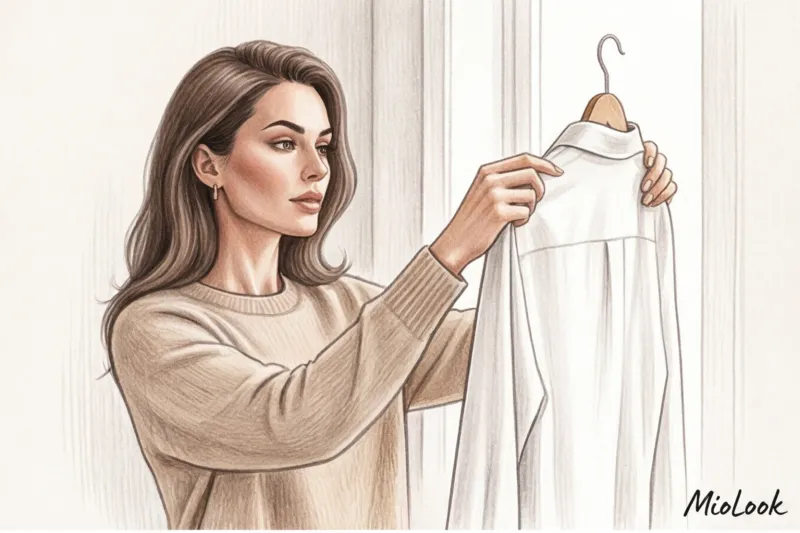
When you add clothes to MioLook , follow two ironclad rules:
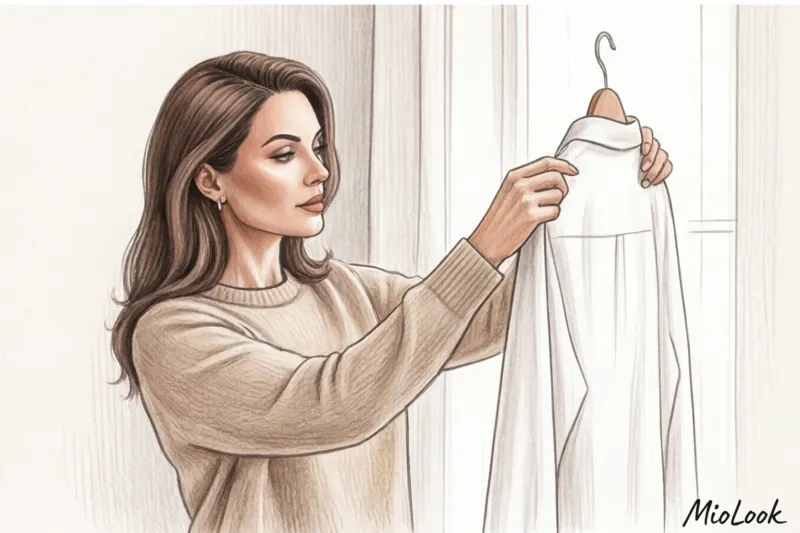
- Light and background: Photograph items in daylight against a contrasting background. The AI should accurately detect the silhouette. If it's a white shirt, don't photograph it on a white sheet.
- Quality tagging: Be sure to include the fabric composition in the description. Mulberry silk, 100% cashmere, heavyweight viscose. This will help the algorithm later select the right texture contrasts.
DNA Capsules: 5 Things You Should Have in Your Virtual Closet
To get the app generating stylish combinations, provide it with the right "database." Here's the foundation without which aesthetics won't work:
- The perfect white shirt. Forget thin, see-through fabric. Choose structured cotton with a minimum weight of 180 g/m² or poplin that holds the collar's shape.
- Palazzo pants with a perfect fit. Look for a blend of fine wool with a silk content of about 10%. They should flow as you walk, not feel stiff.
- Loose-fitting cashmere jumper. The shade is taupe, oatmeal, or cool beige. The V-neckline will add airiness to the portrait area.
- Flawless denim. Straight or wide-leg jeans without any fraying, rips, or unnecessary embellishments. Only pure light blue, deep navy, or ecru.
- Status accessories. A structured bag with a rigid shape (no shapeless bags) and minimalist metal embellishments in a single tone.
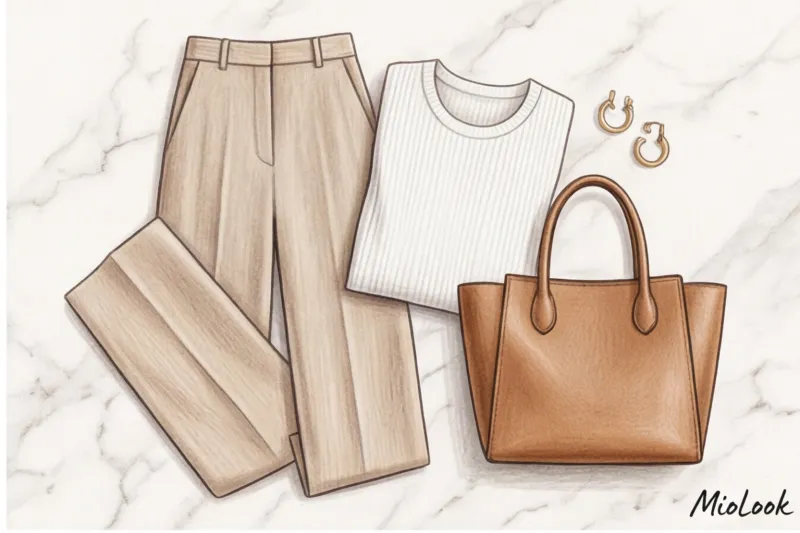
Creating "image formulas" with the help of the AI stylist MioLook
Once the database is loaded, the magic begins. The pairing algorithms are based on color temperature and fabric density. In the Clean Girl aesthetic, we most often use monochrome or analogous color schemes (shades that are close to each other on the color wheel).
I have a client, Anna (CEO of a fintech startup). She hates long dressing times. We spent one evening creating and saving 15 "look formulas" for her work week in the app. The result? She's cut 20 minutes off her morning get-ready time. She simply opens the ready-to-wear section, sees what the AI suggests for the current weather, and puts it on. It looks like a team of stylists spent an hour working on her.
Your perfect look starts here
Join thousands of users who look flawless every day with MioLook.
Get access — €0.99 onceCustomize your palette: from crisp white to camel, chocolate, and graphite. Save your favorite looks into separate lookbooks (e.g., "Office Friday," "Brunch," or "Flights").
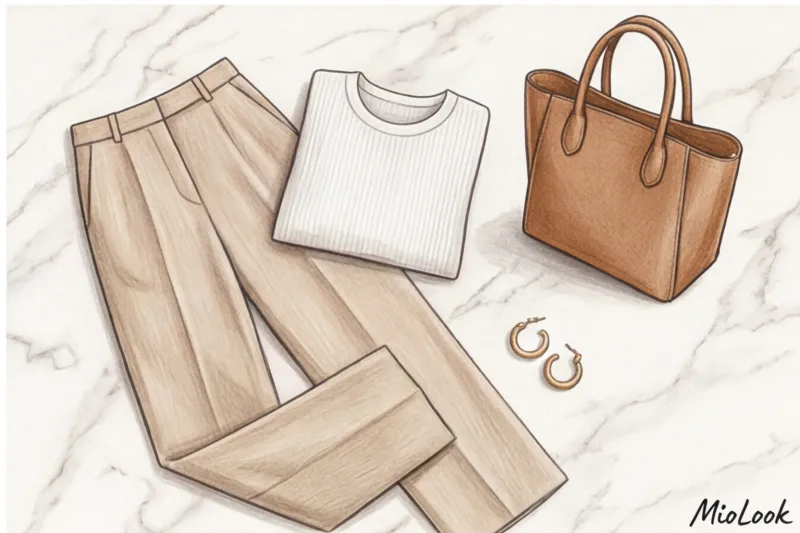
Wardrobe Budget Management: Cost-per-wear for Premium Minimalism
Let's talk about money. True minimalism is always about smart investments, not about saving on matches. This is where the index comes into play. Cost-per-wear (CPW).
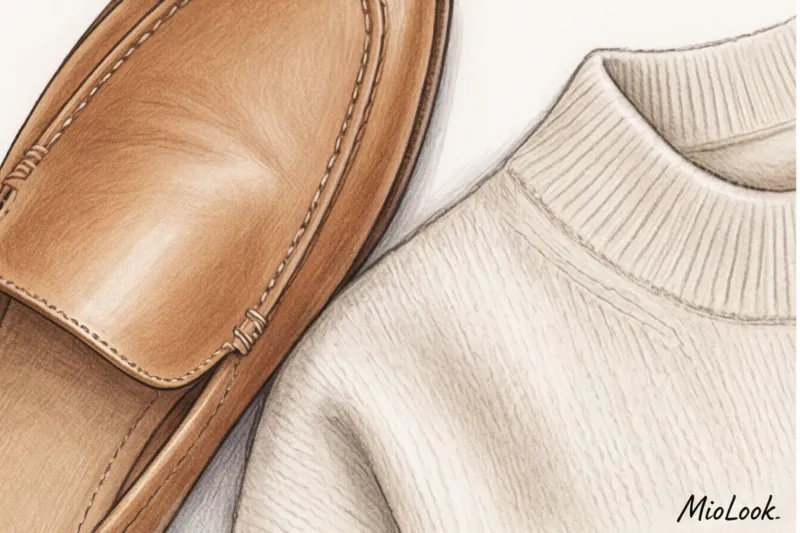
Let's do the math. You buy a premium brand silk blouse for €300. Thanks to its impeccable cut and the fact that it fits perfectly into your digital capsule wardrobe, you wear it 50 times a year. Cost per appearance = €6.
Alternative: You buy a trendy polyester blouse of dubious quality for €40. You wear it three times because it's hot, staticky, and cheapens the look. Cost per outing = €13.30.
Swiss cotton and Italian leather pay for themselves within 3-5 years. But there's a fair limit: You don't need to save up for everything Basic white T-shirts are consumable. Even the most expensive one will turn yellow from deodorant after a season. Buy excellent, thick cotton ones in the €15–€30 range (for example, from the Uniqlo U line) and replace them without regret as soon as they lose their original appearance.
The biggest mistake beginners make: why a basic wardrobe looks cheap
I'll share a non-obvious but crucial rule: The basic wardrobe is the most dangerous It's counterintuitive, because we've always been told that basics are safe. But a tailoring mistake on a bright sequin dress is almost invisible under the glitter. A tailoring mistake on a classic white T-shirt or beige trousers instantly ruins the entire look.
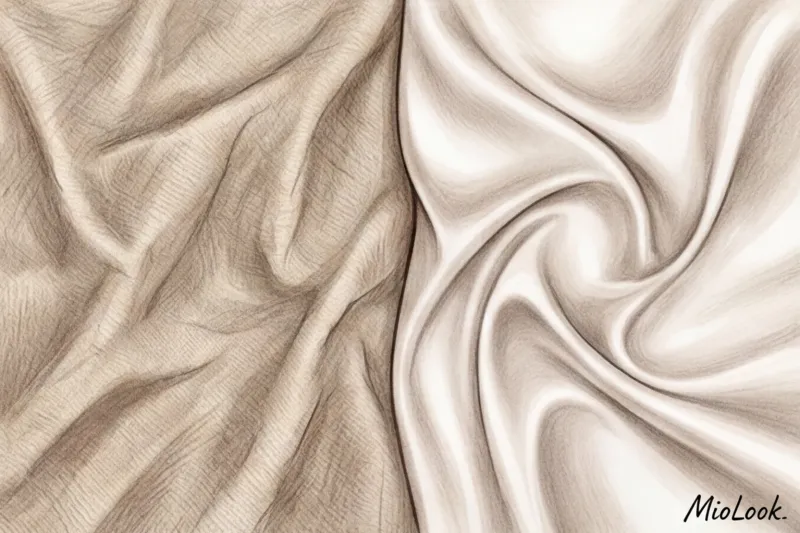
Three reasons why your Clean Girl look might look cheap:
- "Tired" clothes. Pilling on a jumper, stretched knees, micro-stains. Minimalism demands sterile neatness. If an item has lost its appearance, delete it from the app and from your closet.
- Lack of contrast in textures. If you wear smooth cotton trousers and a smooth cotton shirt in the same tone, you look like a medical professional. Rule: always pair smooth fabrics (silk) with textured fabrics (chunky knit, suede, grained leather).
- Mismatch of type. Fair warning: the Clean Girl aesthetic isn't for everyone. If you have a strong, dramatic face type (Kibbe type) with sharp features, you might feel lost in the sleek, beige minimalism. You'll need sharper, geometric lines and contrasts.
Your Action Plan: 5 Steps to Build Your Wardrobe in the App
We've reached the most important point. Stop storing things that don't bring you joy. Here's your step-by-step plan for the coming weekend:
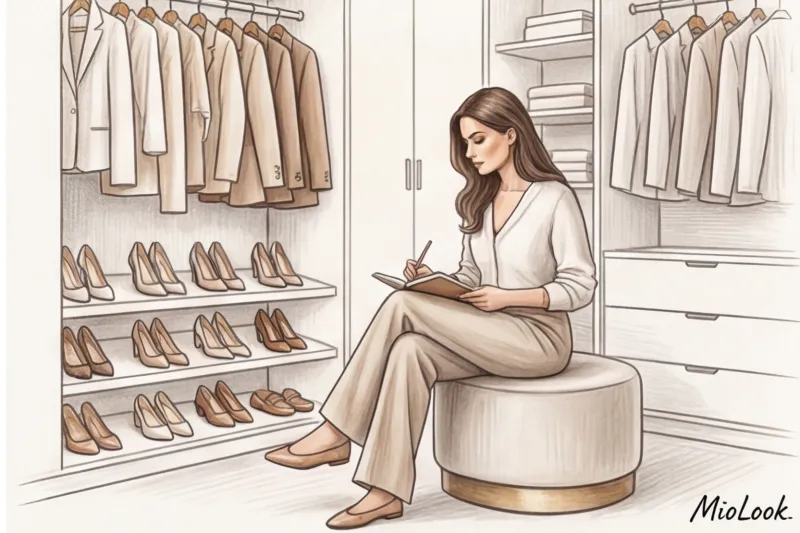
- Clear the space: Physically remove from the active area of the closet anything that contains aggressive prints, is the wrong size, or requires complex repair.
- Take a photo of the base: Select 15 of your best, highest-quality items in a neutral palette. Iron them and add them to MioLook, making sure to include the fabrics in the tags.
- Determine the palette: Give the AI stylist the boundaries of your primary colors. Let the algorithm work only within your personal gradient.
- Create a lookbook: Spend 30 minutes generating and saving at least 10 ready-made formulas for your workdays.
- Analyze the gaps: As you start putting together outfits, AI will automatically show you what's missing. Perhaps you have five perfect tops, but not a single structured jacket. Use this analytics to make informed purchases.
Your style isn't the number of clothes hanging on the hangers. It's a mathematically calibrated system in which every detail reaps 100% of its investment. Digitize your collection, entrust your routine to algorithms, and you'll forever forget the "closet full, nothing to wear" problem.