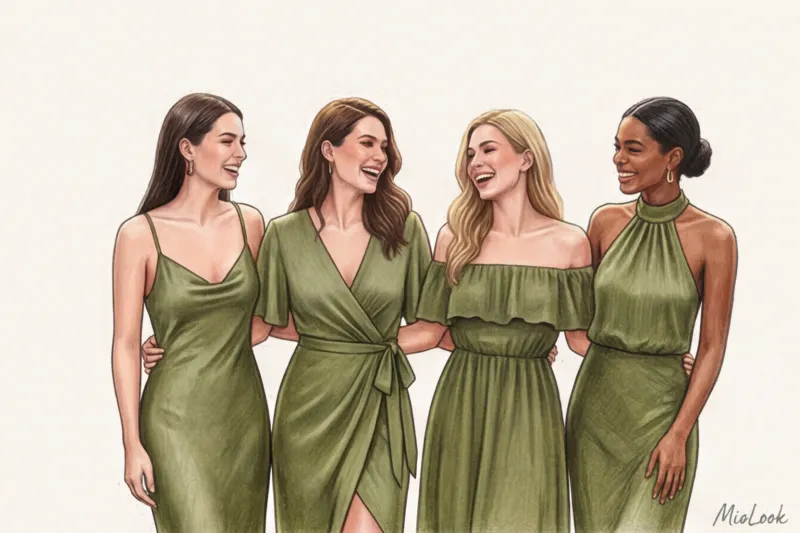
According to a 2023 report by analytics platform Lyst, 85% of bridesmaid dresses are worn exactly once and then end up in the closet forever. Just think about that. Spending €200 on a dress that will only live in wedding photos is a crime against your budget, the environment, and common sense.
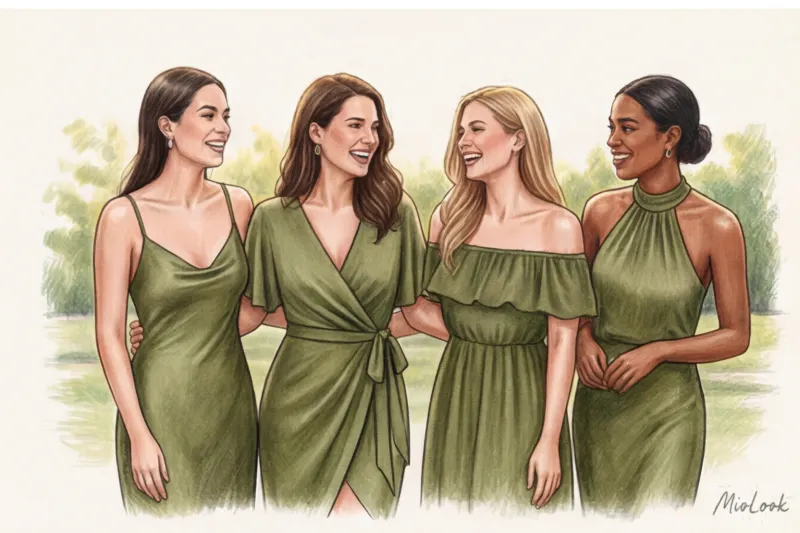
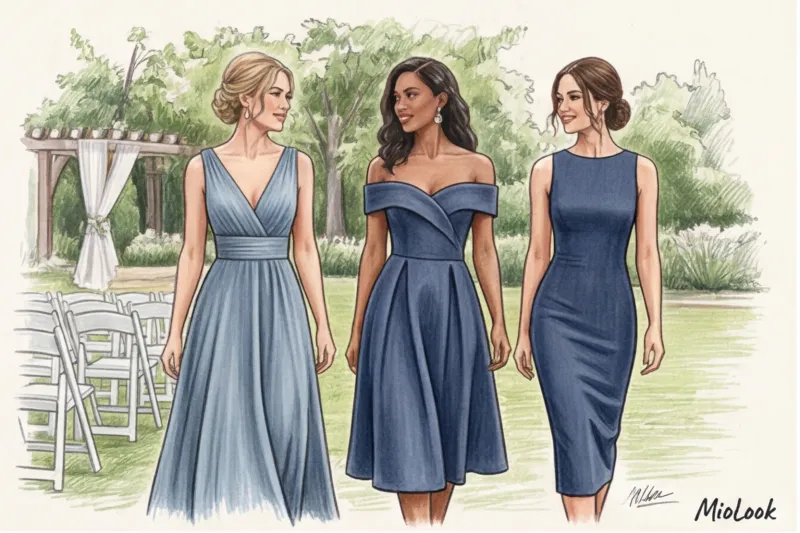
The era of identical chiffon "cake dresses" seen in 2000s rom-coms is officially over. It's been replaced by the mix-and-match trend—different dresses of the same color for bridesmaids, allowing each bride to be her own individual self without ruining the overall aesthetic of the celebration. We've already covered the evolution of this trend in more detail in our complete guide: Bridesmaid Dresses: Trends and Selection Guidelines.
Today I'll tell you why giving your friends complete freedom is the worst idea, and how to create the perfect look using European mass-market pieces that you'll wear for years.
The End of the Clone Era: Why Mixed Color Bridesmaid Dresses Are the New Standard
If you look at the latest Bridal Fashion Week collections from Monique Lhuillier or Vera Wang, you'll notice one detail: leading designers are no longer offering rigid "uniforms." The focus has shifted to the ready-to-wear concept—clothing that can be integrated into everyday life.
Over my 12 years as a stylist, I've styled over fifty wedding receptions in Europe. And the most beautiful, "expensive" shots were taken when the bridesmaids looked like a group of classy, confident women at a social dinner, not like a cloned choir. A smart wardrobe dictates its own rules: a garment must repay the investment. If a purchase is worn more than 30 times, its carbon footprint is reduced by 85%, and the cost per wear approaches zero.
Your perfect look starts here
Join thousands of users who look flawless every day with MioLook.
Get access — €0.99 onceThe biggest mistake brides make: the illusion of freedom and the texture trap
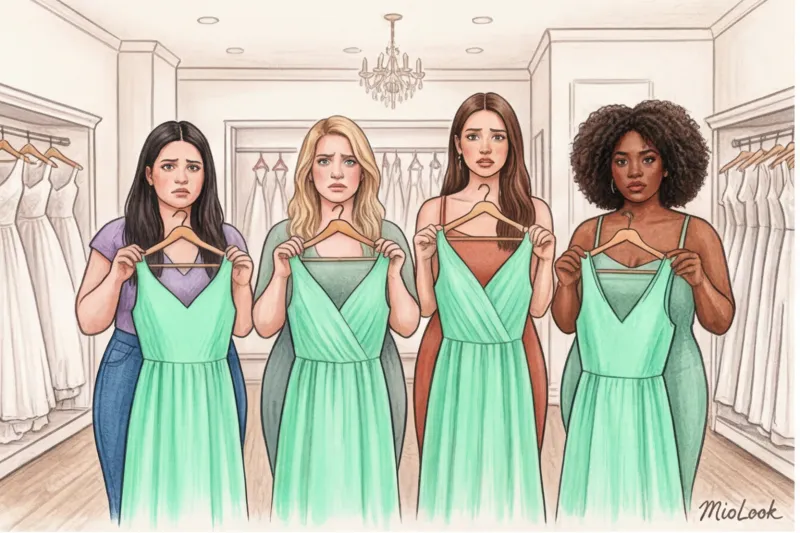
"Girls, just buy something mint, in a style you like!" sounds like concern, right? In reality, it's a grenade thrown into your wedding aesthetic.
I worked with a bride who gave her bridesmaids exactly this kind of democratic approach. On the big day, the group photos were a disaster: one girl showed up in a shiny, cheap satin, another in matte linen, and a third in heavy velvet. The camera flash mercilessly accentuated this chaos. The satin cast a cheap, white glare, the linen looked wrinkled and overly relaxed, and the velvet seemed like a black hole compared to the others.
For the "one color - different styles" concept to work, the bride must include dictatorship of fact You can allow any necklines, sleeves, and draping, but the fabric (and its reflective properties) must be strictly coordinated.
Satin, chiffon, or crepe? Choosing the right base
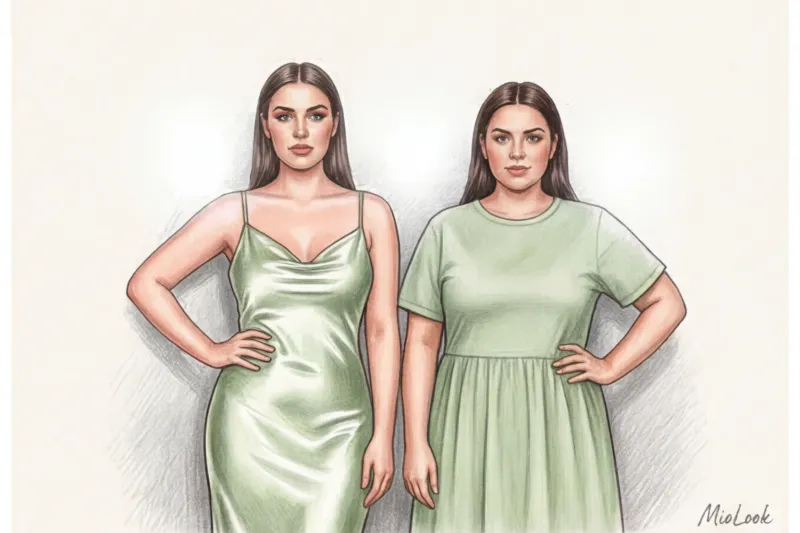
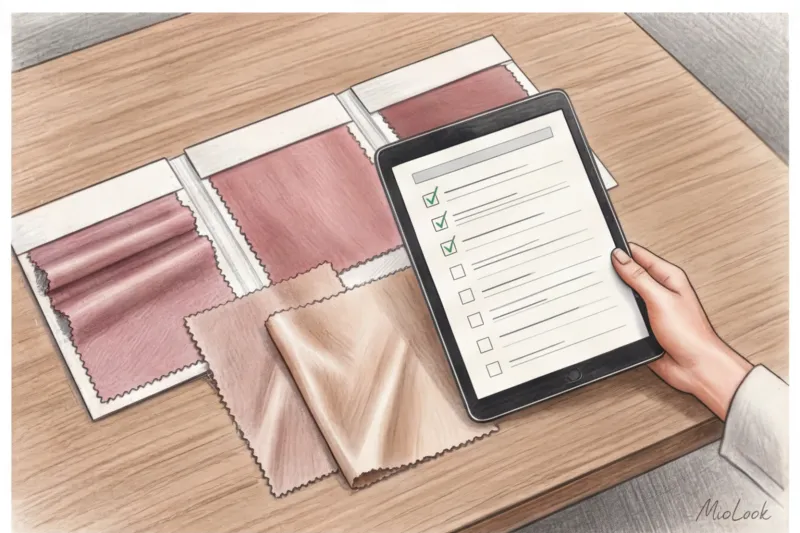
Fabric dictates the body shape and mood of the photo. If it's a summer wedding, choose flowing materials like silk, chiffon, or high-quality viscose (at least 120 g/m²). They create a beautiful movement when walking and in a light breeze. For fall and winter celebrations, dense matte fabrics like crepe or fine suiting wool are ideal—they hold their shape and look extremely classy.
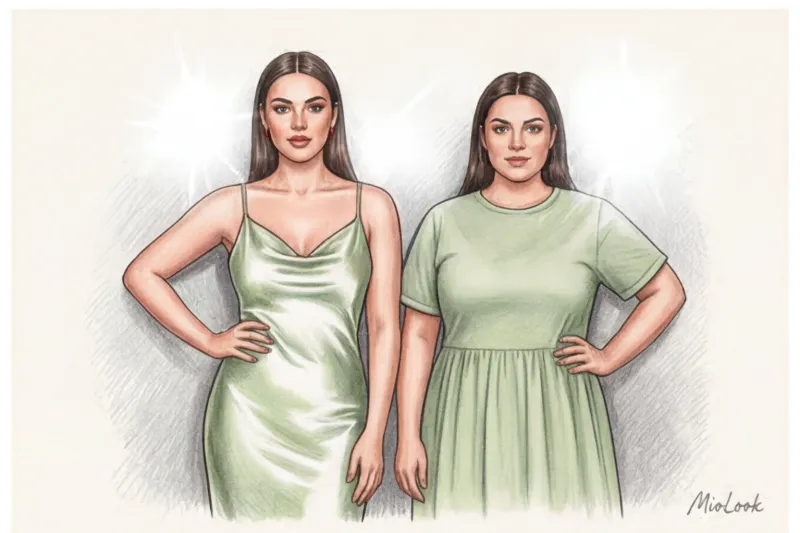
What should you absolutely avoid? Thin, budget-priced polyester satin. Not only does it attract static, but it also acts as a magnifying glass for even the slightest imperfections, creating unsightly creases where they're completely unnecessary.
How to apply one color to different body shapes and color types
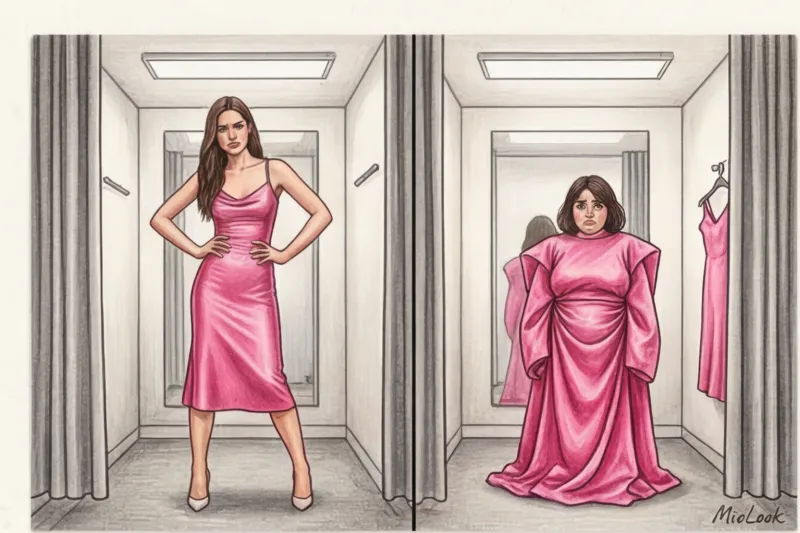
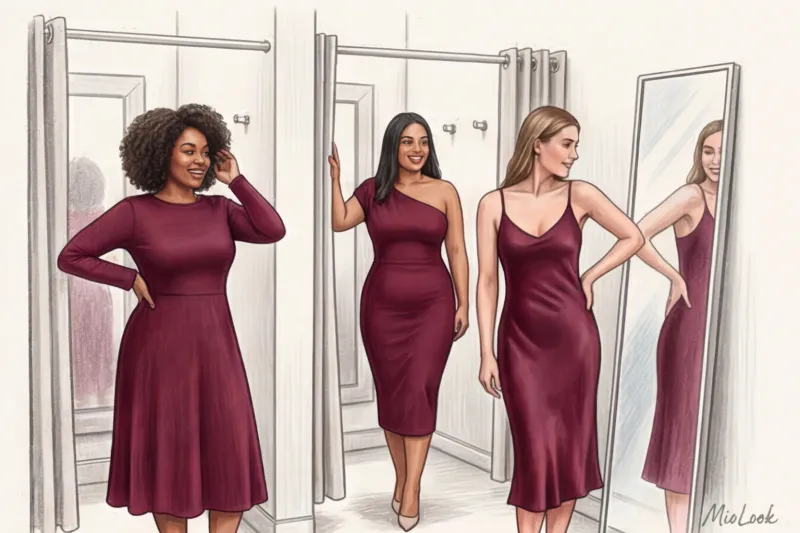
Let's be honest: it's impossible to make four women of different sizes (from a petite XS to a luxurious plus-size) look equally flawless in a bias-cut slip dress. It defies the laws of clothing design.
Working with the 12 color types system, I often encounter another problem. A complex shade chosen by a bride (for example, cool fuchsia or muted olive) perfectly illuminates the face of a soft blonde, but makes the skin of a contrasting brunette look sallow.
How do we solve this? Through the décolleté. For those women whose skin tone is objectively unflattering, we sweep the fabric down with a deep V-neck or completely bare shoulders, maximizing the area of clear skin around the face. The color remains in the look, but no longer clashes with its natural coloring.
Another critical factor is support. The style should address a woman's basic need for comfortable lingerie. An open back all the way to the tailbone is striking on the runway, but for a woman with a D+ bust, it's guaranteed to cause discomfort, hunched shoulders, and a bad mood for the entire eight-hour reception.
Length Rule: Why Midi and Maxi Shouldn't Be Mixed Haphazardly
Here I must voice a strict limitation: chaotic mixing of mini, midi and maxi in one group It doesn't work , unless you're being directed by a professional Vogue cover artist. In regular reportage photos, the varying lengths cut into the frame and make it look like you just met by chance at a bus stop.
The safest, most elegant, and practical choice is a one-size-fits-all midi. It flatters 90% of body types, is appropriate for a formal ceremony, is comfortable on the dance floor, and looks significantly more expensive than an ultra-short mini.
Access to MioLook for €0.99 — one-time payment
A smart AI stylist will select the perfect look based on your color and body type.
Get access — €0.99 onceStylist Secrets: How to Put Together Mass-Market Outfits and Look Expensive
Forget the stereotype that you have to go to a specialized bridal salon to buy a dress. The average price there is artificially inflated to 150-300 euros simply because the word "bridal" is on the sign.
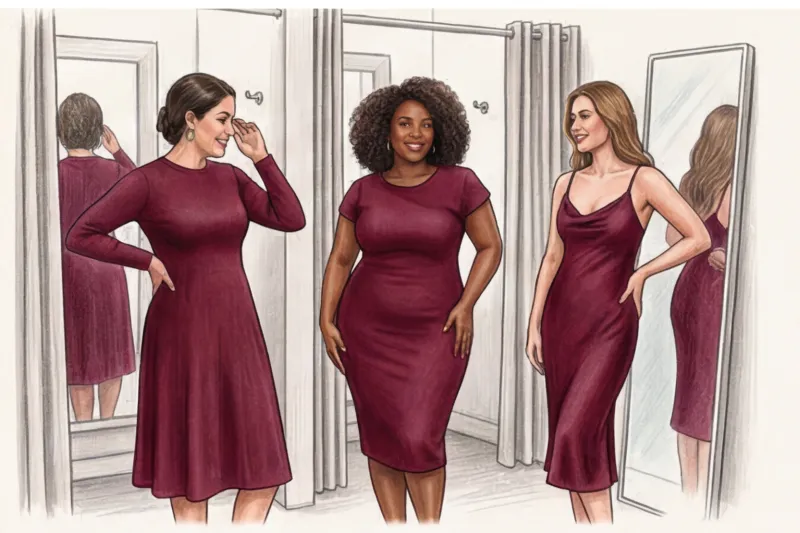
My professional shortlist for smart shopping: limited edition collections from Zara (especially the Studio line), architectural cuts from COS, romantic silhouettes from &Other Stories, and premium essentials from Massimo Dutti. These stores offer stunning pieces for 50-100 euros.
How can you tell "expensive" polyester from "cheap" on a hanger? Look at the back. A quality item will have closed seams (French or bound), and the fabric itself will feel like cool, heavy silk, not slippery cellophane.
Here's my biggest insider secret: buy a basic midi dress at a high-street store and take it to a tailor right away. Adjusting the darts to your figure and adjusting the length will cost 15-20 euros, but after that, a 50-euro dress will fit you like a heavy luxury item. And to visualize how several outfits from different stores will look together, I recommend uploading photos of them to MioLook and assemble a collage on a virtual board.
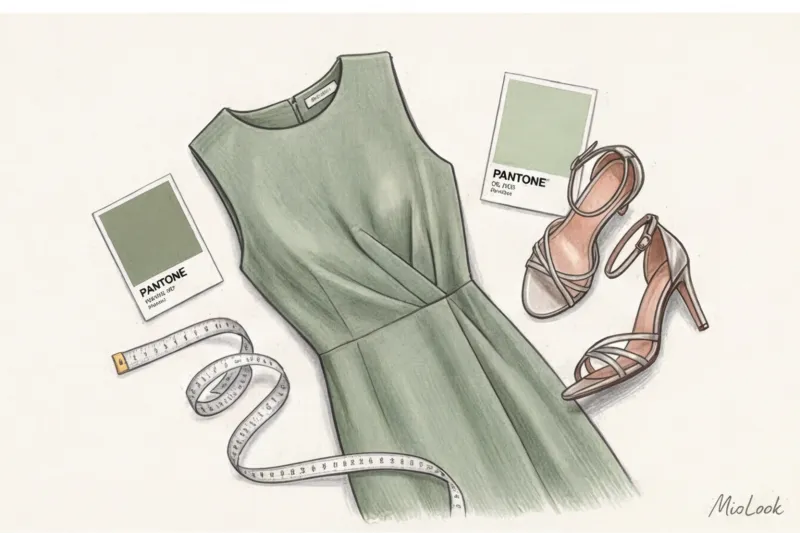
Katarzyna's Checklist: 5 Steps to the Perfect Mix & Match Look
I love a structured approach; it saves me from unnecessary emotions and budget overruns. Here's my working algorithm that I share with my clients:
- Confirm the exact shade. The words "dusty pink" look like four different colors in four different people's minds. Give your friends a specific PANTONE number or physical pieces of fabric as a reference.
- Set boundaries. Set a clear rule. For example: "Midi length, matte fabric with no shine, shoulders can be any length."
- Agree on the budget on shore. Be pragmatic. Discuss a price that's comfortable for everyone before the fittings begin so no one feels left out.
- Create a private approval chat. No item is purchased without approval in the general chat. This ensures that two women don't choose the same style, violating the "different dresses" concept.
- Sync accessories. If your clothing styles vary, your footwear should be consistent. Minimalist sandals with thin, nude straps are ideal, as they don't draw attention to themselves.
An alternative for the daring: pantsuits instead of dresses
Did you know that modern etiquette no longer requires women to wear skirts exclusively to weddings? According to research agency WGSN, in 2024, demand for women's evening wear for special occasions increased by 45%.
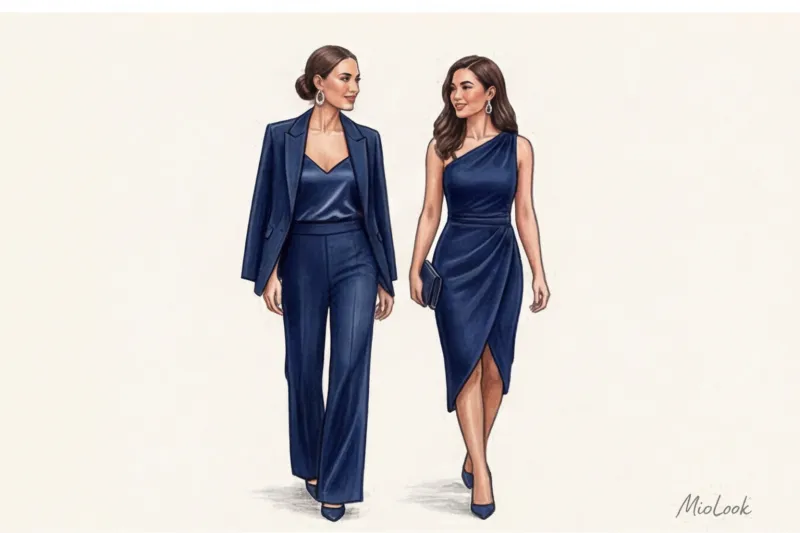
Flowing silk palazzos paired with a lingerie-style top or a perfectly tailored tuxedo in the wedding's colors are an incredibly stylish, fresh choice that will make your group stand out from the crowd of typical wedding photos.
Moreover, this is the smartest investment in a capsule wardrobe. A three-piece suit can easily be broken down into its components: the jacket can then be worn to the office with jeans, and the trousers for Sunday brunch. You'll agree, this is much smarter than storing a dress in a bag for years to come.
"The best outfit for a bridesmaid is one she'll be happy to wear on her date a year from now."
The secret to the perfect wedding photo isn't forcing everyone to look the same. The secret is creating a strict stylistic framework within which each woman can find a silhouette that highlights her individual beauty. Don't be afraid to take on the role of a strict art director—in the end, your friends will be grateful for the fact that they look like goddesses in the photo, not like victims of a failed compromise.