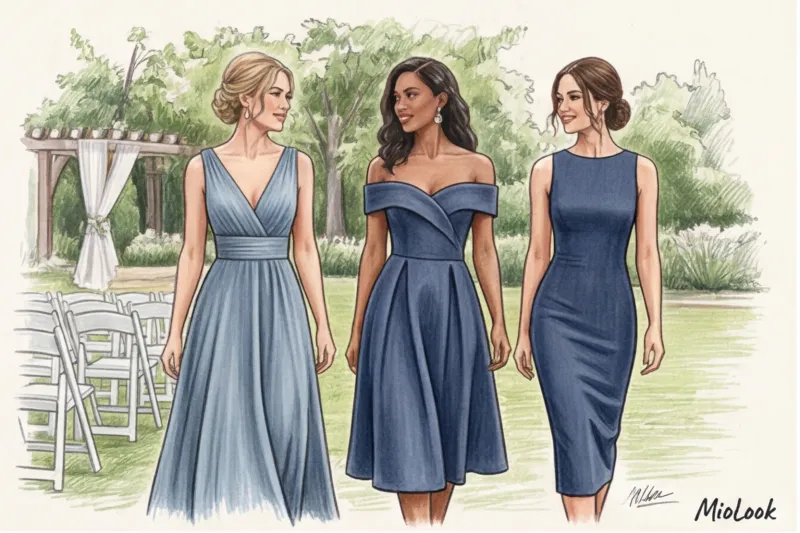
Did you know that the average woman spends over $200 (or the equivalent in another currency) on an outfit she'll wear for exactly eight hours? As a stylist who practices smart wardrobe principles, I regularly conduct closet reviews and can confirm a frightening statistic: 80% of my clients never wear their traditional bridesmaid dresses a second time. These dresses simply hang in their bags, taking up valuable space and serving as a reminder of wasted money.
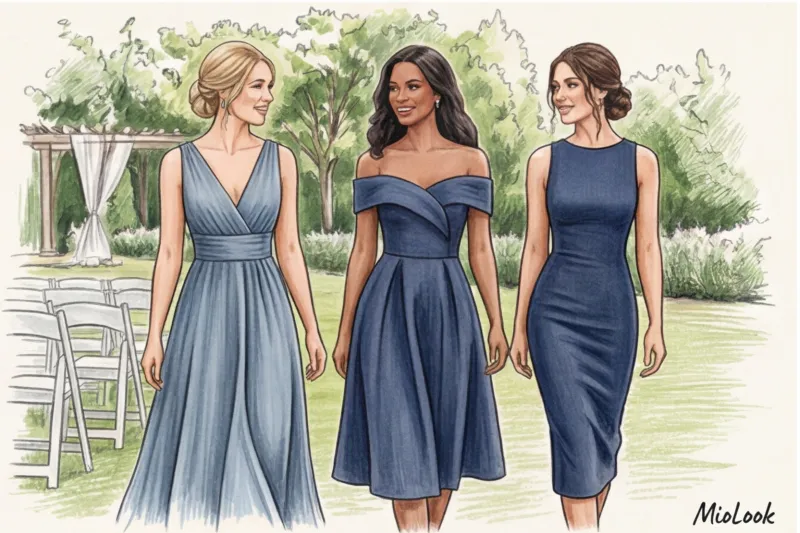
If you're preparing for a celebration or are the bride yourself, it's time to radically change your approach. We've already covered the basic rules of etiquette for guests in detail in our A complete guide to what a guest should wear to a wedding Today, we'll be taking a closer look at bridesmaid looks—not through the prism of outdated traditions, but from the perspective of wardrobe math, pairing algorithms, and cost per wear.
The Evolution of Wedding Dress Codes: Why Matching Bridesmaid Dresses Are a Thing of the Past
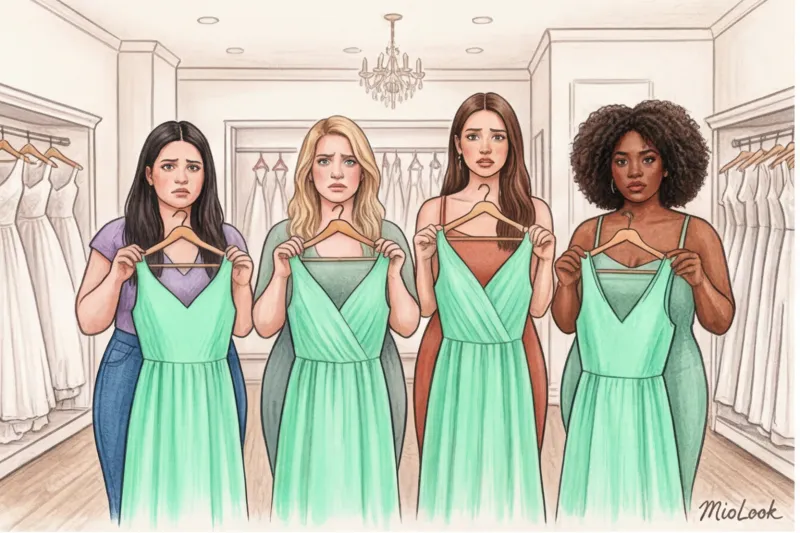
Historically, the tradition of dressing bridesmaids identically had a practical, if slightly dark, purpose: to confuse evil spirits so they wouldn't find the real bride. In the 2000s, this idea morphed into brutal cloning—recall American comedies where six unfortunate brides stand at the altar in identical fuchsia chiffon dresses, regardless of their height or build. Today, this approach has completely failed.
According to The Knot's latest 2024 Wedding Attire Report, over 70% of modern brides are abandoning the "one dress fits all" concept. There's a good reason for this: the tradition of uniformity is literally ruining modern wedding photography. Wearing the same fabric in the same shade on multiple people creates a flat, uniform color splash in the frame, depriving the composition of depth, play of light, and texture.
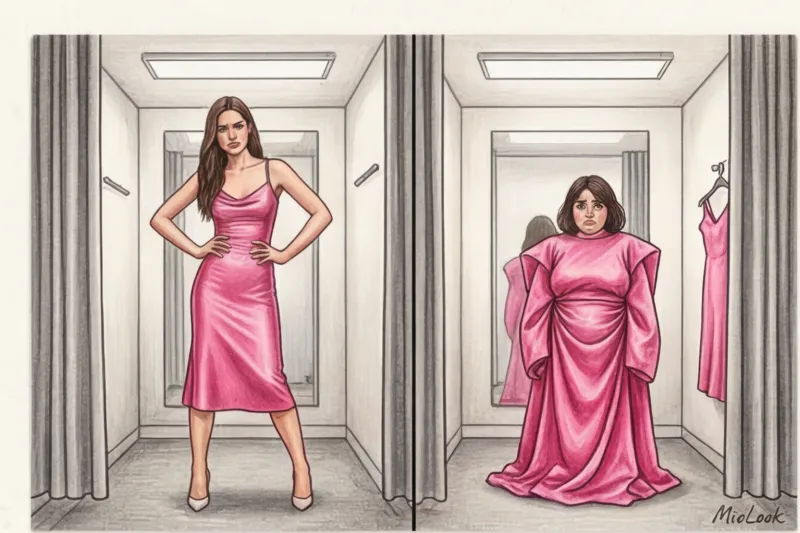
"The same cut suits one of four body shapes at most. What flatters the waist of a pear-shaped figure will visually add bulk to an inverted triangle. This is pure geometry that can't be ignored," and that's why the body-positive approach has supplanted the cloning trend.
The shift to conscious consumption dictates new rules: curated selections have replaced uniforms. Bridesmaid dresses are now individually selected, designed to be integrated into everyday life.
Access to MioLook for €0.99 — one-time payment
A smart AI stylist will select the perfect look.
Get access — €0.99 onceAnti-trends 2024-2025: Bridesmaid Dresses to Ditch
Unfortunately, many regional bridal salons continue to aggressively sell items that have been sitting in warehouses since 2015. Let's be honest: some popular styles are quietly hated by stylists, and it's time to leave them behind forever.
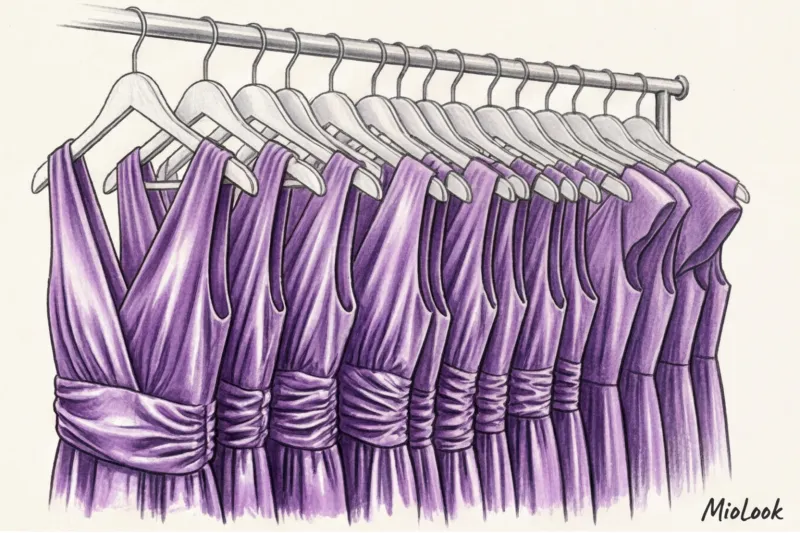
Satin convertible dresses
Infinity Dresses—those dresses with two long strips of fabric that promise "15 tying options in one outfit"—are, in reality, a photographer's and stylist's worst nightmare. The main problem lies in the material: usually a thin, cheap, shiny synthetic jersey (polyester with a high percentage of elastane).
Under camera flashes, such material glares, visually cheapening the shot. Worse, the thin knitwear mercilessly highlights every nuance of the figure: from the contours of seamless underwear to micro-folds. Due to the lack of rigid structure and corsetry, such dresses do not hold well on the chest. After three hours of dancing, the ties inevitably come loose, and the look begins to look sloppy.
Overly complex decor and corsets with rhinestones
Guipure inserts, a scattering of rhinestones, bold beading, and stiff corsets with lacing at the back are a surefire way to visually add 10 years to your appearance. A busy look always looks less prestigious than simple minimalism.
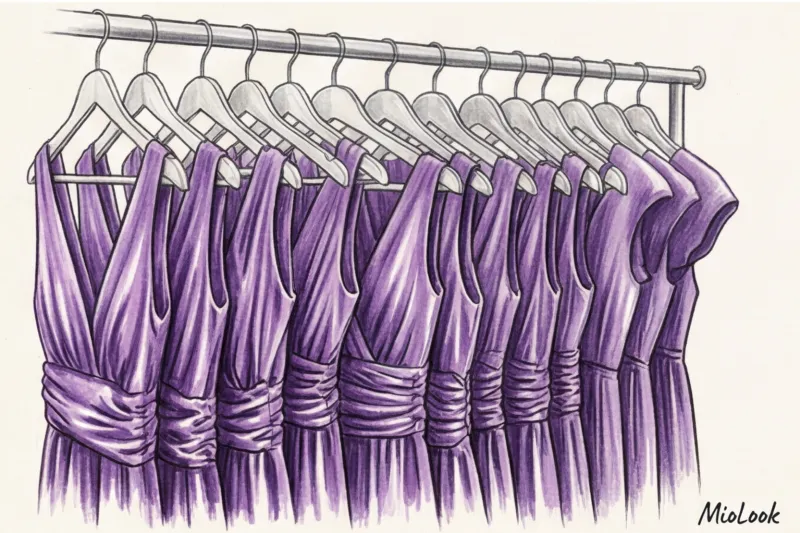
There's also the risk of stylistic conflict. The main unspoken rule for bridesmaids is not to shout down the bridesmaid. If the bride has chosen a minimalist silk dress, while her entourage stands in shimmering crinolines, the visual harmony is ruined. Opt for clean lines and complex architectural cuts over vibrant, glittering embellishments.
Modern Trends: What Bridesmaid Dresses Should Look Like Today
Analyzing the latest Vogue Weddings editorials, it becomes clear: modern luxury lies in refined simplicity. I recently styled a wedding party of six girls. None of them wore a similar dress silhouette, but in the final photos, they looked like they were in a couture show.
Mix & Match Concept: The Art of Combining the Incompatible
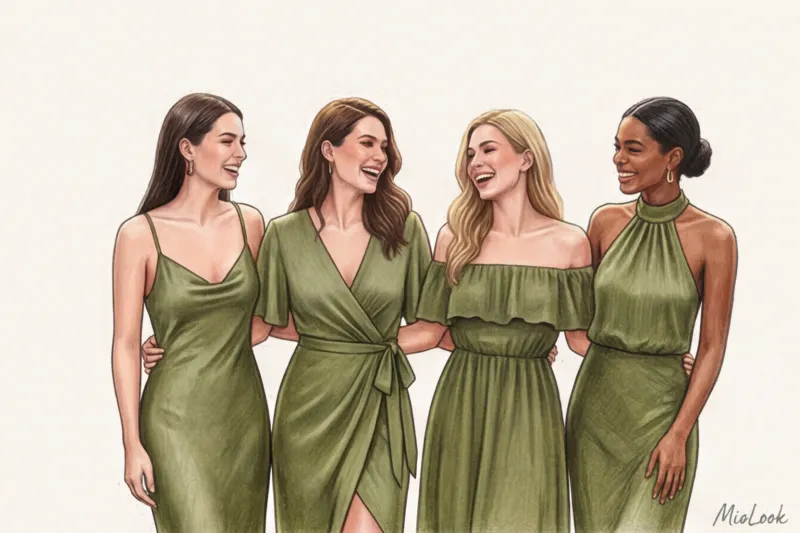
The Mix & Match algorithmic approach works in three main scenarios. First: completely different styles in a single, strict shade. Second: different shades of the same color family in identical fabric (ombré formula). Third: different textures in a single color (for example, matte silk, velvet, and dense chiffon in a deep emerald shade).
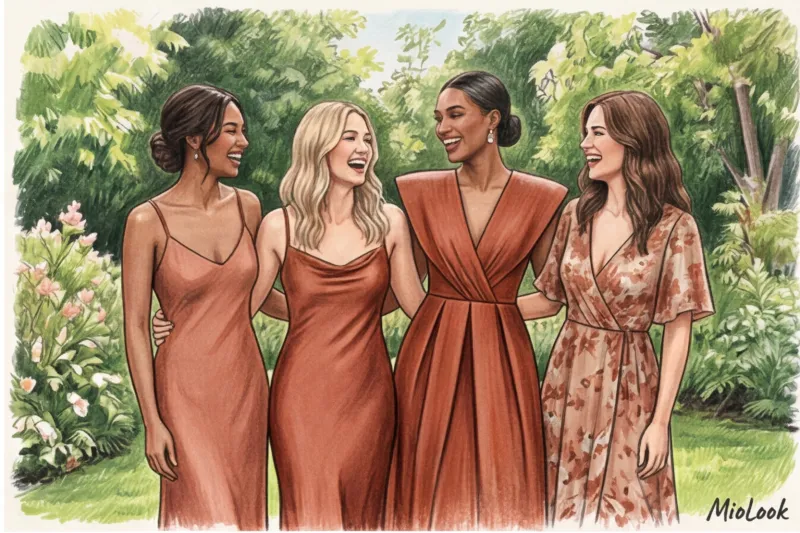
But this method has a severe limitation: it doesn't work if left to its own devices. The formula for the perfect gradient requires strict curation. A great technique for advanced users is the use of prints. If four bridesmaids are wearing monochrome terracotta dresses, the fifth might choose a dress with a delicate floral pattern in the same tones. This creates a stunning magazine-style dynamic.
Lingerie style, minimalism and architectural cut
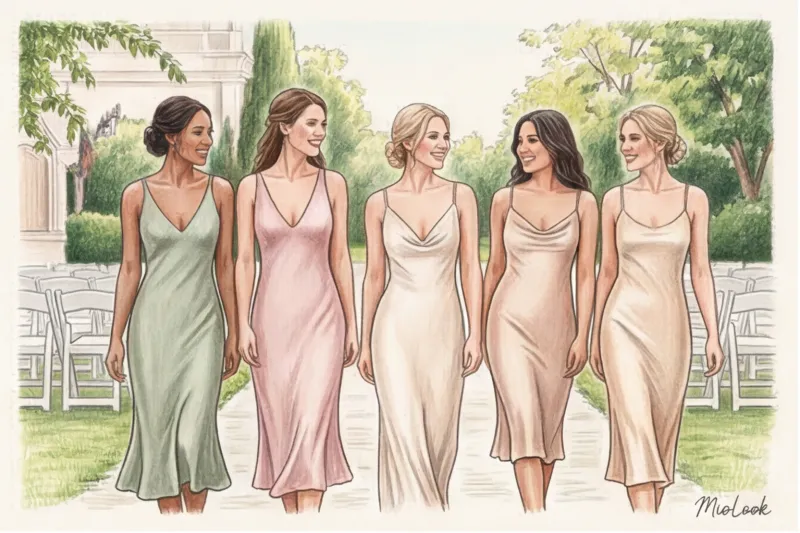
Slip dresses remain a huge hit, but with a key caveat: the quality of the material. Forget thin satin, which can attract static. Look for thick, matte silk, cupra, or high-quality viscose (at least 150-180 g/m²). The dress should be cut on the bias, so it will flow softly across the figure rather than clinging like a second skin.
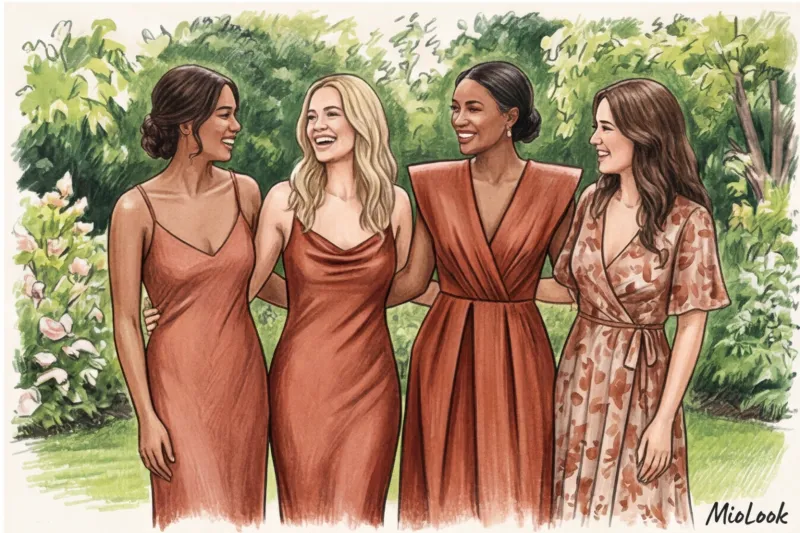
Another current micro trend is one-shoulder asymmetry and sculptural draping, reminiscent of ancient statues. As for length, a mini is rarely appropriate for a bridesmaid dress, as it throws off proportions next to a long bridesmaid dress. A midi (to mid-calf) or full maxi is your safest and most elegant choice.
A Technological Approach: How to Coordinate Images Without Arguments and Stress
The most common cause of conflict during wedding planning is color misinterpretation. Five different girls will interpret the verbal description "dusty rose" or "pistachio" differently, and they'll show up to the wedding in shades ranging from neon pink to dirty powder.
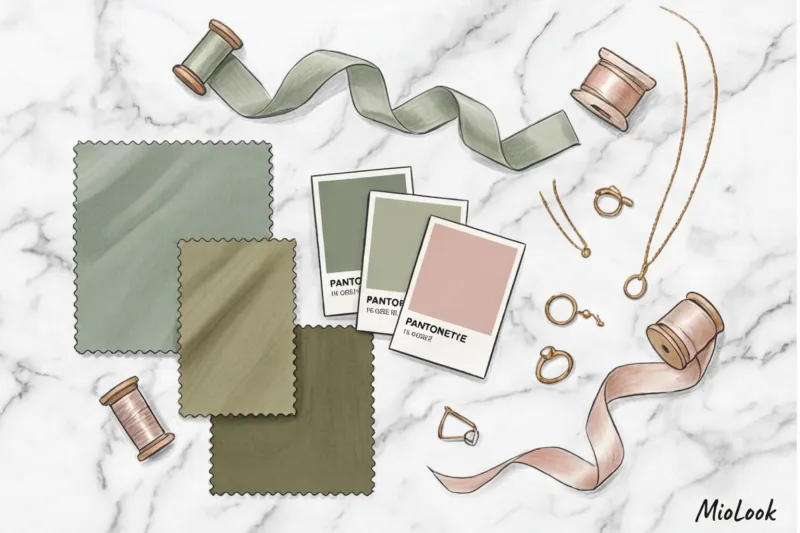
As a tech stylist, I solve this problem not with lengthy emails, but with digital tools. Create a shared visual canvas before anyone pays for a purchase. I recommend using the scheduling feature in MioLook Upload screenshots of all your bridesmaids' potential dresses to one screen. This way, you can immediately see if they match in terms of temperature (warm/cool) and saturation.
Use the "anchor rule": designate exactly one key unifying element. This could be a strict Pantone color code, a consistent midi length, or an identical matte finish. Otherwise, give the girls complete freedom. This algorithm saves everyone's nerves.
Access to MioLook for €0.99 — one-time payment
Start creating perfect images with the help of artificial intelligence
Get access — €0.99 onceA dress for more than one occasion: integration into everyday and capsule wardrobes
Let's move on to my favorite part—the pragmatics of a smart wardrobe. WGSN's research on sustainable fashion shows that the life cycle of a cocktail or evening dress today is just 1.5 wears. That's a real financial disaster.
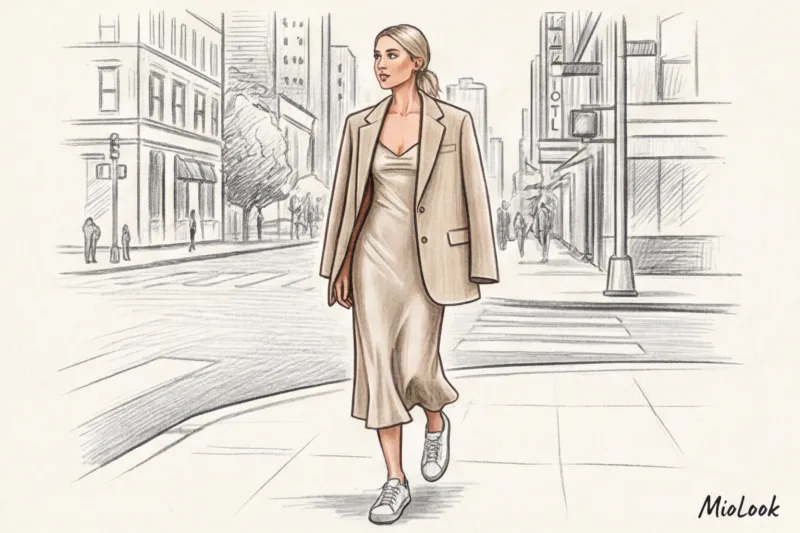
Let's calculate Cost Per Wear. A $200 dress bought solely for a wedding is $200 per wear. The same minimalist slip dress made of thick viscose, worn to a wedding and then nine times to the office, brunch, or dates, is $20 per wear. The difference is colossal.
To incorporate a dressy dress into a smart-casual look, use contrasting textures. Layer a voluminous, oversized jacket in thick wool or structured linen over a silk dress. Swap your evening stilettos for minimalist white sneakers, chunky loafers, or rugged Chelsea boots. The pretentiousness will instantly be toned down, the sheen of the fabric will be muted by the matte finish of the jacket, and the look will become completely urban.
Bridesmaid Checklist: 5 Steps to the Perfect Look
To prevent the selection process from descending into chaos, follow a clear sequence of actions. Go through these five steps before taking the item to the checkout.
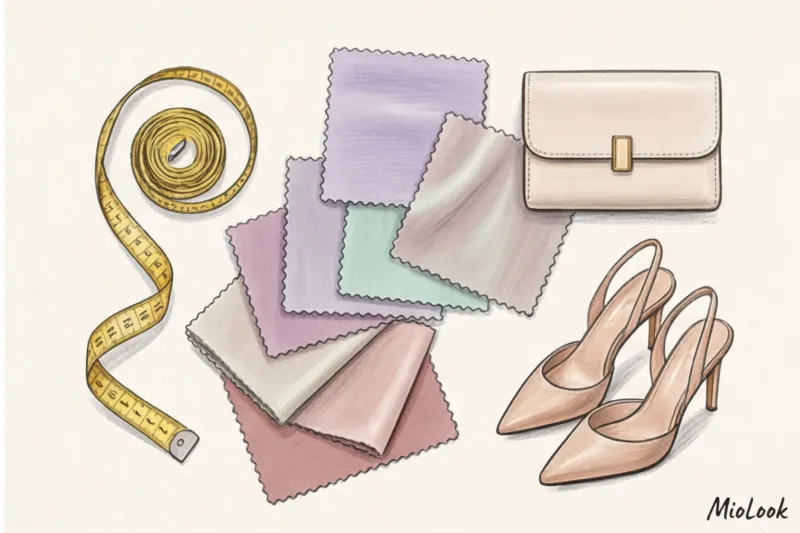
- 1. Request precise references: Ask the bride for a mood board and a specific color code (Pantone) for the wedding. Don't rely on words; ask for a physical fabric sample or digital reference.
- 2. Analyze your proportions: Determine your body type and choose the silhouette that objectively makes you more beautiful, not the one that's currently going viral on social media.
- 3. Agree on the base: Confirm the fabric's sheen level (matte, satin, sequins) and length with the other participants. Mixed textures look sloppy in group photos.
- 4. Invest in the right shoes: You'll be standing for a long time at the ceremony, posing for photographs on the lawn, and dancing. Suede slingbacks with a 5 cm (kitten heel) or elegant ballet flats with a pointed toe will protect your feet and back.
- 5. Future life test: Ask yourself honestly: what from your current wardrobe staples will you be able to pair this dress with a month after the wedding? If you have fewer than three options, look for a different dress.
A modern bridesmaid isn't a pale imitation of the main character in an uncomfortable synthetic corset. She's a stylish woman whose look is as carefully considered as her investment portfolio. Choose wisely, eschew disposable items in favor of high-quality fabrics, and remember: the best clothes are those that continue to enhance your style every day.
Your perfect look starts here
Join thousands of users who look flawless every day with MioLook.
Get access — €0.99 once