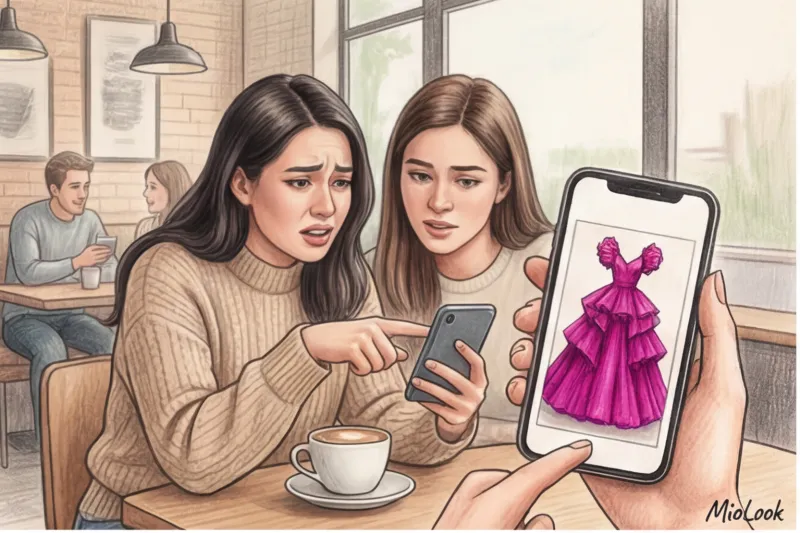
You have a new message in the "Lena's Wedding 💍" chat.
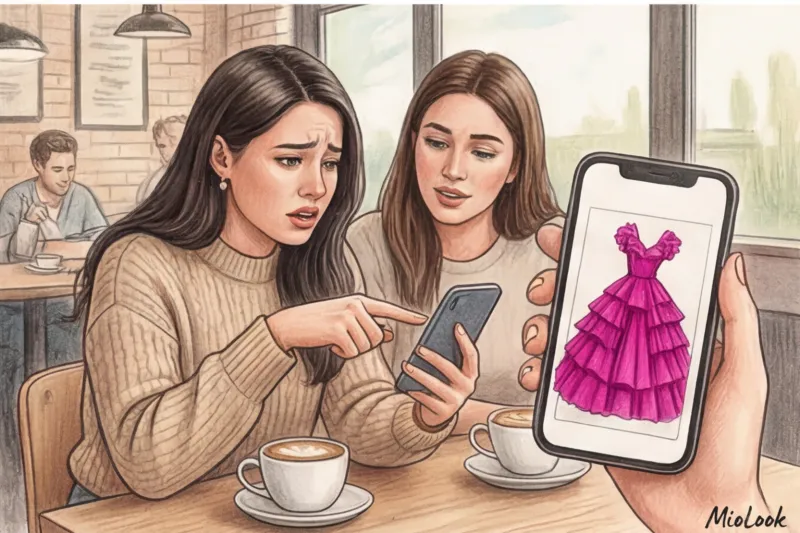
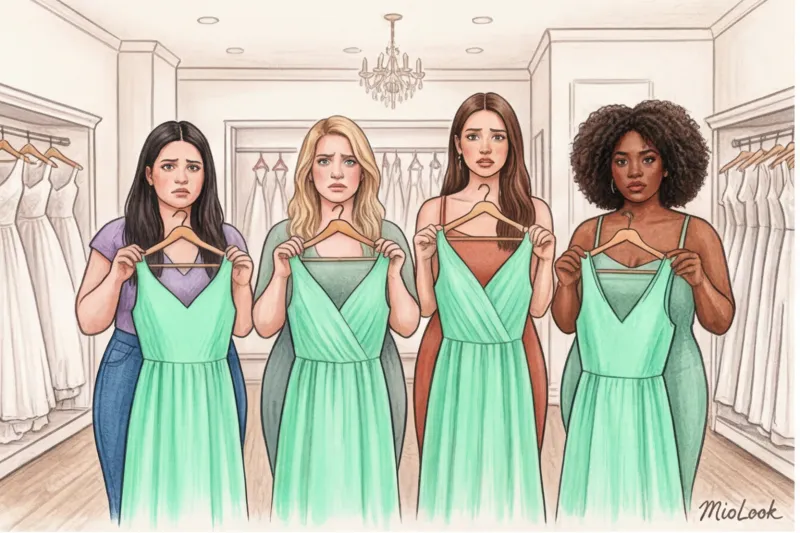
You open your messenger and see a photo of a voluminous, fuchsia-colored gown made of shiny, stiff satin. A message from the bride follows: "Girls, I found the perfect option for you! It's only 250 euros. Should we order?" An awkward silence hangs in the chat. Each of the five girlfriends is frantically calculating their payday budget and horrifiedly imagining how this synthetic disaster will look on their figure.
Sooner or later, in any such chat, the most uncomfortable and explosive question comes up: Who pays for the bridesmaids' dresses? , and how to even discuss this topic without ruining a long-standing friendship. We've covered the evolution of wedding fashion and the rejection of outdated traditions in more detail in our The complete guide to bridesmaid dresses: trends and selection rules , but today let's talk exclusively about money, personal boundaries, and quality fabrics.
In my 12 years as a personal stylist, I've seen dozens of tantrums, cancelled invitations, and lingering grievances stemming from a piece of cheap polyester. It's time to put an end to this. Let's explore the rules of new wedding etiquette without rose-colored glasses.
Who Pays for the Bridesmaids' Dresses: World Traditions vs. Modern Realities
The financial issue causes so much tension precisely because of the clash of different cultural codes and expectations. In the US and UK, it has historically been common for bridesmaids to pay for their own dresses, even if the bride dictates the style. In some European countries, by contrast, the couple covers all the costs of the wedding's aesthetics.
But the realities of 2024–2025 dictate new conditions. Global inflation and the trend toward sustainable consumption have taken their toll. According to the large-scale study The Knot 2023 Real Weddings Study, the average wedding guest's spending is breaking records, and the cost of a bridesmaid dress ranges from $150 to $300—and this excluding mandatory fitting to the figure.
Today, the concept of "financial empathy" is coming to the forefront. Demanding your loved ones to dip into their credit cards to satisfy your aesthetic ideals is absolute bad form.
The Hidden Cost of the "Picture Perfect": Statistics You Need to Know
Before you demand your friends buy you a specific outfit, consider these numbers. A 2023 report from analytics platform Lyst revealed some alarming statistics: 85% of bridesmaid dresses are worn exactly once in a lifetime. After the celebration, they are sent to the far corner of the closet, and then to charity or, worse, to the landfill.
The disposable wedding fashion industry is causing a colossal environmental impact. We produce mountains of non-biodegradable polyester just for five beautiful shots in front of an arch. It's not just wasteful, it's irresponsible to the planet and your friends' wallets.
The main rule of the new etiquette: whoever dictates the terms opens the wallet
Let's get my position out of the way as a stylist and proponent of sustainable fashion.
The statement, "My wedding, my rules, and my friends should adapt," is toxic. If you force a style on your friend that flatters her figure or is made of non-breathable synthetic fabric, you have no moral right to force her to pay for these "photo props."
In modern style, there is an ironclad rule for budget allocation:
- Strict dress code = 100% payment by the bride. If you want five girls of different builds, heights, and colorings to wear identical dresses of a specific brand, length, and shade, you buy them yourself. In this case, the dress serves solely as a decoration for your celebration.
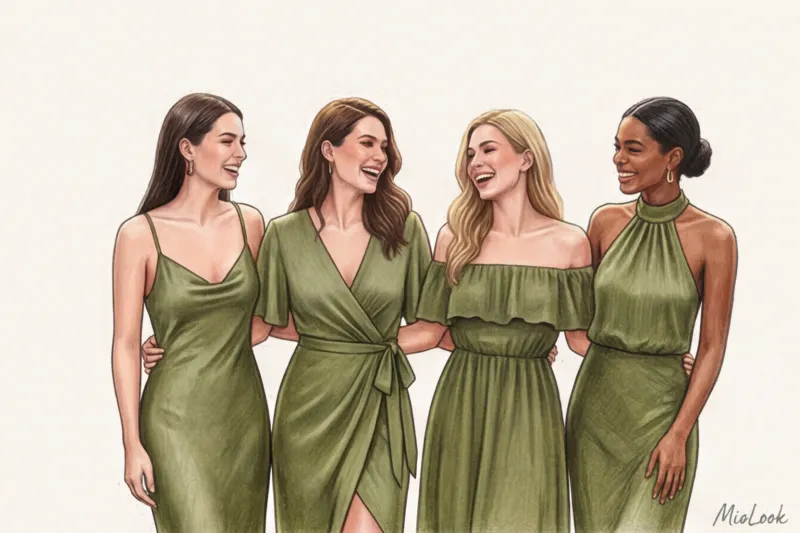
- Casual dress code = girlfriends pay themselves. If you only set a general direction (for example, "any midi dress in shades of muted olive or sage"), and women are free to choose a style that flatters them and fits their personal style, they pay for the purchase themselves. The item will stay in their wardrobe and be worn for years.
Your perfect look starts here
Join thousands of users who look flawless every day with an AI stylist.
Get access — €0.99 onceMix & Match as the Perfect Financial Compromise
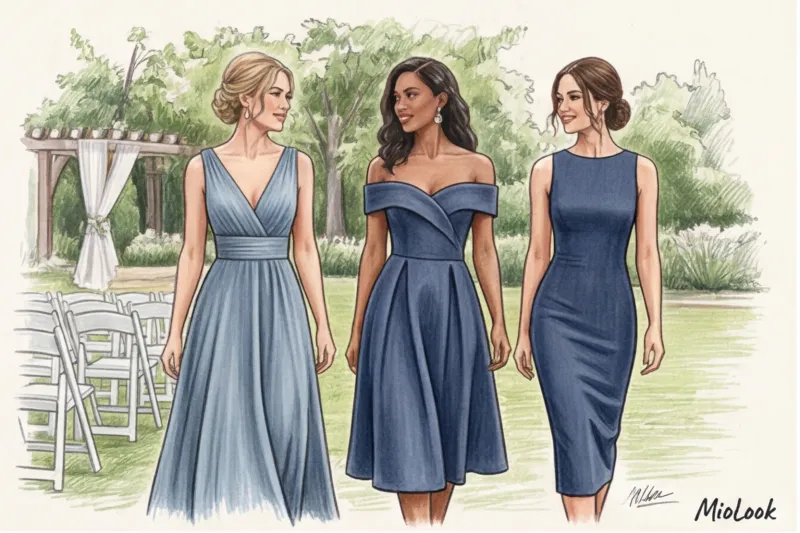
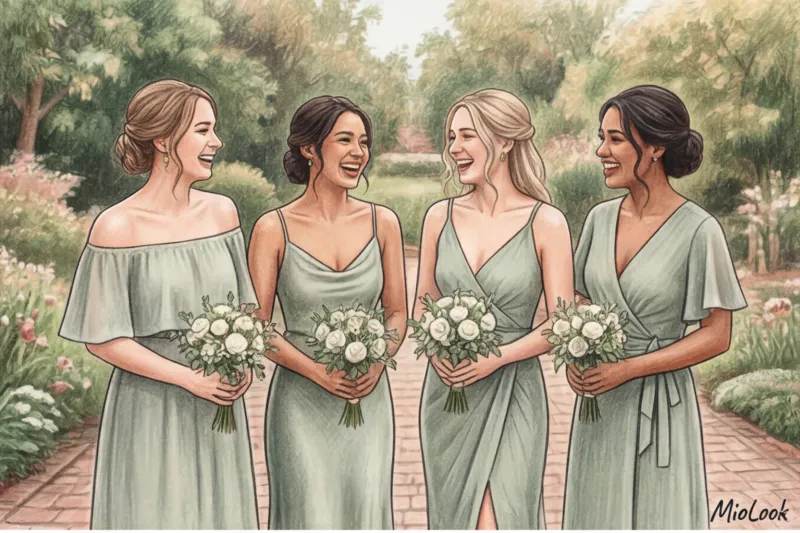
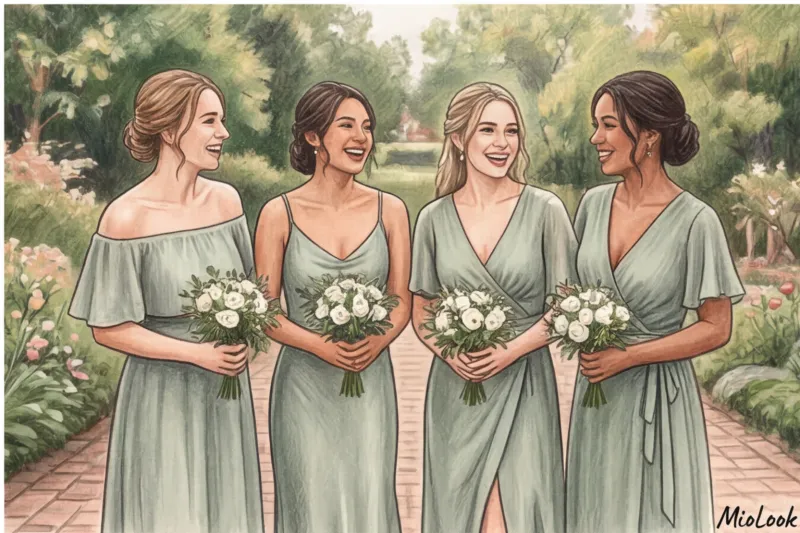
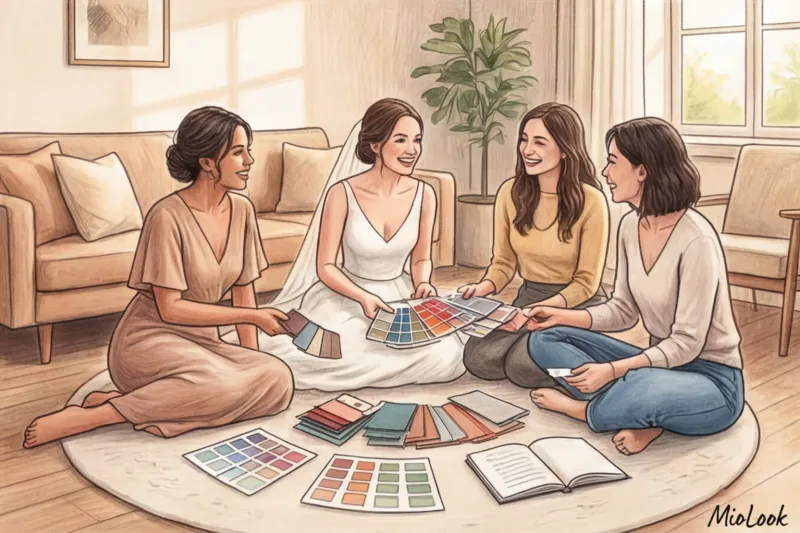
The Mix & Match concept literally saves friendships. Instead of matching dresses, the bride chooses a palette (for example, three or four related shades) and fabric weight. Then the magic of individuality begins.
A friend with a pear-shaped figure might choose a flowing A-line skirt, while someone with an inverted triangle body type might opt for an asymmetrical, one-shoulder cut. Women are happy to buy a dress tailored to their appearance because they see themselves beautiful in the mirror, not a mannequin in a uniform.
Investment or Waste of Money? Evaluating Fabric Quality
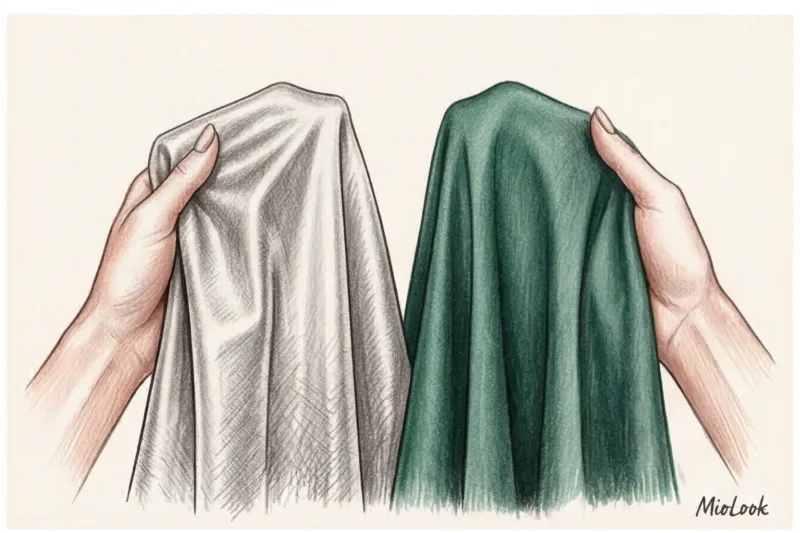
As a textile expert, I implore you: stop buying cheap tulle, glassy organza, and squeaky "wedding" satin. Recently, a client came to me with three identical polyester dresses she'd worn as a bridesmaid at different weddings. She asked: "Sofia, how can I somehow fit this into my wardrobe?" The answer was blunt: no way. Cheap polyester doesn't drape, it's stiff, and it makes you sweat even while applying makeup.
If the girlfriends pay for the outfit themselves, we are obliged to consider Cost Per Wear (CPW) – cost per wear.
- Scenario 1 (Clone Dress): A friend buys a knitted dress made of stiff synthetic material for 150 euros. She wears it once. CPW = 150 euros. It's money wasted.
- Scenario 2 (Investment): A friend buys a luxurious silk slip dress with a perfect cut and bias-cut for 200 euros. After her wedding, she wears it with a bulky sweater and chunky boots in the fall, and with a jacket to the office on Fridays and on dates. She wears it 10 times a year. CPW = 20 euros.
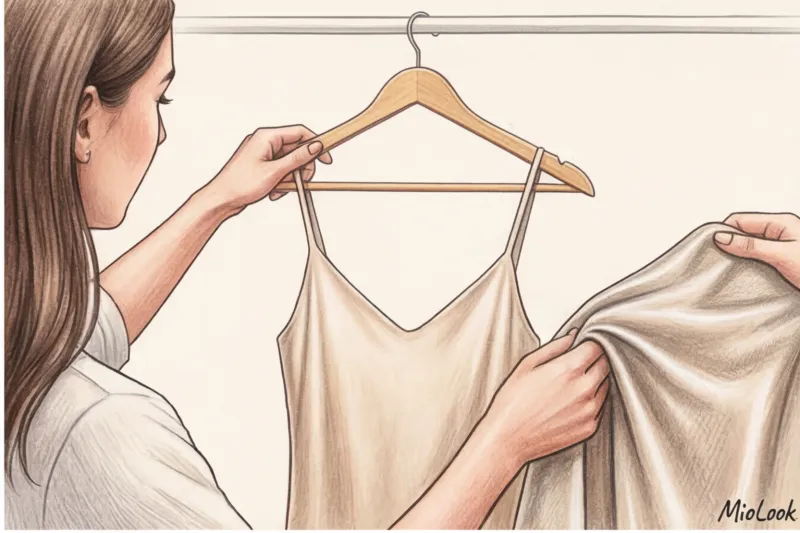
What fabrics are worth investing in:
- Natural silk (Mulberry) with a density of 19 momme - flows and delicately conceals the nuances of the figure.
- Thick viscose crepe - holds its shape well and looks expensive.
- Tencel (lyocell) is an environmentally friendly material that breathes better than cotton and has a noble matte sheen.
Of course, the "investment dress" rule doesn't apply to formal Black Tie or White Tie weddings, where strict etiquette demands maximum uniformity and floor-length evening gowns that would be unwearable in everyday life. In such rare cases, it's ethical for the bride to cover at least part of the cost.
Hidden Costs: What People Forget to Agree on the Shore
The dress is just the tip of the iceberg. In my experience, conflicts most often arise over hidden fees that arise a week before the celebration.
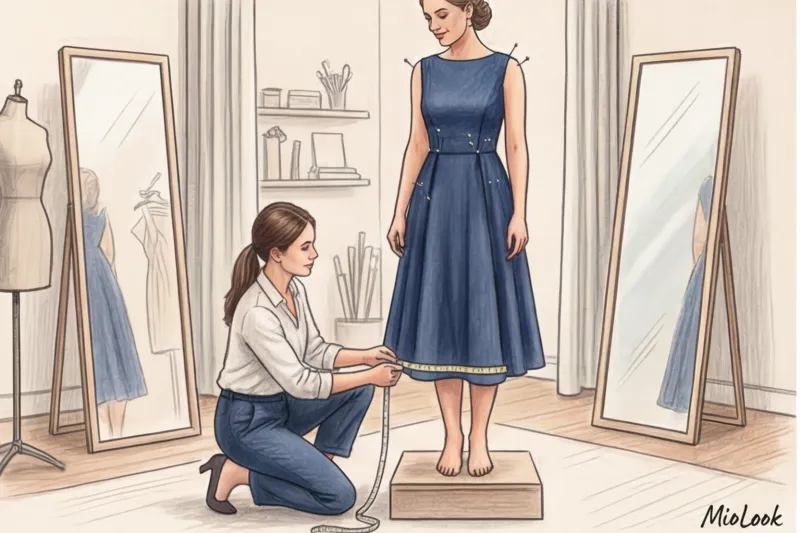
Fit to the figure. No mass-market or mid-range dress will fit perfectly without the help of a tailor. Shortening the hem, raising the straps, or tucking in the waist—tailoring services can account for up to 50% of the cost of the dress itself. Who pays for this? If the bride chose the dress, it's only logical that she'll be responsible for its perfection. If a friend chose the dress for herself, she pays for it.
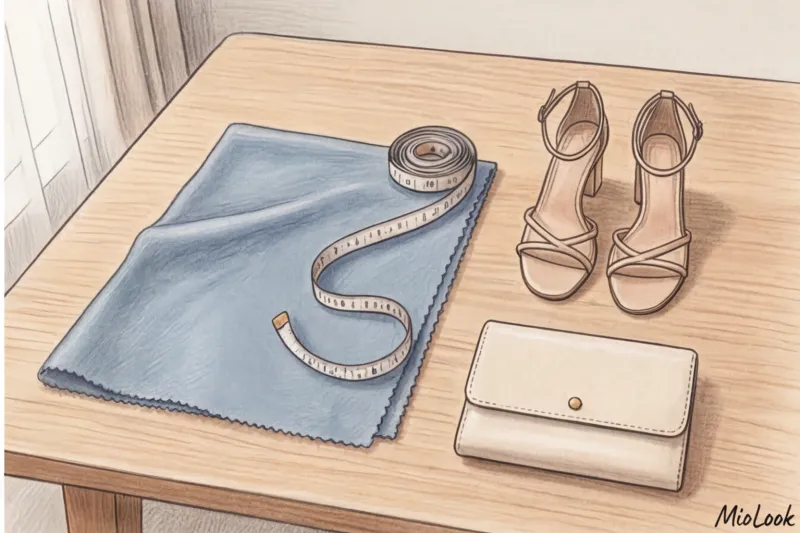
Shoes and accessories. The same ironclad rule applies here: "If you want a specific pair of nude Jimmy Choo pumps or matching pearl earrings, buy them." If there are no requirements, the girlfriends wear the shoes they already have and that are comfortable for dancing.
Makeup and hair. If the bride insists on professional makeup from a specific makeup artist ("I want everyone to have perfect Hollywood waves"), she pays for the services. If she leaves the choice up to the girls, they can choose to do their own makeup or hire a stylist at their own expense.
Access to MioLook for €0.99 — one-time payment
A smart AI stylist will select the perfect look from your items and suggest what's missing.
Get access — €0.99 onceHow to Discuss Finances Without Drama: Scripts for the Bride and Bridesmaids
Never, do you hear? never Don't discuss budgets in the group chat. Group dynamics are merciless: if one of the girls with a high income flippantly says, "Let's chip in 500 euros each, we only live once!", another friend paying a mortgage will feel humiliated and will be forced to agree under pressure from the majority.
Conversations about money are conducted only one-on-one.
Script for the bride: "Masha, I'm currently planning outfits for my bridesmaids. The most important thing for me is that you're comfortable and feel beautiful. I'm considering dresses in the same color palette, which each of you can choose for yourself. Could you tell me what your current budget for an outfit is so I can use it as a reference when choosing brands?"
If your friends' budgets differ dramatically, remember the experience of one of my clients. She did something brilliant and very empathetic: she chose mid-range dresses and then anonymously transferred to me (as the stylist/planner) an amount that covered 70% of the cost of the dresses. We told her friends that the brand offered a large wholesale discount for the wedding party. No one was embarrassed, and everyone looked stunning.
Script for a girlfriend (if the outfit is out of your budget): "Lena, I'm so happy to be by your side on this day! The concept you chose is incredibly beautiful. Unfortunately, that brand is currently out of my budget. I can find a similar model elsewhere for my own money, or, if that brand is crucial to you, I'd be happy to help you plan your wedding day, but I won't be your official bridesmaid so as not to ruin the overall look."
A bride's checklist: how to organize your bridesmaids' looks without arguing with anyone
As a stylist who regularly brings together brides and their teams, I've developed an ideal workflow that saves everyone's nerves.
- Step 1: Define the overall concept. Choose a palette (think sophisticated berry shades) and level of formality (cocktail, relaxed boho, evening chic).
- Step 2: Conduct anonymous surveys or personal interviews. Find out your friends' real, not imaginary, budgets.
- Step 3: Choose your participation format. Decide honestly: you pay for everything, you pay half, or you only specify the color and the girls buy the things themselves.
- Step 4: Create a clear visual guideline (Moodboard). Collect examples of flattering silhouettes and textures. If you've chosen a casual dress code, encourage women to upload their own ideas or find combinations through the "smart wardrobe" feature in MioLook - this way they will immediately see how they can style this item in everyday life after the wedding.
Conclusion: Friendship is more valuable than satin
Let's be honest: in five years, you'll probably never remember whether your high school friend's dress was the perfect shade in those shared photos. But you'll definitely remember whether you laughed together while getting ready, whether she supported you as you walked down the aisle, and whether you felt light and joyful that day.
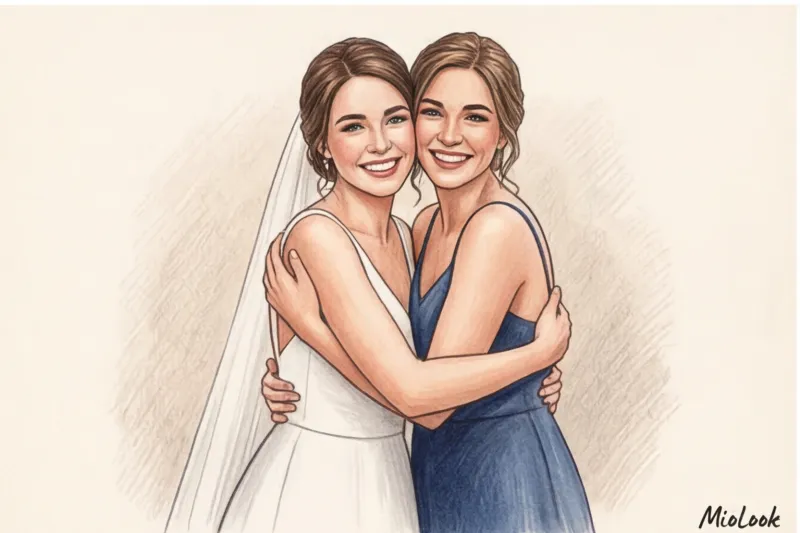
A wedding is a celebration of love and unity, not a glossy photo shoot where people act as symmetrically arranged decorations. Choose mindfulness, respect other people's financial limits, and remember: a beautiful dress can be bought at any time, but the sincere support of close friends is impossible to buy.