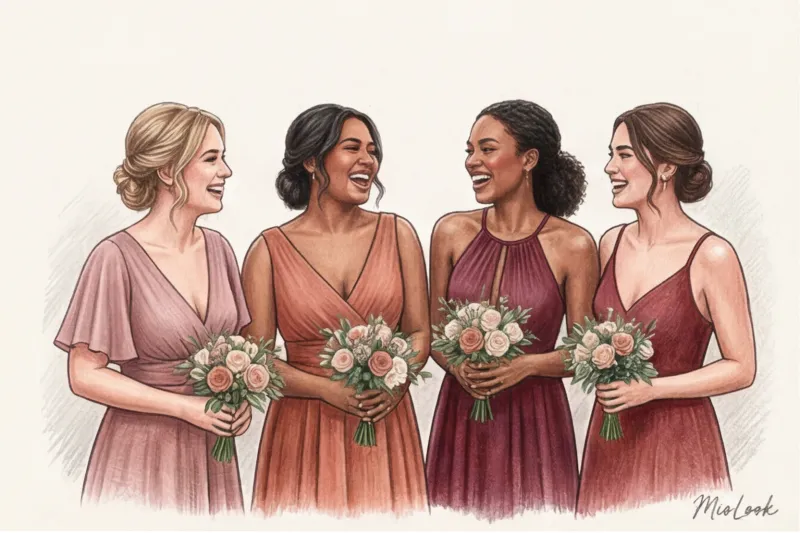
Bridesmaid Dresses: From Outdated Clones to Individual Aesthetics
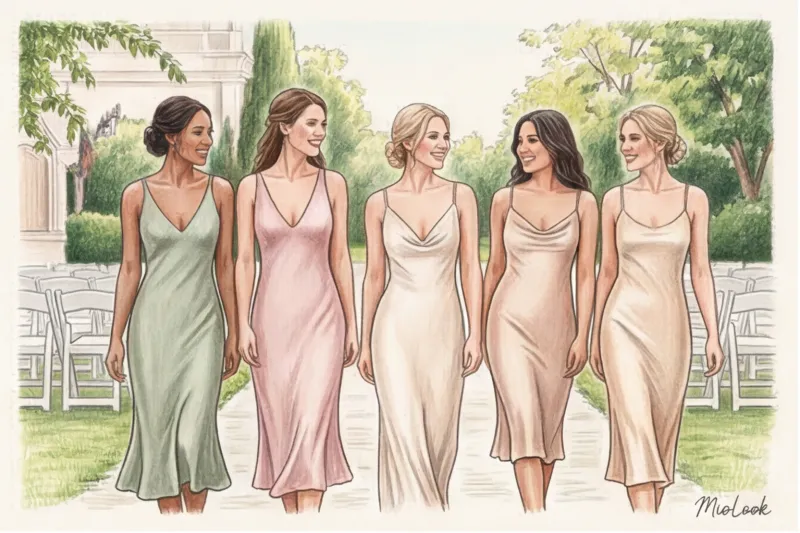
Remember those iconic American rom-coms of the 2000s, where best friends desperately slipped into identical cake-like dresses in garish fuchsia or mint? Stiff satin, an abundance of cheap tulle, and styles that flattered absolutely everyone. Fortunately, that aesthetic is gone forever. Today, bridesmaid dresses aren't a uniform or a chore, but a way to highlight the individual beauty of each bride while maintaining a unified concept for the celebration.
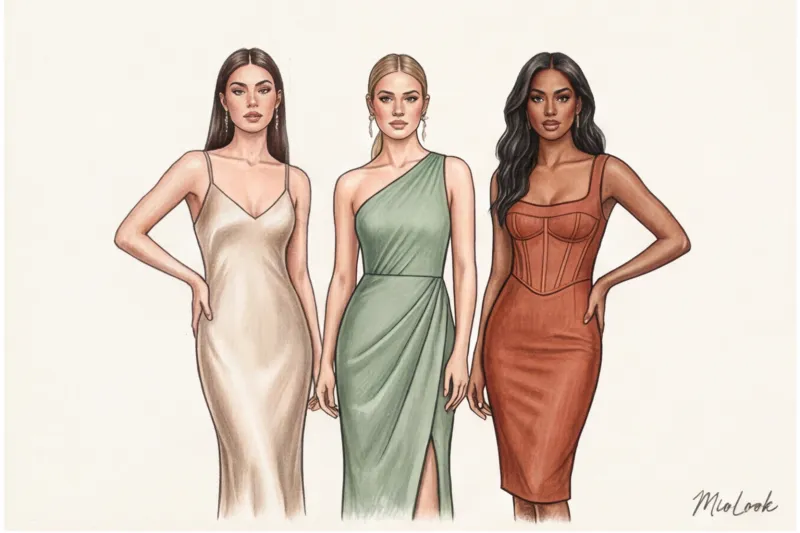
Over 12 years as a stylist, I've dressed hundreds of women for weddings, and I can confidently say: the concept of "clones" is officially dead. And it's not just because trends have changed. According to a 2023 report from analytics platform Lyst, a staggering 85% of identical dresses bought specifically for a ceremony are worn exactly once. After the party, they end up in landfill forever or gather dust in the back of a closet for decades. This isn't just an environmental disaster; it's simply a waste of money—an average of 150 to 300 euros for an item you'll never want to try on again.
But the real drama unfolds not in the purse, but in the fitting room. The psychology of style is merciless: what perfectly accentuates an hourglass waist on a 5'8" woman will turn a petite, curvy woman into a shapeless rectangle. When you force four women of different heights, bust sizes, and skin to wear identical clothing, you literally destroy their confidence.
The main trends of the wedding season: what to wear for bridesmaids
At the recent Bridal Fashion Week shows in New York, designers finally buried the concept of the "typical bridesmaid dress." What we saw in the current collections of Monique Lhuillier and Vera Wang is a fully-fledged ready-to-wear, red carpet aesthetic. No uniforms, no artificial gloss. Pinterest analytics for 2024 show phenomenal figures: search queries for "high fashion bridal party" and "mismatched bridesmaid dresses" have skyrocketed by 140%. Girls no longer want to be the same background for their bridesmaids.
Color Matters: How to Find a Palette That Flatters Everyone
In 12 years of working as a wedding stylist, I've learned one cruel but true rule: pale peach makes approximately 80% of European women look tired. The idea that a wedding requires infantile marshmallow shades from bridesmaids is the most persistent and harmful stereotype in the industry.
According to the latest Pantone Fashion Color Trend Report, the celebration palette has shifted confidently toward dramatic and rich tones. Why? Because deep color creates that "expensive picture" effect, a cinematic quality that bleached-out, flat pastels simply can't achieve.
But the bride's biggest headache lies elsewhere: how to choose a single color when you have five bridesmaids, all completely different? This is where color theory comes in. The secret isn't in finding a magical "universal" color (spoiler: it doesn't exist, except perhaps for the perfect navy blue). The secret is in choosing basic range , and then let each girl find her own temperature and saturation of this shade.
For example, if you've chosen green, a "winter" woman with a contrasting appearance would wear a cool emerald, a soft "autumn" woman would wear a warm olive, and a "spring" woman would opt for a vibrant shade of young grass. We've covered more details on how to correctly determine your type and choose the right undertone in our a complete guide to the 12 color types of appearance.
To avoid getting confused by the halftones when shopping online, I always advise my clients to use the "smart wardrobe" feature in MioLook You simply gather digital images of your friends' dresses on one board and immediately see whether dusty blue clashes with pure sapphire, or whether they harmoniously layer to create a beautiful gradient.
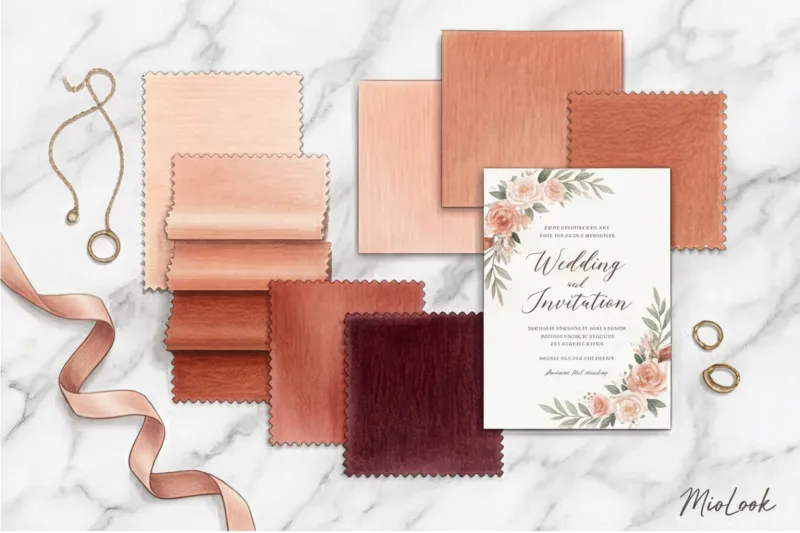
Noble and complex shades instead of “baby” pink
If we're decisively moving away from flat, open colors, what are we getting? A palette that looks like a modern painting. Let's explore three trends guaranteed to deliver a wow-inspiring effect in group portraits.
Deep tones for luxurious contrast. Emerald, sapphire, Marsala, and hot terracotta. My personal aesthetic leans heavily toward Mediterranean chic, so I'm a total fan of bold choices like these. I once styled a lakeside villa wedding, where the bridesmaids wore a mix of terracotta and burnt orange. In the setting sun, this warm contrast made it look like we were shooting a campaign for a European glossy magazine. Plus, rich, dark shades visually elongate the silhouette and conceal figure nuances much more effectively than light, sheer fabrics.
Complex pastel. If your holiday theme absolutely calls for light tones, forget about Barbie doll colors. Look for shades with a hint of gray: dusty rose, cool sage, dusty blue, or muted lavender. This subtle "dustiness" makes the color mature and elegant. A simple sage-colored dress made of high-quality crepe for €150 will look far more refined than a shiny, bright mint polyester for the same price.
"The right, sophisticated color doesn't just enhance a dress—it works like a built-in studio light, illuminating the skin from within and masking the signs of pre-wedding sleep deprivation."
Black trend: black-tie elegance. Yes, you heard that right. Black bridesmaid dresses are a powerful trend that has finally shattered archaic prejudices. For an evening wedding with a strict dress code, there's nothing more striking than a line of bridesmaids in black floor-length dresses of varying styles. It's not mourning, it's red carpet aesthetics. Plus, it's the most eco-friendly and practical solution—every one of your bridesmaids will wear a black silk slip dress at least a dozen more times, simply swapping out the accessories for chunky gold or statement shoes.
Styles by Body Type: Debunking the Myths of "Universality"
Let's be honest. If you search for "perfect bridesmaid dress," the internet will inevitably throw up ads for infinity dresses. Marketers have been selling us the illusion for years: supposedly, a single piece of fabric with two long ribbons can be tied fifteen different ways, magically flattering five completely different female figures. As a practicing stylist, I have to say this.
Fabrics and textures: what looks expensive and what is treacherously shiny
"You can buy a perfectly tailored dress for 500 euros, but if it's made of questionable fabric, it'll look 15 in group wedding photos." A top fashion photographer once told me this during a joint shoot in Como, and I completely share his categorical conviction. Fabric is the absolute foundation of a look. It dictates how a garment fits, how it moves, and, crucially, how it reflects light.
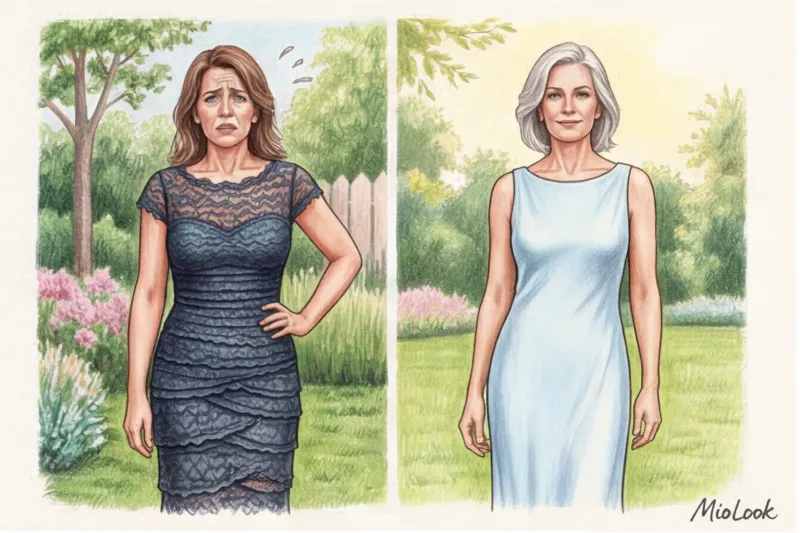
When choosing bridesmaid dresses, many, chasing the lingerie-inspired trend, make a classic mistake: buying thin polyester satin from a budget mass-market store. Let's be honest—it's a real visual betrayal. Cheap rayon works like a magnifying glass, mercilessly highlighting the slightest nuances of the figure, the contours of lingerie, and even slight puffiness.
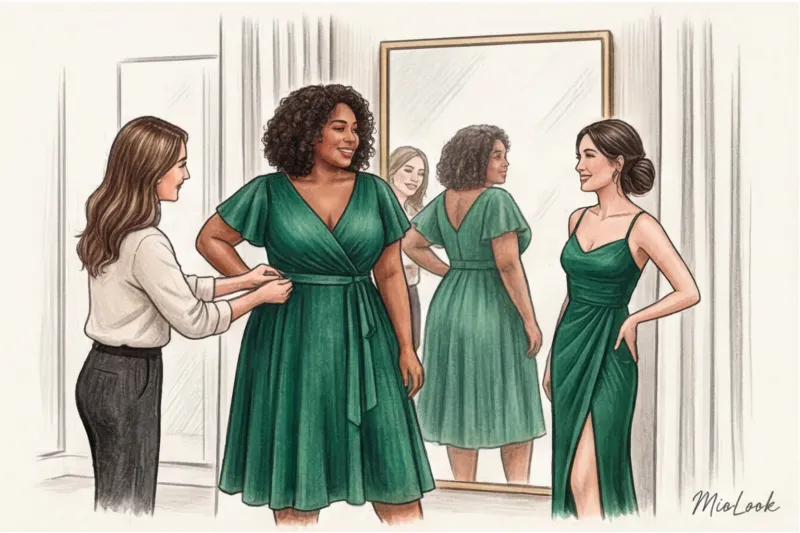
But the worst thing happens later, in photographs. In natural light, such textiles look flat. And as soon as camera flashes or directional studio lights are turned on in the banquet hall, the polyester begins to take on a cheap, plasticky sheen. Instead of a noble emerald or wine hue, you'll get a washed-out, whitish spot in the photos.
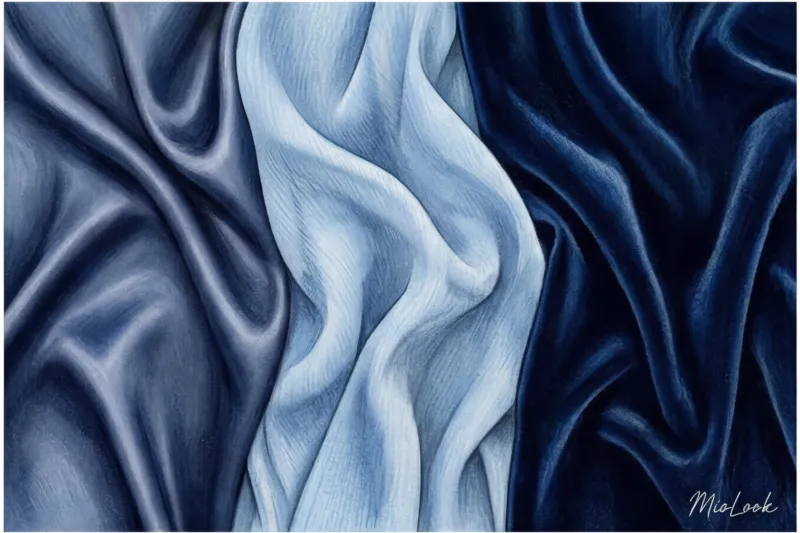
To avoid wasting money, I withdrew 3 rules for checking fabric right in the fitting room:
- Crease test: Squeeze the hem in your fist for 10 seconds. If the fabric is still wrinkled, leave it at the store. You don't want to spend the entire banquet with untidy creases in your hem, do you?
- Transmission test: Look through one layer of fabric at the lamp. The ideal evening attire should be thick enough to not reveal the silhouette of your legs against the light.
- Static check: If your skirt instantly sticks to your tights or legs, you'll have to pour a bottle of anti-static spray on yourself. This ruins the aesthetic of the flowing silhouette.
To avoid textural dissonance, when one friend chooses a matte fabric, and another - a glossy one, I always advise girls to create virtual images in the app MioLook This allows you to clearly compare textures on one screen and ensure that the group will look harmonious.
Silk, chiffon, velvet: choosing according to the season
There's no perfect, universal material. The texture of an outfit must resonate not only with the location but also with the season.
For summer outdoor ceremonies (whether in a vineyard, country villa or on the beach) the absolute favorite remains matte silk It delicately diffuses light, creating a soft, luxurious glow. If you want to add more airiness to your look, opt for flowing chiffon or silk crepe. These fabrics drape beautifully and flutter gracefully in the breeze, adding a dynamic touch to wedding photos. While a high-quality silk dress typically starts at €150–€200, it's an investment well worth it in terms of its impeccable fit.
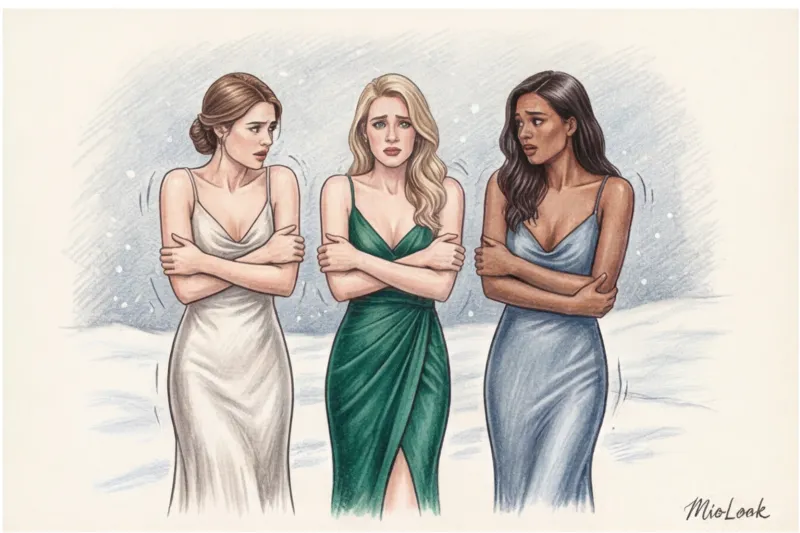
Winter celebrations and late autumn require a completely different approach – visual weight and drama are key.
Velvet has a unique ability to absorb light. This means even the most aggressive flashes won't ruin the shot, and complex shades like sapphire, marsala, or emerald will appear even deeper.
In addition to thick velvet, heavy jacquard is perfect for the cold season—it holds its shape and creates trendy architectural silhouettes. And if your wedding dress code calls for an Old Hollywood aesthetic, consider styles embroidered with high-quality sequins. My top styling tip: always check the inside of the sleeves. Good sequins shouldn't scratch the delicate skin of your hands, otherwise, by the end of the party, you'll end up with serious irritation instead of a festive mood.
Wedding Etiquette: Who Pays for the Bridesmaids' Dresses?
According to a 2023 survey by wedding portal The Knot, about 30% of conflicts between friends during wedding planning arise from hidden financial expectations. Talking about money is always awkward. If you let things slide and simply say, "Buy something green," choosing outfits can easily turn into a test of your friendship.
In Western wedding traditions, a strict rule has historically been ingrained: bridesmaids pay for their own looks, including makeup, shoes, and hair, spending an average of 150 to 300 euros. We don't have strict regulations, and this lack of clarity breeds confusion. Discussing the budget delicately (a crucial skill) soft skills (For any bride, I highly recommend using anonymous surveys.) Create a simple form asking, "What's the most you're comfortable spending on a dress?" Focus on the most modest number. This will save your less affluent friends from the stress of going into debt for just one evening.
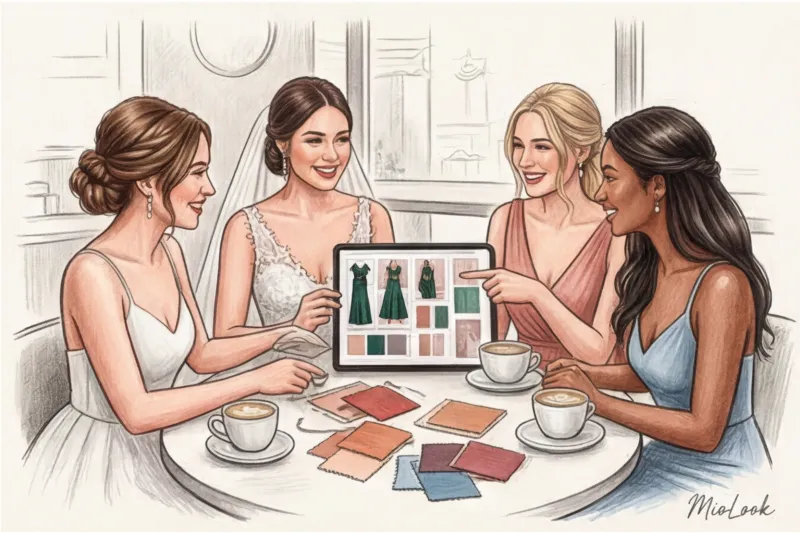
In the professional community of wedding stylists, there's an unspoken but ironclad etiquette. The rule of etiquette is this: if the bride dictates strict requirements—for example, she demands a specific silk slip dress from Ghost London or a specific style from an expensive boutique—she bears the entire cost. You can't force your friend to buy a €400 dress that, let's be honest, may be completely out of place in her everyday wardrobe.
The healthiest compromise that saves relationships and which I implement in the vast majority of my projects is freedom within the concept. The bride sets the tone: she determines the palette (for example, providing references in shades of dusty sage), the length, and the overall aesthetic. The bridesmaids, meanwhile, buy dresses within their own budgets. Some will find the perfect asymmetrical cut at a mass-market store like Mango or COS for 70 euros, while others will decide to invest 250 euros in a designer gown.
The key to smooth communication here is to offer choices while maintaining visual control. To ensure this creative process translates into flawless wedding photos, ask the girls to upload photos of potential purchases to the "smart wardrobe" feature in MioLook This way, you can create a virtual collage of all your dresses and ensure they complement each other without having to ask tactless questions about the price of each individual item.
Your ideal image
it begins Here: Join thousands of users who look flawless every day with MioLook.
Get access — €0.99 onceBride and Stylist Checklist: A Step-by-Step Guide to Choosing a Dress
Statistics from European wedding agencies are relentless: the lion's share of stress on the eve of the celebration is related to logistics and missed deadlines. As a stylist, I often see situations where stunning visual ideas are dashed by the banal "we didn't have time to hem the hem" or "the package got stuck at customs." To ensure your bridesmaid dresses become the highlight of your celebration, rather than the cause of panic attacks a week before the date, you need strict timing.
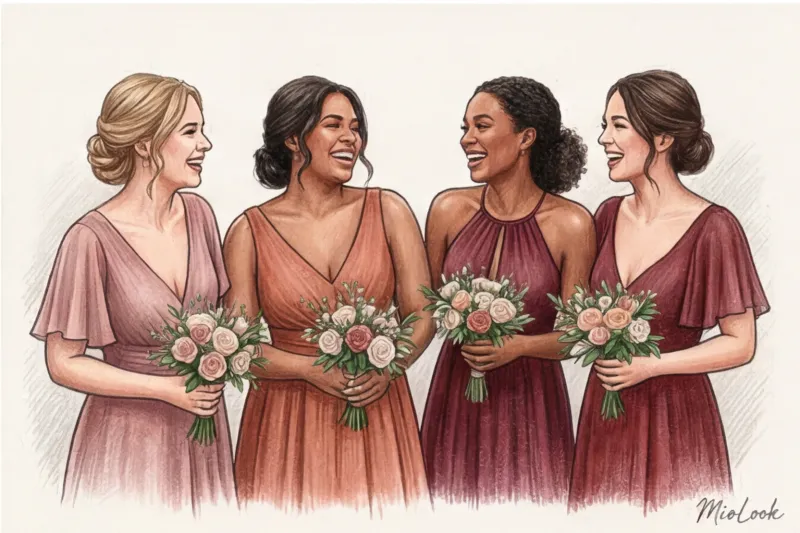
Here's my tried-and-true action plan that we use when planning large-scale celebrations. It will help structure the process and avoid common mistakes.
Step 1: Defining the overall concept and location (5-6 months). It all starts with the venue, because the dress is an extension of the atmosphere. If you're planning a ceremony on a windy beach, a heavy, structured jacquard will look out of place, and tight pencil skirts will restrict freedom of movement on the sand. Conversely, for a historic estate or a classic restaurant, a relaxed cotton sundress will seem too informal. First, we confirm the location, evaluate the lighting (natural light outdoors or artificial light in the hall), and only then define the dress code.
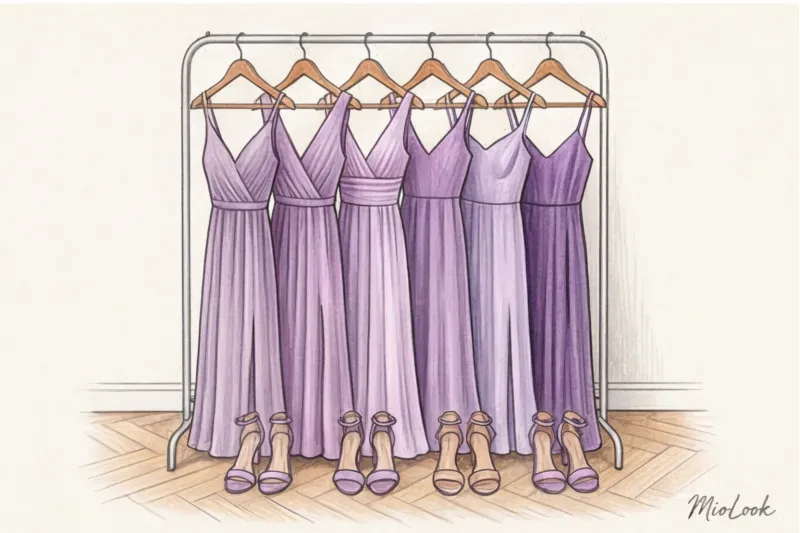
Step 2: Choose a color palette and send the mood board to your friends (4-5 months in advance). The biggest mistake a bride can make is saying, "Girls, just buy something lavender." For one, it might be a rich purple, for another, a pale gray-lilac with a cool undertone. Create a clear visual guide. I highly recommend creating a separate capsule project in MioLook , where you can add references of the right shades and examples of specific styles. Share this mood board with your friends to align your aesthetic expectations.
Step 3: Budget approval – anonymous chat survey (in parallel with the mood board). Finances are an incredibly sensitive topic. As a practitioner, I've seen cases where friends simply declined to participate in the ceremony due to unspoken financial constraints. To avoid embarrassment, create an anonymous questionnaire in your preparation chat. Set three comfortable price ranges, for example: up to €150, €150–300, and over €300. Aim for the majority, but be prepared to seek alternatives if your needs exceed your friends' budget.
Step 4: Approval of lengths and fabrics (3-4 months in advance). Group shots look harmonious only when proportions are maintained. If you've chosen a free-style concept, establish at least one constant. Either a strictly maxi length, so that the photo doesn't have a chaotic "fence" of varying hems, or a consistent fabric texture: only matte crepe or only shimmering silk. This is the stylistic glue that will bring the different women together into a cohesive composition.
Step 5: Order terms (minimum 2 months). Why is it absolutely necessary to avoid putting off a purchase until the last month? When ordering dresses online from other countries, there's always a risk of delivery delays. But the main reason is fit. In 90% of cases, even the highest-quality factory-made dress requires tailoring: shortening the hem to fit the heel, adjusting the darts, and taking in the waist. Good tailors are booked weeks in advance during the wedding season. Remember: the perfect silhouette is created in the studio, and you need to allow at least two to three weeks for this.
Life after marriage: how to fit a dress into your wardrobe
According to statistics from the global fashion analytics platform Lyst, approximately 75% of formal dresses are worn by their owners exactly once, after which they end up in the back of the closet forever. You'll agree, this is a real crime against your budget and common sense. Today, the concept sustainability (sustainability) and conscious consumption dictate completely new rules of the game: every item must be worth every penny invested in it. A dress should work for you even after the party. If you're investing 200-300 euros in a quality outfit, your main stylistic goal is to minimize the cost. cost per wear (cost per appearance). A well-chosen silhouette doesn't die after the bride tosses her bouquet into the crowd, but begins a second, much more fulfilling life in your everyday wardrobe.
My favorite technique, which unmistakably reflects the Mediterranean approach to style, is a bold play on contrasting textures. Here's my personal secret styling formula that instantly takes the edge off the formal pomp: silk slip dress + chunky knit sweater (ideally cashmere or heavy merino) + chunky boots with chunky soles Why does it look so appealing? The matte wool absorbs the light, while the glossy silk reflects it. This visual clash makes the look complex, vibrant, and relaxed. You get that same effect. effortless chic when it seems like you got dressed in five minutes, but still look flawless.
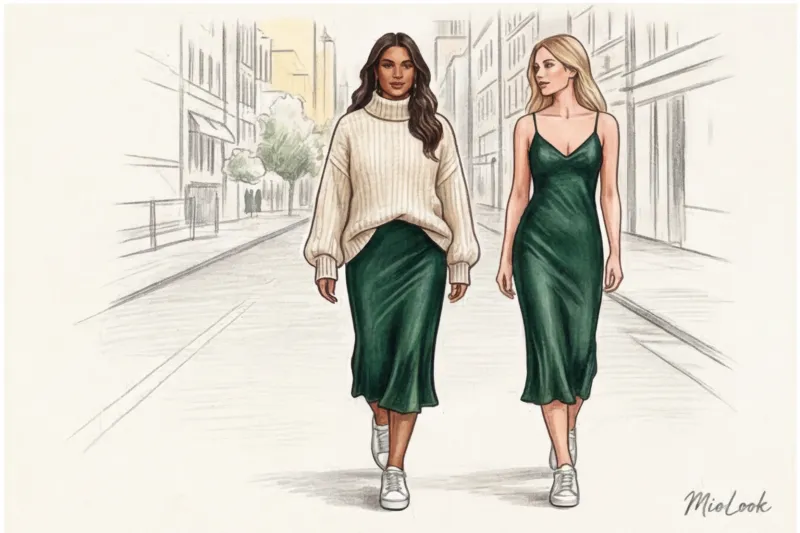
A dressy dress is a wonderfully versatile base. Let's look at how to adapt it to different scenarios. Heading to a corporate New Year's party? Layer a voluminous men's tuxedo or velvet jacket over a slip dress, add statement chandelier earrings, and a sleek hairstyle. (By the way, I've covered the intricacies of creating such looks in detail in our articles on finding your personal style and corporate dress codes.) Planning a trip to the theater to see a modern production? Complete your outfit with a thin cashmere cardigan, a choker, and elegant shoes. kitten heels And for a romantic dinner, just leave your shoulders bare, throw on a classic trench coat, and choose a sensual lipstick shade. To see in advance how an evening dress will pair with your base, I always advise my clients to use the "smart wardrobe" feature in MioLook You simply upload a photo of the item and create dozens of virtual outfits, avoiding the impulsive purchase of unnecessary, one-time-only shoes.
Sometimes the main obstacle to a garment's integration into the urban environment is its uncompromising floor-length. Here, a trusted tailor should be your best friend. I constantly encourage women not to be afraid of drastic changes: a bold change in length at a tailor can work wonders. As soon as a heavy maxi dress becomes a stylish cocktail midi (length just below the knee or mid-calf), the dress completely loses its "wedding" DNA. An investment of 20-40 euros in a professional tailor will give you a completely new, versatile cocktail dress. An experienced tailor can also add a racy slit up the leg, creating an even more dynamic silhouette.
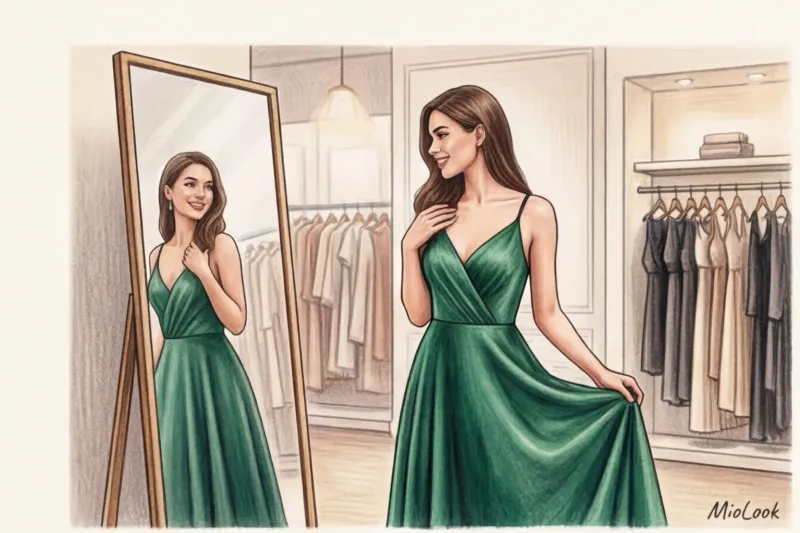
To wrap up our conversation, I want to reiterate the most important thing: the era of identical bridesmaids tucked into uncomfortable corsets is finally over. Today, your outfit is an extension of your individuality, not just a pretty backdrop for wedding photos. Choose styles and shades that make you sit up straight and smile at your reflection. Right now, if you're in the process of searching, take a quick mental test: imagine a potential dress paired with your favorite casual jacket or basic sweater. If the fashion puzzle fits together, you've found your perfect match.
Guide Chapters
The most fashionable colors for bridesmaid dresses
Forget about identical clone dresses! Discover stylish palettes and learn how to choose the perfect shades for each bridesmaid.
Online Wedding Dress Try-Ons: AI for Bridesmaids
Forget about awkward, identical outfits. Discover how AI technology helps you choose the perfect dress that highlights each bridesmaid's individuality.
Different Colored Bridesmaid Dresses: Trends
The era of identical outfits is over. Learn how to create a stylish wedding image by letting your girlfriends choose different styles in the same color.
Affordable Bridesmaid Dresses: Where to Buy
Learn the secrets of a stylist with 12 years of experience. How to choose the perfect bridesmaid dresses that won't end up in your closet after the wedding.
The Perfect Plus Size Bridesmaid Dresses: A Guide
Forget shapeless dresses and the "clone" aesthetic. Learn how to choose a stylish plus-size bridesmaid dress you'll want to wear again.
Silk Slip Dresses for Bridesmaids: A Trend
Lingerie style is unforgiving. Learn the secrets to choosing the perfect slip dress that will elegantly accentuate every bridesmaid's figure.
How to choose accessories for your bridesmaid dress
Properly chosen shoes and accessories are the key to your comfort and confidence at your special occasion. Learn our stylist's secrets for creating a flawless look.
Convertible Bridesmaid Dresses: Pros and Cons
Infinity dresses: a lifesaver for different body shapes or a fashion disaster? We explore the real pros and cons of popular convertible dresses.
Perfect Bridesmaid Dresses for a Winter Wedding
Summer outfits in winter are a recipe for ruined photos and frozen girlfriends. We explore stylish and warm alternatives for a winter celebration.
Maternity Bridesmaid Dresses: Styling Tips
The tradition of matching outfits is becoming a thing of the past. Discover stylish and architectural solutions for pregnant bridesmaids that will highlight their beauty.
Who Pays for the Bridesmaids' Dresses: A Stylist's Advice
The awkward silence in wedding chats when choosing dresses is familiar to many. Learn how to tactfully handle the financial issue and choose the perfect dresses.