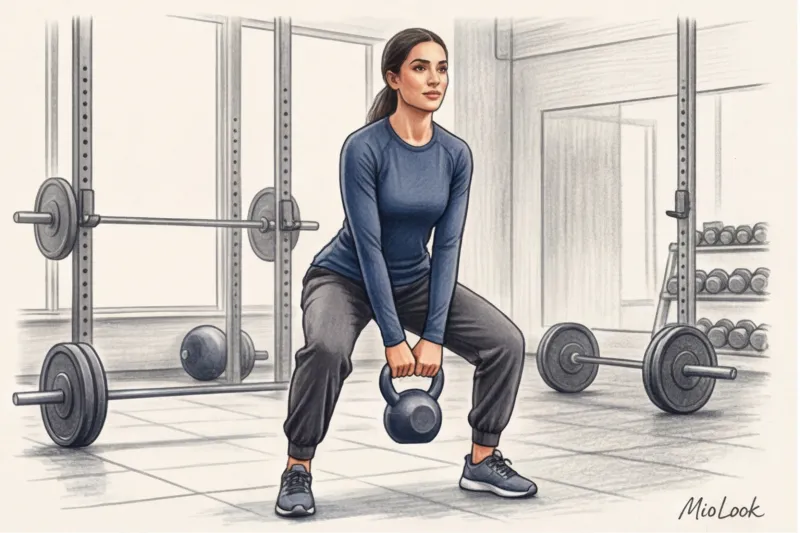
The most paradoxical truth about indoor fitness is this: cotton, which we love for its eco-friendliness and comfort in everyday life, becomes your worst enemy in the gym. It methodically destroys both your comfort and the very modesty for which you chose indoor clothing. When it comes to active training, the "natural is always better" rule seriously breaks down.
We have already talked in more detail about the architecture of a modest sports wardrobe in our The complete guide to sportswear for Muslim women But today I want to talk about physics. As a personal stylist, I constantly encounter women who quit working out simply because they feel physically strained and hot in their clothes. The secret lies not in the number of layers, but in what they are made of. It is the right choice of breathable fabrics for sportswear — this is the invisible line that separates heat stroke from a comfortable, inspiring workout.
The Anatomy of Overheating: Why Casual, Cover-Ups Are Dangerous at the Gym
The difference between everyday, closed-toe clothing and athletic biomechanics is colossal. When you're walking down the street in your favorite thick hoodie, your body is at rest. But as soon as you begin an intense strength or cardio workout, your body activates a powerful thermoregulatory mechanism. Sweating is the body's natural way of cooling itself by evaporating moisture from the skin's surface.
What happens when you use everyday layering—for example, wearing a cotton turtleneck, a T-shirt over it, and then your favorite oversized sweatshirt? You're literally trapping heat inside. I had a particularly telling example. My client, Aisha, showed up to an intense CrossFit workout wearing her favorite thick cotton hoodie with a basic T-shirt underneath. Fifteen minutes into the workout, I noticed she had turned pale and started to gasp. We immediately stopped the workout. It was a classic case of heat exhaustion: the layered cotton created a "sauna" effect, blocking sweat evaporation.
"Modesty should not be synonymous with physical suffering. Your clothing in the gym is your armor, and armor should not stifle its wearer."
According to research from the Institute of Sports Physiology (2023), exercising in non-breathable, multi-layered clothing increases the risk of heatstroke by 40% compared to training in specialized gear. Therefore, transferring everyday layering habits to the gym isn't just a stylistic faux pas; it's a direct health hazard.
Access to MioLook for €0.99 — one-time payment
A smart AI stylist will select the perfect look for training and everyday life.
Get access — €0.99 onceThe Biggest Fitness Myth: Why Cotton Betrays Your Principles
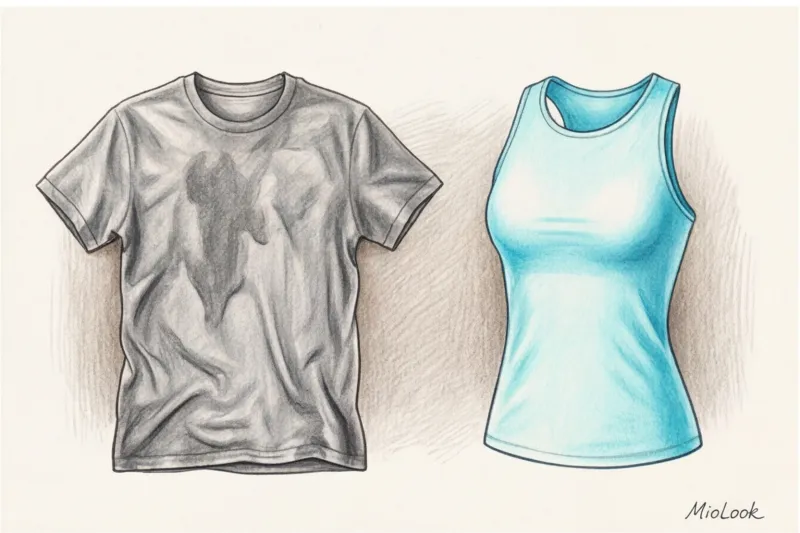
Let's debunk the biggest myth: natural fabrics work against you in sports. The physics of the process are merciless. Cotton has incredible hygroscopic properties—textile industry technologists confirm that cotton fiber can absorb up to 27 times its own weight in moisture.
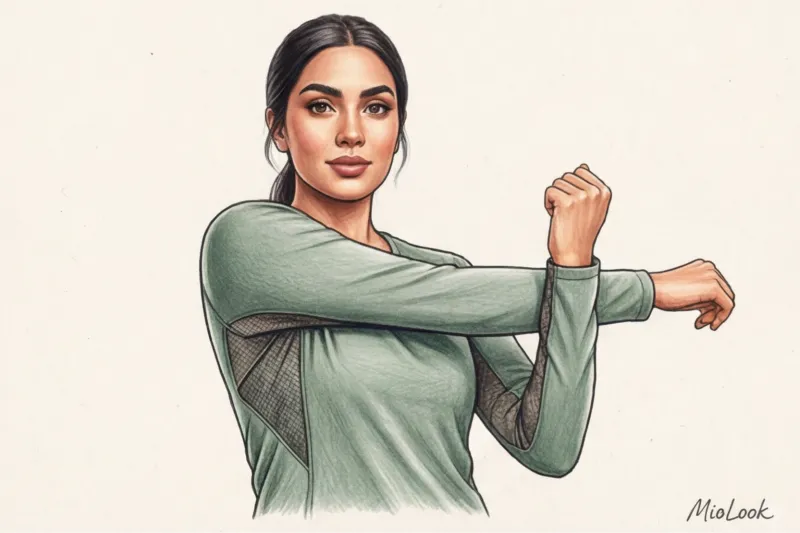
In practice, this means that after 20 minutes on the treadmill, your loose, figure-hugging cotton tunic turns into a heavy, damp lump. And this is where the worst part happens for women who prefer a more covered style: wet T-shirt effect The damp, natural fabric treacherously reveals every line of your silhouette that you've so carefully tried to conceal. What was once a loose, oversized garment clings to your body, creating an unattractive and downright unmodest look.
Of course, this rule doesn't apply if you're doing exclusively gentle, static stretching or Yin Yoga in a cool, well-air-conditioned room. High-quality, thick cotton (at least 180 g/m²) is perfectly acceptable there. However, it's strictly contraindicated for any activity that causes sweating.
Breathable Sportswear Fabrics: A Guide to High-Tech Synthetics
It's time to shed your fear of the word "synthetics." Modern breathable sportswear fabrics are nothing like the cheap, squeaky polyester of the '90s that left you itchy and your clothes staticky.

The secret of smart fabrics (such as Nike's well-known Dri-FIT technology or the Coolmax family of materials) lies in the capillary effect. At the microfiber level, the fabric acts like a pump: it instantly draws a drop of sweat from the skin's surface, distributes it over a wide area on the outside of a tunic or trousers, and allows it to evaporate in seconds. A study in the Textile Research Journal found that proper moisture-wicking gear reduces skin surface temperature by 1–2 degrees Celsius during peak activity.
Next-generation polyester: the foundation of a closed wardrobe
Sports polyester is the absolute fastest-drying fabric. It dries 3-4 times faster than any natural fabric. For indoor fitness, this means your long tunic will remain lightweight and maintain its original, loose fit throughout your workout. The budget for a high-quality basic tunic made of technical polyester today ranges reasonably—from €30 to €70.
Nylon and spandex: freedom of movement without being too tight
These fibers (often known under the brand names Lycra or Elastane) are added to sweatpants and joggers. The secret to perfect full-length sweatpants is striking the right balance: they should provide compression at the waist and ankles (to prevent riding up during jumps) but remain loose in the thighs. Nylon provides incredible strength, and 10-15% spandex ensures the fabric won't stretch out at the knees after your first squat.
Secret Weapon: Merino Wool for Outdoors
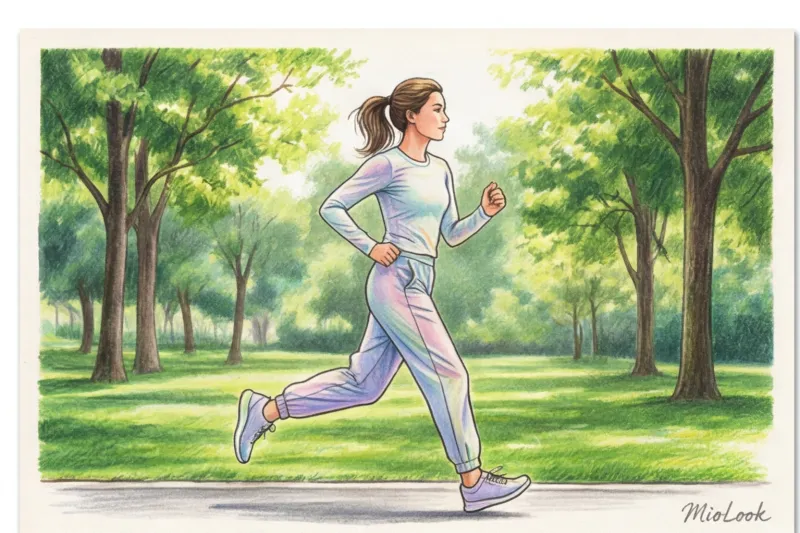
Did you know that wool can cool you down? The finest merino wool (150–200 g/m²) is the ideal choice for indoor outdoor runs or trekking. Unlike regular sheep's wool, merino is non-itchy, has natural thermoregulation, and powerful antibacterial properties. Even if you sweat, your clothes won't smell. A good merino long sleeve top typically starts at €70–€90, but it's an investment worth every penny.
Cutting architecture: how fabric should behave dynamically
Choosing the right fabric isn't enough; you need to understand how it's cut. In full-body sportswear, the garment's design is everything. Over 12 years of working as a stylist, I've developed the perfect formula for my clients: A-line silhouette + moisture-wicking fabric + hidden ventilation = absolute comfort.
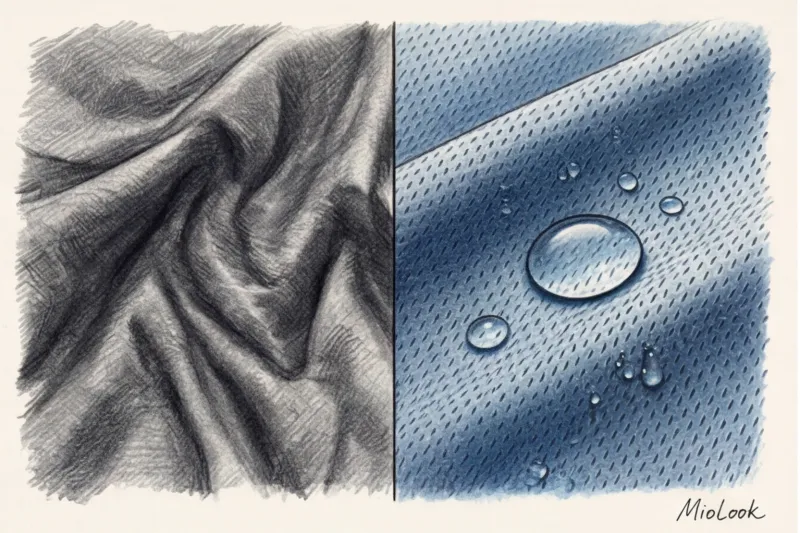
Pay attention to zoning. The best sportswear brands integrate mesh panels in strategic yet discreet areas: underarms, along the spine, and inside elbows. This creates the effect of cross-ventilation under a loose tunic.
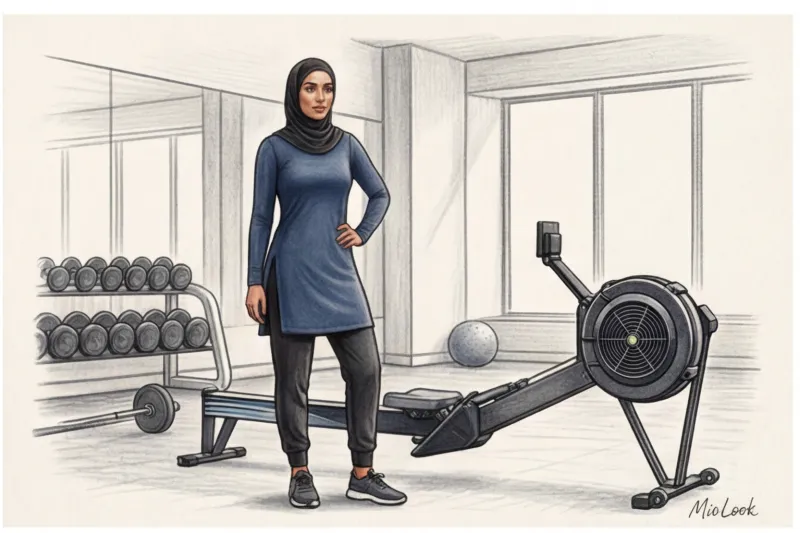
Length also matters. The ideal tunic should cover the hips but have side slits or an asymmetrical cut (shorter in the front, longer in the back) to allow for easy movement. Be sure to look for seamless designs. When your body is sweaty, any rough inner seam can rub and bleed within half an hour of cardio.
Your perfect look starts here
Join thousands of users who look flawless every day with MioLook. Organize your smart wardrobe in just a few clicks.
Get access — €0.99 onceSports Hijab and Headwear: Avoiding Heat Stroke
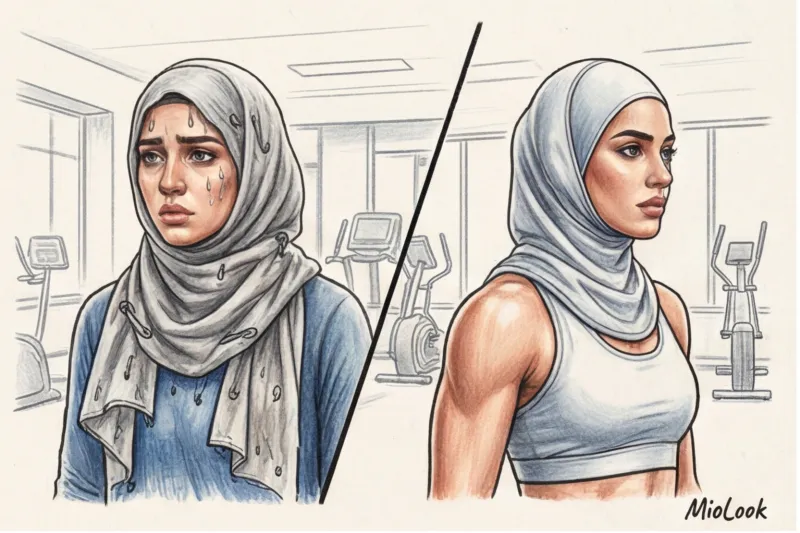
The head is one of the body's main heat exchange zones. Using a regular stole, chiffon scarf, or, even worse, a cotton pashmina for intense workouts is a terrible idea. They slip, require constant pinning (which is simply dangerous in the gym), and create a greenhouse effect.
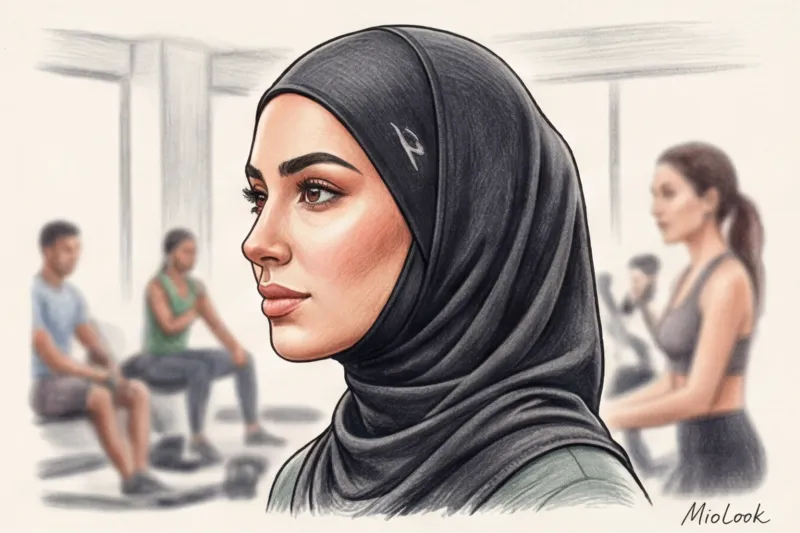
I recently test-drove five different sports hijabs from global brands. My verdict: fit and fabric are everything. The ideal choice is either a one-piece hood, which slips over the head and has an extended bib that covers the chest, or a fitted ninja cap paired with a lightweight sports snood.
The best fabrics for head coverings in the gym are bamboo fiber with added elastane (which naturally cools the skin) or ultra-fine microfiber with laser-cut perforations in the ear area. This not only allows the skin to breathe but is also crucial for hearing the trainer and the surrounding environment clearly.
A stylist's checklist: putting together the perfect capsule wardrobe for a private fitness club
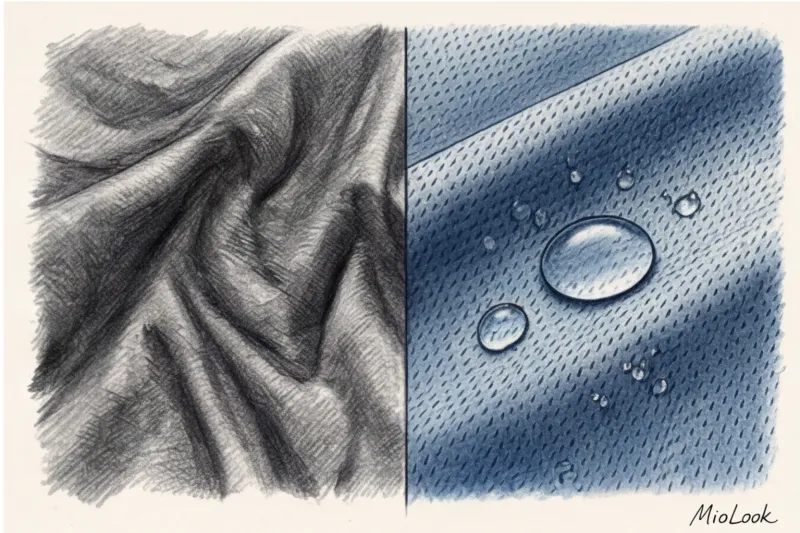
Theory is great, but let's get practical. How can you tell if you're buying the right item? Right in the fitting room (or at home when picking up your online order), do the water drop test: drop a small amount of water onto the inside of the fabric. If the drop forms a bead and doesn't absorb, the fabric isn't breathable. If the moisture immediately spreads into a wide patch and is absorbed, you have excellent moisture-wicking material.
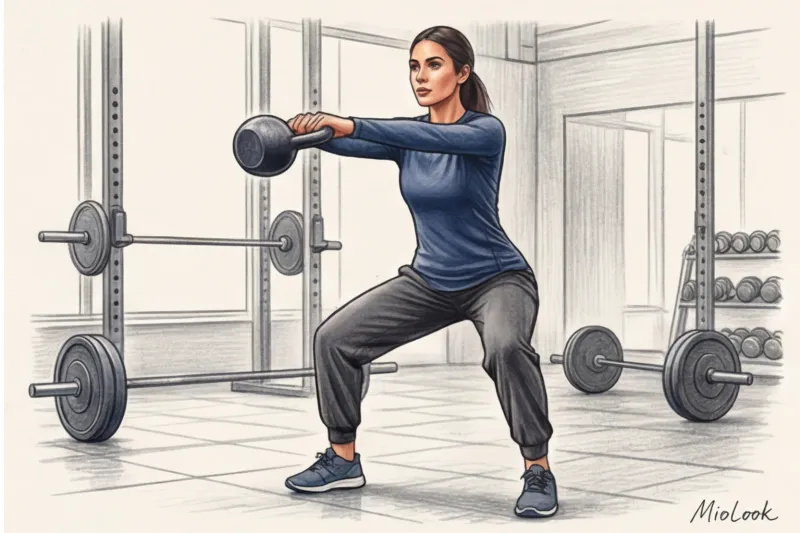
Here's your bare minimum for the gym (the total budget for a basic, quality capsule will be approximately €150–€250):
- High support sports bra: Worn under a tunic. The chest needs support no matter how loose the clothing worn on top.
- Long A-line tunic: Made from next-generation polyester with hidden mesh inserts.
- Athletic joggers or loose tights: with the obligatory wide elastic band at the waist and cuffs at the ankles.
- Specialized sports hijab: without a single pin, made of perforated microfiber.
If you plan to train outdoors (Nordic walking, running), use the three-layer rule: a thin, moisture-wicking base layer (thermal underwear), an insulating layer (fleece), and a protective layer (windbreaker with a membrane).
Conclusion: Confidence starts with the right gear
Indoor fitness has long ceased to be a compromise between beliefs and comfort. Today, the sportswear industry has advanced so far that you can look elegant, fully adhere to your modesty principles, and still break personal records in the gym without suffocating in the heat.
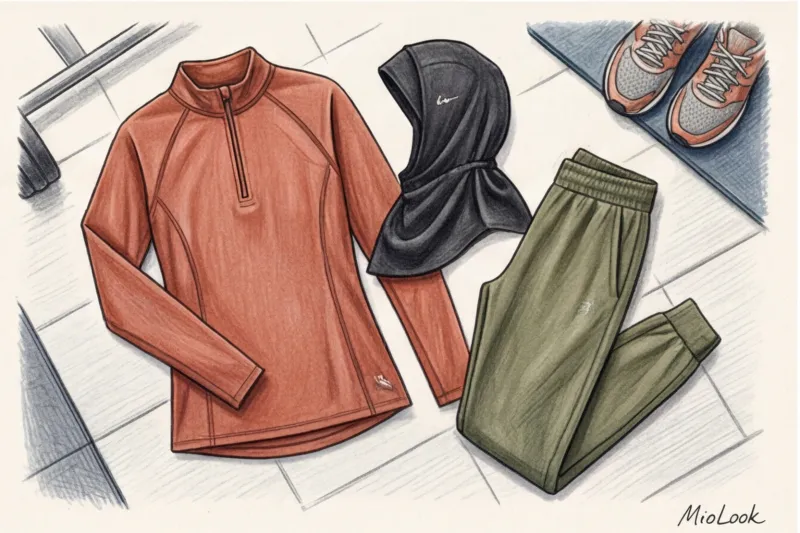
Exercise is an incredible act of self-love and love for your body. And the first step is getting rid of the gear that's holding you back. My challenge to you today: open your gym bag, take out those old cotton sweatshirts and heavy t-shirts. Replace them with just the right high-tech tunic. Trust me, your next workout will feel like a whole new level of energy.