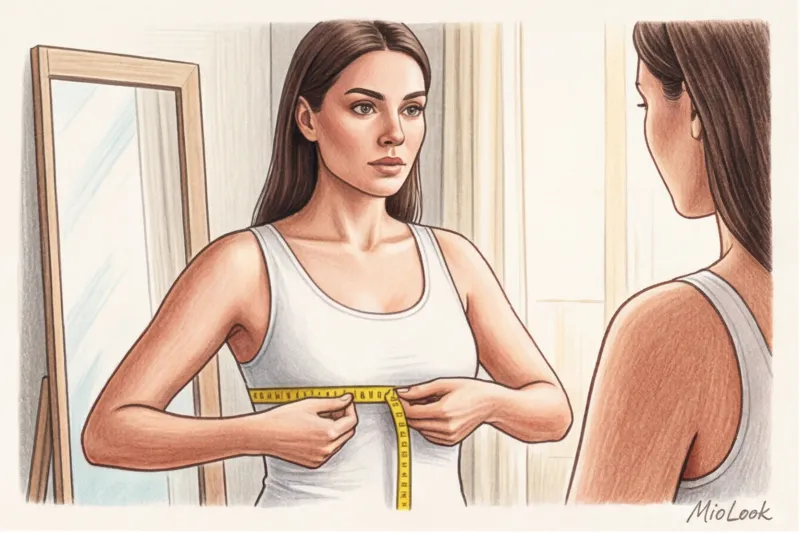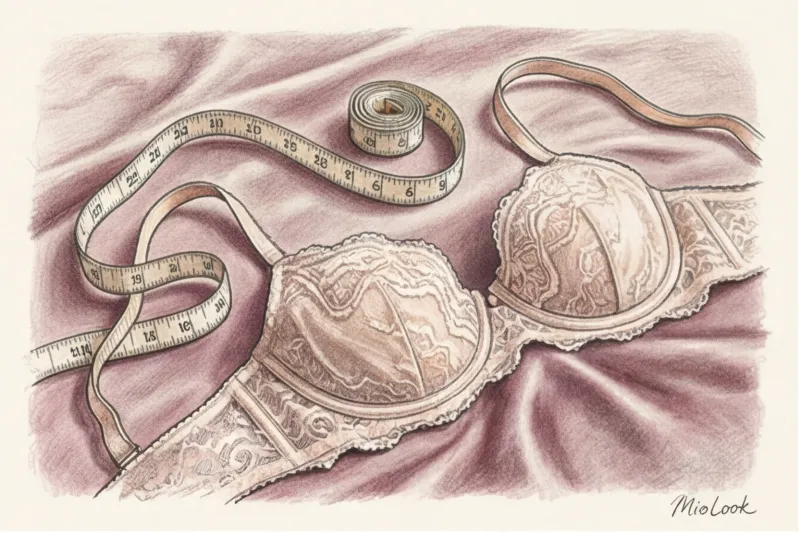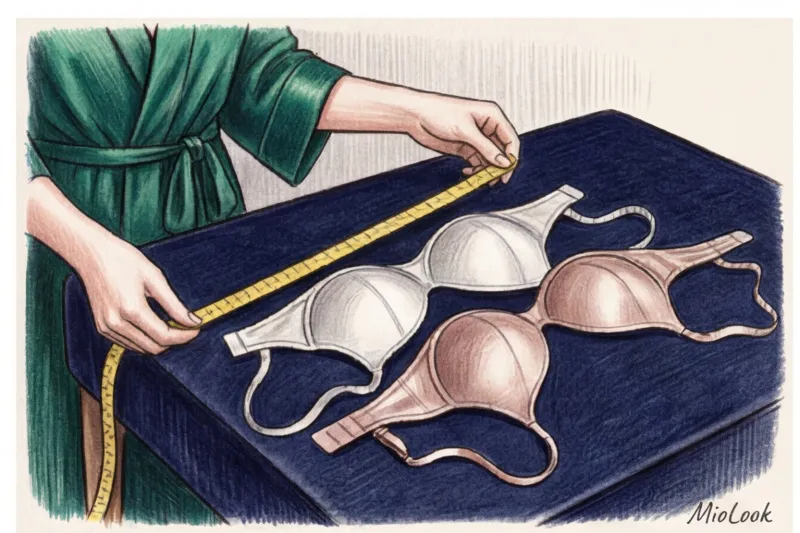
Over twelve years of working with premium wardrobes, I've become convinced of one thing: no perfectly fitted Saint Laurent jacket will save a look if the base layer is poorly chosen. I worked with a client who suffered from chronic shoulder pain for years. She bought a size 80A and complained about the straps falling down and the waistband digging in. When we first took professional measurements, it turned out her true size was a 65D. She simply didn't understand the geometry of lingerie and intuitively tried to compensate for the discomfort by buying styles with a wider waistband.
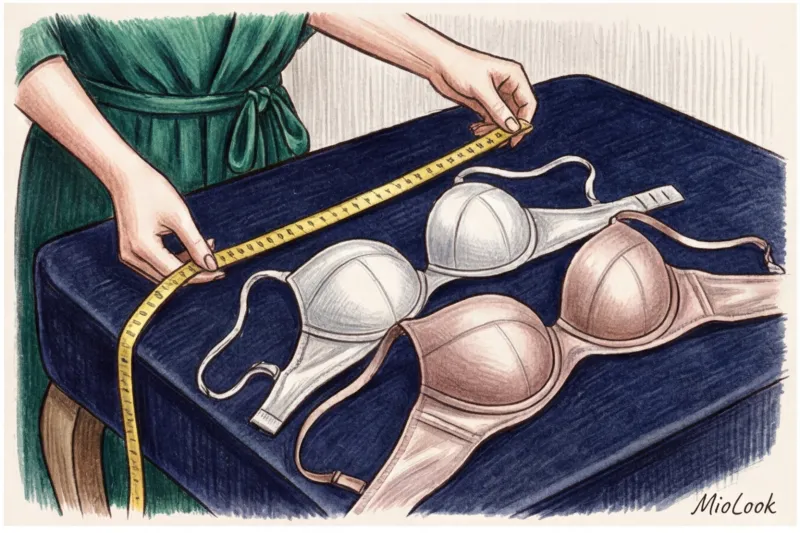
According to the analytical agency WGSN (2024), about 80% of women wear the wrong size bra. And the main reason is a lack of understanding of how bras work. parallel bra sizes (sister sizes). I talked about the evolution of fittings and how technology is changing our approach to shopping in our A complete guide to smart online lingerie selection using AI Today, we'll explore the mechanics of interchangeable sizes—why they exist, when they're worth using, and when they're a waste of money.
What are parallel bra sizes and why you should know about them?
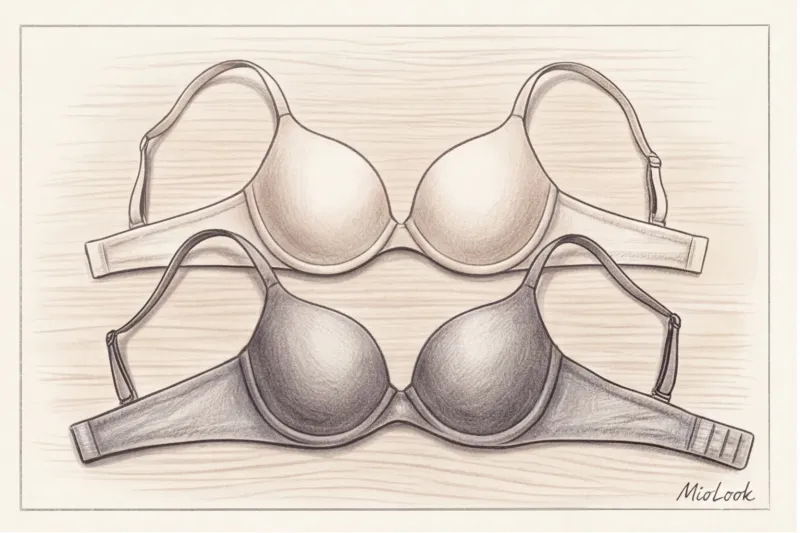
In the world of premium lingerie, labeling always works in strict conjunction. The number denotes the volume under the bust (band), and the letter denotes the projection of the mammary gland itself (cup). The concept sister sizes or parallel dimensions means that the physical volume of the cup itself can be absolutely the same with different numbers on the label.
It sounds like magic, but it's pure mathematics. A D cup on a 65 measurement is visually and practically smaller than a B cup on an 85 measurement. You should see my clients' shock when I bring them a size 65E bra into the fitting room instead of their usual 75B! "I'm not Pamela Anderson, where's the E?" is the standard reaction. But as soon as they put on the right design, their silhouette instantly tightens and their posture straightens.
Knowing your adjacent sizes gives you flexibility, especially if you're hunting for limited collections or buying luxury brands on sale when your ideal size is already sold out.
The Illusion of a Perfect Replacement: Why 75C Isn't the Same as 80B
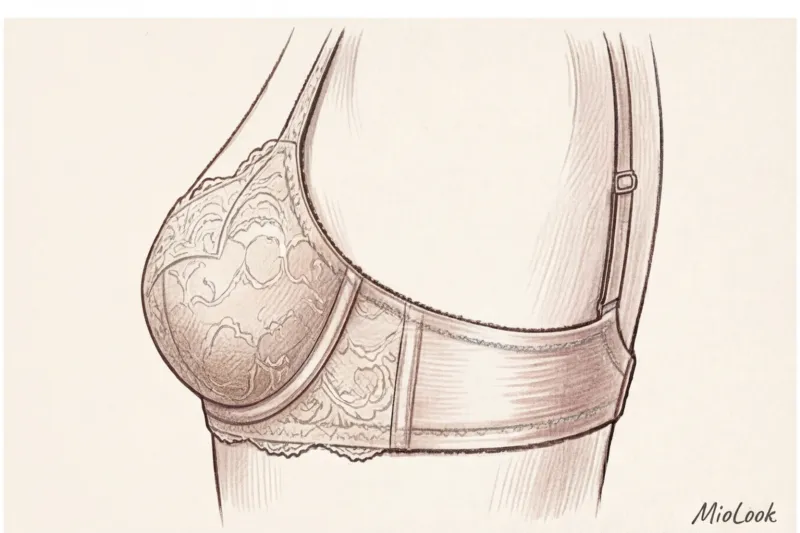
Now let's debunk the biggest mass-market myth. Salespeople at budget stores often say, "Is a 75C too tight? Just go for an 80C!" This is a fatal mistake. When you go from a 75C to an 80C, not only the band size increases, but also the cup size. You'll end up with underwear that's too big for you everywhere.
The right move is to switch to a parallel size: 80B. But there's a counterintuitive insight here that's rarely discussed. Parallel bra sizes they don't fit the same.
"Bra architecture is based on strict physical laws: a tight band provides 80% of the support for a heavy bust, with only 20% of the load falling on the straps. Buying a band that's too wide for comfort deprives your bust of its foundation."
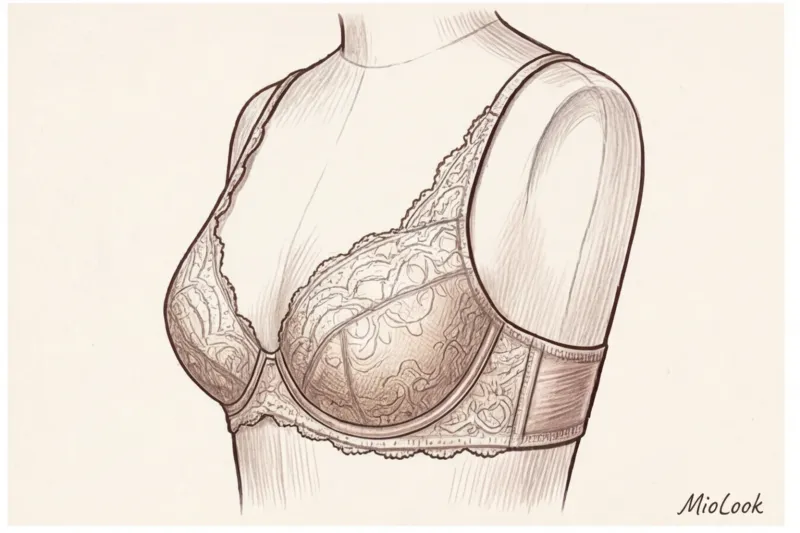
The hidden problem lies in the geometry of the underwire. A size 80B has wider underwire and a wider bridge than a 75C. While it will accommodate a full bust, the underwire will extend deep into the armpits, and the band will inevitably ride up the back, causing the straps to constantly fall off the shoulders.
Access to MioLook for €0.99 — one-time payment
A smart AI stylist will select the perfect look based on your proportions.
Get access — €0.99 onceDiagonal Formula: How to Calculate Your Parallel Bra Sizes
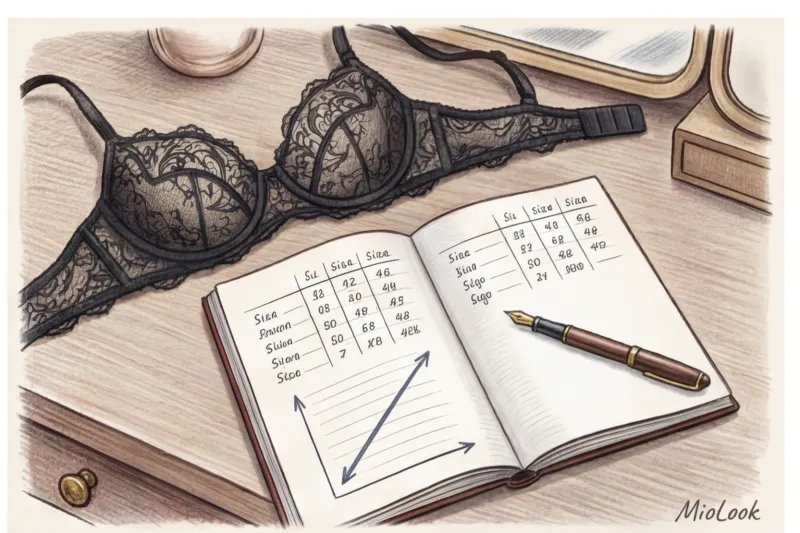
If you want to learn how to juggle sizes like a professional bra fitter, remember the "seesaw rule." The increment between band sizes is exactly 5 cm. The difference in cup size when changing one letter is about 2–2.5 cm in projection. To maintain the desired cup size, move diagonally:
- Increasing the belt by 1 size (5 cm) , you are obliged decrease cup letter by 1 step.
- Decrease the belt by 1 size , you must increase cup letter.
Step left: Increase support (smaller band, larger cup)
Let's say your base size is 75C. Your left parallel size is 70D Why is this necessary? If your current bra constantly rides up your back (the band is too big and doesn't support your weight), but the cup itself fits perfectly, you need to step up.
This trick is a lifesaver for those with a narrow rib cage and heavy breasts. You get the same volume, but with a stronger, tighter band foundation.
Step to the right: give freedom (bigger belt, smaller cup)
For the same 75C the right parallel dimension will be 80B This solution is useful when the underwire cuts hard into your ribs, the band presses so hard that it leaves red marks, but your breasts still fill the cup completely without any empty space.
The danger here is that stepping to the right always reduces the level of support. I recommend this technique only for women with smaller breasts, for whom the compression of the belt is less critical.
Investment Strategy: When the Parallel Size Rule Really Saves You
Why isn't it enough to simply figure out your ideal size and stick to it for the rest of your life? Because fit models vary dramatically across brands.
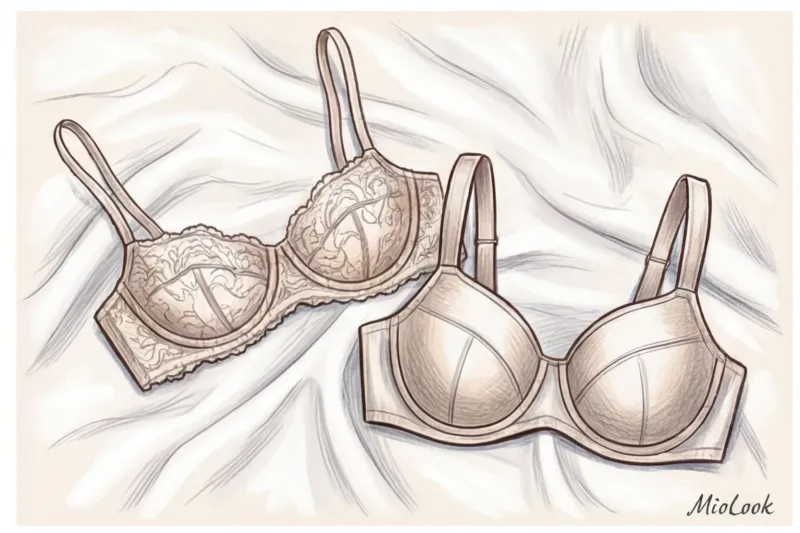
Over the years of working with luxury brands, I've discovered a clear pattern. French brands like Chantelle or Simone Pérèle (price range €90–€180) often feature rather delicate, narrow belts. If you choose their lace balconette, you'll likely need one. step to the right.
British brands, on the other hand, are renowned for their "reinforced concrete" construction. Models from Panache and Freya have very tight, snug bands and deep cups. My clients almost always choose these. step to the left to achieve the perfect silhouette.
Furthermore, a woman's body isn't static. During PMS, breast size may increase, and the rib cage may become slightly swollen. Instead of buying a separate wardrobe for these times, invest in one high-quality bra in your "right" size. This will save you from discomfort without breaking the bank.
Organize your wardrobe
Create a virtual capsule of lingerie and clothing in the MioLook app
Download the appThe One-Step Rule: The Biggest Mistake When Using Interchangeable Sizes
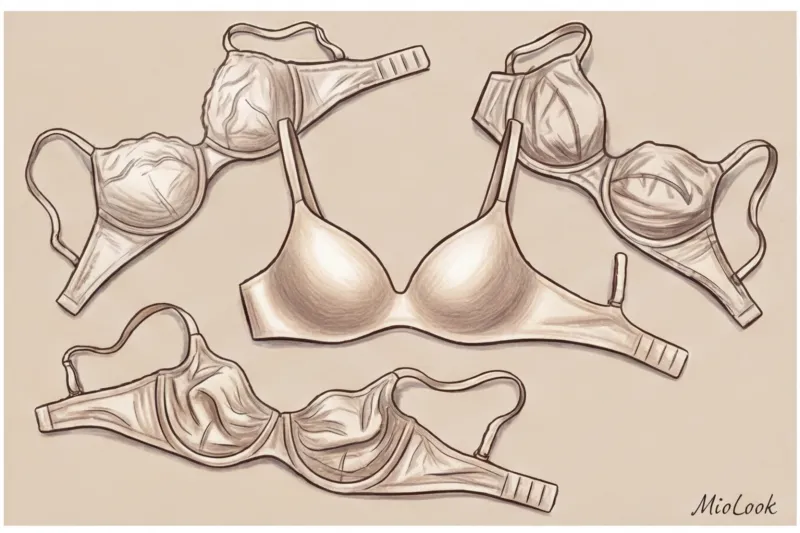
Here I want to issue a stern warning: the rule of parallel dimensions has its limits. Never move more than one step away from your baseline.
Trying to replace a 75C with an 85A is an anatomical dissonance. Yes, mathematically, an 85A cup accommodates approximately the same amount of breast tissue. But the underwire in an 85A is designed for a wider ribcage. On a woman with a 75 cm underbust, these cups will simply end up under the armpits. The bridge will hang in mid-air, and the support function of the band will be negated.
And most importantly: using parallel sizes won't solve your problem if your original size was chosen incorrectly. You'll simply be multiplying the error by error, buying more and more uncomfortable bras at €100 apiece.
From Manual Calculations to Technology: AI vs. Tape Measures
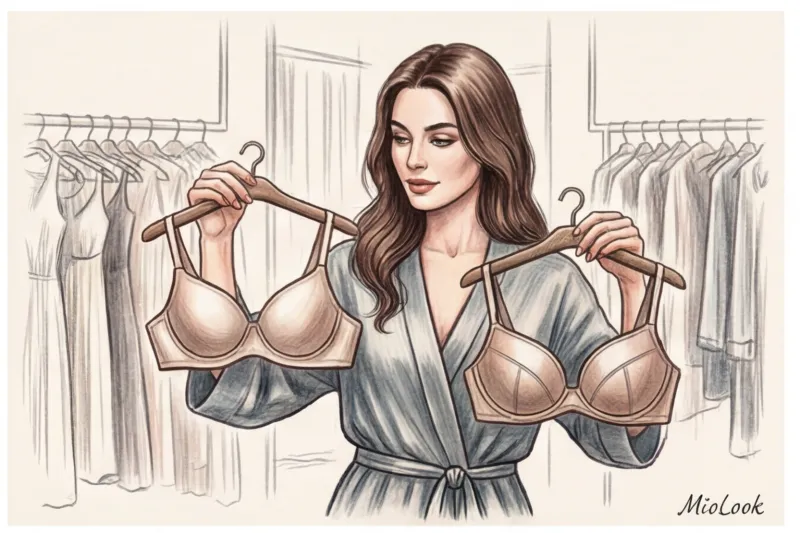
Even knowing your measurements perfectly doesn't guarantee a perfect fit when buying online. Lace elasticity, underwire width, and cup depth—all of these are impossible to assess from a model's photo. That's why the era of manual measurements is becoming a thing of the past.
Today, artificial intelligence analyzes 3D body geometry and matches it with patterns from a specific brand. For example, you can use Smart wardrobe features in the MioLook app To organize your successful purchases and understand which brands suit you best. Predictive analytics algorithms can already tell you whether you need your standard brand in a particular La Perla silk top, or whether its "sister" brand would work better.
Stylist's Checklist: How to Check the Fit of a Parallel Size
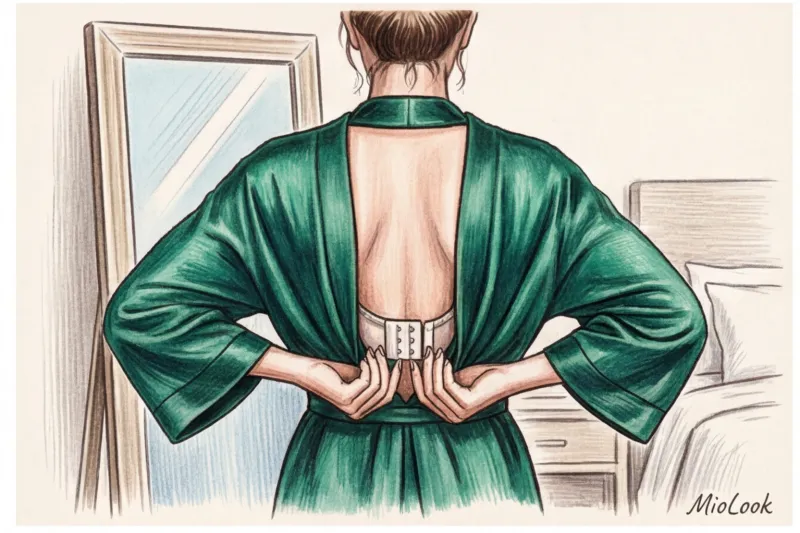
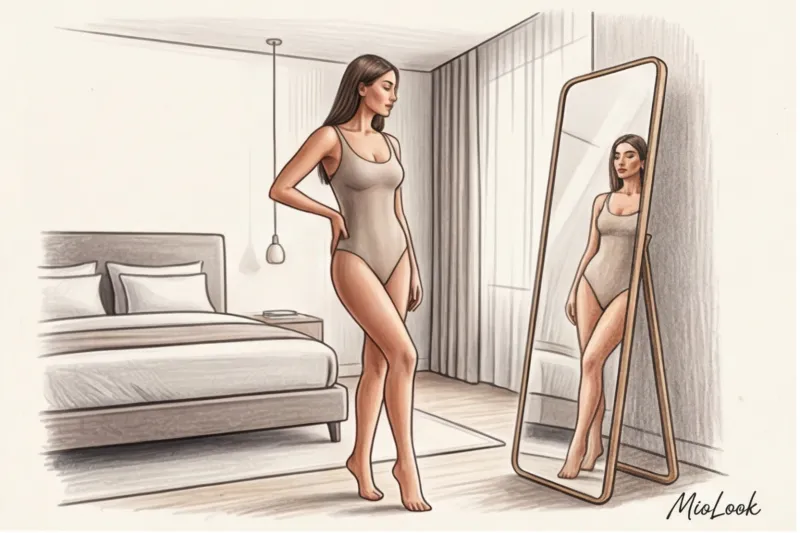
If you ordered your correct size, don't rush to cut off the tags. Do the test in front of a mirror, which I do with all my clients:
- Two-finger test: You should be able to fit exactly two fingers under the belt at your back, with a slight tension. If you can pull the belt 5 cm away from your back, it's hopelessly too big, and the support will fall on your shoulders.
- Jumper check (gore): The center of the bra between the cups should rest firmly on your breastbone. If it floats or falls off when you turn your body, the cup is too small or the underwire is too narrow.
- Bones line: They should contour neatly around the breast tissue. Make sure the metal doesn't rest directly on the breast (this is dangerous) and doesn't extend too far back, pressing against the armpits.
Remember the key: parallel bra sizes are a brilliant tool for adapting to different brands and styles. But they're always a compromise, not a substitute for perfect bra fitting. Invest in the right base size, and your wardrobe, from cashmere turtlenecks to evening dresses, will look truly luxurious.