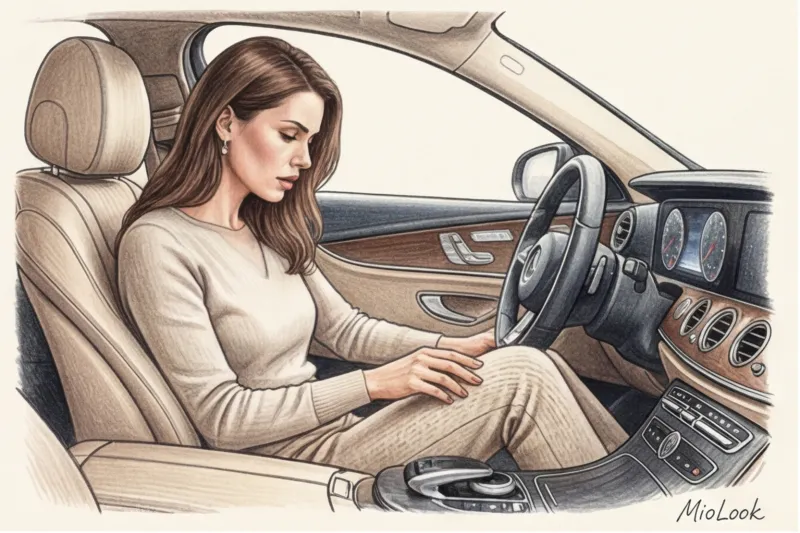
Last year, a client of mine bought a pair of luxurious 100% cashmere trousers for $1,500. A world-renowned brand, the perfect beige shade, and incredible softness seemed like a perfect investment. But exactly two hours later, after just one car ride, the fabric at the knees had hopelessly stretched out, forming unsightly "bubbles." The luxurious garment instantly lost all its luster.
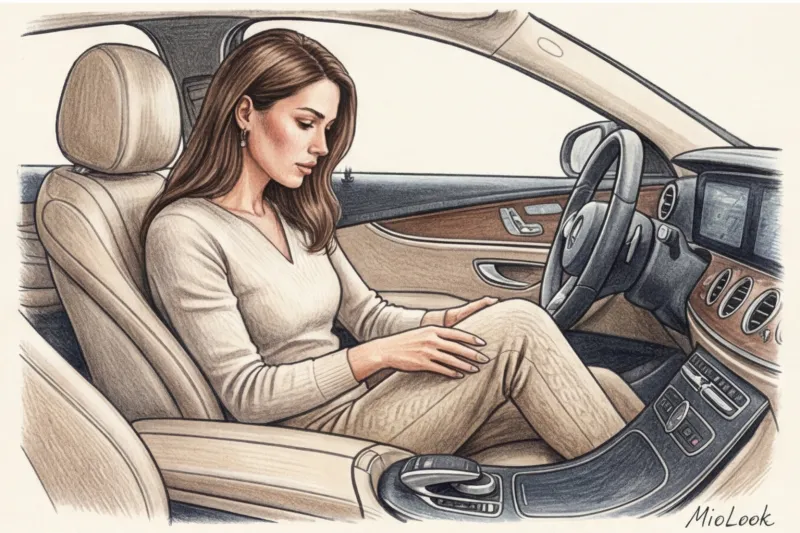
This situation perfectly illustrates the main misconception my new clients have: the blind belief that 100% natural ingredients are an absolute guarantee of quality. Over 12 years of working as a stylist and luxury wardrobe consultant, I've learned one counterintuitive lesson: for many items of clothing, pure wool, cotton, or silk are a surefire way to wrinkle, lose shape, and have a short lifespan. We've already covered the basic principles in more detail in our a complete guide to choosing fabrics , but today I want to explore the most stigmatized topic: why luxury brands intentionally add synthetics to their best products.
The "100% Natural" Myth: Why Clean Ingredients Don't Always Mean Quality
The stereotype that synthetics are always cheap and inferior dates back to the 1990s, when mass-market clothing was flooded with squeaky, non-breathable polyester. But let's distinguish between fast-fashion brands' attempts to cut production costs and the high-tech solutions of fashion houses.
Another telling story from my experience: we were putting together a capsule collection for the CEO of a large IT company. For an important presentation at a conference, she insisted on a suit made of 100% premium linen. The result? By the time she got to the venue in a taxi, her skirt had developed a network of deep folds, as if it hadn't been ironed at all. If the composition had contained at least 20% viscose or high-quality polyester, the cut would have remained impeccable.
"Modern luxury isn't about rejecting synthetics, but rather using them as a framework for natural fibers. Giants like Loro Piana and Ermenegildo Zegna have been incorporating polyamide into their outerwear lines for years to make cashmere and vicuña wind- and abrasion-resistant," Giulia Rossi.
That's why the secret of a status wardrobe The key is not to look for labels that say "100%," but to understand smart proportions.
Blended Fabrics: Pros and Cons for a Smart Wardrobe
When I make a shopping checklist for the season, we always evaluate blended fabrics: pros and cons which directly depend on the specific purpose of a particular item. A technological blend is a yarn in which a natural base is reinforced with synthetic thread to achieve new physical properties.
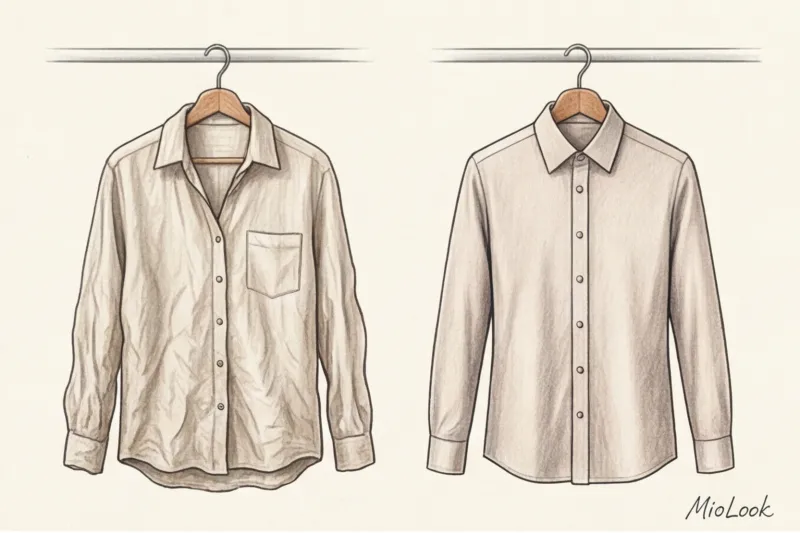
The main advantages of well-designed blends:
- Maintaining the cutting geometry: The shoulders of the jacket do not sag, and the knees of the trousers do not stretch out.
- Pilling resistance: The polyamide thread in the wool coat prevents pilling from forming due to the friction of the bag.
- Easy to care for: A silk blouse with added viscose or polyester wrinkles less and can be washed delicately more easily.
But here I must be honest with you and point out hard limitation This does NOT apply to tight-fitting underwear, T-shirts, and summer dresses. If a base T-shirt contains more than 15% synthetic fiber, breathability is compromised, creating a greenhouse effect and static buildup. Synthetics are ideal for underlayers and outerwear, but it's best to leave the base layer as breathable as possible.
How synthetic fibers change the properties of natural fibers
To avoid being intimidated by complex labels, you need to understand the "chemistry" of the process:
- Elastane / Spandex: is responsible for shape memory. It works like a microscopic spring.
- Polyester: Adds durability and permanently locks in color. It protects cotton items from fading in the sun.
- Polyamide / Nylon: Increases tensile strength. This is critical for fine coat fabrics and suiting wool.
The Golden Ratio: Ideal Proportions for Blended Fabrics
According to a McKinsey analytical report (2024), consumer demand has finally shifted from purely "natural" to "performance" fabrics. This is where the golden ratio of textiles comes into play: 70/30 or 80/20.
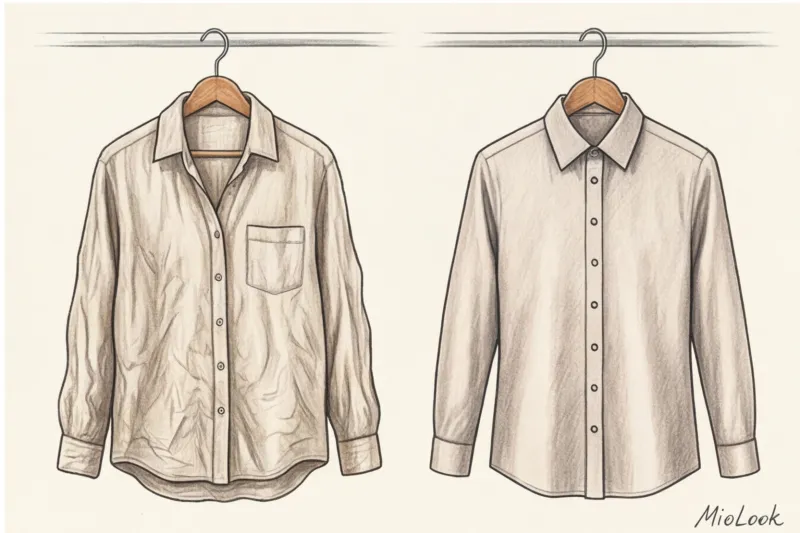
To ensure comfort and maintain the garment's elegant appearance, the proportion of synthetics (polyester, acrylic) in classic clothing should not exceed 20-30%. The remainder should be natural materials that promote thermoregulation.
But there are striking exceptions. Do you know why premium-brand pleated skirts hold their pleats for years, while mass-market ones fall apart after just one wash? The secret is that long-lasting pleating is physically impossible with 100% natural fabric—pressing the pleats requires between 50% and 100% high-quality polyester. This is precisely the case where the high proportion of synthetics is justified by the technology.
Ready to get started?
Try the free plan—no commitments required. Start creating perfect looks with AI.
Get access — €0.99 onceTop 5 Smart Mixes: What to Invest in Without a Doubt
When putting together capsule wardrobes for frequent business trips, I always rely on tried-and-true fabric formulas. Here are my personal top blends that look expensive and last on the road:
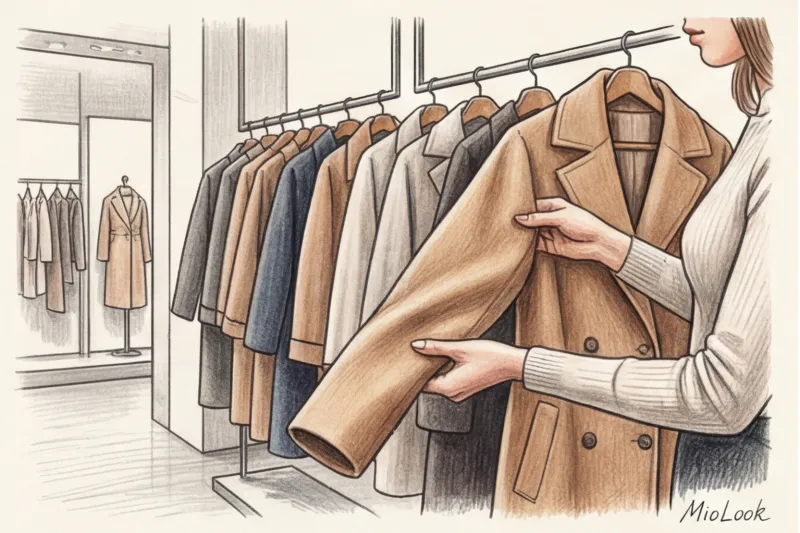
- Wool + Polyamide (80/20 or 75/25): The formula for the perfect winter coat. Natural wool provides warmth, while polyamide (often nylon) acts as reinforcement. This coat won't wear out where you wear it. business leather bag.
- Cotton + Elastane (95/5): A perfect balance between shirts and jeans. The magical 5% elastane allows for freedom of movement at your desk, without the fabric feeling cheaply stretchy.
- Silk + Viscose (or cupro): Luxurious, flowing blouses. Viscose (an artificial but breathable fiber made from cellulose) weighs down silk, making it less sheer and more pliable to drape.
- Cashmere + Merino Wool + Silk: Luxury knitwear. The addition of silk to cashmere (usually around 10-15%) gives the yarn a delicate sheen and protects the soft down from pilling.
- Fine wool + Polyester + Elastane (50/45/5): Armor for business women. These are the best pantsuits for long flights. You can spend 8 hours on a plane with laptop bag on your knees, stand up - and there won't be a single crease in your trousers.
How to Read Labels Like a Pro Stylist (A Practical Guide)
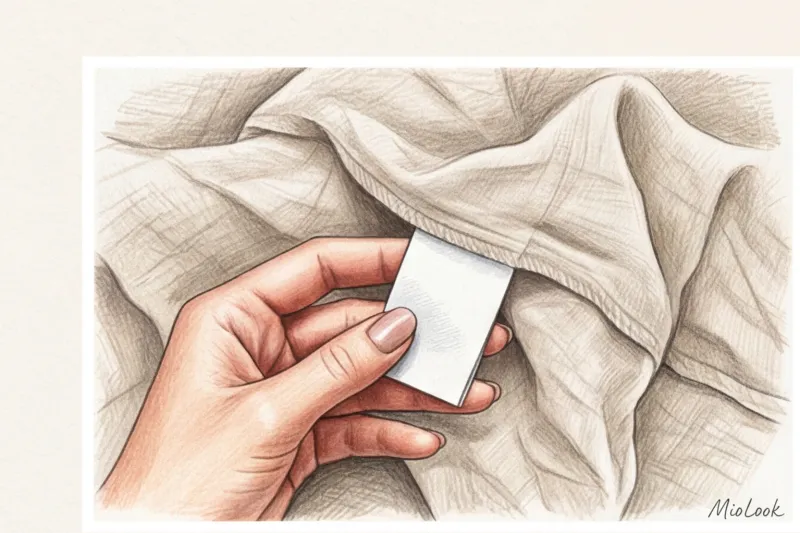
When purchasing fabrics, you need to test them just as carefully, How to test perfume correctly — not trusting first impressions. The cardboard tag on the collar, with "Italian Wool" written in large letters, is just marketing. The real truth is always hidden on the inside side seam of the garment.
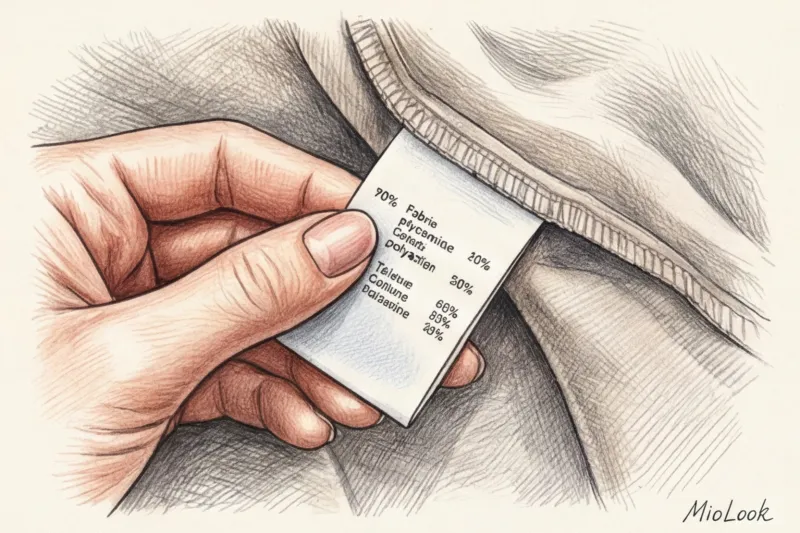
Beware of the "Cashmere Touch" or "Wool Blend" ploy. Mass-market brands often use these terms on items that contain only 3-5% of the valuable fiber, with the remaining 95% being cheap acrylic. Ingredients on the label are always listed in descending order of percentage. The first ingredient (for example, 60% Polyester) will determine the garment's key properties. If you see acrylic listed first, don't hesitate to hang the sweater back on the rack; it will lose its appearance within three washes.
Checklist before checkout: How to touch-test blended fabrics
Even if the composition on the tag looks like a perfect 80% wool and 20% polyamide, the quality of the threads themselves can vary dramatically. Just like in the world niche perfumery , components come in different varieties. I always do three quick tests right in the fitting room:
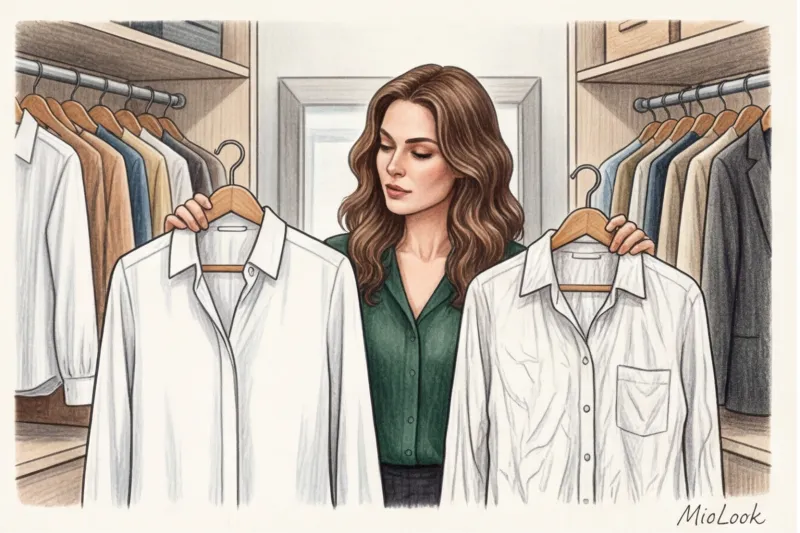
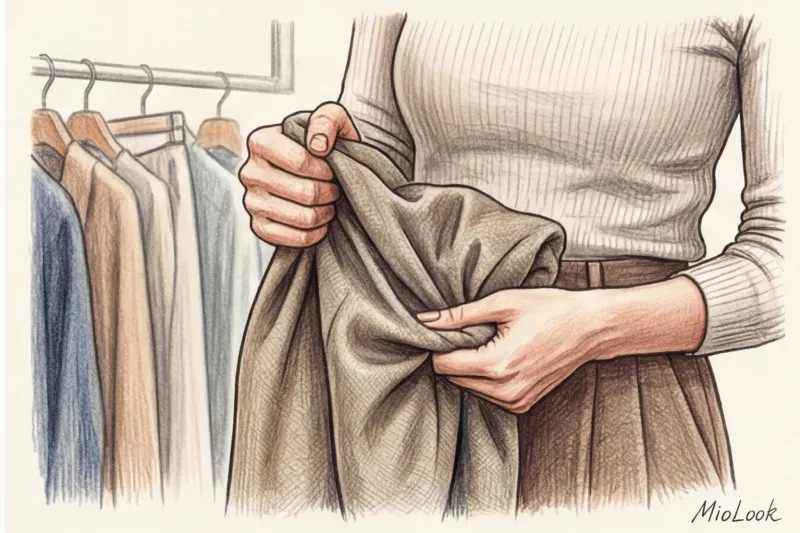
- Crease test: Squeeze the edge of the item tightly in your fist, hold for 10 seconds, and then release. If the fabric remains wrinkled, it will crease with every step you take. If the creases slowly but surely smooth out, the blend is excellent.
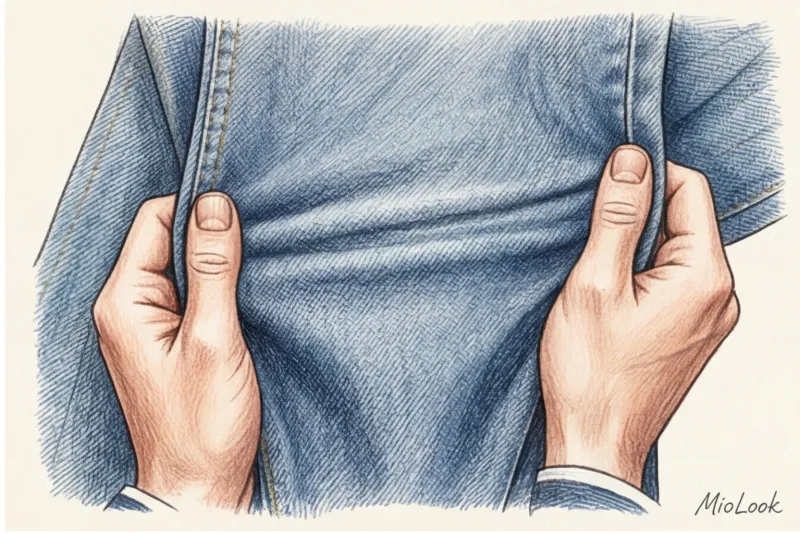
- Shape return test (springiness): Gently tug the fabric with both hands (especially effective for knits and denim) and release. It should instantly shrink back without leaving any ripples.
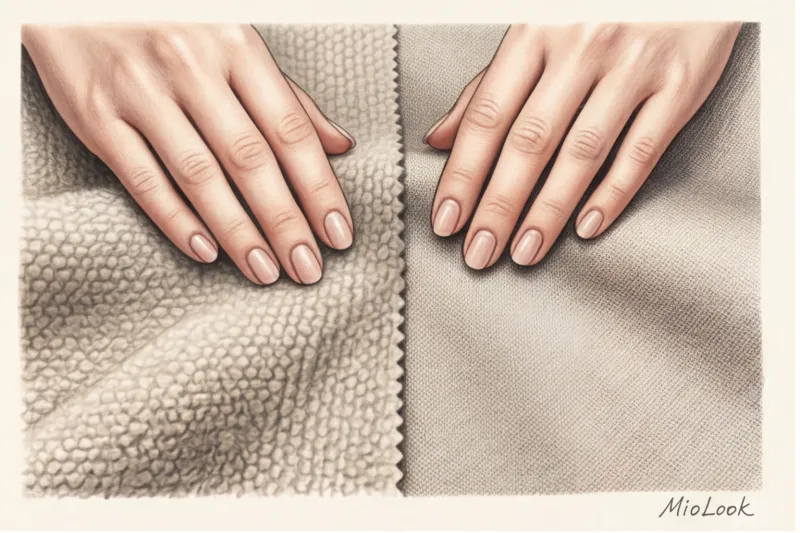
- Tactile rating: Press the fabric between your palms. Cheap polyester creates a "hothouse" feeling almost instantly, causing your hands to sweat. Furthermore, inferior synthetics have a characteristic "glassy," slippery sheen that cheapens any shade.
Conclusion: Invest in technology, not blindly in composition
Blended fabrics today aren't a compromise between price and quality. They're a technological evolution of fashion, designed to make clothes serve our comfort, rather than us serving them, protecting them from every drop of water or extra elbow. Knowing how to choose the right fiber proportions is a basic skill for conscious consumption.
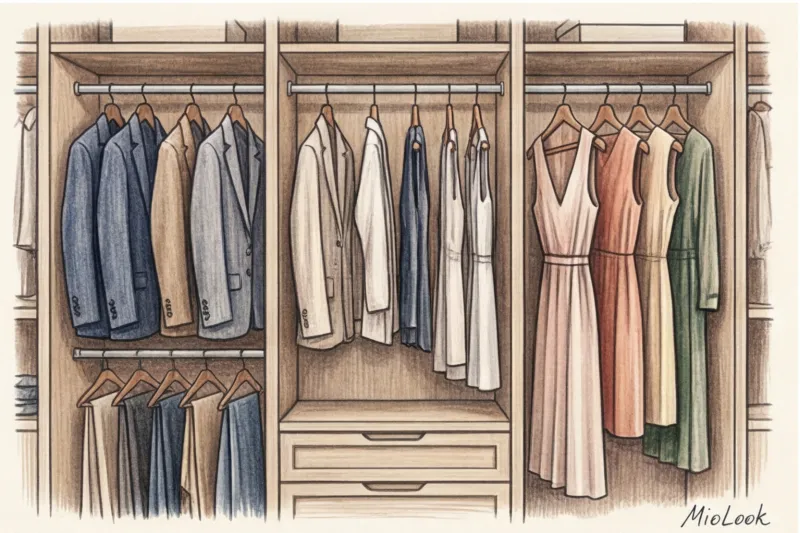
For homework, I suggest you do a little inventory. Open your closet and find two or three of your favorite items that you've worn for years and still look brand new. Study the tags inside. I bet you'll find those clever percentages of elastane, polyamide, or polyester.
Your perfect look starts here
Join thousands of users who look flawless every day. Upload your favorite items, and our smart algorithm will create stylish outfits for any occasion.
Get access — €0.99 once