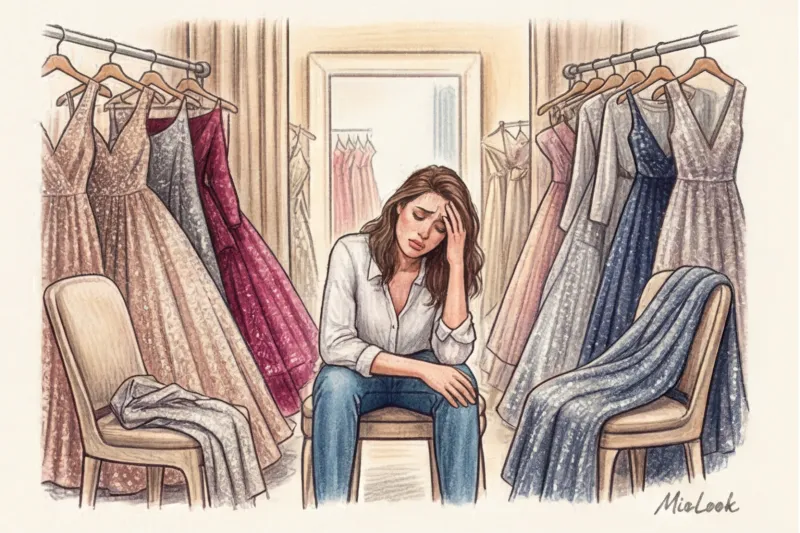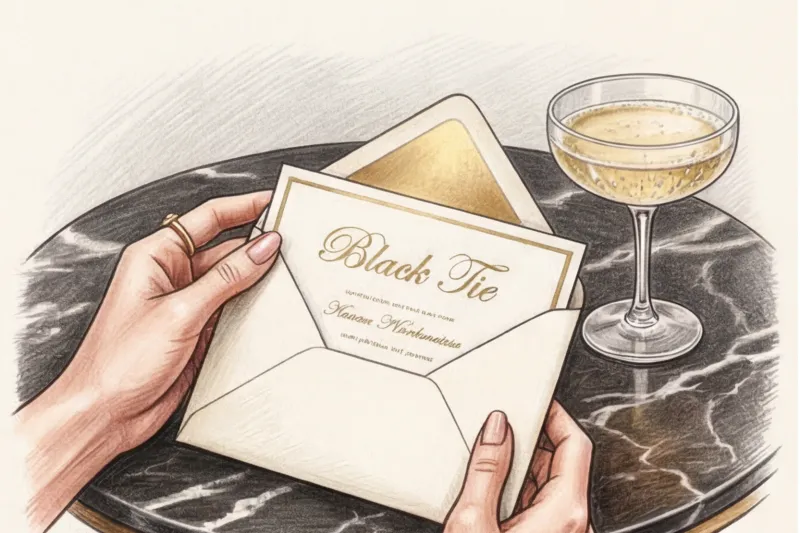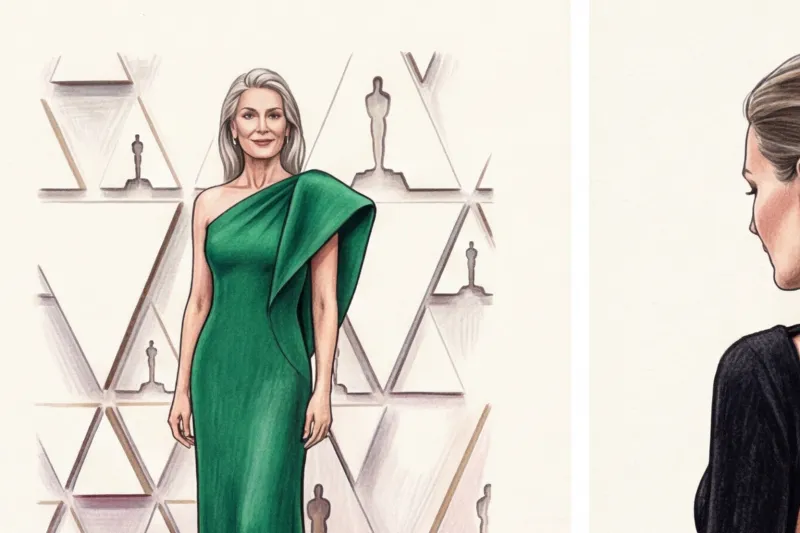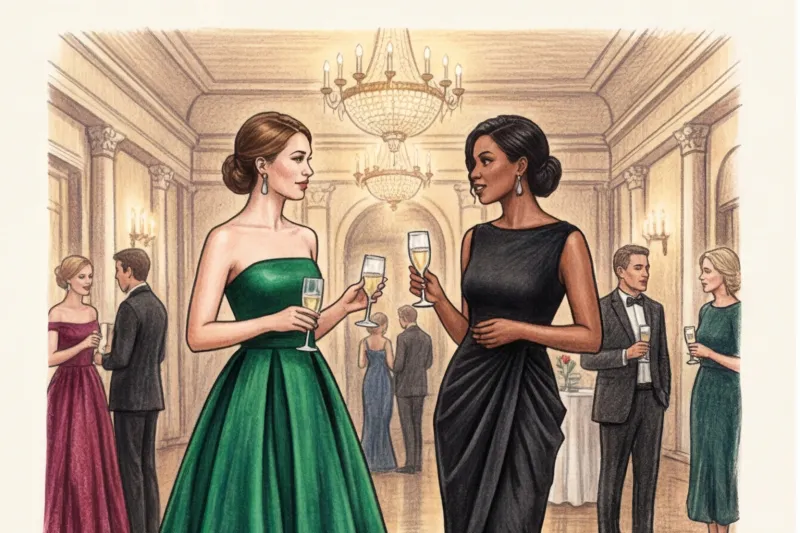
You know what I most often hear on the phone at the start of the social season? A brief sigh of panic after the words, "Camilla, the invitation says Black Tie." Usually followed by a dozen red carpet screenshots with the question, "Do I need the same thing, only a hundred times cheaper?"
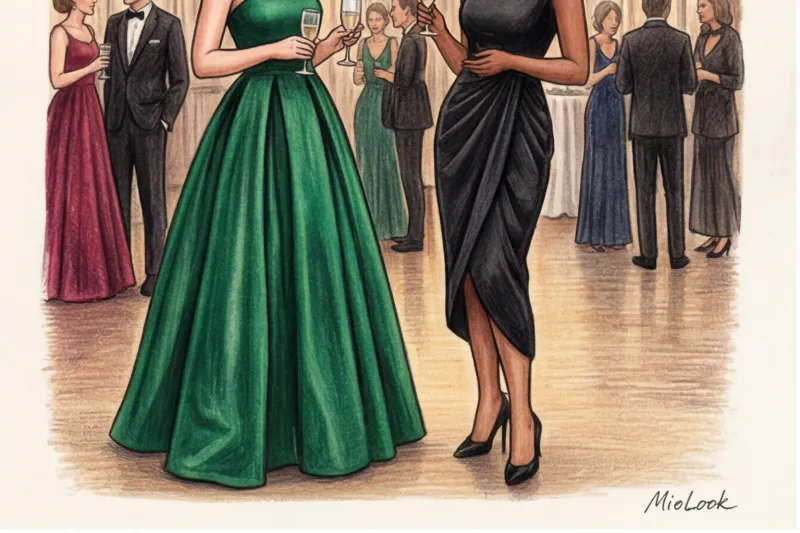
When we search the web Black tie dress code examples from celebrities seem unattainable to us solely because of the astronomical budgets. But after ten years of working at European fashion weeks and preparing clients for social events, I've realized one important thing: the secret to Hollywood looks isn't in the price tag. We covered this in more detail in our a complete guide to the stars' evening looks.
Instead of a banal list of styles, in this article we deconstruct eveningwear from the perspective of "optical physics." We'll explore how fabrics react to camera flashes, why the Hollywood "20-meter rule" works, and how to adapt couture techniques for real-life events, whether a gala dinner or a conservative corporate event.
The Red Carpet Illusion: Why We Confuse Black Tie and Cocktail
The psychology of dress code perception often plays a cruel joke on us. The words "Black Tie" on a thick cardboard invitation automatically conjures up images of crinolines and trains. But the main difference between a formal evening dress code and a cocktail dress code isn't the length.
A few years ago, at a private reception at the Ritz Hotel in Paris, I witnessed a classic scene: half the guests, intimidated by the word "Cocktail," showed up in overtly club-ready bandage minidresses, while the other half, seeing the "Black Tie Optional" invitation, donned puffy prom dresses made of thin tulle. Both felt uncomfortable.
The difference lies in the "architecture" of the look and the density of the fabric. Cocktail is dynamic, easy conversation, moving around the room with a glass, and the opportunity to dance. Black Tie is static, status-conscious, monumental, and posing. An evening dress for a formal dress code should hold its shape even when you're standing still.
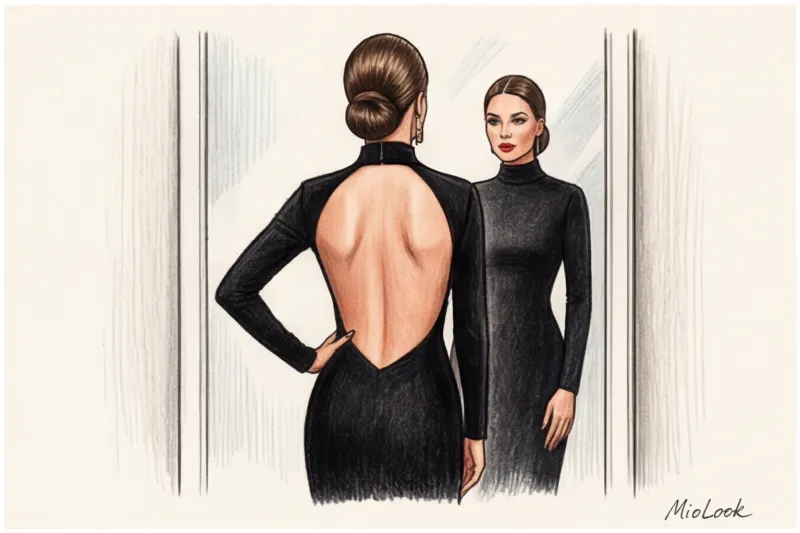
This is where light comes into play. In the dim light of a cocktail party, fine silk looks seductive. But under the harsh spotlights or flashes of photographers at a Black Tie event, the thin fabric will mercilessly highlight the slightest imperfections in your figure and underwear, visually cheapening the look.
Your perfect look starts here
Join thousands of users who look flawless every day with MioLook. Our smart AI stylist will create looks for any dress code.
Get access — €0.99 onceThe "One Focal Point" Rule: Celebrity Stylists' Top Secret
How does the human brain scan a silhouette? In a split second, we identify the key elements. If there are too many details—a deep neckline, a thigh-high slit, rhinestones, and a complex hairstyle—the eye can't focus. As a result, an abundance of accents undermines the status quo, turning a luxurious outfit into a provincial one.
Celebrity stylist Law Roach (the man behind Zendaya's modern style) put it this way in a 2023 interview: "Give the audience just one reason to hold their breath."
It's an absolute axiom of the red carpet: if you reveal your back, keep your chest completely covered. If you show off your legs, choose a stand-up collar and long sleeves. I once had to literally talk a business client out of buying a dress that featured a corset and a mid-thigh slit. We replaced it with a closed-front dress made of heavy crepe (approximately 280 g/m²) with a stunning back cutout. At the event itself, she received more compliments than she had the entire previous year.
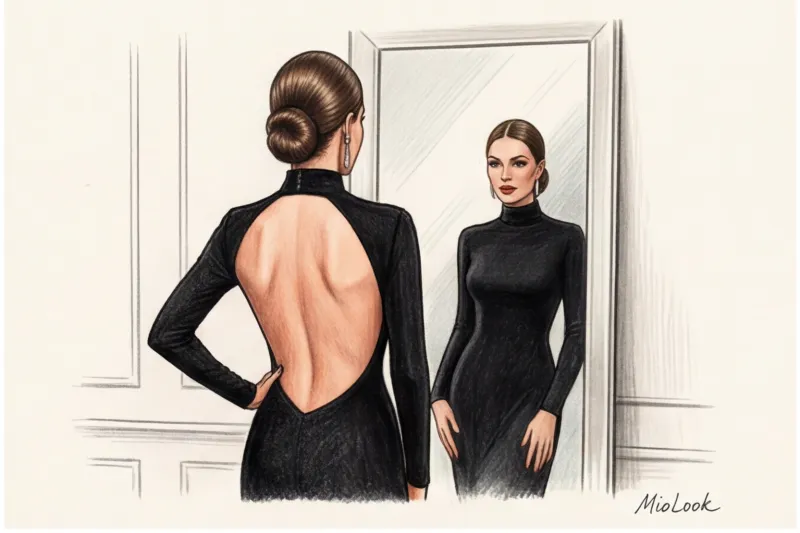
Of course, there's a caveat to this rule. A fully closed-front column dress can make you look older if the fabric is too matte and the color is a dull black. In such cases, architectural shoulders or statement, statement earrings that bring light back to your face are the answer.
Black tie dress code: celebrity examples worth adapting to your needs
A deconstruction of successful star appearances shows that minimalism always wins in the long run. If we study Black tie dress code: celebrity examples prove the effectiveness of the so-called "20-meter rule."
The perfect evening dress should be "readable" from 20 meters away. Fine lace, delicate gradients, or tiny beads blend into a blur from a distance (and in wide-angle photographs). But clean lines, large architectural ruffles, asymmetry, and dense textures work flawlessly. Matte velvet, for example, absorbs light and visually slims the silhouette, while taffeta creates that monumental volume without adding weight.
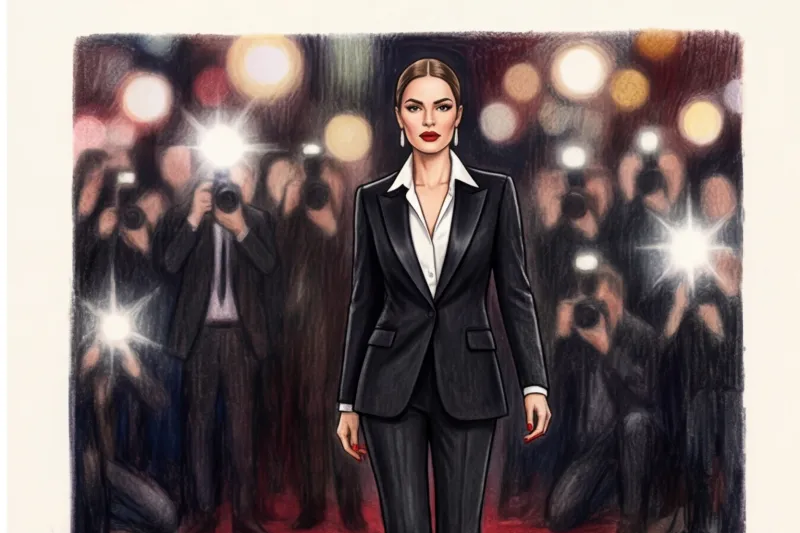
But the most counterintuitive insight I've learned from my experience as a stylist is that black tie doesn't necessarily mean a dress. Angelina Jolie's appearance in a custom tuxedo at the 2014 BAFTAs forever changed the rules of the red carpet.
Women's Tuxedo: The Ultimate in Evening Fashion
An impeccably tailored women's tuxedo made of thick crepe with silk lapels looks a hundred times more prestigious than a cheap floor-length chiffon dress. It's an intellectual sexiness, reminiscent of Yves Saint Laurent's iconic Le Smoking (1966).
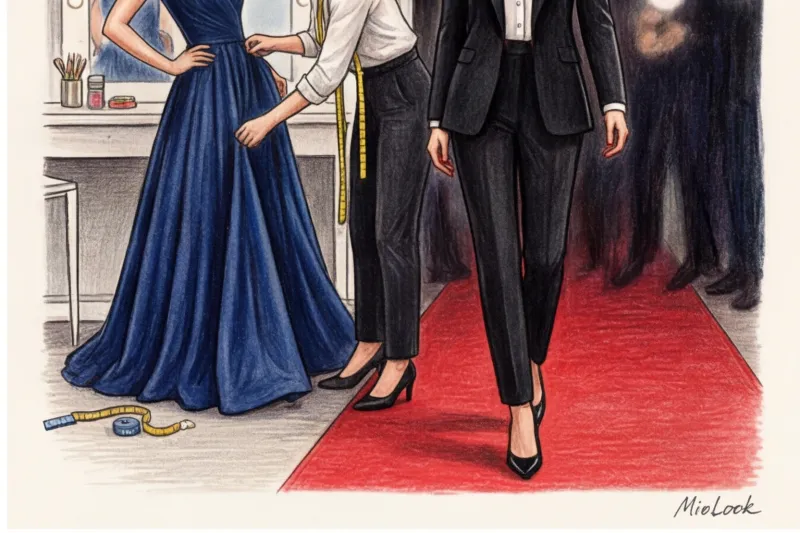
- Landing: The shoulder girdle should be rigid, as if hewn from stone. The length of the trousers should be exactly halfway up the heel (if they're flared) or revealing the ankle (if they're cropped skinny).
- What to wear with: For more conservative events, pair it with a crisp, crisp white shirt. For more bohemian occasions, wear it with a silk lingerie-style top or (if the context and dress code allow) on bare skin with double-sided fabric tape.
- Investment: A great mid-up tuxedo can be found in the €250-€400 range and will last for decades, unlike a one-off dress.
Access to MioLook for €0.99 — one-time payment
Not sure if a tuxedo suits you? Upload your photos to MioLook, and our Smart AI Stylist will find the perfect evening silhouette.
Get access — €0.99 onceRed Carpet Mistakes: Why €50,000 Couture Is Becoming a Meme
Many people believe the myth that an expensive dress automatically equates to a flawless look. Experience proves otherwise. The main enemy of Hollywood stars—and yours at any corporate party—is the spotlight.
Thin, translucent fabrics that look stunning in a dressing room with soft frontal lighting literally "disappear" under flashes. This effect, known as the "flash test," has ruined dozens of Oscar looks. The same thing will happen with your colleague's iPhone flash.
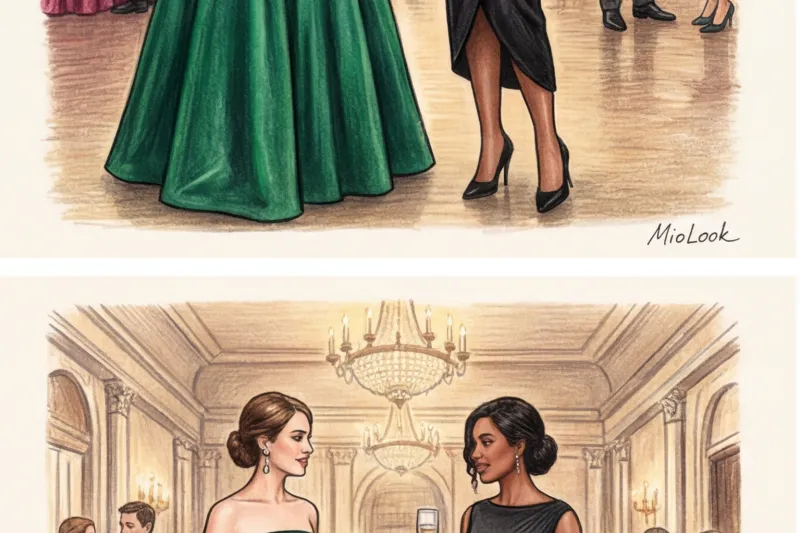
While working as an assistant at the Cannes Film Festival, I first saw how the professionals solve this problem. Stylists always use a double layer of skin-colored lining (not white or black, but nude) under any light-colored or silky outfits. This completely blocks the see-through effect under the flashes.
Another pitfall is overly complex tone-on-tone embroidery. In photographs, it creates the effect of wrinkled fabric or a dirty spot. When choosing a dress for an event where you'll be photographed, opt for smooth textures or contrasting, large embellishments.
Cocktail Dress Code: How to Avoid Going Casual or Club
To understand the cocktail dress code, it's important to look back at its history. Christian Dior popularized the concept of the "cocktail dress" in the late 1940s as an early evening attire (between 4:00 and 8:00 PM). It was a transitional wardrobe item—no longer a daytime suit, but not yet a formal evening gown.
Today, cocktail parties are most often reserved for social gatherings, presentations, and dinners with partners. The main no-nos here are cotton, linen, casual knitwear, revealing miniskirts, and any textures reminiscent of the beach or the gym.
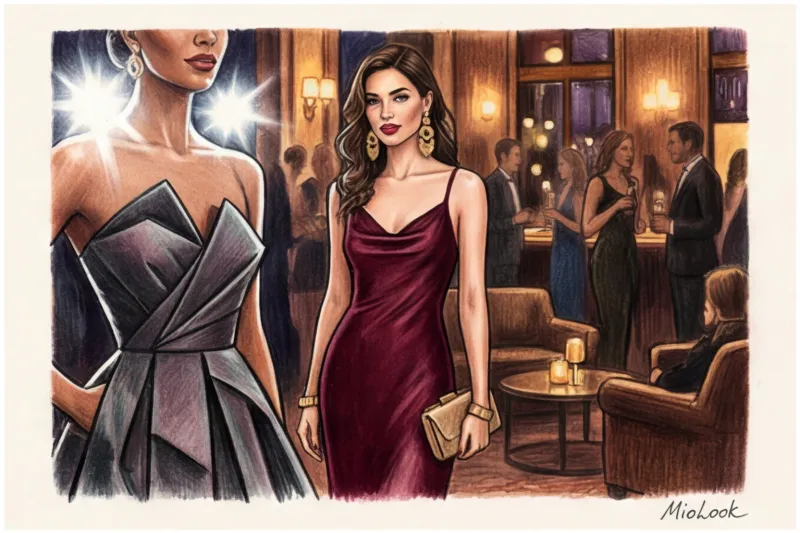
The safest and most elegant choice is a midi length (just below the knee or mid-calf). If you're heading to an event straight from the office, a simple rule of balance applies: the more understated the base, the more statement-making the accessories. A silk slip dress in a deep wine or emerald shade paired with large gold earrings, stiletto heels, and a tailored menswear jacket is the absolute epitome of a modern cocktail look.
Stylist checklist: testing out your evening look before going out
In my experience, 8 out of 10 clients admit to having bought a luxurious dress at least once in their lives, only to find they couldn't eat or breathe in it. To avoid this, inspect your outfit before you buy it (or before you go out, if you're ordering online). In the app MioLook You can put together a capsule of evening looks in advance and evaluate how the details go together, but the physical test is up to you.
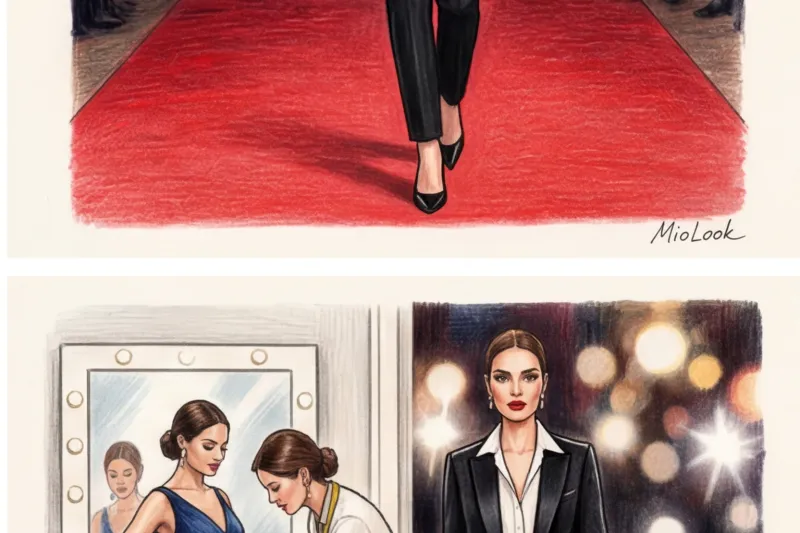
- The Sit and Dance Rule: If you can't raise your arms above your shoulders or sit comfortably on a low sofa without the risk of ripping a seam, the outfit doesn't suit you. Comfort is determined by your posture.
- Home Flash Test: Put on the dress and lingerie you plan to wear with it. Go into a dark room and ask someone to take a photo of you with a flash. You'll be surprised how many secrets black silk can reveal.
- Beauty balance: Always wear a simple, sleek hairstyle with a complex, architectural dress or a heavily embellished suit. Conversely, a simple slip dress will withstand the Hollywood wave.
- Chanel's Testament: Before leaving the house, look in the mirror and remove one accessory. A bracelet is often the least needed accessory when paired with statement earrings and a necklace.
True elegance on the red carpet and in life isn't born from the ability to endure the pain of a corset for the sake of a beautiful photo. It comes from allowing your clothes to become an extension of you, not a cage. Choose textures that flatter you, silhouettes that allow you to breathe, and remember: the most valuable element of any evening look is your relaxed confidence.