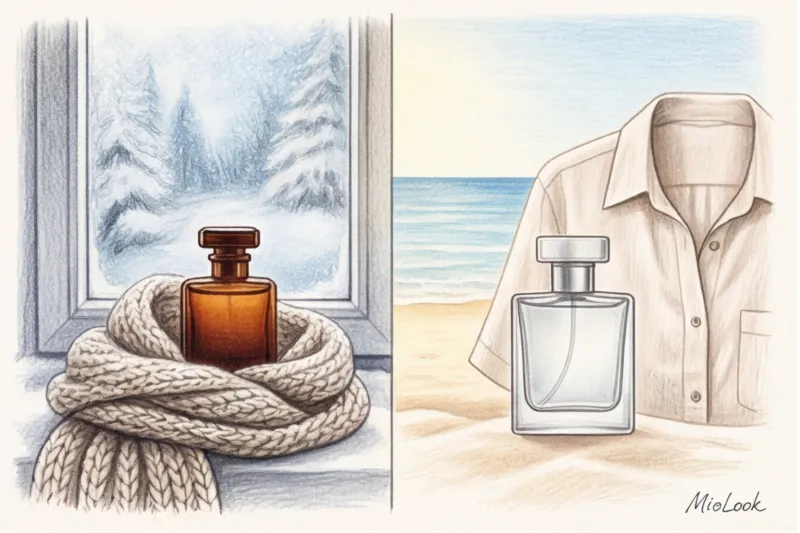
Two years ago, a client of mine brought in a luxurious beige 100% cashmere sweater for a wardrobe cleanout. A stubborn, yellowish oil stain adorned the collar. She had to throw out the €400 item because of one mistake: a generous spray of a heavy gourmand essence directly onto the light-colored yarn before heading out into the cold. It was then that I finally realized: winter perfume isn't just a "delicious scent"; it's a functional accessory. And it needs to be worn properly.
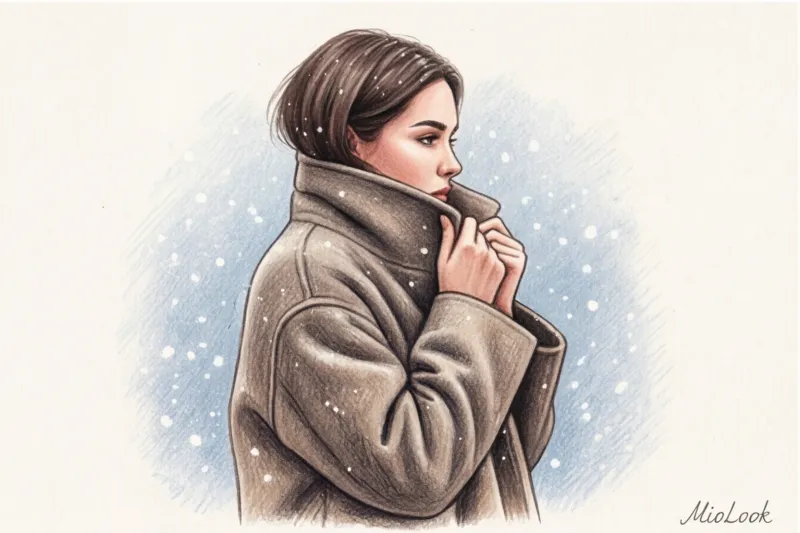
As a stylist, I constantly see the same picture. Women spend hours choosing the perfect coat or the perfect pair of boots, but continue to use the same light floral mist year-round. As a result, they smell like nothing on the street, and in an overheated office, their perfume turns into a chemical weapon. The right choice winter fragrances for women They should work like an invisible scarf: warming in the wind and softly cooling down when indoors. We've covered why the "one bottle for life" concept is hopelessly outdated in our guide. Perfume wardrobe: how to assemble a basic collection.
Let's break down the physics of winter perfumery, forget the marketing hype, and assemble a functional olfactory capsule that will save both your nerves and your expensive cashmere sweaters.
The Physics of Cold: Why Your Summer Favorites Are Freezing
Let's start with basic chemistry. The development of any fragrance is the process of evaporation of volatile molecules from the skin's surface. The rate of this evaporation is directly dependent on body temperature and the surrounding environment. In winter, when the thermometer drops below freezing, our blood vessels constrict, our skin becomes colder, and the outside air becomes drier and denser.
What happens to summer fruity or light aquatic fragrances in the cold? They literally "collapse." The light citrus molecules (limonene) and delicate florals evaporate in minutes, without even having time to form a trail. You leave the house, reach the subway, and the scent is gone.

A study by the Grasse Institute of Perfumery (2023) confirms that at temperatures below 5°C, the diffusion (the ability of a scent to fill a space) of light floral compositions drops by 70%. This is why, in winter, we need heavier, larger molecules—resins, woods, musks, and spices. They evaporate slowly, creating that warming cocoon that combats the frosty air.
Your perfect look starts here
Join thousands of users who look flawless every day with MioLook.
Get access — €0.99 onceThree pillars of winter perfumery: scents that warm you up
To prevent perfume from getting lost in layers of wool and down, its structure must be dense. I identify three main categories that work reliably in the European winter.
Woody and resinous notes
If you love a strict cut, chesterfield coat and minimalism, woody perfume for women — your best investment. Sandalwood imparts a creamy softness, cedar adds a dry, pencil-like austerity, and oud and amber provide phenomenal longevity. Resins (labdanum, benzoin) resonate gracefully in the cold, without being overly sweet.
"A woody base works like the perfect beige trench coat—it ties the look together and adds a touch of class, even if you're wearing simple jeans and a chunky sweater," says Katarzyna Nowak.
Spicy and gourmet compositions
Cinnamon, cardamom, nutmeg, black coffee, and bitter vanilla. This category has a "hot mulled wine" effect. They're perfect for weekends, strolls through Christmas markets, or informal gatherings. The key here is to find balance. To avoid smelling like a candy factory, choose scents where the sweetness is balanced by the bitterness (for example, vanilla with tobacco or chocolate with patchouli).
Leather and tobacco
The most sophisticated and prestigious category. Leather fragrances pair luxuriously with textured fabrics—tweed, thick flannel, and, of course, leather itself. They add masculinity and confidence to any look. They're the perfect choice for high-level business meetings or for an evening when wearing a tailored pantsuit.

Fabrics and Fragrances: How to Wear Perfume with Wool and Cashmere
As a stylist, I must warn you: how a fragrance smells on your skin and how it permeates your clothes are two different stories. According to textile technologists, natural wool (especially merino and cashmere) has a porous structure. It can retain perfume oils for up to three weeks! Synthetics like polyester or acrylic, on the other hand, lose their scent after just a couple of hours.
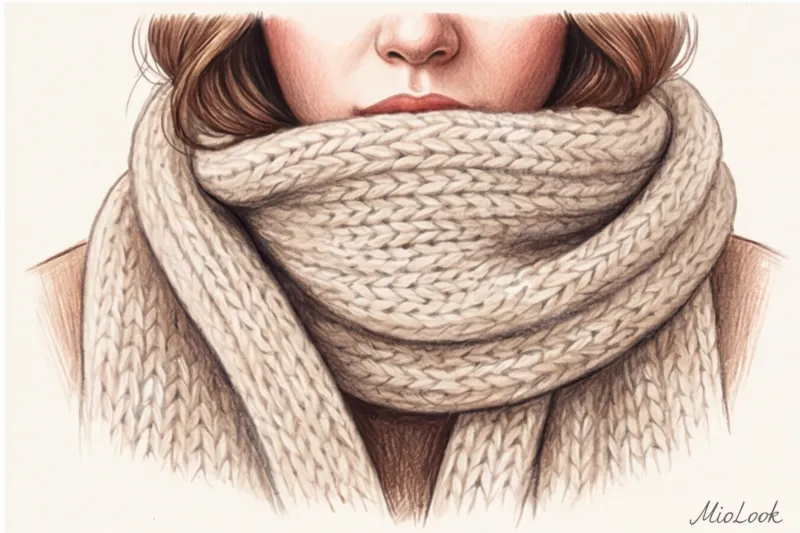
It follows from this the main danger of winter perfume — staining. Heavy winter perfumes (especially those with notes of natural vanilla, amber, or oud) often have a dark amber color. When sprayed on a light-colored collar, they leave those indelible yellow stains I mentioned at the beginning.

My golden rule for the "scented scarf":
Never spray perfume on your clothes. Apply it locally: to the back of your neck under your hairline and to the crooks of your elbows BEFORE putting on a sweater. Your skin will release some of the warmth, the scent will rise, and your hair and collar will gently pick up the scent without the risk of oil stains.
Organize your wardrobe wisely
Try MioLook for free: A smart AI stylist will help you find the perfect look and create a capsule wardrobe to match any perfume.
Get access — €0.99 onceThe Central Heating Rule: How to Avoid Suffocating Your Coworkers in the Office
Here we come to the most insidious aspect of winter perfumery. Imagine: you've sprayed three sprays of a rich, oriental rose-infused oud. In -10°C weather, it sounds like a fairy tale. But then you walk into the office. The temperature is 23°C, the air is dry from the radiators, the windows are closed. Within 15 minutes, your perfume is literally screaming, filling the entire open space.

Business etiquette is strict: your scent shouldn't extend beyond your outstretched arm. Winter perfume for the street and winter perfume for the office are fundamentally different things.
- For Business Formal dress code: Choose dry woody bases (cedar, vetiver) or iris-based compositions. They smell clean, like crisp shirts and collectedness. No vanilla or praline.
- For Smart Casual (Friday office): Light spices are acceptable—pink pepper, cardamom, black tea. They create a cozy yet professional distance.
Advice from practice: If you can't give up your favorite scent, use a micro-dose. Just spray it into the air (create a cloud) and step into it. This is enough for the scent to linger on you from morning until night, without infringing on your coworkers' privacy.
Busting the Myth: Why Citrus and Aldehydes Are Luxurious in the Cold
And now for a counterintuitive insight that often surprises my clients. Who said you ONLY have to wear sweet and heavy perfumes in winter? If you're tired of gourmands, it's time to get them off the shelf. fresh citrus perfume and aldehydes.

The paradox of perception is that cold makes aquatic and aldehyde compositions resonate. Think of the legendary Chanel No. 5 or the classic White Linen by Estée Lauder. In summer, aldehydes can have a "grandmother's soap" note. But wear them in the bitter cold, and they sound like broken crystal. A stunning "crisp clean" effect emerges, the scent of freshly washed laundry brought in from the cold.
When it does NOT work: This trick is absolutely not suitable for those with "cold" skin (when hands are always cold and blood pressure is low). On such skin, icy fragrances in winter can have a sour, metallic note. However, on "hot" skin, they reveal themselves flawlessly.
Checklist: Putting together a basic winter perfume wardrobe
In the appendix MioLook I always ask my clients to associate fragrances with specific capsules. A winter fragrance wardrobe doesn't require dozens of bottles. Three carefully selected items in different price ranges are enough.
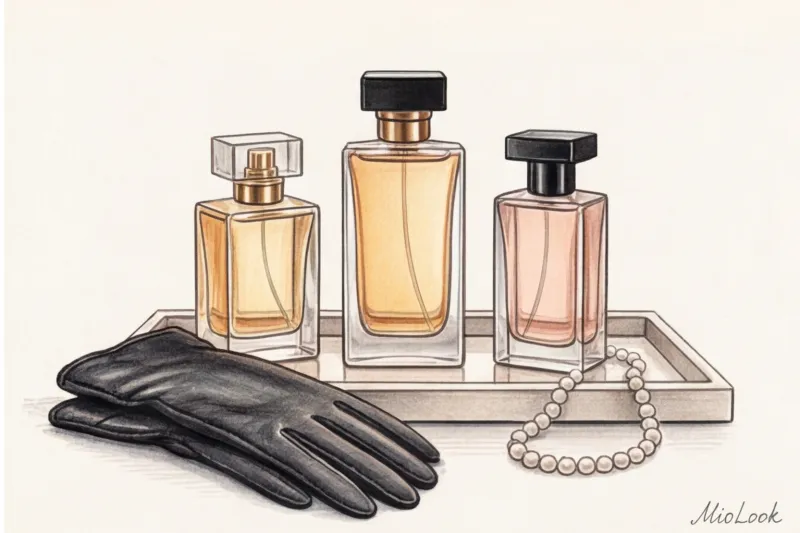
- Fragrance #1: Office Base (Day/Neutral)
The goal: sit close to the skin, smell well-groomed, and not irritate coworkers in a heated room. Look for notes: white musk, iris, cedar, tea rose.
Smart shopping: Instead of the expensive Byredo Blanche (from €180), take a look at the Zara line (for example, A Perfume in Rose (for €20–25). They're less long-lasting, which is a plus for a winter office—the scent fades well by evening. - Fragrance #2: For walks and weekends (Warming/Lingering)
The goal: to cut through a wool scarf, warm in the cold, and create a feeling of coziness. Look for notes: cinnamon, tonka bean, tobacco, cherry, rum.
Smart shopping: Cult Ebony Wood From the Zara x Jo Malone collaboration (around €25) smells like a good niche fragrance for €150. It's a great budget alternative to the dense, woody scents from Tom Ford. - Fragrance No. 3: For corporate events and evening outings (Status/Sophisticated)
The goal: to attract attention, paired with silk, velvet, or an evening suit. Look for notes: leather, patchouli, tuberose, saffron.
Smart shopping: It's harder to save money here, as leather and oud bases are often cheapened in the mass market. I recommend checking out the mid-range segment at Massimo Dutti (Eau de Parfum collection, around €50-60)—they have stunningly crafted, understated evening compositions without excessive sweetness.
Fashions for specific notes come and go, but the laws of physics remain unchanged. Next time you stand in front of your perfume shelf on a cold winter morning, ask yourself one question: "Where will I spend most of today—in the biting wind or next to a hot radiator?" This simple filter will forever save you from perfume mistakes and more than one cashmere sweater.