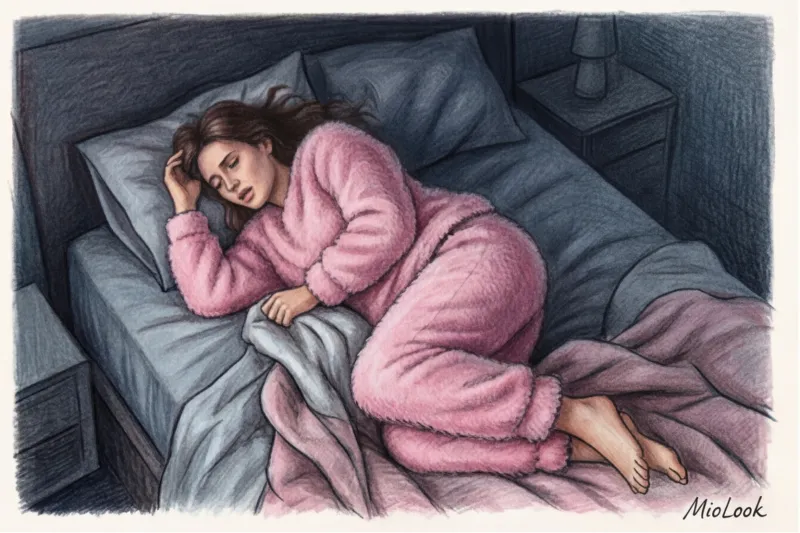
Sound familiar: it's minus 10 outside, the bedroom is chilly, you wrap yourself in your thickest, fluffiest pajamas, and then wake up at 3 a.m. sweating, throwing off the covers? As a certified colorist and stylist, I've analyzed hundreds of home wardrobes over 12 years of practice. And you know what I see most often? A huge gap between how clothes look and how they work on our bodies.
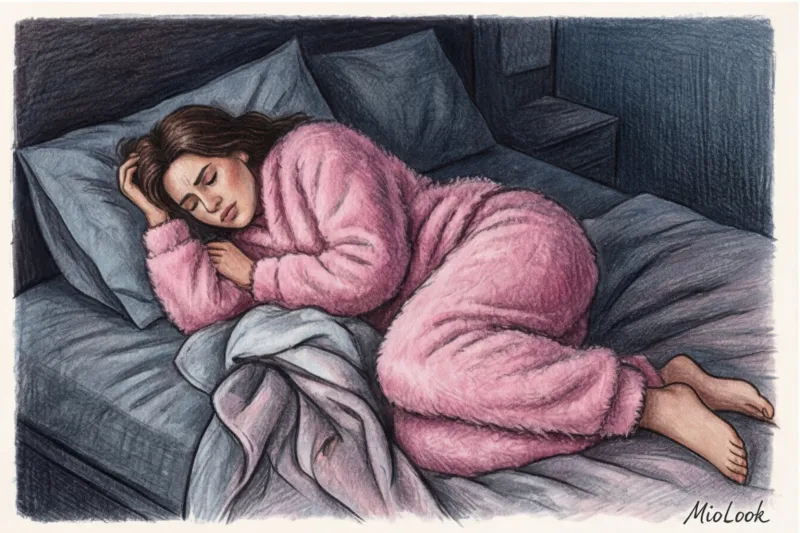
We talked about this in more detail in our A complete guide to choosing pajamas for healthy sleep and beautiful skin , but today I want to talk about winter specifics. The right warm pajamas for winter aren't the ones with the most lint. They're a complex thermoregulatory system that needs to work in tandem with your blanket.
Let's debunk the biggest mass-market myth and figure out why your favorite plush pajamas might be the cause of your morning fatigue, and what you should really look for on the labels of brands like Uniqlo, COS, or H&M.
Why the "warmest pajamas for winter" is a physiological trap
When choosing a home capsule, I always start with one question: "What is the temperature in your bedroom at night?" Answer it yourself before buying another cozy item.
According to data National Sleep Foundation (2023), to trigger melatonin production and enter deep sleep, our body temperature needs to drop slightly. The optimal microclimate under the covers is around 28–30°C. What happens when you wear ultra-thick synthetics?
"A person releases up to 200 ml of moisture per night. If the fabric can't absorb it, a greenhouse effect is created. The temperature under the blanket soars to 35°C+, the brain receives a signal of dangerous overheating and releases cortisol. The result is that you wake up feeling tired."
There's a huge difference between "cuddling up on the couch in the evening watching a TV show" and "sleeping for eight hours under a down duvet." Clothing for these two scenarios requires different choices.
Flannel: The Gold Standard of Thermoregulation
If I were asked to choose just one winter sleepwear item, it would be 100% cotton flannel. The secret to this material lies in its production: the fabric is passed through special rollers that lift some of the fibers, creating that soft, fluffy finish.
According to the principles of textile science, this pile creates an air gap between the fabric and the skin. Flannel doesn't just keep you warm—it traps your own body heat while remaining completely breathable.
- Hygroscopicity: Cotton flannel can absorb up to 20% of its own weight in moisture while remaining dry to the touch.
- Durability: Unlike many modern materials, high-quality flannel only becomes softer after each wash.
- Style: A classic flannel shirt with an English collar and piping always looks classy. Even if you bought the set for €50, it will look like a luxury item.
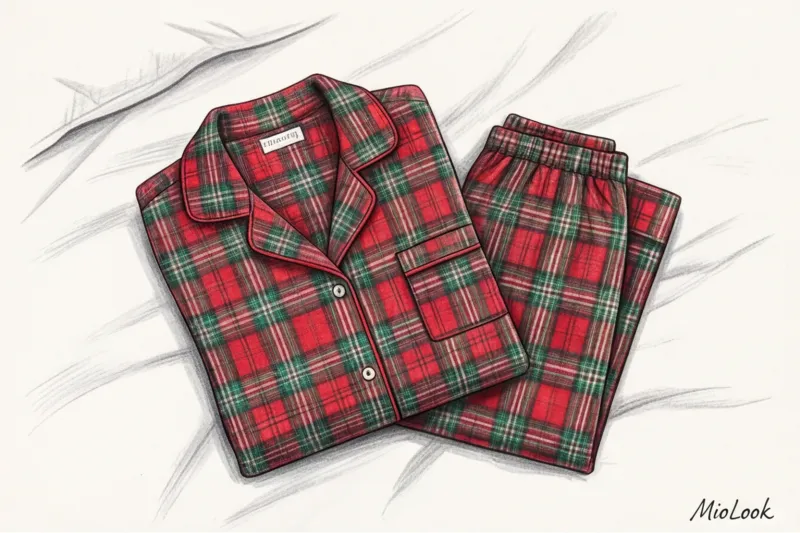
How to distinguish good flannel pajamas from cheap knockoffs
Not all flannel is created equal. Stores often sell blended fabrics (containing over 30% polyester), which negate the cotton's magic. Here are my professional tips for checking quality right in the fitting room:
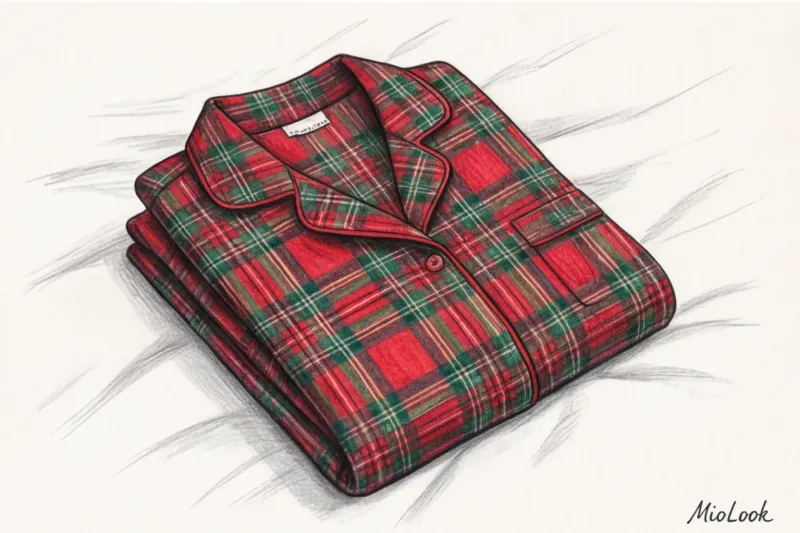
- Translucent test. Hold the fabric up to a lamp. If you can clearly see the light source through the weave, the density is too low (less than 150 g/m²). Such pajamas will fall apart at the seams within a couple of months.
- Pile assessment. Rub the fleece lightly with your fingers. If pilling immediately forms on your hands or on the fabric itself, it's a cheap, short-fibered fabric.
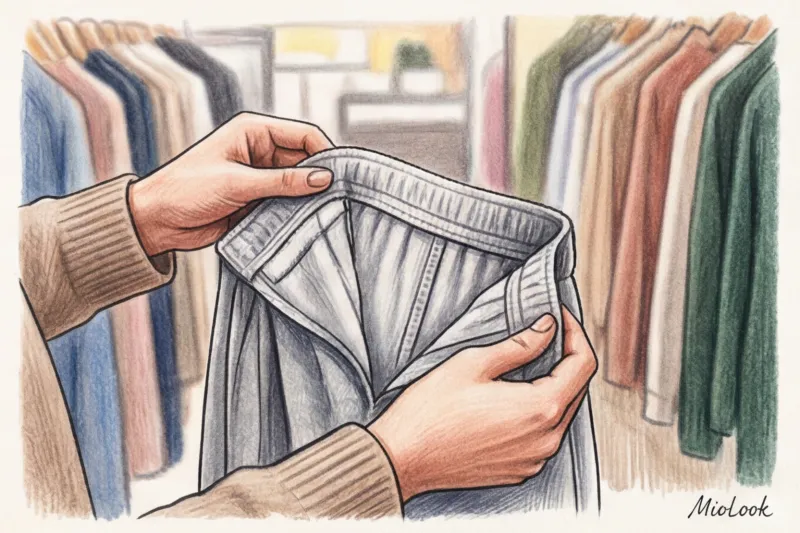
- Seam treatment. Turn the garment inside out. A French (closed) or neatly overlocked seam with no loose threads is the main indicator that the garment will last more than one season.
Fleece: The Cozy Enemy of Deep Sleep?
And now for the most painful part. Those fluffy, incredibly soft pajamas with bear ears that fill the shelves of mass-market stores in December are 100% polyester. They're plastic.
One of my clients, a top manager at an IT company, suffered from insomnia and back rashes for six months. We tried everything: care, nutrition, stress. Then it turned out that with the onset of cold weather, she started sleeping in a new plush fleece suit for €80. Once we replaced it with breathable cotton, the problem disappeared within a week.
Fleece retains heat incredibly well, but has zero hygroscopicity. Sleeping in it is like wrapping yourself in a plastic bag. However, this doesn't mean you should throw away the fleece.
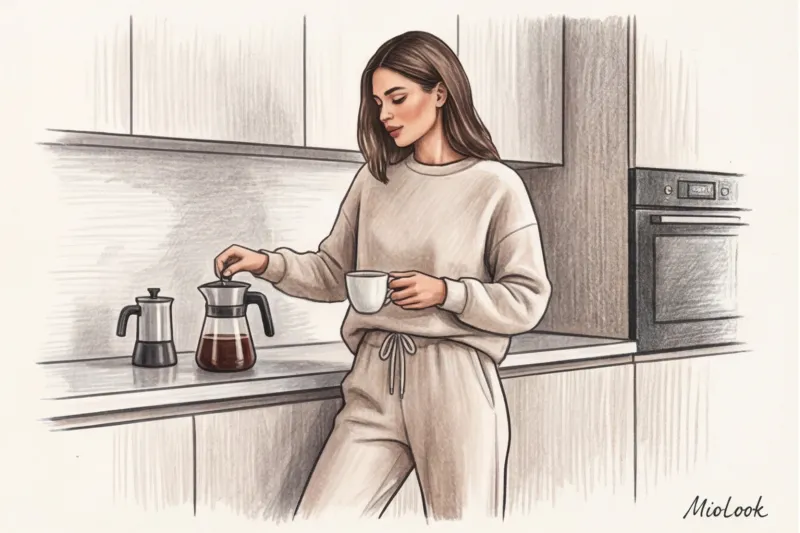
When fleece works best: This is excellent lounge wear for remote work, long breakfasts in a cool kitchen, or evenings with a book. The main rule is to take it off before going to bed.
Stylistic nuance: To avoid a fleece suit looking childish, avoid bold colors and appliqués. Choose monochrome sets in refined shades: ecru, graphite, deep camel.

Optimize your home wardrobe
Using MioLook's artificial intelligence, you can sort your items by season and understand which materials are needed for a comfortable winter.
Get access — €0.99 onceFleece (with or without brushed lining): a compromise between warmth and aesthetics
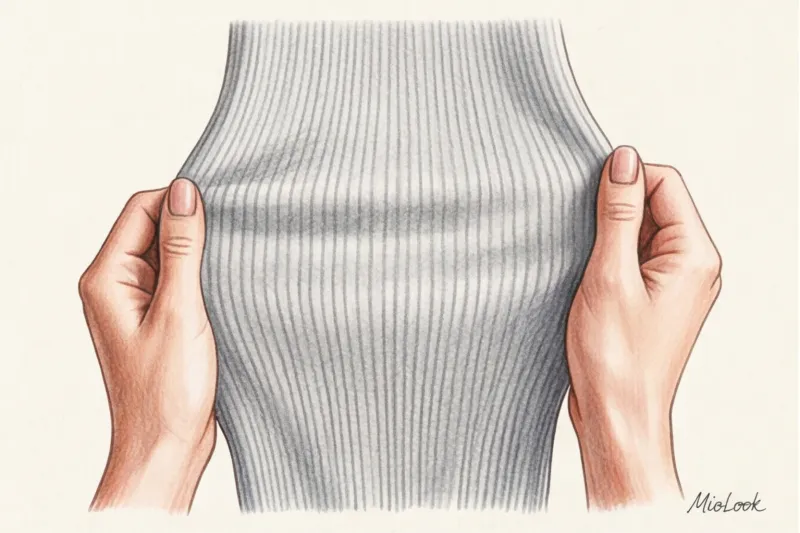
For those who hate buttons and classic tailoring, there's footer. It's a knitted fabric that's smooth on the front and looped (or napped) on the back.
I personally tested suits made of thick fleece while wintering in Norway, where heating in the houses is negligible. Unlike fleece, fleece is made of cotton, so the skin breathes.

This is the perfect choice for smart-casual enthusiasts. An oversized sweatshirt and fleece joggers create the perfect look for opening the door for a delivery person, going out for coffee, or jumping into a video call with colleagues.
Fair Limit: Oversized suits made of thick fleece (300 g/m² and above) are not suitable for sleeping if you toss and turn a lot. The fabric is bulky and will bunch up and cause pressure. For bed, it's better to choose a thin, non-brushed, double-thread fleece.
The ideal composition to look for is 80–90% cotton and 10–20% elastane or polyester. Synthetics are essential to prevent stretched knees from ruining your mood on the second day of wearing them.
A stylist's checklist: how to choose warm pajamas for winter
Buying loungewear is often an afterthought. But let's be honest: we spend a third of our lives in pajamas. Here's my checklist to ensure your warm winter pajamas are both comfortable and stylish:
- The magic of size. Sleepwear should be purchased one or even two sizes larger than your usual size. Nothing should be tight when you bend your elbows or knees.
- Furniture embargo. Avoid large buttons, metal zippers, and thick seams on the back. At night, every such detail will become a rock under the mattress.
- Rubber band test. The lymphatic system actively detoxifies the body at night. A tight elastic waistband can block lymph flow. Insert both palms under the waistband of your pants while you're in the store—if you feel too much pressure, leave the item on the shelf.
- Psychology of color. As a colorist, I insist: avoid pure white (it washes out quickly) and black (it shows every speck of dust and fluff). Complex pastel tones are ideal for relaxing the nervous system: dusty rose, sage, sage blue, lavender.
Don't know what colors suit you?
Use MioLook's appearance analysis feature. Our AI colorist will determine your personality type and select the perfect palette, even for your personal capsule.
Get access — €0.99 onceCaring for Winter Fabrics: How to Maintain Softness After Washing
Buying the right pajamas is half the battle. I often hear complaints like, "I bought expensive flannel for €150, and after a month it became as stiff as cardboard." The problem almost always lies in care.
The main mistake is washing at high temperatures. Both cotton and fleece cannot withstand water hotter than 30–40°C. At 60°C, cotton fibers shrink, and your favorite sweatshirt is guaranteed to shrink a size or two.
And the main insider secret, which is rarely written on the tags: Never use harsh fabric softeners on pajamas. Fabric conditioners coat the fibers of fabrics with a thin silicone film (this is what gives them their artificial smoothness). This film completely blocks moisture absorption. Cotton simply stops absorbing sweat, returning us to the greenhouse effect.
To soften the fabric, it is better to use modern gels for delicate washing and add half a glass of regular table vinegar to the rinse compartment (the smell will disappear during drying, and the fabric will become incredibly soft).
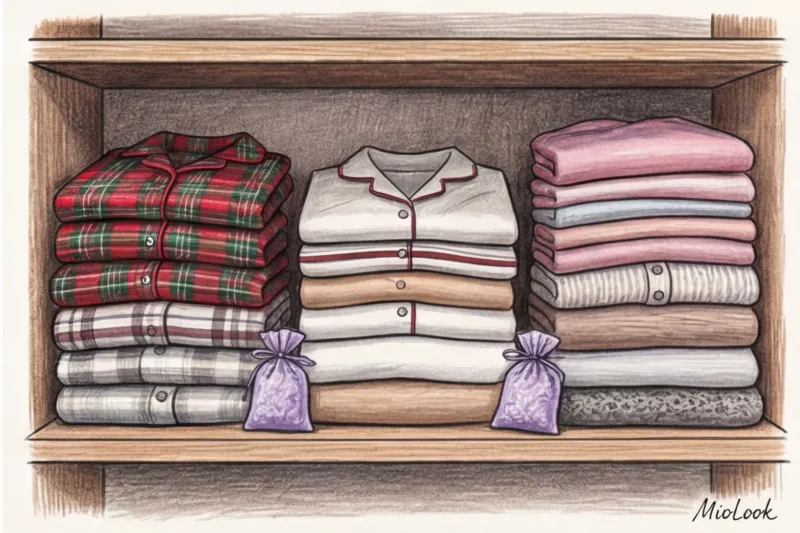
Let's sum it up. Save the fluffy plush for your morning coffee, and invest in high-quality cotton flannel or thin terry for bedtime. Take a look at your wardrobe tonight and check the ingredients on the tags—the secret to your morning energy might lie there.