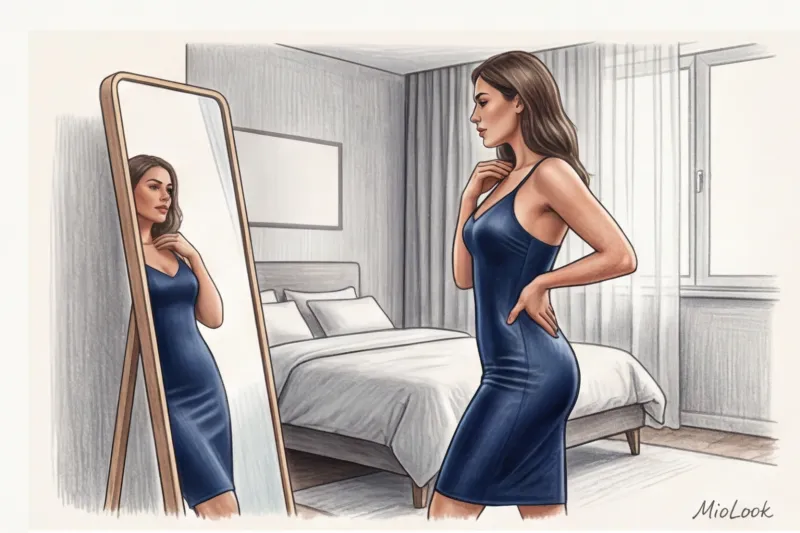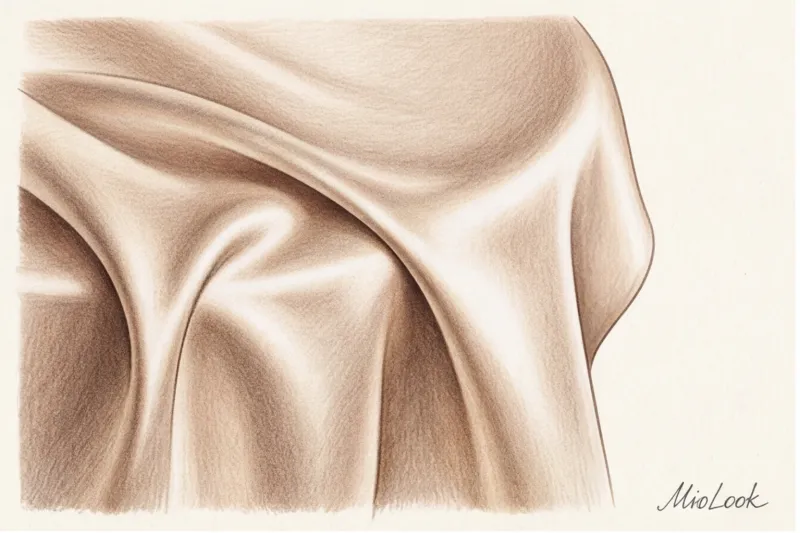
About three years ago, my client Anna, a top manager at an IT company, bought a stunning silk slip dress for €400 for an important gala. It looked flawless in the fitting room. But as soon as she took a few steps across the venue, the thin fabric treacherously began to rise, bunch up in her folds, and literally "glue" itself to her hips. The cause of this fashion disaster cost only €15—it was a pair of ordinary cotton panties. That's when I realized: choosing underwear to go with a slip dress should be based not on aesthetics, but on the laws of physics.
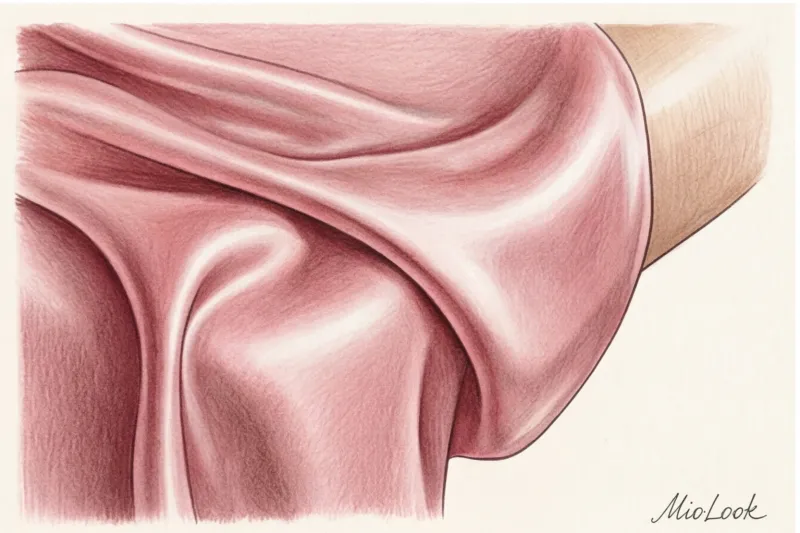
We talked in more detail about the architecture of the image and how the invisible framework for complex outfits is built in our The complete guide to the perfect lingerie for a low-cut dress Today we'll tackle a specific, most challenging wardrobe task.
Fabric Physics: Why Choosing Underwear to Wear with a Slip Dress Is So Difficult
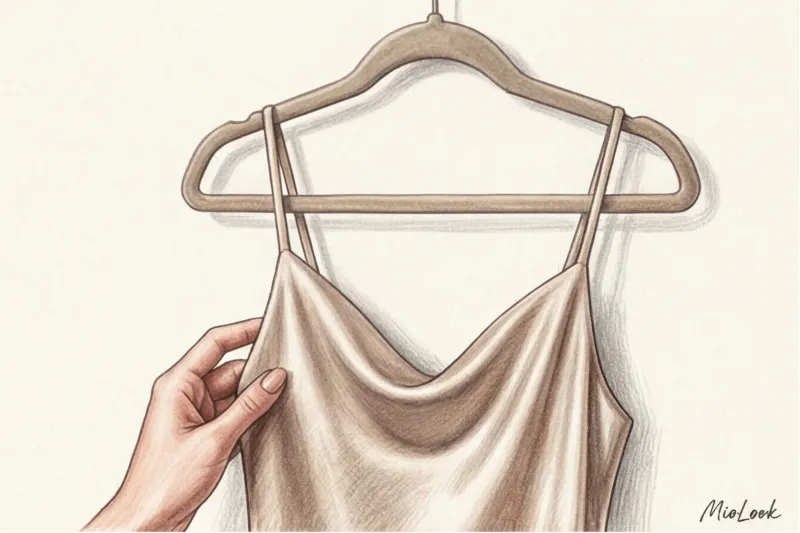
A slip dress is a litmus test for your wardrobe. Silk, viscose, and cupra act like a magnifying glass, instantly highlighting any unevenness, seam, or texture hidden beneath. This is the so-called "texture contrast rule."
But the main problem lies in static electricity and friction. According to textile technologists, the difference in friction coefficient between natural silk and lace is three times higher than between silk and smooth microfiber. What does this mean in practice? Any rough surface underneath your dress will snag the fabric with every step.
Underwear for a slip isn't just a piece of fabric. It's an engineered framework that creates tension, fit, and movement for the garment.
What underwear to wear with a slip dress: 4 ironclad rules from a stylist
Forget cotton. It's the worst material to pair with silk. Cotton is matte and porous, preventing the top fabric from sliding. Smooth microfiber, polyamide (sometimes called "ice silk"), or fabrics with a high elastane content are ideal choices.
Over 12 years of practice, I've discovered a clear pattern: 90% of visible underwear contours are caused not by seams, but by improperly chosen compression. Women often buy panties a size too small, hoping for a slight compression. As a result, the elastic ends up digging into the skin, creating the so-called "caterpillar effect," which silk immediately accentuates.
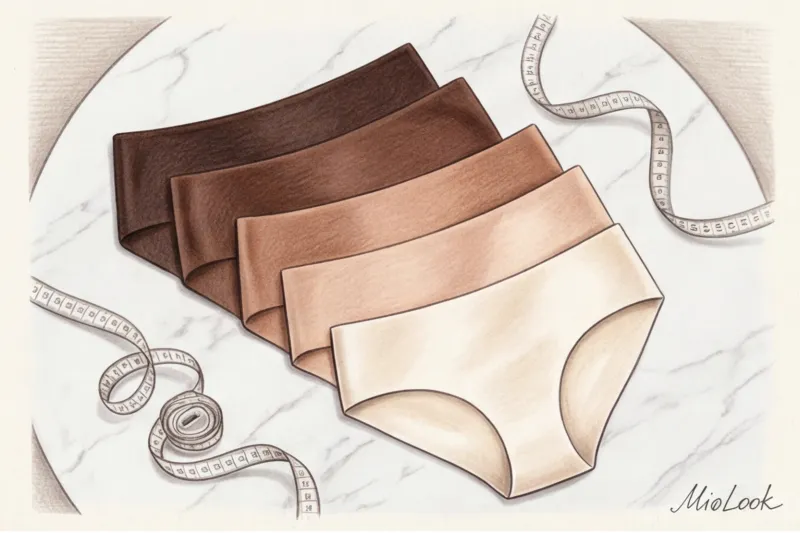
Laser-cut rule
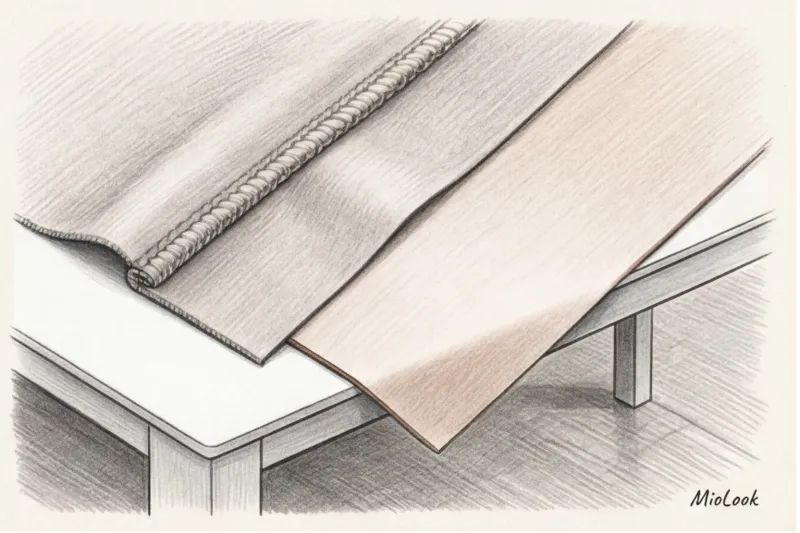
Don't confuse "seamless" underwear with laser-cut underwear. Regular seamless underwear has folded edges and hot-melt adhesive, which still creates a 2-3 mm thick edge. Laser-cutting literally melts the microfiber edge, leaving it flat, like a sheet of paper.
Practical advice: After putting on such underwear, raise your leg, bent at the knee, to 90 degrees. If the edge digs into your groin, it's the wrong size; a dent will be visible under your dress.

The Dangers of "Basic Beige": How to Choose the Perfect Shade
The myth that any nude color is invisible has ruined more than one look. If you're wearing a white or light-colored slip, your underwear should precisely match your skin tone (cool, olive, or warm peach). Beige with a yellow undertone will look like a dirty stain on a porcelain-skinned woman.
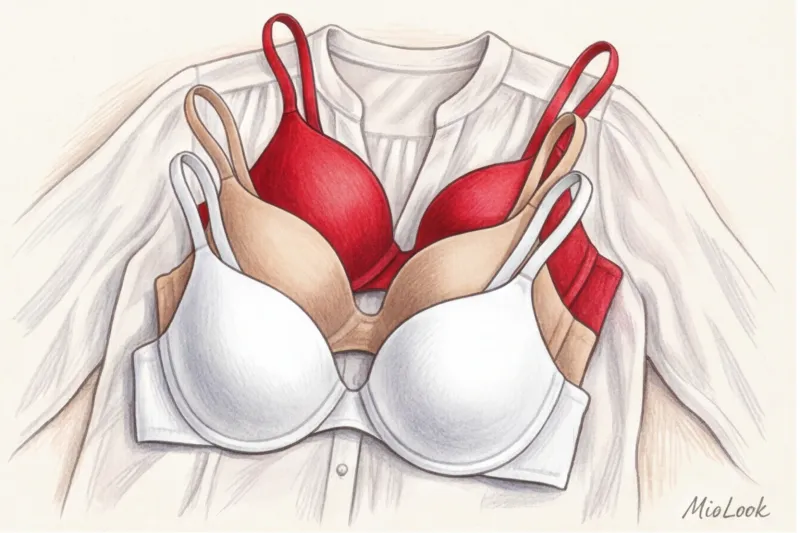
And now a counterintuitive secret from stylists: if you're wearing a black or dark blue silk dress, avoid black underwear. Under bright camera flashes, the black pigment often shows through the thin silk. The best choice is smooth red underwear that matches your blood tone (burgundy for dark skin, scarlet for fair skin). Red absorbs light so well that it becomes completely invisible under dark fabric.
Your perfect look starts here
Join thousands of users who look flawless every day with a smart AI stylist.
Get access — €0.99 onceAn Engineering Approach to Bras: Solving the Neckline Conundrum
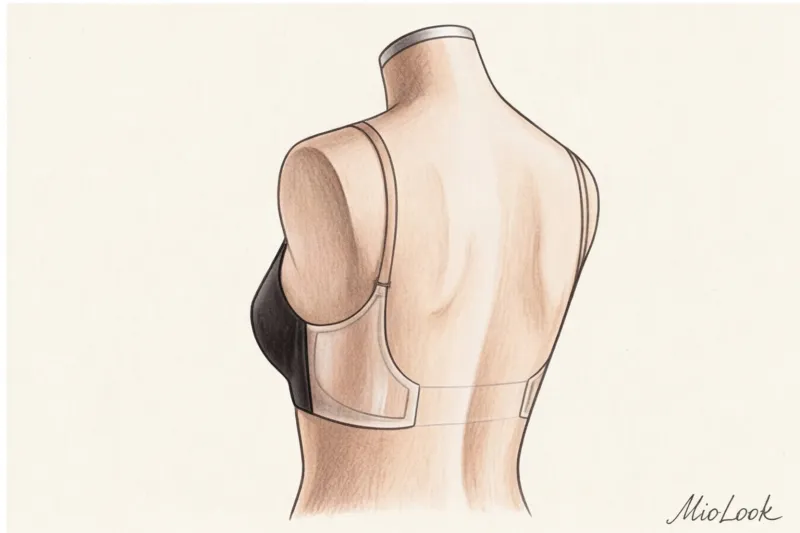
A slip dress bodice is always a design challenge. Thin straps, a deep cowl neck, or a completely open back preclude the use of classic bras.
Let's get this straight once and for all: silicone straps are a complete no-no in a high-status wardrobe. They shine, dig into your shoulders, turn yellow from sweat, and scream out that you haven't thought through your look. According to the rules of lingerie corset design (Haute Couture tailoring), the bust should be supported by the waistband, not the straps.
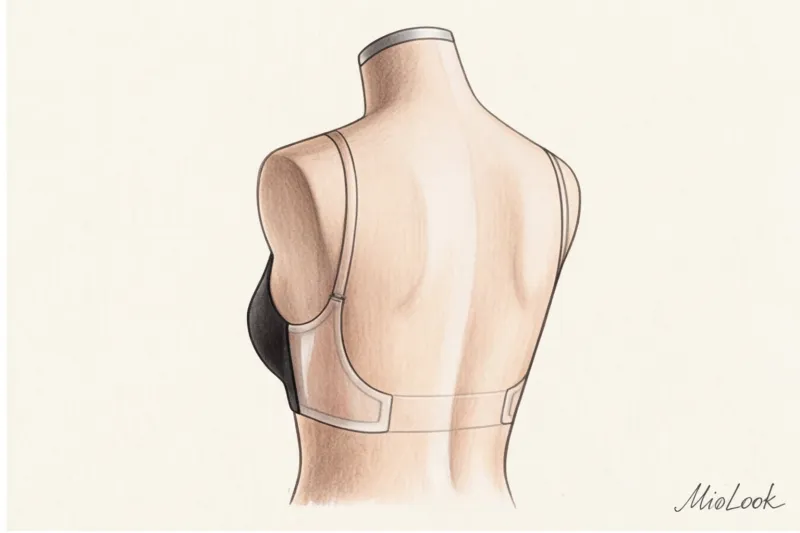
Open Back Solutions
If your dress is completely backless, you have three options:
- Silicone pads (pasties): Look for options with an ultra-thin edge (less than 1 mm) that tapers off. Cheap mass-market pasties for €5 have a thick, blunt edge that will stick out like two saucers under the silk.
- Sconce transformers: Bras with a low clasp that wraps around the waist. Ideal for dresses with a mid-back neckline.
- Kinesio Taping: A professional trick. As Hollywood stylist Karla Welch (2023) notes, it's tape that keeps stars' breasts in place on the red carpet. The elastic band lifts breasts of any size and hides under the fabric. Important limitation: This doesn't work for very sensitive skin - removing the tapes can be painful.
Options for thin straps
For dresses with thin spaghetti straps, choose a bandeau with a silicone band along the top and bottom hem. To prevent the bandeau from slipping (a common complaint), avoid applying moisturizer 12 hours beforehand—the silicone needs to adhere to completely dry skin.
Shapewear for thin silk: busting myths
Many women squeeze into maximum-strength shapewear before an important event. This is a fatal mistake.
A rigid waist trainer works like this: it compresses soft tissue in one area, but it inevitably "slips" out in another. This isn't noticeable under thick jeans, but silk will instantly highlight the resulting roll above the waist or the tightness on the thigh.
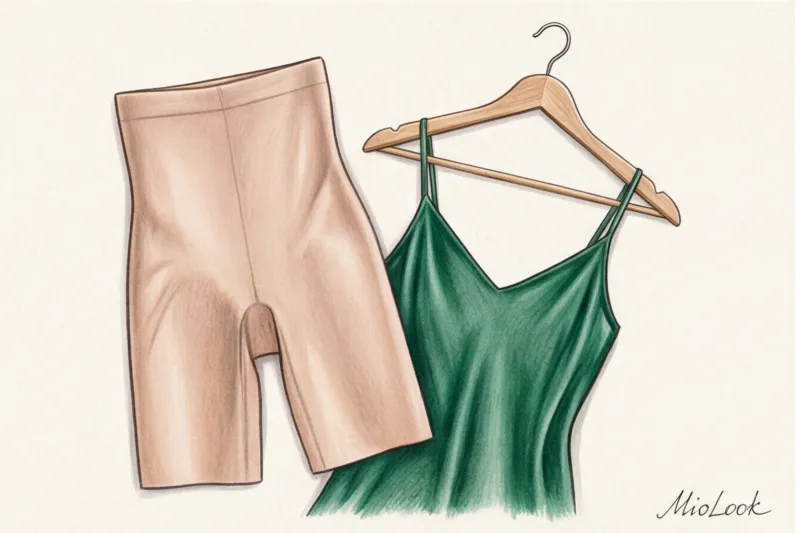
Instead, I recommend slip shorts made of the finest microfiber with low to medium support (in the €30–€60 price range). They perform two functions at once: they smooth out skin microrelief (cellulite or uneven skin) and, crucial for women in the summer, prevent chafing on the inner thighs.
Ready to digitize your wardrobe?
MioLook will help you remember which lingerie pairs perfectly with your sophisticated dresses.
Get access — €0.99 onceStylist Checklist: Crash Test Before Leaving the House
Before introducing a slip dress into a capsule collection, I conduct a mandatory crash test with my clients. Once, as part of a personal experiment, I tested 15 brands of invisible underwear under thin, light-colored viscose. Only three survived. Here's how to test your set:
- Harsh Light Test: Put on the dress and lingerie, turn off the overhead lights in the room, and take a photo in the mirror with your smartphone's flash. Studio lighting or photographers' flashes at the event can make the fabric treacherously transparent. You should be aware of this in advance.
- Test in motion: Sit on a chair, bend over to pick up your keys, and take a wide step. The laser-cut panties shouldn't bunch up on your buttocks.
- Antistatic rule: Never spray antistatic directly onto the front of silk—it will stain. Spray the back of the dress and your tights (or legs) from a distance of 30 cm 10 minutes before going out.

Bottom Line: Invest in an Invisible Wardrobe Foundation
Lingerie under a slip dress isn't about lace and seduction. It's a technical base, the foundation on which your entire look rests. You can buy a stunning cupra dress for €200, but if the textured seam of your cotton panties shows through, the look will be hopelessly ruined.
I always recommend setting aside a separate budget line for functional underwear (basic, sleek sets in nude, black, and red).
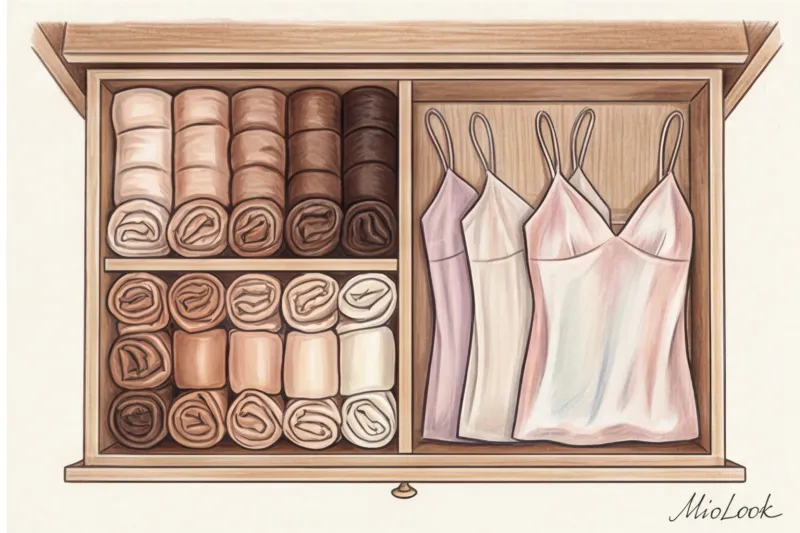
To help me remember which bra or shorts go with a particular neckline, I use MioLook Simply take a photo of your perfect dress and lingerie combination and save it in the app. Next time you need to get ready for dinner in 15 minutes, you won't have to guess and change clothes three times.
The key takeaway is that a perfect silhouette doesn't start with expensive dress fabric, but with the right coefficient of friction in your base layers.