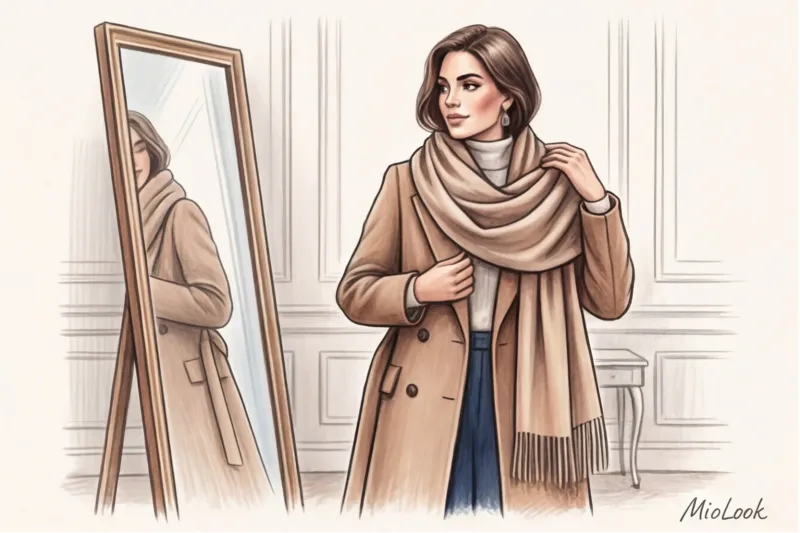
Last year, a client approached me—a brilliant corporate lawyer with an impeccable track record. She came with an unusual request: she felt that her partners were subconsciously distancing themselves from her during face-to-face negotiations. We reviewed her wardrobe—perfect Jil Sander suits, precise fit, neutral colors. Everything was flawless. Until she took off her coat, and the room was filled with the suffocating, dense aroma of heavy gourmand, which she had sprayed five times.
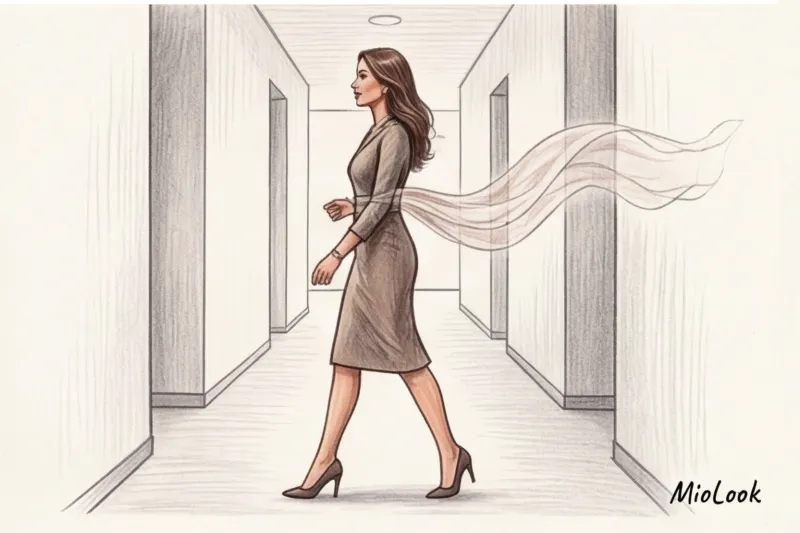
Her perfume screamed, while her clothes conveyed restraint. It was then that I was once again convinced: correctly chosen trail perfume for women — it's more than just a pleasant scent. It's an invisible accessory, a fully-fledged part of your personal brand and smart wardrobe. We've shared more about navigating the world of fragrances in our a complete guide to perfume families.
After 12 years as a stylist, I've learned one thing: your look doesn't end where your jacket ends. It ends where your perfume trail dissipates. Let's explore the physics of fragrance and find out how to control this invisible trail.
What is sillage in perfumery: an invisible calling card
The term "sillage" in English and French perfume terminology sounds like sillage (siyazh). Originally, this word referred to the trail left on water by a passing boat, or the swirls of air behind an airplane wing. In the context of style, it's the olfactory trace that remains in a room long after you've left it.
Many people confuse three basic concepts, leading to mistakes when purchasing. Let's draw a clear line:
- Longevity: How long does the fragrance physically last on your skin?
- Volume (projection): how strong the perfume smells at the moment, at what distance from you it can be smelled.
- Sillage: the ability of molecules to hang in the air and follow you as you move.
"If the longevity of a perfume is the quality and density of the fabric of your dress, then the train is the length of its hem. You wouldn't wear a dress with a three-meter couture train to the office, would you?" – Emily Thompson.
That's why stylists always consider fragrance when creating a capsule collection. A luxurious cashmere sweater requires a completely different olfactory accompaniment than a crisp cotton shirt.
The Anatomy of Fragrance: Why Some Perfumes Fill a Room While Others Smell Close to the Skin
Finding the perfect sillage isn't magic; it's pure physics and chemistry. It all depends on the size of the molecules and their evaporation rate (volatility).
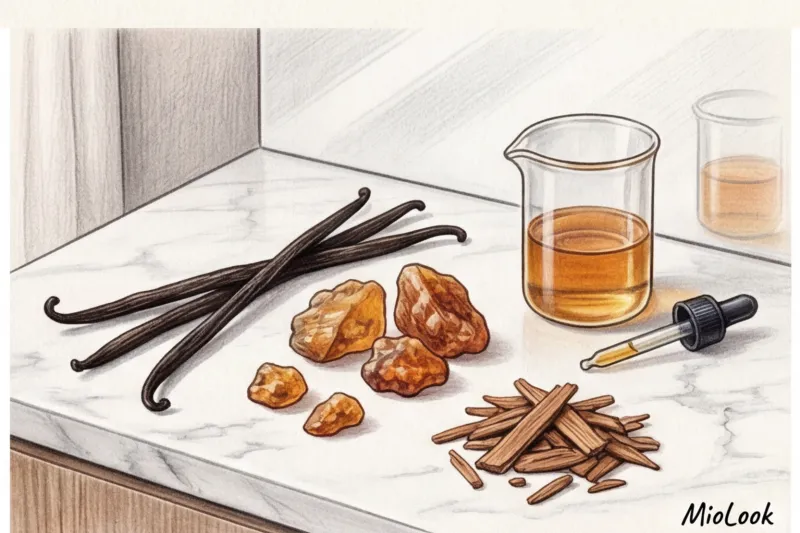
According to the classification of Michael Edwards (creator of the legendary reference book Fragrances of the World), the architecture of a fragrance is based on the difference in the weight of its components:
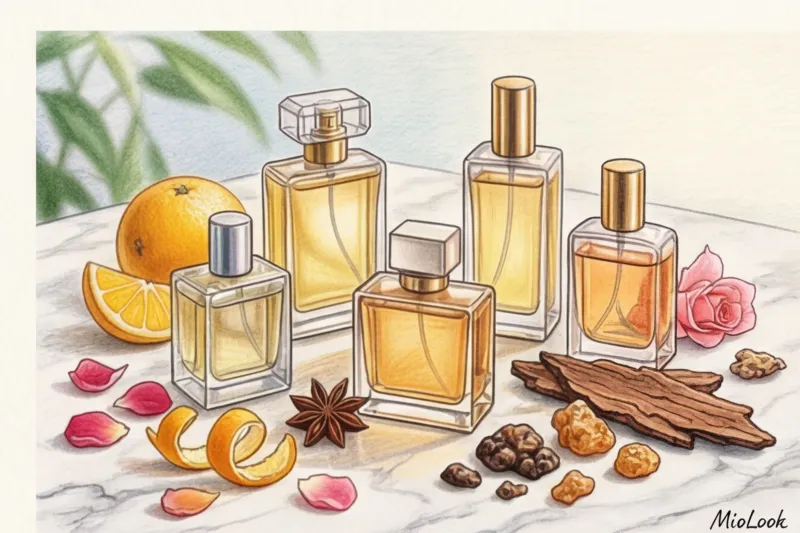
- Top notes: Citrus, light greens, aquatic notes. These are the smallest and lightest molecules. They evaporate from the skin in 15–30 minutes. They are physically incapable of creating a long tail.
- Middle notes (heart): Flowers, fruits, spices. They last from 2 to 4 hours, creating an aura around you.
- Base notes: Resins, woods, musk, vanilla. These are heavyweight molecules. According to the International Fragrance Association (IFRA), they evaporate from the skin within 6 to 24 hours. They are the ones that slowly lift off from the warm skin and hang in the air, forming a trail.
The temperature of your skin and the environment can alter the radius of a scent's trail by 30–40%. In hot weather, the molecules literally "explode" and escape faster, creating a loud but short-lived trail. In cold weather, the scent shrinks.
Access to MioLook for €0.99 — one-time payment
A smart AI stylist will select the perfect look, taking into account every detail of your style.
Get access — €0.99 onceLooking for a long-lasting perfume for women: what notes to look for when buying
If your goal is to leave a lasting impression, stop looking for "merely long-lasting perfumes." Study the fragrance pyramid as meticulously as you would the composition of fabric (can you tell the difference between polyester and silk?).
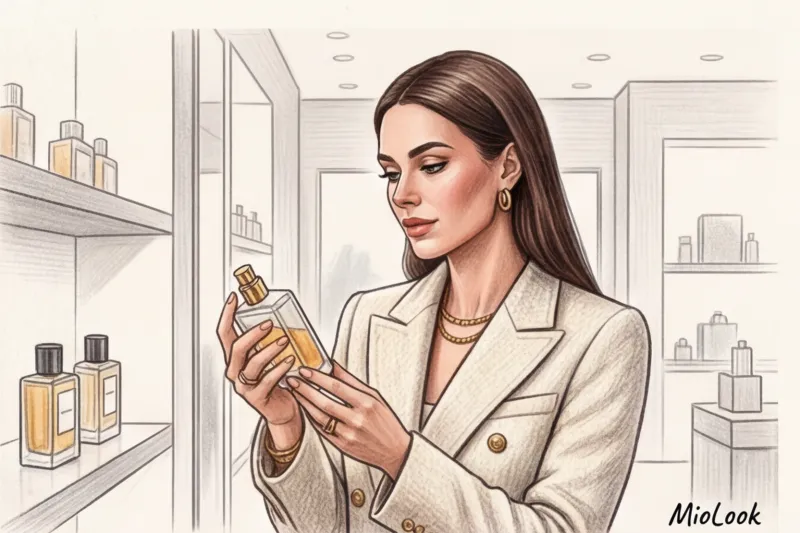
Here are three pillars on which a quality train rests:
- Amber and vanilla. Dense gourmand and oriental resins. They have a high viscosity and leave a dense, warm trail. Ideal for the cold season.
- Patchouli and oakmoss. A classic chypre base. These notes literally penetrate the fibers of natural fabrics, creating a strict, prestigious, and slightly tart trail.
- New generation synthetic molecules. Iso E Super, ambroxan, cashmeran. These are modern boosters. While they may smell subtle on their own, they act as diffusers, dispersing other notes and creating an aura that pulsates around you.
In the appendix MioLook We often advise our clients to match the density of their perfume notes to the density of the fabrics in their outfits. Heavy amber on fine summer linen sounds as out of place as winter boots on the beach.
The myth of "eternal durability": why a kilometer-long trail isn't always a good thing
A dangerous myth has taken root in the perfume community: "If a perfume doesn't have a 5-meter sillage, it's either fake or cheap." I'm willing to challenge that assertion.
WGSN's 2024 Consumer Trends Study reveals a global shift: the era of loud, over-the-top perfumes is over. True luxury today lies in intimacy.
The longest-lasting, most indelible trails in modern mass-market fragrances are often created using cheap "amberwoods" (aggressive synthetic materials) and pungent musks. They artificially inflate the scent's reach. Former Hermès head perfumer Jean-Claude Ellena calls this a violation of the concept of "polite sillage." A luxury perfume shouldn't enter a room before you do.
There's also the phenomenon of olfactory blindness. Your brain blocks out a constant, strong stimulus. You spray five sprays of a powerful extract, stop smelling it after 20 minutes, and think the perfume isn't long-lasting. Meanwhile, your colleagues in the open-plan office are quietly suffocating.
Perfume etiquette in the office
In the business world, the golden rule of "arm's length" applies. Your scent should only be detectable by those within handshake distance.
A strict dress code does not tolerate perfume indiscretion. This is the same rule of good manners as neatness business makeup If you are preparing for an important presentation, think through your image: from a verified makeup for stage performance to a delicate fougere or woody scent that will highlight your professionalism and not distract from the numbers in the report.
Your perfect look starts here
Join thousands of users who look flawless every day with MioLook.
Get access — €0.99 onceHow to Properly Test a Perfume's Sillage
A paper blotter at the store will never show you a real trail. Paper is dead—it has no temperature, no pulse, and no lipid layer.
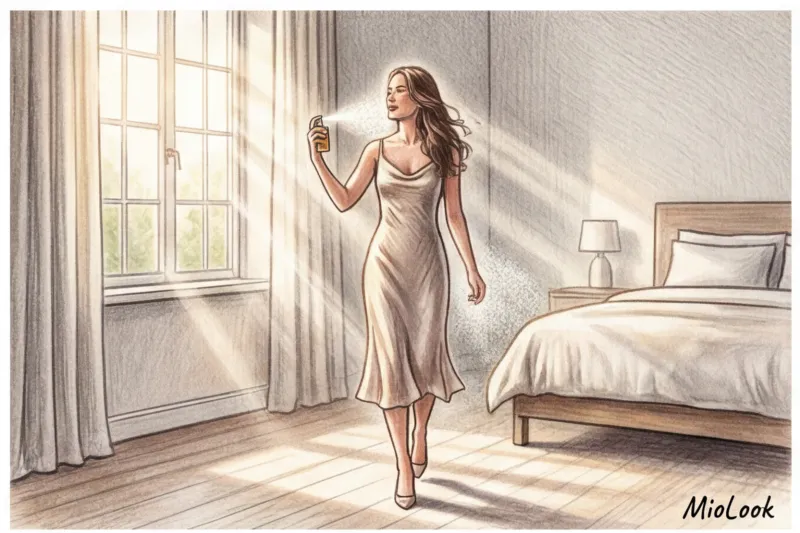
Here's how I teach my clients to test fragrances before buying:
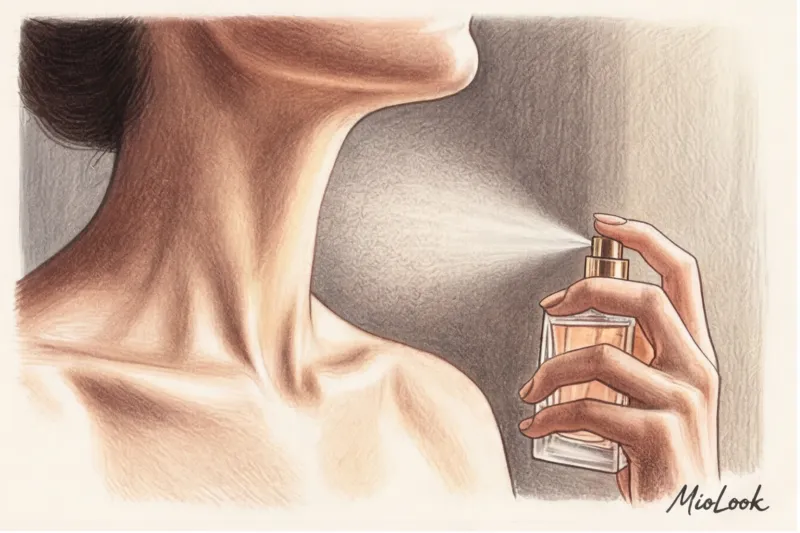
- Apply perfume to your wrist and neck. Do not rub it under any circumstances - this will break down the upper light molecules.
- Exit the store. This method It doesn't work , if you are trying to evaluate the sillage inside a perfume boutique, where the air is already saturated with hundreds of other compositions.
- Use the "air corridor" method. Apply the scent, step outside into the fresh air, walk briskly 10 meters forward, turn around sharply, and retrace your steps. You'll catch your own scent trail.
Consider your skin chemistry. On "hot" skin (with close blood vessels and quick redness), fragrances develop quickly, linger brightly, but fade quickly. On "cool" skin, a fragrance may linger quietly but last for days.
Checklist: 5 ways to enhance the sillage of your favorite perfume without the "gas attack" effect
If your favorite perfume sits too close to your skin, don't spray more. You need to work smarter.
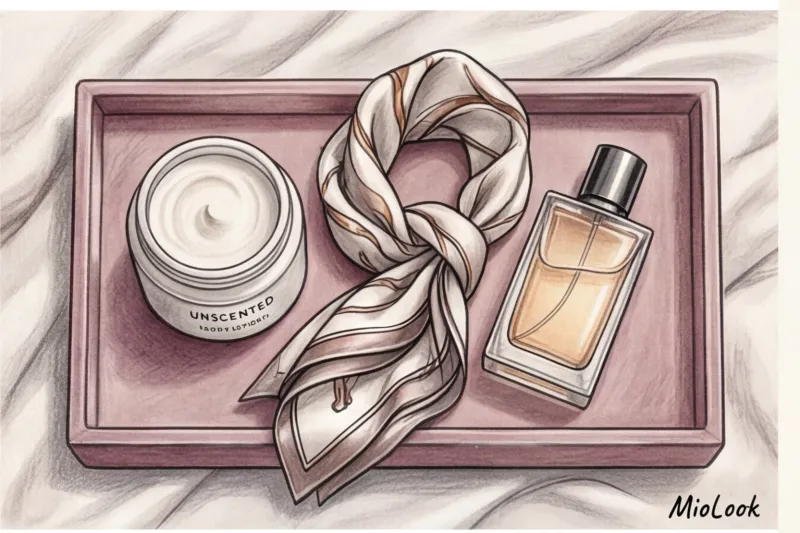
- Moisturizing is the base. Perfume molecules require a lipid (fat) layer to adhere. On dry skin, alcohol evaporates instantly, taking the scent with it. Apply a base, fragrance-free body lotion 10 minutes before applying perfume.
- Strategic points. Wrists are a classic, but they constantly rub against clothing and get washed. For a long trail, apply perfume to the back of your neck (under your hairline) and the insides of your elbows.
- The magic of fabrics. In a personal experiment, I tested scent retention on various materials. Synthetics (polyester, acrylic) distort the scent and quickly release it. Natural fibers—merino wool, thick cotton, natural silk—work like a sponge. They capture molecules and slowly release them into the air.
- Layering method. Use molecular fragrances (such as Escentric Molecules) as a primer. Apply the molecule, wait a minute, then apply your base fragrance. The molecule will act as an elevator, lifting the notes into the air.
- Proper storage. The bathroom is a graveyard for perfumes. Temperature fluctuations and humidity destroy the formula. Store bottles in a cool, dark cabinet.
A train as part of your capsule wardrobe
Style is a system. Your perfume shouldn't clash with your clothes. Remember that lawyer client from the beginning of the article? We solved her problem not only by changing her wardrobe, but also by changing her olfactory profile.
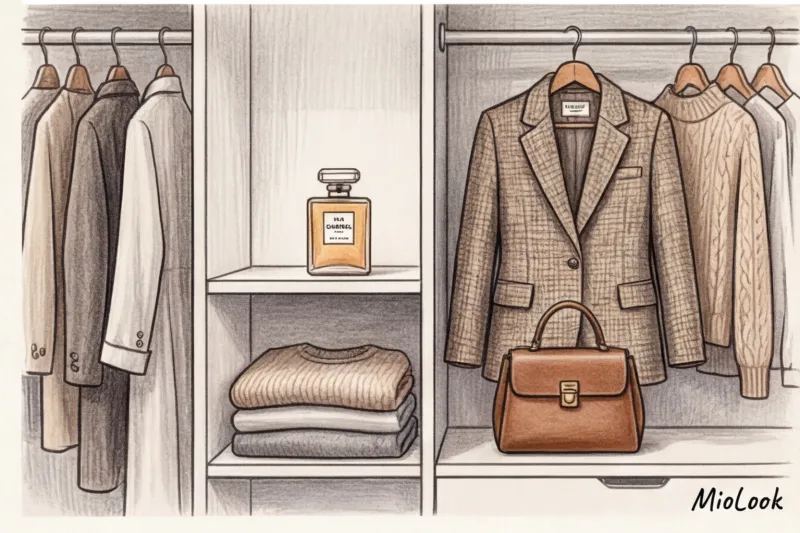
We replaced her flashy Baccarat with a cool, restrained fougère with notes of juniper and vetiver. The sillage remained, but it became crisp, like the starched collar of her shirt. Her colleagues' trust returned because the cognitive dissonance between her appearance and her scent disappeared.
By the way, if you are planning a photo shoot for work social networks, remember: the scent is not visible in the photo, but for business photo shoot The right perfume helps you get into the right mood and feel more confident in front of the camera.
Ready to get started?
Try the MioLook plan for free—no commitments—and build your perfect wardrobe.
Get access — €0.99 onceSummary: Manage your olfactory footprint
Your train is your signature in the air. It can say more about you than a logo on your bag or a watch on your wrist.

Don't chase volume for volume's sake. Choose fragrances with a quality base (resins, woods, patchouli), apply them to moisturized skin and natural fabrics. And most importantly, coordinate your fragrance wardrobe with your clothing capsule.
Take stock today: pull out your favorite bottles and honestly ask yourself: What story does this scent tell when I walk into a room? If you're not satisfied with the answer, it might be time to replace your invisible accessory.