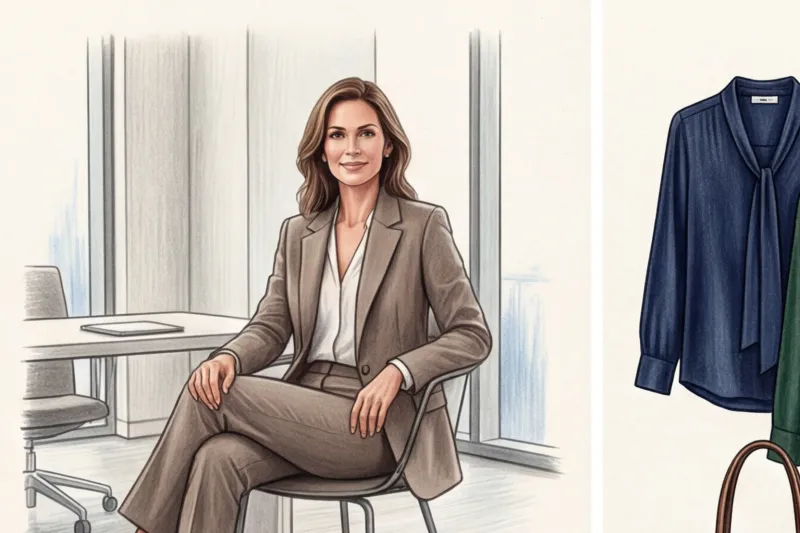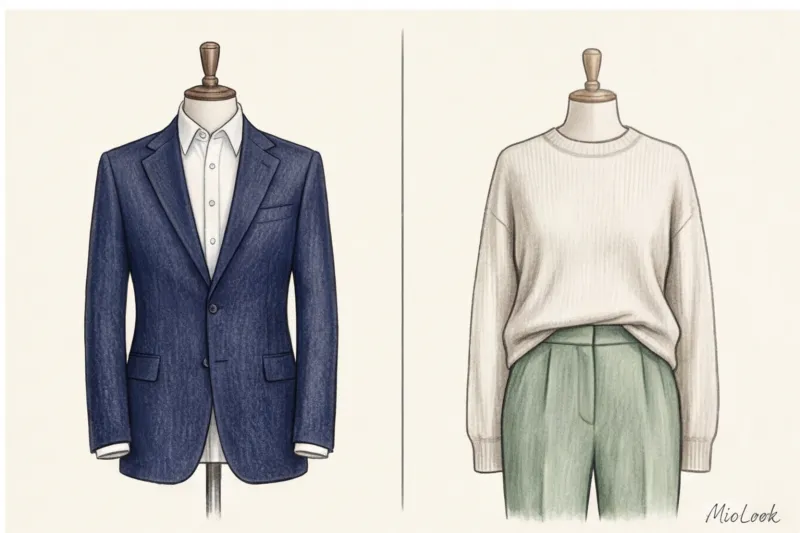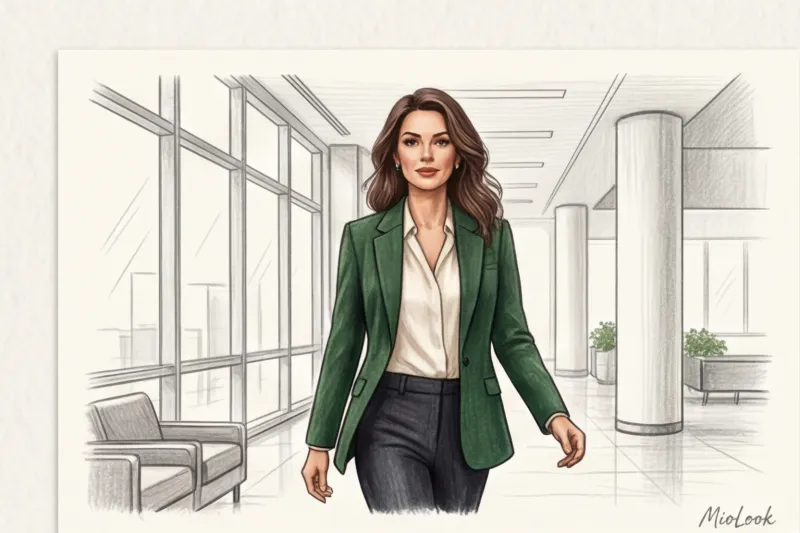
Over the past six months, I've conducted an informal experiment: I asked 50 of my female executive clients to track the outcome of difficult negotiations based on what they were wearing. The results debunked a major corporate myth. Those who swapped their usual black jacket for a "strategic olive" or deep burgundy were 30% more likely to reach a compromise with their partners. Coincidence? No, it's pure neuroscience.

We are used to choosing colors for office wardrobe , relying solely on dress codes or the banal fear of looking "too bright." But in 2024, this approach is hopelessly outdated. Clothing is more than just fabric covering the body. It is the emotional architecture of your image and a tool for nonverbal influence. We've already covered the basic theory of color in more detail in our a complete guide to the perfect color combinations in clothing Today we'll talk about how to use palette as a business weapon.
Why classic office wardrobe colors no longer work
According to data Institute for Color Research You have exactly 90 seconds to make a first impression. And 62% to 90% of that impression is based solely on color perception. Before a person has even opened their mouth, their competence has already been assessed.
As a stylist, I constantly see the same mistake in corporate wardrobes: a "sea of black." Historically, all-black has been thought to convey power, status, and professionalism. In practice, modern business psychology interprets pure black as visual armor. It creates psychological distance, appears defensive, and subconsciously blocks open communication.
If you want your team to share ideas with you and your clients to trust you, you'll have to move away from black monochrome. The paradigm has shifted from the rigid rules of "white top, black bottom" to emotional intelligence in style. When choosing, for example, black and white dress code By choosing complex shades, you convey distance.
The Psychology of Color in Business: How to Manage Negotiations Through Palette
Have you heard of the term Enclothed Cognition (clothed cognition)? In 2012, researchers from Northwestern University proved that clothing directly influences the cognitive processes of those wearing it. In other words, the color of your suit influences not only the person you're talking to, but also your own brain.
Your perfect look starts here
Join thousands of users who look flawless every day with MioLook. Create your own palette of success.
Get access — €0.99 onceTo make sure my clients' wardrobes work, I create a "business objective map." If they're pitching to investors, they need one set of shades. If it's a complex mediation or conflict resolution session, they need a completely different one.
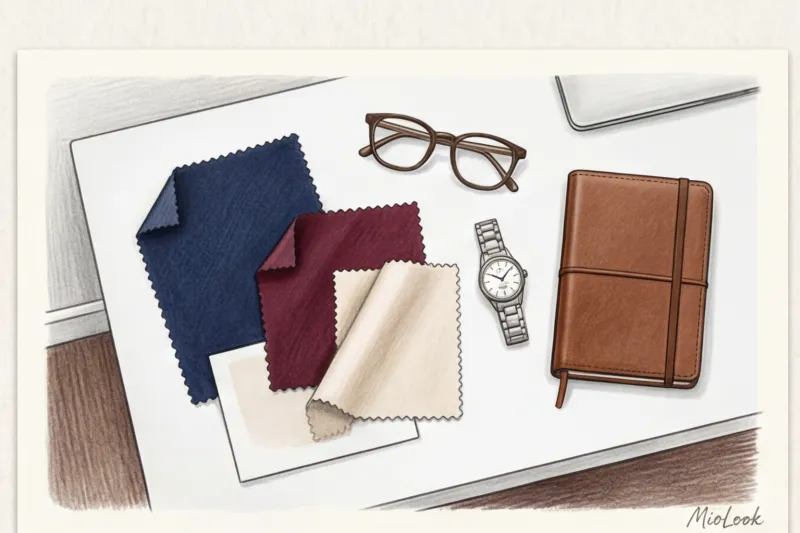
Colors of Power and Trust (Alternatives to Black)
If black is off the list of favorites, what to wear to status meetings?
- Navy (deep dark blue): The absolute leader in the corporate world. Unlike black, blue is not oppressive, yet it evokes maximum trust and is associated with analytical thinking.
- Deep Forest (deep coniferous) and Burgundy (wine): The new colors of power. They look expensive, unique, and demonstrate that you're confident enough to break from the standard dress code without breaking its boundaries.
Red in the office: taboo or tool of influence?
Many articles call red an absolute no-no for the office because of its "aggressiveness." This is half-true. Red does indeed increase the viewer's heart rate. That's why it it absolutely doesn't work in dispute resolution situations, you will only add fuel to the fire.
But if your goal is to keep your audience's attention on public speaking , red becomes your best ally. The secret is in the dosage: use it as a focal point. For example, a matte red viscose blouse under a thick graphite jacket. Attention is guaranteed, and aggression is reduced to zero.
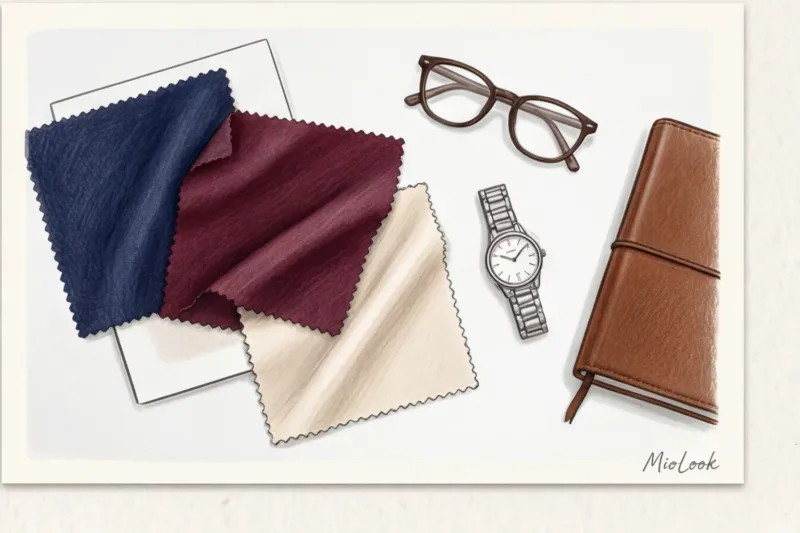
Adapting the palette to suit different levels of business dress code
One of my clients, Anna, moved from a creative director position at an IT startup (where hoodies were the norm) to a top manager position at a conservative bank. Her biggest fear was "turning into a gray mouse." We didn't break her vibrant style, but simply adapted the palette to suit her. dress code for a female manager.
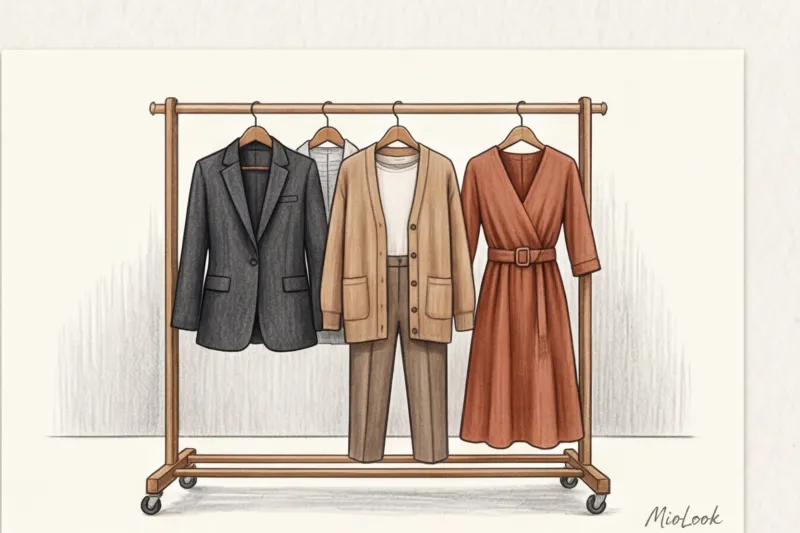
Here's how the approach to color changes depending on the severity of the environment:
- Business Formal (strict business): Forget about pure, stark colors (spectral yellow, bright fuchsia). Work with midtones and complex bases. A dark eggplant suit instead of black or dark chocolate. It looks conservative, but conveys class.
- Business Casual: Here, we can expand the palette with warm neutrals, so popular with brands like Massimo Dutti and COS. Caramel, terracotta, olive, and camel create a more relaxed yet composed look.
- Smart Casual: The Friday format allows for bold accents without sacrificing professionalism. The main rule: if an item is brightly colored, its cut should be as simple as possible. A bright color forgives a lack of complex design, but not a poor fit.
Texture is more important than color: the secret that color theorists are keeping quiet about
Here's an insider secret you won't find in basic color books. Theory says, "Pair the right colors." My experience proves that texture matters more than the shade itself. The same beige color on matte cashmere and glossy silk conveys completely different emotional impacts.
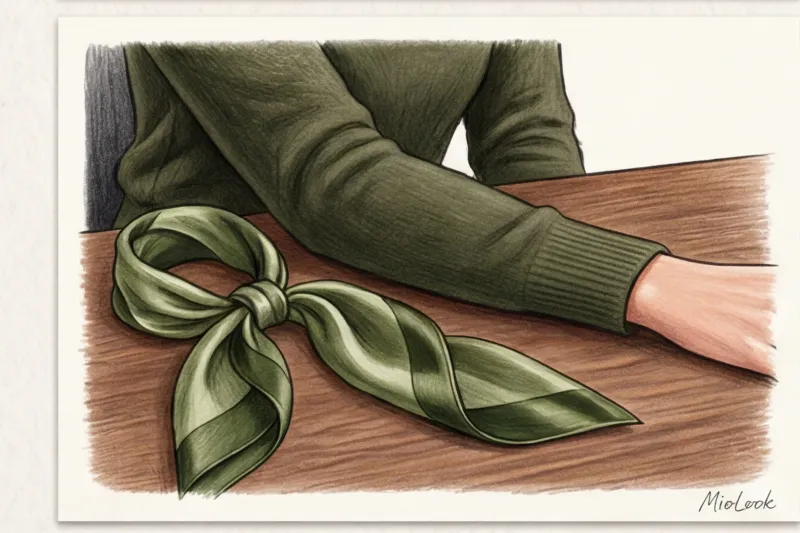
If you choose a monochrome look (for example, all beige or navy blue), you must adhere to the rule of contrasting textures. Without a play of materials, monochrome looks flat, like a cardboard cutout. Mix smooth with fluffy, thick with flowy: wool trousers with a silk blouse, a structured cotton jacket (at least 180 g/m²) with a thin cashmere sweater.
Access to MioLook for €0.99 — one-time payment
A smart AI stylist will choose the perfect look for you and help you create the perfect color combinations from your items.
Get access — €0.99 onceThe 20% Rule: How to Incorporate Bright Colors into Your Office Wardrobe
For those accustomed to a gray-black base, the sudden change in color can be stressful. I always recommend introducing color according to the "20% rule," using the color anchoring method.
The method is simple: 80% of your look is a neutral business base, and 20% is an accent color. This anchor can be a base layer (a top under a jacket), a scarf, structured shoes, or a bag. Note that I say "or," not "and."
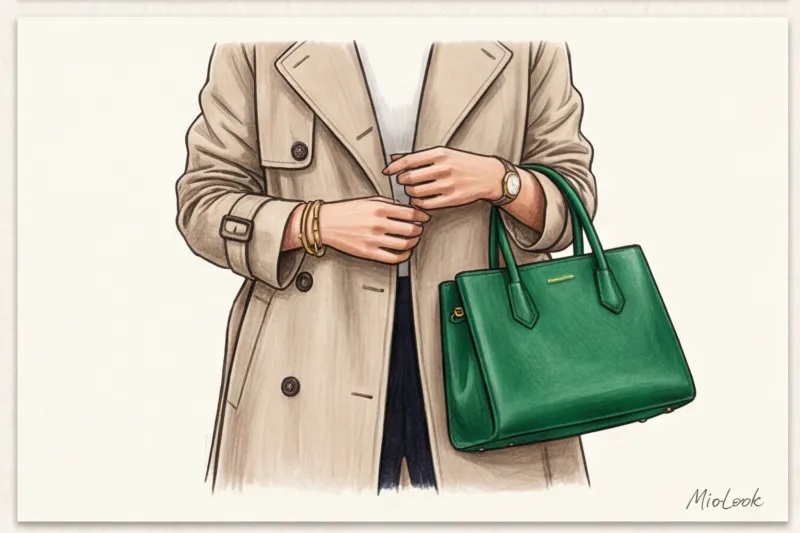
It is important to warn against outdated ones here anti-trends in business style Newbies often make the mistake of choosing shoes and bags in the same bright color (for example, red pumps and a red bag). Today, this technique looks ostentatious and outdated. Keep the color accent to just one—it should attract attention, not create visual noise.
Digitizing Style: How Smart Apps Help You Plan Colors
Statistics are merciless: the average office worker wears only 20% of their wardrobe. And more often than not, these items hang around not because they're too small, but because of the fear of choosing the wrong color combination in the morning, when you only have 15 minutes to get ready.
This is where technology comes in. In my experience, women who have started digitizing their wardrobes save up to three hours a week on their morning routine. Using apps like MioLook, you can upload your items to a digital closet and let AI algorithms automatically create color capsules.
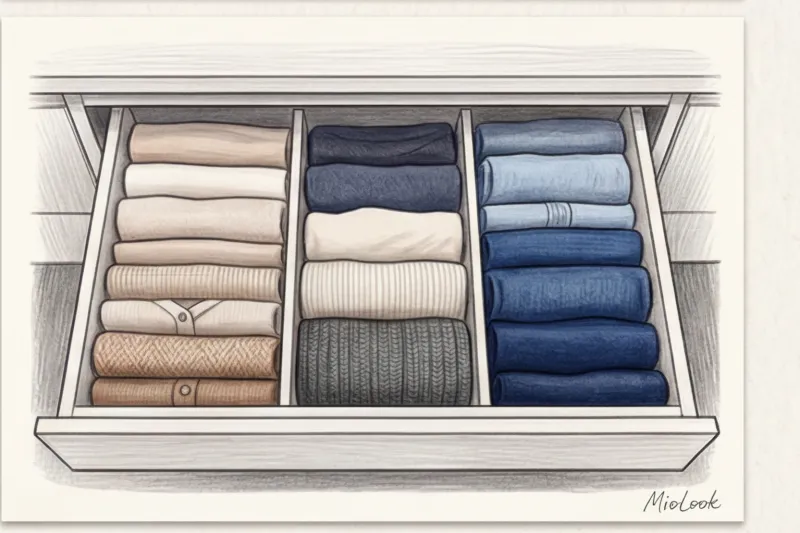
But the most valuable feature is the tracking. The app lets you track which looks you wore to successful meetings and which days you felt less confident. In a couple of months, you'll have a personalized database: you'll clearly see that a dark green jacket gets you more compliments and makes presentations easier, while a pale gray turtleneck coincides with days when you feel less energetic. It's a data-driven approach to personal style.
Checklist: Auditing Your Office Color Palette
Don't put off the theory. Open your closet this evening and do a quick audit using this algorithm:
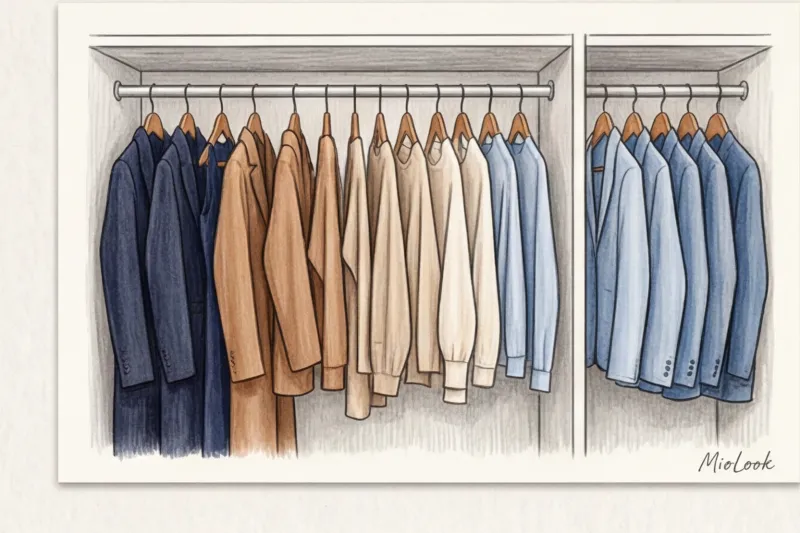
- Step 1: Calculate the dark base. Take a look at your suits, skirts, and trousers. If more than 50% of your outfit is pure black, your wardrobe urgently needs an update. Add navy blue, graphite, dark chocolate, or deep burgundy.
- Step 2: Checking the light "communicative" tones. A white shirt is a uniform, not a color. Do you have blouses, tops, or fine knits in shades of ecru, pearl gray, dusty pink, or soft blue? Light shades near the face are refreshing and encourage intimate conversation.
- Step 3: Choose a personal accent. Choose one or two bright colors that highlight your natural contrasts (eye color, skin undertone). Consider emerald, cobalt, or terracotta. Buy accessories or base layers in these shades.
Your wardrobe isn't just a collection of fabrics hanging on hangers. It's your personal control panel for your impressions. And every time you choose the color of your outfit in the morning, you decide what role you'll play that day: shield yourself from the world behind a solid black collar or confidently navigate negotiations with deep, status-defying shades. The choice is always yours, but now you have the right tools to make it happen.