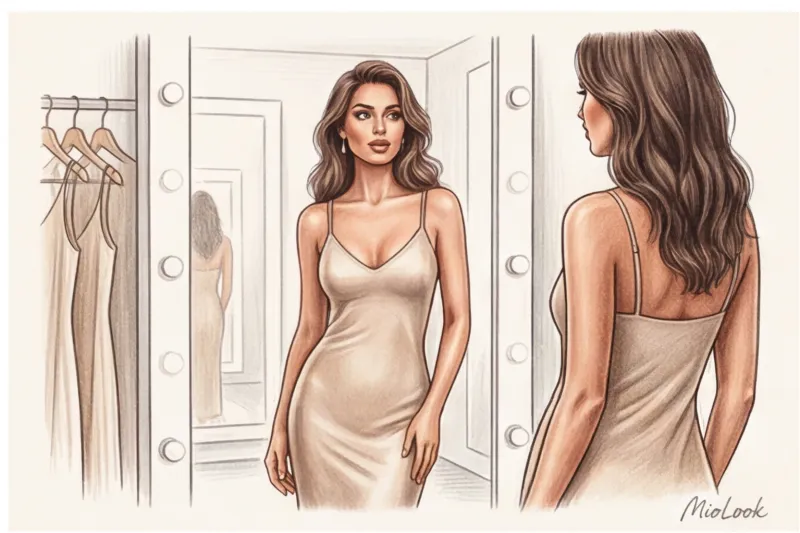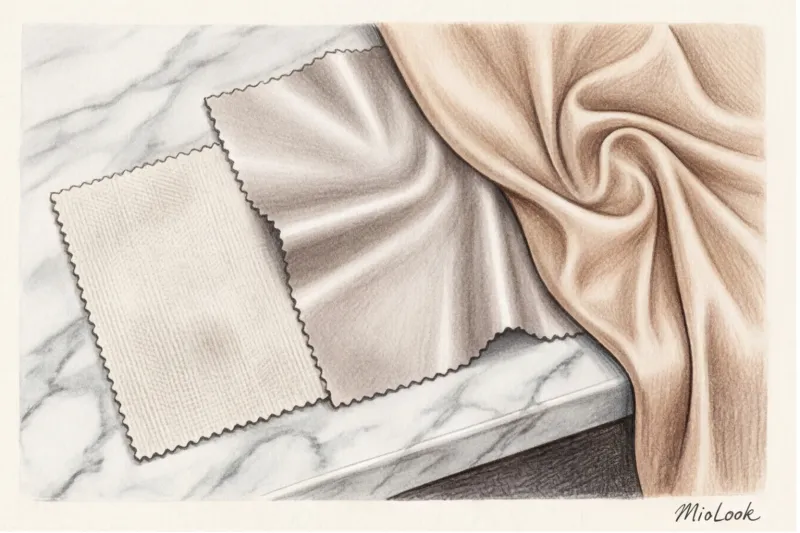
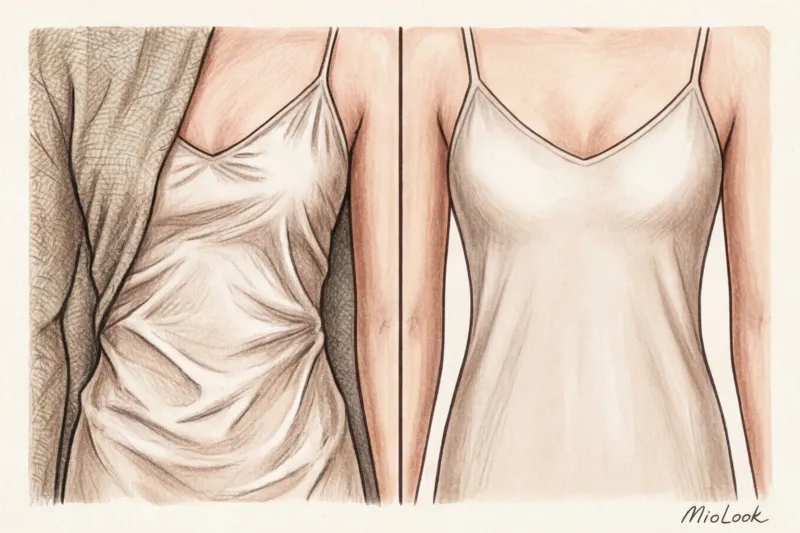
One day, a client came to me in tears. She'd bought a stunning silk slip dress from Maison Margiela for €1,200, but in the reflection, she saw not a Hollywood diva but a tired woman in a wrinkled nightgown. The fabric bunched at the waist, leaving her breasts heavy, and her back was lumpy. The problem wasn't her figure or the cut of the dress. The problem lay deeper—underneath the dress, she was wearing a textured cotton bra and lace culottes from a mass-market store. The perfectly smooth silk literally tripped over the loose texture of the base.
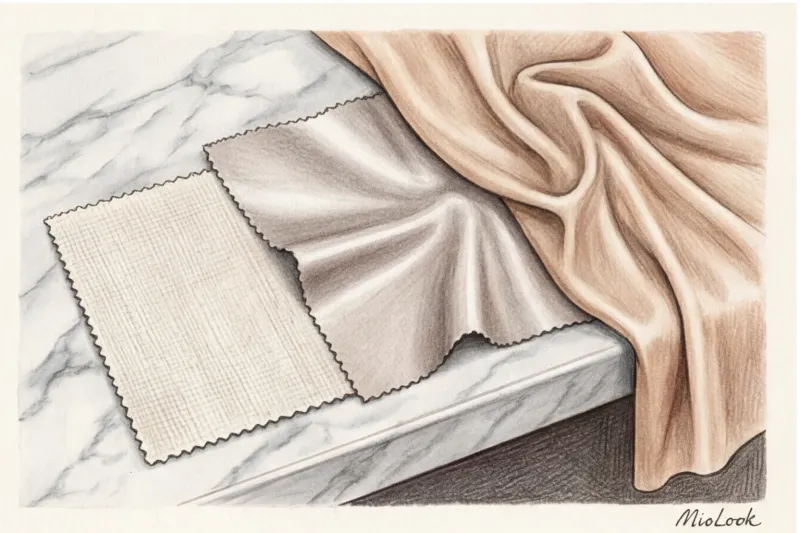
This example from my styling practice perfectly illustrates the main rule of an investment wardrobe: what is worn closest to the body determines the fit of everything else. When choosing material for underwear We don't just choose comfort; we lay the foundation for our silhouette. We've already discussed the architecture of our underwear base in more detail in our The complete guide to a basic lingerie wardrobe , and today I suggest you look at the fabrics under a microscope (and without marketing illusions).
The Anatomy of a Perfect Silhouette: Why the Right Lingerie Fabric is More Important than the Cut
According to research conducted by the WGSN Textile Institute in 2024, the aesthetics of a look depend 40% on the coefficient of friction between layers of clothing. This is pure physics. If your base layer has a high coefficient of friction (like regular cotton or textured lace), your outerwear loses its ability to drape beautifully.
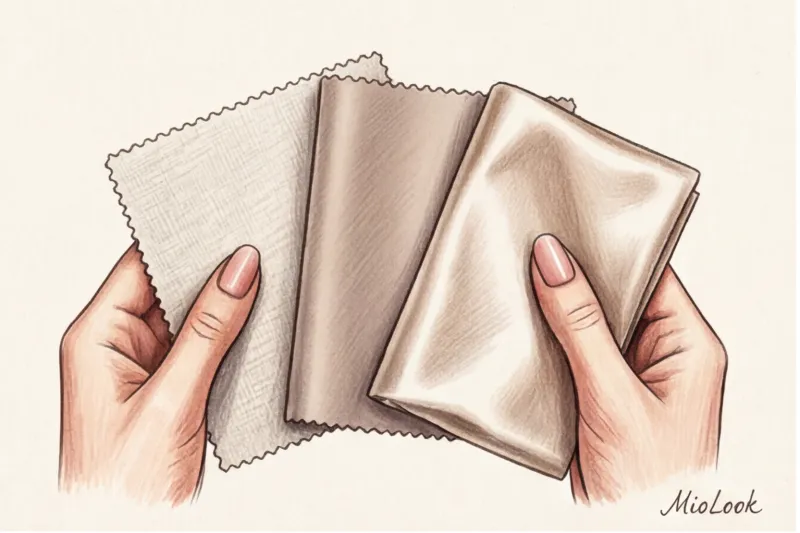
I call this "silhouette architecture." A thin merino turtleneck, a cashmere jumper, or a bias-cut viscose skirt will flow and create complementary lines only if they glide over a smooth surface. The ideal base material should possess three characteristics: absolute smoothness, shape memory (the ability to return to its original shape after stretching), and hygroscopicity. And here's where the first surprise awaits.
100% Cotton: Why is the top choice losing out in your basic wardrobe?
For decades, we've been taught that 100% cotton is the holy grail of underwear. "It breathes," "it's natural," "it's safe." But let's face it: as a stylist, I'm categorically against pure cotton for active everyday life in the big city.
Firstly, cotton fiber lacks natural elasticity. 100% cotton underwear loses its original shape after just a couple of hours of wear: it stretches, bunches up, and ruins the silhouette of form-fitting clothing. Secondly, cotton has a monstrous coefficient of friction. Ever notice how your cotton panties catch on the lining of your silk skirt or skinny pants, causing your clothes to rise with every step?
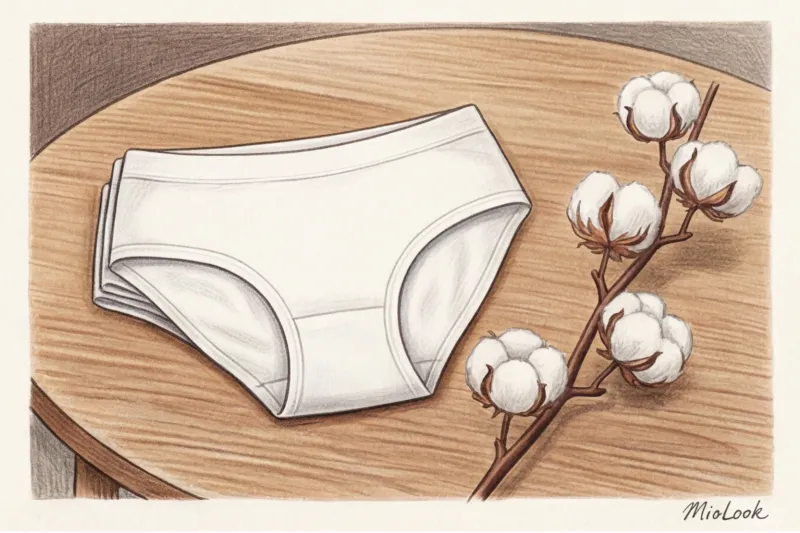
But the main issue is moisture wicking. Cotton can absorb up to 20% of its own weight in moisture, but it dries extremely slowly. If you sweat while running for a taxi or taking a stuffy subway ride, damp cotton will linger, creating a cold compress effect. Pure cotton is essential only in three situations: sleeping, relaxing at home, and for strict medical conditions.
Premium Cotton (Pima and Supima): When the Investment is Justified
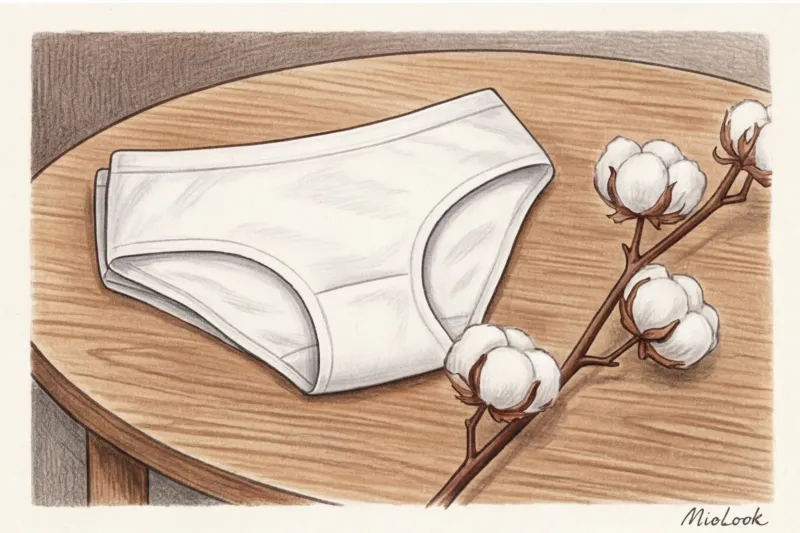
Does this mean you should give up cotton entirely? Not if we're talking about premium cotton. Long-staple cotton like Pima or Supima is in a completely different league. Its long fiber length gives it a silky texture and virtually eliminates the pilling that can ruin a garment's appearance under delicate clothing.
Another brilliant compromise is mercerized cotton. Thanks to a special treatment (removing the "fuzz" from the threads), it acquires a smoothness and a slight sheen without clinging to outerwear. Yes, high-quality basic Pima cotton briefs will cost between €40 and €80, but their appearance is worth every penny.
Access to MioLook for €0.99 — one-time payment
A smart AI stylist will select the perfect look based on your wardrobe.
Get access — €0.99 onceMicrofiber: How Synthetics Became the New Standard of Luxury
If you think synthetics are cheap and uncomfortable, you're stuck in the '90s. Modern microfiber (high-tech polyamide fibers like Tactel or Meryl) is more expensive than many natural fabrics and is used by leading fashion houses.
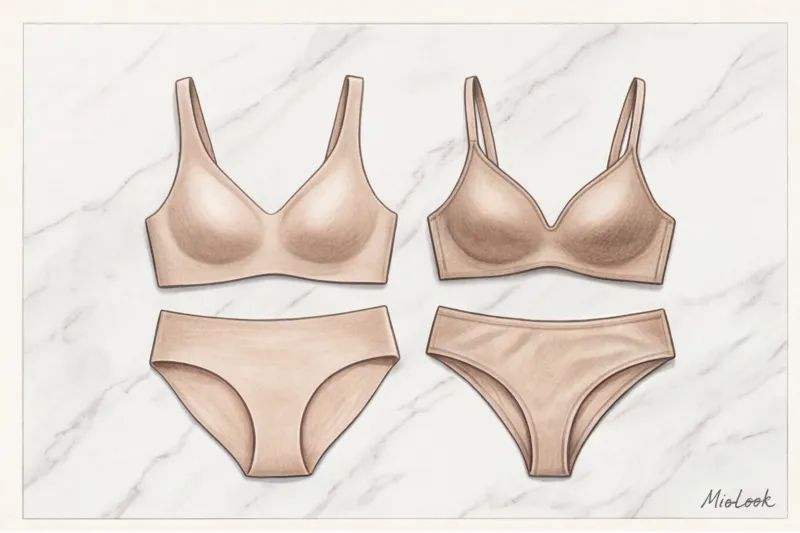
Microfiber is that "second skin" effect. It provides zero friction. Any dress, even the most delicate one, will fit over microfiber underwear as if it were tailored specifically for you. Furthermore, it instantly wicks moisture away from the body and dries in minutes.
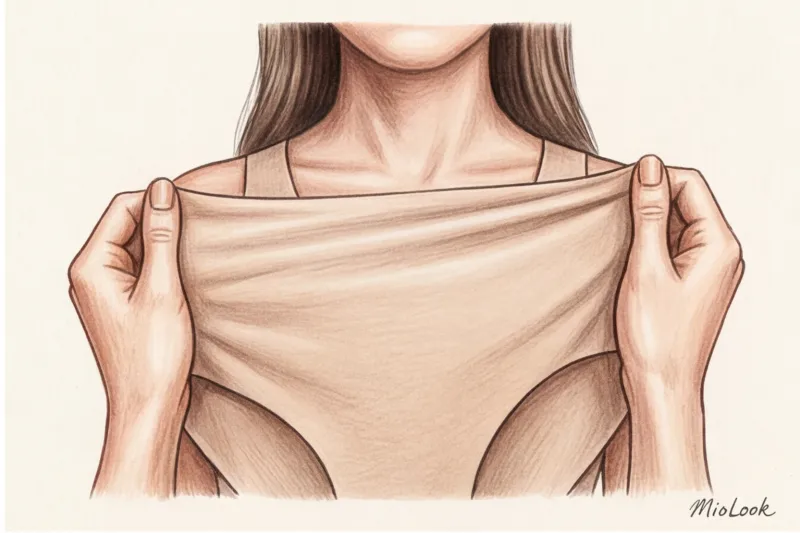
Last year, I conducted a personal experiment. I compared the durability of premium microfiber basic bra sets (from Wolford and La Perla, priced around €120-€150 per bra) and high-quality mass-market cotton (€25). After 50 delicate wash cycles, the cotton bra lost its color saturation and was slightly deformed at the waistband. The Wolford microfiber bra looked like I'd just taken the tag off. If you calculate the cost per wear ( Cost Per Wear ), luxury synthetics turn out to be more profitable than cheap cotton in the next two years.
Seamless technologies and laser processing
Microfiber is what made laser-cut technology possible, eliminating the need for elastic or seams on the edges of underwear. The laser seals the edge of the fabric, making it completely flat. This is a godsend for delicate knit dresses and satin skirts. But there's a catch: to ensure this edge doesn't stretch and fits snugly, it must contain at least 15–20% elastane (Lycra, Spandex).
Bamboo, Modal, and Tencel: Sustainable Luxury or Marketing?
"Organic bamboo" sounds wonderful, right? But let's take a closer look at how this material is made. Bamboo, modal, and Tencel are man-made fibers (not to be confused with synthetic ones). They are produced from natural raw materials—wood pulp (bamboo, beech, eucalyptus)—which is chemically processed. Strictly speaking, bamboo is often simply labeled as viscose on reputable brands.
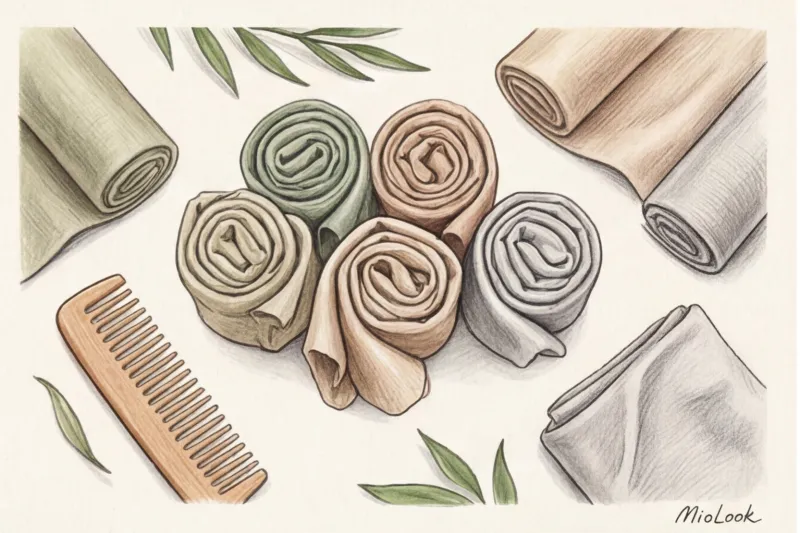
What's so magical about them? New-generation viscose fibers (especially micromodal) are incredibly soft. They feel superior to both cotton and microfiber, reminiscent of a delicate peach. Modal also has a slight cooling effect, making it an ideal choice for women with sensitive skin or for warm climates. However, viscose doesn't handle harsh washing as well and loses its shape more quickly when wet, so it requires careful care.
Your perfect wardrobe starts here.
Organize your shopping and calculate your Cost-Per-Wear with a smart wardrobe manager.
Try MioLookRules of compatibility: choosing underwear material to match your clothing
Collecting capsule wardrobe Most women think only about color combinations. As a stylist, I insist: a capsule wardrobe starts with texture compatibility. Here's my cheat sheet I give to my clients:
- Under silk, satin and thin viscose: Only smooth laser-cut microfiber or the finest micromodal. No seams, no lace. The fabric should glide.
- For cashmere, alpaca and merino: This is where static electricity comes into play. Wearing cheap polyester under a wool sweater will create sparks and attract dust. High-quality microfiber with an anti-static treatment or mercerized cotton are ideal choices.
- For thick denim and suit wool: The texture of the underwear won't show through here, so feel free to choose cotton blends (the main thing is that they contain enough elastane to maintain their shape).
To avoid confusion about what to wear and with what, I always recommend digitizing your looks. In the app MioLook You can create ready-made sets (including a base layer) so you don't have to waste time in the morning wondering if that seamless bra will go with that particular blouse.
A stylist's checklist: how to read the ingredients on your basic underwear labels
The habit of reading the ingredients on a small white label is the line separating a conscious consumer from a marketing victim. There's no such thing as a perfect material, but there is a perfect formula (the mathematics of comfort). For a base layer that should contour and retain its shape, look for the following proportions:
The main fiber (cotton, polyamide, modal) should make up 75–85%, and elastane (spandex, lycra) should be strictly 15–25%. If the elastane content is less than 10%, the underwear will stretch out at the knees within a month. If it's more than 30%, it will become a tight, constricting garment that will restrict circulation.
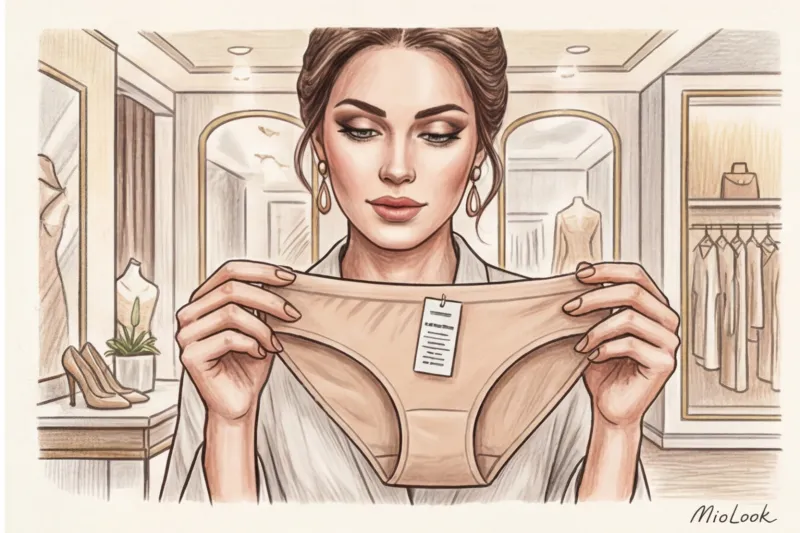
Another ironclad rule that does not tolerate exceptions: regardless of what the panties themselves are made of (even if it is 100% high-tech polyamide), the gusset should always be made of 100% cotton This is a basic hygiene requirement, and luxury brands never neglect it.
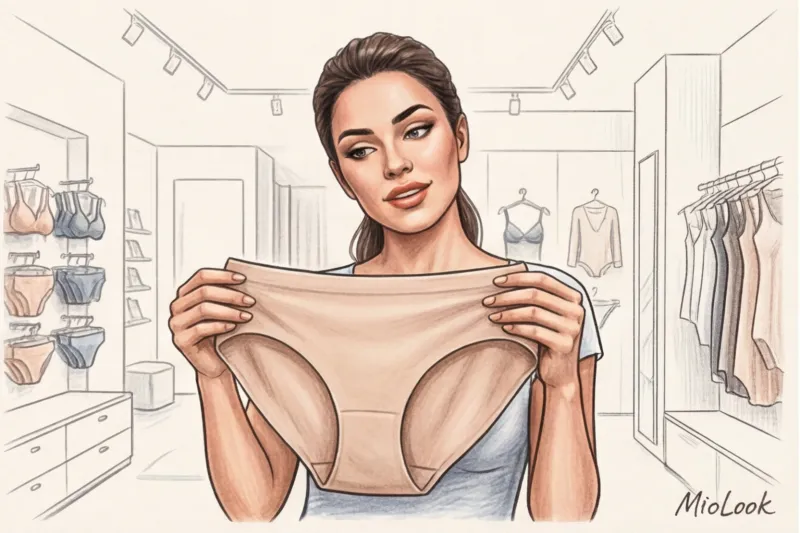
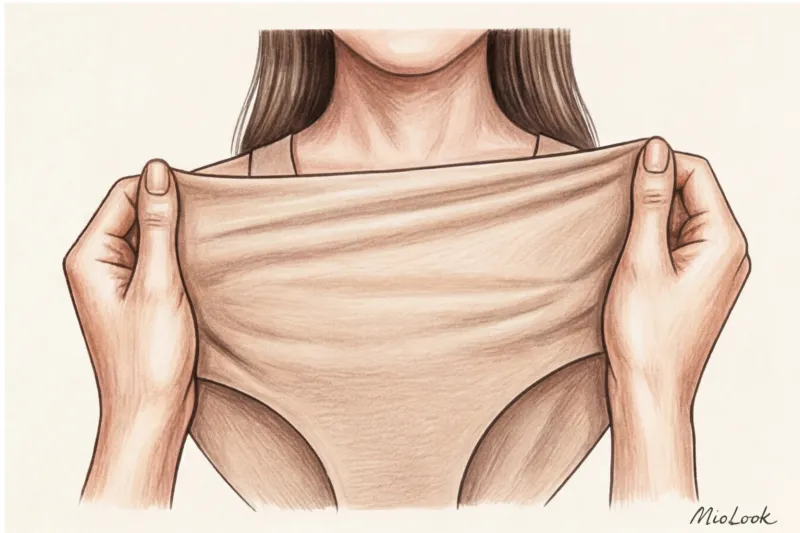
Personal life hack: When in a fitting room or store, try this simple test. Grab the edge of your underwear, tug it hard in both directions, and then release it quickly. High-quality fabric with the right amount of elastane will return to its original shape instantly, with a distinctive soft pop. If the fabric "gathers" slowly or the edge is rippled, leave the item on the hanger—it's a waste of money.
Investing in your wardrobe doesn't start with buying an expensive jacket or a statement bag. It begins when you stop treating underwear as an afterthought. By choosing the right high-tech fabrics for your first layer, you'll be surprised at how much more expensive and elegant your usual dresses and sweaters will look. And what underwear are you currently wearing underneath—does it enhance your silhouette or subtly sabotage it?