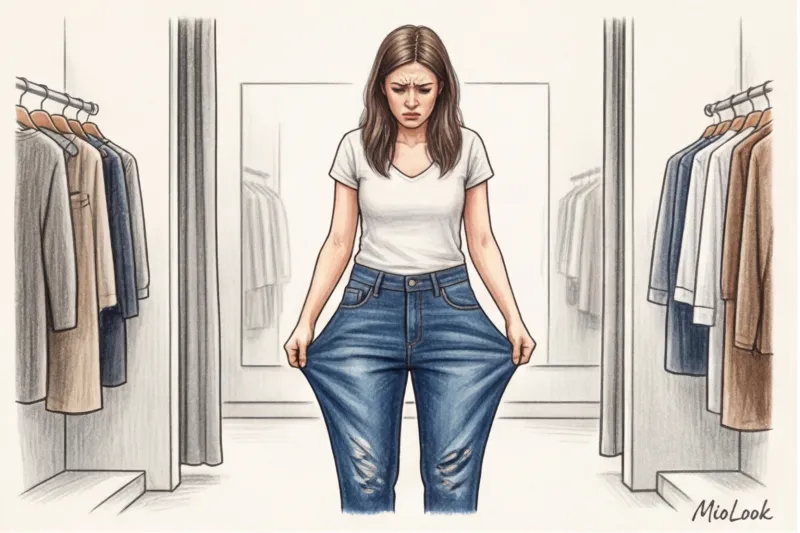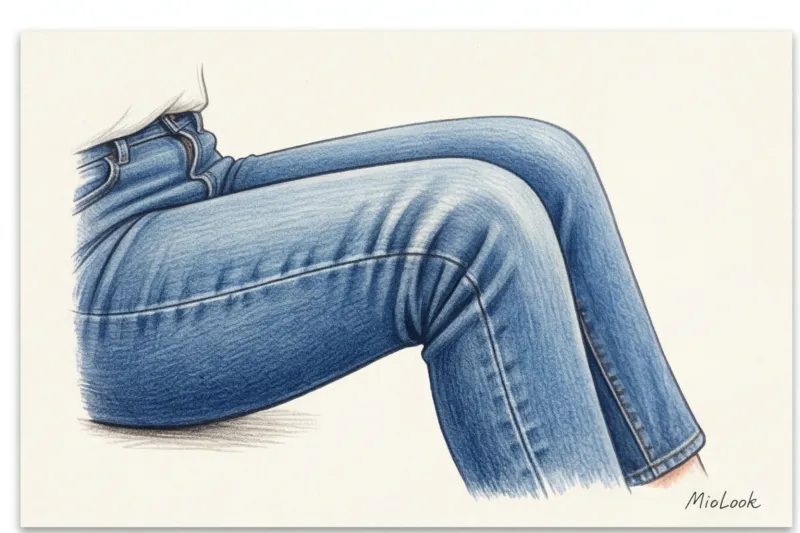
It's a familiar situation: you leave the house at nine in the morning in a pair of flawless, perfectly fitting jeans, only to have them turn into sad harem pants with baggy knees and a sagging butt by five in the evening. In my 14 years as a personal stylist, I've heard this complaint hundreds of times. One of my clients once angrily threw out her expensive designer jeans right during a wardrobe review, declaring, "They have a life of their own!"
And the problem wasn't the brand, my body type, or the price. The problem was hidden in a tiny white tag on the inside of the waistband. Today, we'll explore the ideal composition of jeans to prevent stretching, and I'll share secrets that store assistants will never tell you. We've already covered how different fibers behave during wear in our a complete guide to choosing fabrics , but denim requires special, very close attention.
The Anatomy of Denim: Why Jeans Lose Their Shape and Hang So Treacherously
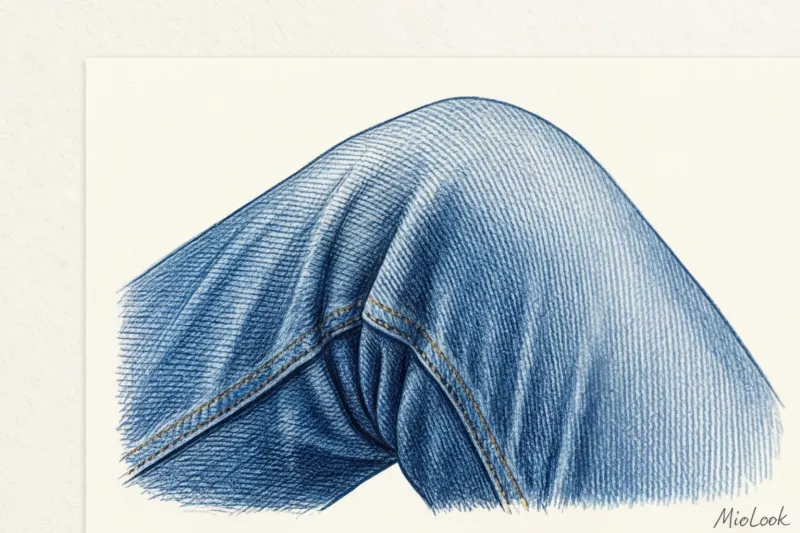
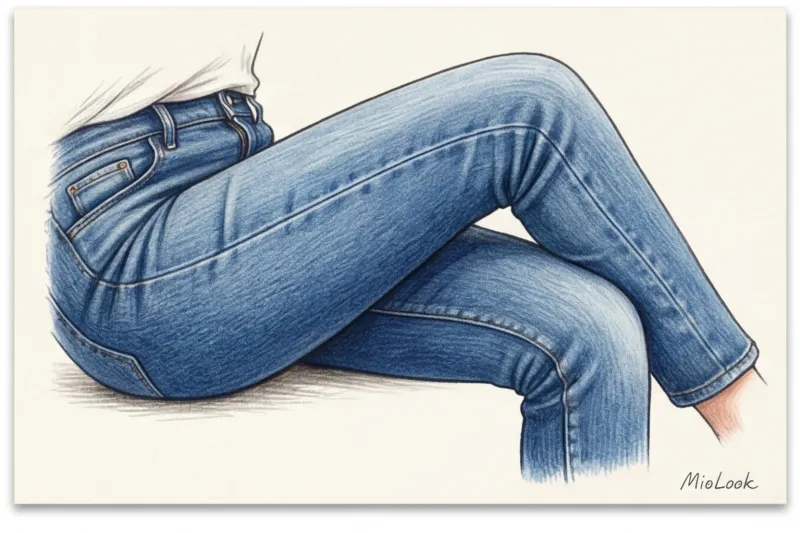
Let's delve a little deeper into the physics of this process. When you sit down, the knee joint acts as a powerful lever, stretching the tissue to its limit.
According to research by the Institute of Textile Technologies (2023), the knee and buttock areas experience the greatest mechanical stress—up to 40% higher than any other part of the trousers. Add to this the warmth of our bodies, which naturally softens the cotton fibers, and you have the perfect recipe for deformation.
Knee bulges aren't just a minor flaw. They're a detail that instantly cheapens the entire look. You can wear a luxurious cashmere sweater and carry a classy bag, but if your jeans are rippled at the creases, the overall look falls apart. The solution lies in understanding what your clothes are made of.
The Biggest Myth About 100% Cotton: Why Being Eco-Friendly Doesn't Guarantee a Perfect Fit
"Look for 100% cotton on the tag!"—this advice is repeated from one fashion blog to another. I believed this myth for a long time until I started analyzing how clothes perform on real people.
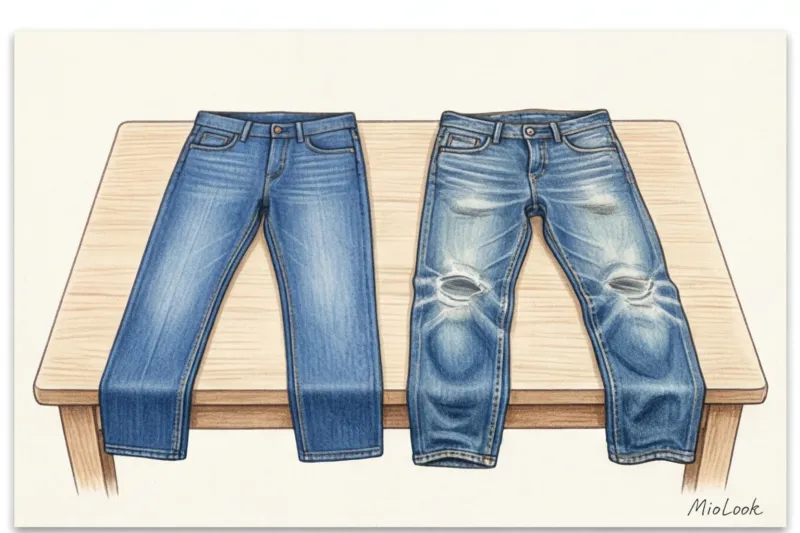
Pure vintage cotton is beautiful. It's dense, textured, and ages beautifully. But it has one fatal flaw for today's fast-paced lifestyle: it has absolutely no spring. The cotton thread stretches under the pressure of your knee and stays that way. Only heat treatment—that is, washing—can restore it to its original shape.
"If you have a sedentary office job, 100% cotton straight- or tapered-fit jeans are guaranteed to be blistered by the end of the workday. It's an inevitable physical process."
When does 100% cotton work? Exclusively in wide, relaxed styles: trench, wide-leg, slouchy, boyfriend. Where the fabric isn't tightly stretched over the joints. For skinnies, classic straight styles, and mom jeans, pure cotton is your worst enemy.
Access to MioLook for €0.99 — one-time payment
A smart AI stylist will find the perfect look for your new jeans and help you organize your wardrobe.
Get access — €0.99 onceThe ideal composition of jeans to prevent stretching: a stylist's formula
To ensure jeans maintain their perfect shape, they must contain so-called "shape retention" fibers. These synthetic fibers act like microscopic springs, causing the fabric to return to its original shape.
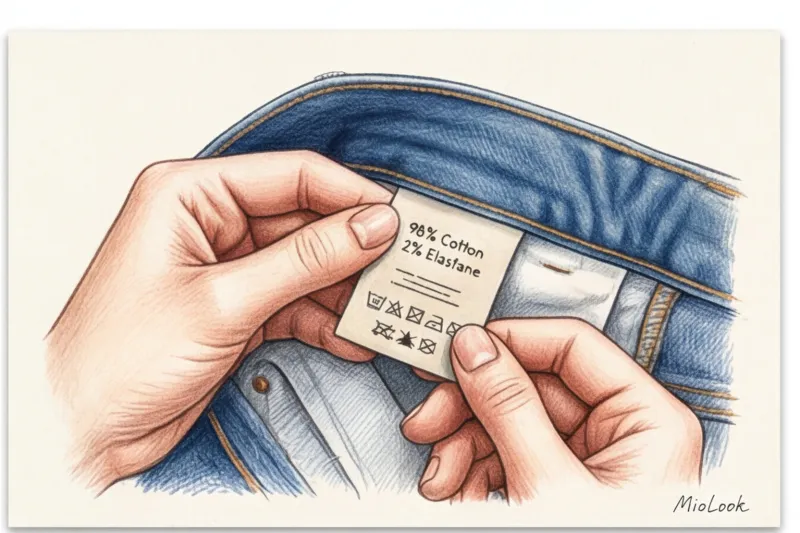
The Gold Standard of Basic Denim: The 98/2 Rule
The most common and safe compromise between naturalness and comfort is 98% cotton and 2% elastane (also known as spandex or lycra). These 2% provide just enough stretch to sit comfortably without making the fabric feel too baggy.
What you should absolutely not do: Buy jeans with 4%, 5%, or 6% elastane. In my experience, women often rejoice: "Oh, they're so soft, they stretch like leggings!" And yes, they do stretch. But after just one wash, these jeans will wrinkle and unsightly "accordion" along the entire length of the legs, and the seams will start to wrinkle. Elastane tends to break down quickly.
The Secret Ingredient of Premium Brands: Why Polyester Matters
And now for an insight that often surprises my clients during shopping sessions. We tend to demonize polyester. In blouses or dresses, it really does create a "greenhouse" effect. But in denim, polyester is your best ally.
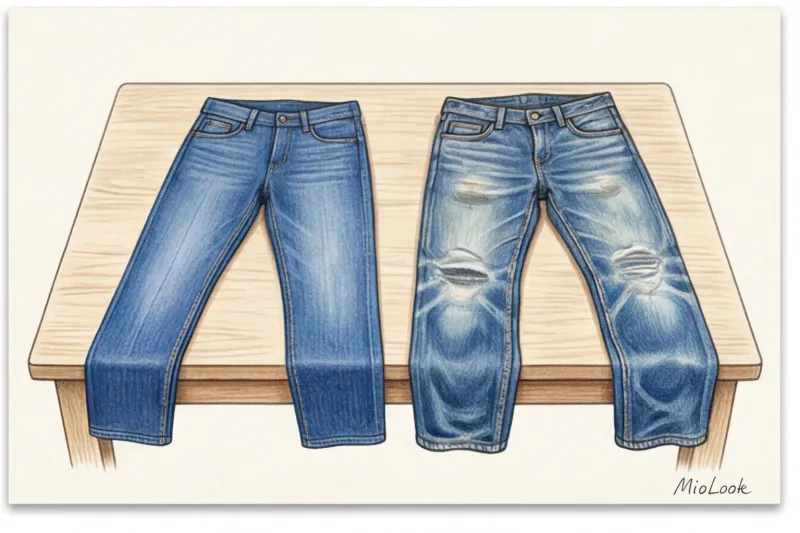
Look at the ingredients of premium brands (for example, Agolde, Frame, or Mother). You'll often see a formula like this: 92-94% cotton, 4-6% polyester (or elastomultiester) and 1-2% elastane.
Why is polyester there? I call it "reinforcement." Elastane stretches well, but over time it tires and stops shrinking. Polyester, on the other hand, is incredibly durable. In this combination, it acts as a rigid frame that forcibly pulls the elastane and cotton back into place every second you get up from your chair. These are the kind of jeans you can wear for a week without washing, and they'll fit like a glove.
Fabric density (ounces) is an indicator that the mass market keeps silent about.
Composition is only half the battle. The other half is the denim's density, measured in ounces (oz). Fast fashion brands (Zara, H&M) often cheat: they use the right composition (98/2), but use very thin fabric with a density of 8-9 oz. Thin fabric is physically unable to hold its shape, no matter how high-quality the threads.
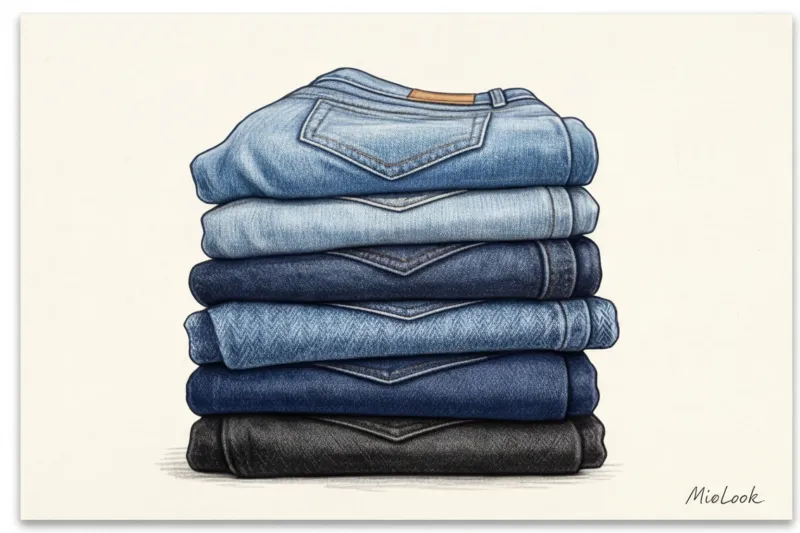
The ideal weight for jeans that don't stretch out at the knees is between 11 and 14 oz. Ounce information is rarely included on the tags of regular brands (unlike specialized denim brands). So what should you do?
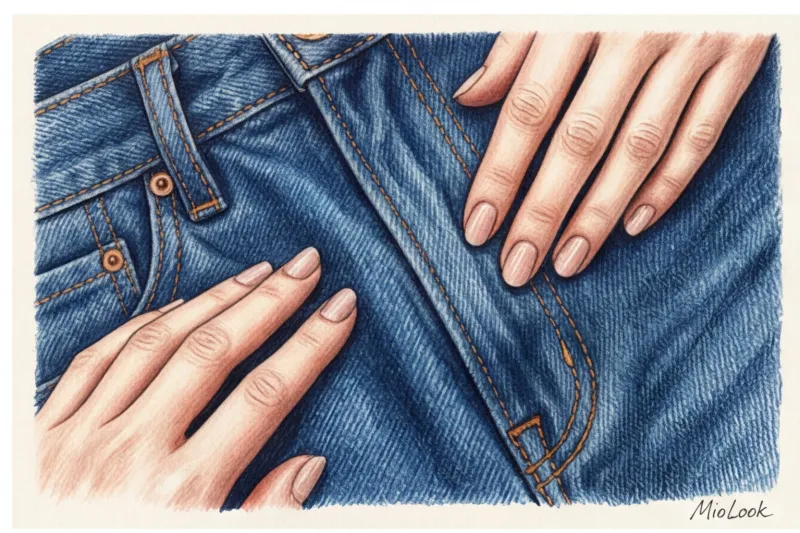
Learn to "feel" the fabric. I always ask clients to simply weigh the jeans in their hands before trying them on. High-quality denim with a 12 oz weight or more is noticeably heavy. The fabric shouldn't feel like a shirt. If you pick up a pair of jeans and they slip through your fingers, return them to the hanger.
Your perfect look starts here
Join thousands of users who look flawless every day with MioLook. Add your jeans to your virtual wardrobe!
Get access — €0.99 onceHow to Test Jeans in the Fitting Room: 3 Signature Tests
Over the years, I've developed three simple steps that I make every client take before we go to the checkout. They're a surefire indicator of how a garment will perform in the future.
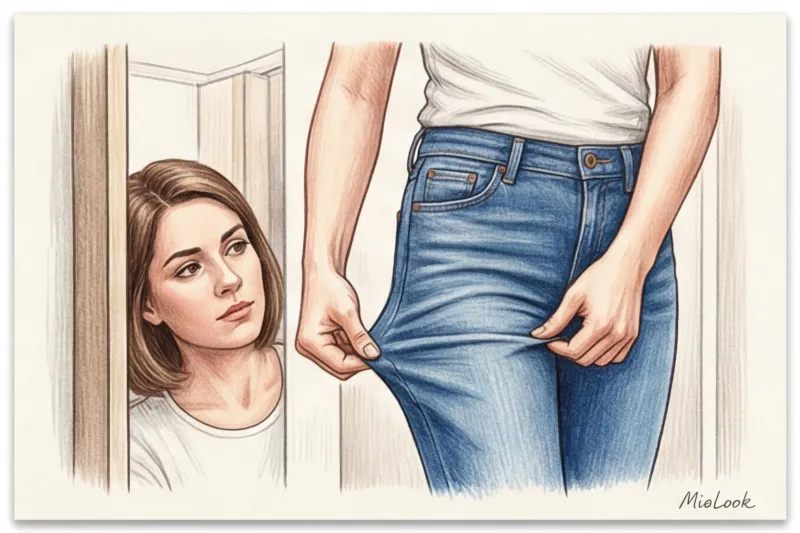
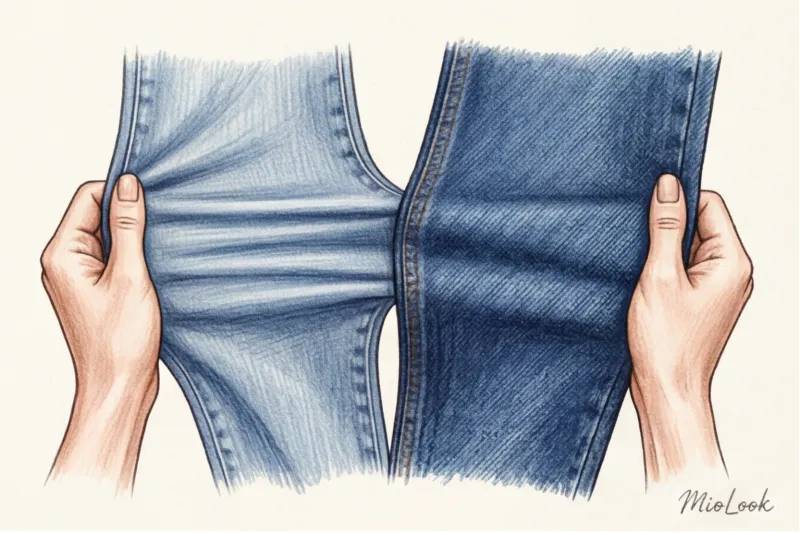
- Pinch Test. Put on your jeans. Pull the fabric firmly with two fingers (pinch) at the front of your thigh and release quickly. The fabric should make a soft pop and instantly spring back without leaving a wrinkle. If a bulge remains where you pinched it, the jeans will stretch out on the first day.
- Squat test. Squat down in the fitting room and stay there for 30 seconds. Stand up and look at your knees in the mirror. Are there visible bubbles that don't disappear when you rub them with your hand? Take them off.
- Checking the seams. Look at the outer side seam. If it's slightly twisted forward or backward in the fitting room (on a brand new item), it means the fabric fibers were distorted during the cutting process. This distortion will only worsen with wear.
Elastane Killers: Why the Right Ingredients Won't Save You If You Don't Care Correctly
It's a common story: a woman buys expensive jeans with the perfect composition (those same 92% cotton, 6% polyester, 2% elastane), and a month later she complains that they've turned into a rag. We investigate, and it turns out she's destroyed the "memory fibers" while washing them.
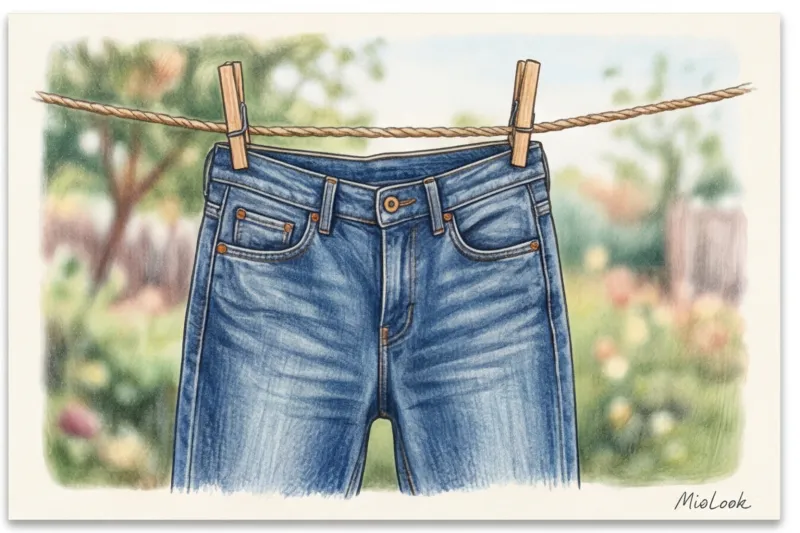
Elastane has two sworn enemies:
- Fabric softener. This is an absolute no-no for stretch denim. The silicones in the conditioner coat the elastane threads, preventing them from shrinking. The jeans become soft, but lose their elasticity forever.
- High temperatures. Washing at 60 degrees Celsius and drying on a hot radiator (or in a tumble dryer on the highest setting) literally "cooks" synthetic fibers. The elastane melts and bursts inside the fabric.
Wash your jeans inside out at a temperature no higher than 30-40 degrees Celsius, using a liquid detergent (powder is harder to wash out of thick fabrics) and dry them straightened out at room temperature.
Checklist: Buying Jeans That Will Last for Years
Let's summarize. Choosing the perfect denim isn't a lottery, but a clear system of filters that's easy to master.
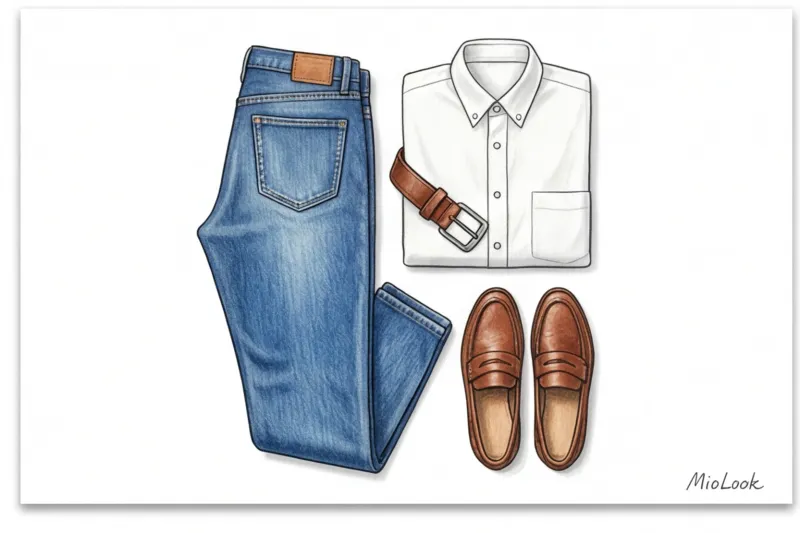
- Let's look at the tag: For fitted and straight styles, we look for 98% cotton and 2% elastane. If the budget allows for the premium segment, we look for added polyester or elastomultiester (around 4-6%) while maintaining 1-2% elastane.
- We estimate the weight: The fabric should be dense (from 11 oz) and heavy to the touch.
- We are testing: We do a pinch test and squat in the fitting room for 30 seconds.
Remember: good jeans are engineered. If you choose the right foundation materials, they'll hold their shape from morning until late at night, allowing you to feel confident in any situation.