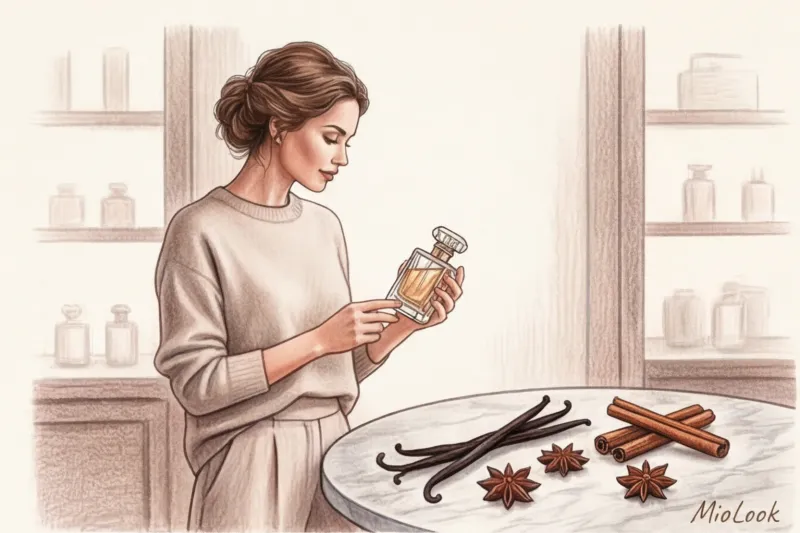
Let's be honest. When I suggest my clients add gourmand notes to their fragrance wardrobe, nine out of ten of them throw up their hands in dismay: "Julia, I'm a department head, not a teenage girl! I don't want to smell like vanilla buns at the boardroom."
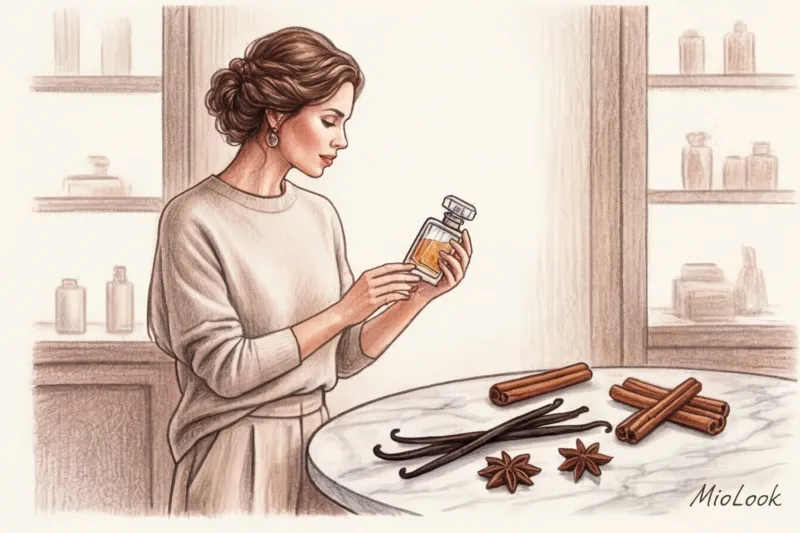
This stereotype is deeply ingrained in us. We're used to associating "edible" scents with cheap mass-market products, sticky body sprays from the 2000s, and confectionery fragrances. But real gourmand niche fragrances — it's in a completely different league. It's an intellectual, status-building tool for personal branding. Mature, non-confectionary vanilla, dark chocolate with cognac, or smoked almonds can sound incredibly expensive, emphasizing your expertise and winning people over on a subconscious level.
I have already talked in more detail about the basics of forming an olfactory wardrobe in our The Complete Guide to Niche Perfumery: Where to Start Today we'll explore the most underrated and most captivating group of fragrances.
The Evolution of Edible Notes: Why Gourmand Niche Fragrances Aren't About Sugar
The world of perfume changed forever in 1992 when Thierry Mugler released his legendary Angel with a lethal dose of ethyl maltol—a synthetic substance that smells like cotton candy and caramel. It was a shock. Before that, women smelled of flowers, aldehydes, or chypres. Smelling like food was considered bad manners.
But what began as a shocking proposition evolved into high art in the niche market. The great perfumer Francis Kurkdjian once noted that creating a beautiful gourmand scent is more difficult than a floral one, because the line between an "olfactory masterpiece" and a "bakery smell" is microscopically thin.
The main difference between selective perfumery and luxury is the absence of a straightforward, sticky cloyingness. Masters balance sweetness with harsh, sometimes aggressive accords: dry wood, smoke, resins, animal musk, or salt. You don't smell like dessert. You smell like an abstract idea of dessert, served on an oak table in a room where expensive cigars were smoked.
From confectionery to high art: how perceptions have changed
Have you ever noticed how strongly we're drawn to warm, enveloping scents during times of stress? According to a 2023 study by the WGSN trend bureau, demand for fragrances with notes of coffee, baked goods, and milk increased by 40% amid global instability. It's pure psychology: olfactory comfort returns us to a state of basic security.
However, the modern niche offers us conceptual comfort. It's not just cookies; it's, for example, the scent of cooling bergamot tea and almond macarons forgotten on an antique leather chair (as in Olivia Giacobetti's fragrances).
Your perfect look starts here
Join thousands of users who look flawless every day with MioLook. Artificial intelligence will help you choose a wardrobe that perfectly matches your perfume.
Get access — €0.99 onceThe Anatomy of Luxurious Vanilla: What Does the World's Most Expensive Ingredient Sound Like?
In my practice, when I conduct blind tests with clients, 100% of women don't recognize natural Madagascar vanilla. They say, "Oh, is that some expensive rum with tobacco and wood? How classy!"
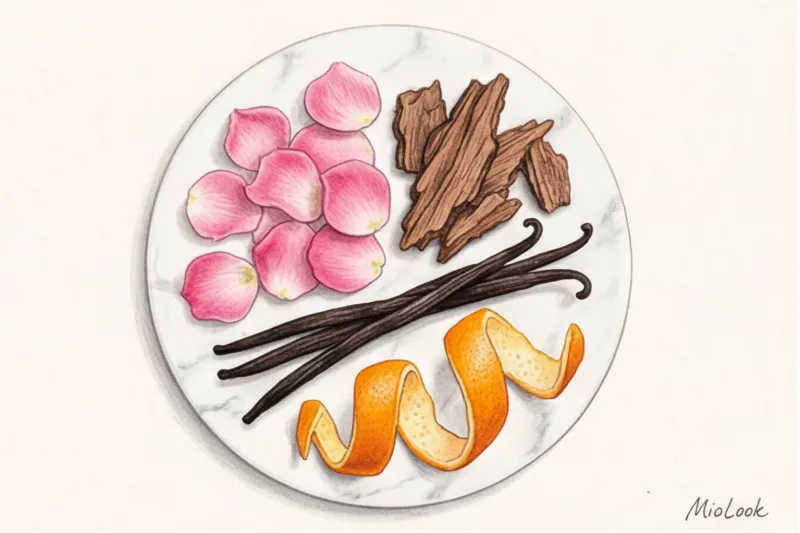
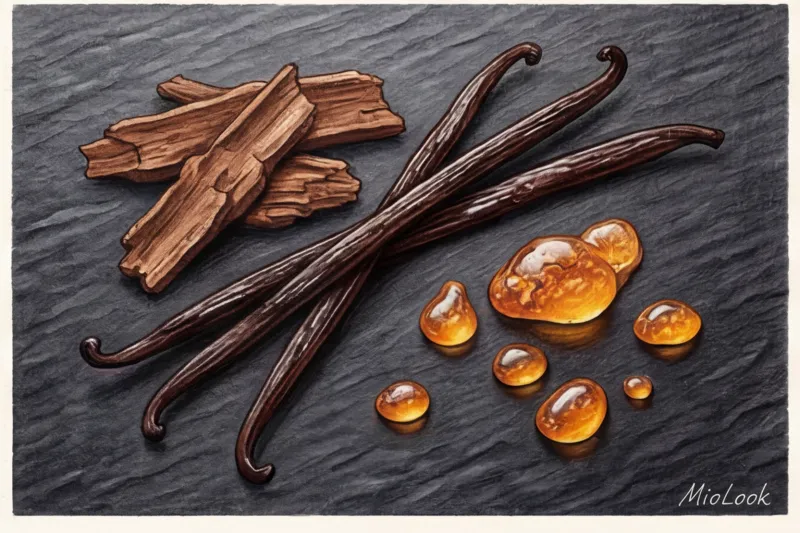
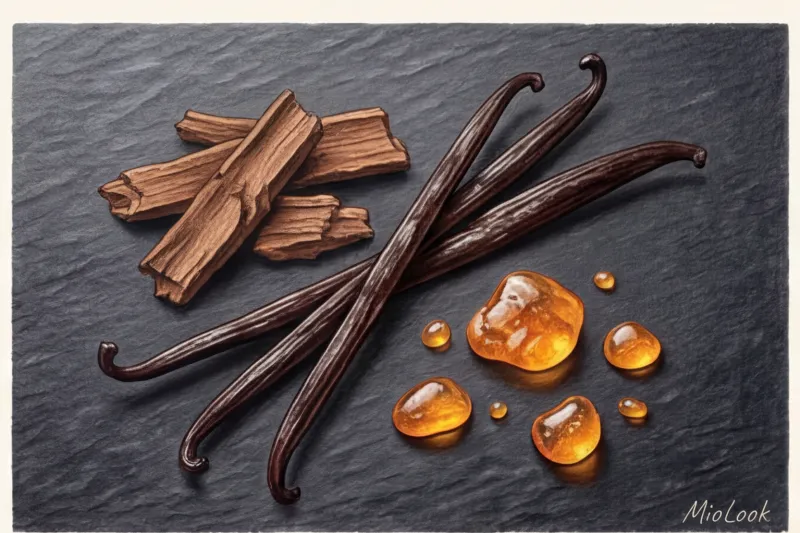
The truth is, natural vanilla absolute is one of the most expensive perfume ingredients in the world (it can cost several thousand dollars per kilogram). And it's completely different from the synthetic ethyl vanillin you find in a baking packet. Real vanilla bean has a dark, resinous scent, with distinct animalic and alcoholic nuances.
"Investing in a bottle of natural vanilla pays for itself instantly. The complex gourmand extracts (Extrait de Parfum) last up to 24 hours on skin and for weeks on fabric. This makes them an extremely cost-per-wear investment."
What goes well with such a prestigious vanilla style in a wardrobe? It demands refined textures. No thin polyester. Only cashmere from Loro Piana (or its high-quality equivalents), dense silk with a 22-momme weight, soft suede, and heavy wool. Vanilla loves voluminous, flowing silhouettes in shades of camel, ecru, and dark chocolate.
Top 3 Niche Fragrances with Noble Vanilla
- Guerlain - Spiritueuse Double Vanille: A benchmark for "drunk" vanilla. It opens with notes of rum, cedar, and incense. On cool skin, it's more austere, revealing more wood; on warm skin, it softens toward a rich liqueur.
- Tom Ford — Tobacco Vanille: A modern classic. Tobacco leaf, spices, tonka bean, and vanilla. The perfect companion for a tuxedo or a tailored pantsuit.
- Serge Lutens - Un Bois Vanille: "Vanilla Forest." Burnt wood, beeswax, licorice, and bitter almond. Mystical, complex, and completely inedible.
Dark chocolate, coffee, and alcohol: status chords for an evening and business look
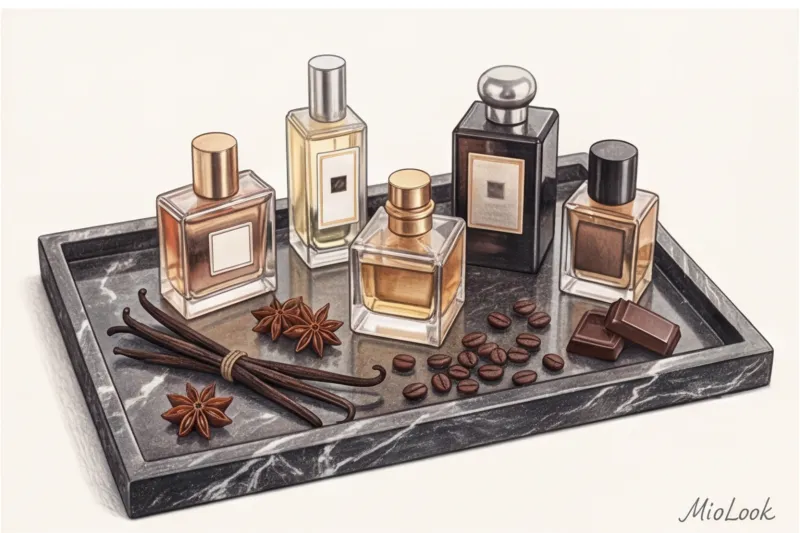
Let's move on to the "dark side" of gourmand. Notes of cocoa beans, roasted coffee, cognac, and rum are powerful tools for creating a look with a subtle masculine edge. For women, such fragrances work like a tuxedo worn over a naked body: they convey strength, confidence, and a hidden sexuality.
One of my clients, Elena (the CFO of a large holding company), wore exclusively cool, "prickly" chypres to work for a long time. Her image was impeccable, but too stern—her subordinates were frankly intimidated by her, and negotiations often became unnecessarily tense. We decided to experiment and replaced her perfume with a scent with notes of dark chocolate, sandalwood, and a touch of rum (Kilian Black Phantom). The effect was striking. The sternness remained, but she acquired the aura of an "iron lady in velvet gloves." Her partners' trust levels increased because the scent was subconsciously perceived as a sign of calm, relaxed luxury.
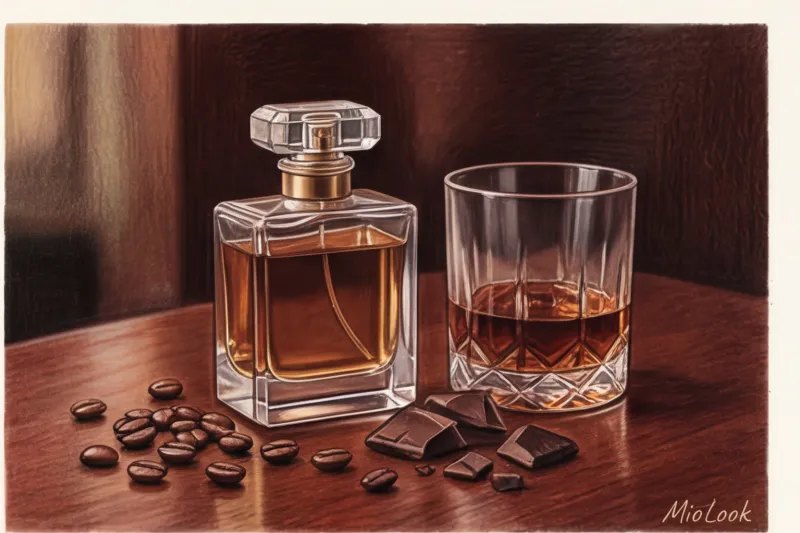
These profiles are ideal for evening events with a strict dress code (Black Tie) and important negotiations where you need to dominate without raising your voice.
Access to MioLook for €0.99 — one-time payment
A smart AI stylist will create the perfect look to complement your new perfume wardrobe. We take into account your measurements, color type, and lifestyle.
Get access — €0.99 onceThe scent of fresh baked goods and almonds: olfactory comfort as a psychological anchor
Notes of praline, croissant, marzipan, and tonka bean work in a completely different way. They blur the distance.
For helping professionals (psychologists, coaches, private practitioners, mentors), a scent with a hint of freshly baked goods or warm milk can be a real tool. Neuromarketing research shows that the scent of vanilla and cinnamon lowers the heart rate of the person you're talking to and builds a basic sense of trust within the first 30 seconds of communication.
But there is an important limitation here: This technique doesn't work if you're a crisis manager, a trial lawyer, or conducting a rigorous audit. In situations requiring maximum subordination and distance, the smell of almond cookies will work against you, depriving your image of the necessary toughness.
Gourmet in a business wardrobe: breaking stereotypes
It's commonly believed that sweet scents are completely taboo in business dress codes. This is a misconception. The problem isn't the trend itself, but the failure to play with contrasts.
The main secret of a stylist: the rule of contrast of textures and meanings If you're wearing a relaxed knit dress, a gourmand scent will make the look too homey. But if you're wearing a tailored, architecturally cut suit (for example, made from thick Super 120s wool by Massimo Dutti or COS), with defined shoulders, a sleek hairstyle, and a minimalist watch—a micro-dose of a savory gourmand will make a splash.

Strict lines visually maintain distance, while a soft, enveloping trail draws you in. This dissonance makes people notice you and remember you.
However, remember perfume etiquette. In an open space or closed conference room, a thick vanilla scent can give colleagues a migraine. Your scent should only be detectable at arm's length (intimate area).
How to Properly Test and Wear Heavy Perfumes
If you've decided to invest in a selective gourmand, forget about paper blotters. On paper, these fragrances sound flat, revealing only the top notes. Gourmands require body heat to reveal their resins and woods.
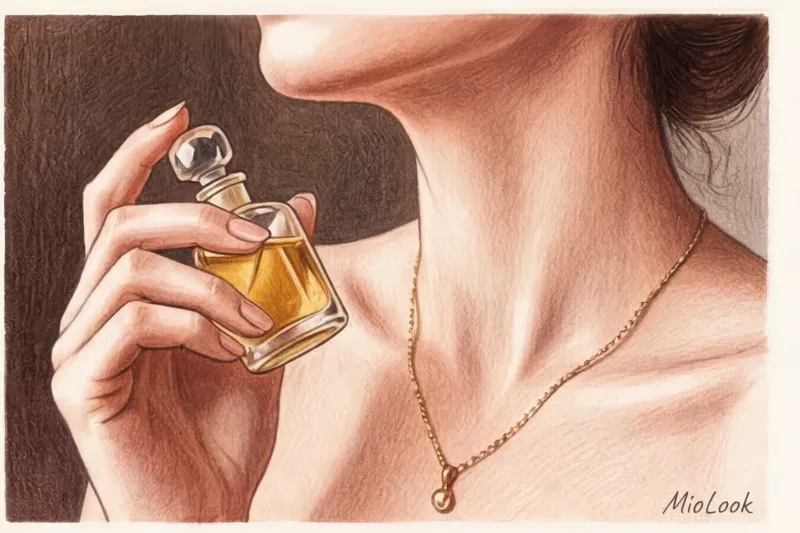
Here's my tried and tested action plan for taming strong aromas:
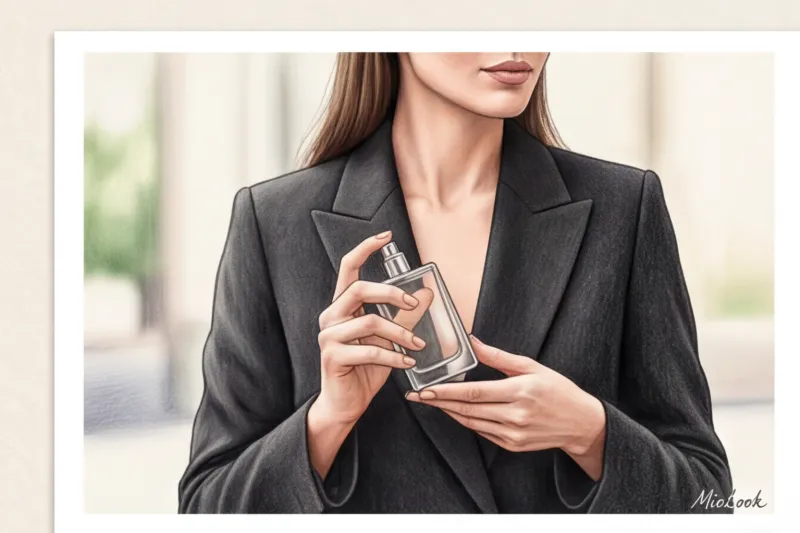
- Microdosing: Never use more than 1-2 sprays. If you have a splash bottle, one drop on the back of your head, just under your hair, is enough. When you turn your head, you'll leave a thin, elegant trail.
- Cloud Entry Technique: For daytime use, spray the fragrance in front of you and step into the mist. This will ensure even, weightless coverage.
- Be careful with fabrics: Niche perfumes (especially Extrait de Parfum) contain a high percentage of essential oils (20% to 40%). Never spray them directly on light-colored silk or fine cotton—they will leave oil stains that no dry cleaner can remove. Apply perfume directly to your skin. to after you put on the blouse.
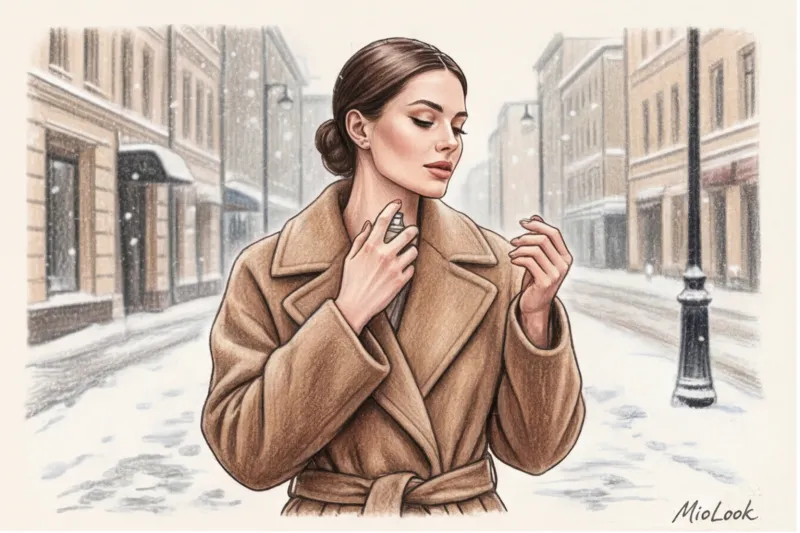
- Wool Magic: On thick wool, tweed, and cashmere, gourmand notes linger for weeks, acquiring an incredibly refined, dry aroma. Lightly spray the lining of your fall coat and enjoy the effect all season long.
Perfume is your invisible accessory, entering the room a second before you and lingering long after you leave. Don't be afraid to experiment with gourmand niche scents. Find your perfect savory vanilla or tart chocolate, and you'll see how this complex olfactory code changes the way the world reacts to you.