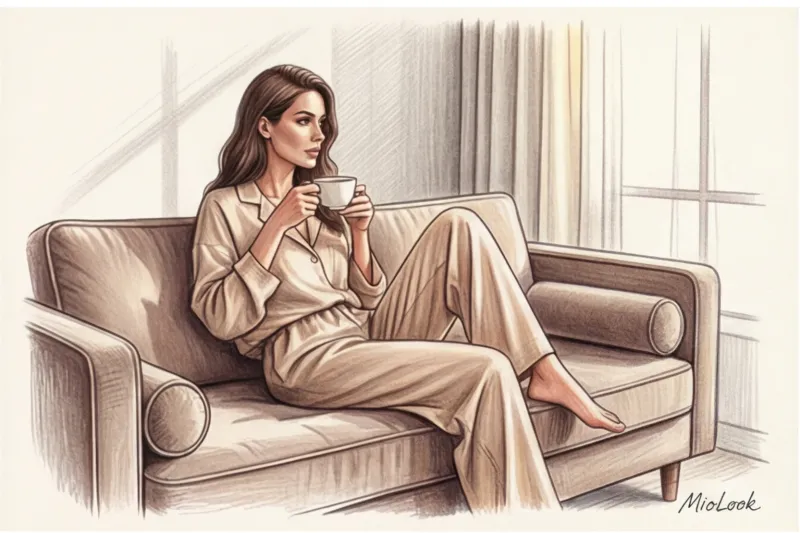
According to WGSN statistics for 2024, we spend about 60% of our time at home. Yet, women spend five times less on their home wardrobe than on office wear. A paradox? Absolutely. We're used to dressing up for colleagues, passersby, and even the barista at the coffee shop, but we save stretched-out T-shirts and casual sweatpants for later.
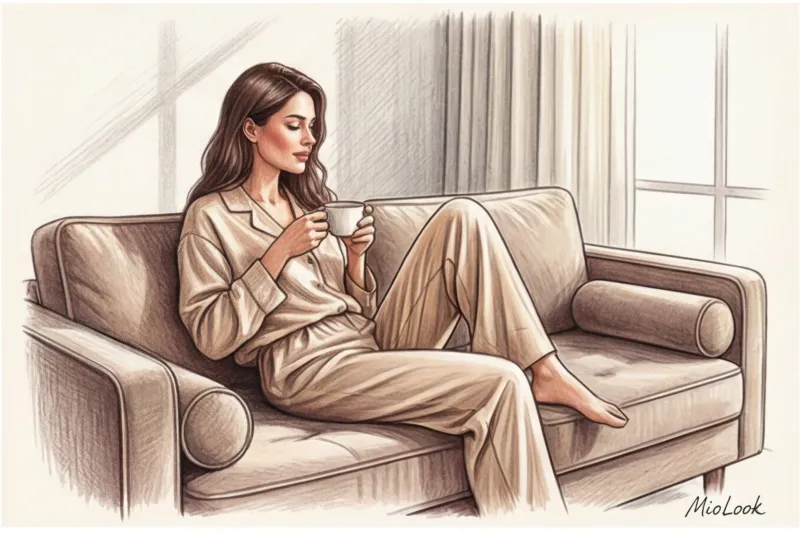
We've written in more detail about why this approach needs to change right now in our The Complete Guide to Women's Loungewear: Aesthetics and Self-Love.
As a personal stylist with 14 years of experience, I can confidently say: what you wear behind closed doors shapes your self-esteem more than the most expensive office suit. And the main secret here lies not in the cut, but in the materials. A well-chosen fabric for home wear can literally change your posture, reduce stress levels, and switch your brain into a well-deserved rest mode or, conversely, into productivity mode.
The Psychology of Tactility: How Loungewear Fabric Changes Our Self-Sense
Did you know that our brain "reads" clothing the same way it reads text? In 2012, researchers Hadjo Adam and Adam Galinsky coined the term Enclothed Cognition Their research proved that the symbolic meaning of clothing directly influences our cognitive processes.
But at home, visual symbolism is complemented by a powerful tactile factor. Rigid, staticky, or scratchy fabrics increase micro-cortisol releases. Your body is constantly in a state of mild irritation, even if you're just lying on the couch.
I remember a client named Anna, an IT manager. While working remotely, she complained of constant slouching and burnout. During an online wardrobe review, I saw her staples: shapeless, stiff melange knitwear. We replaced it with a flowy set made of thick Tencel. A month later, she wrote to me: "Isabella, it's magical. The fabric glides and drapes so beautifully that I physically don't want to hunch over my laptop. I feel like a Hollywood actress in my own office.".
"Draped fabric is your personal sculptor. Flowing, heavy textures make us move more fluidly, breathe deeper, and feel luxurious without the slightest effort."
Access to MioLook for €0.99 — one-time payment
A smart AI stylist will select the perfect look.
Get access — €0.99 onceBusting the Myth: Why 100% Cotton Isn't Always the Ideal Fabric for Loungewear
Walk into any mass-market store, and you'll see tags proudly proclaiming "100% cotton." For years, we've been taught that pure naturalness is synonymous with quality. But let's face it: for loungewear, this is a dangerous myth.
Cheap 100% cotton jersey performs terribly under everyday wear. My personal test drive of basic cotton pants showed that after just 5-7 hours on the couch, they stretched out at the knees, and after the third wash, they lost 20% of their color and became stiff.
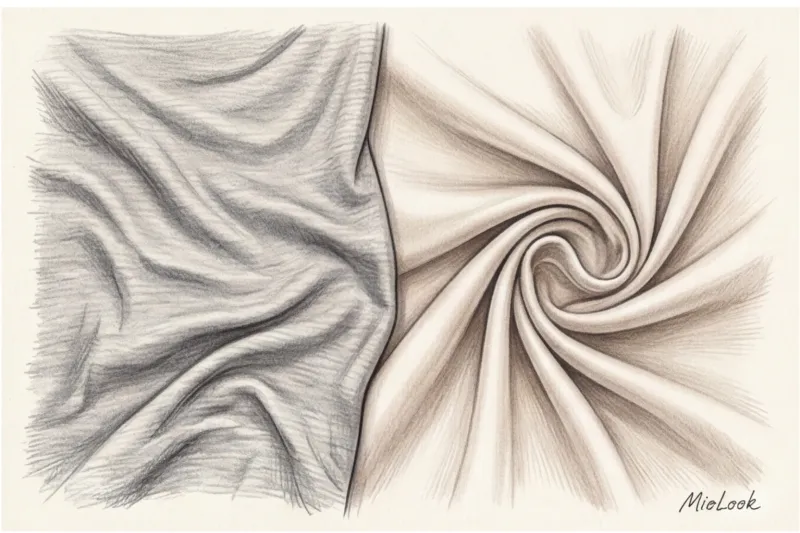
If you want something to last a long time, look for the right compromises:
- Fiber quality: Choose penye quality cotton - these are the longest and smoothest fibers that do not pill.
- Technological additive: 5–8% elastane isn't a "harmful synthetic," but a lifesaver. Elastane is responsible for fiber restoration. Thanks to it, your elbows and knees will remain flawless.
Top 3 Ideal Materials: Choosing Fabric for Premium Loungewear
When you're deciding to update your home wardrobe, I recommend focusing on materials that combine the aesthetics of high-end pieces with absolute comfort. Here's my personal ranking.
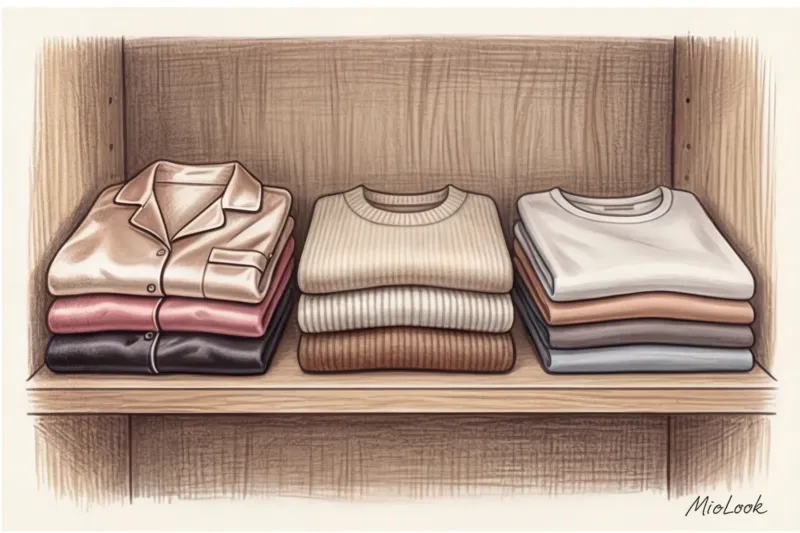
Modal and Tencel (Lyocell): silky aesthetics without the fuss
These are next-generation cellulose fibers. They're produced from eucalyptus or beech wood using closed, eco-friendly technologies. Why do I love them so much?
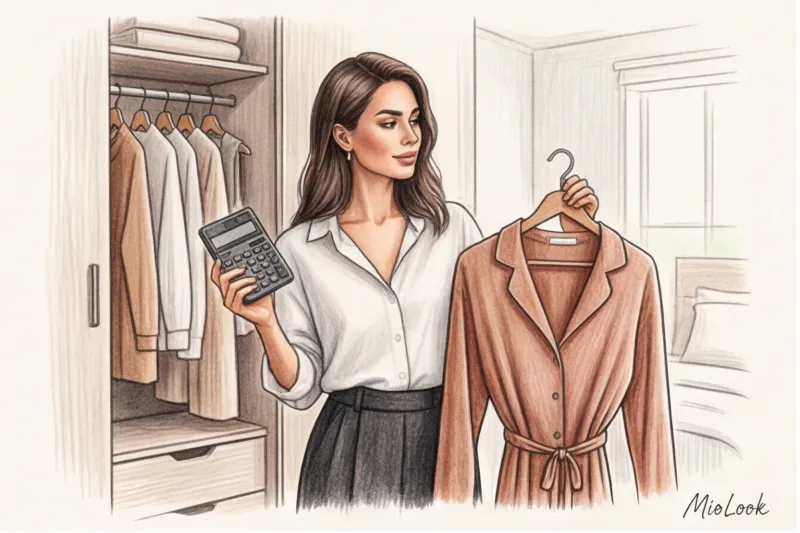
Firstly, according to the Lenzing textile laboratory (2023), Tencel absorbs 50% more moisture than cotton. This makes it ideal for temperature regulation. Secondly, it has a refined matte sheen, which we call "smart silk." A modal set (usually in the €60–€120 price range) can withstand up to 100 washes without losing its shape. It's the ideal fabric for loungewear: pajamas, two-piece suits, and slip dresses.
Cashmere and merino wool: cozy luxury for the cold season
Home knitwear is completely different from street knitwear. We don't need thick fisherman's sweaters. Look for micro merino or finely knit cashmere. This yarn is so smooth that it's completely unprickly.
A quality cashmere cardigan or joggers (an investment of €200 and up) provides enveloping warmth that allows your skin to breathe even in a well-heated room.
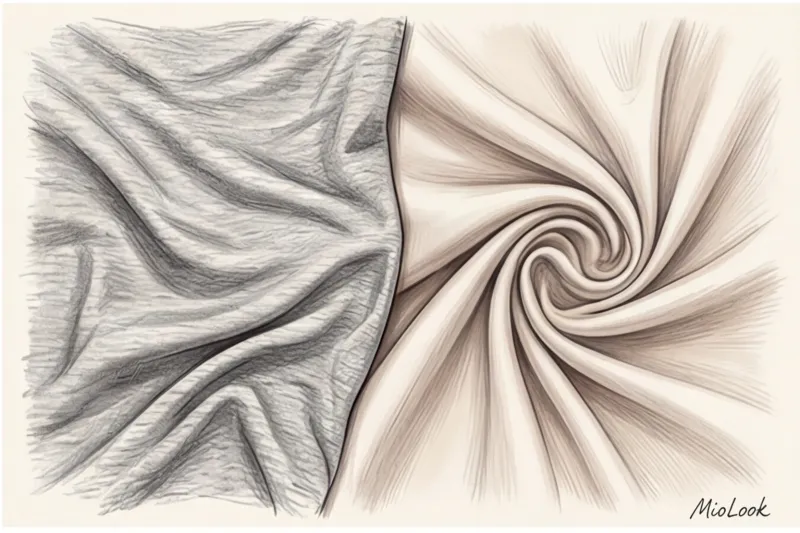
Natural silk: an investment in true self-love
Slip, pleasant coolness, and incomparable aesthetics. Silk is more than just a loungewear fabric; it's a ritual.
But there is a strict limitation here (and this is a case where this advice doesn't work for everyone). Silk requires careful handling: hand wash with special liquid detergents or dry clean. Also, never buy thin silk. Look for a density of at least 19-22 momme. If you're not up for complex care, pay attention to cupru — is a stunning cotton down alternative that looks like silk but is machine washable on a delicate cycle.
Your ideal image
it begins Here
Join thousands of users who look flawless every day with MioLook.
Get access — €0.99 oncePay attention to the label: which fabrics are absolutely taboo in home clothes
Even the most impeccable cut will be meaningless if the garment is made from "dead" materials. Remember these enemies of comfort.
Polyester in its pure form. Those adorable fluffy fleece robes that people love to give as New Year's gifts. The physics behind this process are simple: polyester has zero hygroscopicity (it doesn't absorb moisture). Putting on such a robe creates a greenhouse effect. I allow my clients to wear fleece for a maximum of 30 minutes after a bath—after that, their skin starts to suffocate.
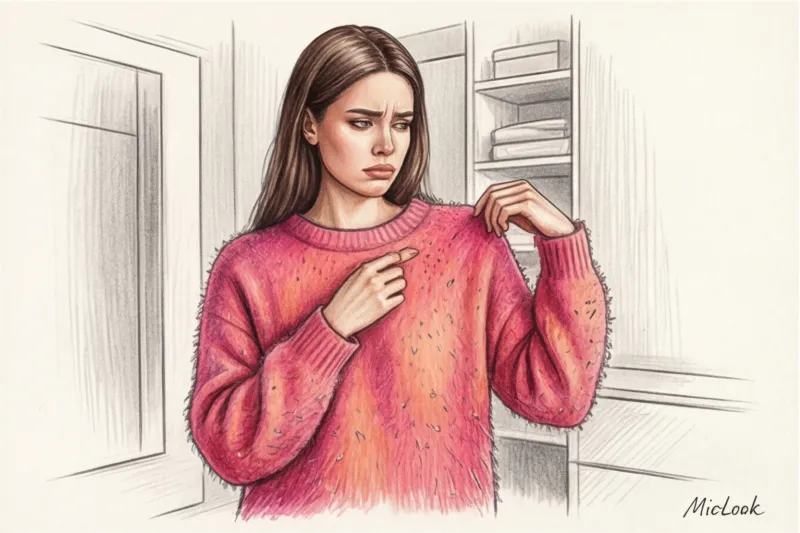
Cheap acrylic. Imitation wool, which attracts static and dust. After two weeks of wear, acrylic inevitably becomes covered in pills, transforming you from an elegant woman into a tired housewife.
Hard flax without softening. It looks fantastically aesthetically pleasing in photos on Pinterest, but it's completely uncomfortable in real life. Sitting on a hard linen sofa is a dubious pleasure.
Style Formula: How to Choose Fabric for Loungewear to Suit Your Personal Style
Clothes should support your lifestyle, not the other way around. To avoid making the wrong choice, I always suggest starting with how you spend your time at home. By the way, to easily put together such outfits and save time in the morning, I recommend using image selection function in MioLook.
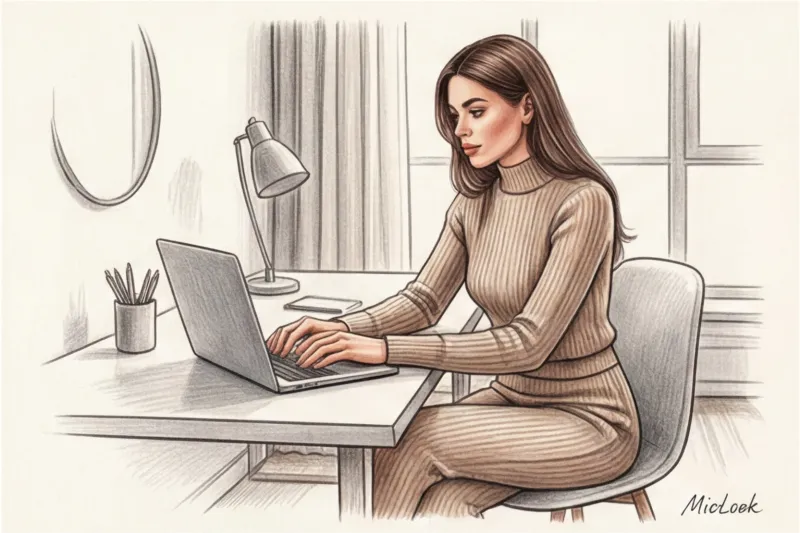
Remote Work (Home Office) Scenario
If you have three Zoom calls before lunch, you need to "keep your cool."
Formula: Heavyweight viscose jersey (ponti-roma) or high-quality cotton double-thread fleece. These fabrics perfectly hold the shoulder line and collar, creating a composed yet relaxed silhouette. You're comfortable, but your colleagues see you're professional.
Scenario "Total Relaxation"
A day off, a book, a glass of wine and a complete switch off from worries.
Formula: Maximum fluidity and freedom. Silk kimonos, wide palazzos made of flowing modal, weightless tops with thin straps. The fabric should flow over the body like water.
Scenario "Active Mom"
Cleaning, cooking, and playing with children on the floor—here, durability and ease of cleaning come first.
Formula: Cotton blends (combed cotton + 5-8% elastane) or dense Tencel. No complicated cuts or ruffles. Just simple joggers and loose sweatshirts that can be easily thrown into the washing machine at 40 degrees.
Stylist's Checklist: 5 Signs of Quality Loungewear Fabric in the Store
How can you avoid being fooled by beautiful boutique lighting? Use my proven approach.
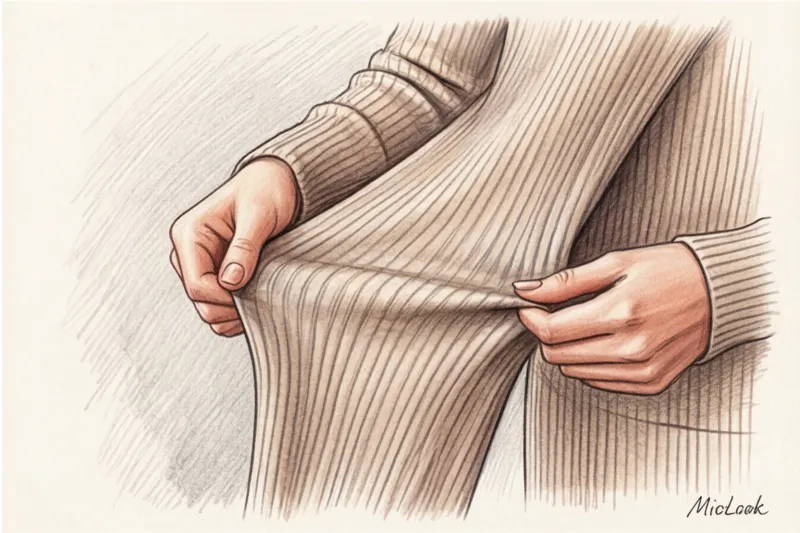
- Crease test: Squeeze the edge of the item tightly in your fist for 10 seconds and release. If the fabric remains chewed up, it will look the same after an hour of sitting on the chair.
- Translucency test: Hold the fabric up to the light. A good, dense weave (180 g/m² or more) will show through evenly, without any bald spots or thinning.
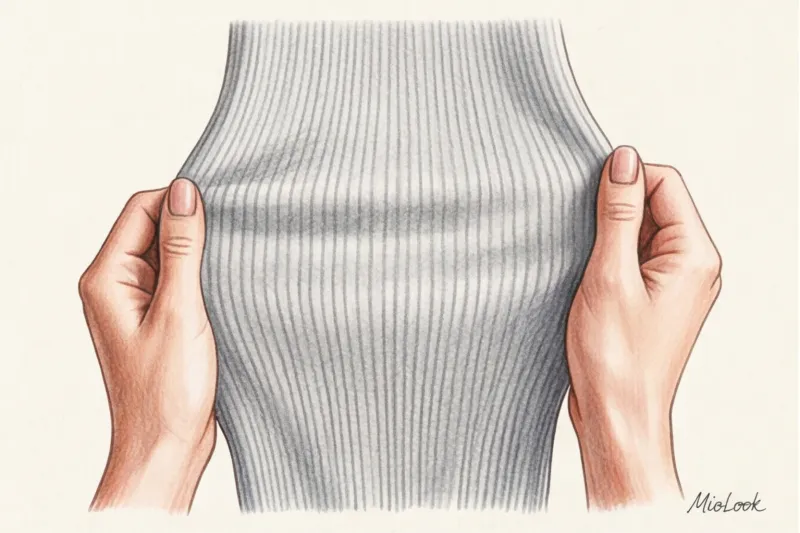
- Rebound test: Pull the fabric at your knee or elbow to the sides and release. High-quality loungewear fabric with the right percentage of elastane should instantly return to its original shape.
- Backside Rating: Turn the garment inside out. The wrong side is more important than the right side! Seams should be flat or closed, without any protruding, prickly nylon threads from the overlocker.
- Tactile test: Never test the fabric with rough fingertips. Instead, apply it to the inside of your wrist or neck—the skin there is most sensitive.
Summary: Assembling a home capsule from the right fabrics
Your home wardrobe isn't a place to put away old, worn-out items. It's your recovery zone.
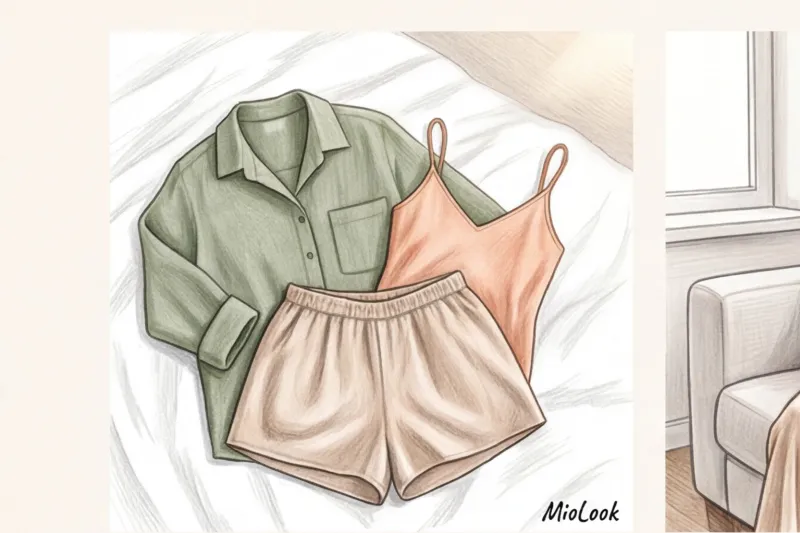
To start, I recommend putting together a capsule of three items: one flowing Tencel set for evening relaxation, one thick viscose or terry suit for active housework, and a beautiful silk (or cupro) kimono for leisurely breakfasts. And to tidy up your current items, digitize them using MioLook smart wardrobe - this will help you see what you are really missing.
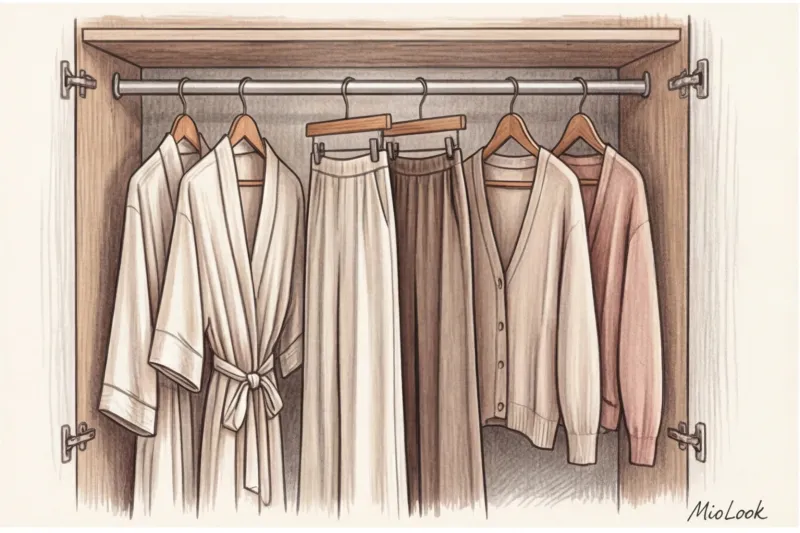
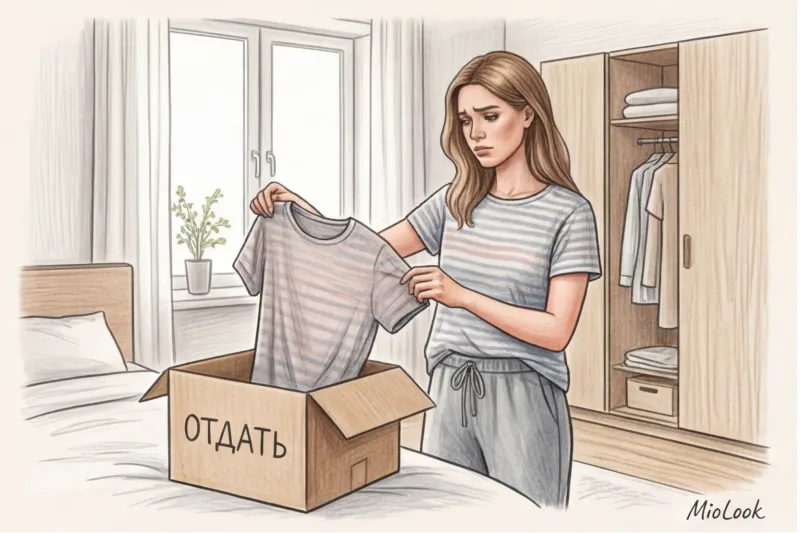
Do it today. Open your loungewear drawer. Throw out (or recycle) anything that's pilled, out of shape, or makes you feel unkempt. You deserve to touch your best, especially when no one's watching.