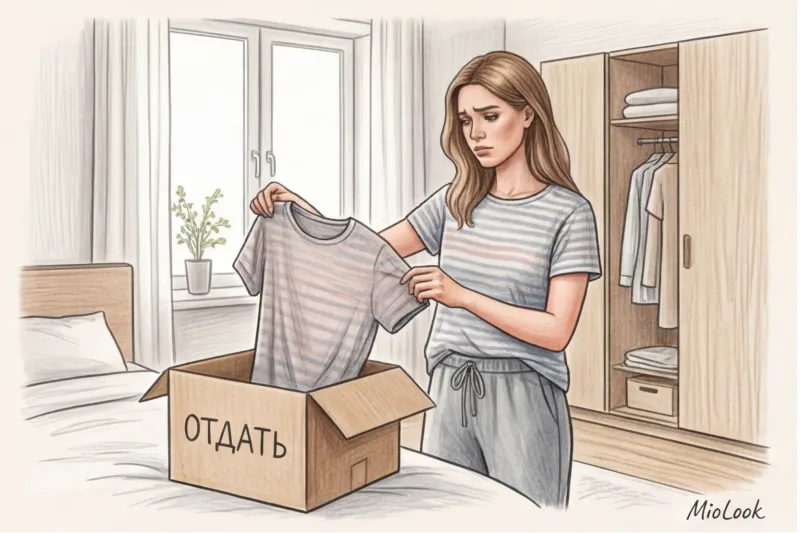
Over 12 years of working as a stylist and hundreds of wardrobe analyses in Paris, Milan, and London, I've discovered one consistent pattern. Even for women with impeccable street style, their wardrobes often resemble a "Frankenstein's wardrobe": faded T-shirts, stretched-out sweatpants, and random items that "I'm too sad to throw away, I'll just wear them around the house." Yet it's what we wear behind closed doors that shapes our basic self-esteem. We discussed this phenomenon in more detail in our The Complete Guide to Home Wardrobe: How to Put Together a Stylish Capsule.
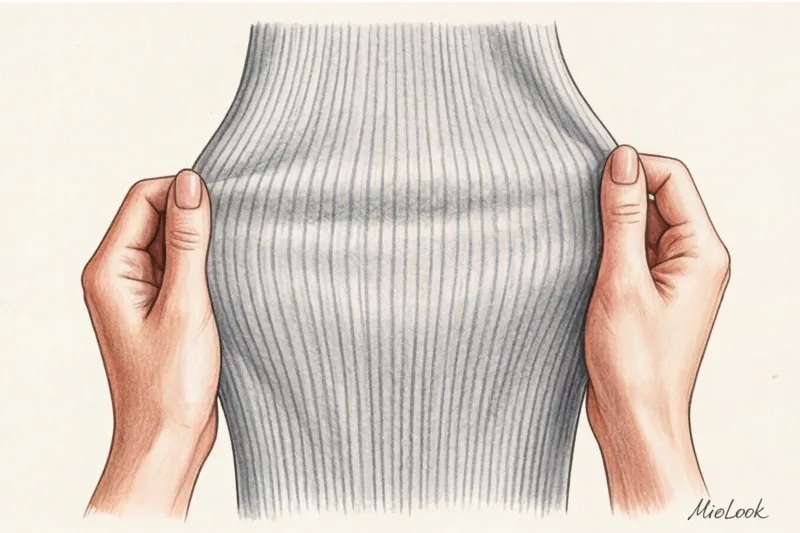
But the main problem lies not in the styles, but in the materials. The right ones fabrics for home wear It's not just a matter of aesthetics. It's about physiological comfort, thermoregulation, and your personal microclimate. And today, I want to dispel several ingrained myths that make you spend money on things that become unsightly within a couple of days.
The 100% Cotton Myth: Why Ideal Loungewear Fabrics Always Contain Impurities
"Look for 100% cotton on the label!"—this advice is repeated in glossy magazines. One of my clients, Anna, followed it and bought a pair of seemingly luxurious organic cotton joggers for $200. After three days of working remotely from the couch, she sent me a photo: her knees had become permanently stretched, and the fabric on her hips had become untidy.
Let's face it: pure cotton is the enemy of home aesthetics when it comes to knitwear. Cotton fiber has no "memory." It stretches under the heat and friction of your body and cannot return to its original shape on its own. Furthermore, 100% cotton loses pigment more quickly with frequent washing.
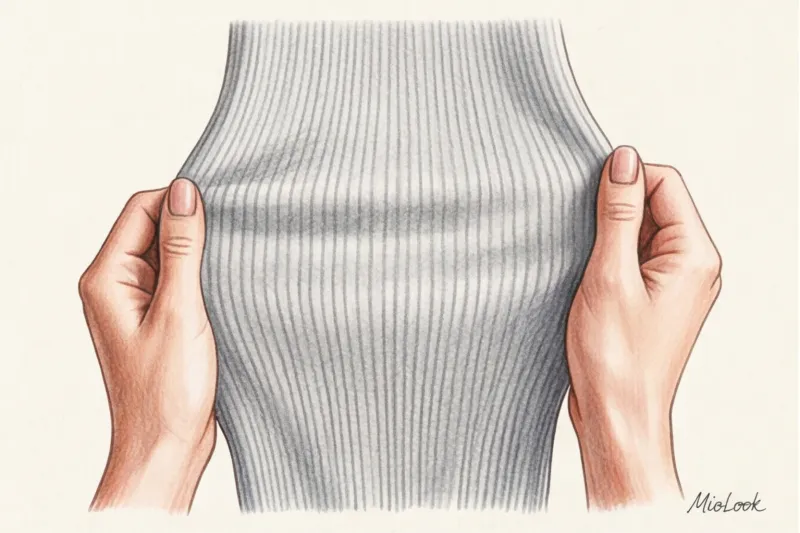
The magic lies in the proportions. The ideal composition of a high-quality lounge suit is 95-97% natural fiber and 3-5% elastane (also known as spandex or lycra). This tiny synthetic additive acts as an internal scaffold: it holds the threads in place, preventing "bubbling" at the knees and elbows, without compromising the breathability of the garment.
Access to MioLook for €0.99 — one-time payment
A smart AI stylist will select the perfect look for home and work.
Get access — €0.99 onceInnovative cellulose: modal, viscose, and tencel as a new base for the home
Many people still confuse synthetic fabrics (made from petroleum products) and artificial ones (manufactured artificially from a natural raw material—wood cellulose). Today, high-tech cellulose fibers have become the premium standard for home bedding. They possess incredible hygroscopic properties: according to research by textile laboratories, they absorb moisture 50% more effectively than regular cotton.
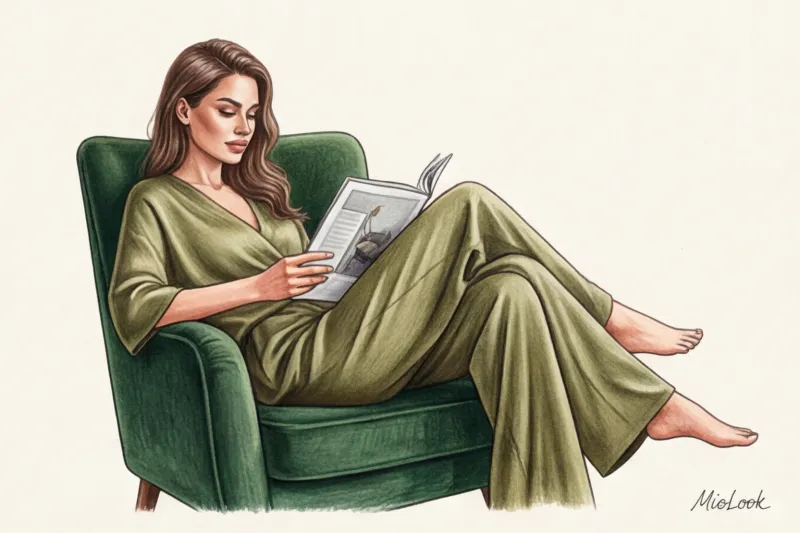
Lyocell (Tencel) - the king of home luxury
Tencel (the commercial name for lyocell) is made from eucalyptus wood. According to the Textile Exchange 2023 report, lyocell production is a closed-loop process: 99% of water and solvents are recycled. This is not only environmentally friendly but also technologically advanced. The fabric has a smooth, flowing texture reminiscent of silk, but requires no complicated washing process. It has a natural antibacterial effect and excellent temperature regulation: it cools in the summer heat and retains heat in the winter.
Modal and micromodal – the “second skin” effect
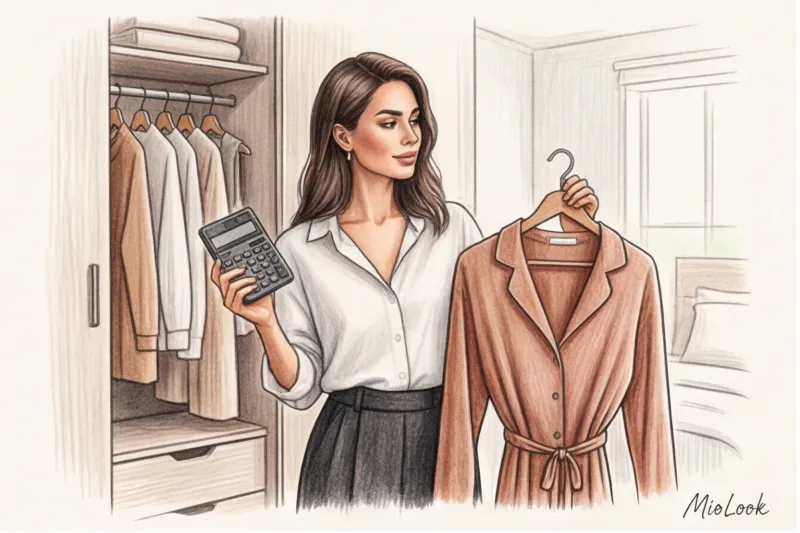
If you're looking for the perfect basic long sleeves, tank tops, or loungewear, look for micromodal. This is an ultra-finely processed beechwood cellulose. Unlike viscose, modal is much more resistant to pilling. Let's calculate the cost-per-wear (cost per wear): a $100 modal lounge set that you'll wear 150 times and still retain its shape will cost you $0.66 per wear. A cheap $20 synthetic set that's covered in pills after three washes costs $6.60 per wear. The mathematics of elegance are merciless.
Warmth and comfort: the best winter fabrics for loungewear without the "sauna" effect
Did you know that the cozy knitwear we're so accustomed to was once considered scandalous? In 1916, Coco Chanel shocked Parisian society by creating everyday dresses made from jersey—a fabric previously used exclusively for men's underwear. She was the first to understand that the body demands freedom of movement.
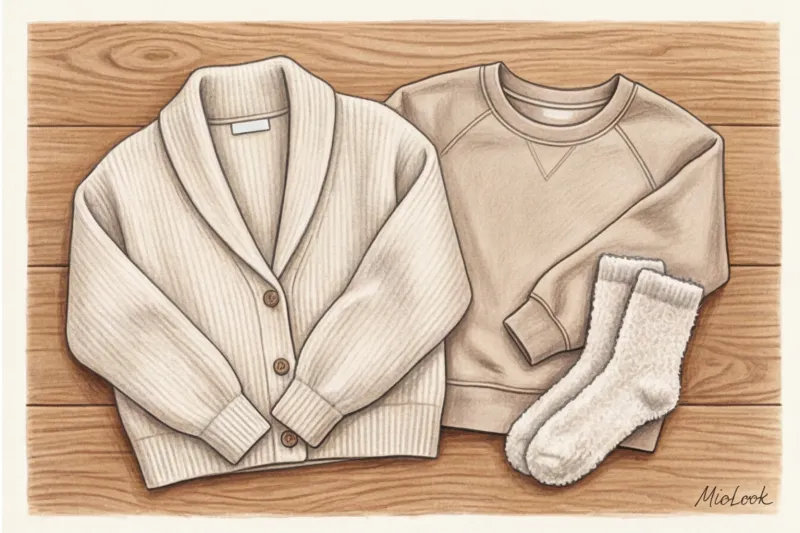
Today, French terry is our most common choice for winter. The secret to choosing the right terry lies in its backing and density. Look for a weight of 250 to 320 g/m² with a diagonal loop backing (not brushed) for the transitional seasons, and terry with a velour effect (peach effect) for winter.
What you should absolutely avoid is cheap 100% polyester fleece. Yes, these robes may look soft as a cloud in the store. But at home, they create a greenhouse effect. Physiologically, layering works better than thick body armor. Thermoregulation experts confirm: a combination of a thin long-sleeve T-shirt (a cotton-modal blend) and a 16-18 micron merino wool cardigan will keep you warm much more effectively and allow your skin to breathe.
Your perfect look starts here
Join thousands of users who look flawless every day with MioLook.
Get access — €0.99 onceThe Aesthetics of Silk: Luxurious Home Materials and Their Practical Alternatives
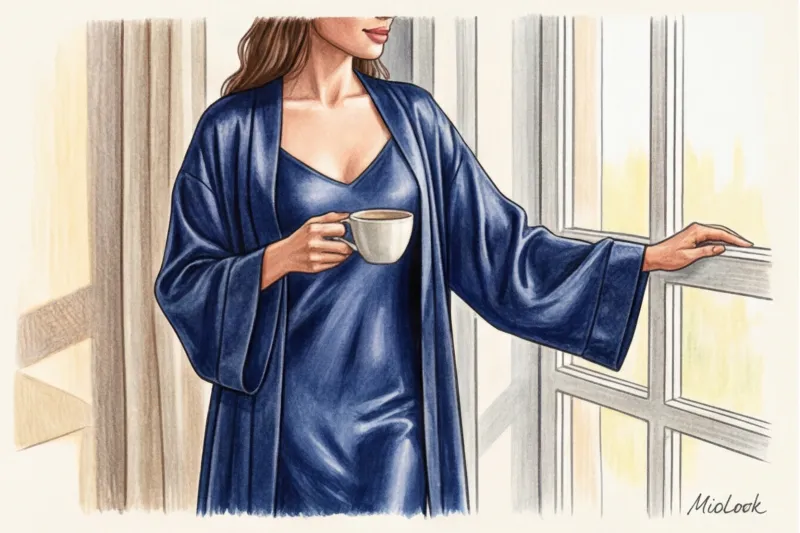
Natural silk is pure hedonism. Its flowing silhouette, its luxurious sheen, the way it glides across the skin. However, I always warn my clients: silk is perfect for morning coffee rituals, but it's completely incompatible with everyday life. A drop of olive oil while cooking or a splash of water—and the item requires professional dry cleaning.
I recently conducted a personal test comparing natural silk and cupro (another noble type of cellulose) while doing my usual morning routine at the sink. Water droplets on the silk left noticeable dark marks that didn't disappear after drying. The cupro dried without a trace in 10 minutes, and that evening I washed the pajamas in the machine on a delicate cycle at 30°C without any problems. If you want a regal look without the astronomical dry cleaning bills, viscose silk or cupro will be your best friends.
Hidden enemies of comfort: which fabrics should be avoided in your home wardrobe?
Loungewear is worn for a long time—8-10 hours a day if you work remotely. Therefore, compromises on materials are the most costly here.
- Acrylic: The worst thing that can happen to your winter evening. It imitates wool, but doesn't warm you up. But it's incredibly static-prone, attracting all kinds of household dust and pet hair.
- Hard flax: Linen is perfect for the Italian Riviera, but at home it's a disaster. If you sit on the sofa for even 20 minutes, your trousers will develop deep creases in the groin area and behind the knees. The exception is linen blended with viscose, softened with enzyme washing.
- Cheap polyester: Dermatological studies show that prolonged wearing of non-breathable synthetics disrupts the skin's microbiome. Synthetic fibers don't absorb sweat, but rather trap it on the surface, creating an ideal environment for bacteria to thrive (in particular, Staphylococcus ), which cause an unpleasant odor.
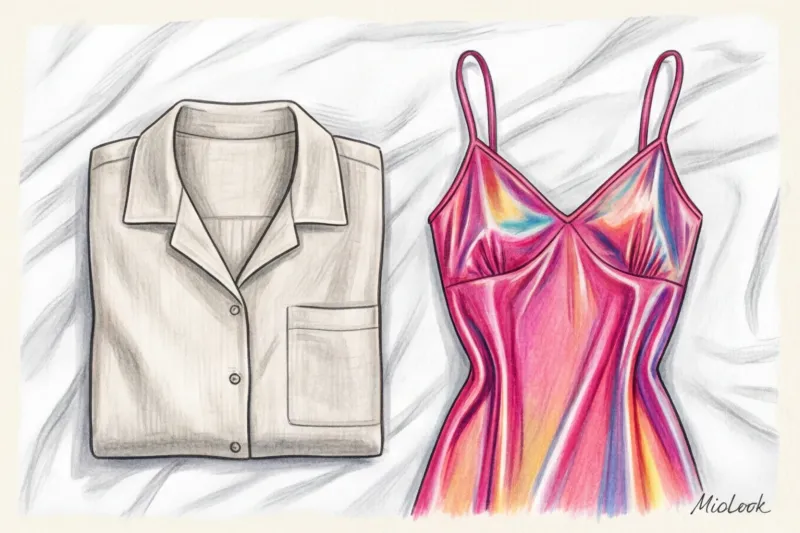
A Stylist's Checklist: How to Choose Fabric to Match Your Home Lifestyle
There's no universal recipe. Fabrics for loungewear should be chosen strictly according to your lifestyle. To avoid having to think about it all, I recommend my clients use Wardrobe organization tools from MioLook , where you can tag things according to their home purpose.
- Scenario 1: Remote work (WFH). You need fabrics that maintain a defined silhouette on Zoom without digging into your waist. Ideal choices include: heavyweight jersey (from 220 g/m²), suiting viscose with elastane, and double-thread non-brushed fleece. Avoid thin, flimsy knits—they always look sloppy on camera.
- Scenario 2: Active mom and pets. Prioritize durability and snag resistance. Choose smooth, lint-free fabrics (no fleece or loose knits, which attract hair). Cotton blends with 10-15% polyamide are an excellent choice. Polyamide gives the fabric phenomenal tear resistance.
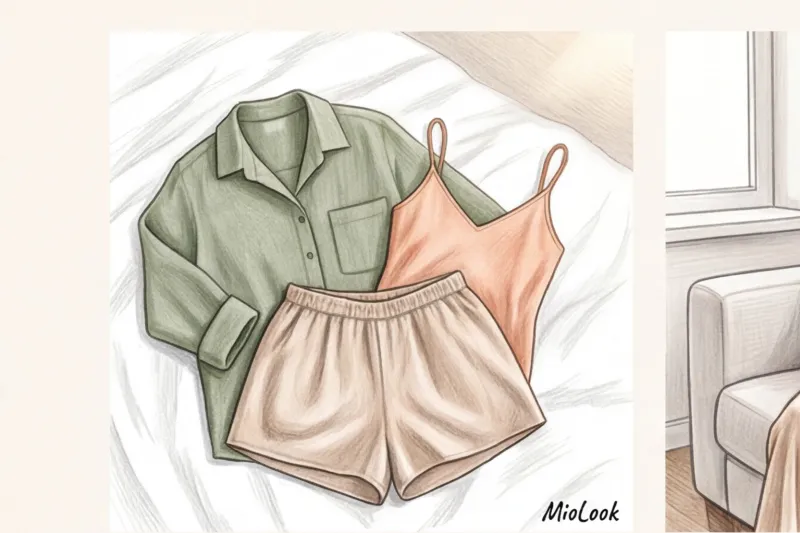
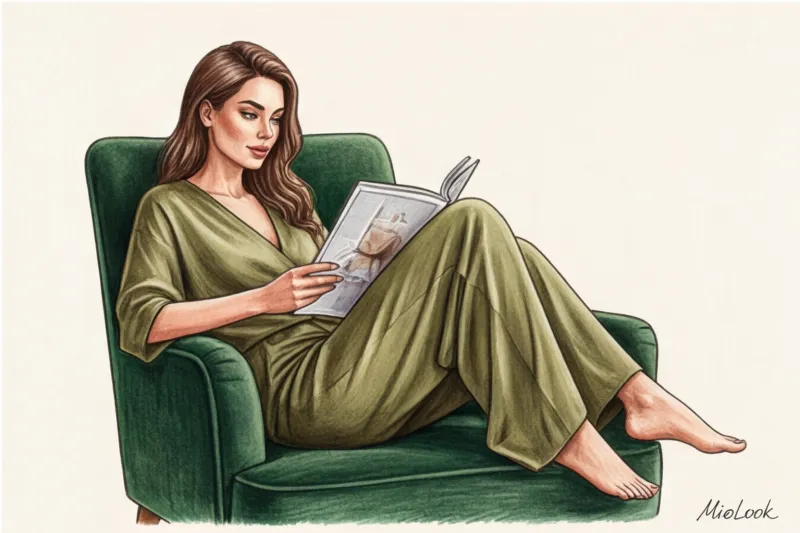
- Scenario 3: Relaxation and hedonism. Time for yourself with a book or a glass of wine. Flowing materials reign supreme here: Tencel, micromodal, cupra, or natural silk.

Caring for your home capsule: how to extend the life of your favorite materials
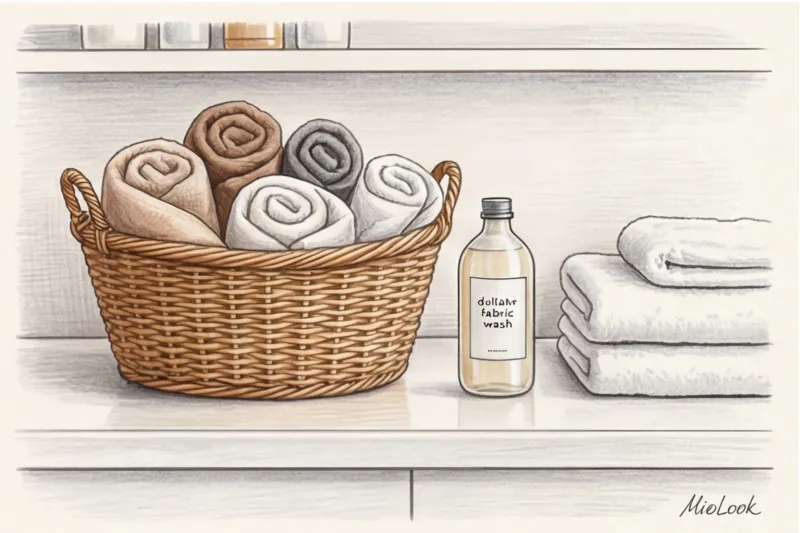
Even the most premium micromodal can be ruined in two washes. The most common mistake I see is the thoughtless use of fabric softeners. Commercial softeners contain silicones, which coat the fibers of the fabric. This works fine for pure cotton, but for fabrics containing elastane (and we've already established that these are the best), it's a death sentence. Silicone clogs the elastic threads, preventing them from shrinking back. The garment loses its shape forever.
My personal professional life hack: replace harsh fabric softeners with regular white vinegar (a couple of tablespoons in the rinse cycle is enough). It completely rinses out detergent residue, softens the fibers of the fleece, and neutralizes odors, while the vinegar aroma itself dissipates during drying.
Your home wardrobe isn't a place where clothes unsuitable for the outdoors should end their days. It's your personal cocoon where you recharge. By choosing high-tech, breathable fabrics with the right percentage of elastane, you're investing not just in a pretty look, but in the quality of your daily rest.