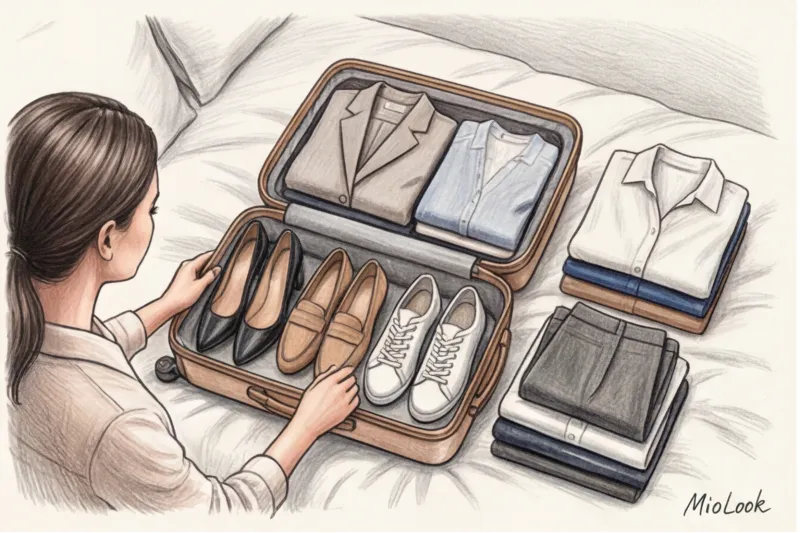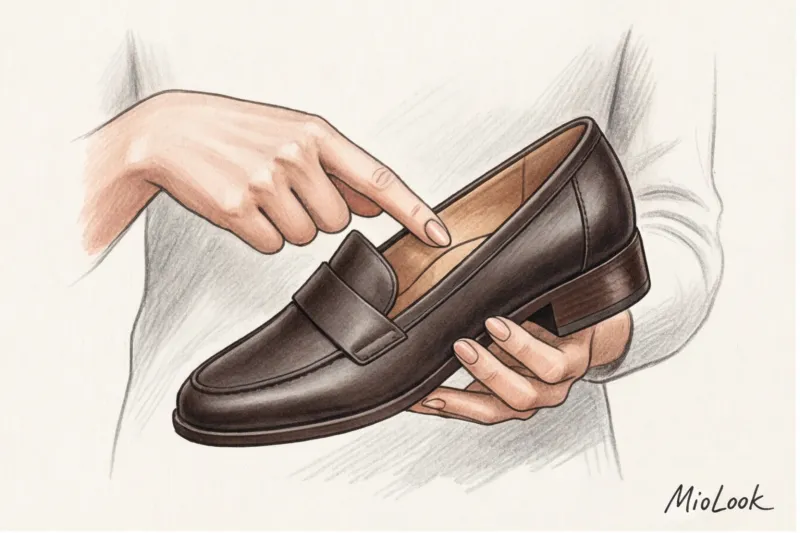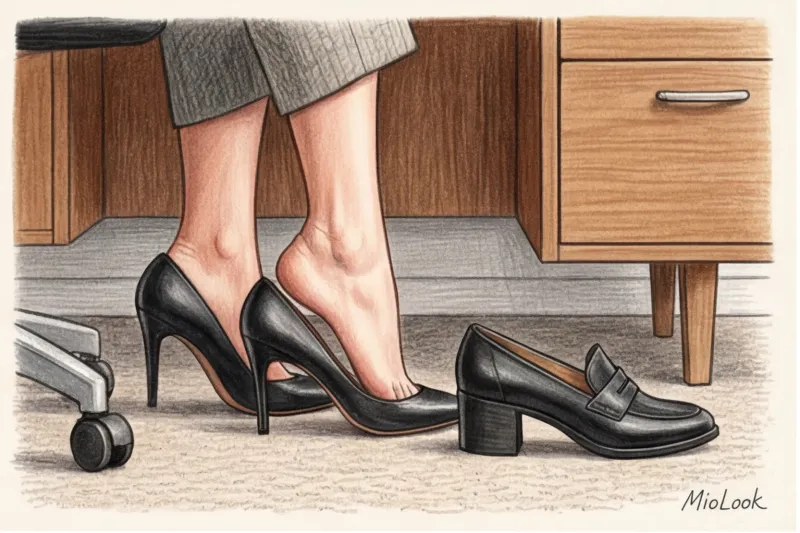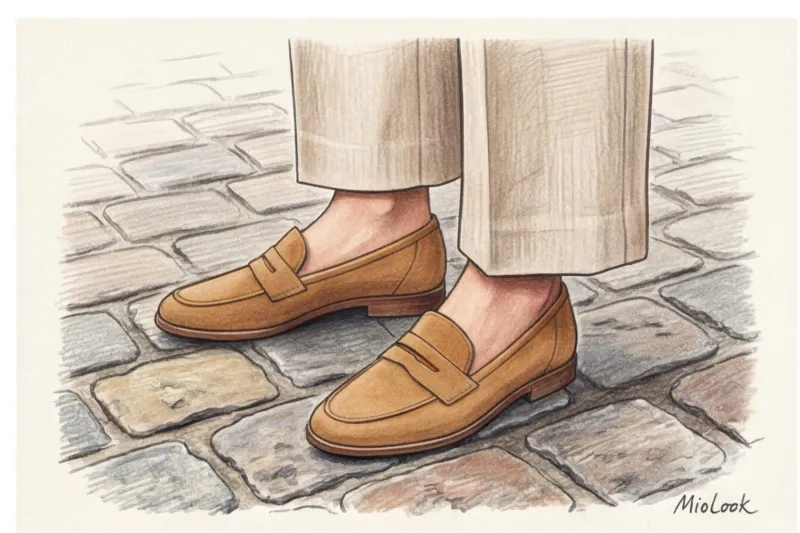
Last week, my client Anna returned from Rome with excess baggage, a €60 Ryanair bill, and bloody heels. She packed five pairs of shoes for the seven-day trip. The irony? She walked the entire 150 kilometers through the Eternal City in a single pair of suede loafers, bought out of desperation at a local shop on the second day. Her "trusted and most comfortable" running shoes, which took up a third of her suitcase, mercilessly chafed her feet after her first excursion to the Vatican.
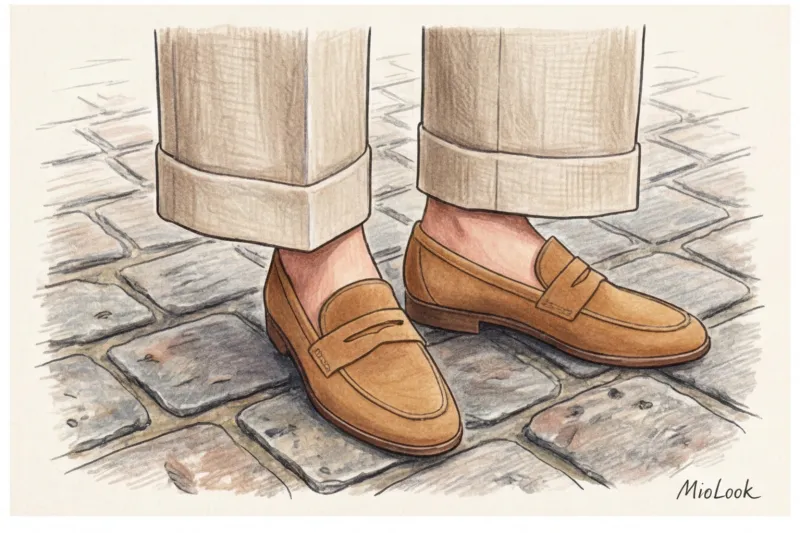
As a personal stylist with 12 years of experience working in Europe, I see this mistake all the time. We're used to thinking that travel comfort requires sacrificing style. But the truth is comfortable shoes for traveling These aren't ugly orthopedic shoes or bulky sneakers. These are a well-chosen pair that will withstand 20,000 steps on uneven cobblestones during the day and won't make you blush at night in a Michelin-starred restaurant.
We've already discussed the architecture of a smart vacation wardrobe in more detail in our The Complete Travel Clothing Guide: Packing a Vacation Capsule Today, we'll cover just the basics—how to find that perfect pair of shoes that will replace your entire travel wardrobe.
The Anatomy of the Perfect Pair: What Makes Shoes Truly Comfortable for Travel
At home, we average 3,000–5,000 steps a day. In European city breaks, this number soars to 15,000–20,000. The load on the foot changes dramatically, and the rules for choosing footwear are completely different.
Let's start by debunking the main myth: "Soft means comfortable" According to research by the American Podiatric Association (2023), overly soft soles (such as those made from the popular memory foam material) lead to severe foot fatigue by the evening. Why? Shoes that are too soft cause the foot to lose stability, forcing the small ligaments to micro-correct your position on uneven surfaces every second. The ideal sole should be flexible but torsionally rigid.
The second iron rule is plus half size During flights and after 10 hours on your feet, your feet expand. What fit you perfectly in the store in 20°C weather this morning will feel like a Spanish boot on a hot day in Barcelona. Always leave about 0.5–0.7 cm of space in front of your big toe.
When it comes to materials, forget about faux leather, even the most expensive. When traveling, the following are the best options:
- Natural suede: My absolute favorite. It's softer than smooth leather, adapts instantly to the bones and contours of your feet, and is incredibly breathable.
- Smooth calfskin: Durable and easy to clean with a damp cloth after dusty open-air museums.
- High-tech textiles (tight knit only): salvation for humid and hot climates.
Access to MioLook for €0.99 — one-time payment
A smart AI stylist will find the perfect look for your next trip.
Get access — €0.99 onceThe Sneaker Myth: Why Running Shoes Are the Worst Choice for Vacation
It sounds counterintuitive, right? After all, running shoes are designed for maximum comfort and joint protection. But therein lies the catch. Running shoes (especially those with a steep heel-to-toe drop) are engineered for linear forward motion and impact.
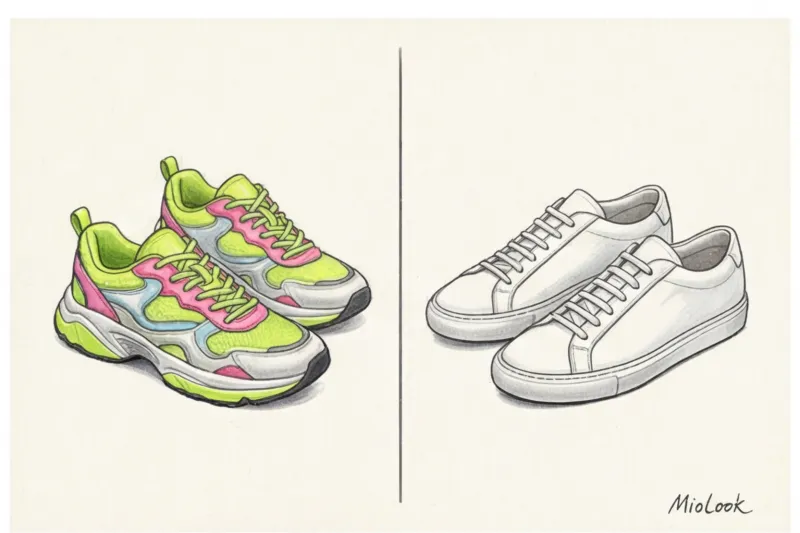
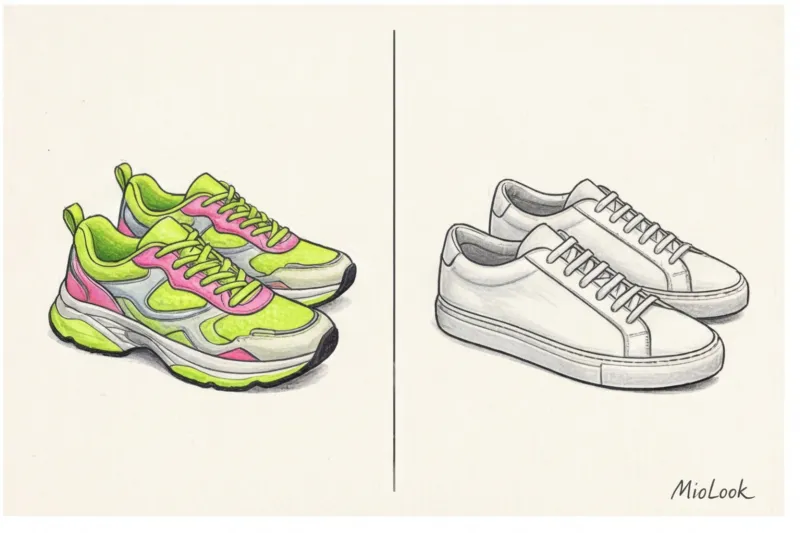
You don't run a marathon on vacation. You stand in line for hours at the Louvre, turn sharply to face the display cases, and balance on the ancient cobblestones of Lisbon. A high, soft sole on uneven cobblestones dramatically increases the risk of twisting an ankle—it lacks the necessary lateral stability.
"Running sneakers with neon accents and mesh are the visual marker of a tourist. They instantly ruin any smart-casual look, even the most carefully considered, turning a silk slip dress or linen palazzo pants into a ridiculous eclecticism."
You need shoes that don't clash with your wardrobe, but rather serve as a noble backdrop to it.
One Pair for Every Day: 4 Styles That Will Replace Your Entire Shoe Wardrobe
In my work I use the concept Resort Elegance These are items that look casual but are expensive. High-quality, comfortable travel shoes should easily withstand the transition from a daytime excursion to an evening cocktail without even checking into a hotel.
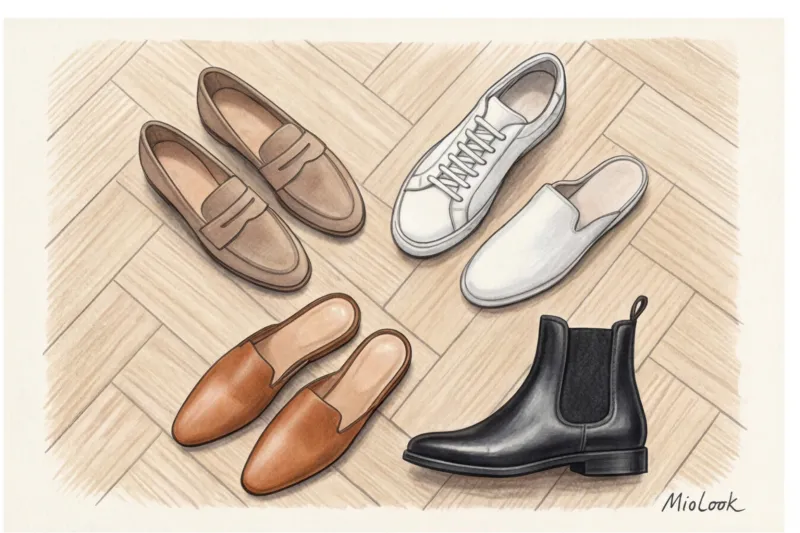
Suede Loafers: European Chic
My personal best: 25,000 steps around Paris in soft, caramel-colored suede loafers from Massimo Dutti. Not a single blister, while my friend suffered in expensive, high-tech sneakers. Suede is flexible and fits your foot like a glove. Choose models with a thin rubber sole (not leather, which is slippery and wears out quickly on the pavement). They look flawless with straight-leg jeans, cropped trousers, and midi dresses.
Minimalist leather sneakers (not trainers!)
If loafers are too formal for you, your choice is basic leather flats in the style of '70s tennis shoes. No mesh, no logos on the half-foot. White, cream, or beige matte leather. Their main advantage for travel is their ease of care. Just wipe them with a damp cloth before dinner, and they'll look like new again.
Closed-toe mules or sandals with a locking strap for hot weather
Let me point out an important limitation right away: This advice doesn't work for all-inclusive beach holidays, where flip-flops are appropriate. But flip-flops are dangerous for summer city walks. When shoes don't have a heel lock, your toes reflexively curl with every step to keep the sole in place. The result is calf cramps and knee pain by evening. Choose leather Greek-style sandals with an ankle strap or elegant woven leather mules.
Chelsea boots for cooler climates
For fall and winter travel, there's nothing better than classic Chelsea boots. They have a subtle but crucial advantage for travelers: they're laceless. You'll appreciate this at airport security, when you need to quickly slip your shoes on and off. With the right water-repellent spray before your trip, quality Chelsea boots will withstand both London rain and Berlin snow.
Your perfect look starts here
Join thousands of users who look flawless every day with MioLook. Digitize your wardrobe in one click.
Get access — €0.99 onceMass-market vs. premium: where to find your comfortable travel shoes
I often tell my clients: active travel shoes are consumables. Buying The Row or Loro Piana loafers for €900 only to wear them out on Roman cobblestones is a bad investment. But you also shouldn't skimp on polyurethane. The perfect balance of price and quality can be found in premium European mass-market lines (€80–€150 range).
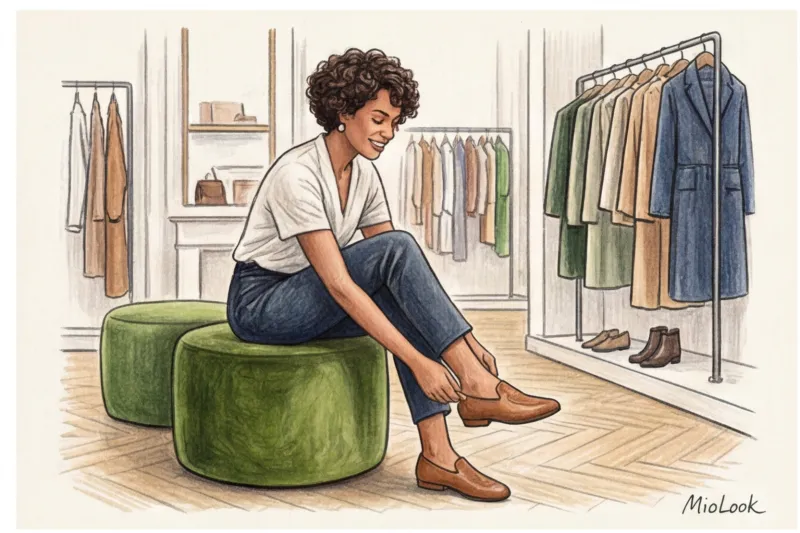
- Massimo Dutti (Studio line): The best suede loafers and ballet flats on the market. The leather is incredibly soft, and the lasts are tailored to the European foot. Price range: €100–€140.
- COS: The perfect place to find minimalist leather sneakers and Chelsea boots with the right, slightly chunky soles. Their leather is slightly stiffer and requires breaking in, but will last for years. Price: €130–€170.
- Zara (only with the 100% Leather tag): Zara's basic line is a bit of a gamble, but their limited leather collections are often made in the same factories in Spain and Portugal as their premium brands. You can find excellent sandals for €60–€80.
Stylist's advice: Try on shoes only in the afternoon. If they feel comfortable at 6:00 PM, they'll be fine on the road.
Stylist Checklist: How to Prepare a New Pair for Travel
The golden rule, written in the tears of thousands of tourists: Never wear an unworn pair of shoes to the airport or on your first excursion. Shoes, even the most expensive ones, need time to take the shape of your foot.

- The Three Day Rule: Wear your new pair at home or in the office for at least three days, 3-4 hours at a time, before your flight.
- The secret of lacing: If you're wearing sneakers, change your laces before boarding to parallel (straight) instead of cross-laced. This will reduce pressure on the instep during the inevitable swelling at 33,000 feet.
- Travel first aid kit for feet: Always keep an anti-friction stick (like the one from Compeed) in your bag—apply it to clean, dry skin BEFORE redness appears, in areas prone to friction. And be sure to have a couple of hydrocolloid patches (they act as a "second skin" if a blister does develop).
The formula for stylish luggage: what to pair with versatile shoes
Shoes are the anchor of your wardrobe. By choosing one versatile pair (for example, beige leather sneakers), you automatically set the tone for the entire wardrobe. The color and style of your shoes are the starting point for planning the rest of your wardrobe.
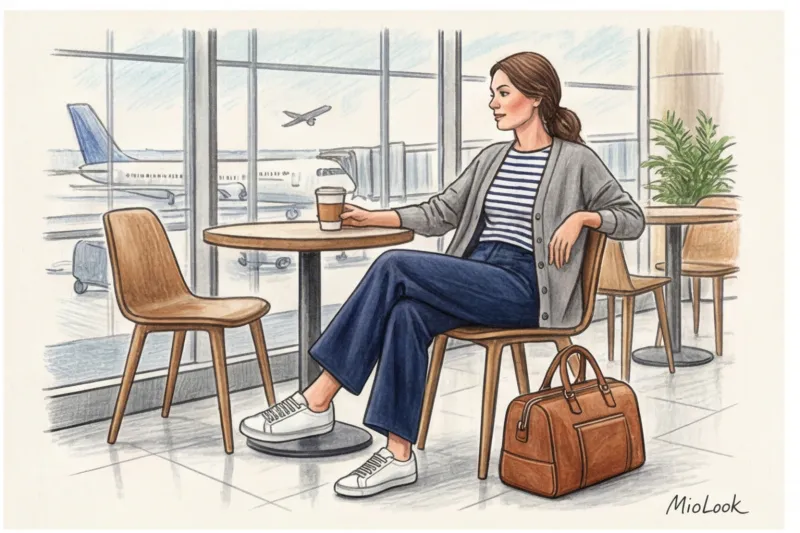
Imagine the perfect day on a trip: You're at the airport in the morning, wearing a chunky knit suit and sneakers. In the afternoon, after checking into your hotel, you swap your joggers for wide-leg linen pants and a cotton top and head to the museum. In the evening, you put on a silk slip dress, throw on a cashmere sweater, and stay in. the same sneakers Your look is relaxed, slightly casual, but completely cohesive.
To avoid confusion in combinations, I recommend my clients to use the "smart wardrobe" feature in MioLook You upload a photo of your ideal shoes, and the algorithm automatically creates dozens of looks from your other items, ensuring that every detail matches in color and style.
Bottom Line: The One-Pair Rule That Will Change Your Travels
Let's do some math. Shoes are the heaviest and bulkiest item of luggage. Two extra pairs eat up to 30% of the usable space in a standard cabin-size suitcase (55x40x20 cm). Given the current rules of low-cost airlines like Wizz Air or Ryanair, where you have to pay an extra €40 to €60 per segment for a full-size carry-on, those extra shoes are literally costing you money.
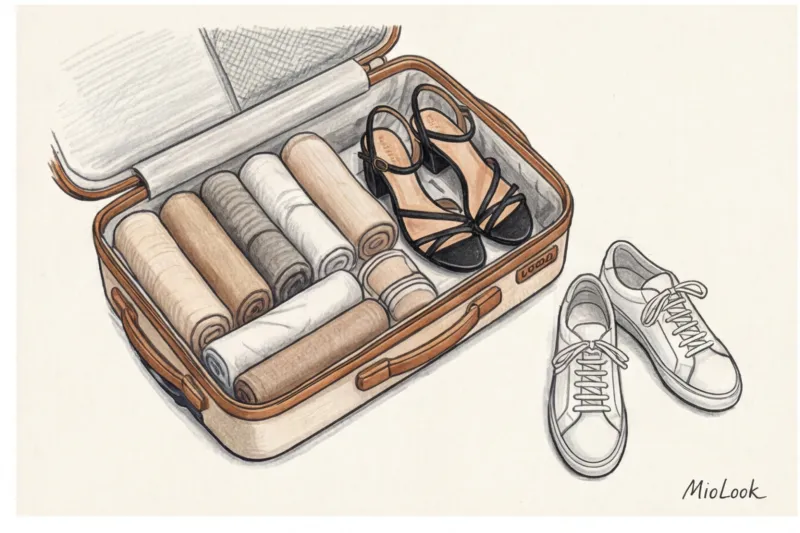
By investing €130 in a pair of quality leather loafers or sneakers that will fit you perfectly, you'll not only save on baggage fees on your very first trip, but also free up space for beautiful accessories, shopping at local boutiques, and, most importantly, avoid the morning stress of "what to wear."
Comfortable travel shoes do exist. The secret is to stop searching for them in sporting goods stores and instead focus on simple, classic leather shoes. Choose your perfect pair now, break them in according to the stylist's guidelines, and your feet will thank you after every 20,000 vacation steps.