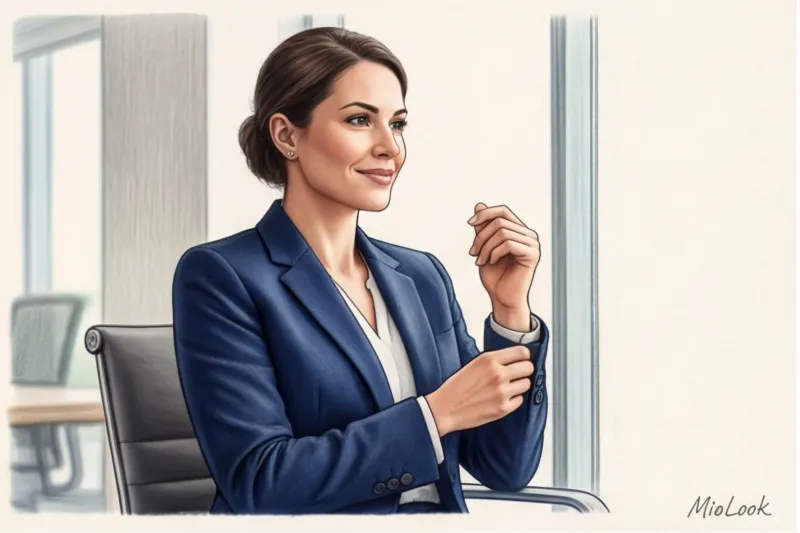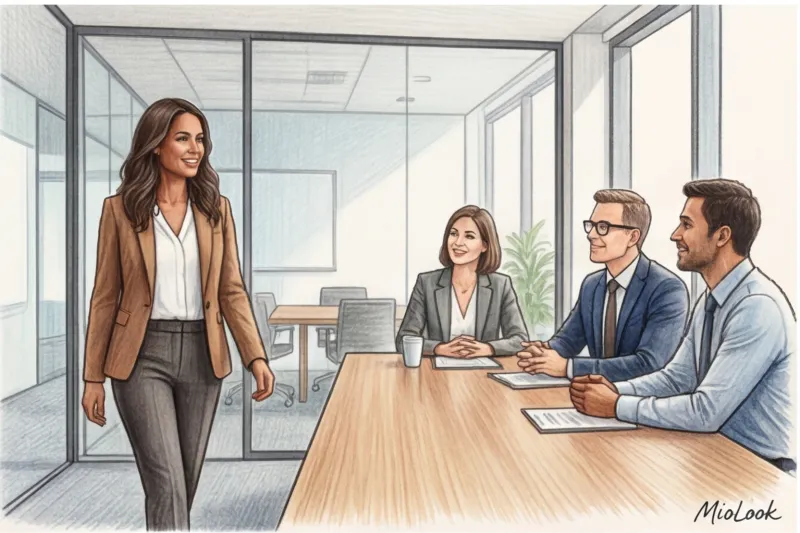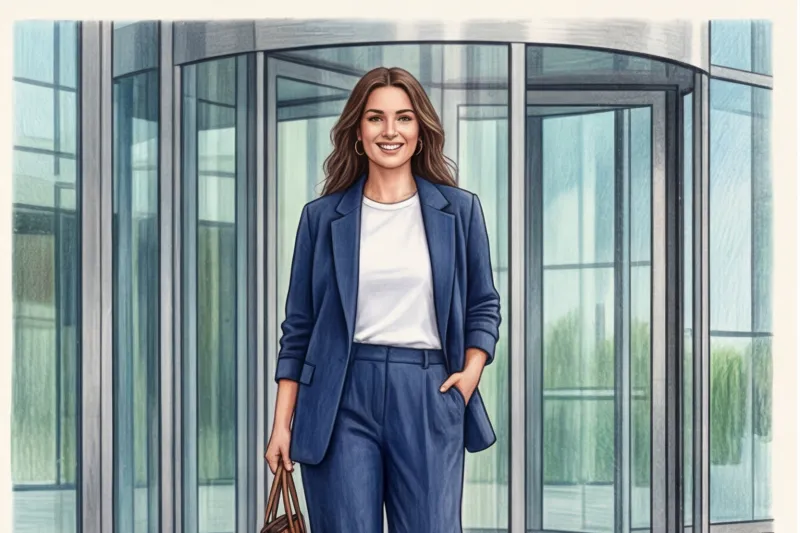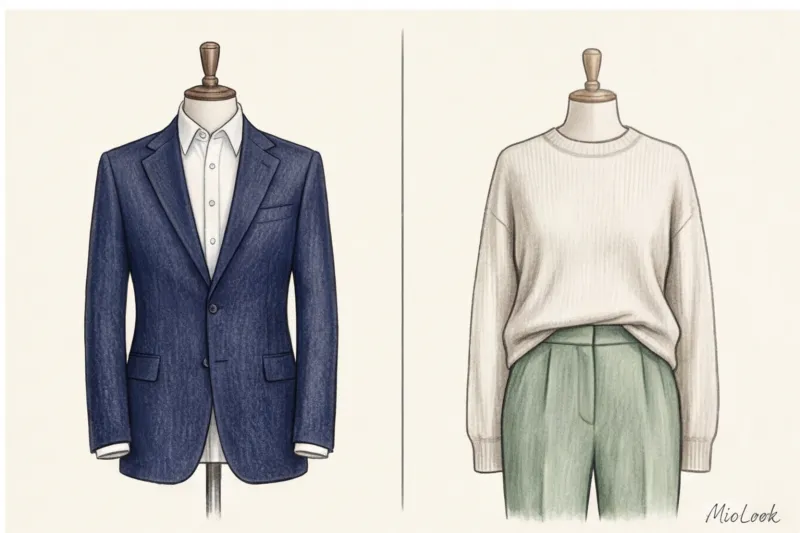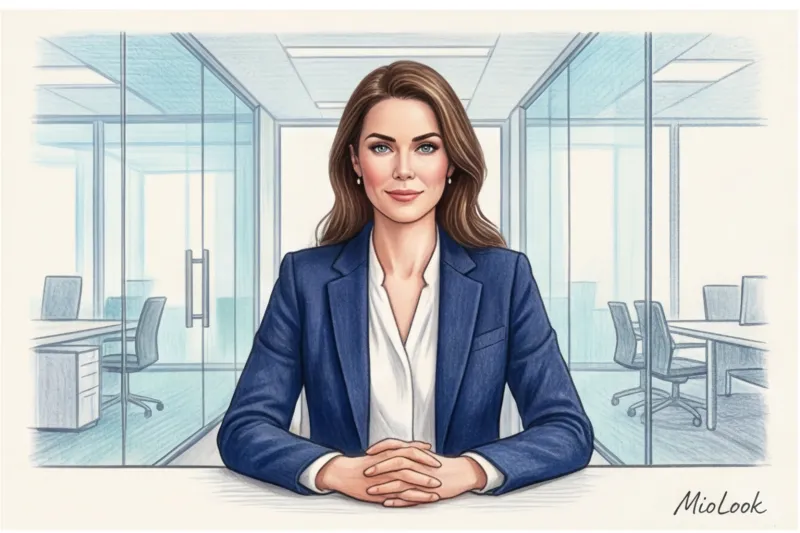
Let's be honest. My client Anna, a brilliant product manager, failed two final interviews in a row. The feedback from HR was painfully vague: "You're a great specialist, but we didn't match on vibe." For both interviews, she wore an impeccable, expensive black two-piece suit. Before the third meeting—with a fast-growing IT startup—we radically changed tactics. The black suit went into disguise, and in its place came a soft terracotta jacket and a sage-colored top. She got the offer that same day.
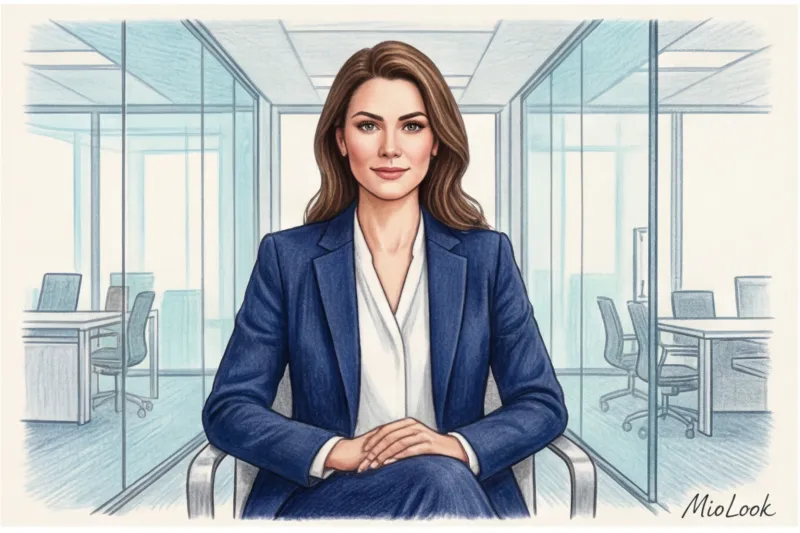
Coincidence? As a stylist with 12 years of experience, I rely on data, not chance. What color to wear to a job interview has long ceased to be a matter of simple neatness. Today, it's a complex mix of videoconferencing algorithms, the contrast of your appearance, and the theory of "complementary trust." We've covered the fundamental principles of working with color palettes in more detail in our a complete guide to the psychology of color in clothing , and here we will look at specific, practical strategies for getting the coveted “You’re accepted.”
What Color to Wear to a Job Interview: The Basic Neuroscience of First Impressions
You've probably heard of the "first-second rule," but have you ever considered how exactly it works at the physiological level? According to the Institute for Color Research (2023 study), our subconscious judgment of a person is formed within 90 seconds, and 62% to 90% of this assessment is based solely on color. This isn't magic or esotericism. It's your endocrine system's response to the wavelength of light reflected by the fabric.
Recent CareerBuilder statistics (2024) show a clear division of roles in business attire:
- Blue (Trust Blue): 23% of HR professionals say it's their top choice. Dark blue is associated with teamwork, reliability, and calm. It literally lowers the heart rate of those looking at it.
- Black (Leadership Black): Ideal for top management candidates, but dangerous for line positions. It conveys power and uncompromising attitude. If you apply for an assistant position in a black suit, you'll visually "overwhelm" your future boss.
- Grey: The perfect "blank slate." If your future job involves analytics, numbers, or logistics, gray will demonstrate your ability to think structured and without unnecessary emotion.
Access to MioLook for €0.99 — one-time payment
A smart AI stylist will select the perfect look for your next interview based on your appearance and desired position.
Get access — €0.99 onceIndustry Decides Everything: A Color Code for Different Business Sectors
The most common mistake I see candidates make is trying to find a one-size-fits-all "interview suit." What guarantees you a spot at Goldman Sachs will have recruiters at Spotify politely saying goodbye to you after 15 minutes. In the app MioLook We specifically introduced the function of classifying wardrobes by the "conservatism index" because context is everything.
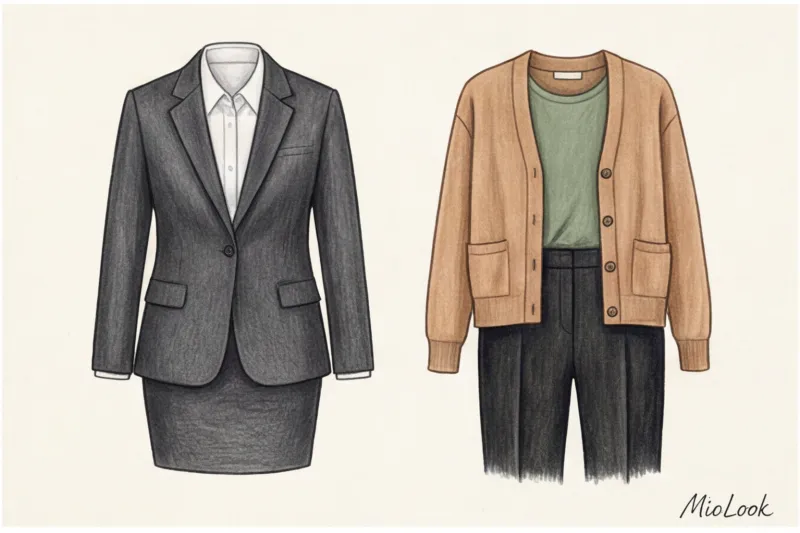
Conservative sector: Finance, Law, State corporations
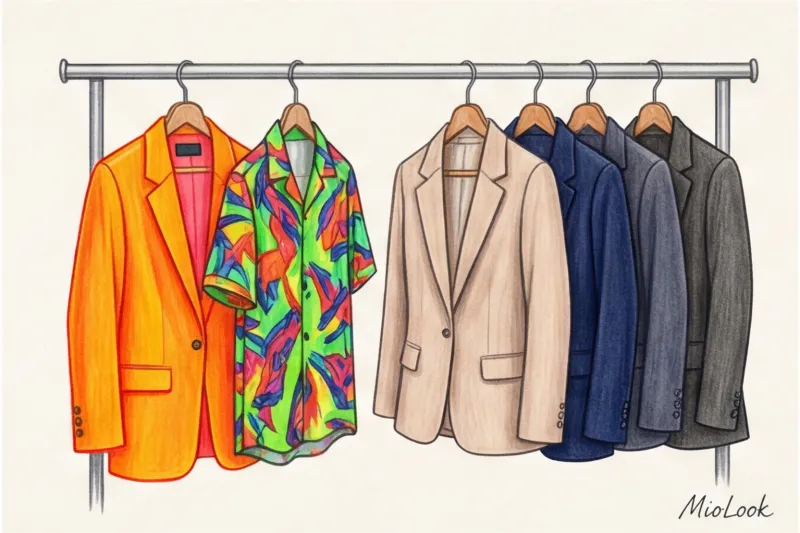
The rule here is high but subdued contrast. Your arsenal includes deep blue (Navy), charcoal gray (Charcoal), and crisp white (for in-person meetings). However, I strongly recommend avoiding brown in formal settings. The old British rule of "no brown in town" still subconsciously applies in elite corporate circles. Brown is perceived as a color for country retreats, not multimillion-dollar deals.
Creative, IT and Startups: Marketing, Design, Tech
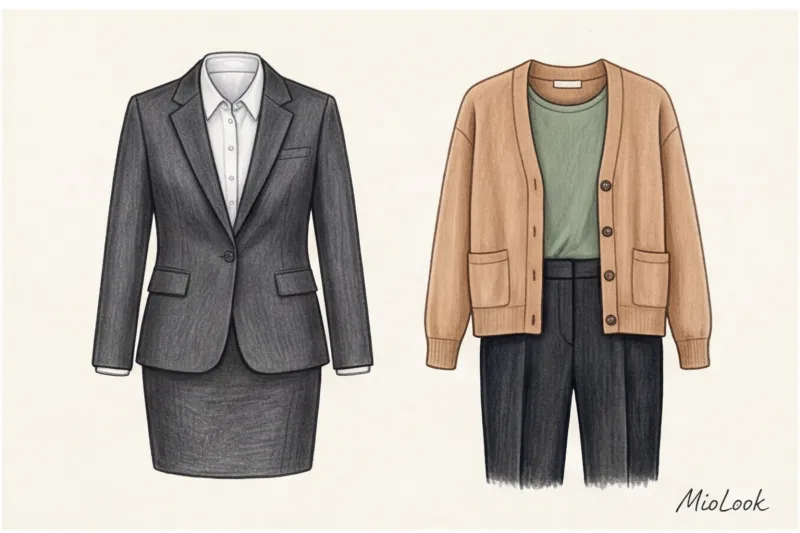
If you show up for an interview at a casual IT company in a formal three-piece suit, you're sending a clear message: "I don't understand your corporate culture and can't adapt." Complex, natural shades work best here: camel, sage green, muted burgundy, or deep terracotta.
The Corporate Color Myth: Why You Shouldn't Copy Your Company Logo
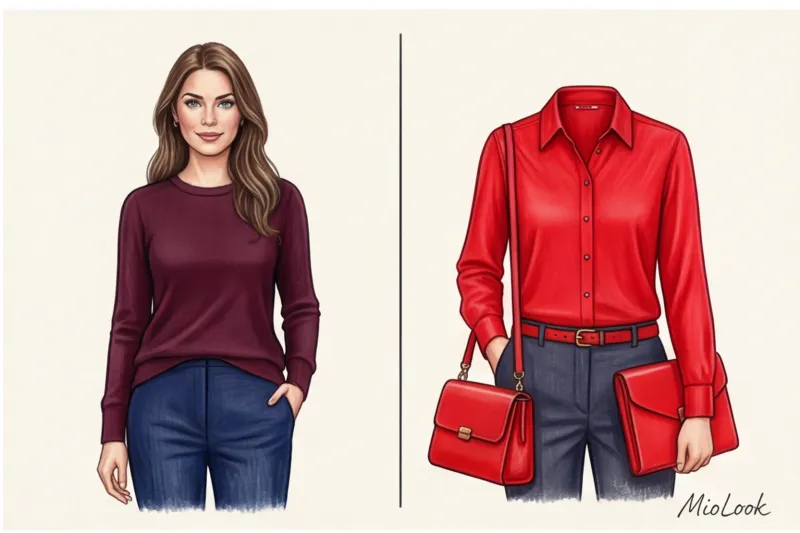
I love to break this stereotype. Many candidates think, "Aha, this company has a red logo. I'll wear a red blouse to show my loyalty!" Please don't do that.
I once had a client approach me about an interview at a major bank, wearing a bright green tie and sporting green branding. The HR manager couldn't resist jokingly asking if he moonlighted as their ambassador. This comes across as excessive effort (the "try-hard" effect) and cheap manipulation, which triggers a subconscious rejection.
"Instead of direct copying, use the theory of complementary trust. Choose shades that are on the opposite side of the color wheel from your corporate colors, or use deep, muted undertones in micro-accessories."
For that same client, we swapped the loud tie for a navy blue suit, but added a watch face with a deep emerald hue. It worked as a subtle, subtle anchor, rather than a blunt blow.
Your perfect look starts here
Join thousands of users who look flawless every day with MioLook. Upload your wardrobe and let AI create your look.
Get access — €0.99 onceOnline vs. Offline: How a Webcam Is Ruining Your Chances of Getting an Offer
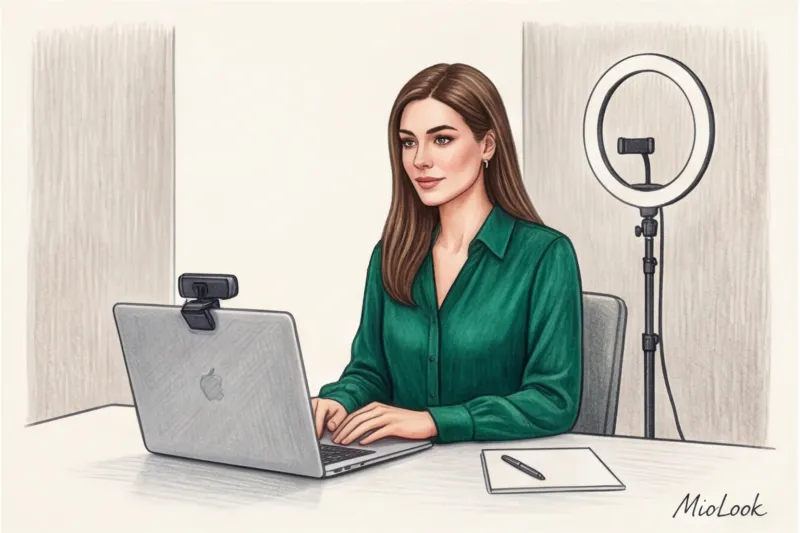
If your interview is taking place on Zoom or Teams, forget everything you know about color in real life. The technical side of videoconferencing dictates its own strict rules. Under standard room lighting, a webcam's sensor "kills" up to 20% of color saturation. You may seem elegant in pastel beige, but on the recruiter's screen, you'll blend into the wall, a pale blob.
The main enemy of online interviews is pure white. Why? Because of automatic exposure algorithms. The camera always focuses on the brightest object in the frame. If you're wearing a blindingly white shirt, the camera will darken everything else to avoid overexposure. This will result in your face being cast in deep shadow, making you look tired and gloomy.
The second technical pitfall is the moiré effect. Fine stripes, ridges, or houndstooth patterns can throw the camera's pixel grid off-kilter, creating a rippled effect on the other person's screen that can literally give you a headache. For video calls, choose solid, rich, jewel tones like sapphire, emerald, and amethyst. They maintain depth and help the camera focus properly on your face.
Red Flag: Colors Guaranteed to Ruin an Interview
Even if you're a brilliant professional, some colors create overwhelming visual noise. And the absolute worst offender here is orange. According to surveys, 25% of recruiters consider it the least professional color in a business wardrobe. It connotes fun, cheapness, and frivolity.
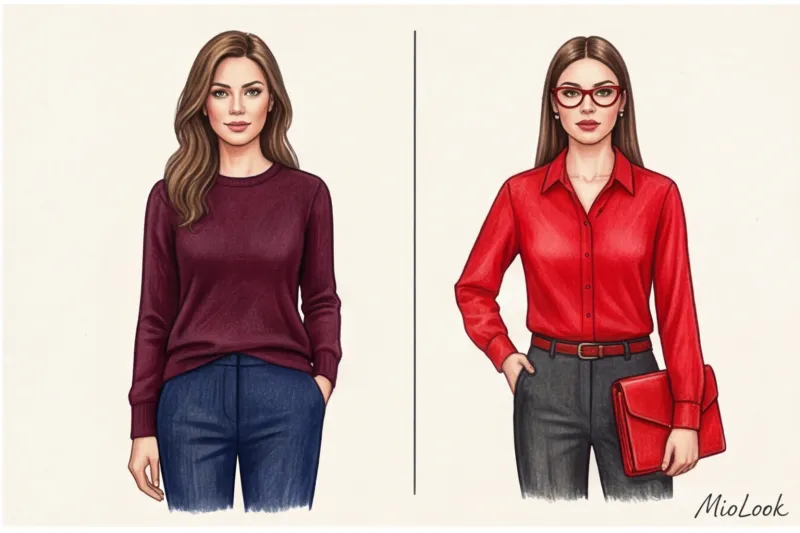
Another important point: the concept of "Power Red" (the aggressive red color of authority) is a holdover from the 1980s. It used to be thought that a red jacket showed confidence. Today, neuroscientists have proven that a large, bright red color triggers a subconscious release of cortisol (the stress hormone) in the interviewer. You're perceived not as a confident candidate, but as a potential threat or someone prone to dominance and conflict. In today's corporate culture, where soft skills and empathy are valued, this is a shot in the foot.
Ready to get started?
Try the MioLook plan for free—no commitments required. Save your best looks for interviews and plan your wardrobe for the week ahead.
Get access — €0.99 onceStylist Checklist: The 60-30-10 Rule for the Perfect Look
Knowing the right colors is half the battle. Knowing how to dose them is crucial. In my practice, I always use the 60-30-10 design rule of proportions. It allows me to create a visually complex yet harmonious look in 15 minutes.
- 60% - Base color. This is your suit, dress, or trousers and jacket. Choose calm, deep shades (navy, graphite, camel).
- 30% - Secondary color. A blouse, shirt, or top underneath the jacket. It should complement the base color but be of a different shade (for example, light blue versus dark blue).
- 10% - Accent. Belt, glasses frames, scarf, watch. Here, you can indulge in a touch of complementary or brighter color (for example, a deep burgundy belt with a blue suit).
Fair warning: This rule does NOT work blindly. If you have a low-contrast complexion (for example, very fair skin, light eyes, and ash-blond hair), using 60% black or navy blue directly near your face will simply "wash you out." Your clothes will take center stage, and you'll be lost. In such cases, the base should be toned down to medium shades of gray or taupe.
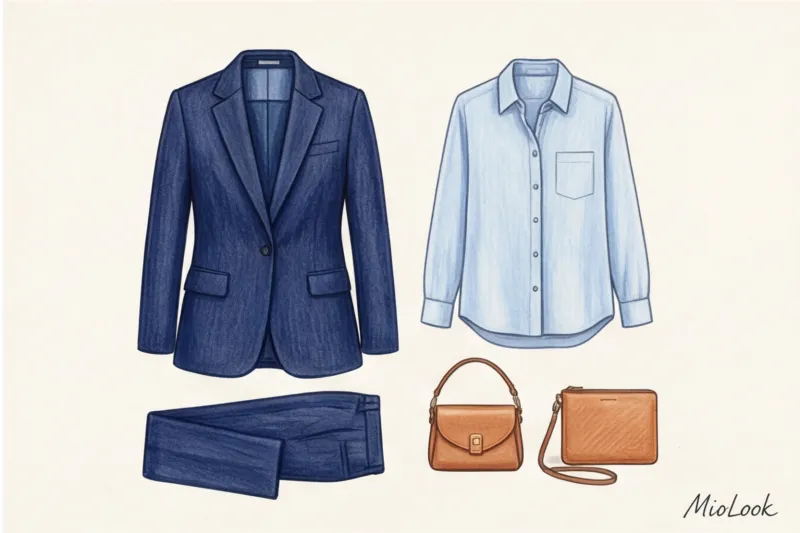
If you're unsure about proportions, take a photo of the outfit with your phone. Or better yet, upload the items to MioLook smart wardrobe The app will automatically analyze your color palette and tell you if you've overdone it with accents.
Ultimately, the perfect color for an interview is one that fulfills its primary purpose: it becomes an elegant, invisible frame for your professionalism. When you're dressed correctly, recruiters don't remember your blouse. They remember your competence, your confidence, and that feeling that you're exactly the person they're looking for.