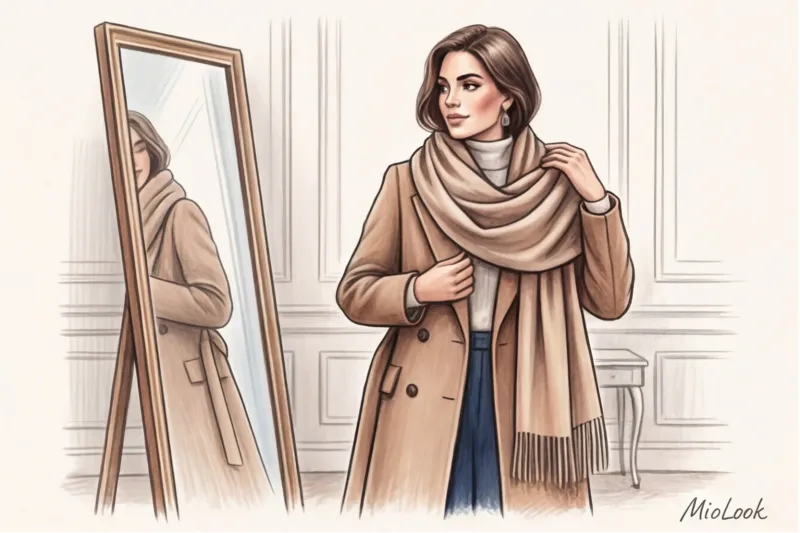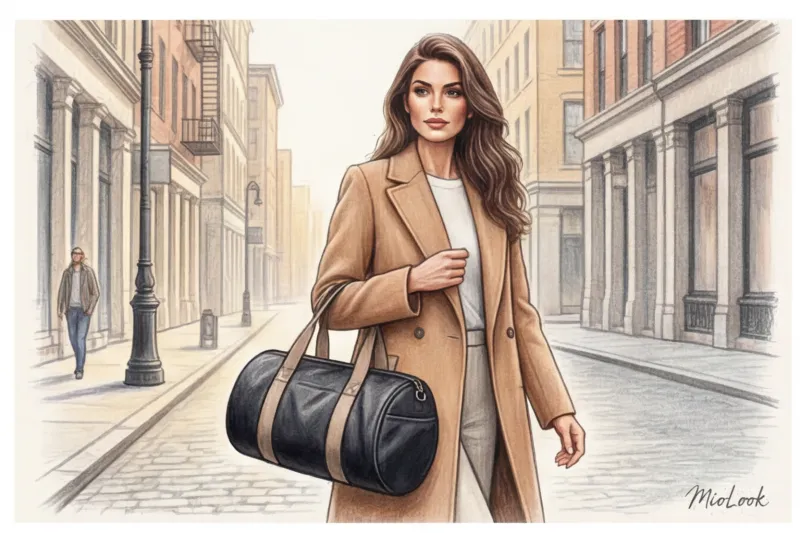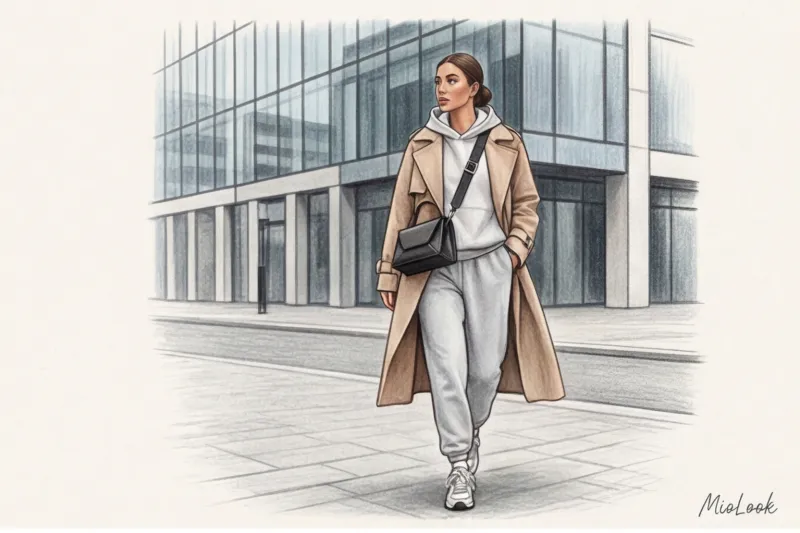
You put on a premium hoodie made of thick cotton, perfectly tailored joggers, grab your everyday soft backpack, look in the mirror and... suddenly realize you look like a tired teenager on the way to school gym. Have you noticed this effect? In 12 years of working as a personal stylist, I've seen this mistake hundreds of times. The paradox is that the perfect a bag for a sporty style - this is the one that, in its structure and texture, is as far removed from sport as possible.
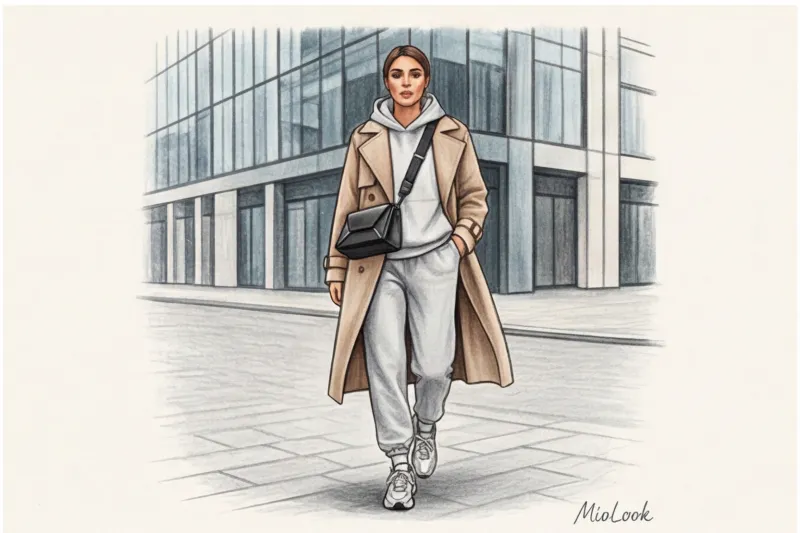
We have already discussed in more detail the rules for integrating relaxed items into your everyday wardrobe in our A complete guide to women's sportswear in the city Today, we'll explore the key stylistic anchor—the bag. We won't be discussing the usual sneaker backpacks. You'll learn how, with just one sharp detail, to transform a terry suit into a chic, nonchalance-inspired look that's appropriate for brunch or a creative office.
A Bag for a Sporty Look: Why the "Pair Your Sneakers with a Backpack" Rule No Longer Works
Let's bust the biggest fashion myth: if you're wearing sneakers and sweatpants, you don't need a backpack. More precisely, you shouldn't use one unless you're in the city, not the woods.
A tracksuit paired with a soft fabric backpack instantly blurs the line between athleisure (urban sport-chic) and gym attire. The look becomes too utilitarian and casual. The bag in such an outfit should act as a stern moderator, declaring to others, "Yes, I'm wearing comfortable joggers, but that's a conscious choice, not laziness."
One of my clients, marketing director Anna, couldn't figure out for a long time why she felt awkward going into expensive cafes on weekends. She wore a high-quality cashmere sweatshirt but accessorized it with a shapeless fabric tote bag. Once we replaced the tote bag with a rigid, smooth leather trapeze bag (priced around €250), her posture literally changed. The structured shape became the anchor that held her relaxed silhouette together. This is the fundamental principle of contemporary urban attire.
Your perfect look starts here
Join thousands of users who look flawless every day with a smart AI stylist.
Get access — €0.99 onceImage architecture: the law of opposite tension
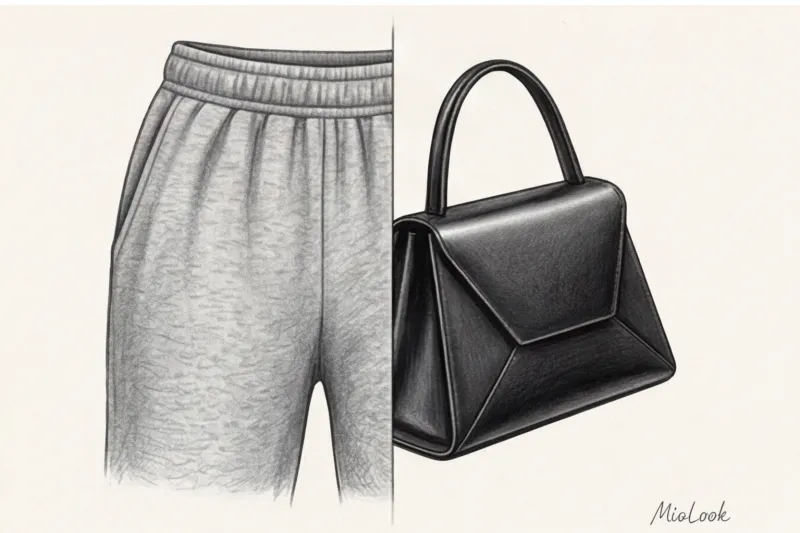
There's an unspoken rule in styling that I call the "law of opposite tension." It's simple: the softer and looser your clothing (fleece, terry, knit), the stiffer, smoother, and shinier the texture of your accessories should be.
- Sportswear — it's always about the absence of strict lines. Voluminous cuts, sloping shoulders, draping.
- Bag — should become a geometric counterbalance. A square, a strict rectangle, or a rigid crescent moon will compensate for this relaxedness.
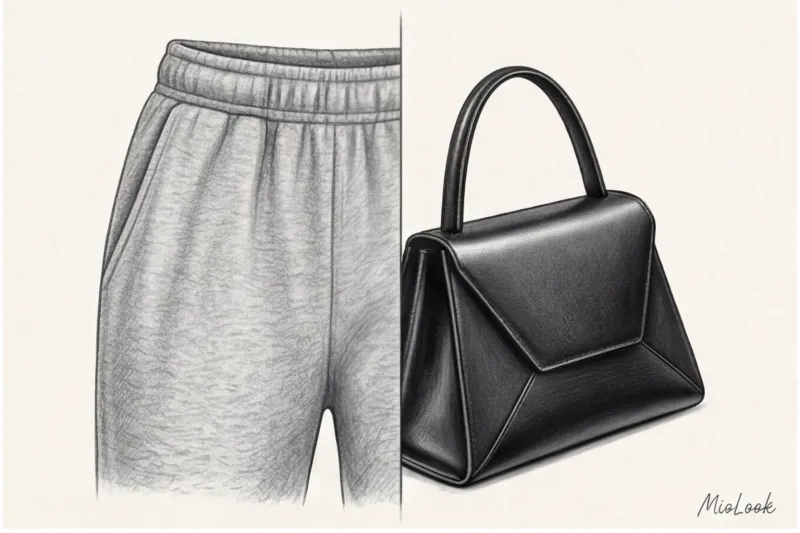
"Style is born at the intersection of conflicting textures. By wearing a hoodie, you take away the shape of the look. By adding a barrel bag or a strict baguette, you bring that shape back"—this principle underlies most street style looks at Fashion Week.
However, there is important limitation (when it does NOT work) Volume balance is key. If you're wearing a super-voluminous oversized hoodie and a puffer jacket, a tiny, rigid micro-bag with a thin strap will look ridiculous. Larger outfits require a proportionate base—for example, a large, rigid hobo bag or a chunky tote.
Shoppers and totes: between the gym and the office
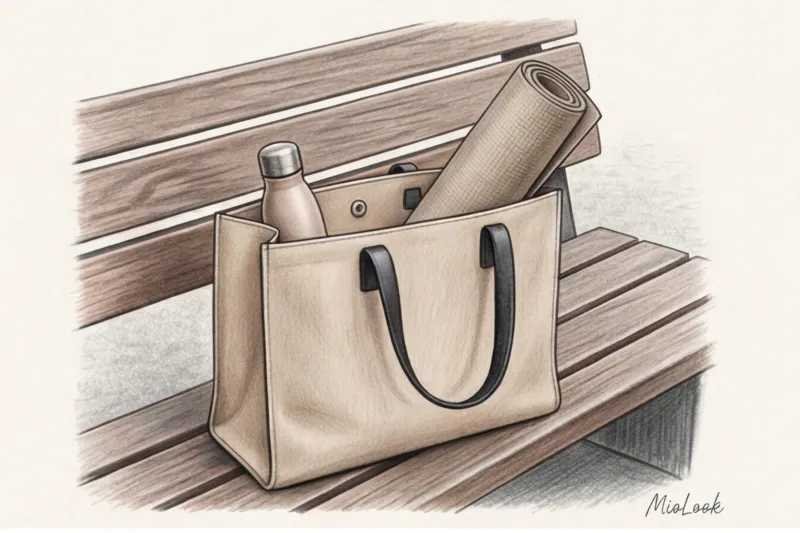
In 2024, the Business of Fashion (BoF) report recorded a 28% growth in the "premium utility accessories" segment. The modern woman needs a work-to-gym bag—one that can fit a laptop, yoga clothes, and a makeup bag without looking like a shoe bag.
What's the difference between a beach shopper and a high-status urban tote? It's in the design of the bottom and handles. An urban tote always has a reinforced (often double) bottom that doesn't sag under the weight of a laptop. As soon as the bottom sags, the bag cheapens its look.
Eco-friendly nylon, canvas or leather?
When it comes to materials for roomy bags, as a textile expert, I insist on eco-friendly and durable alternatives. What holds its shape better?
- Recycled nylon (ECONYL). Unlike cheap virgin polyester, ECONYL withstands 40% more abrasion cycles. I personally tested a bag made from recycled nylon from a Scandinavian brand in harsh urban winter conditions—after a season of daily wear, it didn't show a single snag.
- Thick canvas. Look for markings that are 16 oz or larger. It should feel like thick canvas that physically cannot be folded into a soft cloth.
- Eco-alternatives to leather. According to recent research by textile institutes, plant-based alternatives (such as Piñatex made from pineapple leaves or Desserto made from cactus) are now superior in stiffness even to basic-grade natural leather. They are ideal for creating those "architectural" bags in the €150 to €400 price range.
Ready to get started?
Try the MioLook plan for free—no commitments required. Organize your wardrobe and find the perfect combinations.
Get access — €0.99 onceStrict cross-body and sportswear for women: a play on contrasts
Wearing a classic leather crossbody over a voluminous hoodie or trench coat is a classic modern styling idea. But for this look to work, it needs the right visual bridge. A belt is that bridge.
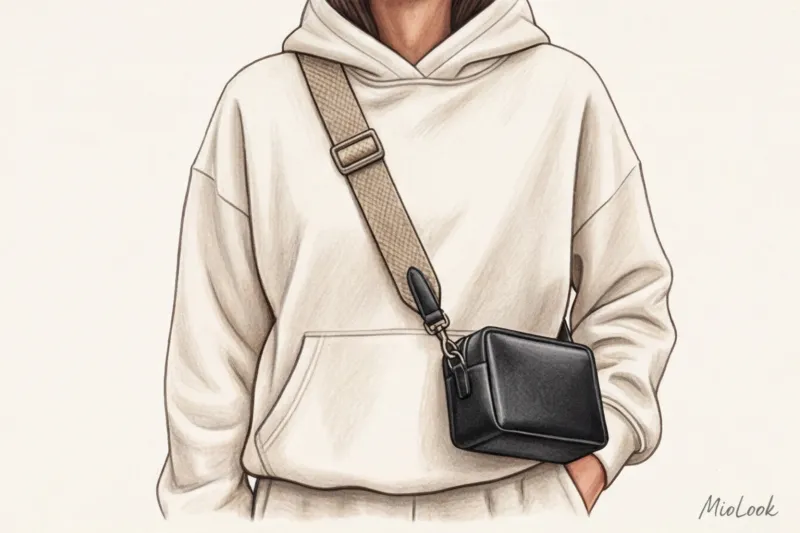
The narrow leather strap, typical of evening bags, will be lost against the backdrop of the voluminous 300 g/m² fleece. Practical advice from an expert: The width of the bag strap should be proportionate to the volume of your outerwear. Choose crossbody bags with wide (at least 4 cm) fabric straps. They complement the classic shape of the bag itself and the sporty feel of your outfit.
Also, pay attention to the hardware. Sporty style doesn't tolerate excessive shine. Logomania and shiny yellow gold often clash with the matte texture of cotton. Choose minimalist metals: matte silver, satin brass, or hardware painted to match the bag's color.
Belt Bags and Slings: The Evolution of Streetwear
The fanny pack has long since migrated from the paraphernalia of '90s market vendors to a wardrobe staple. A WGSN consumer behavior study (2023) found that the concept of hands-free carrying has become a symbol of modern comfort. However, the way people carry it has changed dramatically.
Valid today diagonal rule Wearing a fanny pack or sling diagonally across the chest or behind the back is more practical than wearing it around the waist. Why?
- The diagonal line visually elongates the silhouette, breaking up the massive volume of the hoodie.
- It's ergonomic - the bag doesn't hit your hip when you walk quickly.
- A slight touch of techwear style is created.
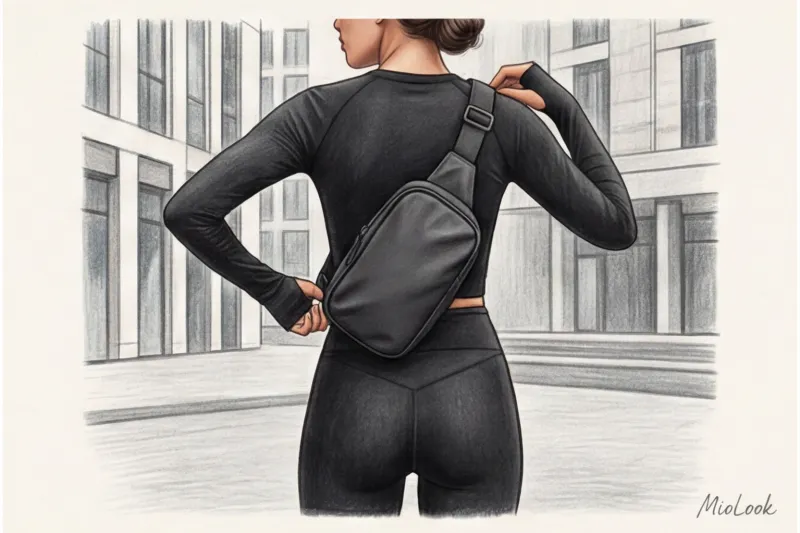
Size is critical here. To avoid looking like a conductor's bag, choose flat, geometrically shaped models or, conversely, oversized slings made of premium matte nylon that contour to the shape of your back.
Access to MioLook for €0.99 — one-time payment
A smart AI stylist will select the perfect look for you for any occasion.
Get access — €0.99 onceMaterials and fittings: what to look for when investing in an accessory
Many articles advise "choosing quality materials," but what exactly does this phrase mean? As a textile expert, I suggest looking for specific indicators that guarantee a garment will last for 5+ years, rather than ending up in a landfill after a season.
First, water-repellent treatment. This is important not only for windbreakers but also for your bags. High-quality nylon or canvas should have a DWR (Durable Water Repellent) coating. If you get caught in the rain in a hoodie, you'll simply dry out. If your bag gets wet, your laptop and documents will suffer.
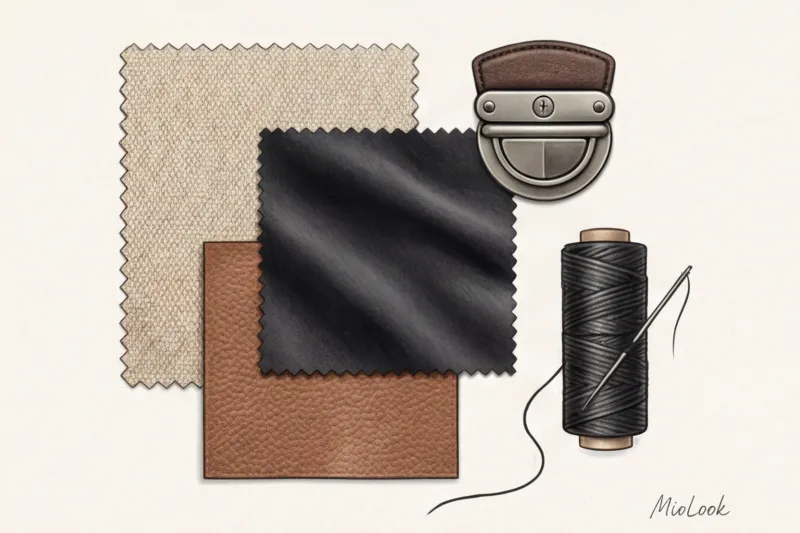
Second, look inside. Hidden signs of a durable item are the seam finishes. Look for bags with French seams or twill binding on the inside seams. The lining should be made of dense cotton (twill) with a minimum weight of 180 g/m², not slippery cheap viscose that will fall apart after three months of being worn under the keys.
And finally, zippers and snap hooks. Cheap, overly lightweight metal with a glossy sheen (so-called silumin) instantly betrays mass-market products. Zippers should be metal or plastic (YKK or Riri)—they're not only reliable but also maintain a utilitarian aesthetic.
A practical checklist: your ideal bag for a sporty look
To ensure that your knowledge doesn't remain just theory, here's a concrete algorithm you can apply right now, standing in front of a mirror.
- Step 1: Assess the texture of your base. Look at your favorite tracksuit. Is it smooth (cotton blend)? Fluffy (fleece, velour)? Matte?
- Step 2: Choose the opposite. Pair matte, fluffy fleece with a smooth leather bag. Pair a smooth nylon bomber jacket with textured canvas.
- Step 3: Check the form. Place your empty bag on the table. If it falls over and becomes a pancake, it doesn't suit a relaxed style. It should stand on its own.
- Step 4: Capacity and weight test. Remember the medical rule: your everyday bag should weigh no more than 10% of your body weight to maintain proper posture. Don't buy a giant tote if you're used to stuffing it to the brim.
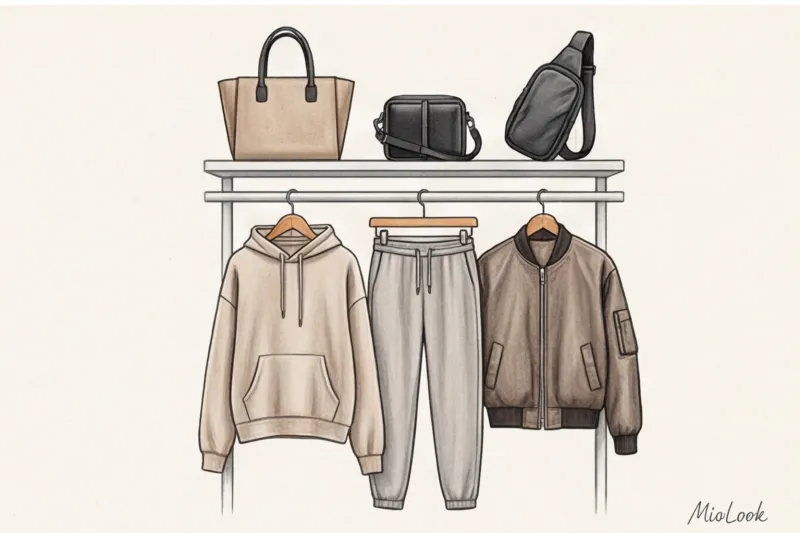
The main conclusion I've come to in my work is that a sporty style requires much more thoughtful accessories than a strict office dress code. A suit already makes you look put-together. In joggers, it's the bag that defines your poise and status. Choose structured shapes, dense, eco-friendly fabrics, and high-quality hardware—and you'll forever forget about the problem of looking sloppy in your favorite hoodie.