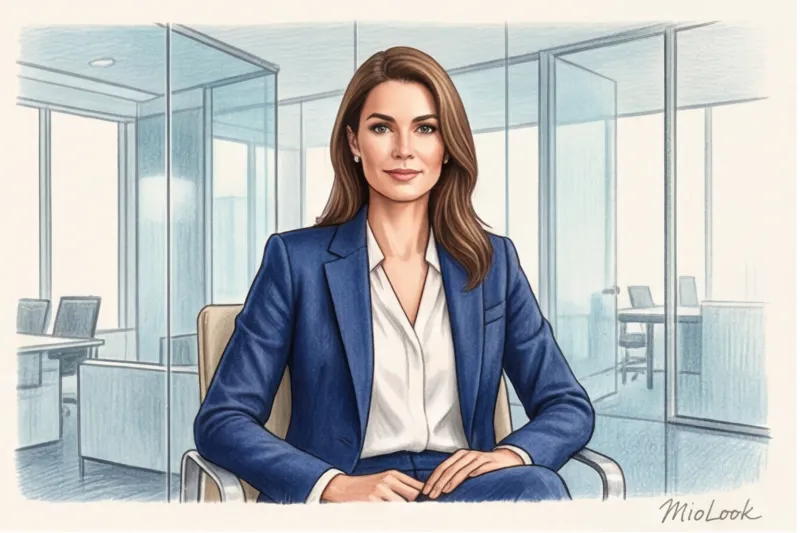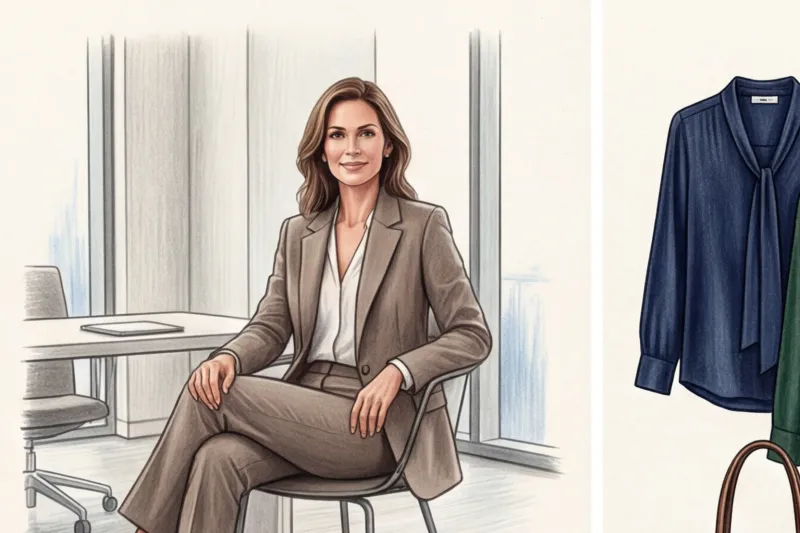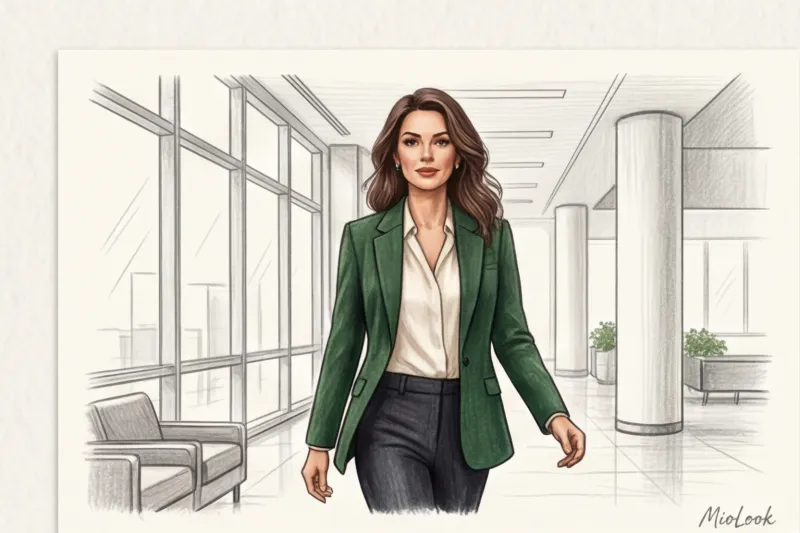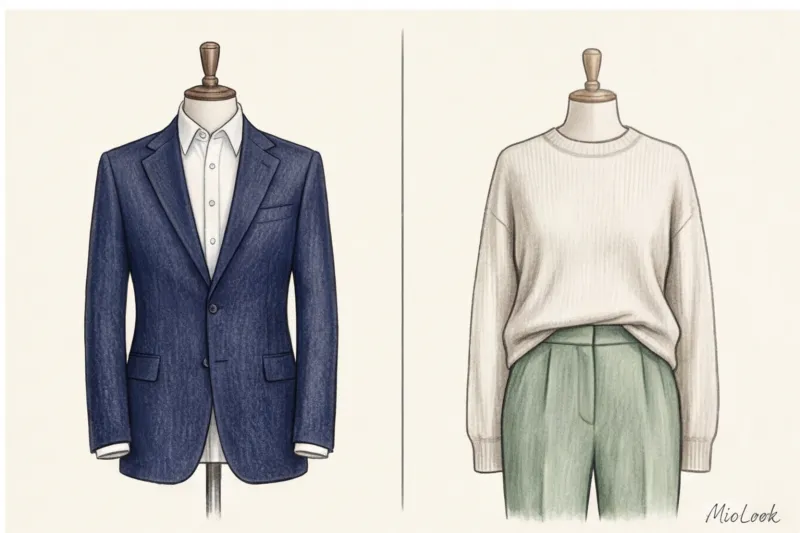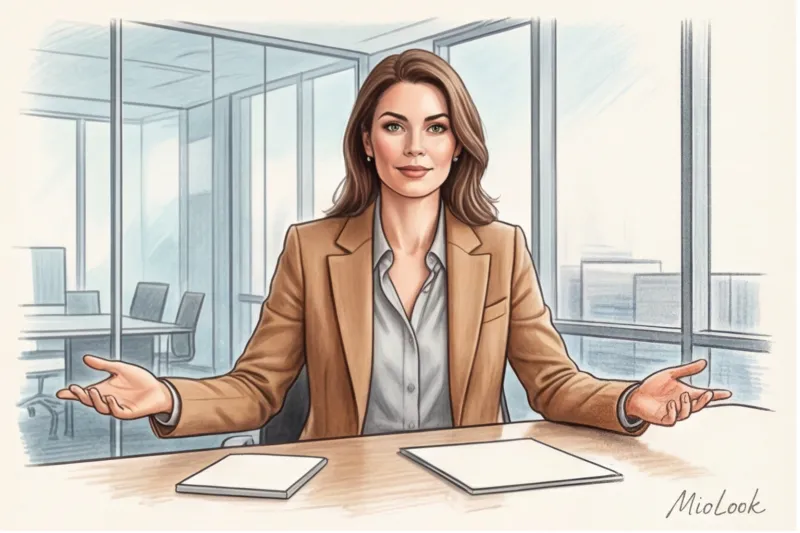
Have you ever noticed how the tone of a difficult conversation subtly changes depending on what your counterpart is wearing? A couple of years ago, Anna, the CEO of an IT startup in the midst of a tough merger with a larger corporation, approached me. For her first meetings, she wore impeccable but muted black suits. The negotiations were tense, and the atmosphere resembled trench warfare. I suggested an experiment: swap out the black gabardine suit for a thick wool camel-colored jacket and a pearl-gray silk blouse. The result amazed us both—the tension at the table noticeably decreased, and the partners moved from an “offensive” position to a dialogue. Why did it work? Because of the well-chosen beige color in a business wardrobe — this isn't an attempt to blend in with the wallpaper, but a strategic tool for managing others' perceptions. We wrote more about the mechanisms of this phenomenon in the full guide. The Psychology of Color in Clothing: How to Manage Impressions.
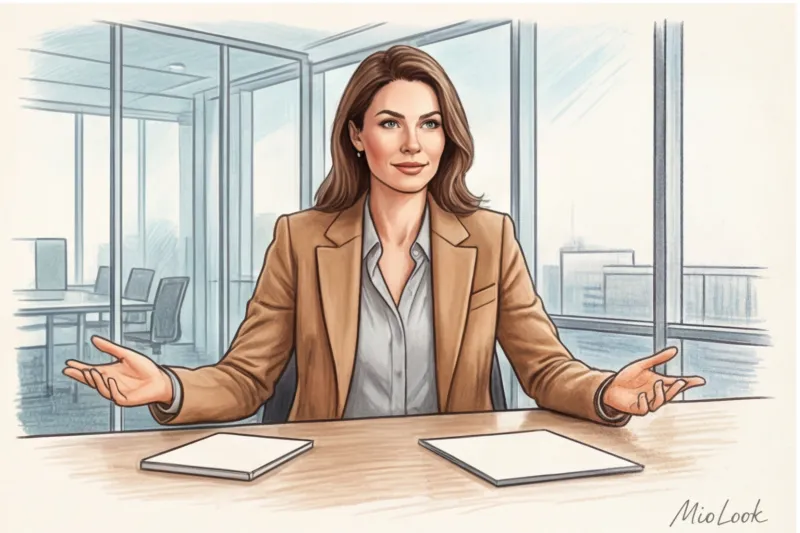
The End of Power Dressing: Why Soft Power Is More Effective Than Aggression
Business dress codes have come a long way from the rigid silhouettes with exaggerated shoulders and contrasting combinations of the 1980s to the empathetic leadership of the 2020s. Today, the concept of soft power in wardrobe means commanding attention without visually overwhelming the interlocutor.
There's a persistent myth that the color black equates to absolute authority and status. The reality of modern business, especially in tech and agile companies, is that black is often interpreted by the brain as defensiveness, isolation, or even an unwillingness to compromise.
“It only takes about 90 seconds for the human brain to subconsciously assess the threat or safety of someone, largely based on the color palette of their clothing,” the data confirms. Institute for Color Research (2023).
By wearing light, natural shades, you literally convey: “I have nothing to hide, I am open to dialogue and so confident in myself that I don’t need visual armor.”
Access to MioLook for €0.99 — one-time payment
A smart AI stylist will select the perfect look for your next meeting.
Get access — €0.99 onceBeige in a Business Wardrobe: A De-Escalation Strategy
The psychological impact of beige is hard to overstate. It physiologically helps reduce cortisol (the stress hormone) levels in those looking at it. Beige is no longer considered a "boring" choice for ordinary office workers. Today, it's a symbol of aesthetics. stealth wealth ("quiet luxury") - elegance that does not shout about its cost.
For what situations is beige ideal?
- Conflict Mediation: Sand shades dampen aggression.
- First meetings with new clients: The color conveys empathy and a willingness to listen.
- HR interviews: You look like a team player, not a dictator.
The Cheap Beige Trap: Why Fabric Composition Matters
As a textile expert, I must warn you: beige is unforgiving when it comes to the quality of materials. Textile chemistry is such that synthetic fibers (such as 100% polyester) do not hold complex light pigments well. As a result, cheap mass-market beige often looks "dirty," with a sickly yellowish tint or a dull gray-green undertone.
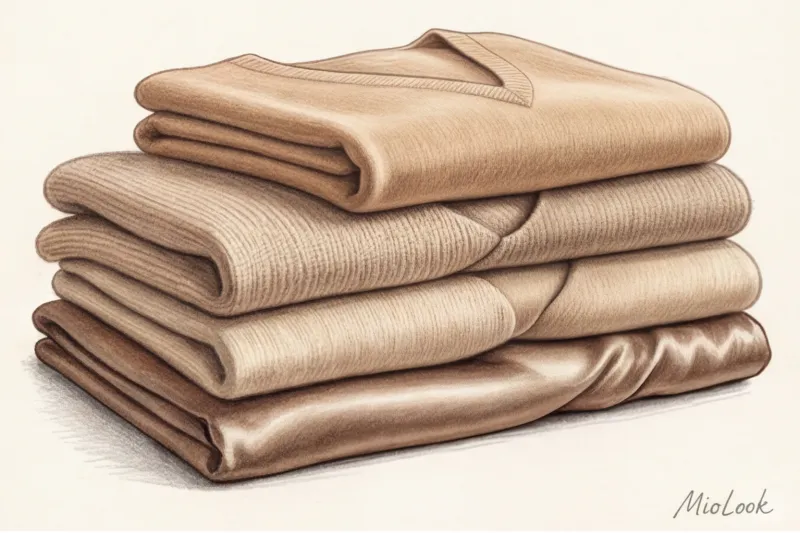
Natural fibers—merino wool, cashmere, and dense silk—have a different structure. They absorb and softly reflect light, creating that refined glow that distinguishes an expensive jacket from a cheap one.
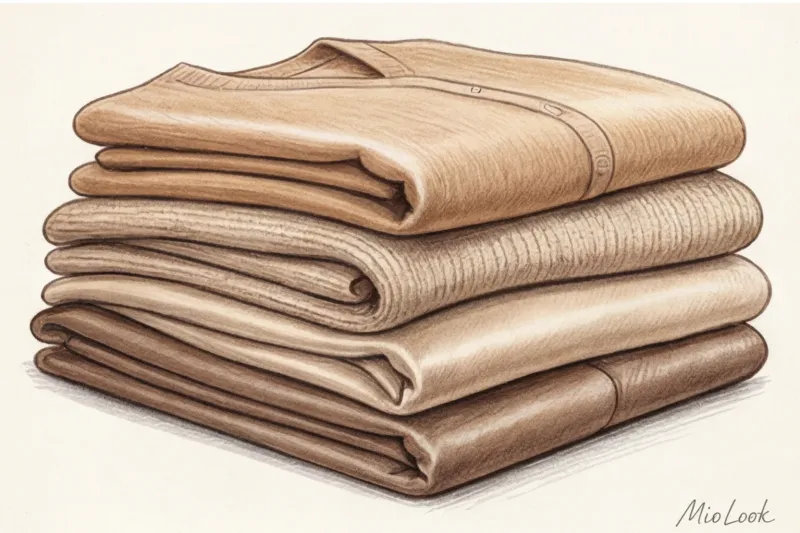
My golden rule for stylists: if you're on a tight budget, choose dark colors (navy, graphite, black). Light neutral shades require impeccable fabric quality. Look for cotton with a weight of at least 180 g/m², premium viscose, or a wool blend.
Gray: analytical anchor and distance without threat
If beige represents empathy, then gray represents pure intellect, objectivity, and balanced decisions. Gray is unique in that it allows for the creation of professional distance without evoking hostility.
According to a study by the consulting agency WGSN (2024), in 70% of cases during difficult corporate negotiations, opponents subconsciously perceive people in dark blue and gray as more inclined to constructive compromise than people in black.
Grayscale allows you to fine-tune your look:
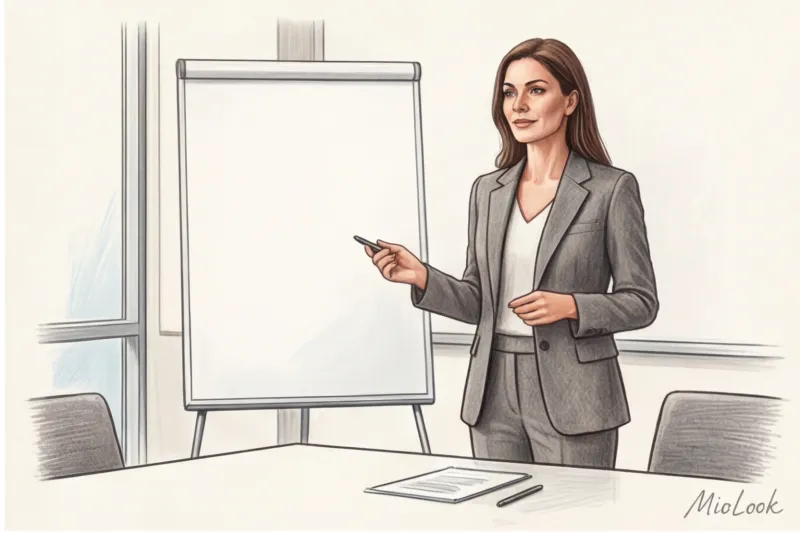
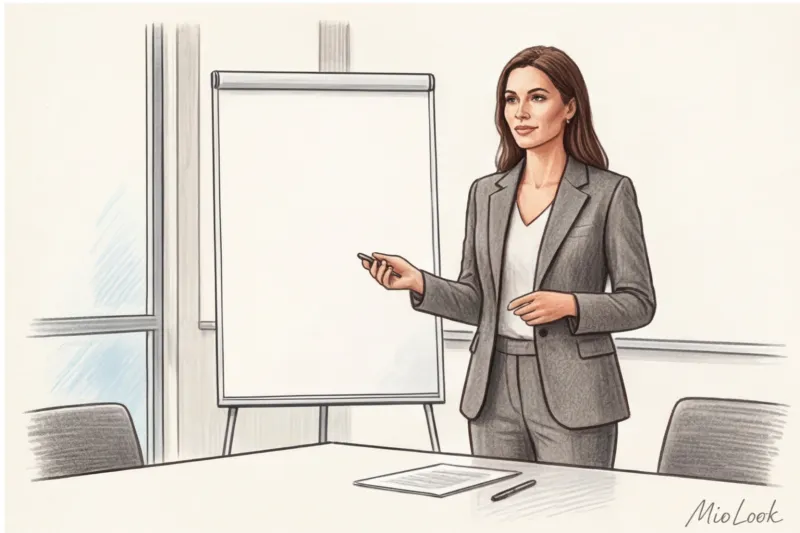
- Light "dove" (dove gray): Maximum openness, ideal for presentations when you need to win over your audience.
- Medium Grey Melange: routine office work, calm authority.
- Charcoal: Stern authority, a gorgeous and more sophisticated alternative to classic black for high-level meetings.
Gray works as an ideal background color: it makes the other person focus on your words and graphics, rather than your appearance.
Your perfect look starts here
Join thousands of users who look flawless every day with MioLook.
Get access — €0.99 onceBrown: the color of deep trust and stability
For years, the corporate world had an unspoken rule: "no brown in town," relegating this color to country weekend wear. Forget it. Brown has made a triumphant return to the office.
Earth psychology works flawlessly: brown conveys reliability, rootedness, and, especially important in business, financial stability. Shades of dark chocolate, terracotta, and taupe (gray-brown) look incredibly expensive if chosen correctly for your complexion. To avoid choosing the wrong undertone, I recommend checking out our article. 12 Color Types of Appearance: A Guide to Choosing a Palette.
A practical tip I give to almost all my clients: try swapping out your usual black leather tote bag and black pumps for accessories in a dark chocolate or cognac shade. This will instantly elevate the entire look, making it more sophisticated and "delicious."
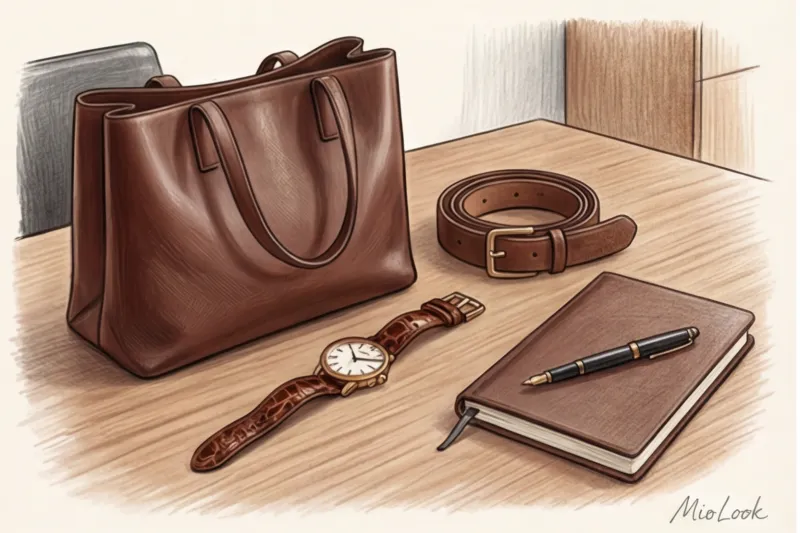
Image Architecture: How to Wear a Neutral Palette Without Looking Invisible
The main fear when switching to a beige and gray palette is blending in with the office furniture. To avoid this, the look needs to be carefully crafted.
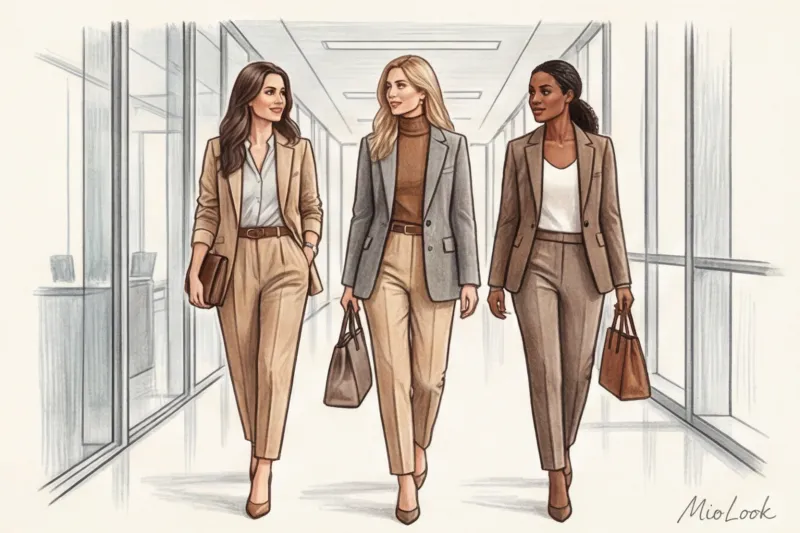
The rule of difference in textures. A monochrome look only works when the materials clash. Combine smooth, flowing silk, loose, matte wool, and crisp, smooth leather in one outfit. For example: a champagne-colored silk blouse + camel-colored wool trousers + a suede belt.
Temperature contrast. The most stylish looks are born at the intersection of warm and cool. Try wearing a cool steel-gray jacket over a warm caramel turtleneck.
Fair warning (when it DOESN'T work): Soft colors can be overly relaxed. The "soft color + soft shape" formula (for example, a beige, shapeless knit cardigan) will make you look like a cozy homemaker rather than an expert. A neutral palette requires a strong architecture: structured shoulders, dense fabrics (from 250 g/m²), clear creases on trousers, and sharp, geometric shoes.
Ready to get started?
Try the MioLook free plan—no commitments required. Get your perfect wardrobe right on your smartphone.
Get access — €0.99 onceChecklist: Auditing Your Neutral Wardrobe
Before rushing to the store for new items, take stock of what's already hanging in your closet. Light-colored items are prone to "color fatigue." If your beige shirt has developed indelible yellow stains on the collar, or your gray jumper has become covered in pills and has acquired a soapy tint after washing, it's time to say goodbye to them. They ruin the magic of an expensive look.
A basic set of "soft power" that will pay off every penny invested:
- Straight-cut jacket in camel (wool) shade.
- Wide-leg pearl grey trousers with creases.
- Silk blouse in taupe or ivory shade.
- Dark chocolate structured tote bag.
- Thin merino turtleneck in graphite shade.
If your work wardrobe currently consists solely of black and white, start integrating with one layer. Wear your usual black pants, but swap out the white cotton top for a beige silk blouse. By the way, to avoid racking your brain over new combinations, I recommend using MioLook app Upload your basic items, and the AI stylist will show you how to harmoniously incorporate new shades into your usual capsule wardrobe.
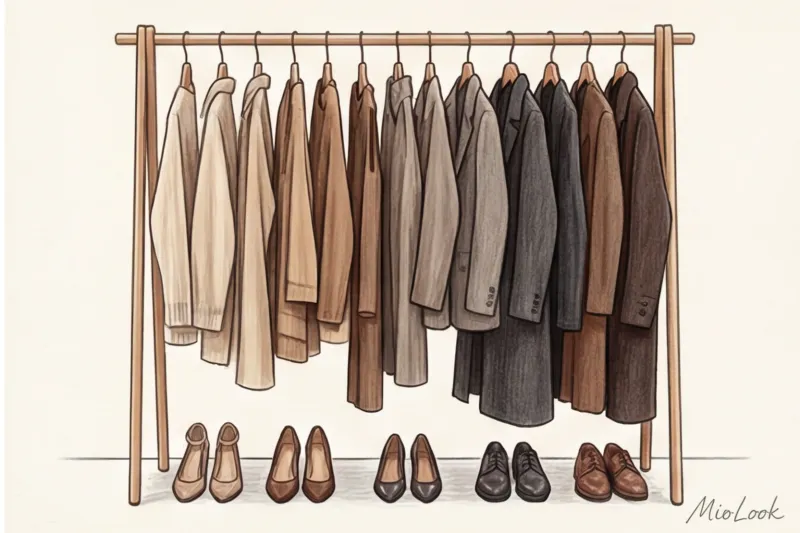
Soft power in wardrobe isn't a sign of weakness or insecurity. On the contrary, it's a privilege for professionals who no longer need to shout or don visual armor to have their ideas heard and accepted.